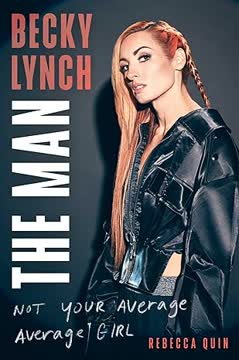
Key Takeaways
1. From Childhood Dreams to Wrestling Reality: The Unconventional Path
My dad gave me the courage to dream. My mom gave me the practicality to go out and work for it.
Early influences. Rebecca Quin's childhood was shaped by the contrasting yet complementary influences of her parents. Her father, a perpetual dreamer, fostered her imagination and encouraged self-expression, while her mother, a staunch realist, instilled the importance of hard work and a desire for "normalcy." This duality laid the foundation for Becky's future, pushing her to both aspire greatly and work relentlessly.
Finding wrestling. Despite initial self-consciousness and a rebellious teenage phase, Becky discovered her passion for wrestling through her brother, Richy. Inspired by the authentic storytelling of Mick Foley, she found a sport that resonated deeply, offering focus and discipline. This pursuit, though initially met with her mother's disapproval and requiring her to lie about her age, became her first true calling.
Early struggles. Her entry into wrestling was far from glamorous, marked by awkward bumps, injuries like a "stinger," and the challenge of being the sole female in training. Experiences like a chaotic UK summer camp and a humiliating first match only solidified her resolve. These early trials taught her that dedication could overcome a lack of natural talent, setting a precedent for her future resilience.
2. The Wilderness Years: Finding Identity Beyond the Ring
I loved wrestling. But there’s no future in it. It’s just not a realistic dream.
Post-injury hiatus. After a severe eye injury and a battle with an eating disorder, Becky stepped away from wrestling, convinced it offered no realistic future. This period, spanning several years, was marked by profound self-doubt and a desperate search for a conventional identity. She took on various roles, including a flight attendant, a personal trainer, and an acting student, each an attempt to fill the void left by her first passion.
Identity crisis. Her time as a flight attendant, though stable and offering travel, felt passionless and isolating. She struggled to connect with colleagues and constantly sought external validation, trying to conform to a "normal" persona. This internal conflict was exacerbated by her eating disorder, which intensified as she pursued bodybuilding, further detaching her from her authentic self and leading to deep unhappiness.
A new direction. A pivotal moment arrived during an acting audition in New York, where she candidly expressed the void wrestling had left. The judge's encouragement, coupled with her grandmother's passing and a friend's timely advice, reignited a spark within her. Though acting didn't immediately lead to a career, it helped her regain confidence and a sense of purpose, subtly preparing her for an unexpected return to the wrestling world.
3. The Unstoppable Comeback: Seizing a Second Chance at WWE
I would pass out or die before I quit. That was the deal I made with myself.
The call to return. While working as a stuntwoman on the TV show "Vikings" and pursuing acting, Becky received an unexpected phone call offering a WWE tryout. This opportunity, facilitated by her friend Joe Cabray and WWE recruiter Robbie Brookside, felt like a fated second chance to address her "unfinished business" in wrestling, years after she had given up on the dream.
The tryout. Despite being at the age cutoff (25) and having years of ring rust, Becky approached the three-day tryout with unwavering determination. She pushed herself physically, outworking other hopefuls and masking her pain with a relentless smile. Her authentic life story, shared during a promo session, resonated deeply with the talent scouts, ultimately leading to an offer for a developmental contract with NXT.
Doubts and preparations. The contract brought immense joy but also new anxieties. Her friend Rachel's devastating ACL injury served as a stark reminder of the fragility of dreams in wrestling. Becky, determined to avoid similar setbacks, cocooned herself in preparation, absorbing advice from mentors like Fergal and Sheamus, and mentally steeling herself for the rigorous demands of the WWE Performance Center.
4. Forging "The Man": Authenticity and Resilience in NXT
Perception is reality.
Initial struggles in NXT. Becky's arrival at the WWE Performance Center was a humbling experience. Surrounded by glamorous, naturally athletic women and imposing male recruits, she felt acutely out of place. Her years of ring rust were evident, and she struggled with basic maneuvers, leading to injuries and relegation to remedial classes. The constant pressure and perceived judgment amplified her insecurities.
Finding her voice. Despite being underestimated and often sidelined, Becky found crucial support in coaches like Robbie Brookside and Dusty Rhodes. Dusty, in particular, encouraged her to embrace her unique personality in promo classes, fostering creativity and authenticity. This period taught her the importance of "getting her shit in"—making the most of every small opportunity, even if it meant being an "extra" Rosebud.
The rise of "The Man." A pivotal moment came with her NXT TV debut, initially a "shameful" Irish jig gimmick. However, the audience's unexpected positive reaction, coupled with her relentless work ethic and a new steampunk-inspired look, began to turn the tide. She joined the "Four Horsewomen" (Charlotte, Sasha, Bayley), becoming a key figure in NXT's burgeoning women's division, proving that heart and fire could overcome natural talent.
5. Igniting the Women's Revolution: Breaking Barriers on the Main Roster
A revolution, you say? Yes, ma’am. A goddamn women’s revolution, and it would be televised!
Main roster debut. Becky, Charlotte, and Sasha's debut on Monday Night Raw in July 2015 marked the official beginning of the "Women's Revolution." Despite initial creative confusion and being grouped into "gal-pal" teams, the audience's enthusiastic "This is awesome" chants signaled a profound shift in how women's wrestling was perceived. Becky, surprisingly, felt more comfortable on the main roster, embracing the chaotic, ever-changing nature of live television.
Overcoming irrelevance. Initially relegated to a sidekick role, Becky faced the challenge of being labeled "the least relevant woman in the Divas Revolution." However, the audience's unexpected support, even when she was positioned as a heel, underscored her undeniable connection with the fans. A compelling storyline with Charlotte, where Becky played the scrappy underdog against the entitled queen, resonated deeply, setting the stage for her eventual breakout.
First championship. The audience's unwavering support culminated in Becky winning the inaugural SmackDown Women's Championship in 2016. Despite her own insecurities about embodying a champion, the crowd's "You deserve it" chants validated her arduous journey. This victory, though followed by a challenging and injury-plagued reign, solidified her position as a fan favorite and a crucial force for change in the evolving landscape of women's wrestling.
6. The WrestleMania Main Event: A Dream Realized Through Grit
I vowed that by next year I would be performing in that very ring. And it reaffirmed, stronger than ever, that, come hell or high water, I would main event WrestleMania.
The long road to Mania. Becky's ambition to main event WrestleMania, a goal she set after witnessing Colby's triumph, seemed distant after a period of being sidelined and relegated to preshow battle royals. However, a personal breakthrough—ending an unfulfilling engagement—unleashed a new level of professional focus and confidence, propelling her career forward.
The rise of "The Man." Her character evolved into an unapologetic, ass-kicking "The Man," resonating with fans who championed her underdog spirit. A pivotal moment came at the 2019 Royal Rumble, where, despite an injury, she dramatically entered and won, pointing to the WrestleMania sign—a classic, iconic gesture that cemented her path to the main event.
Making history. The announcement that she, Ronda Rousey, and Charlotte Flair would main event WrestleMania 35 was a historic moment for women's wrestling. Despite last-minute creative changes, personal doubts, and her father's declining health, Becky embraced the challenge. Her victory, though controversial, marked the culmination of years of struggle, proving that authenticity, resilience, and a deep connection with the audience could lead to the pinnacle of sports entertainment.
7. Navigating Success and Personal Growth: The Evolution of "The Man"
I loved my work. I hated how worked up I would get at every single week of television or every single creative direction.
Post-Mania challenges. After main eventing WrestleMania, Becky faced new pressures: maintaining her top spot, dealing with creative frustrations, and balancing her "The Man" persona with her real-life self. An early post-Mania confrontation with Vince McMahon over a "no-sell" highlighted the constant scrutiny and the need to navigate complex backstage politics, even at the peak of her career.
Personal and professional alignment. Her relationship with Colby (Seth Rollins) blossomed, moving from a flirtatious friendship to a committed partnership. Their on-screen pairing, though initially "awkward" and "cringe," ultimately strengthened their real-life bond. This personal stability allowed Becky to approach her career with renewed clarity, leading to an engagement and a desire to start a family, aligning her personal and professional aspirations.
Embracing motherhood. The unexpected news of her pregnancy, amidst a global pandemic and at the height of her career, presented a new challenge. Her emotional farewell on Raw, where she passed her title to Asuka, was a powerful moment of vulnerability and strength. This decision, though daunting, marked a new chapter, proving that women in wrestling could indeed "have it all"—a testament to the revolution she helped create.
8. Embracing Motherhood: A New Chapter, A New Strength
I’m not the world’s best at doing nothing. But if nothing else, I’d be doing nothing with the rest of the planet.
The journey to motherhood. Becky's pregnancy, though initially terrifying, became a period of profound personal growth. She grappled with anxieties about bonding with her baby and postpartum depression, but the impending arrival of Roux brought a new perspective. The sudden global shutdown due to Covid-19, while disrupting her career, provided an unexpected opportunity to embrace this new phase of life.
Loss and reflection. The joy of impending motherhood was tempered by the rapid decline and eventual passing of her father. His unconditional love and encouragement, even in his final days, underscored the importance of family and living life to the fullest. This loss, coupled with the isolation of the pandemic, forced Becky to confront her own self-centeredness and appreciate the priceless value of time and affection.
A new identity. Giving birth to Roux, after a challenging labor, was a transformative experience. The immediate, overwhelming love she felt for her daughter solidified a new identity: "I am The Mom." This profound shift in priorities, from career ambition to unconditional love, marked the ultimate evolution of Becky Lynch, proving that true strength lies not just in fighting battles in the ring, but in embracing life's most profound and vulnerable moments.
Last updated:





