Key Takeaways
1. Deep-Seated Family Conflicts Fueled by Control and Resentment
"He never walked out the door that she didn’t wish him dead."
A toxic marriage. Delores Lynch, a woman obsessed with cleanliness and order, harbored a profound hatred for her husband, Chuck, a successful General Electric executive. Their marriage was a battleground of wills, with Delores resenting Chuck's demanding career and frequent moves, while Chuck retreated into alcoholism to escape her "unrelenting scorn." This animosity led to them living in separate parts of their large Louisville home, communicating minimally, and Delores openly wishing for his demise.
Smothering control. Delores extended her controlling nature to her daughter, Janie, a dental student. Janie's life was meticulously managed by her mother, from daily calls and meal preparations to apartment cleaning. This intense oversight, coupled with Delores's constant criticism of marriage, was believed by friends to be a significant factor in Janie's inability to commit to relationships, keeping her perpetually tied to her mother.
Susie's estrangement. Susie Newsom Lynch, Tom's wife, also found herself entangled in a web of family conflict, particularly with her mother-in-law, Delores, whom she "loathed." This mutual animosity, combined with Susie's own "overbearing" and "pathological" possessiveness of her children, led to a bitter divorce from Tom. Susie's subsequent return to her parents' home in North Carolina was marked by escalating tensions with her mother, Florence, over her "slovenly housekeeping" and her increasingly "unhealthy relationship" with her cousin, Fritz Klenner.
2. Fritz Klenner: A Life Built on Elaborate Delusions and Paranoia
"He lived in such a fantasy world that I’m convinced you could’ve put him on a lie detector machine and asked him if he was a doctor and he would have passed."
A fabricated identity. From childhood, Fritz Klenner was molded by his father, Dr. Frederick R. Klenner, into a "worshipful clone" with an intense desire to please. Despite never attending medical school, Fritz meticulously maintained the elaborate charade of being a Duke-trained physician, even diagnosing and treating patients, including his cousin Susie, with his father's controversial vitamin therapies. This deception was a cornerstone of his identity, allowing him to project an image of authority and expertise.
Paranoia and survivalism. Fritz's world was steeped in paranoia, fueled by his father's eccentric beliefs and his own growing delusions. He stockpiled weapons, food, and medical supplies, convinced that "Armageddon" was imminent and that he needed to be prepared for societal collapse. He spoke of:
- Communist plots and government overthrow
- Nuclear war and invasion
- Retreating to his father's "Mountain" farm as a fortress
- Forming a "feudal society" where he would be "kingpin"
Covert operations fantasy. Fritz further embellished his persona with tales of being a CIA contract agent and a member of the elite Delta Force, involved in clandestine missions against drug traffickers and communists. He used these fantasies to manipulate others, including Ian Perkins, into believing they were part of a grand, patriotic scheme, blurring the lines between his elaborate lies and a terrifying reality.
3. The Kentucky Murders: A Calculated Act Rooted in Financial Grievances
"This was a hit. A pro took these people out."
A brutal discovery. On July 24, 1984, Marjorie Chinnock discovered Delores Lynch's body at her garage door, shot multiple times. Inside, Janie Lynch was found facedown, also shot, with evidence suggesting she had been chased through the house. The scene was meticulously clean of shell casings, leading Detective Sherman Childers to conclude, "A pro took these people out."
Motive and suspicion. The initial investigation, led by Lieutenant Dan Davidson, quickly ruled out a typical robbery, as valuable items were left untouched. Suspicion initially fell on Tom Lynch, Delores's son, as the sole heir to a substantial fortune. However, Tom's polygraph tests were inconclusive, and his alibi placed him in Colorado. Davidson's focus then shifted to other leads, including Cuban refugees, but these also proved to be dead ends.
Susie's alleged involvement. Davidson later became convinced that Susie Lynch was the "link, the cause, and the motive" behind the Kentucky murders. He theorized that Susie, enraged by Delores's interference in her life and her financial support of Tom's custody battles, had orchestrated the killings. The discovery of a Colt AR15 .223 rifle, purchased by Fritz in July 1984 and traded in the day after the murders, strongly implicated Fritz. Davidson believed Susie accompanied Fritz to Kentucky to point out Delores's house, ensuring a precise and deadly "hit."
4. Susie Lynch's Descent: From Estranged Wife to Believer in Conspiracy
"She just thought everyone was trying to get her kids away from her."
Escalating paranoia. Following her bitter divorce from Tom, Susie's behavior became increasingly erratic and paranoid. She grew convinced that Tom was involved with the Mafia, that his underworld connections had murdered his mother and sister, and that she and her sons were next. This fear was intensified by mysterious incidents, such as the boys' toy animals found with slit throats and anonymous threatening calls, which Susie attributed to Tom's alleged mob ties.
Fritz as protector. In her escalating fear, Susie turned to her cousin, Fritz Klenner, whom she saw as her protector. She believed his elaborate tales of being a CIA agent and his ability to shield them from danger. Fritz, in turn, reinforced her paranoia, feeding her increasingly bizarre theories and solidifying his control over her and the boys. This symbiotic relationship deepened her isolation from her own family, who grew increasingly concerned about her mental state.
A desperate struggle for control. Susie's primary motivation became preventing Tom from gaining custody of their children. She viewed Tom's attempts at visitation as a direct threat, believing he sought to "snatch" the boys. This conviction, coupled with her belief in the imminent danger from the Mafia, led her to extreme measures, including keeping the boys out of school and preparing them for a life of survival, further entrenching them in Fritz's delusional world.
5. The North Carolina Murders: A Brutal Execution Linked to a Custody Battle
"I never dreamed Bob Newsom would turn traitor."
A shocking discovery. On May 19, 1985, Homer Sutton discovered the bodies of Hattie Newsom (Nanna), Robert Newsom, Jr. (Bob), and Florence Newsom in their Winston-Salem home. All three had been shot multiple times, and Florence also suffered multiple stab wounds, indicating a brutal "overkill." The scene, with cash and expensive jewelry left untouched, suggested a motive beyond simple robbery.
The custody catalyst. The murders occurred just days before a crucial court hearing where Bob Newsom was scheduled to testify on behalf of Tom Lynch, advocating for extended visitation rights with his sons. This impending testimony, seen by Fritz as an act of "treason" against Susie, provided a powerful motive for the killings. Susie's family, particularly her cousin Nancy Dunn, immediately suspected Susie and Fritz, noting Susie's unusual calmness and lack of grief.
A calculated act. The meticulous nature of the crime, including the absence of shell casings and the specific targeting of the victims, pointed to a professional execution. The fire set in the hallway, though ineffective in destroying evidence, suggested an attempt to cover tracks. Investigators quickly realized that the murders were not random but a deliberate act, likely connected to the bitter custody dispute and the escalating paranoia surrounding Susie and Fritz.
6. The Breakthrough: An Accomplice's Confession Unveils the Plot
"You know, in the time you say it took for this hike, ya’ll could’ve driven to Winston-Salem, murdered three people, and returned to Virginia."
Ian Perkins's story. The investigation gained a crucial breakthrough when detectives interviewed Ian Perkins, Fritz's young neighbor and accomplice. Ian, a devout and patriotic college student, had been completely duped by Fritz's elaborate CIA fantasies. He confessed to accompanying Fritz on what he believed was a covert mission to "take care of" arms thieves and drug dealers, unaware that the true target was the Newsom family.
The wired confession. To solidify the case, Ian agreed to wear a wire and confront Fritz. In a series of tense, recorded conversations, Fritz, unaware of the wire, revealed chilling details:
- He admitted to killing three people, including using a knife on "guards."
- He showed Ian photos of the Newsom victims, identifying them as the ones "who went down the other night."
- He provided Ian with a fabricated alibi, instructing him to claim they were camping.
- He advised Ian to invoke "National Security Act" if questioned, and offered drugs to calm his nerves.
Corroborating evidence. Ian's detailed account, combined with the discovery of the campground receipt and the identification of the car Fritz drove from the murder scene, provided overwhelming evidence of Fritz's guilt. The recordings, though sometimes garbled, captured Fritz's admissions and his continued manipulation of Ian, confirming the bizarre and deadly nature of his delusions.
7. A Horrific Climax: Shootout, Explosion, and the Children's Tragic End
"He just blew the whole thing up! Get an ambulance out here!"
The final pursuit. On June 3, 1985, police moved to arrest Fritz Klenner. After a tense surveillance, Fritz, Susie, and her two sons, John and Jim, emerged from their apartment, the boys dressed in camouflage fatigues, and entered Fritz's heavily modified Chevrolet Blazer. A high-speed chase ensued, with Fritz firing an Uzi submachine gun at pursuing officers, injuring two.
A devastating explosion. The chase culminated on Highway 150 when Fritz stopped the Blazer, and a massive explosion ripped through the vehicle. Susie's body was found mangled, clearly having been seated atop the bomb. Fritz, though still breathing, died shortly after. The most horrifying discovery was the fate of John and Jim.
The ultimate betrayal. Autopsies revealed that both boys had been poisoned with cyanide and then shot in the head at close range before the explosion. This shocking revelation confirmed the police's worst fears: Susie and Fritz had murdered the children. The presence of cyanide, a weapon in Susie's hip pocket, and the hand-wiping tests indicating Susie had fired a weapon, pointed to her direct involvement in the deaths of her own sons, a final, monstrous act of control and desperation.
8. Unanswered Questions and Lingering Doubts: The Aftermath of a Bizarre Case
"Nine people are dead and I wonder why, Especially why those two little boys had to die."
Susie's complicity. Despite the overwhelming evidence against Fritz, Susie's exact role in the murders remained a subject of intense debate. While her family insisted she was a "duped and brainwashed innocent," others, including Tom Lynch and Detective Dan Davidson, believed she was a full participant, even the mastermind. The SBI's refusal to release all investigative details, including a third taped conversation with Ian, fueled suspicions of a cover-up.
The SBI's role. The SBI faced heavy criticism for its handling of the case, particularly for failing to act on an earlier report that identified Fritz as a "dangerous psychopath" practicing medicine without a license. Davidson believed that if this information had been shared, the Lynch murders, and potentially the Newsom murders, could have been prevented. The agency's strict secrecy and perceived political motivations further eroded public trust.
A lasting tragedy. The case left a trail of devastation, with nine lives lost and families shattered. Tom Lynch, haunted by the deaths of his sons, dedicated himself to ensuring their story was told, while the Newsom family grappled with the unfathomable betrayal. The bizarre saga, filled with delusions, manipulation, and unspeakable violence, became a chilling testament to the destructive power of unchecked mental illness and family dysfunction.
Last updated:
Review Summary
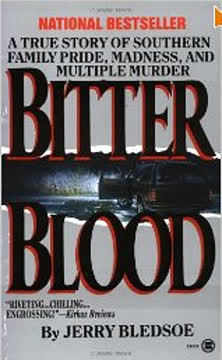
Bitter Blood by Jerry Bledsoe tells the true story of seven murders within connected North Carolina families. Reviewers praise the shocking, well-researched narrative but commonly criticize its excessive length and exhaustive detail. Many found the extensive background information about minor characters, family histories, and tangential topics tedious, with some abandoning the book. However, readers appreciated the bizarre, tragic story's compelling nature and Southern Gothic atmosphere. The pacing issues—particularly the slow first 200 pages—frustrated many, though those who persevered found the conclusion powerful and disturbing.





