

Plot Summary
A Ride Comes Apart
At a traveling carnival, mechanic Grace discovers that the Whirling Swings ride has been dangerously neglected by Calvin, the handsome coworker whose flirtation has kept her hoping for a relationship. She climbs up to inspect the failing machinery, and Calvin starts the ride while she is still working above it. A loose metal arm tears free and knocks her from the platform.
As Grace falls, her crystal necklace glows and a strange melody carries her away from the fair. Far from her world, orc hunter Branikk receives a summons from the Moon Goddess and races toward a new standing stone, convinced it will lead him to a destined bride. Grace's accident and Branikk's quest converge in a forest neither understands in the same way.
The story begins with two kinds of faith being tested. Grace trusts machines because their workings can be inspected, but Calvin's carelessness turns that practical trust into mortal danger. Branikk, by contrast, accepts the goddess's summons as a reliable promise. Their separate assumptions prepare the central conflict: Grace will need evidence before she can believe in magic or affection, while Branikk will have to learn that destiny does not substitute for consent or knowledge.
Pillows Against the Birds
Grace wakes on a crystal-covered standing stone in an unfamiliar forest as a flock of red-eyed birds attacks her. Terrified, she wishes for something to break her fall and conjures a bouncy castle beneath her.
Branikk arrives with his unicorn companion, Aurora, captures one bird in a leather bag, and finds Grace surrounded by the pillows she has conjured while trying to keep him away. He believes the pillows signal eagerness for their goddess-chosen marriage.
Grace assumes he is a costumed actor in an elaborate prank, even as his translation crystal lets them understand each other. Branikk calls her his moon-bound bride; Grace rejects the claim, unsettled by his strength and attraction to her, and clings to the possibility that none of this is real.
Their first encounter turns a language problem into a problem of interpretation. Grace's defensive gestures are legible to her as refusal, but Branikk reads them through his own cultural expectations and the certainty of divine matchmaking. The pillows make that mismatch comic, yet the danger is real: attraction cannot repair a failure to understand another person's boundaries. Branikk's apology when he notices her discomfort is an early sign that he can revise his assumptions, while Grace's disbelief protects her from repeating the humiliations she has experienced on Earth.
A Bargain With Gnomes
When Branikk's attempt to conjure equipment fails, he realizes the standing stone has given Grace a rare power. She still suspects a production crew is behind everything, even when a talking unicorn and acrobatic gnomes emerge from the earth.
Branikk offers the gnomes Grace's bouncy castle and pillows in exchange for hiding his captured sluagh, a soul-stealing fae, where it cannot be killed. The trade removes evidence of Grace's magic from the clearing, but another flock arrives before they can escape.
Branikk, Aurora, and Grace fight off the birds, then flee on Aurora with Grace riding in front of Branikk. He knows the flock can return, and Grace is left trying to decide whether the danger, the creatures, and the man holding her are all part of a performance.
The gnome bargain gives Grace's apparently frivolous creations a social use: they become gifts that purchase cooperation. It also establishes the rules of the threat. Killing an individual bird does not necessarily defeat the collective soul-stealer, and capturing one can restrain it. Branikk's quick improvisation reflects a culture that treats negotiation and magic as ordinary tools, while Grace keeps reaching for familiar explanations. The uneasy ride away marks a shift from a strange encounter to a shared survival problem, though emotional trust has not caught up with physical proximity.
A Courtship Misread
As they travel through Alarria, Branikk explains that Grace is a human witch, one of the goddess's gifts to the orcs, while Grace keeps testing him for signs of a television crew. He tends her peck wounds, shares food, and listens as she shows him scenes from her phone and explains her work repairing carnival rides.
Branikk tells her he loves her after only hours together. Grace hears the declaration through the memory of Calvin's false promises and cannot believe it.
Branikk recognizes that his certainty has frightened her, so he tries to court her patiently, although his teasing and constant touch leave both of them increasingly unsettled. At a creek, Grace secretly sees him naked and realizes that her attraction is no longer theoretical, even as she continues resisting the trust he asks of her.
Grace's suspicion is not simple cynicism. Calvin used attention to secure her labor, so she has learned to treat affection as a possible transaction, especially when it arrives before genuine knowledge. Branikk's instinct is nearly the opposite: he treats the goddess's choice as proof that love is already justified. Their tension exposes how quickly romance can reproduce unequal power when one person assumes certainty and the other expects a trap. His willingness to listen to her work gives their connection a firmer basis than destiny alone, while Grace's private reaction at the creek reveals desire without yet granting trust.
The Wheel in the River
Trying to prove her supposed magic is staged, Grace asks for ordinary objects and gets nothing. Then her crystal warms, and a Ferris wheel appears on a river rock, complete with the same damage and repaired welds as the ride she maintained on Earth.
Its lack of a power supply forces her to confront what Branikk has been saying: her magic is real, and so is Alarria. Grace studies the machinery, switches it off, and rides it with Branikk, finding steadiness in sharing the landscape and her craft with him.
Water nymphs crowd their crossing, so Grace redirects them into diving from the wheel's moving cars. Later, she invites gnomes to operate the ride in exchange for giving rides to other fae, allowing the creation to remain useful after she and Branikk leave.
The Ferris wheel is more than proof of magic. It carries Grace's identity into a world that has stripped away every familiar reference point. Her mechanical inspection converts wonder into something she can engage with rather than merely endure. Just as important, she sees entertainment as a real service: the wheel gives nymphs, gnomes, and pixies pleasure, even if it does not meet a narrow definition of utility. Branikk's respect for her skill helps her recognize that the work she once took for granted has always brought people joy.
Nets Against the Sluagh
Leaving the river, the travelers hear a cu sith, a wolf-like fae, fleeing several sluagh flocks. The cu sith, Rune, asks for help protecting his people and their pups. When the birds attack, Branikk fights with sword and bow, while Grace is weakened by their soul-draining pecks.
Under pressure, she conjures a carnival net gun, traps a bird, and discovers that holding it subdues its entire flock. Branikk uses her weapon to capture birds attacking Aurora and Rune, though one flock escapes. With the immediate assault stopped, Rune explains that his people are under repeated attack.
Grace agrees to travel with him and help protect them. Her first useful creation changes her from a bewildered outsider into an active defender, and Branikk kisses her as relief and admiration break through their guarded courtship.
Grace's breakthrough comes not from mastering magic abstractly but from recognizing a practical need and acting under pressure. Her familiar knowledge of carnival equipment becomes a resource in an unfamiliar ecology. The net gun also reframes the sluagh conflict: victory depends on restraint and containment, not simply on killing whatever attacks. Grace's decision to aid Rune extends her care beyond the man who protects her. That choice is a meaningful expression of agency in a story where the goddess has already assigned her a husband and a role.
Puppies, Bubbles, Doubts
At the cu sith dens, Rune's sister and pack leader, Riselda, introduces Grace to the puppies, including her twins, Astrid and Agnar. Their delight draws Grace into play, and she later conjures a bubble-blowing toy that gives the pups another source of fun.
Yet after becoming intimate with Branikk, Grace worries that he values her chiefly as a powerful witch chosen by the goddess. When she withdraws, Branikk gives her space rather than pressing her to explain. He also points out that her creations have brought joy to the fae around them.
A visiting cat sith, Mist, reveals that the sluagh are gathering in greater numbers near the dens. The puppies' trust and Branikk's patience offer Grace belonging, but the looming threat turns their refuge into a place that must be defended.
Grace's fear returns precisely when intimacy becomes meaningful. While she believed Branikk was acting, she could enjoy his attention without risking much; now that his feelings may be real, past rejection makes hope itself feel dangerous. The bubble toy matters because it is small, repairable, and playful, unlike the grand Ferris wheel or a weapon. Its value helps challenge her belief that only practical labor earns appreciation. Branikk's restraint matters too: he gives care without treating her vulnerability as permission to demand more.
A Pack Learns to Fight
Mist reports that the sluagh are massing near the cu sith territory, and Grace helps prepare a defense. Her magic initially produces another bubble toy instead of the net gun she needs, but Branikk brings the original weapon close and encourages her to try again.
She conjures a second gun and a supply of cartridges, then practices shooting with Branikk guiding her aim. Because the wolf fae lack hands, Grace and Branikk devise net bags while Rune organizes the pack into teams that can catch or retrieve birds without killing them.
The pups turn practice into a game. Mist returns with witch Ashley, her orc husband Dravarr, and the young dragon Drake. Meeting other humans and seeing Branikk proudly introduce her as his bride helps Grace recognize that her feelings have become love.
Preparation turns Grace's individual magic into shared capability. The cu sith cannot operate the net guns, so success depends on designing a whole procedure around their bodies and skills. Grace does not simply provide a powerful object; she and Rune build a system that others can learn. Her difficulty conjuring on command also prevents magic from becoming effortless wish fulfillment. In parallel, Ashley's arrival offers Grace a glimpse of human companionship in Alarria, while Branikk's public pride answers her fear of being hidden or treated as an inconvenience.
The Sluagh Besiege the Dens
The sluagh attack in numbers vast enough to darken the morning sky. The wolves catch birds, Grace and Ashley bag them, Branikk and Dravarr fire the net guns, and Drake burns a portion of the attackers. Then the sluagh drop deathsleep gourds, knocking Drake and several wolves unconscious.
Branikk and Dravarr abandon the guns to shoot the falling gourds before they burst among the defenders. The sluagh that has pursued Grace since her arrival slips through the trees and attacks her.
At Branikk's urging, Grace conjures an oversized net that holds the creature in its assembled form, allowing Branikk to kill the true fae inside. As the remaining birds turn toward the captured flocks, Grace conjures a spinning carnival ride to block their dive. A deathsleep gourd bursts beside her, and she collapses in Branikk's arms.
The climax tests every skill the story has established. The net guns depend on practice, the cu sith depend on coordinated roles, and the giant ride turns carnival spectacle into a defensive structure. Grace's largest act of magic is motivated by love and fear for her friends, not by a desire to prove herself. Yet the victory is incomplete: her creation protects the group but cannot shield her from the new deathsleep formula. That cost keeps the resolution from feeling automatic and makes Branikk's devotion consequential rather than merely decorative.
The Long Sleep
Branikk runs through the deathsleep cloud to carry Grace into clean air, but she loses consciousness, and he soon collapses as well. After receiving an antidote, he wakes to find Grace still unresponsive and learns that the new formula may be especially dangerous to humans. Dragon Sheevora agrees to fly them to Moon Blade Village, where herbalist Gerna has previously cured a human affected by deathsleep.
Branikk reaches the village in about an hour and gives Gerna room to work only after his friend Krivoth pulls him away from Grace's bedside. Gerna prepares a magical remedy with Krivoth's help. Grace remains unconscious for three days while Branikk waits beside her, held there by the fear that the woman he has come to love may not wake.
The aftermath shifts the central action from combat to helpless waiting. Branikk, a hunter accustomed to solving danger through movement and force, cannot fight Grace's illness or hurry her recovery. His dependence on Gerna's expertise and Krivoth's intervention exposes the limits of individual heroism. Grace's coma also makes her absence tangible to the community she helped: the puppies seek her, and others gather around her care. The story measures love here not by declarations or erotic intensity, but by sustained attention when the beloved cannot respond.
A Place in Moon Blade
Grace wakes in Branikk's heart-tree cottage, where Gerna confirms that her treatment worked. Taylor and Olivia, the other human witches, welcome her, while Branikk introduces her to his parents with unmistakable pride. At the village pub, Grace shares the story of her arrival and the ride she conjured; the orcs listen, laugh, and include her rather than treating her as an oddity.
Later, Branikk takes her to a private hot spring and tells her plainly that he loves her for her character, not merely her magic. Grace finally trusts the feeling he has shown through days of practical care, and tells him she loves him too. Their reunion turns the goddess's imposed bond into a relationship they have chosen to inhabit together.
Belonging becomes concrete through social rituals: family introductions, food, storytelling, and a private place where Grace can choose comfort without public exposure. These scenes counter the carnival's transient community and her history of being noticed only when useful. Branikk's declaration is persuasive because the narrative has accumulated evidence: he listens, protects, waits, and takes her craft seriously. Grace's answer is therefore not surrender to destiny but an act of trust grounded in experience. The bond matters less as supernatural compulsion than as a promise they now willingly affirm.
Rides for the Alliance
A council at the standing stone brings together the orcs, unicorns, dragons, cat sith, and cu sith. Grace votes to include Rune's people, and the other groups agree, forming a broader alliance against the sluagh.
The council also assigns Sturrm to seek crystals that may help create an antidote to the new deathsleep. Back in Moon Blade Village, Grace conjures a Whirling Swings ride and uses it to create a spinning barrier over the green, showing that her magic can protect a community as well as delight it.
She then calls the gnomes, who report that fae from across Alarria are already enjoying her Ferris wheel. As Branikk celebrates the discovery that Grace is pregnant, she watches children ride and imagines her own child growing up with the joy she once lacked.
The ending joins private fulfillment to public responsibility without making them compete. Grace's vote recognizes the cu sith as allies, while her ride gives the village a defense that also preserves its original purpose as play. Her magic has matured through use, but it has not become merely instrumental: joy remains part of what makes it valuable. Pregnancy links Grace's longing for family to the future she is building, yet the image of children enjoying the ride also revises her own past. She cannot recover the childhood she missed, but she can help create a more generous world for others.
Analysis
The novel makes practical competence the language through which Grace first understands both magic and love. She has spent years repairing rides that give strangers a safe, joyful experience, yet her work is treated as ordinary and her body as a reason to doubt her desirability. Alarria does not erase those injuries; instead, it gives her familiar objects that can be used in unfamiliar ways. The Ferris wheel, bubble toy, and net guns all emerge from the same source, but their value shifts with context: amusement becomes hospitality, and amusement equipment becomes defense.
That movement matters because the book resists a narrow divide between useful work and emotional life. Grace's creations protect people, but they also make room for pleasure. The gnomes and nymphs do not need to be converted into soldiers to matter; they need a ride, a game, and a reason to gather. Grace's own worth follows the same logic. Branikk's affection becomes credible not because he declares her destined, but because he attends to what she does, respects her choices, and recognizes the happiness she creates.
The romance also examines the danger of treating fate as consent. Branikk's initial certainty is sincere, but sincerity does not make his assumptions harmless. Grace must decide whether to trust him through repeated evidence, while he must change from claiming a bond to earning a relationship. Their union becomes meaningful only when both can name their feelings freely.
The collective conflict echoes this emotional arc. The sluagh are difficult to defeat because their strength is distributed across a flock; the defenders prevail through specialized cooperation among witches, orcs, wolves, unicorns, and dragons. Grace's invention alone is not enough. Others learn how to use it, catch what it captures, and care for those it cannot save. The resolution therefore joins personal belonging to civic responsibility: Grace finds a home not by becoming less herself, but by letting her particular skills and desires matter to a community.
Review Summary
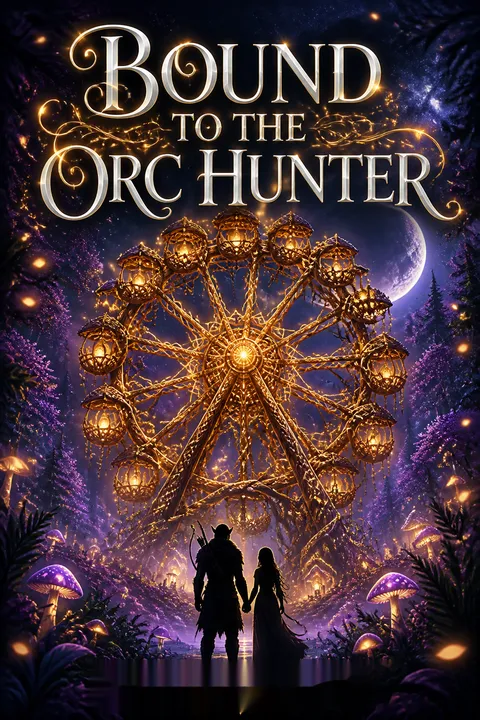
Bound to the Orc Hunter is a well-received fantasy romance novel featuring Grace, a human mechanic, and Branikk, an orc hunter. Readers praise the body-positive representation, sweet romance, and engaging world-building. The book combines humor, adventure, and steamy scenes, with many enjoying the magical elements and diverse characters. Some critics found the plot predictable, but most appreciated the light-hearted tone and character development. The novel is part of a series but can be read as a standalone, with an average rating of 4.28 out of 5 on Goodreads.
Characters
Grace
The practical conjurerGrace is a tall, strong carnival mechanic who trusts what she can inspect and repair. Her competence has made her dependable, but years of mockery about her appearance and Calvin's manipulative flirtation leave her doubtful that anyone could desire her without wanting something in return. In Alarria, she must confront both literal magic and emotional uncertainty. Her conjuring draws on familiar carnival objects, turning her practical knowledge into tools for defense, play, and community. Grace's instinct is to help, whether she is catching a child's cotton candy, protecting Rune's pack, or making a ride accessible to other fae. Her central struggle is learning that being useful is not the price of being loved.
Branikk
The devoted orc hunterBranikk is an outgoing Moon Blade orc, skilled hunter, and maker of bows whose wood magic helps his arrows fly true. He greets the goddess's chosen bride with exuberant certainty and initially assumes their bond explains what Grace wants. His warmth is genuine, but his early haste shows how easily conviction can outrun understanding. When Grace resists, he learns to listen, offer care without demanding intimacy, and recognize her work as part of who she is. His charm gives way to a quieter steadiness in moments of shared calm. Branikk's deepest motivation is connection: he wants a partner, a family, and a life in which his affection is returned rather than merely accepted.
Aurora
The sharp-tongued unicornAurora is Branikk's unicorn companion, a fast and powerful warrior with a horn that serves as a weapon. Her sarcasm and impatience hide deep loyalty; she carries Branikk and Grace across dangerous country while keeping watch and challenging his impulsiveness. She is practical about the dangers of attracting enemies and skeptical of possessions, but she respects capable action. Aurora's teasing also gives the couple a steady outside perspective, especially when Branikk mistakes his certainty for good judgment.
Rune
The cu sith envoyRune is a black wolf-like cu sith and a representative of a pack threatened by the sluagh. His concern for the dens and their young motivates him to seek help beyond his people. He is courteous and earnest, but he is also a capable warrior who can organize others and make a persuasive case for his pack. His friendship with Grace grows from her willingness to protect strangers, and he helps turn her improvised weapons into a workable group defense.
Riselda
The cu sith pack leaderRiselda leads Rune's pack and is mother to the twins Astrid and Agnar. Her caution keeps the pups inside when danger threatens, while her authority coordinates the adult warriors. She treats Grace as a potential ally but does not confuse affection with safety. Riselda's leadership is grounded in responsibility for the whole pack, and she helps make the cu sith's participation in a wider alliance a practical question rather than a sentimental gesture.
Mist
The sly cat sithMist is a feline fae who travels through hidden shadow roads and moves easily between groups with a history of hostility. Her wit and deliberate provocations can inflame old rivalries, but she also carries news, seeks help, and recognizes the strategic need for cooperation. Mist's independence makes her difficult to command, yet her loyalty to the wider struggle becomes visible through action. She is especially alert to the way old grudges can undermine alliances.
Ashley
The welcoming human witchAshley is a human witch who can fly and is married to the orc warlord Dravarr. Openhearted and energetic, she welcomes Grace as a fellow human in Alarria and brings clothes and practical support. Her willingness to fight despite being pregnant grows from a desire to make the world safer for her family and other witches. Ashley's warmth offers Grace a glimpse of the companionship she has missed, while her courage makes her more than a reassuring presence.
Dravarr
The steady orc warlordDravarr is the warlord of Moon Blade Village and Ashley's husband. More reserved than Branikk, he is a battle strategist whose calm helps organize the defense against the sluagh. He fights beside the others, takes responsibility for difficult decisions, and respects the abilities of those around him. His partnership with Ashley reveals a gentler side beneath his disciplined exterior, while his leadership emphasizes that survival depends on coordination, not strength alone.
Drake
The young dragon allyDrake is a young dragon who can fly and breathe fire, though his power has limits and must recover after use. Proud of dragons and fond of declaring their superiority, he is also loyal to Ashley and willing to carry Dravarr across Alarria. His role in the defense shows both the enormous value and the limits of magical strength. Drake's youth is apparent in his complaints and bravado, but he accepts serious responsibility when his allies need him.
Gerna
The skilled herbalistGerna is an orc herbalist and one of Branikk's childhood friends. She is practical, precise, and confident in her knowledge of plants and remedies. In a village without a full healer, she handles difficult medical problems that others cannot solve. Gerna's friendship with Branikk is affectionate but firm; she expects him to trust her expertise when emotion makes him want to take control. Her quiet competence anchors the story's care work.
Krivoth
Branikk's gruff friendKrivoth is Branikk's close friend and Taylor's husband. More reserved and gruff than Branikk, he knows what it is to love someone across a dangerous crisis. He helps Gerna with her work and intervenes when Branikk's fear makes him interfere with Grace's care. Their friendship is marked by blunt affection and practical loyalty rather than elaborate reassurance.
Taylor
The telekinetic witchTaylor is a human witch who can move objects with her mind and is married to Krivoth. Energetic and sociable, she treats new arrivals as friends before they have time to feel like outsiders. Her presence shows Grace that other humans have built lives in Alarria, though Taylor's fast-moving friendliness can overwhelm someone more reserved. She is part of the small community that helps translate the unfamiliar world into something welcoming.
Olivia
The food-conjuring witchOlivia is the first human witch brought to Alarria and can conjure food, especially pizza. Her creations have become part of village life, giving the orcs a shared pleasure and a taste of human culture. She is married to Rovann, who is mentioned but does not take part in this story's events. Olivia's example helps Grace understand that witches can contribute in distinct ways without needing to compete or produce the same kind of magic.
King Aldronn
The orc alliance kingKing Aldronn rules the orc clans and convenes the gathering where the peoples of Alarria consider a broader alliance. He delegates responsibilities, listens to proposals, and expects decisions to serve more than one village. His authority makes cooperation possible, while his request to see Grace's protective magic signals that her work has political as well as personal significance.
Calvin
The unreliable coworkerCalvin is a handsome carnival mechanic whose flirtation gives Grace hope that they might date. He avoids his maintenance duties and lets her take responsibility for a failing ride. His behavior teaches Grace to distrust attention that appears only when someone wants something from her.
Pebble
The gnome negotiatorPebble leads the gnomes, who travel through earth and enjoy acrobatics, bargains, and novelties. She assesses Grace's creations as both gifts and useful objects, then negotiates fair exchanges. Her practical curiosity helps turn the Ferris wheel into a lasting attraction for Alarria's fae.
Astrid and Agnar
The cu sith twinsAstrid and Agnar are Riselda's young twins and Rune's niece and nephew. Their affection for Grace grows through play, especially her bubble-making toy, and they bring a child's directness to the pack's tense life. Their eagerness to see Grace reminds the adults that protecting the young means preserving joy as well as safety.
Kora and Bronn
Branikk's steadfast parentsKora and Bronn are Branikk's parents. Kora is openly affectionate and welcomes newcomers readily; Bronn is a calm woodworker whose magic shapes the living heart trees into homes. Together they represent the stable family life Branikk hopes to share, and their welcome helps make Moon Blade Village feel like a possible home for Grace.
Sturrm
The gruff village warriorSturrm is an older orc warrior with a formidable build, a permanent scowl, and a surprisingly beautiful singing voice. He participates in the village's social life and is chosen for a dangerous mission by the king. His contrast between stern appearance and artistic skill suggests a private depth that the story only briefly reveals.
Plot Devices
The Moon-Bound Marriage
A bond tested by choiceThe Moon Goddess brings human witches into Alarria as sky gifts and binds each to an orc partner. Branikk treats the bond as proof that Grace is his wife and destined match, while Grace experiences it as an arrangement made without her consent. Their relationship develops as he learns not to use divine certainty as a substitute for listening, and she gathers evidence that his affection is not another manipulation. The bond supplies the romance's premise, but the emotional resolution depends on voluntary trust. Its force is therefore both magical and psychological: it draws the characters together, then asks whether they can make a real partnership inside a destiny neither chose in the same way.
The Crystal and Standing Stone
A bridge into FaerieGrace's crystal necklace is connected to the magical standing stones of Alarria. Its glow accompanies her fall from Earth, and it helps her access the conjuring ability she had not known she possessed. A speaking-stone crystal lets Branikk communicate with her despite their different languages. The stone also marks the place where Grace arrives and where the Moon Goddess's magic can be felt. Together, the crystals and stones make an invisible world tangible: they provide translation, summonings, and a focus for power. They are not simply magical props, since Grace's relationship to them changes as she moves from treating their effects as tricks to accepting that her own wishes can alter the world.
Carnival Conjuring
Familiar tools become magicGrace's power produces objects shaped by her memories and needs, often equipment or attractions from the carnival where she worked. Early conjuring is unpredictable: pillows appear when she wants to repel Branikk, and a Ferris wheel arrives when she is trying to test the limits of her ability. Under pressure, familiar devices become useful, especially the net guns that can capture sluagh birds. The rides also entertain fae and can protect a settlement by creating a moving barrier. This pattern ties magic to Grace's identity as a mechanic and to the value she places on public joy. Her creations are not reliable because she commands them perfectly; they work best when her need and imagination align.
The Sluagh Flocks
A distributed soul threatThe sluagh appear as flocks of red-eyed black birds whose pecks drain a victim's life force and can eventually turn that victim into part of the flock. Killing one bird does not defeat the whole fae, which makes ordinary combat frustrating and dangerous. Branikk learns that capturing a bird can subdue its flock, giving Grace's net guns a decisive purpose. The birds can merge into a humanoid form and use deathsleep gourds to incapacitate their opponents. Their pursuit of Grace connects the local attacks to her unusual magic and raises the stakes from escape to protecting the people around her. The rules of the threat reward containment, coordination, and knowledge rather than simple force.
Deathsleep
A victory with a costDeathsleep is a magical herb used by the sluagh to place fae in a prolonged coma, leaving them vulnerable to attack. The defenders have an antidote for its earlier form, but the sluagh introduce a new version that also affects humans. This variation prevents a clean victory when Grace's Whirling Swings ride blocks the birds and helps drive them away. She is exposed to the new formula and remains unconscious until Gerna treats her in Moon Blade Village. The device turns a successful battle into a medical and emotional crisis, forcing Branikk to depend on others and making the limits of Grace's protection painfully clear.
About the Author



Download PDF
Download EPUB
.epub digital book format is ideal for reading ebooks on phones, tablets, and e-readers.








