Key Takeaways
1. Master Personal Work Management for Foundational Productivity
High productivity starts with self-management.
Understand your workload. Effective project management begins with individual discipline. Before you can manage complex projects or teams, you must first master your own time and tasks. This involves a clear understanding of your commitments, distinguishing between urgent and important, and ruthlessly eliminating non-value-adding activities.
Prioritize and plan. Create an effective action list, whether daily or weekly, to guide your work. Prioritize tasks based on value and objectives, not just urgency, and allocate specific time slots in your diary for important work to avoid constant interruptions. Don't be afraid to remove tasks you genuinely won't complete or delegate them when appropriate.
Seek help and say no. Recognize when your workload is unmanageable or you lack the necessary skills. Proactively seek support from your line manager or colleagues, clearly articulating your needs and potential solutions. Crucially, learn to say "no" to new tasks that don't align with your priorities or capacity, explaining your reasoning assertively and offering alternatives.
2. Define Tasks and Objectives with Precision for Team Success
The starting point for getting anyone else to do a task is to define what you want.
Clarity is paramount. When delegating or assigning tasks, precise definition is non-negotiable. Clearly articulate the "what," "why," "how important," and "constraints" of the task, ensuring the recipient understands the desired outcome and how success will be measured. This upfront clarity prevents misunderstandings and rework.
Assess skills and resources. Before assigning, evaluate the skills, knowledge, and resources required for the task. Match the task to the right person, considering their expertise, motivation, and availability. Decide whether to be prescriptive with instructions or allow creative freedom, based on the task's nature and the individual's experience.
Monitor and support. Establish clear checkpoints for progress review, especially for complex or unfamiliar tasks. Be open to requests for help, guiding individuals to find their own solutions rather than doing the work for them. Remember, effective delegation includes providing ongoing support and feedback, fostering development rather than just offloading work.
3. Clarify Problems and Opportunities Before Seeking Solutions
Organisations waste huge resources treating the symptoms. It is always more effective to resolve the root cause.
Identify and understand. Projects often arise from problems or opportunities, but a vague understanding leads to ineffective solutions. Begin by actively listening, observing, and analyzing performance metrics to identify the true nature of issues or potential improvements. Don't jump to solutions; first, deeply understand the problem's manifestations and impact.
Root cause analysis. Employ techniques like Ishikawa diagrams or the "5 Whys" to uncover the underlying causes, not just the symptoms. Gather data, structure issues into chains of events, and relentlessly ask "why" until you reach the fundamental origin. Resolving root causes ensures lasting solutions and prevents recurrence.
Generate and explore solutions. Once the problem is clear, foster an environment of creativity to generate diverse solutions. Challenge assumptions, seek inspiration from competitors or experts, and go beyond obvious ideas. For opportunities, clearly define the desired outcome. Detail each idea, exploring its potential and practicalities, before converting the most promising ones into actionable steps.
4. Strategic Project Selection and Robust Business Cases are Non-Negotiable
If an organisation is going to invest in a project, it must be a relevant project that is truly aligned to the needs of the business.
Justify investment. Not every good idea warrants a project. Projects consume valuable resources, so each must be strategically selected and justified by a robust business case. This document explains the project's purpose, what it will deliver, the resources required, and the anticipated benefits and costs.
Align with strategy. A compelling business case clearly articulates how the project aligns with the organization's overarching strategy and objectives. It identifies financial and measurable benefits, as well as intangible gains like improved competency or market position. Crucially, it addresses risks, assumptions, and sensitivities, providing a comprehensive view for decision-makers.
Gain buy-in. Secure a senior project sponsor who can champion the project and provide active support. Anticipate challenges and objections, preparing clear answers to "why this project?" and "why now?". Effective stakeholder engagement, understanding their power, influence, and attitude, is vital for building and maintaining organizational support throughout the project lifecycle.
5. Comprehensive Project Definition and Planning Drive Predictable Outcomes
The foundation stone of every successful project is a clear scope, and a comprehensive set of customer requirements.
Define objectives and scope. A project's direction is set by its objectives, which answer "why" it's being done in concise, unambiguous statements. The project scope then defines the boundaries—what is in and out—and describes the expected deliverables. This clarity is crucial for managing expectations and preventing scope creep.
Understand customer needs and success. Engage stakeholders to explore their needs, not just what they think they want, but what they truly need. Translate these into specific, measurable success criteria that define how the project's achievement will be judged. This ensures the project is designed to deliver real value and impact.
Plan with the Iron Triangle. Develop a detailed work breakdown structure (WBS) to identify all necessary tasks. Estimate time and costs for each, building in contingency for uncertainty. Always consider the "iron triangle" of time, cost, and quality, understanding their interdependencies and which can be flexed. This foundational planning underpins all subsequent project management.
6. Proactive Project Control and Risk Management are Daily Imperatives
Project management is largely about risk management!
Monitor and track. Once a project is initiated, continuous monitoring is essential to keep it on track. Regularly collect information on progress, expenditure, and benefit realization, comparing actuals against the plan. Focus on trends over time, not just isolated deviations, to identify underlying issues.
Manage risks and issues. Proactively identify, assess, and prioritize risks, developing mitigation strategies and contingency plans. For problems that have already occurred, treat them as issues, documenting their impact, assigning ownership, and tracking resolution. Assumptions, often overlooked, are a critical source of risk and must be explicitly identified and verified.
Control change and drive performance. Implement a robust change control process to manage modifications to scope, requirements, or plans, preventing chaos and scope creep. Drive team performance by assigning clear roles, providing feedback, and fostering motivation. Know when to escalate problems to your sponsor, providing clear information and proposed solutions, and be prepared to stop a failing project if necessary.
7. Effective Handover and Change Management Ensure Lasting Benefits
If the deliverables are not used, nothing changes once the project is complete. That means no benefits will be realised.
Plan for transition. Project completion isn't just about delivering outputs; it's about ensuring they are adopted and used effectively within the organization. Develop a detailed handover plan, confirming deliverables meet quality standards and resolving major issues before transition. Operational departments must be ready and willing to take responsibility.
Manage resistance and support. Change is inevitable, but human reactions vary. Identify stakeholders, predict their responses, and plan actions to leverage support and overcome resistance. Listen to concerns, communicate openly and repeatedly, and involve people in the change process. Remember, forcing change can lower motivation and drive resistance underground.
Support during go-live. The "go-live" period is a critical transition. Provide ample support to the organization, expecting a temporary dip in performance. Ensure senior managers champion the change and act consistently. Celebrate successes, but don't underestimate the ongoing need for communication, training, and problem-solving to embed the new ways of working and achieve sustained change.
8. Continuous Learning and Quality Assurance Elevate Project Performance
All projects, from the best to the worst-performing, provide valuable opportunities to learn.
Assess success and learn. A project's true value extends beyond its immediate deliverables; it lies in the lessons learned. Objectively determine if the project met its success criteria, both tangible and intangible, and gather feedback from all stakeholders. This assessment forms the basis for future improvement.
Conduct structured reviews. Perform post-project reviews soon after completion, creating a safe space for open debate without blame. Focus on "start, stop, and continue" questions: what should be started, stopped, or continued in future projects? Document findings and assign tangible actions with owners to ensure learning translates into behavioral and process changes.
Elevate organizational capability. Beyond individual projects, strive to improve the organization's overall project performance. This involves developing a culture that values learning, enhancing project management skills through training and mentorship, and refining processes and tools. Regular project quality assurance (QA) reviews can identify systemic issues and opportunities for improvement across the portfolio.
9. Manage Multiple Projects and Portfolios for Organizational Alignment
Projects rarely exist in isolation. Programme and portfolio management provide the toolkit to select, prioritise and deliver multiple projects successfully and in line with an organisation's operational needs and __ Strategy.
Structure for complexity. When an organization undertakes multiple related projects, they often form a "programme," requiring a higher level of coordination. A "portfolio" encompasses all projects and programmes, serving as a strategic tool to align delivery with business strategy and optimize resource allocation.
Prioritize and balance. Portfolio management involves selecting the right mix of projects, not just individual ones, based on strategic fit, financial returns, impact on KPIs, and feasibility. This requires filtering out unsuitable projects and prioritizing the remainder against resource constraints. The goal is to achieve a balanced portfolio that meets diverse stakeholder needs and manages cumulative risk.
Resolve resource conflicts. Human resources are often the biggest constraint. Proactively plan to identify bottlenecks and apply resource leveling. When conflicts arise, prioritize based on strategic importance, and explore options like rescheduling, bringing in external resources, or even adjusting project scope. Effective portfolio management ensures that the most critical initiatives receive the necessary support.
10. Build a Competent Project Management Team and Infrastructure
An effective way to fulfil the constant demand for projects is to set up an adequately resourced project management team as a permanent part of a company's organisation.
Establish a dedicated function. To consistently deliver successful projects, organizations benefit from a dedicated project management team. This team is responsible for recruiting, developing, and deploying project managers, providing support staff, and ensuring consistent project delivery standards across the business.
Structure and staff strategically. Decide whether to centralize project managers for specialist expertise or distribute them for closer operational alignment. Size the team based on average workload, using contractors for peaks, or even intentionally making it a bottleneck to control project volume. Recruit project managers based on proven delivery experience, technical skills, and cultural fit, not just accreditation.
Invest in support systems. A Project Management Office (PMO) can provide invaluable administrative support, collect aggregated project information, and maintain project management standards and tools. Develop a comprehensive infrastructure including software, templates, governance processes, and continuous learning opportunities to empower project managers and enhance overall organizational capability.
11. Focus on Benefits Realization to Prove Project Value
If you cannot measure the benefits achieved, you cannot be sure that the project investment was worthwhile.
Identify and align benefits. The ultimate purpose of any business project is to deliver value. This value, or "benefits," must be clearly identified during the business case development, aligning directly with organizational objectives and strategy. Benefits can be financial (revenue, cost savings), measurable (customer satisfaction, fault rates), or intangible (strategic alignment, competency improvement).
Measure and track. Benefits management is the process of ensuring these identified benefits are actually realized. This requires defining clear metrics for each benefit and establishing a system to measure and track their achievement, not just during the project, but often long after its completion. Assign clear ownership for benefits realization to operational managers, not just the project team.
Link to strategy and budget. Integrate benefits tracking with project budgets and overall organizational strategy. Regularly review progress towards benefit targets, making adjustments to projects or operational activities as needed. By rigorously focusing on benefits realization, organizations can ensure that project investments truly contribute to strategic goals and deliver tangible business value.
Last updated:
Review Summary
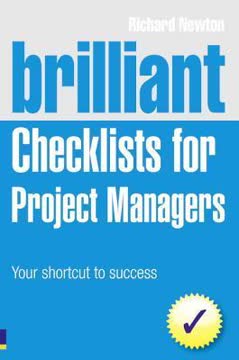
Brilliant Checklists for Project Managers receives a 3.66 rating. Reviewers find it useful guidance for project management. The book offers over 100 checklists covering all project stages from start to finish. It addresses key success factors, goal identification, the time-cost-quality triangle, and project evaluation. Readers appreciate its comprehensive tips for managing projects smoothly, understanding all aspects, handling any project size, and quickly finding optimal solutions to problems.





