Plot Summary
Red River's Crimson Tide
The novel opens with the Red River festival, a day of ritualized violence in the Imperial capital, Piarago. Azetla, a Mashevi "jackal" conscript, witnesses the public execution of his people, a spectacle that both sickens and steels him. The city is divided by blood and status, with the Mashevi despised and scapegoated. The festival's brutality is a reminder of the Empire's power and the precariousness of Azetla's existence. The event sets the tone for the story's exploration of power, prejudice, and the cost of survival in a world where blood—both literal and symbolic—dictates fate.
Shadows in South City
Azetla navigates the dangerous alleys of South City, enduring insults and suspicion from both the Empire's citizens and his own people. He is a conscript in the Black Wren battalion, trusted by his Captain but always an outsider. The city's underbelly is a place of shifting alliances and constant threat, where Azetla's skills as a scribe and soldier are both his shield and his curse. The chapter introduces the complex social fabric of Piarago, the tension between north and south, and the daily negotiations required to survive as a marked man.
Bonds of Blood and Salt
Within the Black Wren, Azetla finds a semblance of belonging, forged through years of service and shared hardship. His closest ties are to Joseph, a northern-born sergeant, and Khala, his street-sister. The battalion is a microcosm of the Empire's diversity and divisions, yet also a place where merit can, at times, transcend blood. Rituals—Mashevi prayers, Maurowan oaths, and the sharing of salt—bind and separate the characters, highlighting the novel's central motif: the tension between chosen and inherited bonds.
The Jackal's Burden
Haunted by the executions and his own impotence, Azetla shoulders the weight of his people's suffering. He is both participant and observer, forced to enforce the Empire's will while mourning its victims. His role as scribe and second-in-command is both a privilege and a sentence, as he is trusted with responsibility but denied recognition. The chapter delves into Azetla's internal conflict, his struggle to reconcile duty with conscience, and the psychological toll of being both tool and target of oppression.
Imperial Games and Treason
Lord Verris, a low-blooded noble, plots to unseat Emperor Riada by elevating the pliable Corra James. The court is a nest of intrigue, where alliances are forged and broken in pursuit of influence. Verris seeks military support from Captain Hodge and the Black Wren, seeing them as expendable pawns. The chapter reveals the fragility of status, the dangers of ambition, and the ways in which the powerful manipulate the marginalized for their own ends.
The Devil's Territory
The Emperor commands a campaign into Sahr territory, the land of the so-called devils. The Black Wren, led by Hodge and shadowed by Verris and James, is sent on a mission that is as much political theater as military necessity. The journey is grueling, the landscape hostile, and the threat of the Sahr—whether human or supernatural—ever-present. The battalion's cohesion is tested by fear, prejudice, and the uncertainty of their purpose.
Blood in the Desert
The Black Wren suffers devastating attacks from an unseen enemy. Soldiers are killed with uncanny precision, their bodies mutilated in ways that stoke terror and superstition. The battalion's leadership is decimated, and Captain Hodge is mortally wounded. Azetla is forced to step into command, his authority both challenged and needed. The desert becomes a crucible, burning away illusions and forcing the survivors to confront the reality of their situation.
The Sahr's Silent Hunt
The battalion finally corners and captures the Sahr, a figure shrouded in myth and ambiguity. The Sahr is revealed to be a woman, marked by scars and tattoos, her silence both a shield and a weapon. Her capture is both a victory and a curse, as she becomes a symbol for the Empire's power and the battalion's survival. Azetla's decision to keep her alive is pragmatic, but it also sets in motion a series of moral and political dilemmas.
Commanders and Outcasts
With Hodge dead and the battalion in disarray, Azetla's position becomes precarious. He is both indispensable and expendable, his authority tolerated only as long as it serves the interests of those above him. The Sahr's presence exacerbates tensions, as soldiers and officers alike struggle to reconcile their need for her knowledge with their fear and hatred. The chapter explores the dynamics of leadership among the marginalized, the fragility of trust, and the ever-present threat of betrayal.
The Emperor's Mandate
Emperor Riada intervenes, seizing the Sahr as a prize and sending the Black Wren away to prevent the spread of dangerous stories. The Sahr's fate becomes a matter of imperial politics, her humanity denied in favor of her utility as a symbol. Azetla and his men are exiled to the frontier, their achievements co-opted and their sacrifices ignored. The machinery of Empire grinds on, indifferent to the lives it consumes.
The Price of Survival
The Black Wren, now led by Azetla in all but name, is sent to the Trekoan outpost of Areo. Along the way, they are joined by the Sahr, Verris, and the displaced Colha family. The journey is fraught with danger, both from without and within. Azetla must navigate tribal politics, imperial suspicion, and the ever-present threat of execution. The Sahr proves both a guide and a liability, her knowledge essential but her loyalty uncertain.
The Devil Unmasked
In Trekoa, the Sahr's true nature and history begin to emerge. She is both more and less than the legends suggest—a survivor, a tool, a scapegoat. Azetla forges an alliance with Rokh Imal Bin-Zari, leveraging the Sahr's connections and his own hard-won authority. The battalion's survival depends on uneasy bargains and the willingness to use every available resource, even those deemed unclean or unworthy.
Treacheries and Alliances
As Verris and James maneuver to unseat Riada, Azetla and the Black Wren are drawn deeper into the web of conspiracy. Loyalties are tested, and the line between survival and betrayal blurs. The Sahr's presence is both a blessing and a curse, her usefulness offset by the danger she represents. The chapter explores the moral ambiguity of resistance, the price of complicity, and the ways in which the oppressed are forced to become instruments of power.
The Mashevi's Choice
Azetla faces a series of choices that will determine not only his own fate but that of his battalion and the people he has come to care for. He must decide whether to submit, resist, or find a third path. The Sahr, too, is forced to choose between survival and self-destruction, between being a tool and asserting her own agency. The chapter is a meditation on the nature of freedom, the limits of endurance, and the possibility of redemption.
The Shihrayan's Bargain
Azetla and the Sahr strike a bargain: language for language, knowledge for knowledge. Their exchange is both practical and symbolic, a recognition of shared otherness and the need to find common ground. The chapter explores the power of language to both divide and unite, the ways in which identity is constructed and reconstructed, and the possibility of forging new bonds in the midst of old enmities.
The Coup's First Sparks
At Areo, the fate of Azetla and the Black Wren hangs in the balance. Colonel Everson, caught between duty and pragmatism, chooses to spare Azetla for his usefulness, even as Verris demands his execution. The Sahr's influence tips the scales, her presence a reminder of the unpredictable consequences of violence and mercy. The chapter is a turning point, as the first sparks of the coup are struck and the old order begins to tremble.
The Outpost's Judgment
Azetla's survival is secured, but at a cost. He is both scapegoat and savior, his continued existence a matter of expedience rather than justice. The Black Wren is given a new purpose, tasked with transforming the outpost's ragged conscripts into a fighting force. The chapter is a meditation on the nature of legacy, the ways in which the marginalized shape history from the shadows, and the resilience required to endure in a world that would rather see them erased.
The Weight of Names
In the aftermath, Azetla reflects on the meaning of his name—"nothing"—and the paradoxical power of being overlooked. The Sahr, too, contemplates her place in a world that has made her both legend and outcast. The novel closes on a note of cautious hope, as the characters look toward an uncertain future, determined to carve meaning from the chaos and to claim, if not victory, then at least the right to endure.
Characters
Azetla
Azetla is a Mashevi "jackal," marked by his people's subjugation and the Empire's contempt. As a debt-conscript in the Black Wren battalion, he is both indispensable and expendable, trusted by his Captain but always at risk of betrayal. Azetla's psyche is shaped by trauma, guilt, and the constant negotiation between duty and conscience. He is fiercely intelligent, meticulous, and deeply loyal to those who earn his trust. His relationship with power is fraught—he is forced to lead from the shadows, his authority always contingent and his survival always uncertain. Over the course of the novel, Azetla evolves from a passive observer to an active agent, asserting his right to exist and to shape his own fate, even as he remains haunted by the weight of blood and salt.
The Sahr (Tzal)
The Sahr, later called Tzal, is a woman captured in Sahr territory, marked by scars, tattoos, and a history of violence and survival. She is both more and less than the legends that surround her—a tool, a scapegoat, a survivor who has learned to use silence and speech as weapons. Her identity is fluid, shaped by the expectations and fears of those around her. She is fiercely intelligent, pragmatic, and capable of both great violence and unexpected compassion. Her relationship with Azetla is complex—a mixture of rivalry, kinship, and mutual recognition. Tzal's journey is one of asserting agency in a world that would reduce her to a symbol, and her presence forces those around her to confront their own prejudices and fears.
Lord Verris
Verris is a low-blooded noble whose ambition drives much of the novel's political intrigue. He is shrewd, calculating, and willing to use anyone—Azetla, the Black Wren, even the Emperor's brother—to achieve his ends. Verris is both a product and a master of the Empire's system, adept at navigating its hierarchies and exploiting its weaknesses. His relationship with Azetla is adversarial, marked by both contempt and a grudging respect for the jackal's abilities. Verris's psychological complexity lies in his simultaneous sense of entitlement and insecurity, his need to prove himself in a world that will never fully accept him.
Corra James Sivolne
James is the Emperor's brother, chosen by Verris as the figurehead for the coup. He is gentle, anxious, and deeply aware of his own limitations. James is both manipulated and manipulating, caught between his desire to do good and his fear of responsibility. His psychological arc is one of gradual awakening, as he moves from passivity to agency, forced to make choices that will determine not only his own fate but that of the Empire. His relationship with Azetla is marked by a mixture of guilt, dependence, and a growing recognition of shared vulnerability.
Captain Hodge
Hodge is the Captain of the Black Wren, a veteran soldier who values merit over blood. He is Azetla's protector and mentor, willing to bend the rules to make use of his talents. Hodge's death is a turning point in the novel, forcing Azetla to step into leadership and exposing the fragility of the battalion's precarious harmony. Hodge's legacy is one of resilience, pragmatism, and the belief that survival sometimes requires breaking the rules.
Joseph Radabe
Joseph is a northern-born sergeant and Azetla's closest friend. He is both supportive and critical, serving as a sounding board and occasional challenger to Azetla's decisions. Joseph's loyalty is tested by the increasing dangers and moral ambiguities of their situation. He represents the possibility of cross-cultural friendship, but also the limits of understanding and the persistence of old prejudices.
Nimer Sarrez
Sarrez is a Makarish high-blood whose relationship with Azetla evolves from hostility to respect. Their shared history is marked by violence, rivalry, and eventual reconciliation. Sarrez's journey mirrors the novel's broader themes of overcoming inherited enmity and forging new bonds in the crucible of shared struggle.
Tzal (Shihrayan)
Tzal, the Sahr, is both a literal and symbolic devil—feared, reviled, and yet essential to the survival of the Black Wren. Her knowledge of the desert, her linguistic skills, and her ability to navigate the complexities of identity make her both a threat and a resource. Tzal's psychological complexity lies in her refusal to be defined by others, her willingness to use whatever tools are available, and her determination to survive on her own terms.
Rokh Imal Bin-Zari
Imal is the Rokh of Saqiran, a powerful Trekoan leader whose alliance is crucial to the success of the coup. He is pragmatic, proud, and deeply invested in the survival of his people. His relationship with Azetla and Tzal is marked by both respect and suspicion, as he navigates the shifting sands of loyalty and self-interest.
Colonel Orde Everson
Everson is the Colonel of Areo outpost, a man caught between duty, ambition, and the realities of imperial politics. He is willing to bend the rules, to use whatever resources are available, and to make hard choices for the sake of survival. His decision to spare Azetla is both pragmatic and self-serving, a recognition of the value of the marginalized in times of crisis.
Plot Devices
Duality of Identity and Otherness
The novel's central plot device is the exploration of identity—personal, cultural, and political. Characters are constantly negotiating the boundaries between self and other, insider and outsider, human and devil. The use of language, ritual, and naming serves as both barrier and bridge, highlighting the ways in which identity is constructed, imposed, and reclaimed. The Sahr's shifting roles—as captive, guide, and devil—mirror Azetla's own journey from outcast to leader, forcing both characters and readers to question the nature of belonging and the cost of survival.
Power, Prejudice, and the Machinery of Empire
The novel employs the machinery of Empire—ritualized violence, public spectacle, and bureaucratic control—as both setting and antagonist. The Red River festival, the campaign into Sahr territory, and the coup plot all serve as stages on which the characters must perform, resist, or subvert the roles assigned to them. The interplay of power and prejudice is both explicit and subtle, shaping every interaction and decision. The use of scapegoats, the manipulation of symbols, and the co-opting of achievements are recurring motifs, underscoring the ways in which the marginalized are both used and erased by those in power.
Foreshadowing and Narrative Structure
The novel's structure is marked by foreshadowing, parallel arcs, and the gradual unveiling of secrets. Early events—such as the Red River festival and the initial capture of the Sahr—echo throughout the narrative, their significance deepening as new information comes to light. The use of multiple perspectives allows for a nuanced exploration of motive and consequence, as characters' actions are reframed in light of later revelations. The interplay of past and present, memory and action, creates a sense of inevitability and tragedy, even as the characters struggle to assert agency.
Language as Weapon and Bridge
Language is both a barrier and a tool in the novel, used to exclude, to manipulate, and to connect. The exchange of language lessons between Azetla and the Sahr is both practical and symbolic, a recognition of shared otherness and the possibility of forging new bonds. The novel's attention to dialect, accent, and ritual speech underscores the ways in which communication is always fraught, always political, and always a site of struggle.
Analysis
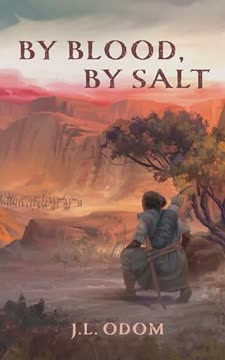
By Blood, by Salt is a sweeping, character-driven epic that interrogates the nature of power, identity, and survival in a world riven by prejudice and violence. At its heart is the story of Azetla, a man forced to navigate the treacherous terrain between oppressor and oppressed, tool and agent, scapegoat and leader. The novel's world is meticulously constructed, its social hierarchies and rituals both alien and achingly familiar. Through the lens of the Black Wren battalion and its unlikely allies, Odom explores the ways in which the marginalized are both used and erased by those in power, and the psychological toll of living on the edge of survival. The Sahr, as both devil and mirror, forces the characters—and the reader—to confront the limits of empathy, the dangers of dehumanization, and the possibility of forging new bonds in the midst of old enmities. The novel's use of language, ritual, and shifting perspectives creates a rich tapestry of meaning, inviting readers to question the stories we tell about ourselves and others, and the cost of clinging to or rejecting the roles assigned to us. Ultimately, By Blood, by Salt is a meditation on endurance, the search for meaning in the face of erasure, and the hope that even those named "nothing" can shape the world in ways both subtle and profound.
Last updated:
Review Summary
By Blood, by Salt won the SPFBOX competition, earning widespread praise for its literary prose, rich worldbuilding, and complex characters. Set in a Middle Eastern-inspired desert world, it follows Azetla, a debt soldier facing systemic discrimination who navigates military life and political intrigue. Reviewers consistently praised J.L. Odom's debut writing quality, comparing her to established authors like Robin Hobb and Josiah Bancroft. The book emphasizes cultural depth, religious tensions, and themes of racism over traditional fantasy action. While some found the pacing slow and struggled with emotional engagement, most celebrated its thoughtful, character-driven approach and subtle storytelling.





