Plot Summary
Two Women, Two Eras
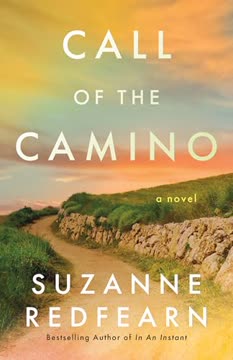
In 1997, Isabelle, a spirited Andorran teenager, is thrust into crisis when a family feud over a mountain's future turns deadly. In 2024, Reina, a New York copyeditor with a passion for food and a longing for meaning, seizes a chance to write about the Camino de Santiago. Both women, separated by decades, are drawn to the ancient pilgrimage for reasons of escape, hope, and self-discovery. Their stories, told in alternating timelines, set the stage for a narrative about identity, belonging, and the transformative power of walking the Way.
The Call to Walk
Isabelle flees her boarding school after learning her vote could tip the balance in a bitter land dispute, putting her life in danger. Her only hope is to disappear among the pilgrims on the Camino, trusting in the trail's reputation for providing refuge. Meanwhile, Reina, desperate for a break in her stagnant career and to help her struggling aunt, volunteers to cover the Camino's food for a travel magazine. A twist of fate—her rival's lost passport—lands her the assignment, and she sets out, both terrified and exhilarated, to walk in her late father's footsteps.
Fleeing Home, Chasing Dreams
Isabelle's journey is one of survival. Hungry, alone, and hunted, she relies on the kindness of strangers and the lessons of her mother to navigate the perils of the trail. The Camino, with its ancient traditions and promise of forgiveness, becomes her sanctuary. For Reina, the Camino is a chance to prove herself as a writer and to connect with the memory of her father, who once walked the same path. Both women are propelled by longing—Isabelle for safety and freedom, Reina for meaning and connection.
The Camino Beckons
Both women begin their pilgrimages in St. Jean Pied de Port, France, facing the daunting climb over the Pyrenees. Isabelle, under an assumed name, joins a ragtag group of international pilgrims, finding unexpected camaraderie. Reina, ill-prepared and physically untested, quickly learns the Camino's hardships: blisters, exhaustion, and the humbling realization that the journey is far more difficult than anticipated. Yet, the trail's beauty and the warmth of fellow travelers kindle hope in both.
First Steps, First Trials
The physical demands of the Camino test both women. Isabelle's resourcefulness and mountain upbringing help her endure, while Reina's struggles are eased by the support of Ted and Ned, two Canadian brothers, and a motley crew of pilgrims. The trail's rhythm—walk, eat, rest, repeat—begins to strip away their defenses. Along the way, both women encounter moments of grace: a shared meal, a helping hand, a song that lifts weary spirits. The Camino's promise that "the Way provides" proves true.
Unexpected Companions
Isabelle's group grows to include Jen, a recently divorced teacher; Joe, a Camino enthusiast; and David, a charming American. As they walk, bonds deepen, secrets are shared, and the Camino's magic works on them all. Reina's rivalry with Matt, her office nemesis, intensifies when he catches up on the trail, but their competition is tempered by shared challenges and the growing sense that the Camino is changing them both. Friendships, flirtations, and Camino "romances" blossom, revealing the trail's power to unite strangers.
The Burden of the Past
As the days pass, both women are forced to confront their histories. Isabelle mourns the loss of her friends and the innocence of her home, haunted by the violence that drove her away. Reina, carrying the grief of her father's death and the weight of family secrets, finds herself questioning her relationship with John, her steady but uninspiring boyfriend. The Camino, with its endless hours of walking, becomes a crucible for reflection, regret, and, ultimately, acceptance.
Love and Loss on the Trail
Isabelle and Peter, a gentle American photographer, fall in love amid the hardships of the trail. Their connection is immediate and profound, but Isabelle's fugitive status and the dangers that follow her cast a shadow over their happiness. Reina, meanwhile, is forced to reevaluate her engagement to John as she grows closer to her Camino companions, especially Matt, whose hidden depths and acts of kindness challenge her assumptions. Both women must decide what they are willing to risk for love.
Rivalries and Revelations
Reina's rivalry with Matt reaches a fever pitch as they vie for the coveted magazine feature. Pranks, betrayals, and moments of unexpected vulnerability mark their journey. Yet, as they walk together, their animosity gives way to mutual respect and, eventually, something more. Isabelle, facing betrayal and violence, must rely on her wits and the support of her friends to survive. Both women learn that the Camino is as much about inner transformation as it is about reaching Santiago.
The Meseta's Lessons
The endless plains of the Meseta test the pilgrims' resolve. Days blur into one another, and the physical and emotional toll mounts. For Isabelle, the isolation brings clarity about her past and the sacrifices she must make for her family's safety. For Reina, the monotony becomes a mirror, forcing her to confront the truth about her relationship with John and her own desires. The Meseta becomes a place of reckoning, where both women shed old identities and prepare for what lies ahead.
Crossroads of the Heart
As the journey nears its end, both women face pivotal choices. Isabelle, gravely ill and hunted, must decide whether to reunite with Peter or let him go for his own good. Reina, after a near-death experience and a profound act of kindness from Matt, realizes she cannot marry John and must forge her own path. The Camino's final stages are marked by farewells, reconciliations, and the bittersweet knowledge that the journey has changed them forever.
The Power of Kindness
Acts of generosity and compassion abound. Isabelle is saved by strangers and friends, her life a testament to the Camino's spirit of mutual aid. Reina discovers her long-lost uncle, David, living as a hermit and guardian of a pilgrim sanctuary, and learns the true story of her parents' love and sacrifice. Both women are reminded that kindness, even in the smallest acts, can alter destinies and heal old wounds.
Truths Unveiled
The mysteries of the past come to light. Isabelle's true heritage, the fate of her family, and the cost of her choices are revealed. Reina learns she is Andorran, not Portuguese, and that her mother was the legendary "Billy Goat" of the Camino. The stories of both women converge in a tapestry of love, loss, and the enduring quest for belonging. Forgiveness—of self and others—emerges as the ultimate lesson of the Way.
The Final Ascent
The approach to Santiago is both triumphant and melancholic. The crowds, the rituals, and the final embrace of Saint James mark the end of a physical journey and the beginning of a new chapter. Isabelle, having sacrificed everything for her family, finds a measure of peace and the possibility of love. Reina, having let go of her old life, stands at the threshold of a future shaped by courage, authenticity, and the wisdom of the Way.
Endings and Beginnings
Both women return to the world transformed. Isabelle, now living under a new identity, finds solace in friendship, work, and the hope of reunion with Peter. Reina, having completed the Camino and reconciled with her family, chooses to stay in Europe, pursue her own dreams, and continue the work her parents began. The story ends with the promise that the Camino's lessons—resilience, compassion, and the courage to choose one's own path—will guide them always.
Wisdom of the Way
The narrative closes with the creation of "Wisdom of the Way," a guidebook and digital project that captures the practical, mystical, and communal spirit of the Camino. Both women, in their own ways, become keepers of the trail's wisdom, ensuring that the lessons of the Way endure for future pilgrims. The Camino, ever ancient and ever new, continues to call, offering each who walks it the chance to become more than they were.
Characters
Isabelle Vidal
Isabelle is a seventeen-year-old Andorran girl whose life is upended by a deadly feud over her village's mountain. Intelligent, resourceful, and fiercely loyal, she flees home to protect her family, blending into the stream of pilgrims on the Camino. Isabelle's journey is one of survival, self-sacrifice, and awakening. Her relationships—with her best friend Gemma, her gentle lover Peter, and her fractured family—reveal a young woman forced to grow up too soon. Psychologically, Isabelle is marked by trauma, guilt, and longing, but also by resilience and hope. Her development is a testament to the power of kindness, the pain of exile, and the possibility of redemption.
Reina Watkins
Reina is a twenty-something New Yorker, orphaned young and raised by her aunt. Driven, witty, and self-deprecating, she longs for purpose and connection. The Camino offers her a chance to step out of her comfort zone, confront her grief, and discover her true self. Reina's relationships—with her boyfriend John, her rival-turned-ally Matt, and her found family of pilgrims—mirror her internal journey from self-doubt to self-acceptance. Her psychological arc is one of letting go: of old wounds, of others' expectations, and of the fear of not being enough. By the end, Reina claims her own story, embracing love, risk, and the wisdom of the Way.
Peter Watkins
Peter is an American photographer walking the Camino with his brother David. Sensitive, patient, and quietly brave, he becomes Isabelle's confidant and champion. Their romance, forged in adversity, is marked by tenderness and mutual respect. Peter's own journey is one of stepping into responsibility, facing danger for love, and learning to let go. His psychological depth lies in his empathy and his willingness to risk his own safety for others. Peter's legacy endures through the guidebook project and his impact on both Isabelle and Reina.
Matt Calhoun
Matt is Reina's office nemesis, a charming but competitive journalist with hidden depths. Initially portrayed as a self-serving antagonist, Matt's true character emerges through acts of kindness, vulnerability, and sacrifice—most notably, saving Reina's life. His relationship with Reina evolves from rivalry to partnership to romance, challenging both to grow. Psychologically, Matt is driven by loyalty to his family, a need to prove himself, and a capacity for selfless action. His arc is one of redemption, as he moves from ambition to authenticity.
Ted and Ned
Ted and Ned, Canadian siblings, provide comic relief, wisdom, and steadfast support to Reina and the group. Ted, the refined and philosophical older brother, acts as a mentor and "Camino dad," while Ned, struggling with his health and self-image, embodies perseverance and transformation. Their relationship is a model of unconditional love and the healing power of shared struggle. Psychologically, they represent the importance of community, humor, and the willingness to change.
Gemma
Gemma is Isabelle's childhood friend, privileged yet fiercely loyal. She defies her family's expectations to support Isabelle, ultimately saving her life. Gemma's presence is a reminder of the enduring power of friendship and the importance of chosen family. Her psychological role is that of the steadfast ally, offering both practical help and emotional grounding.
Uncle David
David, Reina's long-lost uncle, is a former wanderer who finds purpose as the guardian of a pilgrim sanctuary. Haunted by guilt over past losses, he dedicates his life to serving others on the Camino. His wisdom, humility, and generosity make him a spiritual guide for Reina and others. Psychologically, David embodies the themes of forgiveness, atonement, and the search for meaning beyond personal sorrow.
John
John is Reina's boyfriend, a kind and reliable man who represents safety and tradition. His inability to adapt to Reina's changing needs and his rigid expectations ultimately lead to their breakup. Psychologically, John is a foil to Reina's growth—a good man, but not the right partner for her evolving self.
Jen and Joe
Jen, a recently divorced teacher, and Joe, a Camino enthusiast, are part of Isabelle's core group. Jen's journey from heartbreak to hope, and Joe's role as "Cupid of the Camino," giving away heart stones, reflect the trail's power to heal and connect. Their stories parallel and support Isabelle's, offering models of resilience and the importance of community.
Nicole and Cami
Nicole, a glamorous and pragmatic walker, and Cami, a searching Australian, represent the diversity of Camino experiences. Their relationships—with Matt and Tuck, respectively—highlight the transient, transformative nature of trail romances and the choices each pilgrim must make about what to carry forward.
Plot Devices
Dual Timelines and Mirrored Journeys
The novel's structure alternates between Isabelle's 1997 flight and Reina's 2024 pilgrimage, using their mirrored experiences to explore themes of identity, legacy, and transformation. This device allows the reader to see how the past shapes the present, and how the Camino serves as a crucible for both women. The gradual revelation of family secrets, the convergence of storylines, and the ultimate inheritance of "Wisdom of the Way" create a tapestry of interconnected lives.
The Camino as Character and Catalyst
The Camino de Santiago is more than a setting; it is an active force in the narrative. Its traditions, hardships, and community shape the characters' arcs, offering both sanctuary and challenge. The motif of "the Camino provides" recurs, reinforcing the idea that the journey gives each pilgrim what they need, though not always what they expect. The physical markers—scallop shells, heart stones, distance posts—serve as symbols of progress, hope, and the burdens left behind.
Letters, Journals, and Photographs
The use of journals (Isabelle's, Peter's, Reina's father's), letters, and photographs provides a tangible link between generations. These artifacts serve as plot devices for uncovering secrets, deepening character, and driving the narrative forward. They also reinforce the theme of storytelling as a means of survival, connection, and legacy.
Rivalry, Sabotage, and Redemption
The rivalry between Reina and Matt, marked by pranks, sabotage, and one-upmanship, is a central plot device. It provides both comic relief and dramatic tension, ultimately serving as a vehicle for character development and the blossoming of romance. The device of misunderstanding and eventual revelation (e.g., the truth about Karen's articles) allows for themes of forgiveness and the complexity of human motivation.
Foreshadowing and Symbolism
The narrative employs foreshadowing through dreams, omens (heart stones, storks), and repeated phrases ("the Camino provides," "ultreia"). Symbolic acts—leaving stones at the iron cross, sharing food, tending blisters—carry emotional weight and signal character growth. The motif of walking as both literal and metaphorical progress underscores the story's central message: the journey is the destination.
Analysis
"Call of the Camino" is a luminous exploration of pilgrimage as both an outer and inner journey. Through the intertwined stories of Isabelle and Reina, Suzanne Redfearn crafts a narrative that is at once a gripping adventure, a meditation on loss and belonging, and a celebration of the human capacity for resilience and renewal. The Camino de Santiago, with its thousand-year history, becomes a metaphor for life's unpredictability, its hardships, and its unexpected gifts. The novel's dual timelines allow for a rich examination of generational trauma, the inheritance of both wounds and wisdom, and the ways in which the past shapes the present. At its heart, the book is about the courage to choose one's own path, the necessity of letting go, and the transformative power of kindness—both given and received. Redfearn's characters are deeply human, flawed, and lovable, and their journeys remind us that while we may walk alone, we are never truly solitary. The Camino's greatest lesson, echoed in every step, is that the way forward is found not in certainty, but in the willingness to begin, to risk, and to trust that the path will provide.
Last updated:
Review Summary
Call of the Camino follows two women walking Spain's Camino de Santiago a generation apart—Isabelle in the 1990s and Reina in present day. Readers praised the vivid descriptions of the pilgrimage, authentic portrayal of camaraderie among pilgrims, and compelling dual timeline structure. Most loved the character development and emotional depth, with many inspired to walk the Camino themselves. Some found the alternating timelines occasionally disjointed or certain plot elements unnecessary. Overall, reviewers appreciated Redfearn's firsthand knowledge of the trail and her ability to capture its transformative, spiritual nature.