Plot Summary
Genetic Temptations and Tragedy
In a near-future Mumbai, a young couple debates illegal genetic editing for their unborn child, torn between hope for a better life and fear of playing God. Their decision is interrupted by a violent police raid, resulting in the wife's tragic death. This opening sets the stage for a world where gene editing is both miracle and menace, and where the consequences of tampering with life's code are immediate and devastating. The emotional cost of progress is laid bare, foreshadowing the ethical dilemmas and personal dilemmas that will haunt the story's protagonist and the society he inhabits.
The World Remade by Genes
Kenneth Durand, Interpol's lead genetic crime analyst, reflects on a world transformed by synthetic biology. Nations rise and fall based on their embrace of gene editing, automation, and biofacturing. Singapore becomes the new global tech capital, while the US lags behind. The narrative explores the social upheaval, economic displacement, and moral confusion wrought by these advances. Durand's own family history—marked by loss and adaptation—mirrors the broader generational chasms and the relentless march of technological change, setting the tone for a story where identity, power, and survival are all up for grabs.
Family, Ethics, and Secrets
Durand's home life is a microcosm of the world's genetic dilemmas. His daughter, Mia, was edited to cure blindness, raising questions about the morality of gene editing. Conversations with his wife and child reveal the deep anxieties and hopes that come with new technology. The family's love is genuine, but their security is fragile. Durand's guilt over his role in a fatal raid, and his daughter's innocent questions about her own origins, highlight the emotional complexity of living in a world where the boundaries of nature and nurture are blurred.
Interpol's Genetic Crime War
At Interpol's Singapore headquarters, Durand and his colleagues battle the rise of genetic crime. The Huli jing, a shadowy cartel, sits at the center of a web connecting human trafficking, black market gene editing, and data theft. The organization's leader, Marcus Wyckes, is a ghost—constantly changing, always one step ahead. The team's efforts are complicated by political realities, ethical ambiguities, and the sheer scale of the problem. The introduction of Inspector Marcotte, herself a survivor of trafficking, brings urgency and personal stakes to the fight.
The Hit and the Fall
Durand's life unravels when he is targeted by the Huli jing. Ambushed in a crowded Singapore street, he is injected with a mysterious agent and collapses. He awakens weeks later in a hospital, unrecognizable even to himself. His DNA, fingerprints, and appearance have all been altered to match Marcus Wyckes. Framed for crimes he did not commit, Durand is hunted by the authorities and abandoned by his own colleagues. The horror of losing one's identity—body, face, and even legal existence—becomes the story's central nightmare.
Awakening in a Stranger's Skin
Durand's struggle to prove who he is is met with disbelief and suspicion. His friends and family do not recognize him; his own reflection is alien. The psychological torment of being trapped in another's body is compounded by the appearance of gang tattoos that surface and fade with his emotions. The world sees him as a monster, and he begins to doubt his own sanity. The chapter explores the terror of losing not just one's name, but the very markers of selfhood.
Identity on Trial
Medical and law enforcement experts debate the possibility of live genetic editing. Durand's case is dismissed as psychosis or an elaborate ruse. The science says such a transformation is impossible, yet the evidence is undeniable. The narrative delves into the technical and philosophical barriers to changing a living person's DNA, and the implications for law, order, and personal responsibility. Durand's isolation deepens as he is treated as both a criminal and a medical anomaly.
The Mirror and the Madness
Durand's psychological state deteriorates as he is forced to confront the reality of his transformation. The appearance of gang tattoos, the reactions of others, and the impossibility of escape drive him to the brink of madness. The narrative uses the motif of the mirror—literal and metaphorical—to explore themes of self-recognition, alienation, and the fragility of identity. The chapter is a harrowing descent into the loss of self, punctuated by moments of rage and despair.
Framed and Hunted
A staged escape from police custody leaves Durand framed for the murder of officers and on the run in a city blanketed with surveillance. Every camera, every bystander, every algorithm is against him. The Huli jing's reach is total, and Durand is forced to flee into the underbelly of Singapore. The chapter is a tense, kinetic chase, but also a meditation on the impossibility of privacy and the weaponization of identity in a hyperconnected world.
Escape into the Underworld
Durand finds refuge among the city's outcasts—junkies, traffickers, and biohackers. The drug printing markets and underground tunnels are a world apart from the gleaming towers above. Here, identity is fluid, and survival depends on adaptability. Durand's encounters with criminals and the desperate reveal the human cost of technological progress. He is forced to fight for his life, discovering new strengths and new depths of desperation.
The Fugitive's Descent
Durand's journey through the underworld is marked by violence and betrayal. He is forced to kill to survive, and the experience changes him. He acquires new allies—some motivated by greed, others by curiosity or shared enmity with the Huli jing. The chapter explores the moral compromises required to survive in a world where the rules have changed, and the line between victim and perpetrator is blurred.
Allies Among the Outcasts
Durand's search for a way to reverse his transformation leads him to a network of biohackers and black market geneticists. He learns that the technology used on him is real—and potentially reversible. The narrative introduces new characters with their own motives and traumas, and explores the economics and ethics of the underground gene editing market. Durand's hope is rekindled, but the path forward is fraught with danger and uncertainty.
The Cartel's Deadly Reach
The Huli jing's enforcer, Otto—the so-called Angel of Death—demonstrates the cartel's willingness to kill anyone who threatens their secrets. The narrative shifts to the cartel's inner workings, revealing a world of shifting identities, ruthless ambition, and technological mastery. Otto's inhuman nature and the cartel's use of mirror life technology raise the stakes, making clear that Durand is up against forces beyond ordinary human evil.
The Fox Spirit's Empire
The story delves into the origins and philosophy of the Huli jing. Wyckes, the cartel's leader, is revealed as a master of transformation—both literal and figurative. Otto, his right hand, is a product of mirror life, designed to survive any apocalypse. The cartel's operations span continents and markets, trafficking not just in genes but in the very concept of identity. The chapter explores the allure and horror of a world where anyone can become anyone, and where the self is a commodity.
Home, Lost and Found
Durand risks everything to return to his home and see his family. The encounter is heartbreaking—his wife and daughter do not recognize him, and he cannot reveal the truth without endangering them. The pain of being a stranger in one's own life is acute. The chapter is a meditation on love, loss, and the meaning of home in a world where the body is no longer a reliable vessel for the self.
The Search for Self
With the help of informants and biohackers, Durand learns that reversing his transformation is possible—but only with access to his original DNA and the right expertise. The quest takes him across borders, through smuggler tunnels and refugee camps, and into the heart of Southeast Asia's genetic underworld. The journey is both physical and existential, as Durand grapples with what it means to be himself.
Crossing Borders, Crossing Lines
Durand's journey north is marked by encounters with refugees, traffickers, and the desperate. The narrative paints a vivid picture of a world in flux, where borders are porous and identities are provisional. Durand's interactions with fellow travelers—some kind, some predatory—highlight the universality of the search for safety and belonging. The chapter is a testament to resilience, but also a reminder of the human cost of technological and political upheaval.
The Biohacker's Bargain
Durand strikes a deal with a biohacker and a genetic engineer, Frey, to attempt a reversal of his transformation. The alliance is uneasy, built on mutual need and mistrust. The narrative explores the technical and ethical challenges of live genetic editing, and the dangers of sharing such technology with criminal organizations. The chapter is a tense negotiation, with the stakes nothing less than the future of identity itself.
The Long Road North
Durand and Frey are smuggled into Myanmar by Shan resistance fighters. The journey is perilous, marked by drone attacks, landmines, and the ever-present threat of betrayal. The resistance is fighting not just the central government, but the encroachment of the Huli jing and their technology. The chapter is a harrowing trek through a landscape scarred by war and hope, and a meditation on the costs of resistance.
Traffickers and Tides
The journey through the jungle culminates in a dangerous river crossing, under fire from autonomous drones and patrols. Allies are lost, and the survivors are forced to confront the reality of their situation. The narrative is both an action set piece and a reflection on the randomness of survival and the bonds forged in adversity.
The Angel of Death
As Durand and Frey reach the heart of the Huli jing's empire, Otto turns on his creator, Wyckes, in a final act of vengeance. The cartel's secrets are exposed, and its leaders are destroyed—not by law or justice, but by the very technology they sought to control. The chapter is a reckoning, both personal and systemic, as the old order collapses and a new, uncertain world emerges.
The Price of Change
Durand undergoes the reversal procedure, aided by Hanif and Frey. The process is painful and uncertain, but ultimately successful. Frey chooses not to change himself, instead dedicating his skills to healing the children maimed by the Huli jing's experiments. The chapter is a meditation on the limits of science, the meaning of self, and the possibility of redemption.
The Jungle and the River
Durand recovers in a monastery, surrounded by survivors and orphans. The narrative slows, allowing for reflection and healing. The bonds formed in adversity endure, and the possibility of a new life—if not a return to the old one—emerges. The chapter is a quiet coda to the story's violence, emphasizing the resilience of the human spirit.
The Monastery's Children
Frey and Hanif use the change agent to heal the children disfigured by the Huli jing's experiments. The monastery becomes a place of hope and renewal, a testament to the possibility of using technology for good. Durand's reunion with Thet, and his mourning for lost friends, underscore the story's themes of loss, memory, and the search for meaning.
The Final Transformation
Durand, restored to his original body, returns to Singapore and is reunited with his wife and daughter. The joy of recognition is tempered by the knowledge of all that has been lost—and all that has changed. The world is different, and so is he. The chapter is a bittersweet homecoming, a celebration of survival and a meditation on the costs of transformation.
Return and Reckoning
The aftermath of the Huli jing's fall is marked by uncertainty. The technology for live genetic editing is now public, and the world must grapple with its implications. Law enforcement, politics, and society are all thrown into turmoil. Durand's identity is accepted, but the question of who anyone really is remains open. The chapter is a reckoning with the story's central questions, and a warning about the future.
The Post-Identity World
In the story's final moments, Otto—now in a new body—walks the streets of London, his tattoos fading at will. The world has entered the post-identity era, where anyone can become anyone, and the foundations of law, morality, and selfhood are up for grabs. The narrative ends on a note of ambiguity and unease, as the promise and peril of the change agent technology become the new reality.
Characters
Kenneth Durand
Kenneth Durand is the protagonist, a brilliant geospatial analyst for Interpol's Genetic Crime Division. A loving husband and father, he is driven by a deep sense of responsibility and guilt—haunted by the unintended consequences of his work. When he is forcibly transformed into the body and identity of Marcus Wyckes, Durand's psychological journey becomes a struggle to reclaim his selfhood and protect his family. His relationships—with his wife, daughter, colleagues, and unlikely allies—are marked by empathy, self-doubt, and a relentless drive to do what is right, even as the definition of "right" becomes ever more elusive. Durand's arc is one of loss, adaptation, and ultimately, a hard-won return to self, though forever changed by his ordeal.
Marcus Wyckes
Wyckes is the enigmatic leader of the Huli jing, a cartel that has weaponized genetic editing and identity itself. Charismatic, cunning, and utterly amoral, he is both a product and a shaper of the post-identity world. Wyckes's philosophy is one of constant change—he believes survival and power come from adaptability, not stability. His relationship with Otto is complex, blending paternal pride with cold manipulation. Wyckes's ultimate downfall is his inability to control the forces he unleashes, and his legacy is a world forever destabilized by the technology he helped create.
Otto (The Angel of Death)
Otto is Wyckes's right hand and the Huli jing's most feared enforcer. Created as part of the False Apollo project, Otto is a being of "mirror life"—biologically incompatible with the rest of humanity, immune to most toxins, and exuding an aura of existential dread. Psychologically, Otto is both childlike and monstrous, longing for belonging but doomed to isolation. His loyalty to Wyckes is ultimately betrayed by the revelation that he is alone, his "people" destroyed. Otto's final act is one of vengeance and self-assertion, killing his creator and walking into the post-identity world as its most dangerous inhabitant.
Bryan Frey
Frey is a talented but undisciplined genetic engineer, initially motivated by self-interest and a desire to cure his own achondroplasia. His alliance with Durand is pragmatic, but over time he is drawn into the moral complexities of their quest. Frey's journey is one of reluctant growth—he is forced to confront the consequences of his work and the suffering of others. In the end, he chooses not to transform himself, instead dedicating his skills to healing the children maimed by the Huli jing. Frey embodies the tension between self-interest and altruism, and the possibility of redemption.
Bo Win
Bo Win is the commander of the Shan resistance fighters who help Durand and Frey cross into Myanmar. Fiercely competent, principled, and respected by her people, she is a rare figure of stability and honor in a chaotic world. Her relationship with Durand is marked by mutual respect and unspoken connection. Bo Win's ultimate sacrifice in the assault on the Huli jing labs underscores the cost of resistance and the possibility of heroism in the face of overwhelming odds.
Thet Ko Lin
Thet is Bo Win's brother and the group's interpreter. Warm, curious, and adaptable, he serves as a bridge between the protagonists and the Shan resistance. Thet's loyalty and humor provide moments of levity and connection amid the story's darkness. His survival and continued work with the resistance are a testament to the endurance of hope and the importance of human connection.
Inspector Aiyana Marcotte
Marcotte is an Interpol inspector and former trafficking victim, whose personal history fuels her commitment to justice. She is intelligent, resourceful, and unyielding in her pursuit of the Huli jing. Marcotte's encounters with Otto and the horrors of the cartel test her resolve, but she remains a voice of conscience and determination. Her partnership with Durand and the other investigators is marked by mutual respect and shared trauma.
Hanif
Hanif is a genetic counselor and technician in the Huli jing labs, trapped by circumstance and fear. Initially complicit in the cartel's crimes, he ultimately aids Durand and Frey in their escape and the reversal of their transformations. Hanif's arc is one of redemption, as he uses his skills to heal rather than harm, and seeks forgiveness for his past.
Claire Belanger
Belanger is the head of Interpol's Genetic Crime Division, a former biochemist and survivor of a bioweapon attack. Calm, intense, and deeply principled, she serves as a mentor to Durand and a stabilizing force in the chaos of the investigation. Her personal losses inform her commitment to justice and her empathy for those caught in the crossfire.
Michael Yi Ji-chang
Yi is Durand's colleague and friend, a detective seconded from the Korean National Police. Driven by a sense of Han—a deep, generational resentment and desire for justice—Yi is relentless in his search for Durand and the truth. His loyalty, humor, and determination make him a vital ally and a symbol of the enduring bonds of friendship.
Plot Devices
Live Genetic Editing as Identity Erasure
The central plot device is the "change agent"—a technology capable of rewriting the DNA of living adults, erasing and recreating identity at will. This device serves as both a literal threat (used to frame and destroy enemies) and a metaphor for the instability of self in a world of rapid change. The narrative structure uses this device to explore themes of selfhood, accountability, and the commodification of the body. Foreshadowing is employed through early discussions of gene editing's potential and the appearance of the Huli jing's tattoos, which signal deeper transformations to come.
The Mirror Motif
Mirrors and reflections recur throughout the story, symbolizing the protagonist's struggle to recognize himself and the broader theme of identity as performance. The motif is reinforced by the existence of mirror life (Otto), the shifting faces of the Huli jing, and the proliferation of celebrity clones. The narrative uses doppelgängers and mistaken identity to heighten tension and explore the psychological impact of transformation.
Surveillance and the Weaponization of Data
The story's world is saturated with surveillance—cameras, drones, biometric scanners, and data mining. The Huli jing exploit this environment, using data to frame, hunt, and control. The plot leverages the tension between visibility and invisibility, trust and suspicion, and the impossibility of escape in a world where every action is recorded and analyzed.
The Hero's Journey Reversed
Durand's arc is a reversal of the classic hero's journey. Instead of seeking transformation, he seeks restoration—fighting to reclaim his original self in a world that values change above all. The narrative structure follows his descent into the underworld, his trials and alliances, and his eventual return, forever altered by the journey.
Ethical Dilemmas and Moral Ambiguity
The story is driven by ethical dilemmas—should one use forbidden technology to save oneself? Is it right to collaborate with criminals for a greater good? The narrative refuses easy answers, instead presenting a world where every choice has costs, and where the line between victim and perpetrator is blurred. The use of multiple perspectives and shifting alliances reinforces the story's moral complexity.
Analysis
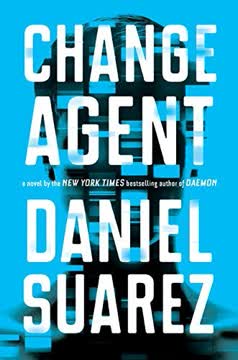
Change Agent is a prescient, unsettling exploration of a world where the boundaries of identity, morality, and reality are dissolved by technology. Daniel Suarez uses the device of live genetic editing not just as a speculative tool, but as a lens through which to examine the deepest anxieties of our age: the loss of self, the commodification of the body, and the erosion of accountability in a world of constant surveillance and transformation. The novel's emotional arc is one of loss, adaptation, and hard-won restoration, but it refuses the comfort of a simple return to the status quo. Instead, it leaves readers with the unsettling realization that the post-identity world is already upon us, and that the questions it raises—about who we are, what we owe to one another, and how we define justice—are more urgent than ever. The story's lessons are clear: technology cannot be uninvented, and the only hope lies in the resilience of the human spirit, the bonds of love and loyalty, and the willingness to confront change with both humility and courage.
Last updated:
Review Summary
Change Agent by Daniel Suarez receives mixed ratings averaging 3.98/5. Readers praise the innovative biopunk premise exploring illegal genetic engineering in 2045, particularly the protagonist's DNA being altered into a criminal's identity. Many appreciate the thought-provoking biotech concepts and Asian settings, comparing it favorably to Michael Crichton's work. However, critics note repetitive plotting, weak character development, and derivative thriller elements reminiscent of Face/Off and Minority Report. The pacing issues and excessive technobabble frustrated some, though others found it engaging and terrifyingly plausible. Overall, reviewers acknowledge fascinating ideas but wish for better execution.