Plot Summary
Legacy in the Snow
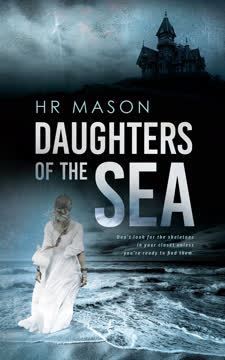
In 1621, Helga flees the witch-hunting hysteria of Vardø, Norway, her mother Else's final words echoing in her mind: "Continue our legacy." Gifted with inexplicable powers, Helga escapes with a rune necklace and a family book, the only remnants of a lineage marked by both blessing and curse. The sea's call is in her blood, and her mother's sacrifice ensures her survival. This act of love and desperation sets in motion a chain of women, each inheriting the gift and the danger that comes with it. The legacy is one of power, secrecy, and the unending struggle to survive in a world that fears what it cannot understand.
New Beginnings, Old Shadows
Runa Brandon, fragile from an abusive past, moves with her mother Asta to Departure Cove, Oregon, seeking a fresh start. The town, shrouded in secrets, is both a new beginning and a return to roots Asta would rather forget. Runa's dreams and the ocean's pull hint at a deeper connection to the place. As she opens her boutique, strange sensations and visions begin to haunt her, and a chance encounter with the enigmatic Chase Everwine stirs both attraction and unease. The past, it seems, is not so easily left behind, and the shadows of Departure Cove are waiting to reveal themselves.
Ancestral Whispers
Runa's life in Departure Cove is marked by unsettling dreams and physical sensations—tingling, electricity, and whispers in a language she doesn't understand. The Ansuz rune ring from her mother becomes a talisman, and the sea's voice grows louder. As Runa's boutique flourishes, she feels increasingly drawn to the mysterious Everwine family and their imposing manor. Her mother's warnings about the town and its people deepen the sense of foreboding. The whispers of her ancestors, both in dreams and in the waking world, urge her to uncover the truth of her bloodline and the power that lies dormant within her.
The House That Calls
Invited to a lavish party at Everwine Manor, Runa is swept into the world of the wealthy and secretive Everwine family. The house itself seems alive, its stained glass windows depicting a woman who looks just like her. The manor's grandeur is matched only by its oppressive atmosphere, and Runa's sense of belonging is tinged with fear. The Everwines' reactions to her are charged with recognition and hostility, especially from Camille, Chase's mother. The house calls to Runa, awakening memories and powers she cannot explain, and setting the stage for revelations that will upend everything she knows about herself.
Secrets Behind Glass
Runa's encounters with the manor's stained glass and portraits become increasingly surreal. She sees herself reflected in the art, and ghostly hands touch her when no one is near. The phrase "Du er i fare"—you are in danger—echoes in her mind, spoken by voices only she can hear. The house's third floor, sealed and forbidden, becomes an obsession. Runa's powers intensify, manifesting in small acts of elemental control. The past and present blur as she realizes the house is both a sanctuary and a prison, holding secrets that demand to be uncovered.
The Everwine Enigma
Runa's relationship with Chase deepens, but the Everwine family's history is a web of obsession, betrayal, and tragedy. Camille's hatred, Easton's predatory interest, and the town's whispers about the Everwines' power all point to a legacy of manipulation and control. Runa learns of Chase's lost wife, Freya, and the rumors of her mysterious disappearance. The Everwines' wealth and influence mask a rot at the core, and Runa is caught between love and the growing realization that she is a pawn in a much larger game.
Bloodlines and Betrayals
Asta's past with the Everwines is revealed: a love triangle, a lost father, and a legacy of violence. Runa discovers she is the product of a forbidden love, and that her mother's flight from Departure Cove was an act of protection. The family book, passed down through generations, surfaces, its pages filled with the stories of women who suffered and survived. Runa's own name is missing, a sign of her mother's attempt to shield her from the curse. The truth of her ancestry is both empowering and terrifying, and the betrayals of the past threaten to repeat themselves.
The Generation of Two
The family history reveals a recurring pattern: the "generation of two," twins born with immense power but destined for sacrifice. Runa's visions intensify, and she learns of her own twin, Freya, given up at birth and lost to her. The sisters' fates are intertwined, their powers magnified when together. The cost of such power is always loss—of love, of freedom, of life. The cycle of sacrifice is unbroken, and Runa must decide whether to embrace her destiny or fight to change it.
The Portrait's Warning
The portrait woman's warnings grow more urgent, urging Runa to "find her." The house's third floor becomes the focus of Runa's quest, as she is drawn to the locked rooms and the secrets they contain. The supernatural intensifies: objects move, voices call, and the line between the living and the dead blurs. Runa's powers reach their peak, and she realizes that the answers she seeks are hidden in the very place she fears most. The past demands justice, and the present teeters on the edge of disaster.
The Third Floor Prison
Runa breaks into the forbidden third floor and discovers Freya, her long-lost twin, alive but imprisoned for years. Freya's daughter, Alina, is revealed to be the product of an affair with Easton, Chase's father. The truth of the Everwine family's cruelty and the depth of their secrets is laid bare. Runa and Freya's reunion is both joyful and tragic, as the sisters confront the reality of their shared destiny. The house's curse is personified in the suffering of its women, and the only hope for salvation lies in their unity.
Sisters Divided, Sisters Found
The sisters' attempt to escape is met with violence. Easton, desperate to maintain control, threatens them with a gun. Asta arrives, and the truth of the family's history is finally spoken: Runa and Freya are twins, separated at birth by Asta's fear and desperation. The confrontation turns deadly—Chase is killed, Freya sacrifices herself to save Asta, and Easton falls to his death. The cycle of violence and sacrifice claims its final victims, but not before the sisters' bond is affirmed and the next generation—Alina—is saved.
The Curse Unleashed
The full force of the family's power is unleashed as Runa and Freya, the generation of two, join hands. Their combined magic is enough to break the Everwine curse, but the cost is Freya's life and Asta's sacrifice. Runa is left to pick up the pieces, grieving her mother and sister but determined to protect Alina. The house, once a place of imprisonment, becomes a sanctuary for the survivors. The curse is broken, but the scars remain, a testament to the price of power and the strength of love.
Sacrifice and Salvation
In the aftermath, Runa cares for Alina, adopting her as her own. The house, now hers by inheritance, is reclaimed as a place of healing. The family book is updated, the names of the lost and the saved inscribed for future generations. Runa's grief is tempered by the knowledge that she has fulfilled her ancestors' legacy, and that the cycle of sacrifice has finally ended. The power that once brought only pain is now a source of hope and protection.
The Book of Daughters
Runa delves into the family grimoire, reading the stories of the women who came before her. The book is both a record and a guide, filled with spells, recipes, and histories. Runa learns to embrace her magic, teaching Alina to do the same. The book's final pages are filled with their names, a promise that the legacy will continue, but on their own terms. The past is honored, the present is reclaimed, and the future is open.
Breaking the Cycle
Runa and Alina perform a ritual in the house's turret, the site of so much suffering. By naming and honoring the women of their line, they transform the space from a prison to a place of light. The oppressive energy lifts, and the house is finally at peace. The generational curse is broken, and the women's power is no longer a source of fear but of strength. The cycle of secrecy and sacrifice is ended, and a new era begins.
The House Reclaimed
Runa discovers that Everwine Manor was once Angelica House, built by her ancestor Brynja. The house's true history is reclaimed, and the field of angelica behind the rose garden becomes a symbol of healing and blessing. The house, once a site of pain, is now a home for Runa and Alina, a place where the legacy of the daughters of the sea can flourish. The past is integrated into the present, and the future is secured.
Return to Vardø
Runa and Alina travel to Vardø, Norway, to visit the Steilneset Memorial and honor the women who were lost to the witch trials. The journey is both a pilgrimage and a homecoming, as Runa connects with her ancestor Helga in a dream. The message is clear: the legacy is not about power, but about love and survival. Runa accepts her place as the daughter of the sea, vowing to teach Alina the true meaning of their inheritance. The story ends with hope, healing, and the promise that the greatest secrets are hidden in the most unlikely places.
Characters
Runa Brandon
Runa is the heart of the story—a sensitive, uncertain woman shaped by trauma and longing for belonging. Her journey from victim to empowered matriarch is marked by self-doubt, resilience, and a growing acceptance of her supernatural heritage. Runa's relationships—with her mother Asta, her twin Freya, and her niece Alina—define her, as does her fraught romance with Chase Everwine. Psychologically, Runa is torn between fear and the compulsion to uncover the truth, ultimately embracing her role as the latest in a long line of powerful women. Her development is a testament to the strength found in vulnerability and the healing power of love.
Asta Brandon
Asta is Runa's fiercely loving mother, a woman marked by loss, guilt, and the burden of knowledge. Her past with the Everwines is a source of pain and motivation, driving her to shield Runa from the family's curse. Asta's own gifts—visions, aura reading—are both a comfort and a curse, isolating her from others. Her greatest secret, the existence of Runa's twin Freya, is a wound that never heals. Asta's ultimate sacrifice is an act of redemption, ensuring her daughters' survival and breaking the cycle of suffering that has haunted their line.
Freya Brandon
Freya is Runa's identical twin, given up at birth and raised in privilege, only to become a prisoner in the Everwine manor. Her affair with Easton and the birth of her daughter Alina are both acts of rebellion and desperation. Freya's psychological complexity lies in her longing for love and her entrapment by those who would possess her. Her relationship with Runa is fraught with resentment and longing, but ultimately, the sisters' bond is unbreakable. Freya's sacrifice is the final act that allows the family curse to be broken, her life both a warning and a gift.
Chase Everwine
Chase is the enigmatic heir to the Everwine fortune, a man haunted by loss and driven by obsession. His love for Runa is genuine but tainted by his inability to let go of Freya, his first wife. Chase's psychological profile is one of repression, denial, and a desperate need for control. His complicity in Freya's imprisonment and his ultimate downfall are the result of generational trauma and the toxic legacy of his family. Chase is both victim and perpetrator, a tragic figure undone by the very secrets he tries to keep.
Easton Everwine
Easton is the embodiment of the Everwine curse—a man whose love is possessive, violent, and ultimately destructive. His obsession with Asta, manipulation of Freya, and abuse of power are driven by a deep-seated need for control and validation. Easton's psychological makeup is marked by narcissism, entitlement, and a capacity for violence. His actions set in motion the tragedies that befall the family, and his death is both a release and a reckoning. Easton is the shadow that haunts the women of the story, a symbol of the dangers of unchecked power.
Camille Everwine
Camille is the icy, controlling mother-in-law whose primary concern is the Everwine legacy. Her disdain for Runa and Asta is rooted in jealousy, classism, and a need to maintain appearances. Camille's psychological rigidity masks deep insecurity and a fear of losing her place in the family hierarchy. Her complicity in the family's secrets and her ultimate demise are the result of her refusal to adapt or empathize. Camille is both a product and a perpetuator of the Everwine curse.
Alina
Alina is Freya's daughter, born and raised in captivity on the third floor of Everwine Manor. Her existence is a testament to the resilience of the human spirit and the enduring power of love. Alina's psychological development is stunted by her isolation, but her bond with Runa offers a path to healing. As the next in the line of daughters of the sea, Alina represents the hope that the cycle of suffering can be broken and that the legacy can be transformed into a force for good.
Brynja
Brynja is the Norwegian ancestor whose story parallels Runa's—a woman of power, forced into marriage, and ultimately betrayed by those she trusted. Her life is marked by love, loss, and the struggle to maintain her identity in a hostile world. Brynja's psychological strength lies in her ability to endure and to pass on her knowledge through the family book. Her presence as the portrait woman and her guidance from beyond the grave are crucial to Runa's journey.
Helga
Helga is the matriarch whose escape from Vardø sets the entire saga in motion. Her powers, faith, and sacrifice are the foundation of the family's legacy. Helga's psychological profile is one of courage, adaptability, and a deep connection to the natural world. Her guidance, both in life and in dreams, is a source of strength for her descendants.
Tawney
Tawney is Asta's childhood friend and a spiritual mentor to Runa. Her own gifts—intuition, vision—make her both an ally and a mirror for the Brandon women. Tawney's role is to provide wisdom, support, and a link to the past. Her psychological insight and emotional intelligence are crucial in helping Runa navigate the dangers of her inheritance.
Plot Devices
Generational Legacy and the Family Grimoire
The central plot device is the inheritance of supernatural gifts passed down through generations of women, each adding her story to a family grimoire. The book serves as both a literal and symbolic record of survival, power, and sacrifice. It is a source of knowledge, a warning, and a guide, connecting past and present. The narrative structure alternates between historical vignettes and the present-day story, using the book as a bridge. Foreshadowing is achieved through dreams, visions, and the recurring motif of the "generation of two," hinting at the inevitable sacrifices to come.
The Haunted House as Character
The manor is more than a setting—it is a living entity, imbued with the memories, traumas, and magic of its inhabitants. Its architecture, especially the third floor and the turret, is used to symbolize both the allure and the danger of the family legacy. The house's secrets are revealed through supernatural phenomena—moving portraits, ghostly voices, and locked rooms—serving as both plot catalyst and metaphor for the hidden truths of the family.
Doppelgängers and Mirrors
The motif of doubles—Runa and Freya, the portrait woman, the stained glass—serves to explore themes of identity, loss, and the inescapability of the past. The use of mirrors and portraits as portals to the supernatural blurs the line between reality and vision, past and present. The revelation of Runa's twin is foreshadowed through these devices, culminating in the literal and figurative reunion of the sisters.
The Cycle of Sacrifice
The narrative is structured around the recurring theme that great power demands great sacrifice. Each generation's story is marked by loss—of life, love, or freedom. The "generation of two" is both a blessing and a curse, and the breaking of the cycle is the story's emotional climax. The device of sacrifice is used to heighten tension, drive character development, and ultimately deliver the story's message of hope and transformation.
Modern Gothic and Feminist Reclamation
The novel employs gothic tropes—haunted houses, family secrets, forbidden love—but subverts them by centering women's voices and experiences. The reclamation of the house, the book, and the family legacy is both a literal and symbolic act of empowerment. The narrative structure, with its interwoven timelines and multiple perspectives, allows for a nuanced exploration of trauma, resilience, and the possibility of healing.
Analysis
Daughters of the Sea is a sweeping, multi-generational tale that blends historical tragedy, supernatural mystery, and contemporary psychological drama. At its core, the novel is about the inheritance of both power and pain—how the traumas of the past echo through generations, and how women, so often silenced or sacrificed, find ways to survive, adapt, and ultimately reclaim their stories. The family grimoire is a powerful metaphor for the importance of memory, storytelling, and the transmission of wisdom. The haunted house, with its locked rooms and hidden histories, stands for the secrets we inherit and the courage required to confront them. The novel's feminist arc is clear: the cycle of suffering can only be broken when women unite, speak their truths, and refuse to be defined by the violence done to them. The final message is one of hope—magic is real, but its greatest form is love, and the most profound legacies are those built on compassion, resilience, and the refusal to let the past dictate the future.
Last updated:
Review Summary
Daughters of the Sea follows Runa Brandon as she relocates to Departure Cove and falls for Chase Everwine, only to discover her heritage as a descendant of women with magical powers. The novel weaves between past and present timelines, exploring Nordic mysticism and family secrets. Reviews average 4.19 stars, with readers praising the suspenseful plot and atmospheric setting. Common criticisms include underdeveloped characters, choppy writing, and a rushed ending. Many appreciated the mystery elements and couldn't put the book down, though some felt the execution lacked depth and immersive atmosphere.





