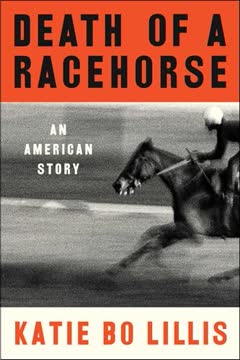
Key Takeaways
1. Bob Baffert: A Flawed Genius at Racing's Crossroads
“I think if you win at a certain [rate]—not too much—then you’re going to be considered… ‘a great horseman’ and all that,” Baffert complained to me. “I’ve never gotten that. [I get:] ‘Oh, he does well because he gets all the best horses.’ ”
From humble beginnings. Bob Baffert, a farm boy from Nogales, Arizona, rose to become one of Thoroughbred racing's most successful and recognizable trainers, winning a record-tying seven Kentucky Derbies and two Triple Crowns. His early career in quarter horse racing, marked by a single drug positive and a near-fatal fall, instilled in him a drive to be "the best at what you do." This ambition, coupled with an uncanny "eyes and gut" talent for spotting potential in overlooked horses, propelled him to the sport's pinnacle.
A polarizing figure. Despite his undeniable success, Baffert remained an outsider in the blue-blooded world of Thoroughbreds, often perceived as brash and cocky. His distinctive white hair and blue-tinted sunglasses became a trademark, but his outspoken personality and string of victories fueled persistent rumors of doping. He felt perpetually underestimated, believing that his achievements were attributed to "the best horses" rather than his horsemanship, a sentiment that would dog his entire career.
A complex character. Baffert is described as a "flawed genius," a "big picture guy" who is a savant with horses but "a little fuzzy on the details." He is fiercely loyal to his team and horses, yet his management style could be chaotic, leading to "sloppiness" in medication control. This blend of talent, ambition, and a perceived lack of accountability would ultimately make him a lightning rod for the industry's deeper problems.
2. Racing's Deep-Seated Medication Culture
“If I lost by that much,” he said, holding his thumb and index finger an inch apart, “and didn’t take advantage of whatever was legal, I wouldn’t be able to sleep.”
A historical reality. Drug use in horse racing is not new; it dates back to the 1890s with the invention of the hypodermic needle. Historically, drugs were used to both speed up and slow down horses for betting advantages. The industry has never been "clean," and the line between "therapeutics" and "performance enhancers" has always been blurred, leading to a culture where trainers constantly seek an edge within the bounds of what is detectable or explicitly prohibited.
The Lasix debate. Lasix, a diuretic used to prevent exercise-induced pulmonary hemorrhage (EIPH), became legal in the U.S. in the 1970s and is used by over 95% of starters. While effective for bleeding, its potential performance-enhancing effects (e.g., weight loss, reduced oxygen deficit) and its role in masking pain have made it racing's most controversial drug. The U.S. remains the only country to allow race-day Lasix, a policy that has weakened the breed, according to some critics.
Therapeutics vs. doping. The industry categorizes drugs into "controlled therapeutic substances" and "banned substances," but this distinction is often ambiguous. Many legal therapeutics, like clenbuterol (a bronchodilator with anabolic effects) or corticosteroids (anti-inflammatories), are routinely used, sometimes in ways that push ethical boundaries. The prevailing attitude has long been: if it's not explicitly disallowed or detectable, it's fair game, creating a "chemical warfare" environment.
3. The Absolute Insurer Rule: A Trainer's Burden
The rule, which has its origins in the early days of modern doping enforcement in the 1930s, stipulates that the trainer bears unequivocal responsibility for the animals in his care.
Unwavering accountability. The "absolute insurer rule" is a cornerstone of racing regulation, holding trainers solely responsible for any prohibited substance found in their horses, regardless of how it entered the system. This principle, while intended to ensure integrity, often leads to protracted legal battles and accusations of unfairness, as trainers are deemed "guilty until proven innocent."
Baffert's repeated challenges. Bob Baffert's career is punctuated by numerous positive tests, each met with fervent denials and alternative explanations.
- 2000 Morphine positive (Nautical Look): Baffert blamed poppy-seed bagels or contaminated feed, fighting the charge for five years before it was dismissed.
- 2020 Lidocaine positives (Gamine, Charlatan): He attributed them to a groom's pain patch or test barn contamination, with Arkansas ultimately allowing the wins.
- 2020 Betamethasone positive (Gamine): He cited a rule change and double hock injections, exceeding withdrawal guidelines.
The "why me?" lament. Baffert consistently felt targeted, believing his high-profile status made him a scapegoat for common industry issues. His explanations, while sometimes plausible (e.g., environmental contamination), often strained credibility, leading critics to view them as evasions rather than genuine mistakes. This cycle of positive tests, denials, and legal challenges eroded public trust and fueled the perception that he was treated differently due to his success.
4. The Tragic Reality of Horse Breakdowns
“You can villainize us and villainize this industry,” Antonucci said, “but you cannot fathom the failure you feel as a human that we are doing everything we can to steward the best for our horses and then something freaky happens."
A heartbreaking inevitability? Catastrophic breakdowns, where horses shatter fragile leg bones and must be euthanized, are a tragic reality of racing. While horsemen often attribute them to horses "taking a wrong step" or "freak accidents," post-mortem examinations reveal that up to 90% show signs of pre-existing damage. This disconnect fuels public outrage and challenges the industry's long-held belief that such deaths are unavoidable.
The Santa Anita crisis. In 2019, Santa Anita Park experienced a cluster of 42 fatalities in six months, drawing intense media scrutiny.
- Contributing factors: Heavy rainfall affecting track surface, potential overuse of corticosteroid joint injections, and pressure from track management to run horses.
- Industry response: Belinda Stronach, CEO of 1/ST (Santa Anita's owner), implemented strict new medication policies, including a Lasix ban and a 30-day stand-down for joint injections.
- Impact: These changes, particularly the joint injection restrictions, significantly reduced shattered ankle injuries, making Santa Anita one of the safest tracks.
Multifactorial causes. Breakdowns are complex, with no single cause. Factors like track conditions, training intensity, breeding practices, and medication use all play a role. The industry's initial resistance to acknowledging systemic issues, often dismissing concerns as "outsiders not understanding," exacerbated its public perception problem.
5. The Economic Engine Driving Horse Welfare
“When a horse has been that good to you, you don’t peddle her like some piece of meat,” Eddie Gregson, a California trainer, told turf writer William Nack at the time. “Everybody was shocked when he sold Lady’s Secret. You can’t sell a horse like that. It destroys your karma.”
Horses as "product." The Thoroughbred industry operates on a fundamental economic premise: horses are financial assets. Their value is determined by their ability to win races and, for colts, their potential as breeding stallions. This commercial imperative often clashes with an idealized view of horses as noble athletes or beloved companions. The sale of champion mare Lady's Secret in the 1980s, seen as disloyal by traditionalists, highlighted this shift.
Profit over purity. The pursuit of profit influences every aspect of the industry:
- Breeding: Focus on aesthetics and early speed for sales, potentially sacrificing durability.
- Sales: Intense "pinhooking" (buying young horses cheap to resell for profit) and pressure to keep yearlings blemish-free, sometimes at the expense of natural development.
- Training: Constant pressure to run horses to cover high upkeep costs and earn purse money, leading to the overuse of therapeutics or compounded drugs to keep horses on the track.
The "social license" dilemma. Racetracks, as gambling enterprises, prioritize full, competitive fields to maximize wagering revenue. This creates pressure on trainers to run horses, even if they are unsound or unprepared. The industry's reliance on horses for entertainment and profit raises a critical ethical question: should the standard of care for these animals be higher, divorced from financial incentives, akin to pets rather than livestock?
6. The Jockey Club's Crusade for Reform
Janney told Tinsley he didn’t want hot-walkers, grooms, and exercise boys. He wanted big names—what Janney called “big fish.”
A call to action. Stuart Janney III, scion of an old-money racing dynasty and chairman of the Jockey Club, grew increasingly frustrated by pervasive cheating and the sport's declining integrity. Witnessing suspicious wins and feeling compelled to congratulate trainers he believed were doping, Janney decided to act. In 2015, he commissioned 5 Stones Intelligence, a private firm, to investigate doping, specifically targeting "big fish" rather than low-level offenders.
The "big fish" mandate. This directive, later criticized as elitist, aimed to expose high-profile dopers who were perceived to be corrupting the sport. Janney believed that only by tackling prominent figures could racing regain credibility. The Jockey Club invested nearly $5 million in this covert operation, hoping to gather irrefutable evidence that state regulators and traditional testing methods had failed to uncover.
Federal intervention. The investigation, initially slow, gained traction when 5 Stones partnered with the FBI, leveraging an obscure connection to Russian organized crime. This collaboration ultimately led to the passage of the Horseracing Integrity and Safety Act (HISA) in 2020, creating a national regulatory authority for anti-doping and safety. HISA, heavily influenced and funded by the Jockey Club, represented a profound shift from fragmented state-level regulation to a more centralized, professionalized system.
7. The FBI's Doping Bust: Unmasking the "Juice Man"
“The Juice Man!” Gindi whoops, pumping a fist. “That’s the juice! That’s the vegetable juice!” “That’s the way we do it,” Navarro crows. “We fuck everyone!”
The investigation unfolds. The FBI, led by agent Shaun Richards (a former horseman himself), launched a wide-ranging investigation into racehorse doping, initially focusing on harness racing before expanding to Thoroughbreds. Key targets included Jorge Navarro, a flamboyant trainer known as "The Juice Man," and Seth Fishman, a veterinarian who manufactured untestable designer drugs. Wiretaps, informants, and clandestine testing revealed a sophisticated network of illicit drug use.
Navarro's brazen doping. Jorge Navarro, an immigrant who rose from humble beginnings to become a leading trainer, openly boasted about doping his horses. His conversations, captured on wiretaps, revealed a casual disregard for rules and a relentless pursuit of winning.
- Methods: Milkshaking (baking soda), "red acid" (anti-inflammatory), EPO mimetics ("monkey"), and custom pain blockers.
- X Y Jet: His most famous horse, X Y Jet, won the $2.5 million Dubai Golden Shaheen after Navarro administered "50 injections" in its mouth, despite strict no-medication rules.
- Consequences: Navarro was sentenced to five years in prison and ordered to forfeit $25 million, facing likely deportation.
Servis's complicity. Jason Servis, trainer of Kentucky Derby winner Maximum Security, also became a target. He purchased compounded clenbuterol (an illegal, concentrated version) and SGF-1000 (a "sheep placenta" product) from Navarro and veterinarian Kristian Rhein. Servis, a seemingly mild-mannered horseman, exhibited a blend of naiveté and hubris, believing his actions were minor infractions or untestable, and continued even after police questioning.
8. Designer Drugs: The Untestable Edge
“Since the molecule is altered, the labs could never detect unless a snitch tuned [sic] a bottle in and the racing authorities decide to make a test,” what appears to be a fact sheet for Fishman’s sales representative, Giannelli, reports about one of the products.
The chemist's advantage. Seth Fishman, a Florida veterinarian, was at the heart of the doping network, manufacturing bespoke drug formulations designed to evade detection. His company, Equestology, offered a dizzying array of products, none FDA-approved, marketed as "the science of performance horses." Fishman's genius lay in tweaking existing drug molecules to create "designer drugs" that were invisible to standard drug tests.
Untraceable performance enhancers:
- [Dmt1]-DALDA: A novel synthetic peptide-based pain blocker, hundreds to thousands of times stronger than morphine, undetectable by U.S. labs.
- BB3: An EPO mimetic, detectable in blood for only four hours, allowing trainers to time administration to avoid positive tests.
- SGF-1000: Marketed as a "regenerative protein" from sheep placenta, it was found to contain mostly sheep collagen and no growth factors, yet was sold as a performance enhancer.
A philosophical justification. Fishman rationalized his actions by arguing that "doping" was only illegal if it was "testable." He believed racing regulations were outdated and that his products, while performance-enhancing, were safe and effective. This "through-the-looking-glass" logic, where testability superseded legality or ethical considerations, highlighted the deep-seated cultural problem within the industry.
9. Medina Spirit: The Derby Win That Broke the Camel's Back
“This is gonna just do me in…. Something is not right with that. I don’t know what’s going on. I don’t know if they’re pissed-off at me or what,” Baffert began.
A Cinderella story. Medina Spirit, a $1,000 yearling, defied expectations to win the 2021 Kentucky Derby, giving Bob Baffert a record seventh victory. His owner, Amr Zedan, and breeder, Gail Rice, celebrated a triumph of "heart" and grit. However, the euphoria was short-lived when Baffert received a phone call a week later: Medina Spirit had tested positive for betamethasone, a corticosteroid.
The "ointment" defense. Baffert initially denied any betamethasone use, then claimed the positive came from Otomax, a topical ointment prescribed for a skin rash on the horse's hindquarters. He argued that the detected 21 picograms were minuscule and wouldn't affect performance, and that topical application shouldn't be treated the same as an injection. This explanation, however, was met with skepticism, given his previous betamethasone positive with Gamine and his shifting narratives.
Disqualification and fallout. The Kentucky Horse Racing Commission ultimately disqualified Medina Spirit, stripping him of his Derby win and suspending Baffert for 90 days. Churchill Downs extended its ban to two years, citing Baffert's "record of testing failures" and "extraordinary explanations." Medina Spirit's death less than a year later, from an apparent heart arrhythmia, further fueled public suspicion, though the necropsy found no prohibited substances. The saga became a referendum on Baffert's character and the industry's integrity.
10. The Industry's Battle for Its "Social License"
“What happens is what happened to greyhound racing, which you no longer see. What happens is what happened to circuses where there were lion tamers. They don’t exist anymore."
Public scrutiny intensifies. The string of breakdowns at Santa Anita in 2019, followed by the FBI's doping indictments in 2020 and Medina Spirit's Derby disqualification in 2021, brought unprecedented negative attention to horse racing. Mainstream media, including 60 Minutes and Saturday Night Live, amplified concerns about horse welfare and drug use, threatening the sport's "social license to operate."
Economic imperative for reform. Racetrack operators like Churchill Downs and NYRA, whose businesses rely on public wagering, recognized the existential threat posed by a tarnished image. They argued that Baffert's controversies, as racing's most recognizable face, directly harmed their brand and customer base.
- NYRA's argument: Baffert's "rampage of doping violations" and "implausible excuses" created a "torrent of negative media coverage," jeopardizing NYRA's "brand equity" and trust with bettors.
- Churchill's stance: Baffert's actions "blighted" the Derby and Oaks, necessitating a two-year ban to protect the integrity of their marquee events.
Class warfare and distrust. The push for reform, particularly by the Jockey Club and its allies, was perceived by many working-class horsemen as an elitist power grab. They accused figures like Stuart Janney of targeting successful trainers out of jealousy or a desire to consolidate power, rather than genuine concern for the sport. This deep-seated distrust, fueled by inconsistent penalties and perceived conflicts of interest, fractured the industry and hindered unified reform efforts.
11. A Call for Cultural Shift: From Product to Pet
“The whole business of racing, the economics of racing, the loss of support in various jurisdictions—that’s the next challenge, and that isn’t HISA,” Janney said. “HISA does not do that.”
Beyond regulation. While HISA has made significant strides in standardizing medication rules, increasing testing, and reducing fatalities (a 38% drop in Q1 2024), it cannot fundamentally alter the industry's core problem: its view of the horse. The sport's "original sin" is treating horses primarily as a "product" or "asset" rather than a sentient being whose welfare is paramount, independent of financial return.
The cost of "business as usual":
- Breeding practices: The rejection of the "Mare Cap" (limiting stallion breedings) prioritizes profit over genetic diversity and soundness, potentially creating more fragile horses.
- Racetrack operations: Practices like writing condition books with too many races or failing to maintain safe surfaces prioritize revenue over horse safety.
- Owner incentives: The drive to maximize investment can lead to pushing unsound horses or seeking illicit advantages.
A new paradigm. The survival of Thoroughbred racing hinges on a cultural shift: embracing a "modesty of ambition" where the joy of raising and racing beautiful animals outweighs the pursuit of profit. This means:
- Prioritizing welfare: Making decisions based on the horse's well-being, even if it means reduced income for participants.
- Reforming economics: Creating a sustainable economic framework that allows horsemen to make a living without compromising care.
- Addressing perception: Aligning internal practices with external expectations, recognizing that for most Americans, horses are seen as "pets," not "livestock."
This transformation requires a collective reckoning, moving beyond technocratic fixes to a fundamental re-evaluation of the industry's relationship with the animal at its heart.
Last updated: