Plot Summary
Alexandria in Flames
In the summer of 391, Hypatia races through Alexandria as Christian mobs, incited by Bishop Theophilus, attack the Serapeum, the last bastion of the Great Library. Hypatia, her father Theon, and her sisters Lais and Jone risk their lives to save precious books from the flames. The city, once a beacon of learning and diversity, is torn apart by religious zealotry and imperial decrees. Hypatia's love for knowledge and her city is tested as she witnesses the destruction of temples, the silencing of scholars, and the transformation of Alexandria into a battleground between old gods and the rising Christian faith. The burning of the Serapeum marks the end of an era and the beginning of Hypatia's struggle to preserve wisdom in a world descending into chaos.
Sisters of Light and Shadow
Hypatia, Lais, and Jone are shaped by loss, intellect, and spiritual longing. Lais, ethereal and god-taught, drifts between worlds, embodying beauty and mystical insight. Jone, the youngest, is born from tragedy and grows up feeling unloved, seeking solace in books and, later, in the Christian faith. Hypatia, the middle sister, is forged by her father's ambitions into a scholar and teacher, but her heart aches for the spiritual depth she glimpses in Lais. Their bond is both a source of strength and sorrow, as each sister's path diverges—Lais toward transcendence, Jone toward religious fervor, and Hypatia toward the burdens of leadership and survival.
The Library's Secret Exodus
As the Serapeum falls, Hypatia and her allies orchestrate a daring rescue of the city's intellectual treasures. Guided by Minkah, an Egyptian of humble origins and secret allegiances, they smuggle books out of Alexandria, hiding them in desert caves. The plan is ingenious: three coded maps, entrusted to Theon, Meletus, and Didymus, ensure the library's survival. The books become a symbol of resistance, hope, and the enduring power of the written word. Yet, the act of saving knowledge is fraught with danger, betrayal, and the knowledge that the world outside is growing ever more hostile to inquiry and doubt.
The Philosopher's Burden
With her father Theon broken by loss and despair, Hypatia assumes responsibility for her family and the city's intellectual life. She teaches in public halls, attracting students from across the empire, and becomes a symbol of reason and tolerance. Yet, her position is precarious—she is a woman in a man's world, a pagan in a city turning Christian, and a voice of questioning in an age demanding certainty. Hypatia's struggle is not only for survival but for the soul of Alexandria, as she navigates the expectations of her family, the needs of her students, and the threats posed by religious and political powers.
The Egyptian's Oath
Minkah, once a street orphan and now Theon's trusted servant, is also a member of the Parabalanoi, the bishop's feared brotherhood. Torn between his duty to Theophilus and his growing love for Hypatia and her family, Minkah becomes both protector and spy. His journey is one of self-discovery, shame, and redemption, as he grapples with the violence he has committed and the possibility of a different life. Through Minkah's eyes, the reader witnesses the complexities of power, class, and identity in a city where survival often means betrayal.
The Gates of Destiny
Lais falls gravely ill, her body wracked by pain and her spirit hovering between worlds. Hypatia, desperate to save her sister, embarks on a perilous journey to the oracle at Siwa, seeking divine intervention. The quest is both physical and spiritual, forcing Hypatia to confront her own limitations, the mysteries of fate, and the boundaries between life and death. The gates—both literal and metaphorical—become symbols of transformation, loss, and the possibility of rebirth. Lais's eventual death marks a turning point, plunging Hypatia into grief and a deeper search for understanding.
The City's Unraveling
Alexandria is shaken by natural disasters and human violence. Earthquakes topple buildings and ignite fires, while religious and political factions vie for control. The city's famed diversity becomes a source of tension, as Christians, Jews, and pagans turn on one another. Hypatia's role as teacher and mediator grows ever more difficult, as she is caught between the demands of her students, the needs of her family, and the machinations of bishops and prefects. The city's unraveling mirrors the unraveling of the ancient world, as old certainties give way to fear and fanaticism.
Lais: Descent and Return
Lais's mysterious illness becomes a crucible for the family. As her body weakens, her spirit seems to grow stronger, touching those around her with moments of grace and insight. Hypatia's efforts to save her—through medicine, prayer, and pilgrimage—are ultimately futile, but the experience transforms her understanding of suffering, love, and the limits of reason. Lais's death is both an ending and a beginning, as her presence lingers in memory, poetry, and the quest for gnosis. Her passing leaves a void that shapes the destinies of Hypatia, Jone, and Minkah.
The Web of Power
The political landscape shifts as Theophilus dies and his nephew Cyril seizes power. Cyril's ambition is matched only by his ruthlessness, as he consolidates control over Alexandria's churches, mobs, and resources. Orestes, the imperial prefect, becomes both ally and rival to Hypatia, as they navigate the treacherous currents of imperial politics, religious intrigue, and popular unrest. The web of power ensnares all—scholars, priests, merchants, and the poor—forcing choices between conscience and survival, loyalty and expediency.
The Companions Gather
In the midst of turmoil, Hypatia gathers a group of Companions—students, friends, and fellow seekers—dedicated to the pursuit of wisdom, tolerance, and spiritual insight. Drawing on the teachings of Plato, Pythagoras, Valentinus, and the lost gospels, they explore the mysteries of number, light, and consciousness. The Companions become a sanctuary for dialogue and dissent, a fragile oasis in a city beset by dogma and violence. Yet, their very existence is a challenge to the new order, and their safety is never assured.
The Rise of Cyril
Cyril's reign is marked by purges, riots, and the suppression of dissent. Jews are expelled, Novatians persecuted, and the city's ancient traditions trampled underfoot. Hypatia, once protected by her reputation and the goodwill of Theophilus, finds herself increasingly isolated and targeted. The Parabalanoi, now Cyril's enforcers, spread fear and enforce orthodoxy. The city's unraveling accelerates, as violence becomes the language of power and the boundaries between sacred and profane, public and private, are erased.
The Last Sanctuary
As public life grows more dangerous, Hypatia's home becomes a sanctuary for women—philosophers, poets, travelers, and survivors. In this circle, ideas flourish, stories are shared, and the possibility of a different world is kept alive. The salon is a space of laughter, learning, and mutual support, a counterpoint to the brutality outside. Yet, even this refuge is threatened by spies, betrayals, and the relentless advance of Cyril's regime. The women's voices, though powerful, are increasingly drowned out by the clamor of fanaticism.
The Book of Impossible Truth
Haunted by loss and the city's decline, Hypatia completes her magnum opus—a synthesis of mathematics, philosophy, and spiritual insight, drawing on the lost gospels and the wisdom of her Companions. Recognizing the danger, she entrusts the book to the desert caves, alongside the rescued library. The act is both an act of hope and resignation, a belief that truth, though suppressed, will one day be rediscovered. The Book of Impossible Truth becomes a symbol of resistance, memory, and the enduring quest for meaning.
The Betrayal of Jone
Jone, long overshadowed by Hypatia and Lais, succumbs to bitterness and religious zeal. Manipulated by Theophania and Cyril, she attempts to poison Hypatia, believing it to be God's will. The attempt fails, but the betrayal shatters what remains of the family. Jone's actions are both personal and emblematic—a reflection of the city's descent into suspicion, fear, and the sacrifice of love for ideology. Her story is a cautionary tale of the costs of exclusion, neglect, and the hunger for belonging.
The Dazzling Darkness
In the aftermath of betrayal and the city's collapse, Hypatia undertakes a solitary pilgrimage into the desert caves. Stripped of possessions, wounded and near death, she confronts the limits of reason, the reality of suffering, and the possibility of transcendence. In the darkness, she experiences a vision of unity, love, and the dissolution of self—a gnosis that echoes the teachings of Lais and the Magdalene. The dazzling darkness becomes both grave and womb, a place of ending and beginning, where Hypatia finds peace beyond understanding.
The Philosopher's End
Returning to Alexandria, Hypatia is caught in the final storm of violence. Betrayed by former allies, targeted by Cyril's mobs, she is murdered in the streets—her body torn apart, her memory defiled, her works destroyed. Minkah, her beloved, is powerless to save her, and the city is left bereft of its last great light. The philosopher's end is both tragedy and testament—a warning of the dangers of fanaticism, the fragility of civilization, and the enduring power of the human spirit.
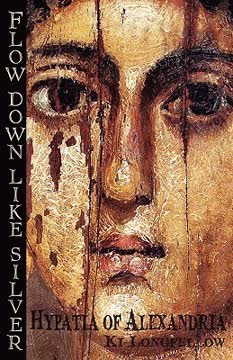
Flow Down Like Silver
In the wake of Hypatia's death, Alexandria descends into darkness, its libraries lost, its voices silenced. Yet, the memory of Hypatia, Lais, and their Companions endures—in hidden books, in whispered stories, in the longing for truth and beauty. The words of poets and philosophers "flow down like silver," surviving the flames and the centuries. The novel closes with a vision of hope: that wisdom, though scattered and suppressed, will one day be reborn, dazzling the world anew.
Characters
Hypatia of Alexandria
Hypatia is the intellectual and emotional center of the story—a woman of formidable intellect, moral courage, and deep vulnerability. Raised by her father Theon to embody the ideals of Greek philosophy, she becomes Alexandria's leading scholar, teaching mathematics, astronomy, and philosophy to students from across the empire. Her relationships—with her sisters, her father, her students, and Minkah—reveal her complexity: at once rational and passionate, skeptical and yearning for spiritual depth. Hypatia's journey is one of increasing isolation, as the world she loves is destroyed by fanaticism. Her ultimate fate—martyrdom at the hands of a mob—transforms her into a symbol of the loss of reason and the enduring quest for truth.
Lais
Lais, Hypatia's elder sister, is a figure of ethereal beauty and mystical insight. She moves between worlds, experiencing trances and visions that baffle and inspire those around her. Lais's poetry and presence are a source of comfort and frustration for Hypatia, who longs for the spiritual certainty her sister seems to possess. Lais's illness and death become a crucible for the family, forcing each member to confront the limits of reason, the reality of suffering, and the possibility of transcendence. In death, Lais becomes a guiding spirit, her wisdom echoing in Hypatia's final revelations.
Jone
Jone, the youngest sister, is marked from birth by loss and exclusion. Unloved by her father, overshadowed by her sisters, she seeks solace in books and, eventually, in the Christian faith. Her conversion is both a search for belonging and an act of rebellion. Manipulated by Theophania and Cyril, Jone's envy and zeal lead her to betray Hypatia, attempting to poison her in the name of God. Her story is one of longing, resentment, and the tragic costs of neglect and fanaticism. Jone's fate is a warning of the dangers of exclusion and the hunger for love.
Minkah
Minkah is a man of contradictions: born into poverty, shaped by violence, and redeemed by love. As Theon's servant and later Hypatia's companion, he becomes indispensable to the family—saving books, tending to the sick, and defending them from danger. Yet, he is also a member of the Parabalanoi, serving as a spy for Theophilus and later Cyril. Minkah's journey is one of shame, self-discovery, and redemption, as he struggles to reconcile his past with his love for Hypatia. His devotion is unwavering, and his ultimate failure to save Hypatia is a source of enduring grief and self-reproach.
Theon of Alexandria
Theon is a brilliant but flawed figure—devoted to reason, obsessed with perfection, and ultimately undone by loss and disappointment. His ambitions for Hypatia shape her destiny, but his inability to adapt to a changing world leaves him isolated and embittered. Theon's decline mirrors the decline of Alexandria itself, as the city's intellectual life is destroyed by violence and fanaticism. His death marks the end of an era and the passing of the old world.
Cyril
Cyril is the novel's principal antagonist—a man of intelligence, cunning, and ruthless ambition. Nephew of Theophilus, he seizes power through violence, manipulation, and the mobilization of mobs and monks. Cyril's reign is marked by purges, expulsions, and the suppression of dissent. His obsession with Hypatia—both as rival and as symbol—drives him to orchestrate her murder. Yet, Cyril is not without complexity; his actions are shaped by fear, envy, and the pressures of a collapsing world. He is both product and architect of Alexandria's destruction.
Theophilus
Theophilus is a master of intrigue, using fear, violence, and religious rhetoric to consolidate his authority. He is both protector and persecutor, capable of moments of tolerance and acts of brutality. His relationship with Hypatia is ambivalent—he recognizes her value but ultimately sacrifices her and her world to secure his own position. Theophilus's death marks a turning point, unleashing the forces that will destroy Alexandria.
Isidore
Isidore is a complex figure—once favored by Theophilus, later a rival to Cyril, and always torn between faith and doubt. His relationship with Hypatia is marked by desire, betrayal, and regret. As a member of the Parabalanoi, he is both enforcer and victim of the city's violence. Isidore's inability to choose between love and ambition, reason and faith, leads to his downfall and complicity in the city's tragedies.
Orestes
Orestes is sent from Constantinople to restore order in Alexandria. Intelligent, pragmatic, and sympathetic to Hypatia, he becomes a target of Cyril's machinations. Despite his efforts to protect the city's diversity and uphold imperial authority, Orestes is ultimately outmaneuvered and forced into exile. His story is one of the limits of power and the tragedy of good intentions in a world ruled by violence.
Nildjat Miw
Nildjat Miw, Hypatia's cat, is more than a pet—she is a symbol of intuition, mystery, and the connection between worlds. Appearing at pivotal moments, Miw guides Hypatia through darkness, loss, and revelation. Her presence evokes the ancient Egyptian reverence for cats as guardians of the soul and mediators between life and death. In the novel's climactic vision, Miw becomes a voice of wisdom, leading Hypatia through the final gate to gnosis.
Plot Devices
Framing History Through Fiction
The novel uses the known facts of Hypatia's life as a scaffold, weaving historical events, real figures, and philosophical debates into a richly imagined narrative. By giving voice to Hypatia, her family, and her adversaries, the story explores the psychological and emotional realities behind the fall of Alexandria. The interplay of personal and political, public and private, is central—showing how individual choices shape and are shaped by the tides of history.
Multiple Perspectives and Inner Monologue
The narrative shifts between Hypatia, Minkah, Lais, Jone, and others, using first-person and close third-person perspectives. This polyphonic structure allows for deep psychological exploration, revealing the hopes, fears, and contradictions of each character. Inner monologues, dreams, and visions provide insight into the characters' motivations and the spiritual themes of the novel.
Symbolism and Mythic Resonance
The novel is rich in symbolism: the burning of books as the loss of memory; the desert caves as both grave and womb; the cat as guide and guardian; the gates as thresholds of transformation. Myths of Persephone, Inanna, and the Magdalene are woven into the narrative, linking the personal to the cosmic and the historical to the eternal. These symbols foreshadow events, deepen emotional resonance, and invite the reader to see the story as both specific and universal.
The Hidden Library and the Book of Impossible Truth
The rescue and concealment of the library is both a literal and metaphorical plot device. It represents the survival of wisdom against the forces of destruction, the hope that truth will outlast violence and ignorance. The Book of Impossible Truth, Hypatia's final work, becomes a vessel for her legacy, hidden away until a future age is ready to receive it. This device ties the novel's ending to its beginning, suggesting that the words and ideas of the past "flow down like silver" through time.
Foreshadowing and Tragic Irony
From the opening pages, the novel is suffused with a sense of impending tragedy. The burning of the Serapeum, the rise of Cyril, the betrayals of friends and family—all are foreshadowed through dreams, omens, and the reflections of the characters. The reader is made aware of the fragility of civilization and the costs of fanaticism, even as the characters struggle to avert disaster. The tragic irony is that, despite their efforts, the world they love cannot be saved—but their resistance is not in vain.
Analysis
Flow Down Like Silver is a profound meditation on the collapse of a civilization, the silencing of wisdom, and the resilience of the human spirit. Through the life and death of Hypatia, Ki Longfellow explores the tensions between reason and faith, tradition and change, love and power. The novel is both a lament for what was lost—the libraries, the diversity, the spirit of inquiry—and a celebration of what endures: the longing for truth, the beauty of the mind, and the possibility of transcendence. By centering the story on women—Hypatia, Lais, Jone—and their relationships, the book challenges the erasure of female voices from history and philosophy. The use of myth, symbolism, and multiple perspectives invites the reader to see the story as both historical and timeless, a parable for any age threatened by intolerance and the suppression of thought. Ultimately, Flow Down Like Silver is a call to remember, to question, and to hope that, even in the darkest times, the words and wisdom of the past will "flow down like silver," lighting the way for generations to come.
Last updated:
Review Summary
Flow Down Like Silver receives overwhelmingly positive reviews (4.01/5 stars), with readers praising Ki Longfellow's meticulous research and lyrical prose about Hypatia of Alexandria, a 4th-century mathematician and philosopher. Reviewers appreciate the novel's exploration of religious conflict between Christians and pagans, themes of intellectual freedom, and Gnostic philosophy. The multiple first-person narrative structure effectively portrays Hypatia's brilliance and tragic fate. Many compare it favorably to Longfellow's previous work, The Secret Magdalene, and the film Agora. Readers value how the book illuminates this remarkable but overlooked historical figure while examining timeless questions about faith versus reason.