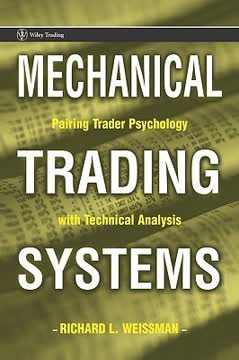
Key Takeaways
1. Master Trader Psychology: The Unnatural Path to Consistent Profit
The vast majority of our life experiences prior to our decision to trade involve the avoidance of pain, error, mistakes, imperfections, and uncertainty and the seeking of pleasure, excitement, approval, and perfection.
Trading defies natural instincts. Successful trading demands a complete reprogramming of innate psychological patterns. Our natural inclination to avoid pain and seek comfort leads to destructive behaviors in the market, such as cutting profits short and letting losses run. This is because we tend to use our entry price as a comfortable reference point, making us fearful when profits grow and falsely secure when losses mount.
Behavioral finance validates irrationality. While efficient market hypotheses assume rational participants, behavioral finance confirms that market participants often act illogically, driven by emotions. This irrationality creates predictable patterns—stable Paretian price distributions—characterized by both mean reversion and amplified trends, which technical analysis exploits. The challenge lies not in finding profitable strategies, but in the discipline to execute them against our emotional impulses.
Discipline is the ultimate edge. The greatest obstacle to success is not discovering a winning strategy, but the inability to consistently adhere to it. Taking trades, especially those that feel "uncomfortable" like buying new highs or selling new lows, requires immense discipline. Exiting trades, whether profitable or losing, as dictated by a mechanical system, is even more formidable, as it forces traders to confront their fear of missing out or accepting a loss.
2. Mechanical Trading Systems: Your Indispensable Discipline Machine
Mechanical trading systems can be defined as methods of generating trading signals and quantifying risk that are independent of an individual trader’s discretion.
Taming emotionalism is paramount. The primary benefit of mechanical trading systems is their ability to remove destructive emotionalism from the decision-making process. By providing objective, immutable rules for entry, exit, and risk management, these systems force traders to act like machines, fostering discipline, patience, and consistency—qualities essential for long-term success. This structured approach helps overcome the psychological biases that plague most traders.
Quantification of risk and reward. Mechanical systems allow for comprehensive backtesting and forward testing of strategies before capital is committed. This quantification provides clear metrics like:
- Total net profit
- Maximum drawdown amount and duration
- Maximum consecutive losses
- Profit to maximum drawdown ratio (P:MD)
- Percentage of winning trades
These metrics are crucial for understanding a system's true performance and for psychologically preparing traders for inevitable drawdowns and losing streaks.
Diversification without specialized knowledge. Unlike fundamental analysis, mathematical technical indicators used in mechanical systems do not require deep market-specific expertise. This allows traders to apply systems across diverse, low-correlated asset classes—from Asian equities to foreign exchange—enhancing overall returns and reducing portfolio risk. This broad applicability is a significant advantage for system developers.
3. Technical Analysis: Decoding Market Emotions for Objective Signals
The basic precept in all technical analysis is that by studying past price history and evaluating volume or number of trades and open interest or the number of contracts outstanding, traders can forecast future price “trends” and identify low-risk/high-reward trading opportunities.
Objective vs. subjective analysis. Technical analysis, broadly defined, aims to forecast future price movements. It splits into two categories: interpretive (subjective) and mathematical (objective). While subjective methods like head-and-shoulders patterns are powerful, their interpretation limits statistical verification. Mathematical technical analysis, however, provides objective buy/sell signals based on immutable rules, making it the ideal foundation for mechanical trading systems.
Psychology of price triggers. Technical analysis works because it capitalizes on recurring psychological conditions. Horizontal support and resistance levels, for instance, become significant due to collective trader behavior:
- Break-even syndrome: Buyers trapped at resistance levels eagerly sell at break-even on retests.
- Sideline regret/remorse: Traders who missed a prior move jump in on retests, reinforcing the level.
- Reversal of roles: Once broken, old resistance becomes new support (and vice-versa), as market participants adjust their psychological reference points.
Indicator-driven triggers as emotional barometers. Indicators like moving averages or oscillators generate signals based on objective criteria. Their effectiveness stems from widespread market participant focus, turning them into self-fulfilling prophecies. This collective attention makes them invaluable tools for forecasting price trends, acting as barometers of market fear, greed, and capitulation.
4. Trend-Following Systems: The Fortitude to Ride Amplified Market Tails
Successful trend-following indicators not only force traders to abandon attempts to buy the bottom and sell the top, they reprogram traders away from destructive price reference points by forcing them to buy recent highs and sell recent lows.
Capitalizing on market leptokurtosis. While markets are range-bound about 70% of the time, the remaining 30% often involves powerful, sustainable trends—the "amplified tails" of a leptokurtic price distribution. Trend-following systems are designed to profit from these extended moves. A single profitable trend trade can offset numerous small losses, leading to overall profitability even with a low percentage of winning trades.
Reprogramming for success. Trend trading requires counter-intuitive actions: buying new highs and selling new lows. This directly opposes the novice trader's desire to "buy low, sell high." By adhering to trend-following indicators like moving average crossovers or channel breakouts, traders are psychologically reprogrammed to:
- Accept more small losses than wins.
- Let profits run, even if it means giving back a portion of unrealized gains.
- Endure long periods of inactivity or consecutive losses.
Simplicity often equals robustness. The book emphasizes that simpler systems with fewer parameters tend to be more robust and have a higher probability of replicating past performance. For example, the two-moving-average crossover often outperforms more complex Ichimoku versions. Filters, while tempting, can lead to curve-fitting and diminish future reliability.
5. Mean Reversion Systems: The Patience to Exploit Market Overextensions
If trend following is such a successful methodology, how can indicators based on the exact opposite philosophy generate consistent profits? The simple answer is that mean reversion indicators, such as RSI and other oscillators, work because they capitalize on the market’s tendency to overextend itself.
Profiting from market overshoots. Mean reversion systems exploit the market's tendency to return to its average after temporary overextensions. Indicators like the Relative Strength Index (RSI) or Stochastics identify overbought or oversold conditions, signaling opportunities to fade the extreme move. These systems typically boast a higher percentage of winning trades compared to trend-following strategies.
Quantified risk and reward. Unlike trend-following, mean reversion systems often quantify both profit targets and stop-loss levels at trade initiation. This eliminates the psychological challenge of "letting profits run," as traders exit once the market reverts to the mean. However, this also means smaller per-trade profits and potentially larger losses relative to wins, necessitating iron-willed discipline to adhere to stop-loss rules.
Asset class suitability. Certain asset classes exhibit a greater propensity for mean reversion, such as equity indices and non-USD denominated foreign exchange cross rates. These markets are often characterized by choppy, range-bound behavior where prices tend to cluster around the mean. Conversely, assets like foreign currencies against the USD or short-term interest rates often display stronger trending characteristics.
6. Short-Term Trading: Quick-Mindedness in Highly Liquid Markets
Because short-term traders must make so many decisions during a typical business day, they are among the most likely of the trading personality types to benefit from systematic trading during the initial phase of their careers.
Liquidity and volatility are paramount. Short-term systems, including swing and day trading, demand exceptional market liquidity and volatility. The smaller per-trade profits in these timeframes mean that typical bid/ask spreads and commissions can quickly erode profitability. Only the most liquid instruments, like major equity indices (e.g., Nasdaq 100, S&P 500) and highly traded currency pairs, are generally viable.
Stress reduction through mechanization. Day trading is inherently demanding, requiring rapid decision-making and intense focus. Mechanical systems transform this high-stress environment by providing predefined entry, exit, and risk rules, reducing emotional burnout and extending a trader's career longevity. This structured approach allows traders to thrive amidst constant market activity.
Trade-offs in shorter timeframes. While short-term systems can offer attractive annualized returns and profit-to-maximum-drawdown ratios, they come with significant trade-offs:
- Reduced diversification: Limited to a few highly liquid assets, sacrificing the benefits of broad portfolio diversification.
- Labor-intensive: Requires continuous screen monitoring during trading hours, unlike longer-term systems.
- Sensitivity to parameters: Systems need more frequent refinement and reevaluation due to rapid market shifts.
Despite these challenges, the ability to "clear your head" daily without overnight margin risk appeals to many quick-minded traders.
7. System Development: Avoid the Perilous Pitfalls of Curve Fitting
The closer the parameters have been fit to a particular data history, the less likely that these criteria will be able to filter out randomness within the data series.
Historical data is a double-edged sword. All trading system decisions are based on historical data, but future market behavior will never perfectly mirror the past. The goal is to find robust systems that show a strong positive correlation between past and future performance. This requires meticulous attention to data integrity and avoiding the pitfalls of curve fitting, which can lead to false confidence in a system's profitability.
Two forms of curve fitting.
- Data curve fitting: Occurs when historical data is selectively chosen or reduced to filter out losing trades, creating an artificially positive backtest.
- Parameter curve fitting: Involves tweaking system parameters (e.g., moving average lengths) to perfectly match in-sample data, making the system perform flawlessly in the past but poorly in the future. The more parameters added, the higher the risk of curve fitting.
The "perfect trader syndrome." Curve fitting often stems from a psychological need for perfection and control over an uncertain future. This leads traders to endlessly tinker with parameters, sacrificing a robust, moderately successful system for one that appears perfect historically but fails in live trading. The solution is to prioritize simplicity and robustness over theoretical perfection.
Out-of-sample testing is crucial. To combat curve fitting, a statistically significant portion of the most recent data (10-20% of the total history) should be reserved for "out-of-sample" or "walk-forward" testing. If the system's performance drastically deteriorates in this unseen data, it's a strong indicator of curve fitting or a paradigm shift in market dynamics, warranting abandonment or significant modification.
8. Price Risk Management: The Only Aspect of Trading You Truly Control
Because we can never know with certainty whether any particular trade will result in a profit or a loss, it is the height of folly to focus our attention and capital on those aspects of trading over which we have no control while simultaneously neglecting price risk management, the one essential aspect of trading over which we exercise absolute control.
Risk management is paramount for survival. While a winning strategy is important, robust price risk management is the ultimate determinant of long-term success. Without it, even a highly profitable system can lead to ruin. Traders must shift their focus from predicting market movements to controlling the amount of risk they assume, as this is the only variable truly within their power.
Two schools of thought, one comprehensive solution. Price risk management combines two approaches:
- Trader School: Focuses on volumetric (position sizing) and stop-loss management. A common rule is limiting per-position risk to 1-2% of total equity. This prevents a string of losses from triggering a catastrophic account drawdown (e.g., a 37.5% fund stop-loss).
- VaR/Stress Testing School: Utilizes Value at Risk (VaR) to quantify the probability of losing a certain amount over a specified period under normal conditions, and stress testing to analyze the impact of extreme, unlikely events (e.g., 1987 crash, correlation breakdowns).
The exponential cost of drawdowns. The probability of returning to profitability decreases exponentially with larger drawdowns. A 15% drawdown requires a 17.6% gain to recover, while a 50% drawdown demands a 100% gain. This highlights why strict risk limits, like a 37.5% fund stop-loss, are crucial to prevent irreversible damage to capital.
9. Diversification: The Power to Enhance Returns and Reduce Risk
Diversification is among the most important and underutilized tools available to traders and investors because it allows improvement of our rates of return without proportionately increasing risk assumed to achieve these enhanced levels of performance.
Three dimensions of diversification. Beyond simply diversifying across asset classes, traders can enhance returns and reduce risk by diversifying:
- Parameter sets: Using multiple, distinct parameter sets for the same trading system. Even minor variations can lead to different performance outcomes, and diversifying across them minimizes regret when one set underperforms.
- Trading systems: Combining negatively or lowly correlated trading systems (e.g., a trend-following system with a mean reversion system). This smooths equity curves, reduces maximum drawdowns, and often improves overall profit-to-maximum-drawdown ratios.
Synergy of uncorrelated systems. Combining systems like MACD (trend-following) and RSI Extremes (mean reversion) can lead to a portfolio where the strengths of one offset the weaknesses of the other. For instance, a mean reversion system might profit during choppy periods when a trend-following system struggles, and vice-versa. This additive effect on profits, coupled with a smoothing effect on drawdowns, significantly improves overall performance metrics.
Psychological flexibility is key. Implementing diversified strategies requires transcending one's innate trading personality. A successful trend trader, for example, must learn to embrace mean reversion signals, even if they conflict with their primary strategy. This psychological flexibility, though challenging, is a natural extension of the discipline required for initial trading success and leads to personal growth both in and out of the markets.
10. Discretion: A Measured Overlay, Not an Abandonment of Discipline
The issue of discretion within the context of a mechanical trading system is always a controversial matter, because its inclusion could lead to a breakdown in trader discipline and consistency.
Balancing rigidity with reality. While strict adherence to mechanical systems is vital, markets are dynamic and can experience paradigm shifts or price shock events that render historically robust models ineffective. Blind adherence in such scenarios can be catastrophic. Therefore, a measured, rule-based discretionary overlay can be a prudent, albeit controversial, component of a comprehensive trading strategy.
Objective triggers for discretion. Discretion should ideally be introduced based on objectively quantifiable thresholds, not subjective "gut feelings." Examples include:
- Exceeding the system's maximum consecutive losses from backtested history.
- Breaching the system's worst peak-to-valley equity drawdown or fund stop-loss levels.
- Significant, aberrant increases in historical volatility (e.g., a 50% rise in one-year volatility).
These triggers prompt actions like reducing volumetric exposure or temporarily suspending the system, rather than abandoning it entirely.
Avoiding "true" discretion's pitfalls. Introducing "fuzzy" discretionary elements, such as headline news or sentiment indicators, without objective thresholds, can undermine the validity of backtested results and risk metrics. Until a trader has demonstrated consistent, disciplined adherence to mechanical systems over a prolonged period, it is advisable to reject subjective overrides in favor of simple, objectively quantifiable rules. The goal is to enhance, not compromise, the system's integrity.
11. Self-Mastery: The Ultimate Journey to Trading and Life Harmony
I count him braver who overcomes his desires than him who conquers his enemies; for the hardest victory is over self.
Trading as reality therapy. The markets offer a unique crucible for self-discovery and personal growth. They relentlessly punish illusions, forcing traders to confront their fears, greed, impatience, and need for control. This "reality therapy" accelerates psychological and spiritual maturation, as success demands the abandonment of ego-driven biases in favor of objective reality and disciplined action.
Even-mindedness and non-attachment. Successful trading cultivates even-mindedness—the ability to remain calm and objective regardless of winning or losing streaks. This is not the elimination of emotions, but their tempering. Traders learn to:
- Honor and accept emotional responses without letting them dictate actions.
- Practice non-attachment to trade outcomes, focusing instead on disciplined execution.
- View losses as data points, not personal failures, and learn from them.
Single-mindedness and self-worth. Internal conflicts, often rooted in issues of self-worth, can sabotage a trader's success, leading to self-imposed ceilings or the surrender of profits. Overcoming these blocks requires continuous self-assessment and a belief in one's deservingness of success. Adherence to system rules serves as an objective measure of this internal alignment, highlighting areas for personal growth.
Resonance between markets and life. The discipline, flexibility, and self-awareness cultivated in trading resonate with higher truths in life. The journey to master emotions and consistently apply conscious effort in the market can lead to greater harmony, purpose, and success in all aspects of one's existence, ultimately fostering a "witness consciousness" that transcends dualistic thinking.
Last updated:
Review Summary
Mechanical Trading Systems receives mixed reviews, with an average rating of 3.45 out of 5. Some readers find it insightful and one of the best trading books published, appreciating the author's sincerity. Others consider it highly technical and difficult to understand, suitable only for experts. The book seems to offer valuable information on gaining an edge in trading, but may require multiple readings to fully grasp its content. Readers acknowledge its potential benefits while noting the challenge in following its concepts.





