

Plot Summary
The Elevator Opens Again
Ebony arrives at her father Ryker's lavish Christmas Eve gathering expecting another evening of smiling through rules she cannot refuse. Ryker leads the Phantom Syndicate motorcycle club and treats family as part of his authority; among those he once controlled was Rook, his wife's son and Ebony's stepbrother.
Rook appears in the elevator wearing a helmet, and his silence makes their reunion more painful than an argument. In the penthouse, Ryker needles Ebony about Blaise, a biker he has been dating her in hopes of securing a suitable match.
Rook reacts to Blaise's name, while Ebony watches the two men measure each other. A gift from Rook's mother, Cindy, briefly softens the room, but the old fracture between Ebony and Rook remains present.
The novel begins with a reunion already burdened by a hidden history. The elevator makes the family gathering feel less like a homecoming than a forced encounter: Ebony and Rook share a confined space but cannot safely speak. Ryker's power shapes both the room and the romance, turning a daughter's dating life into an alliance to manage. Ebony's attention to Rook, despite her effort to remain composed, signals that emotional separation has not followed physical separation. The opening also complicates family roles: Rook is her stepbrother by marriage, yet their history and the club's rivalries make their bond more charged than a simple sibling relationship.
The Ice Beneath Them
The first change began before the separation. At a New Year's gathering, Rook tried to control what Ebony wore and who might look at her, then nearly kissed her before passing the moment off as a joke. Months later, Ebony fell through the ice while skating on the lake. Rook returned to find her still shaken and cold, and climbed into bed to warm her.
What began as comfort became their first kiss and a private intimacy neither could name without changing the family they shared. In the months that followed, Rook crossed further boundaries, while Ebony sometimes pulled away, afraid of their father's response. The secrecy did not resolve the attraction. It gave it room to grow, until Christmas approached again.
The early encounters show how protection can become a claim of ownership when no one questions who has the right to set limits. Rook's jealousy first appears in the language of an older brother guarding Ebony, but his behavior moves beyond care; the near-kiss makes that shift visible to both of them. The lake accident then creates a situation in which physical comfort feels necessary, allowing desire to borrow the moral cover of rescue. Ebony's mixed response is not simple consent to a relationship or a free choice untouched by pressure. The secrecy, their unequal power within the family, and Ryker's threat of violence narrow the space in which either can decide clearly.
Cabin Lights and Gunfire
By the following Christmas, the hidden relationship had become harder to contain. At the family lakehouse, Rook watched Ebony dance with her cousin Tiffany and grew angry when another man approached her. He followed them outside and attacked the man, stopping only when Ryker pulled him away.
Later, after Ebony mistakenly entered Rook's room, Rook initiated a sexual encounter that crossed a line neither could undo. Ryker discovered them before it was over. He and Rook fought through the room, breaking furniture, until Ryker drew a gun.
Cindy intervened, and Ebony begged her father to spare Rook. Ryker ordered Rook to leave the household. The festive gathering ended in violence, and Ebony's private attachment became a crisis the entire family could no longer ignore.
The cabin sequence turns secrecy into a public crisis, but it does not make the relationship's power imbalance disappear. Rook's attack on a stranger frames jealousy as protection, while the later bedroom scene shows him overriding Ebony's uncertainty. Ryker's response is equally coercive: armed authority, not conversation, decides who may remain in the family. Cindy's intervention briefly interrupts the men’s violence, but she cannot undo the conditions that produced it. Christmas lights and family ritual become a stark setting for conflict over control: Rook claims Ebony, Ryker claims the right to govern her, and Ebony is left trying to prevent either man from destroying the other.
A Lie Meant to Save
Before Rook left, Ryker confined him and gave him a choice: disappear or die. Rook asked Ebony to leave with him, believing that escape could make their relationship possible. Ebony wanted to go, but feared Ryker would kill Rook if she chose him. She instead rejected Rook harshly, insisting she did not love him in that way and telling him to leave her alone.
Rook believed her and went. Ryker placed him in charge of a new club outside Boston, where violence and criminal work hardened him into a figure known as the Plague. For two years they had no contact. Ebony stayed under her father's authority and accepted dates with Blaise, while Rook watched her from afar until Blaise's presence became unbearable.
The rejection is a protective lie with real consequences. Ebony chooses Rook's survival over immediate intimacy, but withholding the reason deprives him of the information he needs to understand her choice. Rook interprets the silence as proof that she will not fight for him, and converts grief into resentment and distance. Ryker's ultimatum is the force behind both their decisions, yet neither can acknowledge that force to the other. The exile also gives Rook a new social identity, the Plague, built from violence and grievance. His later surveillance shows that physical absence has not become respect for Ebony's privacy or a genuine end to his fixation.
The Snake in the Parlor
Back in the penthouse, Rook finally faces Ebony. He watches her across the room, and their exchange quickly turns into a contest over the night they shared and the rejection that followed. When Ebony leaves for the bathroom, Rook corners her with his pet snake, Ouija.
He frightens her into compliance, sexually violates her, and then reveals that he has hacked her devices and watched her private life. The encounter leaves Ebony angry and shaken, not reconciled. Rook departs without offering an apology or a safe way forward.
Cindy's affection and Ryker's watchful presence cannot make the family gathering feel secure. Ebony decides to keep the evening's promise to Blaise, hoping that continuing to play along with her father's arrangement will buy her some room.
The reunion does not simply reignite mutual longing; it demonstrates how Rook's fixation has become a threat to Ebony's autonomy. His private surveillance and use of Ouija convert intimacy into monitoring and intimidation. The narrative distinguishes bodily response from meaningful consent: Ebony's conflicted attraction does not erase the coercion or the breach of privacy. Ryker's control helps create the conditions in which she feels trapped, but it does not excuse Rook's choices. The parlor's family setting heightens the danger, since both men exert power while the people around them remain unaware. Ebony's decision to go to Blaise is less romantic preference than an attempt to manage the pressure closing around her.
Blaise's Christmas Gift
At Blaise's apartment, Ebony learns that the arrangement is more dangerous than an unwanted date. Blaise gives her an ornate hairpiece and assumes she will submit to him; when she resists his advances, he declares that marriage and children are already decided. Ebony spits at him, then strikes him with a hot frying pan when he grabs her, and flees into the snow.
She cannot return to Ryker's house without facing his anger, so she drives toward the woods. Her car runs out of gas, her phone loses signal, and she spots a tall figure in a plague-doctor mask beneath a streetlight. When the masked stranger advances, Ebony runs into the forest. The escape from Blaise has delivered her into a different danger.
Blaise's gift turns courtship into a material claim: he presents a decorative object, then behaves as if it grants him access to Ebony's body and future. Her refusal is met with threats of marriage and motherhood, exposing the same patriarchal logic that governs Ryker's plans, now expressed by a prospective husband. Ebony's use of the frying pan is a concrete break from passive endurance; she injures Blaise to get away. Yet the flight is not a clean liberation. Snow, darkness, an empty fuel gauge, and a failed phone isolate her, making the masked figure's appearance a consequence of her escape rather than a separate coincidence.
The Plague in the Snow
The masked pursuer chases Ebony through the snowy trees and forces her into a decorated van near the lake. The vehicle's chains, lights, and fur-lined floor reveal that the encounter is planned, not an accident.
Once inside, the attacker identifies himself through the voice and history only Rook could share. He restrains Ebony and uses the Plague persona to frighten and sexually dominate her. The encounter begins as abduction and coercion; only later does Ebony make choices within their charged, dangerous intimacy.
Rook's mask gives form to the monster he believes her rejection created, while the van becomes a private stage for his attempt to punish and possess her. As the night goes on, the violence gives way to a confrontation neither can keep postponing.
The Plague disguise externalizes Rook's self-image: he has taken the hurt of rejection and fashioned it into a frightening role that grants him power over others. The van's holiday decorations turn familiar Christmas symbols into instruments of confinement, so the setting reflects how the pair's shared memories have been corrupted by control. Crucially, Ebony's later participation does not retroactively make the abduction consensual. The scene holds desire and harm together without making them interchangeable. Rook's belief that Ebony made him into a monster is psychologically revealing, but it also displaces responsibility: he chooses surveillance, confinement, and force, then treats his pain as permission.
Morning Without Forgiveness
As dawn reaches the frozen lake, Rook and Ebony finally explain what the past two years concealed. Ebony admits that her rejection was meant to keep Ryker from killing Rook, not to deny her feelings. Rook answers that he had wanted one last Christmas with her, then planned to let her go because he believed she was miserable.
He offers to return to being the brother she needs, though their attraction remains unresolved. Before taking her home, he reveals the small bunny tattoo beneath his eye, a permanent mark he got after leaving. Ebony wakes alone later and notices Rook watching her through a camera. She deliberately performs for the lens, but he shuts the feed off. His withdrawal convinces her that he may truly be leaving her behind.
The dawn conversation supplies the missing motive behind the breakup, but information arrives after two years of damage and a night in which Rook again violated Ebony's agency. Her explanation clarifies her sacrifice without turning it into a solution; Ryker remains powerful, and the family relationship still makes a shared future dangerous. Rook's offer of brotherhood sounds like care, yet it also asks Ebony to accept a smaller bond than either wants. The tattoo embodies his attempt to carry her absence on his face. When he ends the camera feed, he makes a rare withdrawal from surveillance, and Ebony experiences that restraint as another abandonment.
The Ring, the Recording, the Road
At Ryker's New Year's party, Ebony arrives dressed as herself rather than as the polished daughter her father expects. She finds Blaise there and learns that the gathering is also meant to celebrate their engagement. When she refuses, Blaise plays a recording of her and Rook together, captured through the hairpiece he gave her.
He threatens to expose them to Ryker, who has already warned that he may kill Rook, unless Ebony accepts the marriage. Instead of submitting, Ebony takes a motorcycle from the garage and rides into the rain. She calls Rook and sends him a plea. Rook finds her on the roadside. Ebony tells him she wants to be with him, and they ride away together, choosing the uncertain road over the life arranged for her.
The final choice is made under pressure, not in a world suddenly free of consequences. Blaise weaponizes a recording to turn Ebony's past into leverage, while Ryker's threat gives that leverage lethal force. Her refusal of the engagement therefore carries more than romantic meaning: she rejects the premise that her body and future are bargaining chips in the clubs' alliances. The motorcycle matters because Rook once taught her to ride when Ryker would not; taking it now converts an old lesson into practical escape. Their departure is not proof that danger has vanished. It is the first decision they make together without pretending that obedience will keep them safe.
Analysis
Noel of Sin builds its romance around a contradiction it does not allow the reader to overlook: Ebony and Rook feel profound attachment, but the relationship unfolds inside a family structure governed by threats, surveillance, and unequal power. Rook's devotion is not automatically benevolent. He watches Ebony without consent, uses fear and force, and repeatedly assumes that desire gives him authority over her. Her attraction and eventual choices complicate the picture, but they do not erase the coercion that precedes them. The story's most revealing question is therefore not whether their desire is strong, but whether either can distinguish love from possession.
Ryker and Blaise offer two versions of patriarchal control. Ryker uses family loyalty and club power to direct Ebony's future; Blaise turns courtship into a claim backed by a recording and the threat of exposure. Both treat her life as something to arrange. Ebony's movement toward self-determination is concrete: she strikes Blaise when he restrains her, refuses the engagement, takes a motorcycle, and asks Rook to meet her. These actions matter precisely because escape remains dangerous rather than magically freeing.
Christmas supplies the book's recurring emotional machinery. The same holiday that once shelters intimacy also holds the discovery, separation, and reunion. Decorations that usually signify warmth become associated with restraint, disguise, and surveillance. The holiday's repetition makes the past feel physically present, as though the characters must revisit the scene before they can choose differently.
The ending offers a choice, not a settled resolution. Ebony and Rook leave together, but the story does not demonstrate that Ryker's power has vanished or that their relationship's harmful patterns have been repaired. Their departure is meaningful because Ebony chooses it, not because the road guarantees a happy future. The novel's central distinction is between being chosen by someone and choosing for oneself.
Review Summary
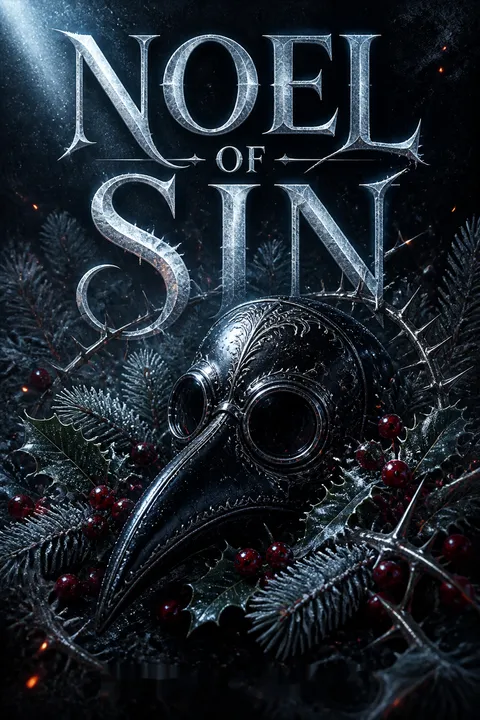
Noel of Sin by Jodie King is a spicy Christmas novella featuring step-siblings Rook and Ebony in a forbidden, taboo romance. Readers praise the intense chemistry, dark themes, and exceptionally high spice levels, though many wished it was longer. The story involves motorcycle club elements, a morally black MMC who's obsessed with his stepsister, and creative holiday-themed intimate scenes. While marketed as minimal plot and maximum smut, reviewers found meaningful backstory and emotional depth. The writing drew readers in quickly, with most devouring it in one sitting. Trigger warnings are emphasized as essential.
Characters
Ebony
The managed daughterEbony is Ryker's daughter and Rook's stepsister, raised inside a family where the Phantom Syndicate's power reaches into private life. She has learned to look composed, meet expectations, and conceal the distress that would invite more control. Her attachment to Rook unsettles the orderly identity her father has designed for her, but she is not simply swept along by desire: she weighs danger, protects people she loves, and increasingly recognizes the cost of letting others make her choices. Her quietness can be mistaken for passivity; beneath it is a capacity for anger and decisive action. The tension between self-protection and self-determination shapes how she navigates both family pressure and intimacy.
Rook
The exiled stepsonRook is Cindy's son, Ryker's stepson, and the older boy who grew up beside Ebony. His biological father led a rival motorcycle club, leaving Rook with a history of loss and a deep resistance to Ryker's authority. He is fiercely loyal, physically intimidating, and accustomed to answering vulnerability with aggression. His protectiveness toward Ebony is tangled with jealousy and possessiveness, making care difficult to separate from control. Rook experiences love as absolute commitment, but his belief that he knows what Ebony wants can override her boundaries. The Plague persona reflects the harder, more violent identity he has built around grief, anger, and the desire to remain indispensable to her.
Ryker
The club's iron patriarchRyker is Ebony's father, Cindy's husband, and the leader of the Phantom Syndicate MC. He treats family loyalty as a matter of discipline and sees strategic relationships as part of the club's survival. His affection for Ebony exists alongside a desire to govern her future, so protection often becomes coercion. Rook's refusal to submit provokes Ryker's hostility, sharpened by the history between their motorcycle clubs. Ryker believes that power and force can prevent disorder, and his capacity for violence makes disagreement dangerous even inside the family. He is not indifferent to those he loves, but he repeatedly mistakes control for care.
Cindy
The uneasy family bridgeCindy is Rook's mother and Ryker's wife. After Rook's biological father died, she struggled with grief and instability before building a more settled life with Ryker. She cares for Ebony and tries to keep the household intact, but she has limited success intervening when Ryker and Rook clash. Her kindness, including a thoughtful Christmas gift, offers Ebony a rare experience of affection without an explicit demand. Cindy's position between her son and husband makes her a mediator in a conflict she cannot fully control.
Blaise
The polished suitorBlaise leads the Shadow Serpents MC and enters Ebony's life through the arrangement Ryker favors. He presents himself as established and suitable, but his attention is tied to entitlement rather than mutual affection. He expects Ebony to accept his advances and treats marriage as a settled transaction, revealing how easily respectability can conceal coercion. His position gives him access to Ryker's circle, while his private ambitions make him a threat to Ebony's independence.
Jack
The family cousinJack is Ebony and Rook's cousin. He socializes with Rook during the Christmas gathering and serves as one of the few relatives present while the central family tension simmers.
Taylor
Ebony's old friendTaylor is Ebony's friend during the earlier New Year's gathering. Her presence gives Ebony a companion as she tries to enter Rook's social world and experience more independence.
Tiffany
The dancing cousinTiffany is Ebony's cousin, close to her in age. At the lakehouse Christmas gathering, she dances with Ebony before Rook's jealousy turns the party's attention toward the man approaching them.
Jessica
Rook's passing dateJessica is a woman Rook dates before visiting Ebony after the lake accident. The relationship highlights how he tries to redirect his attention from Ebony without resolving his attachment.
Ouija
Rook's pet snakeOuija is Rook's small black pet snake. Rook uses her presence to unsettle Ebony during their reunion, making the animal part of his intimidating performance.
Plot Devices
The motorcycle club alliance
Family as bargaining currencyThe Phantom Syndicate and its relationships with other clubs shape the private choices of Ryker's family. Ryker's authority gives him the means to exile Rook and to push Ebony toward a match he considers useful. Blaise's connection to another club makes the courtship appear strategic as well as personal. This device explains why Ebony fears that choosing Rook could provoke violence, and why marriage is treated as a business arrangement rather than an individual commitment. The clubs are not background decoration: their rivalries and alliances turn family intimacy into a question of power, loyalty, and survival.
The Christmas ritual
A yearly pressure chamberThe family's recurring Christmas gatherings create a fixed occasion when Ebony and Rook must face each other under Ryker's supervision. Earlier Christmas memories hold the first private shift in their relationship and the night Ryker discovers them; two years later, another gathering brings Rook back into the same room. Snow, lights, gifts, and family festivities repeatedly contrast with the danger beneath the surface. The holiday is therefore both a calendar structure and an emotional trigger. Each return to Christmas brings the characters closer to the secret they have tried to bury, while making old injuries impossible to mistake for resolved ones.
The Plague disguise
Grief turned into menaceRook's plague-doctor mask, illuminated cane, and chosen identity as the Plague let him stage his pain as a frightening persona. When Ebony is stranded in the woods, the mask initially makes him appear to be an unknown pursuer. The staged holiday imagery and the enclosed van extend that performance, turning familiar Christmas motifs into signs of confinement. The disguise does not create Rook's anger; it gives it a ritual and theatrical shape. Its function is to make his return feel like an encounter with the monster he believes he has become, while exposing how readily he uses that identity to intimidate Ebony.
The hidden recording
Intimacy converted to leverageThe ornate hairpiece Blaise gives Ebony first appears to be an expensive personal gift. At the New Year's party, Blaise reveals that it recorded private sounds from Ebony and Rook, then uses the evidence to pressure her into accepting an engagement. The recording links the earlier Christmas encounter to the final crisis and gives Blaise a weapon that bypasses Ebony's refusal. It also makes the contrast between gift and trap concrete: an object presented as courtship becomes a surveillance device. The recording escalates the stakes from unwanted marriage to the threat of Ryker's violence against Rook.
The motorcycle
A route to self-directionRook's black Harley, Darkness, is first part of his dangerous independence and a marker of his outsider identity in Ryker's polished world. Earlier, he teaches Ebony to ride when her father refuses because she is a girl. That lesson returns at the New Year's party, when Ebony takes a motorcycle to leave the engagement trap and eventually reunites with Rook. The vehicle does not guarantee safety or solve their conflict. It gives Ebony a practical means to act, and it turns a memory of Rook's support into a tool she can use on her own terms.
About the Author
Other books by Jodie King





Download PDF
Download EPUB
.epub digital book format is ideal for reading ebooks on phones, tablets, and e-readers.








