Key Takeaways
1. Fairy Tales as Profound Psychological Guides
Truth, naked and cold, had been turned away from every door in the village. Her nakedness frightened the people. When Parable found her she was huddled in a corner, shivering and hungry. Taking pity on her, Parable gathered her up and took her home. There she dressed Truth in Story, warmed her, and sent her out again. Clothed in Story, Truth knocked at the villagers’ doors and was readily welcomed into people’s houses. They invited her to eat at their table and to warm herself by their fire.
Stories as truth. Fairy tales, particularly the Grimm brothers' collection, are far more than simple bedtime stories; they are profound psychological guides, offering timeless wisdom in a compact, metaphorical form. Unlike sanitized modern versions, the original tales unflinchingly address the raw realities of human experience, from love and disappointment to murder and incest.
Healing narratives. These stories function as "healing stories" by depicting recognizable human dilemmas and offering insights or techniques for resolution. They provide a sense of solidarity, showing that others have faced similar struggles and survived, thereby empowering the reader to navigate personal transitions and psychic trauma. The tales speak to us in a "picture language of the soul," resonating at a primal level of awareness.
Beyond entertainment. For generations, these narratives served as a source of real knowledge, predating psychology textbooks and certified therapists. They reveal deep truths about human behavior, often through magical events that symbolize internal shifts and profound recognitions, making complex psychological concepts accessible and memorable.
2. The Six Archetypes: A Map for Life's Journey
An archetype, then, has less to do with what people are, or what they do for a living, than how they choose to face the world. It’s a life attitude.
Developmental stages. Archetypes are not stereotypes but fundamental developmental stages and life attitudes that every human being is called to experience. They describe how a person chooses to use their energy in response to the world's challenges, appearing consistently in great literature and life itself.
The six archetypes:
- The Innocent: Naturally loving and trusting, like a baby.
- The Orphan: Experiences disappointment, ejected from safety, forced to find their own way.
- The Pilgrim: Embarks on a journey toward personal truth, exploring what may happen.
- The Warrior-Lover: Chooses a life worth fighting for, balancing courage with compassion.
- The Monarch: Sensitive to the needs of the whole realm, organizes and energizes others.
- The Magician: Changes the energy of a situation, putting people in touch with their best selves for miraculous change.
Personal growth. These archetypes appear in a specific order, mapping a journey of personal and spiritual growth. Understanding them allows us to recognize our own stage of development and the challenges and opportunities inherent in each, guiding us toward a more authentic and fulfilling life.
3. "The Frog-King": Embracing Authentic Self-Worth in Love
The beauty of the tale is that it is all about sex without saying so directly.
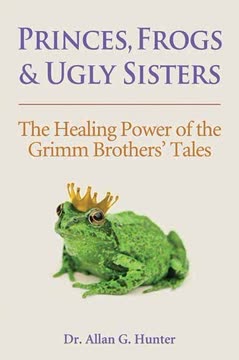
Beyond the kiss. The Grimm brothers' "The Frog-King" is a powerful tale of psychosexual maturation, starkly different from the Disney version. The princess does not kiss the frog; instead, she hurls him against the wall in a fit of "terrible anger." This act of fierce self-assertion is the catalyst for his transformation into a prince.
Self-worth and boundaries. The golden ball symbolizes the princess's self-indulgent completeness, which she loses and must reclaim. Her initial reluctance to honor her promise and her father's insistence on integrity force her to confront her spoiled nature. Her anger, when her sexual boundaries are breached, signifies a crucial moment of self-love and the demand for what she truly deserves, rather than settling for less.
Archetypal journey. The princess moves from Innocent to Orphan (losing her ball, forced to conform), then Pilgrim (questioning her situation), and finally Warrior (her anger). Her self-love brings forth the Lover in the prince, leading to their union as Monarchs. Faithful Henry's bursting heart symbolizes the Magician archetype, showing how their authentic love inspires others, proving that true love elevates both partners.
4. "Cinderella": Active Self-Empowerment, Not Passive Waiting
On the other hand, if you sit around and wait for your prince to come, or your fairy godmother to appear, then I promise you, you will wait your entire life in vain.
Active pursuit of destiny. The Grimm version of "Cinderella" is a testament to self-empowerment, rejecting the passive "waiting for a prince" trope. Cinderella actively seeks her future: she plants a hazel twig on her mother's grave, waters it with her tears, and it grows into a tree that provides her magical dresses and golden slippers. She then makes three determined requests to attend the ball.
Inner strength and intuition. Her regular visits to her mother's grave symbolize her connection to unconditional love, which fuels her inner strength and loyalty. The birds (pigeons and turtledoves, symbols of fidelity) assist her, highlighting her attunement to nature and her authentic self. Her repeated escapes from the prince at the ball, only to return, show her overcoming fear and confirming her readiness for a genuine connection.
Beyond appearances. The prince's persistence in finding the slipper's owner, despite the stepsisters' deceptions and his initial misjudgment, underscores a love that sees beyond superficial beauty to inner worth. The tale culminates in a union based on deep recognition and mutual courage, where both partners actively choose and fight for their love, embodying the Warrior-Lover archetype and inspiring others.
5. Confronting Evil and Trauma: Tales of Healing and Justice
The great power of these tales is that they never for a moment doubt that evil exists, and that it is brutal and savage.
Acknowledging evil. Grimm's tales do not shy away from the brutal realities of evil, unlike some modern interpretations. Stories like "The Girl Without Hands" and "The Robber Bridegroom" confront predatory human nature, offering insights into how to face and overcome profound trauma.
Vulnerability and resilience. "The Girl Without Hands" portrays goodness as fragile and defenseless, yet resilient. The girl's unwavering goodness, even after extreme mutilation, brings out the best in others (angels, the king), demonstrating that goodness, though vulnerable, can heal and regrow its faculties when supported. Her seven years of exile symbolize the long process of healing from deep-seated evil.
Exposing and overcoming. "The Robber Bridegroom" highlights the importance of trusting intuition and exposing evil publicly. The young woman's misgivings, her marking of the path with life-affirming peas and lentils, and her courage to confront the murderer with physical proof (the severed finger) illustrate that individual action, supported by community, is essential for justice and preventing self-blame in victims of abuse.
6. Parental Dynamics: Navigating Narcissism, Incest, and Rejection
The beauty of these tales, and the courage of the Grimm brothers in selecting them, lies in the fact that such important issues are not swept under the carpet.
Narcissistic control. "Little Snow-White" vividly portrays the destructive force of maternal narcissism. The stepmother's obsession with her own beauty and her murderous jealousy of Snow-White's youth symbolize parents who view their children as extensions of themselves, crushing their spirit through over-control and premature sexualization (stay laces, poisoned comb, apple). The dwarfs offer safe, unconditional love, allowing Snow-White to mature.
Incestuous desire. "Allerleirauh" (All Kinds of Fur) bravely addresses a father's incestuous desires, driven by a twisted promise to his dying wife. The daughter's retreat into a "fur cloak" disguise symbolizes the psychological defense mechanisms adopted by victims of sexual trauma, often manifesting as a rejection of their own attractiveness. Her journey to the kitchen's ashes and her subtle hints (golden objects in soup) represent her tentative steps towards seeking help and reclaiming her true identity.
Healing and acceptance. Both tales underscore the damage inflicted by unhealthy parental dynamics but also offer paths to healing. Snow-White's awakening by the prince signifies her readiness for mature love, free from her stepmother's influence. Allerleirauh's eventual revelation of her "star-dress" and golden hair, and the king's acceptance of her true self, illustrate that healing comes from being seen, understood, and loved unconditionally, allowing the victim to shed their defenses and embrace wholeness.
7. The Descent into the Unconscious: Finding Inner Riches
The unconscious, represented by the underground cave inhabited by the toad, is where all the real riches of the psyche are to be found.
Journey inward. Many Grimm tales feature a protagonist's "descent into the underworld," a powerful metaphor for exploring the deep recesses of the unconscious mind. This journey is not always literal but represents a profound introspection necessary for personal growth and accessing hidden wisdom.
Humility and intuition. In "The Three Feathers," Simpleton, the youngest and seemingly foolish son, succeeds where his arrogant brothers fail by humbly following his feather into a hole and trusting the toad. His willingness to descend into the unconscious and accept its gifts, even when they seem absurd (turnip, mice), demonstrates that true wisdom comes from purity of heart and intuition, not intellectual pride.
Confronting repressed self. "The Glass Coffin" illustrates the tailor's growth in courage through his descent into a subterranean chamber, where he finds a beautiful maiden in a glass coffin. This symbolizes encountering his anima—the repressed feminine aspects of his psyche—and his own suppressed dreams and longings. By freeing her, he frees himself, transforming from a timid tailor into a courageous man ready for love and life.
8. Maturation and Love: Overcoming Obstacles and Forgetting
We discover most fully who we are when we’re in relationship, not when we’re isolated. We learn about love by loving.
The path to adulthood. "The Two Kings’ Children" is a complex tale of maturation, highlighting the challenges young individuals face in establishing independent, loving relationships against familial interference. The prince's initial "death" at sixteen symbolizes the necessary end of his old, dependent self, paving the way for sexual and emotional maturity.
Interdependence and magic. The princess's magical transformations (briar/rose, church/priest, pond/fish) when fleeing her father symbolize the interdependent nature of true love, where each partner provides the environment and meaning for the other's existence. Her ability to conjure "earth men" for the prince's impossible tasks shows that genuine love unlocks powerful, unconscious resources, creating miracles through shared effort and acceptance of vulnerability.
Forgetting and reclaiming. The prince's temporary forgetting of the princess after his mother's kiss illustrates how parental influence can derail personal growth and cause one to lose sight of true love. The princess's persistent vigils outside his door, despite being drugged, represent the enduring power of memory and devotion. This struggle to reclaim forgotten love underscores that archetypal development is not linear; it requires constant vigilance and courage to stay true to one's authentic self and chosen partner.
9. The Power of Three: Tests, Transformations, and Enduring Lessons
Three repetitions, after all, establish a pattern.
Universal structure. The recurring motif of "threes" (three tasks, three brothers, three nights) is a fundamental narrative device in fairy tales, building thematic significance and reinforcing lessons. This pattern, also evident in epics like Beowulf, signifies a progression of challenges that deepen character and reveal profound truths.
Layered challenges. In "The Golden Bird," the youngest son faces three tests, each requiring him to overcome his tender-hearted nature and follow the fox's practical advice. His repeated failures to resist temptation (golden cage, golden saddle, allowing the maiden to say goodbye) highlight that even virtues like compassion can become flaws if unchecked, and that true wisdom involves learning to temper one's nature.
Enduring struggles. Beowulf's three battles against Grendel, Grendel's Mother, and the Dragon, similarly illustrate that internal demons are never fully vanquished; they evolve and reappear throughout life. Each confrontation demands a different form of courage and strategy, teaching that personal growth is an ongoing process of facing and integrating one's shadow self, even unto death.
10. The Wisdom of the "Simpleton": Purity of Heart and Intuition
The tales, therefore, show us how to work within the existing social structure, rather than how to destroy or change it.
Unconventional success. Many Grimm tales feature a "simpleton" or "Dummling" character who, despite being underestimated or ridiculed, ultimately triumphs. These characters succeed not through cunning, intellect, or social status, but through purity of heart, humility, and an unwavering connection to their intuition.
Authenticity over artifice. In "Hans the Hedgehog," Hans's spiky exterior symbolizes the defenses adopted by those who feel rejected. His transformation into a human, facilitated by the second king's daughter's unconditional love and acceptance, demonstrates that true authenticity and healing come from being seen and loved for who one truly is, beyond superficial appearances or adopted personas.
Trusting inner guidance. The simpleton's success often stems from their willingness to trust inner promptings and act on what feels right, even when it defies conventional logic. This contrasts with characters driven by ego or external validation, who often fail. The tales advocate for listening to one's inner voice and cultivating a genuine self, which ultimately leads to lasting fulfillment and the ability to inspire others.
11. Fairy Tales: A Mirror to Our Deepest Human Passions
The triumph of these Grimm tales is that they approach these difficult topics with memorable and haunting stories, so that we can reflect on them in our own way and in our own time.
Universal human experience. Grimm's fairy tales serve as enduring mirrors to the full spectrum of human passions and experiences. They explore universal themes such as love, loss, fear, growth, good versus evil, family dynamics, and emerging sexuality with an unflinching honesty that transcends cultural and historical boundaries.
Metaphorical healing. By presenting complex psychological issues through vivid metaphors and archetypal journeys, these tales offer a safe and accessible framework for understanding and processing personal challenges. They don't provide direct answers but rather illuminate the internal landscapes of struggle and transformation, empowering readers to find their own paths to wholeness.
Timeless relevance. Despite being centuries old, the insights embedded in these narratives remain profoundly relevant today. They remind us that the human psyche grapples with fundamental questions of identity, relationship, and purpose, and that wisdom often lies in recognizing and honoring these deep, often uncomfortable, truths within ourselves and our communities.
Last updated:
Review Summary
Princes, Frogs and Ugly Sisters receives mixed reviews averaging 4 out of 5 stars. Readers appreciate its analysis of Grimm Brothers' fairy tales and their psychological insights, finding it valuable for understanding archetypes and therapeutic writing. Some criticisms include the book being overly interpretive, judgmental in tone, and placing too much emphasis on sexuality. Reviewers note the author's conservative interpretation reflects the Grimms' 1800s context rather than personal views. The book effectively critiques Disney's sanitized versions and offers life lessons through deep literary analysis.





