Plot Summary
Chains of Wanting
Nahadoth, once the embodiment of chaos and night, is chained in mortal flesh by the decree of Itempas, the god of order. In his confinement, Nahadoth contemplates the nature of want, time, and selfhood, savoring the name given to him and the boundaries that now define his existence. The loss of his siblings and the memory of a time when he was everything haunt him, but he clings to the hope that, when free, he will choose who shapes him. This longing for agency and identity becomes the core of his suffering and the seed of his future rebellion, setting the stage for the interplay between gods and mortals that will define the narrative.
The Boy in the Well
Haan, a survivor of a destroyed land, is thrown into the world of the Arameri, the ruling family. He is cold, wild, and shaped by trauma, treated as a thing rather than a person. Haan seeks out Nahadoth in his prison, drawn to the darkness and the god's indifference. Their interactions are marked by mutual recognition of pain and anger, with Haan's emptiness and calculated cruelty mirroring Nahadoth's own suffering. The boy's presence becomes a rare source of interest for Nahadoth, who watches as Haan navigates the treacherous politics and abuses of the Arameri, plotting his own survival and revenge.
Lessons in Suffering
Haan endures exploitation and humiliation at the hands of the Arameri, used for pleasure and breeding, yet he remains emotionally detached, channeling his pain into anger and calculated acts of violence. Nahadoth, the originator of mortal suffering, observes with a mix of boredom and fascination as Haan poisons his abusers and eliminates rivals. The god's indifference is challenged by the boy's resilience and creativity, and a strange bond forms between them. Haan's suffering becomes a crucible, forging him into a weapon of vengeance and a vessel for Nahadoth's own frustrated desires.
Murder as Survival
As Haan grows older, his beauty fades and he must fight harder for favor. He eliminates a younger rival by orchestrating a murder disguised as suicide, further honing his skills in manipulation and violence. Nahadoth, increasingly possessive, recognizes Haan as his own—a worshipper in all but name. The god's interest deepens as Haan's actions escalate, each killing a testament to his refusal to be a mere thing. The Arameri remain oblivious to the danger they have nurtured, while Nahadoth waits for the moment when Haan's ambition and rage will serve a greater purpose.
The Dream of Oneness
In his isolation, Nahadoth receives a dream from Nsana, a child of the gods, reminding him of the pleasures and unity once shared among the Three—Nahadoth, Itempas, and Enefa. The dream, a sensory memory of intimacy and connection, is both a comfort and a torment, highlighting the loss of oneness and the pain of separation. Nahadoth's yearning for purpose and companionship is sharpened by this reminder of what has been lost, fueling his desire to break free and reclaim agency, even as he mourns the impossibility of true reunion.
Names and Power
Haan, now a man, confronts Nahadoth with questions about identity and power. He speaks the god's name aloud, an act considered blasphemous and dangerous, and offers his own purpose as a gift. This exchange is charged with risk and desire, as Haan skirts the boundaries of forbidden worship and Nahadoth contemplates the possibility of using mortal agency to achieve his own ends. The act of naming becomes a catalyst, allowing Nahadoth to absorb Haan and reshape himself, blending mortal cunning with divine power in preparation for rebellion.
The Mortal Within the God
The narrative shifts to the god without a name, a being who once shared a body with Nahadoth, living as a mortal by day and a god by night. After centuries of imprisonment, he is finally free, but struggles with his identity and the limitations of mortality. His interactions with Yeine, the new Gray Lady, reveal a deep ambivalence about existence, power, and the meaning of life. The god's journey becomes one of self-discovery, as he tests the boundaries of his new form and seeks a purpose beyond mere survival.
The God Without a Name
The nameless god wanders the world, experimenting with power, intimacy, and fear. He becomes a protector and organizer of the marginalized, creating safe spaces for those exploited by society. His efforts to understand his own nature lead him to confront the limits of godhood and the dangers of connection. Through encounters with mortals and other gods, he learns that true strength lies not in domination, but in the willingness to risk vulnerability and forge bonds, even at the cost of pain and betrayal.
The Price of Freedom
The god without a name grapples with the consequences of his liberation, finding both joy and sorrow in the complexities of mortal and divine existence. He builds a life among mortals, creating a network of care and protection, but is repeatedly confronted by the pain of loss and the fear of intimacy. His journey is marked by moments of connection and heartbreak, culminating in the realization that happiness is fleeting, but worth pursuing. The struggle to define himself continues, shaped by the choices he makes and the relationships he forms.
The Artisans of Flesh
The god's experiment with the "Arms of Night," a house of sexual artisans, becomes a microcosm of his quest for meaning. By empowering mortals and godlings alike to reclaim agency and dignity, he challenges the structures of exploitation and abuse. The house becomes a haven for those seeking healing and connection, and the god learns that true power lies in enabling others to thrive. Yet, even in this success, he faces the inevitability of change and the pain of letting go, as those he cares for move on to new lives and loves.
The Daughter's Quest
Glee, the daughter of Itempas and a mortal woman, embarks on a journey to find her estranged father. Driven by a need for understanding and purpose, she navigates a world shaped by the legacies of gods and mortals. Her methodical, rational approach contrasts with the chaos and unpredictability of her heritage, and she must learn to balance order and change as she seeks answers to the fundamental question of why she exists and what she is meant to do.
Rituals of Departure
Glee's departure from her mother is marked by ritual and careful preparation, reflecting her respect for order and tradition. She accepts her mother's gifts and reassurances, setting out with a promise to return. As she travels, Glee encounters the diversity and complexity of mortal life, learning to adapt and survive while remaining true to herself. Her journey becomes a process of self-discovery, as she confronts the challenges of her dual nature and the expectations placed upon her by both parents.
The Road of Atonement
Itempas, stripped of much of his power, wanders the world in atonement, taking on dangerous and thankless tasks to serve mortals. Glee follows him, observing his methods and questioning their effectiveness. Through their interactions, she comes to understand the limitations of divine intervention and the necessity of gradual, systemic change. The road becomes a crucible for both father and daughter, as they confront the realities of justice, responsibility, and the possibility of transformation.
Change and Contagion
Glee proposes a new approach to enacting change, challenging Itempas to move beyond mere penance and embrace proactive influence. The process is difficult and fraught with resistance, as both struggle to adapt to new roles and expectations. The metaphor of infection and fever underscores the discomfort and risk inherent in growth, but also the potential for renewal. Through mutual support and understanding, they begin to forge a new path, one that balances order and change in pursuit of a better world.
The Third Why
Glee is repeatedly confronted with the question of why—why she seeks her father, why she cares about mortals, why she would wield power if given the chance. Each answer brings her closer to understanding herself and her place in the world. The third why, posed by Itempas, challenges her to articulate her deepest motivations and to claim her heritage as both mortal and divine. In doing so, she affirms her commitment to justice and the creation of a new order.
The Sword of Justice
Itempas offers Glee the possibility of wielding the legendary sword of order, a symbol of ultimate authority and the potential for both creation and destruction. Glee must decide whether she is worthy of such power, and what she would do with it. Her answer, rooted in her identity as Itempas's daughter and her belief in the possibility of a better world, marks the culmination of her journey and the beginning of a new era.
New Orders, New Worlds
With the old structures of power broken and the gods changed by their experiences, the world stands on the brink of transformation. Glee and Itempas, joined by other gods and mortals, set out to create a new order based on justice, compassion, and the lessons learned from suffering. The process is uncertain and fraught with challenges, but the commitment to change endures. The narrative closes with a sense of hope and possibility, as the characters embrace the risks and rewards of forging a new path.
The Choice to Begin
The story ends with the affirmation that change is possible, but only through the conscious choice to begin. Glee, Itempas, Nahadoth, and the god without a name each find their own answers to the question of why, and in doing so, claim the power to shape themselves and their world. The journey is ongoing, marked by uncertainty and struggle, but also by the promise of growth and the enduring strength of will.
Characters
Nahadoth
Nahadoth is the Nightlord, the embodiment of chaos, change, and darkness. Once limitless, he is now bound in mortal flesh by Itempas, forced to experience time, limitation, and suffering. His relationship with his siblings—especially the loss of Enefa and the betrayal by Itempas—defines his pain and his yearning for agency. Nahadoth's interactions with mortals, particularly Haan, reveal his fascination with human resilience and cruelty. Over the course of the narrative, he evolves from passive suffering to active rebellion, blending mortal cunning with divine power. His journey is one of self-definition, as he seeks to reclaim the right to choose who shapes him, ultimately embracing the risks and responsibilities of freedom.
Haan (The Wild Boy)
Haan is a descendant of the destroyed land of Ostei, brought into the Arameri fold as a tool and plaything. Shaped by trauma and treated as an object, he develops a cold, calculated approach to survival, using violence and manipulation to assert control over his life. His relationship with Nahadoth is complex, marked by mutual recognition of suffering and a shared desire for agency. Haan's willingness to embrace his own monstrosity makes him both a danger to others and a catalyst for Nahadoth's transformation. Ultimately, he offers his purpose to Nahadoth, becoming a vessel for the god's resurgence and a symbol of the blurred boundaries between mortal and divine.
The God Without a Name (Ahad/Beloved)
Once the mortal vessel for Nahadoth, this god is freed from his dual existence and must forge a new identity. He is marked by ambivalence, curiosity, and a deep-seated fear of intimacy. His journey is one of experimentation, as he explores the limits of power, vulnerability, and connection. Through his work with mortals—especially the creation of the Arms of Night—he learns the value of compassion and community, even as he struggles with the pain of loss and the risk of betrayal. His development is defined by the search for a name, a nature, and a purpose, culminating in the acceptance of his own complexity and the choice to live fully, despite the inevitability of suffering.
Yeine
Yeine is a mortal who ascends to godhood, becoming the Gray Lady and a central figure in the new order of gods. She serves as a foil and confidante to both Nahadoth and the god without a name, challenging them to confront their limitations and embrace change. Yeine's perspective is shaped by her dual heritage, allowing her to navigate the tensions between order and chaos, mortality and divinity. Her role is one of guidance and provocation, pushing others to grow while grappling with her own uncertainties and responsibilities.
Itempas
Itempas is the Skyfather, the embodiment of order, light, and stability. His actions—imprisoning Nahadoth, killing Enefa—set the stage for the suffering and upheaval that follow. Stripped of much of his power, Itempas wanders the world in penance, taking on dangerous and thankless tasks to serve mortals. His relationship with Glee, his mortal daughter, is marked by distance, pride, and a gradual opening to change. Itempas's journey is one of humility and transformation, as he learns to balance justice with compassion and to accept the necessity of change.
Glee
Glee is the child of Itempas and a mortal woman, embodying both order and change. Methodical, rational, and driven by a need for understanding, she embarks on a quest to find her father and her own place in the world. Glee's journey is one of self-discovery, as she learns to balance her dual heritage and to claim agency in shaping her destiny. Her interactions with Itempas challenge both to grow, and her commitment to justice and transformation marks her as a force for change in a world shaped by the legacies of gods.
Kurue
Kurue is one of Nahadoth's children, a godling whose knowledge and power have been diminished by imprisonment and mutilation. Her loss of wings—repositories of knowledge—symbolizes the cost of the gods' defeat and the limitations imposed by mortals. Kurue's relationship with Nahadoth is marked by longing for unity and the pain of separation. She advocates for collective action and survival, reminding Nahadoth of the strength found in family and community.
Zhakkarn
Zhakkarn is another of Nahadoth's children, embodying strength, resilience, and a practical approach to conflict. She supports Nahadoth's decision to fight, recognizing the necessity of adapting tactics to new circumstances. Zhakkarn's loyalty and willingness to act make her a key ally in the struggle against mortal oppression, and her presence underscores the importance of solidarity among the gods.
Sieh
Sieh is the oldest of the godlings, representing mischief, innocence, and the potential for transformation. His relationship with Nahadoth and the other gods is complex, marked by both affection and rivalry. Sieh's eventual death signals the end of an era and the necessity of moving forward, even in the face of loss. His legacy endures in the lessons he imparts and the changes he inspires.
Haan's Descendants
The children and grandchildren of Haan inherit his beauty, intelligence, and capacity for cold calculation. They become instruments of change within the Arameri, continuing the cycle of vengeance and transformation initiated by their ancestor. Their presence serves as a reminder of the enduring impact of trauma and the potential for both destruction and renewal.
Plot Devices
Divine Imprisonment and Mortal Agency
The central plot device is the imprisonment of gods by mortals, particularly Nahadoth's chaining in flesh and Itempas's penance. This inversion of power dynamics explores themes of agency, suffering, and the possibility of change. The narrative structure weaves together the perspectives of gods and mortals, highlighting the interplay between cosmic forces and individual choices. Foreshadowing is used to build tension, as the consequences of past actions ripple through generations, and the potential for rebellion and transformation is seeded in moments of suffering and defiance.
Naming and Identity
The act of naming—whether bestowing, withholding, or reclaiming—serves as a key plot device, symbolizing the struggle for agency and the assertion of identity. Characters who claim or reject names define themselves and their relationships to others, and the power to name becomes a means of resistance and self-creation. This device is mirrored in the narrative's focus on questions of why—motivation, purpose, and the search for meaning.
Cycles of Suffering and Renewal
The narrative is structured around cycles of suffering, loss, and renewal, both for gods and mortals. Trauma begets transformation, and the willingness to endure pain becomes a prerequisite for growth. The interplay between order and chaos, stability and change, is embodied in the characters' journeys, as they learn to balance the risks and rewards of vulnerability, connection, and agency.
Ritual and Rebellion
Rituals—of departure, naming, atonement, and justice—anchor the characters in their histories and relationships, providing structure in a chaotic world. At the same time, the breaking or subversion of ritual becomes a means of rebellion and transformation. The narrative uses these devices to explore the tension between continuity and innovation, highlighting the necessity of both in the creation of new orders and identities.
Analysis
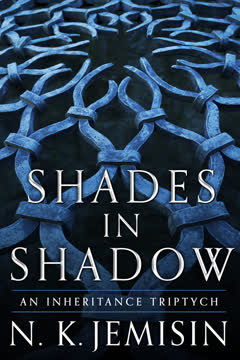
"Shades in Shadow" distills the grand themes of Jemisin's Inheritance Trilogy into a triptych of stories that interrogate the boundaries between gods and mortals, order and chaos, suffering and renewal. Through the intertwined journeys of Nahadoth, the god without a name, and Glee, the narrative explores the costs and possibilities of freedom, the necessity of change, and the enduring struggle to define oneself in the face of trauma and loss. The stories challenge the reader to consider the nature of justice, the risks of intimacy, and the power of choice, offering no easy answers but insisting on the value of agency and the hope of transformation. In a world where gods can be chained and mortals can shape destiny, the ultimate lesson is that meaning is forged in the crucible of suffering and the courage to begin anew.
Last updated:





