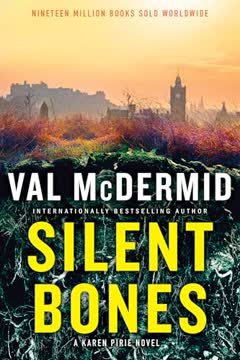
Plot Summary
New Year's Eve Secrets
On Hogmanay 2013, ambitious Chloe Grange attends a glittering fundraiser at Fraoch House, hosted by Lord Haig Striven-Douglass and comedian Billy the Kidd. The event, full of Scotland's elite, is a world away from Chloe's humble roots. She hopes to network her way into a better job, but the night takes a dark turn. Amidst the revelry, Chloe is targeted, drugged, and sexually assaulted by the hosts. The trauma is buried under gifts and a job offer, setting in motion a chain of secrets, shame, and complicity. The party's aftermath will ripple through the years, binding together the fates of the powerful and the vulnerable, and sowing the seeds for future tragedy.
Bones in the Mud
In 2025, a landslide exposes human remains beneath the M73. DCI Karen Pirie and her Historic Cases Unit are called in. Forensic anthropologist Dr. River Wilde confirms the bones are male and the death is suspicious. The body's presence in the motorway's substrate suggests a deliberate burial during construction, over a decade earlier. The discovery is a logistical nightmare, but also a rare opportunity: a cold case literally unearthed. The team braces for a complex investigation, knowing the victim's identity and story are buried under years of silence, and that the truth may implicate powerful figures.
The Walk-In Brother
Drew Jamieson, visiting from New Zealand, walks into the HCU office, convinced his brother Tom's 2020 death was murder, not accident. He brings new evidence: CCTV images of a hooded man following Tom from the Scott Monument Hotel to the Scotsman Steps, where Tom died. Drew's persistence and grief force the team to reopen the case, despite skepticism. His determination is fueled by guilt and a sense of unfinished business, and his outsider's perspective challenges the complacency of the original investigation. The team is drawn into a web of old wounds, family loyalty, and the search for closure.
Unsettled Cases
Karen Pirie juggles bureaucratic battles, including pressure to move her unit to Gartcosh. She and her sergeant Daisy Mortimer review Drew's evidence, uncovering a possible link between Tom's death and a mysterious man, Marcus Nicol, who profited during the pandemic. The team's dynamic is tested by personal histories and institutional inertia. Karen's leadership is marked by empathy and stubbornness, as she fights for her team's independence and the integrity of their work. The cold case world is one of frustration, dead ends, and the occasional breakthrough, demanding both patience and tenacity.
The Man in the Hoodie
Karen and Daisy confront Marcus Nicol, whose image matches the hooded man in the CCTV. Nicol is evasive, denying any connection to Tom Jamieson or the hotel. His defensiveness and success during the pandemic raise suspicions, but there's no hard evidence. The interview is a dance of power and implication, with Nicol's lawyerly confidence clashing with Karen's quiet persistence. The encounter leaves the team with more questions than answers, and the sense that Nicol's secrets are protected by wealth, connections, and a carefully managed public image.
Pandemic Profiteers
Daisy's research reveals Nicol's rise during Covid, pivoting his company Surinco to supply medical equipment—some of questionable quality. She learns from political contacts that Nicol's success was built on charm, ambition, and exploiting government desperation. The pandemic's chaos allowed opportunists to thrive, and the lines between public service and private gain blurred. The investigation exposes the moral ambiguities of crisis, the complicity of officials, and the difficulty of holding the powerful to account. The team senses that the pandemic's shadow still lingers over the present, shaping motives and alliances.
Deep Dives and Dead Ends
Jason, the team's researcher, narrows the possible identities of the motorway skeleton by cross-referencing missing persons. Daisy interviews Tom's colleagues, learning of a falling out over a book club. The team practices "victimology," seeking to understand the lives and relationships of the dead. They find that ambition, rivalry, and the desire for advancement can fracture even close-knit groups. The investigation is a mosaic of small details, each potentially significant, but the picture remains incomplete. The past resists easy explanation, and the truth is hidden in the intersections of personal and political histories.
The Skeleton's Identity
Forensic analysis identifies the motorway skeleton as Sam Nimmo, an investigative journalist who vanished in 2014 after his pregnant fiancée Rachel was murdered. Sam was the prime suspect, but his disappearance and a series of confessional texts led police to believe he'd fled. The discovery of his body upends the old narrative: Sam was murdered and buried during motorway construction. The team re-examines the original case, questioning assumptions and recognizing the ease with which the powerful can manipulate stories. The revelation brings new pain to Sam's family, who have lived for years with uncertainty and shame.
The Book Club Vacancy
Tom Jamieson's ambition led him to join an exclusive book club, the Justified Sinners, whose membership is by invitation and limited to twelve. The club is a nexus of influence, privilege, and mutual favors among Scotland's elite. When a member dies, a vacancy opens, and competition is fierce. The club's name, drawn from a literary classic about predestined salvation, hints at its members' sense of impunity. The team suspects that the club is more than a social gathering—it is a network for trading favors, covering up misdeeds, and perhaps enabling murder to protect its own.
Victimology and Five-a-Side
Daisy and Karen interview Tom's boyfriend Jayden and colleagues, learning about Tom's dedication, his falling out with the sommelier over leaving the football team, and his excitement about the book club. The investigation reveals the tensions between ambition and loyalty, the costs of social climbing, and the ways in which personal and professional lives intertwine. The team must navigate grief, suspicion, and the limits of what people are willing to reveal. The search for motive leads them to consider not just enemies, but the dangers of wanting too much, too quickly.
The Boyfriend's Grief
Jayden Shaw, Tom's partner, is still haunted by his death. He insists Tom had no enemies and dismisses the idea of murder. The interview is fraught with emotion, as Jayden relives his loss and resents the reopening of old wounds. The team must balance compassion with skepticism, recognizing that grief can cloud memory and judgment. The case becomes a meditation on the ways in which the living carry the burdens of the dead, and the difficulty of finding truth when everyone is invested in their own version of events.
The Journalist's Disappearance
Re-examining Sam Nimmo's case, the team uncovers evidence that he was framed for Rachel's murder. The original investigation was shaped by assumptions, lack of motive, and the convenience of blaming the absent. Sam's reputation as a muckraker made him enemies, but also left him vulnerable to being discredited. The team suspects that his investigation into a sexual assault at a political fundraiser made him a target. The case is a study in how narratives are constructed, how the powerful protect themselves, and how the truth can be buried—sometimes literally.
Family Ties and Old Wounds
Karen visits Sam's family, who have been devastated by his disappearance and the suspicion that he was a killer. His sister Jess describes the family's unraveling: a father lost to alcoholism, a mother consumed by grief, a sister forced to return home. The interview is raw and painful, exposing the collateral damage of unresolved cases. Karen promises to seek the truth, knowing that even answers may not bring healing. The chapter explores the psychological toll of uncertainty, the need for closure, and the ways in which families are both fractured and bound by tragedy.
The Justified Sinners
The investigation into the Justified Sinners reveals a group of powerful men who use their connections to advance their interests and shield each other from scrutiny. The club's exclusivity, secrecy, and pattern of "dead man's shoes" admissions suggest a willingness to do whatever it takes to maintain their circle. The team suspects that the club is involved in more than literary discussion: it is a mechanism for mutual protection, corruption, and perhaps murder. The chapter delves into the psychology of elite networks, the allure of belonging, and the dangers of unchecked power.
The Power of Connections
Karen and her team trace the ways in which the Justified Sinners trade favors, secure contracts, and manipulate outcomes. The club's members include politicians, businessmen, and professionals, all with something to gain—and to lose. The investigation uncovers a web of mutual obligations, where loyalty is rewarded and dissent punished. The team must navigate the complexities of privilege, the opacity of elite circles, and the challenge of proving wrongdoing when everyone is invested in maintaining the status quo. The chapter is a study in the mechanics of soft power and the limits of accountability.
The Architect's Fall
The death of architect Bryce Gordon, originally ruled an accident, is re-examined. Evidence emerges that his car was run off the road by a Mercedes SUV registered to Marcus Nicol's wife. The timing of the car's sale and traces of red paint suggest a cover-up. The team suspects that Gordon's death was orchestrated to create a vacancy in the Justified Sinners, and that Nicol's ambition drove him to murder. The chapter explores the psychology of envy, the costs of ambition, and the ways in which violence can be disguised as misfortune.
The Web of Favors
The investigation reveals how the Justified Sinners facilitate business deals, secure contracts, and protect their own. The club's influence extends into government, finance, and the arts. Members benefit from insider information, mutual support, and the ability to make problems disappear. The team uncovers evidence of corruption, but struggles to prove criminality. The chapter is a meditation on the nature of privilege, the seductions of power, and the difficulty of holding the elite to account. The club's motto—drawn from a novel about predestined salvation—becomes an ironic commentary on their sense of impunity.
The Fundraiser's Shadow
The team uncovers the story of Chloe's assault at the Fraoch House fundraiser. The event, meant to celebrate political hope, becomes the site of violence and betrayal. Chloe is silenced by shame, fear, and a job offer that binds her to her abuser. The assault is an open secret among the elite, but no one is willing to challenge the powerful men involved. The chapter explores the dynamics of complicity, the costs of speaking out, and the ways in which trauma is both personal and political. The team recognizes that the past is never truly past, and that old wounds continue to bleed.
The Rape That Echoes
Karen confronts Claudia (formerly Chloe), urging her to testify about the assault and its consequences. Claudia is torn between the desire for justice and the fear of losing everything she has rebuilt. The interview is fraught with emotion, as Karen balances empathy with the need for evidence. Claudia's story is one of survival, compromise, and the high price of silence. The chapter is a meditation on the complexities of victimhood, the challenges of seeking justice, and the ways in which the powerful exploit the vulnerable. The team must reckon with the limits of the law and the demands of conscience.
The Cover-Up Unravels
The team brings in Marcus Nicol and Hugh Grieve for questioning. Under pressure, Grieve reveals the club's "dead man's shoes" policy and Nicol's repeated attempts to join. Evidence mounts that Nicol murdered Gordon to create a vacancy, and Tom Jamieson to secure his place. The investigation exposes the club's culture of secrecy, the willingness to sacrifice outsiders, and the fragility of alliances built on self-interest. The chapter is a study in the psychology of confession, the dynamics of interrogation, and the ways in which the truth can be both revealed and denied.
The Cleaner's Trail
Attention turns to William Kidd, the comedian who fled Scotland after the murders. The team suspects he acted as the "cleaner," covering up crimes for the club. A sting operation lures him back for a secret comedy gig, but his old friend Linda Lawrence tries to warn him. The confrontation is chaotic, but Kidd is arrested. Under questioning, he confesses to helping cover up Rachel's death, but insists it was an accident. The chapter explores the psychology of guilt, the burden of complicity, and the ways in which loyalty can be both a shield and a weapon.
The Football Fix
Parallel to the main investigation, Jason uncovers a football betting scam involving referees, Singaporean fixers, and Scottish clubs. The case is a microcosm of the larger themes: ambition, corruption, and the ease with which the powerful exploit the system. The team's success in exposing the scam is a rare victory, but also a reminder of the pervasiveness of wrongdoing. The chapter is a meditation on the nature of justice, the satisfaction of small wins, and the ongoing struggle to make a difference in a world resistant to change.
The Stakeout
The team stakes out the Justified Sinners' meeting, identifying members and preparing to confront them. The operation is tense, as they balance the need for evidence with the risk of alerting suspects. The confrontation is a test of nerves, strategy, and the ability to read people. The chapter is a study in the art of investigation, the importance of teamwork, and the ways in which the pursuit of justice is both a science and an art. The team's persistence is rewarded with new leads, but also new challenges.
The Interview Room
In a series of interviews, the team confronts suspects, witnesses, and each other. The process is grueling, marked by resistance, denial, and the slow erosion of defenses. The team must navigate legal constraints, psychological barriers, and their own doubts. The interview room becomes a crucible, where stories are tested, motives revealed, and the limits of the law exposed. The chapter is a meditation on the nature of truth, the power of narrative, and the difficulty of achieving closure in a world of ambiguity.
The Confession
Claudia confesses to being present at Rachel's death, insisting it was an accident during a confrontation over the impending story. She called Billy the Kidd for help, and he cleaned the scene, later disposing of Sam Nimmo's body after Haig Striven-Douglass killed him in a panic. The confessions are partial, self-serving, and shaped by fear. The team must piece together the truth from fragments, recognizing that justice may be incomplete. The chapter is a study in the psychology of confession, the costs of survival, and the ways in which the past continues to haunt the present.
The Limits of Justice
Despite their efforts, the team is unable to bring charges for the murders or the rape. The Lord Advocate declines to prosecute, citing insufficient evidence and the public interest. The powerful escape accountability, while the victims and their families are left with answers but no justice. The team reflects on the limits of the law, the persistence of privilege, and the ongoing struggle for truth. The case becomes the subject of a TV drama, offering a different kind of reckoning. The chapter is a meditation on the meaning of justice, the costs of compromise, and the hope that telling the story may make a difference.
Characters
Karen Pirie
Karen is the heart of the Historic Cases Unit, driven by a fierce sense of justice and a deep empathy for victims and their families. Her leadership is marked by stubbornness, compassion, and a refusal to accept easy answers. She is haunted by personal loss—her partner Phil's death—and struggles with the loneliness of command. Karen's relationships with her team are complex: she mentors Daisy and Jason, pushes them to excel, and relies on their strengths. Her psychological insight allows her to see through facades, but she is also vulnerable to self-doubt and the emotional toll of her work. Karen's journey is one of persistence in the face of institutional resistance, the challenge of balancing empathy with objectivity, and the recognition that justice is often imperfect.
Daisy Mortimer
Daisy is Karen's right hand, bringing a blend of intelligence, intuition, and emotional intelligence to the team. She is openly gay, in a stable relationship with Steph, and uses her outsider status to build rapport with witnesses and suspects. Daisy's approach to interviews is marked by empathy and strategic charm, allowing her to elicit information others might miss. She is ambitious but grounded, aware of her strengths and limitations. Daisy's psychological insight is balanced by a healthy skepticism, and she is unafraid to challenge Karen or Jason when necessary. Her development is marked by increasing confidence, a willingness to take risks, and a deepening commitment to the pursuit of truth.
Jason "The Mint" Murray
Jason is the team's researcher, with a knack for databases, archives, and the patient assembly of evidence. He is loyal, hardworking, and often underestimated, but his persistence and attention to detail are crucial to the team's success. Jason's background is working-class, and he is motivated by a desire to prove himself and honor the memory of his mentor, Phil. He is in a relationship with Meera, an archivist, which broadens his perspective and supports his growth. Jason's psychological makeup is marked by a need for validation, a fear of failure, and a growing sense of competence. He is the team's anchor, providing stability and a quiet determination that balances Karen and Daisy's more volatile energies.
Claudia Grainger (Chloe Grange)
Claudia is the central victim of the Fraoch House assault, whose life is shaped by trauma, compromise, and the struggle for agency. She is ambitious, intelligent, and determined to rebuild her life after the assault, accepting a job from her abuser as a means of survival. Claudia's psychological journey is marked by shame, fear, and the high cost of silence. She is torn between the desire for justice and the fear of losing everything she has achieved. Her eventual confession is an act of courage, but also a recognition of the limits of what the law can offer. Claudia embodies the complexities of victimhood, the challenges of speaking out, and the ways in which survival can require complicity.
William Kidd (Billy the Kidd)
Billy is a once-popular comedian whose charm masks deep insecurities and a history of complicity. He is both a perpetrator and a victim, drawn into the orbit of the powerful and used as a tool for their ends. Billy's psychological makeup is marked by guilt, fear, and a desperate need for validation. His flight from Scotland is both an escape and an admission of guilt. Under pressure, he confesses to his role in covering up Rachel's death and disposing of Sam's body, but insists he was not the ringleader. Billy's development is a study in the costs of loyalty, the burden of secrets, and the corrosive effects of shame.
Lord Haig Striven-Douglass (Friockheim)
Haig is the embodiment of privilege, using charm, wealth, and connections to get what he wants and avoid consequences. He is the architect of the Fraoch House assault, the manipulator behind the Justified Sinners, and the likely instigator of the cover-up. Haig's psychological profile is marked by narcissism, a sense of impunity, and a willingness to sacrifice others for his own protection. He is skilled at delegating dirty work, maintaining plausible deniability, and exploiting the loyalty of those around him. Haig's development is a study in the dangers of unchecked power, the ease with which the elite evade justice, and the corrosive effects of entitlement.
Marcus Nicol
Nicol is a pandemic profiteer whose rise is built on charm, connections, and a willingness to bend the rules. He is implicated in the deaths of Bryce Gordon and Tom Jamieson, motivated by the desire to join the Justified Sinners and secure his place among the elite. Nicol's psychological makeup is marked by envy, insecurity, and a ruthless pragmatism. He is skilled at presenting a respectable facade, but his actions reveal a capacity for violence and self-preservation. Nicol's development is a cautionary tale about the costs of ambition, the dangers of unchecked desire, and the ways in which the powerful protect their own.
Hugh Grieve
Grieve is the doorman and fixer for the Justified Sinners, responsible for maintaining the club's exclusivity and managing its affairs. He is not a direct perpetrator, but his complicity is essential to the club's functioning. Grieve's psychological profile is marked by loyalty, self-preservation, and a growing sense of unease as the club's secrets unravel. Under pressure, he confesses to the club's "dead man's shoes" policy and Nicol's repeated attempts to join. Grieve's development is a study in the costs of complicity, the limits of loyalty, and the difficulty of escaping the web of favors and obligations.
Sam Nimmo
Sam is an investigative journalist whose commitment to truth makes him both a hero and a target. He is framed for his fiancée's murder, discredited, and ultimately killed to protect the powerful. Sam's psychological makeup is marked by idealism, stubbornness, and a willingness to take risks. His disappearance devastates his family and friends, and his posthumous vindication is bittersweet. Sam embodies the dangers of speaking truth to power, the vulnerability of the outsider, and the high cost of integrity in a corrupt world.
Rachel Morrison
Rachel is Sam's pregnant fiancée, whose murder sets the main plot in motion. She is described as kind, principled, and supportive, but her death is used to frame Sam and silence his investigation. Rachel's psychological presence is felt through the grief of those left behind, the injustice of her fate, and the ways in which her story is manipulated by others. She is a symbol of the collateral damage caused by the powerful, and a reminder of the human cost of secrets and lies.
Plot Devices
Dual Timelines and Interwoven Cases
The novel uses a dual timeline structure, with the present-day investigation uncovering events from 2013–2014. The cold case format allows for the gradual revelation of secrets, the re-examination of old evidence, and the challenge of overcoming institutional inertia. The interweaving of multiple cases—the motorway skeleton, Tom Jamieson's death, the football betting scam—creates a complex tapestry of motives, suspects, and connections. The structure emphasizes the persistence of the past, the difficulty of achieving closure, and the ways in which power protects itself.
The Exclusive Club as Microcosm
The Justified Sinners book club is both a literal and symbolic device, representing the networks of privilege that enable corruption and violence. Its "dead man's shoes" policy, limited membership, and culture of favors create a closed system where outsiders are expendable. The club's name, drawn from a novel about predestined salvation, is an ironic commentary on its members' sense of impunity. The club serves as a microcosm of elite society, where connections matter more than merit, and where justice is subverted by loyalty and self-interest.
Foreshadowing and Red Herrings
The novel employs foreshadowing through early references to the party, the book club, and the hidden connections between characters. Red herrings abound: the focus on the football team, the initial suspicion of Billy the Kidd, the possibility of organized crime involvement. These devices create suspense, challenge assumptions, and force the reader to question appearances. The gradual accumulation of evidence, the shifting of suspicion, and the ultimate revelation of Claudia's role are all foreshadowed but not fully revealed until the climax.
The Limits of the Law
The narrative structure emphasizes the difficulty of achieving justice in a world shaped by privilege, secrecy, and institutional inertia. The team's investigation is hampered by legal constraints, the reluctance of witnesses, and the power of the elite. The ultimate inability to prosecute the main perpetrators is both a plot device and a commentary on the limits of the law. The use of a TV drama as a form of reckoning is a metafictional device, suggesting that storytelling may achieve what the courts cannot.
Analysis
Val McDermid's Silent Bones is a masterful exploration of the intersection between power, privilege, and justice in contemporary Scotland. Through the lens of a cold case investigation, the novel interrogates the ways in which the elite protect themselves, the costs of complicity, and the challenges of seeking truth in a world resistant to accountability. The Justified Sinners club serves as a potent symbol of the networks that enable corruption, while the personal stories of victims and investigators ground the narrative in emotional reality. The novel is unflinching in its depiction of trauma, the complexities of victimhood, and the psychological toll of unresolved cases. McDermid's use of dual timelines, interwoven cases, and shifting perspectives creates a rich, suspenseful tapestry that rewards careful reading. The ultimate resolution—where justice is partial, compromised, and achieved as much through storytelling as through the courts—reflects the realities of modern society, where the powerful often escape consequences, but where the act of bearing witness remains vital. The novel's lessons are clear: truth is hard-won, justice is imperfect, and the fight for accountability is ongoing. Silent Bones is both a gripping crime story and a profound meditation on the meaning of justice in a fractured world.
Last updated:
Review Summary
Silent Bones, the eighth Karen Pirie novel, features DCI Pirie and her Historic Cases Unit investigating skeletal remains found under a motorway and a suspicious accidental death. Reviewers praised McDermid's intricate plotting, realistic Scottish setting, and well-developed characters, particularly Karen's leadership and her team's dynamics. Most found it readable as a standalone despite being mid-series. The pacing was generally strong, though some felt the ending rushed or anticlimactic. Several noted the book's exploration of justice in cold cases and political themes around Scottish independence. Ratings averaged 4-5 stars, with occasional criticism about too many plotlines or issue-focused dialogue.





