Plot Summary
Verona's Midnight Call
In the stifling heat of a Verona summer night, Cathy is jolted awake by a frantic call from her sister Frannie. The urgency in Frannie's voice is unmistakable—she begs for help, her words laced with terror. Cathy, always the reliable sibling, rushes out into the darkness, her mind racing with worry. The siblings—Cathy, Joe, and Frannie—converge on a remote road, drawn by the gravity of family ties and the unspoken promise to protect one another. The night's tranquility is shattered, and the siblings are thrust into a crisis that will test the limits of their loyalty, morality, and love. The air is thick with fear, and the seeds of an irreversible decision are sown.
Blood on the Road
Under the harsh glare of headlights, the siblings find Frannie kneeling beside a man's lifeless body, her hands and clothes stained with blood. The victim is a stranger—at least, that's what they believe. Frannie, in shock, confesses to hitting him with their car, her panic escalating as she realizes the gravity of her actions. Joe and Cathy, both veterinarians, attempt futile CPR, but the man is already dead. The siblings are united in horror and disbelief, their hands literally and figuratively stained. The accident is not just a tragedy; it is the catalyst for a series of choices that will entangle them in a web of lies, fear, and desperate self-preservation.
The Pact of Three
As the reality of the situation sets in, the siblings are paralyzed by fear—of the law, of losing each other, of the consequences for Frannie's young son, Paul. The memory of a recent altercation with the victim at the market, and the presence of a local policeman who witnessed it, heighten their anxiety. Frannie's pleas to avoid prison and protect her child sway Cathy and Joe. In the suffocating night, they make a pact: they will cover up the accident, bury the body, and protect their own at all costs. The decision is made not out of malice, but out of love and terror, binding them together in secrecy and complicity.
Burying the Evidence
The siblings, trembling and exhausted, carry the man's body into the woods near their villa. They dig a grave deep enough to evade sniffer dogs, their actions mechanical and surreal. Cathy, ever the pragmatist, insists on precautions—removing evidence, cleaning the car, burning bloodstains. As dawn breaks, the siblings are physically and emotionally spent, haunted by the enormity of what they have done. The burial is not just of a body, but of their innocence. Each shovelful of earth is heavy with guilt, and the knowledge that their lives have been irrevocably altered.
The Weight of Guilt
In the days that follow, the siblings struggle to maintain a façade of normalcy. Cathy is consumed by guilt, Joe by anxiety, and Frannie by fear for her son. The police begin their investigation, and the siblings are interviewed, their stories carefully aligned. The presence of sniffer dogs and the relentless heat amplify their paranoia. Each interaction is fraught with tension, every detail scrutinized for potential exposure. The siblings' relationships begin to strain under the weight of their shared secret, and the psychological toll becomes increasingly apparent.
Family Under Siege
The siblings' unity is threatened as external pressures mount. Lydia, Joe's wife, senses something is amiss, her suspicions growing as Joe becomes more distant and volatile. The family's veterinary practice, once a source of pride and stability, becomes a battleground for control and trust. The siblings are forced to navigate not only the practicalities of their cover-up but also the emotional fallout—resentment, jealousy, and the resurfacing of old wounds. The family's foundation is shaken, and the cracks begin to show.
The Market Confrontation
Flashbacks reveal the market altercation that preceded the accident. Frannie's confrontation with the victim, Will, was more charged than she initially admitted. The siblings recall the presence of a policeman, the heated words exchanged, and the sense that Will was not just a random stranger. These memories cast doubt on Frannie's account and foreshadow deeper connections and motives. The market scene becomes a focal point for the investigation and the siblings' growing unease.
The Cover-Up Unravels
As the investigation intensifies, the siblings' carefully constructed lies begin to unravel. Cathy discovers inconsistencies in Frannie's story and evidence of deleted emails. Joe's attempts to cover their tracks—crashing the car to explain the damage, staging false sightings—become increasingly desperate. The arrival of blackmail from their colleague Evan, who uncovers their secret, pushes the siblings to the brink. The family's unity is tested as trust erodes and the threat of exposure looms ever larger.
Blackmail and Betrayal
Evan's discovery of the truth gives him leverage over the siblings. He demands a partnership in the family business in exchange for his silence, exploiting their vulnerability. The siblings are forced to commit further crimes—fraud, bribery, and forgery—to appease him. The moral lines blur as they become entangled in a cycle of blackmail and betrayal. The stress fractures their relationships, and the sense of impending doom grows. The cost of their silence becomes unbearable.
The Truth About Will
Cathy uncovers the true identity of the victim, Will McGovern, and his connection to Frannie. Will was not a stranger, but Paul's biological father, seeking custody through the Italian courts. Frannie's fear of losing her son drove her actions, and the siblings realize they have been complicit in a far more complex and personal tragedy. The revelation shatters any remaining illusions and forces the siblings to confront the full extent of their deception and its consequences.
Fractures and Confessions
The truth about Will's identity and Frannie's motives leads to explosive confrontations. Joe's anger boils over, and the siblings' relationships reach a breaking point. Cathy, feeling isolated and betrayed, contemplates confessing to the police. The family's history of trauma—particularly the loss of their youngest sister, Rosie—resurfaces, coloring their actions and responses. The siblings are forced to reckon with their own flaws, loyalties, and the limits of forgiveness.
The Second Crime
The cycle of crime escalates when Joe, pushed to the edge by Evan's renewed blackmail, kills him in a fit of rage. Cathy is once again drawn into the aftermath, torn between loyalty to her brother and the need to end the cycle of violence. The siblings' world collapses as the police close in, and the consequences of their actions become inescapable. The second death marks the point of no return, and the family's fate is sealed.
The Trial and Testimony
The siblings' crimes are laid bare in a high-profile trial. Cathy, offered a plea deal in exchange for her testimony, is forced to betray her brother on the stand. The trial is a crucible for the family, exposing their secrets, lies, and the depths of their love and desperation. The emotional toll is immense, and the siblings are left to grapple with the consequences of their choices. The verdicts bring a measure of closure, but the scars remain.
Aftermath and Reckoning
In the wake of the trial, the family is irrevocably changed. Joe is convicted of multiple crimes but acquitted of murder, his sentence a reflection of the complexity of his actions. Frannie, broken by guilt and trauma, is institutionalized, her future uncertain. Cathy, haunted by her role in the cover-up, seeks solace in therapy and a new relationship. The family's once-close bonds are fractured, and each member must find a way to move forward in the shadow of their shared past.
Love, Loss, and Loyalty
Despite the devastation, threads of love and loyalty persist. Cathy finds comfort in her relationship with Tom, and Frannie begins to heal in the safety of the hospital. Paul, the innocent at the center of the tragedy, is cared for by Cathy, a living reminder of both loss and hope. The siblings' love for each other, though tested and scarred, endures. The family's story becomes one of survival, resilience, and the search for redemption.
The Price of Silence
The cost of the siblings' silence is measured in lost years, broken relationships, and enduring guilt. The calendar Frannie keeps, counting down the days until Joe's release, is a poignant symbol of hope and penance. The family's silence protected them in the short term but exacted a heavy toll on their souls and futures. The price of their choices is paid in full, and the lessons of their ordeal linger.
Healing and Moving Forward
In the epilogue, the family begins to heal. Cathy and Tom build a life together, Frannie prepares for her release, and Paul thrives in their care. The siblings, though changed, find moments of peace and connection. The past cannot be undone, but the future holds the possibility of forgiveness and renewal. The story ends with a sense of hard-won hope, as the family looks toward a future shaped by love, loss, and the lessons of that night.
Characters
Cathy Plant
Cathy is the eldest sister, a veterinarian whose sense of responsibility and loyalty to her family is both her strength and her burden. She is methodical, pragmatic, and often the voice of reason, but her tendency to shoulder guilt and self-sacrifice leaves her emotionally isolated. Cathy's relationship with her siblings is complex—she is both protector and outsider, haunted by the family's past trauma and her own perceived failures. Her journey is one of grappling with guilt, seeking redemption, and ultimately learning to prioritize her own needs and happiness, as seen in her relationship with Tom.
Joe Plant
Joe, the eldest sibling, is fiercely loyal and quick to anger, traits that both unite and endanger his family. As a veterinarian and de facto patriarch, he feels responsible for his sisters, especially Frannie. Joe's psychological landscape is marked by anxiety, a need for control, and unresolved grief over the loss of their sister Rosie. His protective instincts drive him to make increasingly desperate choices, culminating in violence. Joe's arc is a tragic exploration of the limits of loyalty, the corrosive effects of guilt, and the struggle to reconcile love with responsibility.
Frannie Plant
Frannie, the youngest sibling, is charismatic, impulsive, and deeply vulnerable. Her actions—driven by fear for her son Paul and a desperate need to avoid losing him—set the story in motion. Frannie's tendency to seek help from her siblings reflects both her dependence and the family's enmeshment. Her psychological unraveling, marked by guilt, depression, and eventual institutionalization, is a poignant portrait of a woman crushed by the weight of her choices and the consequences of secrets. Frannie's love for Paul is both her motivation and her undoing.
Lydia Plant
Lydia, Joe's wife, is intelligent, perceptive, and determined to carve out a place in the Plant family. Her own history of trauma and estrangement from her birth family makes her fiercely protective of her marriage and future. Lydia's growing suspicion and eventual discovery of the truth force her to confront the limits of loyalty and the cost of silence. Her decision to leave Joe is an act of self-preservation, highlighting the dangers of being on the periphery of a family bound by secrets.
Paul Plant
Paul, Frannie's young son, is the emotional heart of the story. His presence is both the reason for the siblings' desperate actions and a symbol of hope and continuity. Paul's innocence and vulnerability underscore the stakes of the family's choices, and his well-being becomes the measure by which the siblings judge their actions. He is a living reminder of both the tragedy and the possibility of redemption.
Evan Sawyer
Evan, a colleague at the family's veterinary practice, discovers the siblings' secret and uses it to blackmail them. His actions force the siblings into further criminality and ultimately lead to his own death at Joe's hands. Evan's role is that of an external threat, but his own vulnerabilities—financial struggles, loneliness—add complexity to his character. His presence exposes the fragility of the siblings' unity and the dangers of unchecked desperation.
Will McGovern
Will, the man killed in the accident, is initially a stranger but is later revealed to be Paul's biological father. His pursuit of custody and aggressive tactics make him both a threat and a tragic figure. Will's death is the catalyst for the siblings' descent into crime, and the revelation of his identity forces them to confront uncomfortable truths about motive, responsibility, and the limits of empathy.
Maria Plant
Maria, the siblings' mother, is a retired veterinarian who struggles to relinquish control of the family business and her children's lives. Her anxiety and inability to process past trauma—especially the loss of Rosie—shape the family's dynamics. Maria's presence is both stabilizing and suffocating, and her relationship with Cathy is particularly fraught with unspoken guilt and longing for forgiveness.
Tom
Tom, Cathy's romantic interest, is a calming, supportive presence who offers her the possibility of happiness and healing. His easygoing nature and emotional intelligence provide a stark contrast to the turmoil of the Plant family. Tom's acceptance and encouragement help Cathy to break free from the cycle of guilt and self-sacrifice, symbolizing hope and the potential for renewal.
Rosie Plant
Rosie, the youngest Plant sibling, died in childhood, leaving a void that shapes the family's dynamics and psychology. Her absence is a source of unresolved grief, guilt, and longing, particularly for Cathy and Joe. Rosie's memory haunts the family, influencing their actions and relationships, and serves as a poignant reminder of the fragility of happiness and the enduring impact of loss.
Plot Devices
Interwoven Timelines and Perspectives
The novel employs a non-linear narrative, alternating between past and present, and shifting perspectives among Cathy, Joe, Frannie, and Lydia. This structure allows the reader to experience the immediate aftermath of the crime, the psychological unraveling of the characters, and the long-term consequences in parallel. The use of therapy sessions, courtroom scenes, and flashbacks provides insight into the characters' motivations and emotional states, building suspense and deepening empathy.
Family as Both Sanctuary and Prison
The central plot device is the family's unbreakable bond—a source of strength and a trap. The siblings' decision to protect one another at all costs propels the narrative, but also leads them into moral and legal catastrophe. The family's history of trauma, particularly the loss of Rosie, is woven throughout, shaping their choices and relationships. The tension between love and self-preservation is explored through repeated tests of loyalty, confession, and betrayal.
Escalating Consequences and Moral Slippery Slope
The initial accident sets off a chain reaction of increasingly desperate and unethical actions—cover-up, blackmail, fraud, and ultimately murder. Each attempt to fix or contain the situation only worsens it, illustrating the slippery slope of moral compromise. The narrative uses foreshadowing and dramatic irony, as the reader anticipates the inevitable unraveling of the siblings' plans and the exposure of their secrets.
Psychological Realism and Therapy as Framing
The use of therapy sessions and legal consultations as narrative devices allows for deep psychological exploration of the characters. These scenes provide a space for confession, analysis, and the gradual revelation of truth, both to the reader and to the characters themselves. The introspective tone and focus on mental health underscore the novel's themes of guilt, trauma, and the search for redemption.
Symbolism and Motifs
Motifs such as blood, burial, and the recurring presence of animals (reflecting the siblings' profession and their attempts to heal) reinforce the novel's exploration of guilt, innocence, and the desire for atonement. The calendar Frannie keeps, counting down the days until Joe's release, serves as a symbol of hope, penance, and the enduring bonds of family.
Analysis
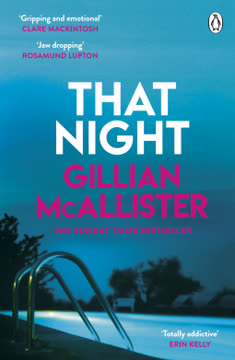
That Night is a masterful exploration of the moral and psychological complexities of family loyalty in the face of catastrophe. Gillian McAllister crafts a narrative that is both a gripping thriller and a profound meditation on the consequences of our choices. The novel interrogates the boundaries between right and wrong, the corrosive effects of secrets, and the ways in which trauma shapes identity and relationships. Through its nuanced characters and interwoven timelines, the story reveals how love can both save and destroy, and how the desire to protect those we love can lead us to betray our own values. The ultimate lesson is that silence and denial exact a heavy price, but that healing and redemption are possible—even after the darkest of nights—if we have the courage to face the truth, seek forgiveness, and move forward.
Last updated:
Review Summary
That Night by Gillian McAllister follows three close-knit siblings who help cover up a deadly hit-and-run during an Italian holiday. Readers praise the tense, gripping narrative exploring moral dilemmas about family loyalty and the consequences of lies. The multiple POVs and past-present timeline effectively build suspense. Characters are deliberately flawed and often unlikeable, which resonated with some but frustrated others. While many loved the twists and emotional depth, critics found it slow-paced, repetitive, and overly long. The ending proved divisive, shocking some positively while angering others.