Key Takeaways
1. Comanches Reversed Colonialism, Forging an Indigenous Empire
For a century, roughly from 1750 to 1850, the Comanches were the dominant people in the Southwest, and they manipulated and exploited the colonial outposts in New Mexico, Texas, Louisiana, and northern Mexico to increase their safety, prosperity, and power.
A counter-narrative of power. Conventional histories often portray Native Americans as passive victims or mere obstacles to European expansion. However, the Comanches defied this narrative, establishing a powerful empire that actively exploited and marginalized colonial regimes. This was not a momentary disruption but a century-long reversal of imperial dynamics.
Economic and violent foundations. The Comanche empire was fundamentally an economic construct, driven by an extensive commercial network that controlled trade and incorporated foreign ethnicities as dependents, workers, and slaves. This economic power was buttressed by a formidable military, which extracted resources and tribute from both Native and Euro-American neighbors.
Informal yet potent rule. Unlike European empires, the Comanche empire lacked rigid structures, clear-cut borders, or ostentatious architecture. It was a fluid, decentralized system of nomadic bands that achieved dominance through a creative blend of violence, diplomacy, extortion, trade, and kinship politics, imposing its will without direct political control.
2. The Horse and Gun Fueled Comanche Conquest of the Southern Plains
They purchased and plundered horses from New Mexico, reinvented themselves as mounted fighters, and reenvisioned their place in the world.
From Basin to Plains. The Comanches, originally Shoshone hunter-gatherers, migrated from the Great Basin to the southern plains in the early 18th century, seeking new opportunities. This move coincided with the widespread diffusion of Spanish horses and European firearms, which they rapidly adopted.
Technological revolution. Horses transformed Comanche life, multiplying their mobility, hunting efficiency, and military prowess. Guns, though initially cumbersome, provided a decisive advantage in warfare. This technological leap allowed them to:
- Transport more goods and belongings
- Hunt bison more effectively
- Wage war and plunder with unprecedented speed and force
- Access new sources of energy (horsepower, gunpowder)
Ute alliance and slave trade. Early on, Comanches allied with the Utes, who introduced them to horses, European goods, and the lucrative slave trade in New Mexico. This alliance provided a strategic base for their expansion, allowing them to raid Apache villages for captives and horses, which were then traded to the Spanish.
3. Comanches Mastered a Complex Diplomacy of Raiding, Trading, and Alliances
Comanches, to simplify a complex multistage process, developed aggressive power policies in reaction to Euro-American invasions that had threatened their safety and autonomy from the moment they had entered the southern plains.
Strategic opportunism. The Comanche conquest of the southern plains was not a random expansion but a calculated, multi-stage process. They exploited the geopolitical instability of the region, playing Spanish and French colonial powers against each other to secure advantages. Their initial wars with the Apaches were driven by the need for:
- Control over vital river valleys for horse pasturage and winter shelter
- Access to New Mexican markets for carbohydrates (maize)
- Captives for trade and labor
Flexible foreign policy. Comanches developed a sophisticated foreign policy that seamlessly blended violence, diplomacy, and commerce. They would raid one colonial outpost for resources while maintaining peaceful trade relations with another, often using the spoils of one to fuel the trade of the other. This fluid approach baffled European officials who struggled with rigid diplomatic protocols.
Alliance networks. Crucial to their success was the formation and dissolution of strategic alliances. They initially allied with the Utes, then with the Taovayas and other Wichitas, and later with Pawnees, Kiowas, Cheyennes, and Arapahoes. These alliances secured their borders, provided access to diverse markets (including French and British guns), and allowed them to mobilize large, multi-ethnic military campaigns.
4. Comanchería Became the Economic Nexus of the North American Midcontinent
At its core was an extensive commercial network that allowed Comanches to control nearby border markets and long-distance trade, swing surrounding groups into their political orbit, and spread their language and culture across the midcontinent.
A vast trading empire. By the early 19th century, Comanchería was the central hub of a sprawling commercial network. Western Comanches controlled the upper Arkansas basin, funneling horses from the Southwest to the northern plains (Pawnees, Cheyennes, Kiowas, Shoshones, Crows) in exchange for guns and manufactured goods. Eastern Comanches dominated trade with American merchants from Louisiana and later with removed Indian tribes in Indian Territory.
Strategic resource control. Comanches leveraged their unique position to control the flow of critical commodities. They supplied horses and mules to a vast deficit region, ensuring a steady inflow of firearms, metal tools, textiles, and agricultural products (maize, beans, squash). This economic power made them indispensable to many Native and Euro-American groups.
Market manipulation. Comanche raids on Spanish and Mexican settlements served a dual purpose: acquiring livestock and captives, and creating artificial demand for their own products in colonial markets. They effectively turned colonial outposts into economic hinterlands, forcing them to trade for necessities that Comanches had either plundered or produced.
5. A Unique Blend of Pastoralism and Slavery Sustained Comanche Power
The Comanche empire was powered by violence, but, like most viable empires, it was first and foremost an economic construction.
Pastoral-hunting economy. Comanches transformed their subsistence hunting into a sophisticated dual economy of bison hunting and horse pastoralism. Their southern plains homeland provided ideal conditions for horse breeding, allowing them to amass vast herds (often 3-4 horses per capita, with thousands of surplus animals). This pastoral wealth fueled their trade networks and military campaigns.
Labor-intensive production. The demands of managing massive horse herds and processing bison robes for market created a chronic labor shortage. Comanches addressed this through:
- Polygyny: Men took multiple wives to increase household labor for tasks like hide tanning, meat curing, and horse tending. This led to a decline in women's social status.
- Slavery: Comanches became the largest slaveholders in the Southwest, raiding Mexico and other Native groups for thousands of captives (Mexican, Apache, Pueblo, Anglo-American, African American).
Fluid and economic slavery. Comanche slavery was distinct from chattel slavery. While captives endured brutal "natal alienation" and forced labor, many were eventually adopted into Comanche families, especially women and children, to replenish populations decimated by disease. However, the constant need for labor meant continuous raiding for new captives.
6. Comanche Society Evolved into a Stratified Yet Flexible Imperial Polity
To cope with the opportunities and challenges of their rapid expansion, Comanches created a centralized multilevel political system, a flourishing market economy, and a graded social organization that was flexible enough to sustain and survive the burdens of their external ambitions.
Wealth and status. The influx of horses and slaves led to significant social stratification. Wealthy elders, or "big men," amassed large herds and multiple wives/slaves, allowing them to retire from active labor and gain political influence through generosity and patronage. This created a new aristocracy.
Competitive warrior culture. Young, unpropertied men found their path to status and marriage primarily through military exploits. The "counting coup" system and elite warrior societies like the Lobos incentivized daring raids and battles, channeling male ambition outwards against external enemies.
Hybrid political structure. Comanches maintained a decentralized political system of autonomous rancherías (bands) led by civil chiefs (paraibos) and war chiefs (mahimiana paraibos). However, they also developed a "Comanche confederacy" through multi-divisional councils. This allowed for:
- Coordinated national policies (peace, war, trade)
- Flexibility for local bands to adapt to changing conditions
- A unified front against external powers, while maintaining internal fluidity.
7. Comanche Cultural Influence Reshaped Neighboring Societies
By preserving the essentials of their traditional ways—and by expecting others to conform to their cultural order—they forced the colonists to adjust to a world that was foreign, uncontrollable, and, increasingly, unlivable.
Cultural assimilation and emulation. Comanchería became a multiethnic melting pot, absorbing thousands of voluntary immigrants and captives from diverse backgrounds (Kiowas, Naishans, Chariticas, Wichitas, Mexicans, Genízaros). These newcomers often adopted Comanche language, customs, and identity, drawn by the empire's prosperity and security.
Linguistic hegemony. The Comanche language became a lingua franca across large parts of the Southwest and Great Plains, used in trade and diplomacy by numerous Native and Euro-American groups. This linguistic dominance reflected their broader cultural and political sway.
Shaping colonial interactions. Comanches imposed their cultural norms on colonial relations. They expected gifts as a sign of kinship, viewed raiding as a form of reciprocal exchange, and often baffled European officials with their fluid approach to peace and war. This forced colonists to adapt to Comanche protocols, rather than the other way around.
8. Comanche Power Weakened New Spain and Mexico, Paving the Way for U.S. Expansion
Ultimately, the rise of the Comanche empire helps explain why Mexico’s Far North is today the American Southwest.
Tributary states. Comanches reduced Spanish New Mexico and Texas to de facto tributary states. They systematically raided for livestock and captives, while demanding gifts and favorable trade terms to maintain peace. New Mexico became economically dependent on Comanche trade, while Texas was nearly destroyed by constant depredations.
Aborting imperial designs. Comanche power thwarted Spain's ambitions to expand into the North American interior. They displaced Apaches, who then ravaged northern Mexico's mining districts, and later extended their own raids deep into Mexico. This left Spain's northern frontier fragmented and vulnerable.
Facilitating U.S. conquest. The Comanche empire inadvertently paved the way for U.S. expansion. Mexico's inability to control Comanche raids in Texas led it to open the province to Anglo-American immigration, which ultimately resulted in the Texas Revolution. During the Mexican-American War (1846-48), Comanche raids further weakened northern Mexico, creating a "vanquished hinterland" that the U.S. Army easily occupied.
9. Internal Ecological and Economic Crises Precipitated Comanche Decline
For decades, and almost imperceptibly, several in-built economic and ecological problems had been brewing, erupting into a full-blown crisis in the closing years of the 1840s.
Unsustainable growth. By the mid-19th century, the Comanche empire's prodigious production system had surpassed the ecological limits of Comanchería. Overhunting by Comanches and their allies, coupled with grazing competition from massive horse herds, severely depleted bison populations.
Drought and famine. A prolonged and intense drought from 1845 to the mid-1860s exacerbated the crisis. Water sources dried up, grasses withered, and bison herds collapsed, leading to widespread starvation among the Comanches. This ecological disaster crippled their subsistence economy.
Dissolving trade networks. The bison crisis triggered a commercial collapse. American hide traders abandoned their posts, and intertribal trade links with Cheyennes, Arapahoes, and Wichitas dissolved as game disappeared. The comanchero trade, though resilient, also faced increasing pressure.
10. The U.S. Army Delivered the Final Blow to a Faltering Empire
The Comanches trapped on the floor of the Palo Duro Canyon had not suffered decisive defeats in the hands of U.S. troops, but they were a society fatally crippled by poverty, malnutrition, and a loss of cultural order.
Post-Civil War invasion. The U.S. Civil War offered a brief respite, but after 1865, a rapidly industrializing United States turned its attention westward. Thousands of settlers, ranchers, and soldiers poured into the Great Plains, encroaching on Comanchería.
Total war strategy. The U.S. Army, under generals like Sherman and Sheridan, adopted a scorched-earth policy. Recognizing that direct military engagements were costly, they aimed to destroy the Comanches' economic base:
- Encouraging buffalo hunters to annihilate bison herds, violating treaties
- Launching winter campaigns to burn camps, food supplies, and horse herds
- Disrupting the comanchero trade to cut off vital supplies
Palo Duro Canyon (1874). This battle, though resulting in few Comanche casualties, was a decisive economic blow. Colonel Ranald Mackenzie's forces destroyed hundreds of tipis, thousands of pounds of food, and over 1,400 horses, leaving the Comanches destitute and starving.
Surrender and collapse. Facing utter destitution and the complete destruction of their way of life, most Comanche bands surrendered at Fort Sill by 1875. Their empire, already weakened by internal ecological and economic crises, was swiftly and brutally dismantled by the overwhelming might of the United States.
Last updated:
Review Summary
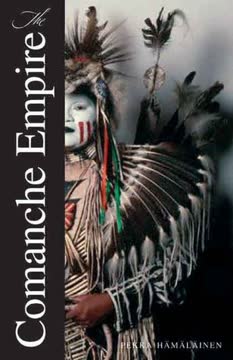
The Comanche Empire receives widespread acclaim (4.17/5) for reframing American Southwest history by portraying the Comanche as a powerful imperial force rather than passive victims of colonization. Reviewers praise Hämäläinen's well-researched narrative showing how Comanches dominated the southern Great Plains from 1700-1874, reducing Spanish and Mexican colonies to tributary states. While some note dense academic prose initially, most find the book compelling and eye-opening. Critics appreciate the balanced portrayal avoiding romanticization while acknowledging both Comanche achievements and brutal practices including slavery and raiding. The work successfully challenges Euro-centric historical narratives.





