Plot Summary
City of Hidden Dangers
New York City pulses with both grandeur and menace, its streets and buildings layered with history, privilege, and peril. Chicky Diaz, the longtime doorman at the Bohemia, stands sentinel, reflecting on the countless ways the city can turn deadly. His job is to keep danger at bay for the wealthy residents, but he knows violence can erupt anywhere, even in the most protected enclaves. The city's divisions—by class, race, and opportunity—are stark, and the threat of unrest simmers beneath the surface. Chicky's vigilance is both professional and personal, shaped by his own losses and the city's relentless churn. The Bohemia, a fortress for the elite, is not immune to the chaos outside, and Chicky senses that tonight, the city's dangers are drawing closer than ever.
Marriages and Masks
Emily Longworth, art expert and wife to the fabulously wealthy Whit, navigates a marriage built on compromise and denial. She's learned to project patience and perfection, but beneath the surface, her relationship is brittle, marked by Whit's evasions, humiliations, and a chilling penchant for control. Their union, cemented by a lucrative prenup, is a transaction as much as a partnership, and Emily's sense of self is eroded by the roles she's forced to play. The trappings of privilege—art, parties, philanthropy—mask deeper wounds, and Emily's growing disillusionment is mirrored by the city's own fractures. As she juggles motherhood, social obligations, and her own desires, Emily begins to question the cost of the life she's chosen.
The Price of Privilege
The Bohemia's residents live in a world of unimaginable luxury, but their fortunes come with strings attached. Whit's business, built on defense contracts and body armor, draws both admiration and outrage, and his connections to unsavory figures like Justin Pugh threaten to unravel the family's carefully curated image. Emily's attempts to do good—volunteering, fundraising—are complicated by the hypocrisy of her position. The city's inequalities are on full display, from the opulent apartments to the food pantries where Emily volunteers under an alias. The threat of exposure, both literal and metaphorical, looms over the Longworths, as old alliances sour and new enemies gather at the gates.
Old Friends, New Fears
Julian Sonnenberg, a gallerist and Bohemia resident, faces his own mortality after a dire medical diagnosis. His relationships—with his wife, children, and business partner Ellington—are strained by secrets and the slow erosion of relevance. Julian's connection to Emily, once innocent, deepens into something more dangerous, offering both solace and risk. The city's past and present collide in Julian's memories, and the specter of loss haunts every interaction. As protests erupt over police violence, Julian is forced to confront his own complicity and the fragility of the world he's built.
Generations and Goodbyes
Chicky's life is marked by loss: his wife's death, his daughters leaving for college, mounting debts, and the slow fade of community. The Bohemia's staff, once a tight-knit group, is now a microcosm of the city's shifting demographics and tensions. Chicky's sense of duty is both a comfort and a burden, and his loneliness grows as the world he knew slips away. The generational divide is everywhere—between parents and children, old money and new, tradition and progress. As the city prepares for another night of unrest, Chicky wonders what, if anything, is worth holding onto.
Woke Wars and Wounds
The Bohemia's board meetings and school drop-offs are battlegrounds for debates over race, privilege, and progress. Residents and staff alike navigate a minefield of microaggressions, performative activism, and genuine attempts at change. Emily is caught between her liberal ideals and the realities of her social circle, while Chicky and his colleagues face their own struggles for respect and recognition. The city's protests, sparked by another police killing, bring these tensions to a head, exposing the limits of good intentions and the dangers of complacency.
Chicky's Burdens
Chicky's financial woes deepen as he juggles multiple jobs, mounting bills, and the threat of eviction. His sense of responsibility—to his family, his coworkers, and the Bohemia's residents—pushes him to the brink. When a violent encounter at his side job as a bouncer puts him in the crosshairs of a local enforcer, Chicky is forced to consider desperate measures. The lines between right and wrong blur as survival becomes paramount, and Chicky's loyalty is tested in ways he never imagined.
Boardroom Battles
The Bohemia's co-op board, a relic of old New York, grapples with its own biases as it debates security measures in the face of citywide protests. Julian, as board president, tries to steer a course between legal liability and moral responsibility, but the divisions among the residents are deep and often ugly. The specter of racism, antisemitism, and class resentment hangs over every decision, and the board's actions have consequences far beyond the building's walls. As the city's unrest inches closer, the illusion of safety begins to crack.
Security and Suspicion
As the protest swells, the Bohemia's residents and staff brace for the worst. Calls for extra security, armed guards, and police intervention reveal the deep anxieties of the privileged, who fear both the anger of the city and the resentment of those who serve them. Chicky, Olek the super, and the other staff are caught in the middle, their loyalties questioned and their safety uncertain. The city's divisions are mirrored within the building, and the sense of impending crisis is palpable.
Art, Affairs, and Enemies
Emily and Julian's affair, born of loneliness and longing, becomes a lifeline for both—but also a liability. Their secret meetings in a rented studio offer escape from their unhappy marriages, but the risks mount as Whit grows suspicious and the city's unrest intensifies. The world of art, with its own hierarchies and betrayals, provides both cover and exposure. As old enemies resurface and new threats emerge, the boundaries between love, loyalty, and survival blur.
The Cost of Silence
Chicky's knowledge of the Longworths' secrets, Julian and Emily's affair, and the simmering resentments among the staff and residents all converge as the city teeters on the edge of chaos. The price of silence—whether bought, coerced, or chosen—becomes increasingly high. As the night unfolds, alliances shift and old debts come due. The cost of protecting others, and oneself, is measured in more than money.
The Protest Ignites
The city's protest against police violence turns violent, spilling into the streets around the Bohemia. Shots ring out, and the fragile peace of the building is shattered. Emily, caught in the chaos, is forced to confront her own fears and the reality of the world outside her privileged bubble. Chicky, Julian, and the other residents and staff are drawn into the maelstrom, their fates intertwined by circumstance and choice. The boundaries between inside and outside, safety and danger, are obliterated.
Secrets in the Studio
Emily's studio, once a sanctuary, becomes a crucible for confession and reckoning. Her affair with Julian is threatened by surveillance, suspicion, and the ever-present risk of discovery. The city's violence echoes in their private world, and the consequences of their choices become impossible to ignore. As Emily prepares to confront Whit, she realizes that the secrets she's kept may be her undoing—or her salvation.
The Heist Unfolds
A team of armed, masked men breaches the Bohemia, targeting the wealthiest apartments—including the Longworths'. Chicky is forced to act as the inside man, leading the robbers from door to door under threat of violence. The operation is swift and professional, but complications arise as residents are taken hostage and shots are fired. The line between victim and accomplice blurs, and Chicky must decide where his loyalties lie. The building's security, both physical and moral, is put to the ultimate test.
Blood on the Parquet
As the heist spirals out of control, blood is spilled—residents, staff, and intruders alike are caught in the crossfire. Emily, Chicky, and Julian are forced to make split-second decisions that will haunt them forever. Old grievances and hidden motives come to light, and the true cost of privilege is paid in blood. The aftermath is chaos: bodies, sirens, and the shattering of lives and illusions. The Bohemia, once a symbol of safety and exclusivity, becomes a crime scene.
Aftermath and Alibis
In the wake of the violence, the survivors scramble to construct narratives that will protect them from suspicion and prosecution. Emily and Chicky, bound by shared guilt and necessity, agree on a version of events that shields them both. The police, lawyers, and media descend, hungry for answers and scapegoats. The city, ever resilient, begins to clean up and move on, but the scars remain. The price of survival is silence, and the burden of truth is heavy.
The Doorman's Dilemma
Chicky, hailed as a hero by some and suspected by others, must navigate the aftermath of the heist and the choices he made. His loyalty to Emily is rewarded, but at the cost of his own peace of mind. The lines between right and wrong, victim and perpetrator, are forever blurred. As he prepares to leave the Bohemia, Chicky reflects on the meaning of service, sacrifice, and the possibility of redemption. The city moves on, but the doorman's story lingers in the shadows.
Endings and Escapes
Emily, now a widow and free from Whit's shadow, faces a future shaped by both loss and liberation. Julian's death leaves a void that cannot be filled, and Jennifer must find her own path forward. Chicky, finally unburdened by debt and duty, steps into retirement with a mixture of relief and regret. The Bohemia, scarred but standing, remains a monument to the city's contradictions—wealth and want, safety and danger, love and betrayal. As the sun sets on Central Park, the survivors carry their secrets into the uncertain light of tomorrow.
Characters
Chicky Diaz
Chicky is the heart and conscience of the Bohemia, a doorman whose decades of service have made him both invisible and indispensable. His life is marked by sacrifice: a widower struggling with grief, debt, and the loneliness of an empty nest. Chicky's sense of duty is unwavering, but it comes at a personal cost—he suppresses his own needs to serve others, often at the expense of his own happiness. His relationships with the residents are complex, shaped by boundaries of class and race, but he is trusted by all. When violence erupts, Chicky is forced to confront the limits of his loyalty and the weight of his secrets. His journey is one of endurance, quiet heroism, and the search for dignity in a world that often overlooks men like him.
Emily Longworth
Emily is a study in contradictions: cultured, compassionate, and deeply unhappy. Her marriage to Whit is both a golden cage and a source of shame, built on wealth, power, and silent bargains. Emily's desire for meaning leads her to volunteer work and an affair with Julian, seeking connection and escape from her stifling life. She is acutely aware of her privilege and the hypocrisies it entails, yet struggles to break free from the roles imposed on her. Emily's psychological arc is one of awakening—she moves from denial and self-sacrifice to agency, but not without moral compromise. Her complicity in violence and her willingness to rewrite the truth for survival reveal the complexities of guilt, love, and self-preservation.
Whitaker Longworth
Whit is the embodiment of entitled, ruthless privilege. Handsome, intelligent, and fabulously wealthy, he is also manipulative, emotionally abusive, and obsessed with power. His business dealings are morally dubious, and his personal life is marked by infidelity, humiliation, and a chilling need for dominance. Whit's relationships are transactional—he views Emily, his children, and even his own safety as assets to be managed. His psychological unraveling is accelerated by public scandal and personal betrayal, leading to paranoia and violence. Whit's downfall is both inevitable and tragic, a cautionary tale of unchecked ambition and the corrosive effects of power.
Julian Sonnenberg
Julian is a man out of time, clinging to the vestiges of a once-glamorous life. His career in the art world is threatened by changing tastes, financial instability, and his own declining health. Julian's marriage is hollow, his children distant, and his partnership with Ellington strained by shifting cultural tides. His affair with Emily offers a brief respite from despair, but also exposes him to danger and moral ambiguity. Julian's psychological portrait is one of longing—for love, for purpose, for a sense of belonging. His ultimate fate is shaped by both his choices and the inexorable forces of a city that no longer has a place for men like him.
Olek (Oleksander Ponomarenko)
Olek is the Bohemia's resident manager, a man of few words and many secrets. His past is shrouded in mystery—rumors of military service, prison, and exile swirl around him. Olek is hyper-competent, unflappable, and fiercely protective of his domain. He keeps his personal life hidden, navigating the building's politics and crises with stoic resolve. Olek's psychological depth lies in his isolation and his code of honor; he is both feared and respected by staff and residents alike. When violence comes, Olek's preparedness and willingness to act are both a blessing and a curse.
Jennifer Sonnenberg
Jennifer is Julian's wife, a corporate lawyer whose career and competence contrast sharply with her husband's fading relevance. She is practical, emotionally reserved, and resigned to the compromises of marriage. Jennifer's awareness of Julian's affair is tinged with both pain and pragmatism—she fears loneliness more than betrayal. Her psychological resilience is tested by grief, public scrutiny, and the need to protect her family. Jennifer's journey is one of survival, adaptation, and the search for dignity in the aftermath of loss.
Ellington Toussaint
Ellington is Julian's business partner, a Black gallerist navigating the art world's shifting landscape. He is charismatic, driven, and acutely aware of the barriers he faces. Ellington's relationship with Julian is both collaborative and competitive, shaped by mutual dependence and underlying tensions about race, equity, and recognition. His psychological arc is one of striving—for success, for respect, for a place in a world that alternately celebrates and marginalizes him. Ellington's choices reflect the complexities of ambition, loyalty, and the costs of breaking new ground.
Zaire Diggs
Zaire is a member of the Bohemia's staff, outspoken and politically engaged. He is unafraid to challenge authority, question policies, and demand respect. Zaire's anger is both personal and political, rooted in experiences of racism and exclusion. His relationships with colleagues are fraught, especially with Chicky, as they navigate the boundaries of solidarity and self-interest. Zaire's psychological profile is one of righteous indignation, but also vulnerability—his activism is both a shield and a source of isolation.
Justin Pugh
Pugh is a former business associate of Whit, whose descent into extremism and resentment makes him a dangerous adversary. He is emblematic of the city's undercurrents of hate, grievance, and violence. Pugh's actions are driven by a sense of betrayal and a desire for retribution, and he becomes the architect of the Bohemia's darkest night. His psychological makeup is a toxic mix of entitlement, rage, and self-pity, making him both pitiable and terrifying.
DeMarquis
DeMarquis is Whit's driver and bodyguard, a man of few words but keen observation. He is caught between worlds—trusted with the Longworths' safety, yet always an outsider. DeMarquis's loyalty is tested by the family's dysfunction and the city's violence. His psychological strength lies in his discretion and his ability to navigate danger without drawing attention. DeMarquis's actions in the crisis reveal both his competence and his humanity.
Plot Devices
Interwoven Perspectives and Social Microcosm
The novel employs a shifting third-person perspective, moving fluidly between Chicky, Emily, Julian, and others to create a tapestry of interconnected lives. The Bohemia serves as a microcosm of New York's social hierarchies, with its residents and staff embodying the city's divisions of class, race, and power. The narrative structure mirrors the building's architecture—public spaces, private rooms, hidden passages—each concealing secrets and vulnerabilities. Foreshadowing is deftly used: early meditations on violence, privilege, and the city's dangers set the stage for the climactic heist and its bloody aftermath. The protest outside the Bohemia is both a literal and symbolic eruption, exposing the fragility of the residents' security and the consequences of their choices. The use of parallel plotlines—affairs, financial crises, boardroom battles—heightens the sense of inevitability, as personal and political tensions converge in a single night of reckoning.
Analysis
The Doorman is a masterful exploration of the hidden costs of wealth, the corrosive effects of power, and the moral ambiguities that define modern urban life. Through its ensemble cast and tightly woven plot, the novel interrogates the boundaries between service and servitude, love and betrayal, justice and vengeance. The Bohemia, both fortress and prison, becomes a stage for the city's most urgent conflicts—race, class, gender, and the ever-present threat of violence. The characters' struggles for dignity, agency, and connection are set against a backdrop of social upheaval, exposing the limits of good intentions and the dangers of complacency. The novel's central lesson is that no one is immune to the city's dangers—not the privileged, not the powerful, not even the doorman. In the end, survival depends not on wealth or status, but on the willingness to confront uncomfortable truths, to make impossible choices, and to bear the weight of one's own story. The Doorman is both a gripping thriller and a profound meditation on what it means to live—and to serve—in a world where safety is always an illusion.
Last updated:
Review Summary
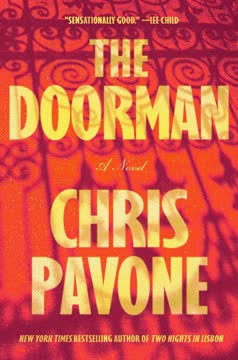
The Doorman by Chris Pavone receives mixed reviews averaging 3.9/5 stars. Many readers praise the novel's social commentary on class, race, and contemporary politics in Manhattan's elite circles, comparing it favorably to Bonfire of the Vanities. The protagonist, doorman Chicky Diaz, navigates financial troubles while residents Emily and Julian face their own crises. Critics appreciate Pavone's character development and authentic NYC atmosphere. However, significant complaints include slow pacing with thriller elements arriving only in the final 10-30%, excessive political discourse from multiple viewpoints, and lengthy background exposition that detracts from suspense.