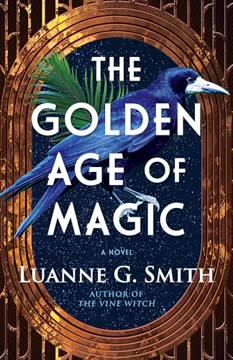
Plot Summary
Parisian Shadows and Sisterhood
In the heart of Paris, Celeste, a young initiate of the Fées Gardiennes—magical women once revered as fairy godmothers—faces the consequences of defying her ruthless elder, Anaïs. The old order of magic, once tied to royal courts, has fractured after revolution and war. Now, the sisterhood's purpose is uncertain, and Celeste's misstep—countering a deadly curse at a child's christening—has put her at odds with Anaïs and under scrutiny from Dorée, the wise and formidable matriarch. As Paris glitters with modernity and old magic lingers in the shadows, Celeste is exiled for her own safety, sent far from Anaïs's vengeance. Her only hope for redemption: to find a protégé and guide them to greatness, thus earning her place among the Gardiennes.
Exile Across the Atlantic
Banished from France, Celeste boards a grand ship bound for America, accompanied by her loyal stoat familiar, Sebastian. The Atlantic crossing is both a physical and emotional passage, as she mourns her lost home and uncertain future. On deck, she comforts a lonely boy, conjuring a miraculous whale sighting that rekindles his hope. This act, small but profound, reminds Celeste of her calling: to spark dreams in others. As the ship nears New York, she receives a token of luck—a coin imbued with longing and possibility. The journey is a liminal space, where Celeste's doubts and hopes mingle, and the promise of a new beginning beckons from the distant American shore.
Arrival in the Land of Dreams
After a weary train ride across the continent, Celeste arrives in Los Angeles, a city pulsing with ambition and raw energy. Guided by intuition and a mysterious postcard, she settles in a magical bungalow at the Beverly Hills Hotel, conjured into existence with Sebastian's help. The city's glamour and grit are intoxicating, but Celeste feels the weight of her mission: to find a worthy protégé and fulfill her magical destiny. As she explores the city, she senses the undercurrents of old magic and new dreams, and the challenge of forging a path in a land where enchantment and ambition collide.
The Search for a Protégé
Determined to prove herself, Celeste sets out to find her first protégé. Advised to arrange an advantageous marriage—a relic of the Gardiennes' past—she is unsettled by the transactional nature of such magic. Driving through Hollywood's burgeoning streets, she is overwhelmed by the sheer volume of dreams and desires swirling around her. The city is a cacophony of hope, and Celeste fears she may never discern the true star among so many. Yet, with Sebastian's gentle encouragement, she resolves to trust her instincts and wait for the unmistakable pull of destiny.
Hollywood's Chorus of Hope
Outside a bustling movie studio, Celeste is nearly drowned by the collective wishes of aspiring actors and artists. The intensity of their longing nearly knocks her unconscious, but in the chaos, she is rescued by Nick West, a charismatic studio head. Inside, she glimpses Rose, a humble seamstress whose quiet ambition and talent shine through the noise. Celeste senses a unique spark in Rose—a dream not of fame, but of creation. As she recovers, Celeste realizes that true magic lies not in the loudest wishes, but in the quiet, persistent ones that endure.
Rose Among the Costumers
Disguised as a fellow seamstress, Celeste befriends Rose and witnesses her artistry firsthand. Rose's designs, hidden behind the drudgery of costume work, are exquisite and original. Yet, she is overlooked by her superiors and peers, her path blocked by jealousy and indifference. Celeste subtly intervenes, nudging fate to bring Rose's work to the attention of Dolores Diaz, a rising star. As Rose's confidence grows, so does Celeste's conviction that she has found her protégé. But the studio is plagued by misfortune—accidents, rumors of a curse, and a chill that seems to emanate from the shadows.
Curses and Cold Shadows
The studio's string of bad luck intensifies: equipment fails, costumes are ruined, and a sense of dread pervades the lot. Celeste and Sebastian investigate, discovering traces of a cold, malevolent magic—jinxes and hexes that feel personal and targeted. Their search leads them to Rose's home, where even her sewing machine is cursed. The presence of a Skulk—an Infortunii, a being who feeds on misfortune—becomes undeniable. As Celeste delves deeper, she realizes that the balance between fortune and downfall is being manipulated, and that someone, or something, is determined to thwart Rose's ascent.
The Skulk's Sabotage
Unbeknownst to Celeste, Anaïs has followed her to Hollywood, allying with an occultist ex-lover to brew a potion capable of breaking magical bonds. Meanwhile, the Skulk, disguised as the genial janitor Charlie, escalates his sabotage, targeting both Rose and the studio. The curse grows more dangerous, culminating in a night of rain and ruin that nearly destroys Rose's breakthrough costumes. Celeste, exhausted but resolute, uses the last of her magic to repair the damage, unaware that greater peril is looming.
A Murder in the Fitting Room
The next morning, the studio is rocked by the shocking murder of Dolores Diaz, found dead in the fitting room with Rose's scissors in her neck. The evidence points to Rose, who is arrested and shamed. The dream that was just within reach is shattered, and Celeste is wracked with guilt and doubt. The studio descends into chaos, suspicion, and fear, as the curse's true cost is revealed. The weight of misfortune threatens to crush not only Rose, but Celeste's own hopes of redemption.
The Web of Deceit
As the investigation unfolds, Celeste is confronted by Dorée and Anaïs, who reveal the deeper game at play: she was sent to Hollywood as bait to draw out a rogue Skulk, Liam, whose unchecked malice threatens the balance of fate itself. The Gardiennes and the Infortunii have long maintained an uneasy truce, each side necessary to the world's equilibrium. But Liam's actions—murder, sabotage, and the targeting of an initiate—are unprecedented. Celeste, feeling betrayed and used, must decide whether to flee or fight for the future of magic.
The Gathering of Gardiennes
With the truth laid bare, the Gardiennes unite to confront the Skulk. Dorée, Anaïs, and Celeste pool their knowledge and power, preparing for a confrontation that will test their limits. The Skulk, now revealed as Charlie, is more dangerous than ever, his form shifting and his malice unchecked. The battle lines are drawn on the studio lot, where illusion and reality blur, and the fate of both Rose and the magical sisterhood hangs in the balance.
The Downfall Effect Unleashed
As the Gardiennes face the Skulk, they grapple with the fundamental truth of their existence: every rise must be balanced by a fall, every dream by a shadow. The downfall effect—the inevitable price of magical intervention—becomes manifest, threatening to consume not only Rose, but Celeste herself. The Skulk's power, drawn from the city's tar pits and the collective misery of failed dreams, is formidable. Only by embracing both light and shadow can the Gardiennes hope to restore balance.
The Skulk Revealed
In a climactic confrontation, Celeste lures the Skulk into the open, using herself as bait. With the help of Dorée and Anaïs, and a dazzling display of magical ingenuity, they trap the Skulk in a blaze of light, transforming him into a harmless, blubbering creature. The leader of the Infortunii, Barnaby, arrives, acknowledging the necessity of both sides and agreeing to contain the rogue. The bond between Celeste and the Skulk is severed, but not without cost—her magic is nearly depleted, and the scars of misfortune linger.
The Battle of Light and Shadow
The victory is bittersweet. Dorée, having fulfilled her final duty, relinquishes her power and dissolves into golden light, her essence becoming part of the land she helped enchant. Celeste, now fully initiated, inherits the mantle of Gardienne, her magic transformed and deepened. The sisterhood endures, but not without loss. The balance between fortune and misfortune is restored, but the memory of sacrifice and the reality of pain remain.
The Fate of the Sisterhood
With the Skulk contained and Rose exonerated, the studio begins to heal. Rose, though marked by tragedy, is offered a new opportunity at MGM, her talent finally recognized. Celeste, changed by her trials, embraces her role as a full Gardienne, her bond with Sebastian stronger than ever. Anaïs, too, finds a measure of peace, her rivalry with Celeste transformed into respect. The sisterhood, though diminished, is renewed, its purpose clear: to nurture dreams, knowing that every ascent carries the risk of a fall.
A New Star Ascends
As Celeste stands atop the Hollywood hills, the city sprawled below, she feels the weight and wonder of her new power. The golden age of magic is not a time or a place, but a state of being—a commitment to hope, to risk, to the messy, beautiful work of helping others shine. The lessons of loss and love, of downfall and redemption, echo in her heart. The world is forever changed, but the magic endures, shimmering in every dreamer's eye.
Characters
Celeste
Celeste is the heart of the story—a young, idealistic initiate of the Fées Gardiennes, exiled from Paris after defying her elder's cruel curse. Raised in the sisterhood's traditions but yearning for purpose, she is both vulnerable and courageous, her compassion often at odds with the cold logic of magical law. Her journey is one of self-discovery: from self-doubt and homesickness to the fierce resolve of a true Gardienne. Her bond with Sebastian, her stoat familiar, grounds her, while her relationships with Dorée and Anaïs challenge and shape her. Celeste's arc is a coming-of-age through adversity, culminating in her acceptance of both the light and shadow within herself and her calling.
Sebastian
Sebastian, Celeste's stoat companion, is more than a magical sidekick—he is her confidant, conscience, and sometimes her only friend. Their psychic bond is both a source of strength and vulnerability, as it is tied to the magical gemstones that power Celeste's abilities. Sebastian's animal instincts often provide the clarity Celeste lacks, nudging her toward courage or caution as needed. His presence is a reminder of the deep, ancient connection between the Gardiennes and the natural world, and his loyalty is unwavering, even in the face of mortal danger.
Dorée
Dorée is the eldest of the Fées Gardiennes, a figure of immense power, knowledge, and gravitas. She embodies the old world—elegant, formidable, and sometimes inscrutable. Her decisions are guided by a long view of history and the necessity of balance, even when it means using Celeste as bait or sacrificing herself for the greater good. Dorée's relationship with Celeste is both maternal and demanding, pushing her to grow while withholding easy comfort. Her ultimate sacrifice is both an ending and a blessing, her essence lingering as a protective force over the land.
Anaïs
Anaïs is Celeste's foil—a brilliant, ambitious Gardienne with a reputation for cruelty and cunning. Her initial antagonism masks a deeper loyalty to the sisterhood and a willingness to do what is necessary, even if it means playing the villain. Anaïs's psychological complexity is rooted in her own wounds and the burdens of power. Her journey from adversary to reluctant mentor mirrors Celeste's own growth, and their eventual alliance is hard-won and transformative. Anaïs's sharp wit and unapologetic strength make her both a formidable opponent and an invaluable ally.
Rose Downey
Rose is the protégé Celeste is destined to find—a gifted but overlooked seamstress whose true passion is design. Her journey is one of perseverance in the face of neglect, sabotage, and scandal. Rose's humility and creativity set her apart from the city's chorus of fame-seekers, and her bond with Celeste is built on mutual respect and quiet encouragement. The murder accusation nearly destroys her, but her resilience and the intervention of the Gardiennes set her on a path to genuine success. Rose embodies the story's central theme: that true magic lies in nurturing hidden talent.
Nick West
Nick is the magnetic, enigmatic head of West Coast Studios—a man shaped by ambition, loss, and the weight of leadership. His relationship with Celeste is charged with possibility, but complicated by the suspicion that he may be the Skulk in disguise. Nick's own dreams and vulnerabilities mirror those of the city he helps build, and his fate is intertwined with the studio's fortunes. He represents both the allure and the peril of power, and his arc is one of survival and adaptation in a world where magic and misfortune are never far apart.
Charlie / Liam (The Skulk)
The Skulk, masquerading as the kindly janitor Charlie, is the story's central antagonist—a rogue Infortunii who feeds on the downfall of others. His psychological makeup is a twisted blend of resentment, hunger, and a warped sense of justice. He believes suffering is the true measure of worth, and his sabotage escalates from petty jinxes to murder. The Skulk's ability to manipulate form and fate makes him a formidable foe, and his confrontation with Celeste is both a battle of magic and a clash of worldviews. His ultimate defeat is not annihilation, but transformation—a reminder that misfortune, though necessary, must be kept in balance.
Gideon
Gideon, Anaïs's rook, is a silent observer and messenger, his sharp eyes and magical connection to his mistress making him an invaluable asset. He is both spy and sentinel, his presence a constant reminder of Anaïs's reach and cunning. Gideon's loyalty is fierce, and his interventions often tip the balance at critical moments.
Benoit
Benoit, the white mouse who accompanies Dorée, is a subtle but potent symbol of the quiet wisdom and resourcefulness of the elder Gardienne. He is a carrier of messages, a finder of lost things, and a participant in magical rituals. Benoit's presence is a thread connecting the past to the present, and his final journey with Dorée is a poignant farewell.
Barnaby
Barnaby is the enigmatic head of the Infortunii, the shadowy counterparts to the Gardiennes. He is both adversary and necessary partner, his motivations rooted in the maintenance of cosmic equilibrium. Barnaby's interactions with Dorée are marked by mutual respect and wary negotiation, and his acceptance of the Skulk's fate signals a fragile but enduring truce between light and shadow.
Plot Devices
The Balance of Fortune and Misfortune
The central plot device is the cosmic balance between the Fées Gardiennes, who nurture talent and dreams, and the Infortunii (Skulks), who ensure that every ascent is matched by a corresponding downfall. This duality is embodied in the "downfall effect"—the inevitable price paid for magical intervention. The narrative structure weaves together personal arcs (Celeste's coming-of-age, Rose's rise, Anaïs's redemption) with the larger metaphysical struggle to maintain equilibrium. Foreshadowing is used throughout: the recurring chill, the sabotage, and the warnings about the cost of magic all point to the coming confrontation. The use of familiars, enchanted objects, and the motif of lost and found (postcards, keys, gems) reinforce the theme that magic is both a gift and a burden, and that every act of creation carries the risk of destruction.
Analysis
The Golden Age of Magic reimagines the fairy godmother myth for a world where old certainties have crumbled and new ambitions surge. At its heart, the novel is a meditation on the price of magic—literal and metaphorical. Every act of hope, every dream nurtured, is shadowed by the risk of loss, failure, or betrayal. The story interrogates the ethics of intervention: when is it right to help, and at what cost? Through Celeste's journey from exile to empowerment, the book explores the necessity of both light and shadow, the inevitability of pain alongside joy, and the importance of agency in shaping one's fate. The sisterhood's endurance, despite loss and deception, is a testament to the power of community and tradition. Ultimately, the novel suggests that the true golden age is not a vanished past, but the ongoing, imperfect work of nurturing hope in a world that will always be both enchanted and perilous.
Last updated:
Review Summary
The Golden Age of Magic receives mixed reviews averaging 3.7/5 stars. Readers praise the creative concept of fairy godmothers in 1920s Hollywood and the entertaining plot, but criticize poor execution, predictable twists, and underdeveloped characters. Common complaints include loose plot threads, unresolved storylines (particularly a dropped romance), anachronistic dialogue, and slow pacing in early chapters. Some find the protagonist too naïve, while others appreciate the world-building and magical system. The book's short length leaves many wanting more character development and resolution, though fans of light historical fantasy find it an enjoyable, whimsical read.





