Plot Summary
Cairo's Shifting Sands
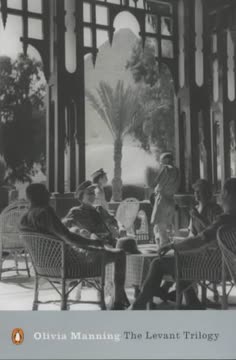
In the summer of 1942, Cairo is a city on the brink, its streets teeming with refugees, soldiers, and the anxious British community. The Pringles—Guy, a gregarious intellectual, and Harriet, his more reserved wife—have fled the Nazi advance across Europe, only to find Egypt no safer. The city is a crossroads of cultures and ambitions, where the threat of Rommel's Afrika Korps looms ever closer. Amid the heat and dust, the British scramble to maintain order and morale, but the sense of impermanence and loss seeps into every relationship. The Pringles' marriage, already strained by Guy's boundless sociability and Harriet's longing for intimacy, is tested by the pressures of war and exile. The city's colonial certainties are crumbling, and the British, once rulers, now cling to routines and illusions as the world they knew dissolves around them.
Exiles and Entrances
Young Simon Boulderstone arrives in Egypt, alone and disoriented, searching for his brother Hugo and a sense of belonging. He is swept into the orbit of the Pringles and their circle: Edwina, the beautiful and restless; Angela, haunted by personal tragedy; and a host of expatriates, each clinging to their own version of home. Sightseeing trips to the pyramids and desert tombs become metaphors for the characters' search for meaning amid chaos. The war's randomness is underscored by the sudden death of a child, a moment that shatters the illusion of safety and exposes the fragility of all their lives. As Simon navigates Cairo's social labyrinth, he is both seduced and bewildered by its glamour and cruelty, his innocence slowly eroded by the realities of war.
The Desert's Edge
Simon is posted to the Western Desert, where the British line is thin and the outcome uncertain. The camaraderie of soldiers is laced with fear and fatalism; the desert itself is both a place of beauty and a graveyard. Letters from home and fleeting leaves in Cairo offer brief respite, but the war's brutality is never far away. Simon's longing for connection—whether with his brother, with Edwina, or with the memory of England—becomes a way to endure the monotony and terror of battle. Meanwhile, the Pringles and their friends in Cairo live on the edge of the battlefield, their daily routines shadowed by the knowledge that the front could collapse at any moment. The city's social life is a dance of denial, but the war's reach is inescapable.
The Unraveling Line
As Rommel's forces advance, the British retreat becomes a rout, and Cairo is gripped by fear and rumor. The Pringles' circle is scattered: some flee to Palestine, others cling to the hope that the British will hold. The city's colonial hierarchy is exposed as hollow, its supposed superiority mocked by the chaos of evacuation and the indifference of the Egyptians. Harriet, working at the American Embassy, confronts her own alienation and the limits of British power. The war forces uncomfortable questions about loyalty, identity, and the meaning of home. The Pringles' marriage, already fragile, is further strained by separation and the pressures of survival. The sense of community that once sustained the exiles is breaking down, replaced by suspicion and self-preservation.
Marriage and Memory
The Pringles' relationship becomes a microcosm of the larger disintegration around them. Guy's devotion to his work and friends leaves Harriet feeling abandoned, while her search for meaning and connection leads her into new friendships and temptations. The war exposes the fault lines in their marriage: the gap between expectation and reality, the longing for intimacy, the fear of loss. Other couples in their circle are similarly tested, their relationships warped by displacement and uncertainty. The past becomes both a refuge and a burden, as memories of happier times are contrasted with the present's hardships. The question of what can be salvaged from the wreckage—of love, of self, of civilization—haunts them all.
The Siege Within
The Second Battle of Alamein marks a turning point in the war, but victory brings little relief to those who survive. Simon is gravely wounded, paralyzed and confined to a hospital ward filled with other young men whose lives have been shattered. His struggle to recover is both physical and existential: he must come to terms with the loss of his old self and the uncertain future that awaits him. The Pringles, too, are changed by the war's toll. Harriet's health deteriorates, and she contemplates leaving Egypt; Guy is consumed by guilt and grief, unable to reconcile his public persona with his private failures. The war's true cost is measured not just in casualties, but in the scars it leaves on the living.
The Battle for Alamein
The Allied victory at Alamein is both a triumph and a tragedy. The battle is depicted not as a moment of glory, but as a grinding ordeal of fear, confusion, and loss. Simon, now a liaison officer, witnesses the chaos and carnage firsthand, his own survival increasingly uncertain. The Pringles and their friends in Cairo celebrate the victory, but their relief is tempered by the knowledge of what has been sacrificed. The city's mood shifts from panic to euphoria, but the underlying sense of displacement and vulnerability remains. The war has changed them all, and the future is as uncertain as ever.
Aftermath and Absence
In the wake of battle, the survivors must confront the emptiness left by those who are gone. Simon's recovery is slow and painful, his sense of purpose eroded by the loss of his brother and the end of his own military career. Harriet, believing herself to be a burden, contemplates leaving Guy and Egypt behind. The Pringles' marriage is at a crossroads, their love tested by absence and the weight of unspoken regrets. The city, once a place of possibility, now feels like a prison. The characters are haunted by memories and by the question of what, if anything, can be rebuilt from the ruins of war.
The Price of Survival
As the war moves on to Italy and beyond, those left behind in Cairo must find ways to live with what they have endured. Simon, learning to walk again, is forced to confront the reality of a future without the certainties of youth or the promise of heroism. Harriet, after a failed attempt to start anew in Syria, returns to Cairo, her sense of self altered by exile and disappointment. Guy, bereft and guilt-ridden, is forced to reckon with the consequences of his choices. The survivors are united by a sense of having been spared, but also by the knowledge that survival comes at a cost: the loss of innocence, the burden of memory, the challenge of finding meaning in a world remade by violence.
The Long Goodbye
As the war winds down, the characters prepare to leave Cairo, each facing an uncertain future. Some, like Angela and Castlebar, seek solace in new relationships; others, like Edwina, settle for marriages of convenience. Harriet and Guy are reunited after a long separation, their love tempered by loss but not extinguished. Simon, now recovered, prepares to return to active service, his youthful idealism replaced by a more sober understanding of what war demands. The city that once seemed a place of exile has become, in its way, a home, and leaving it is both a relief and a sorrow. The long goodbye is not just to Cairo, but to the world that existed before the war.
The Return of the Lost
Harriet's return to Cairo, presumed dead after the sinking of the evacuation ship, is a moment of joy and disbelief. Her reappearance forces Guy to confront his own grief and guilt, and offers the possibility of renewal. The reunion is both a personal and symbolic victory over the forces of chaos and loss that have defined their lives. Yet the happiness is fragile, shadowed by the knowledge that the war is not yet over and that the future remains uncertain. The characters are changed by what they have endured, but the bonds of love and friendship endure.
The Enduring Heart
In the aftermath of war, the survivors must find ways to live with what they have lost and what they have become. The Pringles' marriage, battered but unbroken, becomes a testament to the endurance of love in the face of adversity. Simon, now a man rather than a boy, prepares to face whatever comes next, his sense of self forged in suffering. Angela, bereft of Castlebar, finds solace in friendship and the routines of daily life. The city, once a place of exile and danger, is now a place of memory and belonging. The enduring heart is not untouched by loss, but it beats on, sustained by hope and the promise of new beginnings.
The Sum of Things
As peace returns, the characters reflect on what has been lost and what remains. The war has stripped away illusions and forced them to confront the limits of love, friendship, and self-knowledge. Yet in the sum of things, life is revealed as both compromised and rewarding. The survivors are not heroes, but ordinary people who have endured extraordinary times. Their stories are marked by disappointment and failure, but also by resilience and the capacity for joy. The world they inherit is not the one they hoped for, but it is theirs to remake. In the end, the sum of things is not victory or defeat, but the stubborn persistence of life itself.
Characters
Guy Pringle
Guy is the intellectual and social center of the expatriate community, a man whose warmth and generosity draw people to him but whose inability to set boundaries leaves his wife, Harriet, feeling neglected. He is driven by a sense of duty—to his work, to his friends, to the ideals of education and civilization—but this very devotion blinds him to the needs of those closest to him. Guy's psychological complexity lies in his oscillation between public engagement and private guilt; he is both a comfort and a source of pain to Harriet. Over the course of the trilogy, Guy is forced to confront the limits of his own influence and the consequences of his choices, especially as the war exposes the fragility of the world he has tried to build. His development is marked by a gradual, painful recognition of his own fallibility and the necessity of compromise.
Harriet Pringle
Harriet is the emotional anchor of the narrative, a woman whose quiet strength and introspection contrast with Guy's exuberance. She is both fiercely independent and deeply vulnerable, longing for intimacy and recognition in a world that often overlooks her. Harriet's journey is one of self-discovery: she must navigate the challenges of exile, illness, and marital disappointment, all while maintaining her dignity and sense of self. Her psychological depth is revealed in her capacity for empathy, her acute observation of others, and her willingness to confront uncomfortable truths. Harriet's relationship with Guy is both a source of pain and a site of growth; through loss and reunion, she learns to assert her own needs and to find meaning in survival.
Simon Boulderstone
Simon enters the story as a naïve young officer, eager to prove himself and to find his brother Hugo. The war quickly strips him of innocence, exposing him to loss, injury, and the arbitrary cruelty of fate. Simon's psychological arc is one of disillusionment and adaptation: he must come to terms with the death of his brother, his own paralysis, and the collapse of youthful dreams. His relationships—with Edwina, with Guy, with his fellow soldiers—are marked by longing and disappointment, but also by moments of genuine connection. Simon's eventual recovery and return to service signal not a restoration of innocence, but the forging of a more resilient, if chastened, self.
Edwina Little
Edwina is the object of desire for many men, including Simon and Hugo, but her own desires are more pragmatic. She is charming, flirtatious, and adept at navigating the social hierarchies of Cairo, yet beneath her glamour lies a deep insecurity. Edwina's relationships are transactional, shaped by the need for protection and status in a world where women's options are limited. Her psychological complexity emerges in her oscillation between vulnerability and calculation; she is both a victim and an agent of her own fate. Edwina's development is marked by a series of disappointments and compromises, culminating in a marriage of convenience that leaves her longing for something more.
Angela Hooper
Angela is introduced as a woman marked by personal tragedy—the death of her child in a wartime accident. Her grief isolates her from others, yet she remains a vital presence in the expatriate community, seeking solace in friendship and, later, in her relationship with Castlebar. Angela's psychological depth lies in her capacity for both despair and resilience; she is at once fragile and fiercely determined to find meaning in the aftermath of loss. Her relationships are shaped by a longing for connection and a fear of abandonment. Angela's journey is one of gradual healing, though she is never entirely free from the shadows of the past.
Bill Castlebar
Castlebar is a minor academic and would-be poet, whose wit and self-deprecation mask a deep sense of inadequacy. He is both a source of amusement and a figure of pathos, dependent on Angela for emotional and financial support. Castlebar's psychological complexity is revealed in his oscillation between bravado and vulnerability; he is acutely aware of his own failings, yet unable to change them. His relationship with Angela is both a refuge and a trap, offering comfort but also reinforcing his sense of dependency. Castlebar's fate is emblematic of the war's capacity to both sustain and destroy.
Major Cookson
Cookson is a former property owner and socialite, reduced by war to a life of penury and dependence. He is both a figure of comedy and a symbol of the war's capacity to upend social hierarchies. Cookson's psychological depth lies in his ability to adapt to changing circumstances, even as he clings to the rituals and manners of a lost world. His relationships are marked by a mixture of nostalgia, self-pity, and genuine affection. Cookson's story is one of survival, but also of the loss of identity and status.
Jake Jackman
Jackman is a freelance journalist and professional gossip, whose sharp tongue and relentless skepticism make him both a valuable source of information and a disruptive presence. He is psychologically complex, driven by a need to expose hypocrisy and to assert his own relevance in a world that often marginalizes him. Jackman's relationships are transactional, shaped by mutual need and suspicion. His fate—arrest and exile—underscores the dangers of living by one's wits in a world where truth is a casualty of war.
Mona Castlebar
Mona is Castlebar's estranged wife, whose arrival in Cairo disrupts the fragile equilibrium of the expatriate community. She is both a figure of ridicule and a source of genuine menace, her jealousy and sense of entitlement driving her to extremes. Mona's psychological depth lies in her capacity for self-deception and her refusal to accept the reality of her situation. Her relationships are marked by bitterness and a desperate need for validation. Mona's story is a cautionary tale about the dangers of clinging to the past.
Dobson
Dobson is a British diplomat whose air of insouciance and dry humor mask a keen intelligence and a deep understanding of the world's complexities. He is both a confidant and a commentator, offering perspective on the follies and tragedies of those around him. Dobson's psychological depth lies in his ability to maintain detachment without losing compassion. His relationships are marked by tact, generosity, and a willingness to help others, even as he recognizes the limits of his own influence. Dobson's presence is a reminder that survival in times of crisis requires both adaptability and a sense of proportion.
Plot Devices
War as Displacement and Disintegration
The trilogy uses the backdrop of World War II not just as a setting, but as a force that displaces, fragments, and ultimately exposes the characters' illusions and vulnerabilities. The narrative structure is episodic, mirroring the uncertainty and impermanence of exile. The war's progress is marked by a series of retreats, advances, and false dawns, each serving as a catalyst for personal and collective crisis. Foreshadowing is used to heighten the sense of impending loss: early scenes of camaraderie and hope are undercut by later revelations of betrayal, death, and disillusionment. The war's randomness is reflected in the arbitrary deaths of both major and minor characters, reinforcing the theme of life's unpredictability.
Marriage as Microcosm
The Pringles' marriage serves as a microcosm of the larger disintegration wrought by war. Their struggles with intimacy, loyalty, and self-understanding are echoed in the relationships of those around them. The narrative uses parallelism and contrast to highlight the ways in which personal and political crises intersect. The breakdown of colonial authority, the erosion of social hierarchies, and the collapse of old certainties are all mirrored in the characters' private lives. The use of interior monologue and shifting perspectives allows for a nuanced exploration of psychological conflict and growth.
Exile and the Search for Home
Exile is both a physical and psychological condition in the trilogy. The characters' journeys—from Bucharest to Athens to Cairo to Jerusalem—are marked by a constant search for belonging and meaning. The narrative uses motifs of travel, waiting, and return to underscore the sense of rootlessness and the longing for home. The city of Cairo itself becomes a character, its shifting moods and social dynamics reflecting the inner lives of the exiles. The use of letters, rumors, and missed connections serves to heighten the sense of dislocation and the difficulty of communication.
Survival and the Cost of Endurance
The trilogy is structured around the tension between survival and the cost of endurance. Characters are forced to make compromises—moral, emotional, practical—in order to survive, and these compromises leave lasting scars. The narrative uses repetition and cyclical structure to emphasize the persistence of loss and the difficulty of moving on. The motif of return—whether to a place, a relationship, or a state of mind—serves to highlight both the possibility of renewal and the inevitability of disappointment. The use of irony and understated humor provides a counterpoint to the prevailing sense of tragedy, allowing for moments of grace and resilience.
Analysis
Olivia Manning's The Levant Trilogy is a profound meditation on the human cost of war, the fragility of civilization, and the resilience of ordinary people in extraordinary times. Set against the backdrop of World War II's North African and Middle Eastern campaigns, the trilogy explores the ways in which displacement, uncertainty, and loss shape both individual lives and collective destinies. Manning's characters are not heroes in the conventional sense; they are flawed, vulnerable, and often powerless in the face of forces beyond their control. Yet it is precisely in their ordinariness that the trilogy finds its power: the struggles of the Pringles, Simon, and their circle are rendered with a psychological acuity and emotional honesty that transcend the specifics of time and place. The narrative's episodic structure, shifting perspectives, and understated style reflect the chaos and impermanence of exile, while its attention to the textures of daily life—meals, conversations, small acts of kindness—grounds the story in the realities of survival. Manning's critique of colonialism, her exploration of gender and power, and her refusal to offer easy resolutions make The Levant Trilogy a work of enduring relevance. The ultimate lesson is that life, though rarely easy and often compromised, can be rich and rewarding; that in the sum of things, what endures is not victory or defeat, but the stubborn persistence of hope, love, and the will to endure.
Last updated:
Review Summary
The Levant Trilogy continues the story of Guy and Harriet Pringle from The Balkan Trilogy, following them through Egypt and the Middle East during WWII. Readers praise Manning's vivid descriptions and character development, particularly Harriet's journey toward independence in her troubled marriage. The trilogy explores themes of British colonialism, gender roles, and relationships under wartime pressure. While some found it slightly less engaging than the Balkan books, most reviewers appreciated the authentic historical detail drawn from Manning's experiences and the realistic portrayal of marriage's imperfections and compromises.