Plot Summary
Beacons in the Darkness
The Elysian Book of Virtues opens the collection, challenging the reader's assumptions about power and leadership. Travelers, often seen as ultimate authorities or last resorts against chaos, are revealed to be guides—beacons meant to inspire others to reach their potential. This philosophical underpinning sets the tone for the stories, emphasizing that true leadership is not about domination or brute force, but about example, inspiration, and sacrifice. The narrative's world is one of Territories, each with its own rules and dangers, and the Travelers who walk them are both protectors and potential threats. The stories that follow explore the tension between personal ambition, duty, and the higher calling to serve as a light in the darkness, especially when the world is threatened by unleashed Incarnations.
Queen Leah's Burden
Queen Leah I, newly crowned and beset by crisis, faces a fractious council of Overlords more concerned with their own cities than the nation's survival. The Incarnations—powerful, destructive beings—have escaped, and the kingdom is in chaos. Leah's authority is fragile, her youth and inexperience undermining her commands. She is frustrated by the Overlords' inaction, especially regarding the Endross Incarnation, and must navigate political resentment, personal vendettas, and the weight of her father's legacy. Her only solace is the steadfast support of Indirial, a Valinhall Traveler, who encourages her to persist and offers practical advice. Leah's exhaustion and isolation are palpable, but her resolve to act where others will not marks her as a true leader, even as she questions her own strength.
The Vanishing Endross
Leah discovers that nearly half of the Endross Travelers have disappeared, leaving the kingdom vulnerable. The Endross Territory, a land of deadly storms and wild jungles, calls to its own, and many have deserted or gone rogue in the chaos. Leah's frustration grows as she realizes that the Overlords are unwilling or unable to control their people. She decides to take matters into her own hands, seeking out the last known Endross weather-worker, Helene Rhode, to guide her into the Wastes. The sense of abandonment and the looming threat of the Incarnations underscore the fragility of order and the difficulty of uniting disparate factions in a time of crisis.
Into the Lightning Wastes
With Indirial tasked to hunt the Endross Incarnation, Leah enters Valinhall to recruit a bodyguard—Simon, a young but formidable Traveler. Accompanied by Helene and Simon, Leah prepares to confront the Endross Travelers and restore order. The journey into Endross is perilous, marked by unpredictable Gates, lethal lightning storms, and the ever-present risk of betrayal. Leah's vulnerability is exposed as she is battered by the elements and forced to rely on her companions. The harshness of Endross mirrors the internal storms Leah faces as a leader, and her determination to face danger herself, rather than delegate, sets her apart from the self-serving Overlords.
Simon's Awakening
Simon, once timid and uncertain, has grown into a capable and dangerous Traveler. His awakening is both literal—startled from sleep, knife in hand—and metaphorical, as he steps into the role of Leah's protector. Haunted by past trauma and the constant threat of violence, Simon's instincts are sharp, and his loyalty to Leah is unwavering. His interactions with the enigmatic Mistress Agnos and the ever-present dolls hint at a complex inner life shaped by Valinhall's dangers. Simon's quiet strength and willingness to face threats head-on make him an ideal, if unconventional, bodyguard for Leah's mission.
The Reluctant Bodyguard
Helene, the Endross guide, is skeptical of Simon's abilities, seeing only a boy with a sword and a doll. Leah, however, insists on his value, and Simon's calm confidence begins to win over his companions. The dynamic between the three is tense but functional, with each bringing unique strengths to the group. Simon's understated power and his connection to Valinhall's mysteries set him apart from other Travelers, and his presence becomes a subtle but potent deterrent to those who might challenge Leah's authority. The group's uneasy alliance is tested as they approach the heart of Endross.
Storms and Survival
The journey through the Lightning Wastes is a trial by storm. Leah is nearly struck by lightning, drenched by sudden rain, and forced to confront her own limitations. Helene's expertise keeps them alive, but the Territory's hostility is relentless. The outpost they reach is a fortress against the elements, its defenses a testament to the Travelers' ingenuity and desperation. Leah's embarrassment and discomfort are tempered by Simon's quiet support, and the ordeal forges a bond among the trio. The environment itself becomes a character, shaping the actions and attitudes of those who dare to cross it.
The Arena of Valor
At the Endross outpost, Leah confronts Corthis, the de facto leader, in a public arena. The Travelers' culture values strength and bravery above all, and Leah must prove her right to command through combat. She agrees to a contest: her champions, Simon and Helene, against Corthis's best. The arena is a spectacle of violence and spectacle, with summoned beasts and raw power on display. Simon's performance is extraordinary—he dispatches his opponents with ease, his Valinhall abilities overwhelming the competition. The display of strength secures Leah's authority, but also reveals the precariousness of power in a world where might often makes right.
Command and Consequence
With Simon's victory, Leah demands the Endross Travelers return to their duties. Corthis resists, citing the lack of an Overlord and the futility of opposing the Incarnations. Leah's patience wears thin, and she leverages Simon's fearsome reputation to enforce her will. The confrontation is a test of leadership, as Leah balances diplomacy, threat, and the need for unity. The Travelers' grudging obedience is won not by argument, but by the demonstration of overwhelming force. Leah's success is bittersweet, as it underscores the limits of persuasion and the necessity of hard choices in desperate times.
The Price of Justice
In the Caverns of Flame, young Naraka Travelers Rasmus and Taichon undergo their own trials. The culture of Naraka prizes punishment over mercy, and the Initiation ritual requires a confession of guilt to gain protection from fire. Rasmus, envious and resentful of Taichon's success, commits a crime—pushing Taichon off a cliff in a fit of jealousy. The act is rationalized as justice, but the Territory's ash hounds, able to smell murder, judge Rasmus guilty. He is hunted and ultimately killed by the very creatures he once commanded. The story is a brutal meditation on justice, guilt, and the consequences of unchecked ambition.
Ash Hounds' Judgment
Rasmus's attempt to justify his crime fails as the ash hounds, embodiments of Naraka's unforgiving justice, close in. His desperate pleas and rationalizations are ignored; the Territory's laws are absolute, and mercy is foreign. The hounds' attack is both literal and symbolic, representing the inescapable nature of guilt and the futility of self-deception. Rasmus's fate is a cautionary tale about the dangers of envy, the perversion of justice, and the absence of compassion in a world ruled by retribution.
Seeds of Sacrifice
In the past, Queen Cynara faces the overwhelming threat of the Incarnations. With her city besieged and hope fading, she bargains with the enigmatic Old Man for a way to bind the Incarnations. The price is steep: the seeds of the Hanging Tree, which require a life to activate and will demand annual sacrifices. Cynara's willingness to pay with her own life, rather than ask others to do so, marks her as a true leader. The seeds become a symbol of sacrifice, hope, and the terrible costs of survival in a world at war.
The Last Stand of Cynara
As the armies of Elysia, Asphodel, and Endross converge, Cynara prepares for her last stand. She entrusts her daughter with the seeds and the future of the kingdom, then faces the Incarnation of Elysia in a desperate duel. Wielding the Lightning Spear and the Bleeding Wand, Cynara fights with all her strength, enduring agony and risking her sanity. Her victory is pyrrhic—she binds the Incarnation but is mortally wounded. The scene is a powerful meditation on courage, sacrifice, and the burdens of leadership, as Cynara chooses the fate of her people over her own life.
The Bargain of Blood
The Old Man, architect of the Hanging Tree's power, arrives to claim Cynara's body. He revives her, transforming her into the first Incarnation of Ragnarus, against her will. His actions expose the dangers of deals with those who wield power without conscience, and the ease with which noble intentions can be twisted. Cynara's transformation is both a violation and a perverse fulfillment of her sacrifice, as she becomes a weapon in the Old Man's schemes. The chapter explores themes of agency, betrayal, and the corrupting influence of unchecked ambition.
Mother and Daughter
In her final moments, Cynara entrusts her daughter with the tools to save the kingdom. The bond between mother and child is both a source of strength and vulnerability, as the younger Cynara must shoulder responsibilities far beyond her years. The passing of the seeds and the Lightning Spear is both literal and symbolic—a transfer of hope, duty, and the possibility of redemption. The chapter is suffused with love, regret, and the bittersweet knowledge that true leadership often requires the ultimate sacrifice.
The Birth of Ragnarus
Revived by the Old Man, Cynara becomes the Incarnation of Ragnarus, her humanity stripped away. The process is agonizing and dehumanizing, a stark contrast to her earlier self-sacrifice. The new Ragnarus is powerful but bound, her fate a warning about the costs of power and the dangers of losing oneself in the pursuit of victory. The chapter is a meditation on identity, loss, and the thin line between savior and monster.
The Old Man's Deceit
The Old Man's duplicity is laid bare as he gloats over Cynara's fate. His willingness to twist bargains and exploit sacrifice for his own ends is a chilling reminder of the dangers posed by those who see others as tools. The chapter underscores the importance of integrity, the perils of trusting the untrustworthy, and the tragic consequences of noble intentions corrupted by external forces.
Sacrifice and Legacy
The collection closes with a return to the Elysian Book of Virtues, emphasizing that all virtues are meaningless without self-sacrifice. The stories of Leah, Simon, Cynara, and others are united by their willingness to put others before themselves, even at great personal cost. The legacy of their choices endures, offering hope that, even in a world of darkness and danger, the light of sacrifice and compassion can guide the way forward.
Characters
Leah the First
Leah is a newly crowned queen, thrust into leadership amid chaos and war. Her youth and inexperience make her vulnerable to the machinations of the Overlords, yet she possesses a fierce determination to do what is right for her people. Leah's relationships are defined by a mix of trust and skepticism—she relies on Indirial's counsel, is wary of Helene, and gradually comes to appreciate Simon's loyalty. Psychologically, Leah is driven by a need to prove herself, haunted by her father's legacy and the constant threat of failure. Her journey is one of growth, as she learns to balance compassion with authority, and to wield power without losing her humanity.
Simon
Simon is a Valinhall Traveler marked by trauma and resilience. Once timid, he has become a formidable warrior, shaped by the dangers of his Territory and the loss of his mother. His relationship with Leah is complex—part protector, part equal, and tinged with unspoken affection. Simon's psychological landscape is scarred by violence, but he channels his pain into unwavering loyalty and a quiet strength. His interactions with the dolls and Mistress Agnos hint at a longing for connection and normalcy. Over the course of the story, Simon's confidence grows, and he emerges as a symbol of hope and stability in a world on the brink.
Indirial
Indirial is an experienced Valinhall Traveler and a pillar of support for Leah. His optimism and confidence are unshakable, providing a counterbalance to Leah's doubts. As a mentor, he offers practical advice and emotional reassurance, guiding Leah through political and personal challenges. Indirial's psychological resilience is rooted in his long experience and deep sense of duty. He is both a warrior and a counselor, embodying the virtues of patience, loyalty, and self-sacrifice. His absence during Leah's journey into Endross is keenly felt, underscoring his importance as a stabilizing force.
Helene Rhode
Helene is an Endross weather-worker with a no-nonsense attitude and a formidable arsenal. Her experience navigating the Wastes makes her an invaluable guide, and her pragmatic approach to danger contrasts with Leah's idealism. Helene's relationship with Leah is professional but tinged with mutual respect, while her banter with Simon reveals a dry wit and a willingness to challenge assumptions. Psychologically, Helene is shaped by years of survival in a hostile environment, making her both cautious and fiercely independent. Her role as a guide is both literal and metaphorical, helping Leah navigate the storms within and without.
Corthis
Corthis embodies the virtues and vices of Endross: bravery, stubbornness, and a penchant for spectacle. As the de facto leader of the Endross outpost, he resists Leah's authority, valuing strength and tradition over unity. His psychological makeup is defined by a need for respect and a fear of irrelevance. Corthis's eventual capitulation to Leah's demands is less a change of heart than a recognition of overwhelming force. He serves as a foil to Leah, highlighting the challenges of leadership in a culture that prizes might above all.
Rasmus
Rasmus is a young Naraka Traveler consumed by jealousy and insecurity. His rivalry with Taichon drives him to commit a fatal crime, rationalized as justice but rooted in resentment. Rasmus's psychological turmoil is marked by self-doubt, a craving for recognition, and an inability to accept his own limitations. His fate—judged and executed by the ash hounds—serves as a cautionary tale about the dangers of unchecked ambition and the absence of mercy. Rasmus's story is a tragic exploration of guilt, punishment, and the human capacity for self-deception.
Taichon
Taichon is Rasmus's peer and rival, gifted in the arts of Naraka and marked by a natural confidence. His success is a source of envy for Rasmus, but Taichon himself is open, friendly, and perhaps oblivious to the depth of Rasmus's resentment. Psychologically, Taichon is shaped by privilege and a sense of responsibility, but also by a desire for connection and understanding. His confession to Rasmus is an act of vulnerability, tragically repaid with betrayal. Taichon's fate underscores the dangers of trust in a world where competition can turn deadly.
Cynara the First
Cynara is a former queen facing the annihilation of her people by the Incarnations. Her willingness to sacrifice herself for the greater good marks her as a true leader, but her fate is twisted by the Old Man's manipulations. Cynara's psychological strength is matched by deep love for her daughter and a fierce commitment to her people. Her transformation into the Incarnation of Ragnarus is both a violation and a testament to her enduring will. Cynara's legacy is one of hope, sacrifice, and the enduring power of selflessness.
The Old Man
The Old Man is a master of schemes, wielding power with cunning and a lack of scruples. His bargains are always double-edged, and his true motives are obscured by layers of deception. Psychologically, he is driven by a desire for control and a belief in his own superiority. His interactions with Cynara reveal a capacity for both charm and cruelty, and his role as the creator of the Hanging Tree and the Incarnations makes him a pivotal, if sinister, force in the narrative. The Old Man embodies the dangers of unchecked ambition and the perils of trusting those who see others as means to an end.
Rhalia (Elysia Incarnation)
Rhalia, the Incarnation of Elysia, is both alluring and terrifying. She sees herself as a mother to her followers, justifying her actions as necessary for the creation of paradise. Psychologically, Rhalia is marked by a blend of compassion and fanaticism, her vision of order overriding any sense of mercy. Her confrontation with Cynara is a clash of ideals as much as powers, and her ultimate defeat is a testament to the limits of even the most seductive forms of authority. Rhalia's character explores the dangers of utopian thinking and the fine line between benevolence and tyranny.
Plot Devices
Territories and Incarnations
The narrative is structured around the concept of Territories—distinct magical realms, each with unique rules, dangers, and powers. Travelers are individuals who can access these Territories, gaining abilities and responsibilities. The Incarnations are the ultimate expressions of each Territory's power, often destructive and uncontrollable. This structure allows for a rich exploration of themes such as identity, power, and the costs of leadership. The interplay between Territories, Travelers, and Incarnations drives the plot, creating a world where personal and political conflicts are inseparable from the supernatural.
Leadership and Sacrifice
The stories repeatedly test their characters' capacity for leadership, often forcing them to choose between personal safety and the greater good. Sacrifice—whether of comfort, reputation, or life itself—is a recurring motif, embodied by characters like Leah and Cynara. The narrative structure uses parallel stories (Leah's present, Cynara's past, Rasmus's fall) to highlight the different forms and costs of leadership. Foreshadowing is used to build tension, as characters' choices echo through the world and set the stage for future conflicts.
Justice and Mercy
The stories explore the tension between justice and mercy, particularly in the Naraka chapters. The plot device of the confession and the ash hounds' judgment serves as both a literal and symbolic mechanism for exploring guilt, punishment, and the possibility (or impossibility) of redemption. The lack of mercy in Naraka is contrasted with the self-sacrifice of characters like Cynara, creating a thematic dialogue about the nature of virtue and the dangers of rigid moral codes.
The Elysian Book of Virtues
Each story is bookended by excerpts from the Elysian Book of Virtues, providing philosophical commentary on the events and characters. These passages serve as both foreshadowing and analysis, inviting the reader to reflect on the deeper meanings of bravery, justice, sacrifice, and leadership. The Book's teachings are both a guide and a challenge to the characters, shaping their choices and the world they inhabit.
Analysis
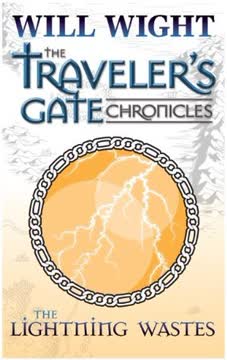
Will Wight's "The Lightning Wastes" is a masterful exploration of leadership, sacrifice, and the moral complexities of power. Through interwoven stories set in a richly imagined world of magical Territories, the collection examines what it means to lead—not through force or fear, but by example and selflessness. The characters, from the embattled Queen Leah to the tragic Cynara and the haunted Simon, are united by their willingness to put others before themselves, even at great personal cost. The narrative's structure, alternating between political intrigue, personal struggle, and mythic confrontation, allows for a nuanced exploration of justice, mercy, and the dangers of unchecked ambition. The Elysian Book of Virtues serves as both a philosophical anchor and a challenge, urging readers to consider the true meaning of virtue in a world where every choice has consequences. Ultimately, "The Lightning Wastes" is a meditation on the enduring power of sacrifice, the necessity of compassion, and the hope that even in the darkest times, beacons of light can guide the way forward.
Last updated: