

Plot Summary
Prologue
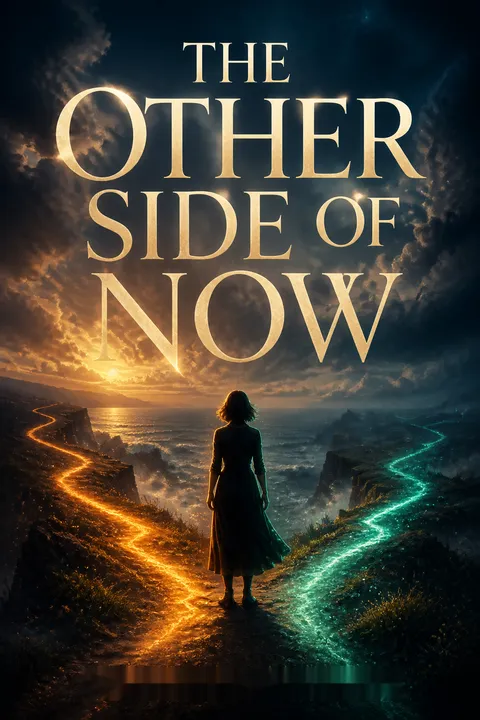
At fifteen, Meg Bryan and her best friend, Aimee, visit a fortune teller at their Florida town’s end-of-summer carnival. The woman tells Meg that her life divides into two possible paths.
When she reads Aimee’s palm, she falls silent, then urges both girls to be well. A candle flares, Aimee goes pale, and the girls leave unsettled. They later turn the incident into a joke, but its unanswered warning stays buried between them.
The carnival reading plants the novel’s governing image before Meg has the life experience to understand it: a future can branch, but choosing one road may cost more than the other. The fortune teller’s silence over Aimee’s palm matters as much as her prediction for Meg. It creates a private unease neither girl can interpret, while their joking afterward shows how friendship can hold fear without resolving it. The candle’s sudden flare gives the supernatural premise a physical detail, but the scene refuses certainty. That ambiguity lets the prologue function as memory and omen at once.
The Birthday Breakdown
In Los Angeles, actress Lana Lord finishes a season of Brilliance, then learns the show may be canceled and its producers want her thinner still. At her thirtieth birthday party, she finds her boyfriend, Grayson Gamble, alone with his costar Elsa and assumes an affair, only to discover he was discussing a role in a Hitchcock biopic.
The misunderstanding leaves their relationship strained, while the possible end of her career deepens her sense that her polished life is hollow. On the balcony, Meg watches an old video of herself and Aimee, the friend she has not seen in years, and remembers the acting school in Ireland she gave up. Before dawn, she books a cottage in Avalon.
Meg’s crisis begins not with a single catastrophe but with the failure of several scripts she has been performing: glamorous actress, accommodating girlfriend, eternally improving body. The birthday exposes the gap between a life that looks enviable and one she can inhabit without effort. Her impulsive booking is not yet a clear choice of Ireland over Los Angeles. It is a flight from the demand to keep managing appearances. The video of Aimee carries unusual force because it preserves Meg before fame taught her to edit herself. Looking backward becomes her first attempt to locate a self not designed for an audience.
Meg Vanishes Online
After a sleepless flight, Meg reaches Surrey House in Avalon, Ireland, and walks to a pub for food and a phone charger. The bartender, Cillian Madden, treats her with familiar irritation, while a woman named Kiera sits down as if they are old friends and calls her Meggie. Cillian insists the unfamiliar phone is hers, and its cracked screen, old photos, and account details seem to belong to a stranger with Meg’s face.
When she searches for Lana Lord, no actress appears. The show exists, but another woman plays Meg’s role. Cillian returns her debit card, bearing Meg Bryan’s name, then asks her to return his dog. His easy familiarity turns the missing online identity into a personal mystery.
The pub makes the alternate life legible through ordinary social friction rather than spectacle. Cillian’s impatience and Kiera’s casual intimacy are more destabilizing than a dramatic revelation because they imply years of shared habits that Meg cannot access. The phone, too, is not simply evidence: it is a pocket-sized archive that has the authority of daily use, fingerprints, and personal photographs. Meg’s absence from the internet unsettles her professional identity, but the greater threat is relational. Other people seem to know a version of her that she cannot recognize, making fame’s public record look less definitive than the private knowledge carried by friends.
Surrey House Remembers
At the cottage, Meg reaches automatically for hidden whiskey and the right glass, then discovers a dog named Maureen on the sofa. In the bathroom mirror, she sees her natural face and fuller body, unlike the surgically altered, carefully controlled appearance she left in Los Angeles. Searches confirm that her acting career belongs to another reality, while the house holds books, clothes, and keepsakes she once owned.
A photo box contains pictures of Cillian and Kiera, plus an image of Meg with adult Aimee. The date proves it was taken years after Meg last saw her friend. On the phone, a favorite photograph shows Meg and Cillian looking unmistakably devoted, though she has no memory of their life together.
The cottage turns the impossible into a sequence of material tests. Meg’s body, familiar possessions, and automatic knowledge of where things belong all contradict her conscious memories, but none offers a clean explanation. The contrast between her altered Los Angeles appearance and her unmodified reflection makes the question of identity bodily, not merely biographical. Most important, the adult photograph of Aimee converts Meg’s private grief into an urgent uncertainty: the friend she remembers may exist here. The sentimental box, once a container for keepsakes, becomes evidence that a self can persist in objects even when memory refuses to recognize its own history.
Kiera Calls the Doctor
The next morning, Meg confirms that the photograph of adult Aimee is real and calls her mother, who gives the Avalon address as Meg’s home. Kiera arrives with Meg’s favorite chai and takes her to Jim, a local doctor and Cillian’s father. Jim finds no obvious injury and recommends observation, but Kiera remains concerned by Meg’s claim that she belongs to another life.
She explains that Meg has dated Cillian for years, though they recently split, and that her friendship with Aimee has cooled. Meg calls Aimee and leaves an apologetic message. Kiera agrees to help her retrace the life she cannot remember, while warning that she may need hospital care if the confusion continues.
Kiera provides care without granting Meg’s explanation, a useful distinction that keeps the story grounded in uncertainty. Jim’s examination rules out an obvious physical cause but does not validate a supernatural one; the people around Meg must act responsibly without knowing what they are facing. Meg, meanwhile, cannot rely on the authority of her own memory, so she begins borrowing other people’s accounts. Her call to Aimee is the emotional hinge: she is no longer investigating an abstract alternate self but risking contact with the friend whose absence has shaped her life. Kiera’s practical support gives Meg enough safety to make that risk.
Aimee Answers Alive
At Joy’s coffee shop, Meg meets Aimee in person and struggles to reconcile the living woman with the friend she remembers from adolescence. Aimee is married to Theo, has two children, and has not been close to Meg for some time. Meg explains her Hollywood life and her belief that she has crossed into the path where she attended Avalon.
Aimee does not fully accept the theory, but she believes Meg is telling the truth as she experiences it. Their conversation reveals that their distance grew from years of different priorities, not one decisive betrayal. Aimee invites Meg to her daughter Clare’s birthday party, offering a tentative opening. Meg leaves shaken by the ordinary fact of Aimee’s voice, face, and family.
The reunion tests Meg’s fantasy against the independent life Aimee has built. Aimee is not a preserved childhood companion waiting to restore Meg’s past; she is a mother, partner, and adult with her own grievances and limits. That difference prevents the reunion from becoming a simple wish fulfillment. Meg’s urgency comes from knowing a truth she cannot yet disclose, while Aimee’s caution reflects the actual distance between them. The invitation to Clare’s party is modest but consequential. It grants Meg access to Aimee’s present without pretending the friendship has already returned to its former intimacy.
Cillian’s Unanswered Proposal
Kiera recounts how Meg and Cillian first met at the pub, circled each other for years, then built a loving relationship punctuated by breakups. Meg ended it whenever she feared Avalon would make her life too small.
At Clare’s party, Cillian tells Meg that she recently rejected his proposal and then acted as if nothing had happened. Later, when rain sends partygoers to the pub, Meg helps him serve them, and her old bartending competence returns. After closing, Cillian explains that Meg’s restlessness makes him feel like the life she wants to escape.
He refuses to exploit her confusion, even when she invites him to stay. The next evening, Meg steals Maureen for comfort; Cillian comes to retrieve the dog, and they confess love and sleep together.
Cillian’s story gives Meg a second form of lost history, one built not from childhood grief but from repeated adult choices. Her breakups are less evidence that she does not love him than attempts to escape a life she fears will define her too narrowly. Yet that distinction does not spare Cillian from feeling disposable. His restraint when Meg desires him is crucial: he recognizes that her attraction is real while refusing to treat disorientation as consent to resume their old relationship. Their later intimacy is therefore grounded in mutual recognition rather than simple nostalgia. Meg experiences connection as a choice she can make without surrendering ambition or selfhood.
Lola Becomes a Confession
At Clare’s party, Meg meets Aimee’s children and sees the tenderness of Aimee’s family life. She also learns that Aimee’s play, about two old friends confronting a shared past, has no finished second act. The next day, both student actors withdraw, fearing the unfinished production will damage their prospects. Meg offers to perform the lead, Lola, while Aimee takes the other role, Hailey.
As they search for an ending, Meg suggests that one friend has been dead for years. Aimee presses her to explain, and Meg admits that Aimee died in the life she remembers, after a car crash in Florida. Kiera hears the confession. Aimee leaves abruptly, while Kiera holds Meg through the grief she has never spoken aloud.
The play creates a safe but unstable double for the women’s real relationship. Meg can propose a dead friend as a dramatic twist before she can say plainly what happened to Aimee, using authorship as a bridge to confession. The revelation changes the meaning of the alternate life: it is not merely the glamorous career Meg abandoned, but a world in which the person she lost continues to grow older. Kiera’s response matters because she does not need to decide whether the story is metaphysically true before treating Meg’s grief as real. Aimee’s abrupt departure, by contrast, marks the cost of being told that one’s life ends elsewhere.
Aimee’s Hidden Acceptance
During final rehearsals, Meg and Aimee clash over the play’s ending, then finally discuss the fight that separated them before the car crash in Meg’s remembered life. Aimee reveals that she had also been accepted to Avalon, but concealed it because she did not want to leave Florida or Theo.
Meg had assumed Aimee was rejected and stayed home to keep their promise; Aimee feared Meg would blame her for choosing a smaller, more rooted future. In the Avalon life, Aimee later changed her mind and joined Meg at school. The revelation reframes their old resentment: Meg’s sacrifice was based on a false premise, while Aimee carried guilt for accepting it. Their reconciliation remains fragile as the performance approaches.
Aimee’s concealed acceptance exposes how friendship can turn loyalty into a contract neither person has honestly negotiated. Meg treated their promise as proof of devotion; Aimee experienced it as pressure to share an ambition she did not actually want. Each mistook the other’s silence for knowledge. The revelation also complicates Meg’s belief that a single choice created her entire fate. The alternate life is not a clean counterfactual in which everyone simply gets what they wanted; it contains its own evasions, resentments, and delayed decisions. Their difficulty speaking now is not a failure of love but the accumulated cost of interpreting love as mind-reading.
The Red Light Recalled
Before the performance, Aimee tells Meg she has dreamed of the Florida crash and recognizes details Meg never shared. She asks Meg to change the play’s ending so Lola, not Hailey, confronts the death. During the show, Meg describes the argument in the car and blames herself for making Aimee turn up the music. Aimee recalls the rain, then challenges Meg’s memory of the intersection.
Meg remembers Aimee was driving and had accelerated through the red light while Meg shouted for her to stop. The crash was not caused by Meg’s noise or by the other car running the signal, as she had believed. The two women acknowledge their love and grief onstage, embrace, and finish the improvised scene together.
The stage lets the women approach trauma through a fiction that can absorb revisions as they become bearable. The decisive change is not that Meg discovers Aimee had no responsibility, but that she stops claiming sole responsibility herself. Her guilt had simplified a frightening accident into a moral verdict she could carry: if she caused it, perhaps the world remained explainable. Aimee’s memory disrupts that bargain without erasing the tragedy. The public setting heightens the risk, yet performance also gives Meg structure, cues, and a role through which she can finally speak. Their embrace replaces the old silence with a shared account, not a painless one.
Avalon Goes Dark
After the successful performance, Aimee apologizes for doubting Meg and says the crash has become real to her through a vivid dream. She affirms that her life with Theo and their children is the one she belongs to. Meg steps away briefly, then returns to find the theater empty, the set dismantled, and every trace of the gathering gone.
She runs through Avalon, but the pub is locked and Aimee’s house is silent. Back at Surrey House, she finds her original luggage and Los Angeles phone. A taxi waits to take her to Dublin, and online searches confirm that Lana Lord exists while Aimee’s obituary remains. Meg boards the taxi, unable to say goodbye to Cillian, Kiera, or Aimee.
The disappearance refuses to explain whether Avalon was a parallel world, a supernatural visitation, or something beyond Meg’s categories. Its abruptness makes the loss resemble the crash itself: the people are present, then irretrievable, and no adequate farewell can be arranged. The return of her original suitcase and phone restores the external facts of Los Angeles but cannot restore her former emotional certainty. Crucially, Meg’s pain is not proof that the alternate life was false. The novel treats experience as consequential even when its ontology remains unresolved. Her inability to say goodbye becomes another unfinished loss, but this time she must carry the memory rather than erase it.
Meg Chooses the Road
Back in Los Angeles, Meg reunites with Dido, then recognizes how foreign her expensive home and carefully managed body feel. She ends her relationship with Grayson without accusing him of cheating, telling him she is Meg rather than only the public persona he knows. She packs her personal belongings, her old Edward Hopper print, and Dido’s things, then drives toward Florida instead of returning to the career that has defined her.
At home, she reconnects with her parents and visits Aimee’s parents, Jenny and Joe. Over dinner, she tells them what happened in Avalon. Jenny believes her account and confirms that Aimee really was accepted to the school, a fact kept secret in Meg’s remembered life. Meg finally cries with both families present.
Meg’s return is not a rejection of ambition so much as a refusal to let ambition remain her only available identity. Ending things with Grayson is unusually clear-eyed: she neither prosecutes him nor uses the breakup to win another argument. She names herself and leaves. The drive to Florida reverses the flight that followed Aimee’s funeral, when she escaped grief by making herself difficult to reach. This time, she goes toward the people who shared the loss. Jenny’s confirmation about the acceptance repairs one factual wound without pretending the past can be remade. Meg’s grief becomes communal rather than a private sentence she imposes on herself.
A Life Built in London
Months later, Meg has left Brilliance and moved to London for a theater role. She finds pleasure in rehearsal, cheap beer, shared meals, and friendships that do not require her to perform celebrity. On Aimee’s birthday, her cast gathers to celebrate her, letting the day hold both laughter and grief.
At a pub afterward, Meg encounters Kiera, who recognizes her as Lana Lord, and then meets Cillian, Kiera’s longtime friend and a Brilliance fan. Neither appears to know Meg from Avalon, but Cillian’s question about déjà vu echoes the connection she remembers. They share a kiss in the snow. Meg stays present for the evening and makes plans for the next day.
The ending does not restore Avalon in a literal, dependable form. Instead, it lets its emotional effects travel with Meg into a life she builds deliberately. London offers a middle ground between the scale of Hollywood and the rooted intimacy she experienced in Ireland: she continues acting, but in a company where collaboration matters more than visibility. The chance meeting with Kiera and Cillian remains ambiguous, preserving the book’s magical uncertainty without making them instruments of fate. Meg’s change is visible in how she handles the reunion: she neither denies its importance nor demands proof that it will last. She lets the evening be good while it is happening.
Epilogue
In London, Meg acts in a holiday play, walks Dido through winter streets, and marks Aimee’s birthday with friends who know her story. At a pub, she meets Kiera and Cillian, who are strangers to her history but feel uncannily familiar.
Cillian recognizes her from Brilliance; after they talk, they kiss in the snow. Meg does not force the meeting to explain Avalon. She enjoys the night, eats chocolate in bed, and makes plans for tomorrow.
The epilogue offers reunion without resurrection. Kiera and Cillian appear in Meg’s ordinary world, but their meeting does not confirm that Avalon literally persists or that they share its memories. The uncertainty protects the emotional truth of what Meg experienced while keeping her future grounded in choices she can make. Acting remains part of her life, yet she has moved from celebrity production to a theater community where work is made together. Remembering Aimee also changes form: her birthday becomes a joyful gathering rather than a sealed chamber of grief. The final emphasis on tomorrow suggests a future built through attention, not prediction.
Analysis
The novel’s central question is not which version of Meg’s life is objectively correct, but why she keeps treating life as a verdict she must win. In Los Angeles, she has achieved the visible markers she once pursued, yet her body and schedule remain subject to other people’s standards. In Avalon, she finds a life she initially idealizes, only to learn that this Meg is restless too. The alternate world therefore does not offer a simplistic cure. It exposes the recurring habit beneath both lives: Meg imagines that happiness waits beyond the place she has chosen, and delays inhabiting the present while measuring its future value.
Aimee’s history sharpens that problem. Meg’s guilt over the crash has become a form of control, a story in which she alone caused the unbearable loss. The remembered facts prove more complicated, and that complexity is ethically important. Forgiveness does not depend on assigning innocence to every person involved; it begins when Meg stops confusing grief with a conviction. Her reunion with Aimee also reveals that friendship cannot be preserved by freezing it. Aimee has a life Meg never knew, with preferences and choices that were not extensions of Meg’s own ambitions.
The book’s magical uncertainty reinforces its psychological realism. Meg cannot prove whether Avalon is another universe, yet the experience changes how she treats grief, work, friendship, and her name. That change does not erase loss or guarantee permanence. It makes her more willing to risk attachment without demanding that it protect her from future pain. The ending’s ordinary acts, sharing food, joining a theater company, making plans, matter because they replace fame as a measure of significance. The novel does not ask Meg to renounce ambition. It asks her to stop postponing life until ambition, love, or certainty makes it safe.
Review Summary
The Other Side of Now receives overwhelmingly positive reviews (4.2/5 stars), with readers praising its magical realism and emotional depth. The story follows actress Meg Bryan/Lana Lord who travels to Ireland and discovers an alternate reality where her deceased best friend Aimee is alive. Reviewers highlight the heartfelt exploration of grief, friendship, and self-discovery, along with the charming Irish setting. Most appreciate the satisfying ending and relatable protagonist, though some critique the YA-feeling dialogue and shallow Hollywood references. Readers recommend it for fans of sliding doors narratives and contemporary fiction with romance elements.
People Also Read









Characters
Meg Bryan
The restless actressMeg is a Florida-raised actress who uses the professional name Lana Lord. Ambitious, funny, and highly observant, she can read a room while remaining less honest with herself than she is with a script. The entertainment industry rewards her for managing her image, and she learns to treat control over her appearance and career as proof that she is safe. Her closest bonds are with Aimee, her childhood friend, and with the people she encounters in Avalon. Meg’s central tension is between wanting a life large enough to validate her talent and wanting the ordinary intimacy she has often dismissed. Her imagination is both her craft and her defense, making it difficult for her to distinguish escape from genuine possibility.
Aimee
Meg’s oldest friendAimee has been Meg’s closest friend since their school years, when they shared theater, sleepovers, and extravagant ideas about the future. She is perceptive, intellectually curious, and more comfortable with a rooted life than Meg is. Her affection for Theo and her interest in family and creative work place her at a different angle from Meg’s hunger for recognition. Aimee is not simply a confidante: she has her own ambitions, fears, and standards, and can become guarded when Meg assumes she knows what Aimee wants. Their friendship carries deep humor and familiarity, but it also shows how easily devotion can become pressure when neither person says plainly what she needs.
Cillian Madden
The steady pub bartenderCillian works at the pub owned by his mother and lives above it. Gruff in manner but attentive in action, he feeds people who have forgotten to eat, notices when someone is panicking, and makes his care practical rather than showy. His long, complicated bond with Meg is built from shared humor, repeated closeness, and uncertainty about what future she wants. Cillian values his work, his community, and the possibility of traveling more, but he does not want to become an obstacle to Meg’s ambition. His restraint is part of his character: he can desire closeness while still asking whether the other person is ready to choose it.
Kiera
The irreverent loyal friendKiera is Meg’s close friend in Avalon and her coworker at Dinner Party, a small shop selling food, drink, and thoughtful gifts. Quick-witted and frank, she uses humor to make awkwardness survivable, but her loyalty is expressed through concrete care: bringing tea, arranging food, checking on Meg, and staying when things become painful. She has a generous appetite for pleasure and a pragmatic view of adulthood, resisting the idea that a meaningful life must be grand or publicly admired. Kiera does not automatically believe Meg’s explanation of events, yet she takes Meg’s distress seriously. Her combination of skepticism and warmth makes her an anchor without turning her into an unquestioning guide.
Grayson Gamble
The famous boyfriendGrayson is a well-connected Hollywood actor and Meg’s boyfriend in her Los Angeles life. His family name and career give him an ease with fame that Meg has had to earn, while his earnestness and occasional obliviousness complicate their relationship. He wants to be taken seriously as an actor and pursues demanding roles, but often misses emotional or cultural cues that matter to Meg. Their relationship began with professional calculation and developed genuine affection, though shared convenience cannot answer every deeper question. Grayson functions as a reminder that a relationship can be kind and still fail to fit the life someone needs.
Theo
Aimee’s enduring partnerTheo is Aimee’s longtime love, first known to Meg as a teenage boyfriend she distrusts. As an adult, he is a father and a specialist in plant breeding, with a life that is more settled than Meg expected. Meg’s judgment of him is colored by an old humiliating encounter and by protectiveness toward Aimee. His presence tests whether she can separate past injury from the person Aimee chose. Theo is not defined solely by Meg’s suspicion; his devotion to his family gives him a more ordinary, complicated shape.
Lisa Michele
The distracted assistantLisa Michele is Meg’s young personal assistant in Los Angeles, responsible for managing the constant stream of work, brand requests, and social media demands around a celebrity. Her energy and phone habits grate on Meg, who needs quiet but rarely asks for it effectively. Lisa Michele represents the machinery that keeps Meg’s public image in motion, even when the person inside that image is exhausted. She is not a villain so much as an ill-matched presence in a life where boundaries have grown difficult to enforce.
Devon
The show’s flattering directorDevon directs Brilliance and praises Meg’s talent while delivering the network’s demands about her appearance and uncertain future. He is affectionate and protective in some moments, yet remains part of a production culture that treats her body as a business variable. His relationship with Meg captures the ambiguity of industry mentorship: encouragement can be sincere while still serving an institution that asks the performer to become more marketable.
Jim
The village doctorJim is a local doctor and Cillian’s father. He examines Meg when she reports memory problems, asks practical questions, and avoids pretending to know more than he does. His manner is paternal without being overbearing, and he balances reassurance with sensible concern. Jim’s presence gives the people around Meg a grounded response to an experience they cannot explain.
Marcia
Cillian’s watchful motherMarcia owns the pub where Cillian works and is his mother. She is reserved around Meg, partly because she is protective of her son, and her disapproval gives the history between them social weight. Beneath her stiffness is a strong attachment to family and community. She is one of the people whose everyday judgment reminds Meg that her decisions affect others, not just herself.
Charlotte Bryan
Meg’s practical motherCharlotte, usually called Char, is Meg’s mother. She is a worrier who shows love through calls, food, and attention to the details of her daughter’s safety. Her life is shaped by home and friendship rather than Meg’s appetite for reinvention, a difference that can make Meg mistake contentment for fear. Charlotte’s steady presence offers Meg a connection to the family she left behind.
Kyle Bryan
Meg’s easygoing fatherKyle is Meg’s father, a low-key presence who communicates affection through music, familiar routines, and understated humor. He is less verbally demonstrative than Charlotte, but his ordinary steadiness matters to Meg. His relationship with her reflects a family bond that survives distance even when she is reluctant to share the parts of herself that hurt.
Jenny
Aimee’s candid motherJenny is Aimee’s mother and a longtime friend of Meg’s family. Warm and candid, she carries knowledge about Aimee’s ambitions that Meg does not have. Her willingness to listen makes her an important bridge between the girls’ shared past and the lives their families continued to build.
Joe
Aimee’s supportive fatherJoe is Aimee’s father and Jenny’s partner. He belongs to the close circle of adults who watched Meg and Aimee grow up, offering a steady family presence around their friendship. His bond with Kyle helps connect the two households beyond the girls’ school years.
Clare
Aimee’s spirited daughterClare is Aimee and Theo’s young daughter. Curious and openhearted, she welcomes familiar adults with the directness of a child and shares small gestures that carry real warmth.
Ronan
Aimee’s quiet sonRonan is Aimee and Theo’s young son. Shy and affectionate with his mother, he gives Meg a glimpse of the family life Aimee has made.
Maureen
Cillian’s affectionate dogMaureen is Cillian’s golden retriever, a cheerful presence who quickly accepts Meg’s care. Her wandering between the pub and cottage gives the characters a reason to visit one another, and her uncomplicated affection offers comfort when human histories become difficult.
Fia
The generous shop ownerFia owns Dinner Party, the gift and provisions shop where Meg and Kiera work. Her resources allow the shop to be a creative project rather than a high-pressure business, giving Meg a glimpse of work that can be pleasurable and communal.
Plot Devices
The divided palm lines
Plants the split-life premiseAt the carnival, a fortune teller sees two lines in Meg’s palm and predicts two possible lives. Her silence while reading Aimee’s hand adds a warning she will not explain. The scene frames the novel’s later reality shift without providing rules or proof, so the reader encounters the supernatural first as an unsettling childhood memory rather than a mechanism. Its unresolved nature lets the story treat destiny as a question while keeping character choices central.
The alternate Avalon life
Makes another choice tangibleAfter Meg travels to Ireland, she appears to enter the life that followed a different decision about college. Her body, belongings, phone, relationships, and local history support that reality, while she retains memories of Hollywood. The novel never supplies a definitive scientific explanation, and Meg’s companions interpret her condition in different ways. This device allows the story to compare possible selves through daily experience rather than a simple fantasy of success or failure. It also makes the reader weigh emotional truth against factual certainty.
The phones and keepsakes
Turn objects into evidenceA cracked phone, old photos, a box of sentimental objects, and a framed Edward Hopper print connect Meg to a history she cannot remember. The items provide concrete clues about her relationships with Aimee, Kiera, Cillian, and Maureen, but they do not explain how she reached this life. Their function is intimate rather than forensic: each object makes an absent memory feel almost touchable. The phone also contrasts Meg’s public identity as Lana Lord with the personal name and history held by people in Avalon.
The play within the story
Lets grief speak indirectlyAimee’s unfinished play concerns two old friends returning to a past they have avoided. When its actors withdraw, Meg joins Aimee onstage, and their revisions begin to mirror what Meg cannot yet say directly. The performance gives their memories a shared structure, allowing a fictional accident and a real one to meet without making either woman a passive witness. Its changing ending turns the play into an active instrument of discovery and reconciliation, not merely a parallel theme.
The Hopper painting
Figures Meg’s waiting selfAn Edward Hopper print that Meg loved as a teenager appears in the Avalon cottage and later travels with her. She has long identified with the woman standing alone outside a movie theater, a figure she reads as excluded from life. Cillian offers another interpretation: she may simply be waiting at work and able to enter the theater. The image quietly links acting, watching, and participation. It becomes a visual measure of Meg’s changing relationship to the life in front of her.
Download PDF
Download EPUB
.epub digital book format is ideal for reading ebooks on phones, tablets, and e-readers.








