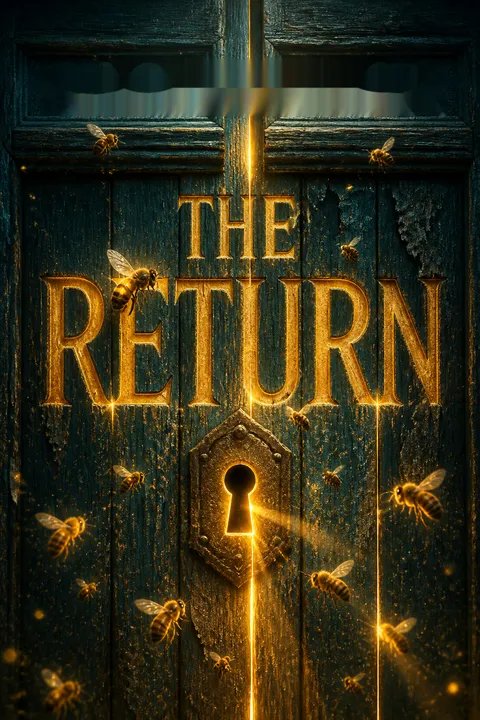


Plot Summary
Prologue
Five years after the events that changed his life, Trevor Benson arrives at a wedding in a small Southern church. He is now a psychiatrist, no longer the wounded surgeon who came to New Bern to recover and settle his grandfather’s affairs.
The bride is someone he has known for years, and another woman in the church is bound to him by an unfinished story. Trevor remembers the bees, an old man’s final words, and the unexpected ways people can become family. He cannot tell whether this gathering marks an ending or a new beginning.
The frame turns the story into a question of return before its history is known. Trevor is not presented as a triumphant healer, but as a man who has survived and changed without mastering what happened to him. His attention to bees suggests that care is often quiet, repetitive work, while the wedding places that work beside the possibility of renewal. Most importantly, the prologue resists promising a conventional happy ending. Trevor’s uncertainty prepares the reader for a story in which love can be real and still remain constrained by another person’s duties and choices.
Back to Carl’s Creek
In spring 2014, Trevor Benson returns to his grandfather Carl’s property near New Bern, North Carolina. A mortar attack in Afghanistan ended his work as a Navy surgeon and left him managing PTSD with the help of psychiatrist Eric Bowen. Carl has recently died in a South Carolina hospital, far from home, after speaking in fragments that Trevor cannot make sense of.
Trevor has also been accepted into a psychiatric residency in Baltimore, but first he wants to prepare the inherited house for sale and understand Carl’s last journey. While repairing the neglected place, he meets Callie, a wary young woman who walks past on her way to work at the Trading Post. Her blunt advice about snakes makes Trevor laugh for the first time in months.
Trevor’s return joins two forms of unfinished work: rebuilding a life after physical and psychological injury, and reconstructing the final choices of a beloved relative. His grief carries guilt because he stayed away from Carl while struggling with his own trauma. The inherited property is therefore not simply an asset; it is a setting where memory can be approached through action, from tending hives to repairing a door. Callie’s small, unsentimental intervention matters because it interrupts Trevor’s isolation without asking him to perform recovery. The story begins when care becomes practical again.
A Deputy at Dusk
Natalie Masterson, a deputy sheriff who knew Carl through his honey sales, visits Trevor after noticing that the supposedly empty house has been occupied in the past. Someone broke the back door, used candles, cleared dust from a table, and left the room unusually tidy.
Nothing valuable appears to be missing, so Natalie cannot tell whether anyone was actually living there. Her professional concern gives way to an easy, teasing conversation with Trevor, though she reveals little about her own life.
He sees her again at the farmers’ market, where she abruptly distances herself when an acquaintance notices them together. Later, at the riverside park, she explains that small-town gossip makes her cautious and shares pieces of her family history, her work, and her interest in shooting sports.
Natalie’s entrance is both a romantic beginning and a clue-bearing event. Her attention to the house establishes her as observant and responsible, while her guardedness gives Trevor something to interpret before he understands what she is protecting. The neat traces of an intruder complicate the familiar idea that trespass must leave wreckage: this person has tried to preserve the house, not exploit it. Trevor, meanwhile, uses charm to invite intimacy, but his curiosity risks turning another person’s privacy into a puzzle. Their attraction grows through precisely this tension between attention and restraint.
Honey Between Them
Trevor invites Natalie to see Carl’s beehives, explaining how the colony survives seasonal change and how Carl harvested honey without using chemicals. Natalie moves from wary observer to fascinated participant, tasting honey directly from a frame.
Their shared afternoon leads to dinner in Beaufort, where they speak more frankly about loss. Trevor describes the deaths of his parents in a plane crash and his own injuries; Natalie tells him that her childhood best friend died after being struck by a drunk driver.
Their ease is interrupted by her reluctance to discuss the years she has spent in New Bern. As they part, Natalie suggests that Trevor search for Carl’s truck, reasoning that its contents might explain the trip to South Carolina. The romance and the mystery now advance together.
The bees give Trevor and Natalie a shared subject that is intimate without being confessional. Their work around the hive makes trust visible in small decisions: where to stand, what to touch, when to move closer. The lesson also echoes Carl’s ethic of taking only what a colony can spare, a model of care that does not confuse affection with possession. At dinner, grief becomes reciprocal rather than competitive. Each recognizes the other’s loss without claiming equivalence. Natalie’s practical suggestion about the truck shows that her attention is not merely emotional; she contributes actively to Trevor’s search.
The Creekside Confession
Trevor takes Natalie up Brices Creek, where they find two young alligators and a bald eagle’s nest with eaglets. Over dinner at his house, he realizes he loves her. Natalie admits that she has been involved with someone for years, but says her feelings for Trevor have unsettled that attachment. They kiss and move toward the bedroom, yet she stops before they have sex, overcome by a thought she cannot explain.
Later, at Green Springs, she admits that choosing between Trevor and the other man feels impossible, but asks him to hold her rather than press for an answer. When he drives her home, she makes him promise not to contact her again. Trevor keeps the promise, even as her abrupt departure leaves him hurt and bewildered.
The creek outing offers an image of shared wonder, but it cannot dissolve the moral conflict Natalie carries. Trevor’s declaration of love is sincere, yet sincerity does not give him a claim on her future. Natalie’s hesitation is first legible as secrecy and then as an ethical boundary she cannot yet explain. The scene’s emotional force comes from the mismatch between their immediate closeness and the life she is already bound to. Trevor’s promise not to contact her becomes a concrete test of care: he must respect a request that wounds him, rather than treat love as permission to override it.
The Road to Easley
Following Natalie’s advice, Trevor traces Carl’s ambulance pickup to Highway 123 near Easley, South Carolina. At the Evergreen Motel, manager Beau confirms that Carl paid cash for one night, then collapsed in his idling truck the next morning.
Beau moved the truck and later handed its keys to AJ’s Towing. AJ refuses Trevor’s calls, and an attorney eventually explains that the truck was auctioned after storage fees went unpaid. Meanwhile, Trevor’s distress over Natalie disrupts his sleep and appetite.
He follows Bowen’s advice by arranging a Baltimore apartment and keeping up his routines, but cannot stop grieving. After deciding to keep Carl’s property rather than sell it, he begins arranging repairs and asks the towing company’s lawyer to recover any personal belongings that might have survived.
The Easley trip produces evidence but not closure. Carl’s careful overnight stop suggests a purposeful journey, while the auction removes the most obvious source of answers. Trevor’s search becomes an exercise in tolerating incomplete knowledge, just as his therapy asks him to tolerate emotions he cannot control. The breakup sharpens that lesson: he can arrange housing, exercise, and repairs, but he cannot make Natalie choose him. His decision to keep the property is not a cure for grief. It is a commitment to preserve a relationship with the past without pretending the past can be restored.
Callie’s Fall
During a violent rainstorm, Trevor gives Callie a ride toward the Trading Post, but she gets out after he asks about her family. Later, she collapses while reaching for merchandise on a ladder.
Trevor recognizes that she fainted before falling, then helps Claude and other customers carry her through flooded roads to the hospital when emergency services cannot arrive promptly. Her head injury and broken arm require urgent treatment. At the hospital, administrators discover that Callie has used the Social Security number of Trevor’s late grandmother and cannot verify her identity.
Trevor also realizes she may have been the careful squatter in Carl’s house: she ate peanut butter, kept the rooms clean, and needed shelter after her trailer burned. When doctors ask Trevor to intervene, he learns that Callie has a serious blood disorder.
Callie’s fall converts Trevor’s old professional identity into immediate action. His medical judgment is no longer a career he has lost but a skill he can use to get a vulnerable person through a flooded town and into care. The rescue also changes the meaning of his curiosity: the strange details surrounding Callie are no longer merely clues but signs of a life lived without security. Her false identity and refusal to discuss family can be read as self-protection, though they place her at medical risk. Trevor’s decision to help is a form of responsibility, not a claim that he already understands her.
Maps in the Box
Doctors diagnose Callie with advanced aplastic anemia and warn that she needs a bone marrow donor, most likely a close relative. She refuses to identify her family, so Trevor tries to discover where she came from.
The belongings salvaged from Carl’s truck finally arrive: among his cap, wallet, clothes, and family photographs are old maps marked with a route from New Bern through South Carolina and onward to Helen, Georgia. Trevor connects the destination to Callie’s Georgia sweatshirt and calendar, and suspects Carl was trying to find her family.
Natalie agrees to accompany him, but first takes Trevor to meet her husband, Mark. He is alive but has been in a vegetative state since bacterial meningitis. Natalie explains that her love for Trevor was real, yet she cannot abandon Mark or make life-ending choices on his behalf.
Carl’s maps transform an obscure final journey into a deliberate act of care. They also reveal how much of his life Trevor did not know, a reminder that love does not grant complete access to another person’s history. Natalie’s husband changes Trevor’s understanding of her silence: she has not been weighing two ordinary romances but struggling with loyalty to someone unable to speak for himself. Her choice is neither simple self-sacrifice nor deception alone. It is a moral identity she fears betraying. Trevor’s task shifts from winning Natalie to understanding the limits that shape her decision.
Karen Comes Home
In Helen, Georgia, local police have no runaway registered as Callie. Trevor reexamines Carl’s fragmented deathbed words and realizes they may contain a different name: Karen. Chief Robertson finds Karen Johnson, a sixteen-year-old missing from Decatur for more than a year. A news story explains why she fled: her four-year-old brother Roger choked while she was babysitting him, and she believes her parents blame her.
Back in the hospital, Trevor tells her that her parents and twin sisters are alive and gives her a chance to contact them before police do. Karen finally describes her guilt and the grief that drove her away. She calls home. Her family rushes to New Bern, and her sister Heather proves to be a full bone marrow match.
The solution depends on listening differently, not discovering a new fact by force. Trevor’s reinterpretation of Carl’s words works because he has learned to connect scattered details with Callie’s hidden life. Karen’s guilt reveals the psychological logic of her disappearance: self-blame lets her imagine that leaving could repair a family’s suffering. The belief is devastating, but it also gives a child a false sense of control over an uncontrollable death. Her family’s arrival does not erase that grief or guarantee an easy reconciliation. It creates the possibility of facing the past together and gives her treatment a viable path.
Goodbye, Then Return
Karen’s family agrees to testing, and doctors prepare to transfer her for a transplant using Heather’s matching marrow. Trevor pays for nearby lodging so they can stay with her. He and Natalie say goodbye at the hospital; she cannot leave Mark, and Trevor leaves for Baltimore without asking her to reconsider.
Three days later, he finds her letter among his moving boxes. Natalie writes that loving him made her feel alive again, but asks him not to tempt her into becoming someone she could not respect.
Trevor does not answer. He completes psychiatric residency, continues treating veterans, and keeps Carl’s house and hives. Karen’s transplant succeeds, and she eventually returns to her family. Five years later, Trevor attends her wedding, where Natalie is also present.
This resolution makes restraint part of the love story’s emotional truth. Trevor does not receive the future he imagined, but he honors Natalie’s request and lets her define what fidelity means to her. The letter offers intimacy without changing the decision: it is an acknowledgment, not an invitation. Meanwhile, caring for Karen carries forward Carl’s model of practical compassion, and Trevor’s psychiatric work turns survival into a chosen vocation. The wedding frame allows time to alter circumstances without treating time as a magical solution. Reunion becomes possible only after both characters have lived with the consequences of their earlier choices.
Epilogue
Five years later, Trevor has completed his psychiatry residency and arrives in Helen for Karen’s wedding. Natalie attends too. Mark died ten months earlier, after years in a vegetative state, and Natalie has since opened a flower shop in New Bern. Trevor is weighing job offers, including work near the town he once planned to leave.
He and Natalie meet away from the reception, discover that neither has built a lasting relationship with anyone else, and acknowledge how much they have missed each other. Trevor asks her to help with the honey harvest; Natalie turns the invitation into dinner on the porch. They return to the celebration together, kissing as they enter the tent.
The ending offers reunion without pretending that the intervening years were a pause. Natalie has endured Mark’s illness and death, while Trevor has completed the professional path he once considered surrendering for love. Their renewed closeness is possible because neither has demanded that the other choose under pressure. The bees return as a modest bridge between past and future: shared work can become an invitation rather than a promise. Karen’s wedding also closes the circle of care Carl began, while allowing Trevor and Natalie to imagine a life together only after the circumstances that once made that choice impossible have changed.
Analysis
The Return places two forms of unresolved grief beside each other. Trevor mourns people who are gone: his parents, Carl, and the future he imagined with Natalie. Natalie lives with a husband who is physically present but unable to answer her, so her grief has no clear boundary or socially accepted endpoint. These situations are not equivalent, but each exposes the limits of ordinary advice about moving on. Trevor’s therapy gives him tools for managing symptoms; it cannot decide what he owes another person. Natalie’s fidelity protects an identity she values, yet it also asks her to defer desires she cannot know when or whether she may pursue.
Callie’s story makes the novel’s ethic of care more concrete. She turns guilt into a theory of causation: if her actions caused her brother’s death, then leaving might somehow undo the harm. Her self-blame offers a child an illusion of control, but it also cuts her off from the people who could help her survive. Trevor reaches her not by dismissing the guilt, but by staying present long enough for her to tell what happened. The family’s reunion does not erase the death or guarantee reconciliation; it makes truthful contact possible again.
Carl’s bees and his final journey connect these stories through acts of attention. He notices who needs food, shelter, work, or a route home, and he acts without demanding that the recipient first explain themselves. Trevor’s movement from grieving grandson to psychiatrist follows that model. His recovery is not a return to his former self but a widening of what he can do with his pain.
The ending is hopeful without making love a cure-all. Trevor and Natalie reunite only after Mark’s death and years of separate lives. Their renewed kiss matters because it follows changed circumstances, not because devotion has overridden them. The novel’s deepest promise is narrower and more credible: people may not control loss, but they can choose whether to meet one another with honesty, patience, and care.
Review Summary
The Return receives mixed reviews with an overall 3.9/5 rating. Many readers found the romance unconvincing, criticizing the "insta-love" between Trevor and Natalie and Trevor's unlikeable, self-absorbed character. The extensive beekeeping details divided readers—some found them fascinating while others felt they overshadowed the story. Several long-time Sparks fans expressed disappointment, feeling they'd "outgrown" his formulaic style. Positive reviews appreciated the mystery elements surrounding Callie and Trevor's grandfather, the PTSD representation, and the small-town atmosphere. Common complaints included slow pacing, shallow character development, and excessive cheese factor.
People Also Read










Characters
Trevor Benson
Wounded doctor returning homeTrevor is a former Navy orthopedic surgeon whose injuries and PTSD have forced him to rebuild his life. Intelligent, self-mocking, and accustomed to achievement, he initially treats recovery as another problem to solve through discipline. His inherited property reconnects him with his grandfather and a childhood in which affection mattered more than performance. Trevor’s attraction to Natalie exposes his tendency to imagine a future before he understands another person’s constraints. His work with Callie teaches him to direct his medical skill outward, while Bowen’s guidance helps him distinguish care from control. He is driven by a need to make meaning from loss, but his growth depends on accepting that not every painful story can be repaired by his effort alone.
Natalie Masterson
Guarded deputy with divided loyaltiesNatalie is a New Bern deputy sheriff whose competence and warm humor sit beside a private life she is reluctant to expose. She is observant, practical, and deeply attached to family, yet she has become accustomed to carrying difficult feelings alone. Her work brings her close to suffering, and her religious upbringing gives her persistent questions about why people endure it. Natalie is drawn to Trevor’s openness and irreverence, but attraction does not erase her commitments. She struggles to balance desire, duty, and the fear that a choice made for her own happiness could alter who she believes herself to be. Her restraint is not a lack of feeling; it is an attempt to remain faithful to her own moral understanding.
Callie
A guarded young neighborCallie works at Slow Jim’s Trading Post and lives with little money, few possessions, and a strong instinct to protect her privacy. She is wary of questions and resists help, yet her steadiness at work and her care for the store cat reveal a dependable, tender side. Her friendship with Carl suggests that she responds to kindness when it is offered without interrogation or judgment. Callie has had to become self-reliant before she was ready, and that competence can make her seem older than she is. She is driven by a need to stay safe and preserve control over her own life, even when secrecy makes accepting care more difficult.
Carl Haverson
Beekeeper and quiet benefactorCarl is Trevor’s maternal grandfather, a former mill worker, World War II veteran, and lifelong beekeeper. He is eccentric in practical ways, from building an unconventional boat to saving objects for projects he may someday undertake. Beneath that resourcefulness is a generous instinct: he makes room for strays, shares honey, and notices people who have been overlooked. His marriage to Rose remains central to his sense of himself, and he speaks of her with enduring tenderness. Carl’s influence on Trevor is less about advice than example. He offers food, work, shelter, and attention, teaching that love often appears as a useful thing done at the right moment.
Mark Masterson
Natalie’s devoted husbandMark is Natalie’s husband, whom she met in college. He is remembered as kind, energetic, and unpretentious, with a close bond to his family and a talent for lacrosse. His relationship with Natalie was built on affection, shared plans, and an easy trust. Even when he is not present in ordinary conversation, her memories of their life together shape how she understands loyalty and the future. Mark’s importance lies in the way his prior relationship with Natalie remains emotionally real, complicating any simple choice between past and present.
Eric Bowen
Trevor’s steady therapistDr. Bowen treats Trevor’s PTSD through cognitive and dialectical behavioral approaches. Calm, precise, and patient, he helps Trevor identify how sleep, exercise, anger, and stress affect his symptoms. Their conversations are frank but not sentimental; Bowen asks questions that return responsibility to Trevor instead of offering easy instructions. He is one of the few people who knows how severe Trevor’s earlier despair became. His role is to provide a stable framework in which Trevor can make his own choices and recognize when emotion is pushing him toward action he may regret.
Claude
Trading Post’s generous ownerClaude runs Slow Jim’s Trading Post and remembers Carl with affection. Friendly and practical, he provides Trevor with local history and trusts his customers enough to help people in need. He hired Callie after Carl vouched for her and recognizes her reliability even though she keeps her life private. During the storm, Claude helps carry her to the hospital and drives through dangerous conditions. His loyalty to the people around him makes the Trading Post more than a place of business; it is a small community’s informal safety net.
Rose Haverson
Carl’s beloved wifeRose is Carl’s late wife and Trevor’s grandmother. She lived with epilepsy, a condition that shaped some of the couple’s practical choices, including Carl’s efforts to make their boat safe. Although Trevor never knew her well, the photograph in Carl’s home and the stories Carl tells give her a vivid presence. Their enduring marriage becomes Trevor’s measure of a love that lasts through ordinary routines as well as hardship.
Curtis Johnson
Callie’s guarded fatherCurtis is Callie’s father, a reserved man whose expectations and anger have strained their relationship. He works to support his family and has difficulty expressing emotion, especially under pressure. His quietness can be read by Callie as rejection, leaving old tensions difficult to discuss. He matters because family love is not always communicated in ways a frightened child can recognize.
Louise Johnson
Callie’s devoted motherLouise is Callie’s mother, a loving parent whose family has endured grief and financial strain. She is closely connected to her daughters and responds to emotional upheaval with visible care. Her relationship with Callie is shaped by both affection and the pain of events the family has struggled to discuss. She represents the possibility of a bond surviving distance, even when trust must be rebuilt.
Heather Johnson
Callie’s twin sisterHeather is one of Callie’s twin younger sisters. She shares a family history marked by affection, upheaval, and grief, and remains part of the close sibling bond Callie misses while away. Along with her twin, Tammy, she offers Callie a connection to the ordinary family life she remembers.
Tammy Johnson
Callie’s twin sisterTammy is Callie’s other twin sister. Her presence helps define the family Callie longs for, including childhood celebrations and the daily closeness that disappeared after tragedy. She is one of the people whose relationship with Callie must be approached again after a long separation.
Jim
Elderly Trading Post regularJim is Claude’s elderly father and a regular presence in the Trading Post’s porch rockers. His poor hearing and wandering recollections make him an imperfect source of information, but his memories of Carl and local life still matter.
Jerrold
Porch-side storytellerJerrold is an older widower who sits with Jim at the Trading Post. He has a teasing, unpredictable manner and helps Trevor make sense of Jim’s scattered recollections about Carl.
Dr. Mollie Nobles
Callie’s oncologistDr. Nobles is the oncologist who investigates Callie’s abnormal blood counts and explains the urgency of her condition. Direct and compassionate, she works across specialties and tries to obtain accurate family information without reducing Callie to a diagnosis.
Chief Harvey Robertson
Helen’s resourceful police chiefRobertson leads the Helen police department and helps Trevor and Natalie search missing-person records. He is practical, perceptive, and willing to consider their request, while remaining mindful of his responsibilities to the law.
Plot Devices
Carl’s beehives
Care made visibleThe hives connect Trevor to his grandfather through a skill they shared and give him a way to stay grounded in the present. Teaching Natalie to handle a hive brings them close without requiring immediate confession. The colonies also embody Carl’s ethic of tending what depends on you while taking only what can be spared. Later, harvesting honey becomes a reason for Trevor to keep the property and a practical link between past relationships and possible future ones.
Carl’s final words and maps
A trail through griefCarl’s confused phrases at the hospital and the marked maps recovered from his truck turn Trevor’s mourning into an investigation. The maps establish that Carl travelled deliberately beyond Easley, while Trevor’s later reinterpretation of the words reveals the destination and the person he hoped to help. These clues are not merely a puzzle solution. They show that Carl acted on concern he had not explained to Trevor, and they let his grandson continue a piece of that unfinished work.
Trevor’s therapy practices
Recovery through behaviorBowen’s CBT and DBT methods give Trevor concrete routines for managing PTSD: exercise, regular sleep, healthy habits, and deliberate responses to anger. These practices do not erase trauma, but they let him remain functional through grief, romantic rejection, and Callie’s medical crisis. The story makes recovery visible through choices rather than a sudden cure. When Trevor responds to Callie’s fall with clear judgment, the skills he has practiced support both his own stability and another person’s survival.
Callie’s hidden identity
Secrecy with a costCallie’s false name and borrowed Social Security number protect her from being found, but they also prevent doctors from identifying relatives who might be able to help her. Everyday traces, including her food, belongings, and Georgia calendar, allow Trevor to connect her to Carl’s final journey. The device turns secrecy into both a survival strategy and an obstacle. Its resolution depends not on exposing her for punishment, but on giving her enough trust and information to choose contact with her family.
The wedding frame
A delayed second chanceTrevor’s attendance at a wedding five years after his return to New Bern frames the main story as a memory whose meaning is still unsettled. The opening creates anticipation without revealing what the couple’s lives became. When the frame returns at the end, the wedding places Callie’s restored future beside Trevor and Natalie’s changed circumstances. It allows the story to offer renewed possibility without claiming that time alone resolves grief or that the lovers’ separation was meaningless.
About the Author
Other books by Nicholas Sparks









Download PDF
Download EPUB
.epub digital book format is ideal for reading ebooks on phones, tablets, and e-readers.








