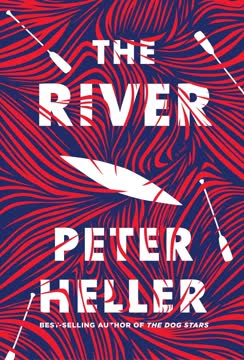
Plot Summary
Smoke on the Water
Jack and Wynn, two college friends, paddle through the remote Canadian wilderness, savoring the solitude and beauty of late summer. Their peace is disturbed by the persistent scent of smoke, which they eventually trace to a massive forest fire burning far to the northwest. The fire's presence is both awe-inspiring and terrifying, a reminder of nature's power and unpredictability. The boys realize that the fire is moving in their direction, and with no easy way out, they must decide whether to continue their journey downriver or attempt to turn back. The looming threat of the fire sets the tone for the journey ahead, infusing every decision with urgency and dread.
Friendship Forged in Wilderness
Jack and Wynn's friendship is rooted in their shared love of the outdoors and literature. Both have experienced heartbreak and loss, and their bond is strengthened by their complementary personalities—Jack's pragmatic toughness and Wynn's gentle optimism. Their time together in the wilderness is a chance to escape the pressures of their lives and immerse themselves in the rhythms of nature. The river trip is meant to be an adventure, a test of skill and endurance, but also a retreat into simplicity and camaraderie. Their partnership is built on mutual respect, unspoken understanding, and a willingness to face challenges together.
Ominous Encounters
The boys encounter two drunken men camped on an island, whose crude jokes and dismissive attitude toward the fire foreshadow trouble. Later, as they paddle through fog and wind, they hear the sounds of a couple arguing on the shore but decide not to intervene. These encounters unsettle Jack and Wynn, introducing the possibility that other people in the wilderness may be as dangerous as the natural elements. The sense of isolation is broken, replaced by a growing awareness that human conflict and violence can intrude even in the most remote places.
Voices in the Fog
The shouts of a man and woman, muffled by fog and wind, haunt Jack and Wynn as they continue their journey. The boys debate whether to turn back and warn the couple about the fire, ultimately deciding to do so out of a sense of responsibility. Their search for the couple is fruitless, and the absence of any sign of them adds to the sense of unease. The voices in the fog become a symbol of the unknown dangers lurking in the wilderness, and the boys' decision to try to help marks a turning point in their journey from carefree adventure to moral responsibility.
The Missing Woman
Jack and Wynn encounter Pierre, a distraught man paddling alone, who claims his wife Maia has disappeared in the fog. Pierre is injured, panicked, and evasive, and his story is confusing and incomplete. The boys are drawn into his crisis, torn between suspicion and compassion. They agree to search for Maia, carrying their canoe and supplies back upriver in a race against time and the encroaching fire. The search for Maia becomes a test of their resourcefulness, courage, and willingness to risk themselves for a stranger.
Rescue and Suspicion
Jack and Wynn find Maia, battered and barely alive, hidden in the undergrowth. Her injuries suggest violence, and the boys begin to suspect that Pierre may have attacked her. As they tend to her wounds and struggle to keep her alive, they are forced to confront the possibility that the real danger may come not from the fire or the wilderness, but from another human being. The tension between trust and suspicion strains their friendship, as Jack's instincts for self-preservation clash with Wynn's faith in people's goodness.
Fire and Flight
The fire draws closer, transforming the landscape into a hellish inferno. Jack, Wynn, and Maia must flee downriver, racing against both the flames and the possibility of pursuit by Pierre. The journey becomes a harrowing ordeal of physical and emotional endurance, as they navigate rapids, starvation, and the constant threat of ambush. The fire is both a literal and symbolic force, burning away illusions and forcing the characters to confront their deepest fears and desires. The river, once a source of joy and freedom, becomes a gauntlet of survival.
Survival and Betrayal
The group's food and gear are destroyed or stolen, possibly by Pierre, leaving them vulnerable to hunger and exposure. The wilderness, once a place of abundance, becomes a landscape of scarcity and danger. Jack and Wynn are forced to rely on their skills and each other, but the strain of suspicion and fear begins to erode their partnership. The threat of betrayal—by Pierre, by the drunken men, even by each other—hangs over every decision. The struggle to survive becomes intertwined with the struggle to maintain trust and hope.
The River's Judgment
As they paddle through burned and unburned country, the group witnesses the devastation wrought by the fire—dead animals, scorched earth, and a silence that feels like judgment. Starvation and exhaustion take their toll, and the river becomes both a path to salvation and a test of character. The arrival of the two drunken men, now sobered by their own brush with death, offers a brief respite and a chance for rescue. But the river's judgment is not yet complete, and the final confrontation with Pierre and the consequences of past choices loom ahead.
Starvation and Sacrifice
With food scarce and Maia's condition worsening, Jack and Wynn are forced to make hard decisions to keep her alive. They hunt, fish, and forage, but the specter of starvation is never far away. The bonds of friendship and loyalty are tested as the boys confront the limits of their endurance and the reality that not everyone can be saved. Sacrifice becomes inevitable, and the choices they make will haunt them long after the journey ends.
The Final Confrontation
The group's path converges with Pierre's in a deadly showdown at a river portage. Misunderstandings, fear, and the chaos of survival lead to gunfire and death. The violence is sudden and senseless, a culmination of all the tensions and suspicions that have built up over the journey. In the aftermath, Jack is left to grapple with guilt, grief, and the knowledge that even the best intentions can lead to tragedy. The river, indifferent to human suffering, flows on.
Loss and Reckoning
The journey ends in loss—of friends, of innocence, of certainty. Jack must carry the weight of Wynn's death, Maia's suffering, and his own actions. The wilderness that once promised escape and renewal has become a place of reckoning, where every choice has consequences. Jack's return to civilization is marked by a sense of alienation and unresolved grief. The story's emotional arc is one of transformation through suffering, as Jack seeks meaning and redemption in the aftermath of disaster.
Homecoming and Grief
Jack visits Wynn's family, struggling to find the words to explain what happened on the river. The act of telling the story becomes a form of mourning, a way to honor Wynn's memory and seek forgiveness. The homecoming is bittersweet, filled with reminders of what was lost and the enduring bonds of love and friendship. Jack's journey is not over; the river continues to flow, carrying the weight of the past into an uncertain future.
Characters
Jack
Jack is the novel's central figure, shaped by early trauma—the loss of his mother in a river accident for which he feels responsible. Raised on a Colorado ranch, he is tough, resourceful, and deeply self-reliant, but also burdened by guilt and a sense of fatalism. Jack's friendship with Wynn is a rare source of joy and connection, and he is fiercely protective of those he loves. His pragmatism often puts him at odds with Wynn's idealism, especially as the journey grows more dangerous. Jack's psychological arc is one of increasing isolation and self-blame, culminating in profound grief after Wynn's death. His actions are driven by a need to atone for past failures, but he is ultimately forced to confront the limits of his control and the randomness of fate.
Wynn
Wynn is Jack's best friend and the emotional heart of the story. Raised in Vermont, he is sensitive, optimistic, and deeply empathetic, with a love of art, literature, and the natural world. Wynn's faith in people's goodness is both his greatest strength and his tragic flaw, as it leads him to trust and help others even when it puts him at risk. He serves as a counterbalance to Jack's cynicism, urging compassion and second chances. Wynn's relationship with his family, especially his younger sister Jess, reveals his nurturing side. His death is a devastating loss, not only for Jack but for the reader, as it represents the destruction of innocence and hope in the face of violence and chaos.
Maia
Maia is Pierre's wife, a scientist whose research trip becomes a nightmare. Her disappearance and injuries are the catalyst for the novel's central conflict, forcing Jack and Wynn to choose between safety and moral responsibility. Maia's strength and will to survive are evident in her endurance and eventual recovery, but she is also a victim of both human and natural violence. Her presence complicates the boys' relationship and exposes the darker aspects of human nature. Maia's story is one of survival against overwhelming odds, and her eventual rescue is both a triumph and a reminder of the costs of compassion.
Pierre
Pierre is a complex and ambiguous figure, at once a victim and a potential perpetrator. His account of Maia's disappearance is evasive and contradictory, and his behavior oscillates between panic, aggression, and helplessness. The suspicion that he may have attacked Maia adds a layer of psychological tension to the story, forcing Jack and Wynn to navigate the dangers of both trust and mistrust. Pierre embodies the unpredictability of human behavior under stress, and his ultimate fate is a grim reflection of the novel's themes of judgment and consequence.
Brent
Brent is one of the two drunken men encountered early in the story, later revealed to be more competent and dangerous than he first appears. His interactions with Jack and Wynn are marked by a blend of camaraderie, suspicion, and self-interest. Brent's actions during the fire and his role in the final confrontation highlight the thin line between cooperation and conflict in extreme situations. He represents the moral ambiguity of survival, where alliances are temporary and trust is always provisional.
JD
JD is Brent's companion, a man of few words but considerable physical presence. His loyalty to Brent is unquestioned, but his own motivations are less clear. JD's attempted assault on Maia and subsequent injury at Jack's hands add another layer of danger and unpredictability to the group's dynamic. He is both a product and a casualty of the lawless environment, his fate intertwined with the novel's exploration of violence and retribution.
Jack's Mother
Though she appears only in memory and dream, Jack's mother is a central influence on his psyche. Her death in a river accident is the defining event of Jack's life, shaping his sense of responsibility, guilt, and longing. She represents the fragility of happiness and the enduring power of grief. Jack's memories of her are both a source of comfort and a wound that never fully heals.
Wynn's Family (Hansie and Jess)
Wynn's mother Hansie and sister Jess provide a counterpoint to the harshness of the wilderness, representing the warmth and stability of family. Their presence in the novel's final chapters underscores the depth of Wynn's loss and the enduring impact of his character. Hansie's acceptance of Jack and her insistence on hearing the truth are acts of grace, offering a measure of healing in the aftermath of tragedy.
The River
The river is both a setting and a character in its own right, shaping the journey and testing the limits of human endurance. It is beautiful and deadly, a source of sustenance and a vehicle of destruction. The river's currents mirror the emotional currents of the story, carrying the characters toward both revelation and loss. Its indifference to human suffering is a reminder of the limits of control and the necessity of humility.
The Fire
The forest fire is the novel's most powerful antagonist, an unstoppable force that consumes everything in its path. It is both a literal threat and a metaphor for the uncontrollable forces—violence, fate, grief—that shape the characters' lives. The fire's approach drives the action, strips away illusions, and forces moments of truth. It is a crucible in which character is revealed and tested.
Plot Devices
Dual Narrative of Nature and Human Conflict
The novel's structure intertwines the external threat of the forest fire with the internal dangers posed by human conflict. The fire's relentless advance mirrors the escalation of suspicion, betrayal, and violence among the characters. This dual narrative creates a sense of inevitability and amplifies the stakes of every decision. Foreshadowing is used effectively, with early hints of danger—smoke on the horizon, voices in the fog—building toward the climactic convergence of natural and human disaster. The river's linear progression provides a framework for the story's unfolding, while flashbacks and memories deepen the psychological complexity of the characters. The use of shifting perspectives—Jack's pragmatism, Wynn's idealism, Maia's trauma—allows for a nuanced exploration of moral ambiguity and the limits of understanding.
Analysis
Peter Heller's The River is a meditation on friendship, morality, and the unpredictable forces—both natural and human—that shape our lives. The novel explores the tension between idealism and pragmatism, compassion and self-preservation, as embodied by Jack and Wynn. Their journey down the river is both a physical ordeal and a spiritual trial, forcing them to confront the limits of their strength, the fragility of trust, and the inevitability of loss. The wilderness is both a sanctuary and a crucible, stripping away the comforts of civilization and exposing the raw realities of survival. The fire, as both a literal and symbolic force, burns away illusions and compels moments of reckoning. The story's emotional power lies in its refusal to offer easy answers or redemption; instead, it presents a world where good intentions can lead to tragedy, and where the bonds of love and friendship are both a source of strength and a cause of suffering. In the end, The River is a testament to the enduring human need for connection, meaning, and forgiveness in the face of chaos and loss.
Last updated:
Review Summary
The River by Peter Heller follows college friends Wynn and Jack on a Canadian canoe trip that becomes a survival ordeal. Reviewers praise Heller's lyrical, vivid descriptions of wilderness and the deep friendship between the protagonists. The novel balances beautiful nature writing with mounting tension from a wildfire, a missing woman, and dangerous strangers. While many found it gripping and unputdownable, some critics felt it was overly descriptive, slow-paced, and laden with excessive gear details. The abrupt ending divided readers. Most appreciated the character development and emotional depth, though a few found it boring.