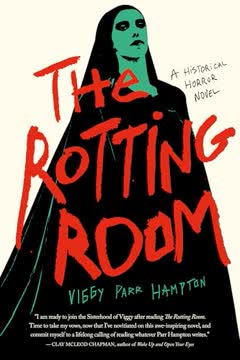
Plot Summary
Arrival at the Abbey
Sister Rafaela, recently transferred from a disgraced convent in Barcelona, arrives at the isolated abbey of the Sisters of Divine Innocence. Haunted by her past and desperate for spiritual renewal, she is greeted by Mother Superior and introduced to the abbey's strange customs. The abbey is cloistered, silent, and ruled by strict routines. Rafaela's first night is spent in terror, forced to pray beside the rotting corpse of a Sister in the "chamber of divine decomposition." The oppressive atmosphere, the scent of death, and the Sisters' coldness fill her with dread and uncertainty, but she clings to the hope that this new home will offer her redemption and peace.
The Chamber of Decomposition
Rafaela is initiated into the abbey's most disturbing practice: the chamber of divine decomposition. Here, the dead are seated in stone chairs to rot, their bodily fluids collected in buckets beneath them. The Sisters believe these "holy essences" erase sin. Rafaela is repulsed but compelled to obey, her fear of Mother Superior's authority outweighing her disgust. The chamber's heat, the sickly-sweet stench, and the tactile horror of touching the dead Sister's hand leave Rafaela shaken. She senses that the abbey's rituals mask something deeply wrong, but she is too new, too uncertain, to question openly.
Bottles and Secrets
Rafaela's daily duties include bottling the green-brown liquid collected from the chamber. The bottlery is a dark, charred building filled with glass bottles and the ever-present stench of decay. The Sisters work in silence, filling and corking bottles with practiced efficiency. Rafaela suspects the liquid's true origin but is afraid to ask. She learns that the abbey sells these bottles to villagers and pilgrims, who believe the "holy essence" can erase sin or heal. The abbey's wealth, the secrecy, and the Sisters' detachment from the world outside deepen Rafaela's unease and sense of complicity.
Confessions and Shadows
Father Bruno, the village priest, is drawn into the abbey's orbit, performing Mass and hearing confessions. He is unsettled by the Sisters' odor and the oppressive atmosphere. Rafaela's confession reveals her traumatic childhood—witnessing her mother's infanticide and the horrors at her previous convent. Bruno, himself haunted by childhood guilt and the memory of a wrongly executed "witch," feels a dangerous kinship with Rafaela. Both are burdened by secrets, shame, and the sense that evil can hide behind piety. Their confessions become a lifeline, but also a source of temptation and spiritual peril.
The Stranger Berta
A mysterious, sickly English nun named Berta arrives at the abbey, seeking refuge. She is feverish, coughing blood, and unsettling in her manner. Rafaela is assigned to care for her and is disturbed by Berta's cryptic warnings: people in the village are dying because of what the Sisters sell. Berta's presence coincides with a wave of illness among the Sisters. She speaks to Rafaela in dreams and waking visions, sowing doubt and fear. Berta's death is swift and strange—her body remains lifelike, uncorrupted, and the Sisters begin to whisper of miracles and sainthood.
Nightmares and Doubts
Rafaela is tormented by nightmares of Berta, the chamber, and her own past. She questions her sanity, unable to trust her senses or memories. The abbey's silence and isolation amplify her paranoia. She witnesses the Sisters selling more bottles, villagers collapsing, and her own rags—soaked with menstrual blood—being collected and wrung out for the tincture. The boundaries between holy ritual and blasphemy blur. Rafaela's attempts to seek help—through letters to her father and confessions to Father Bruno—are intercepted or dismissed. She is trapped, doubting herself, and increasingly convinced that evil has taken root in the abbey.
The Tincture's True Source
Rafaela's suspicions are confirmed: the "holy essence" is indeed the bodily fluids of the dead, mixed with blood from the living. The abbey's graveyard is barren; bodies are exhumed to supply the chamber. The Sisters' commerce is built on death and deception. Rafaela is horrified to realize her own blood is being used, and that the villagers are dying from the tincture. She tries to warn her father and Father Bruno, but her letters are stolen, and her trust is betrayed. The abbey's leadership, especially Mother Superior and Sister Leonella, become openly menacing, their eyes taking on a hellish golden-red hue.
Sickness Spreads
Illness sweeps through the abbey. Sisters cough blood, collapse, and die, their bodies quickly withering in the chamber. Yet some, after praying to Berta, recover with unnatural vigor. The line between miracle and curse is erased. The Sisters begin to venerate Berta as a saint, even as their rituals grow more frenzied and blasphemous. Rafaela, increasingly isolated, is the only one who sees the danger. She is offered bargains—her pain relieved, her family's legacy secured—in exchange for her silence and complicity. The abbey's spiritual sickness is mirrored by the physical decay all around.
The Incorruptible Body
Berta's body remains uncorrupted, drawing pilgrims and Sisters alike to worship her. The abbey is gripped by mass hysteria; prayers to God are replaced by prayers to Berta and, increasingly, to demonic names. The Sisters' eyes glow with unnatural light. Mother Superior and Sister Leonella, once sick, are now radiant and powerful, their scars healed. The chamber becomes a site of unholy adulation. Rafaela, the last holdout, is pressured to join the cult of Berta or face dire consequences. The line between victim and perpetrator, sanity and madness, is obliterated.
Letters and Betrayals
Rafaela's desperate attempts to reach the outside world are thwarted. Her letters are intercepted, altered, or destroyed. Father Bruno, once her confidant, is manipulated or overpowered by the Sisters. The abbey's leadership forges letters to her family, severing her last ties to hope and rescue. Rafaela is accused, threatened, and finally physically overpowered. She is forced to witness the consequences of her resistance: Father Bruno is imprisoned and poisoned with the tincture, and her own fate is sealed. The abbey is now a closed system, feeding on itself.
Bargains with the Devil
Rafaela is offered a final bargain: join the Sisters in their worship of Berta and share in their health and power, or refuse and face death. She is shown the consequences of resistance—her family will be poisoned, her soul damned, her body used to make more tincture. The Sisters, now fully transformed, are agents of Berta's will. Rafaela's faith is tested to the breaking point. She is bound in the chamber, forced to choose between apostasy and annihilation. The devil's voice, through Berta and the Sisters, is seductive and relentless.
The Failed Salvation
In a final act of courage, Rafaela attempts to destroy the bottlery by setting it on fire, hoping to end the cycle of death and poison. She is caught by Mother Superior and Sister Leonella, who extinguish the flames with a bucket of her own blood and grave dirt. Her last hope of salvation is crushed. She is dragged to the chamber, bound, and prepared for the same fate as the others. The Sisters, now fully in thrall to Berta, perform a blasphemous ritual, offering Rafaela a last chance to join them or die.
The Fire Within
Rafaela, bound and surrounded by the transformed Sisters, refuses to renounce her faith or join their cult. She is forced to drink the tincture, her body and soul violated. The Sisters mock her, promising that her body will soon be used to make more "holy essence." In her final moments, Rafaela realizes that the true horror is not just death, but the corruption of faith, the perversion of ritual, and the loss of hope. She screams into the darkness, abandoned by God, as Berta's laughter echoes in the chamber.
The Final Choice
The abbey is lost. The Sisters, once innocent, are now damned, their rituals a mockery of holiness. Rafaela's resistance is crushed, her fate sealed. The cycle of ritual and silence will continue, fed by the bodies and blood of the faithful. The outside world remains ignorant, the abbey's secrets preserved by silence and fear. The story ends with Rafaela's final scream, a testament to the cost of complicity, the danger of unchecked authority, and the horror that can grow in the shadows of faith.
Characters
Sister Rafaela
Rafaela is the protagonist, a young nun fleeing the trauma of her past—her mother's infanticide, the corruption of her previous convent, and her own complicity in evil. She is intelligent, sensitive, and deeply self-doubting, constantly questioning her perceptions and her worthiness. Rafaela's psychological journey is one of isolation, guilt, and the desperate search for spiritual certainty. She is both victim and witness, drawn into the abbey's horrors by her need for belonging and her inability to trust herself. Her resistance to the abbey's corruption is courageous but ultimately futile, as she is betrayed by those she trusts and overwhelmed by forces beyond her control. Rafaela's arc is a tragic one: her faith is tested, her agency stripped, and her final stand is met with annihilation.
Mother Superior Maria Innocentia
Mother Superior is the abbey's leader, a figure of absolute authority and rigid piety. She is both protector and oppressor, enforcing silence and obedience with an iron will. Her devotion to ritual masks a deep moral rot; she is complicit in the abbey's commerce in death and the deception of the faithful. As the story progresses, she becomes increasingly menacing, her eyes taking on a supernatural glow as she succumbs to Berta's influence. Mother Superior's psychological profile is one of pride, denial, and the willingness to sacrifice others for the appearance of holiness. She is both a victim of the system and its chief architect, ultimately transformed into an agent of evil.
Sister Leonella
Once a meek and wounded figure, Sister Leonella is physically and emotionally marked by past trauma (a fire that left her with visible scars). She is Mother Superior's right hand, enforcing discipline and participating in the abbey's darkest rituals. As the story unfolds, Leonella's scars fade, her health restored by Berta's "miracles," and her ambition grows. She becomes a willing instrument of Berta's will, betraying Rafaela and Father Bruno. Leonella's psychological arc is one of resentment, envy, and the seduction of power. Her transformation from victim to perpetrator is both horrifying and pitiable.
Father Bruno Prifti
Father Bruno is the village priest, an outsider assigned to the abbey. He is burdened by childhood trauma—witnessing the execution of a woman accused of witchcraft—and by his own failings as a spiritual leader. Bruno is drawn to Rafaela, both as a confessor and as a man, and their relationship is fraught with temptation and mutual need. He is both compassionate and weak, unable to protect Rafaela or himself from the abbey's corruption. Bruno's arc is one of increasing helplessness, as he is manipulated, imprisoned, and ultimately destroyed by the forces he cannot comprehend or control.
Berta
Berta is the mysterious English nun whose arrival precipitates the abbey's collapse. She is sickly, otherworldly, and charismatic, speaking in riddles and sowing doubt. After her death, her body remains uncorrupted, and she becomes the focus of the Sisters' veneration. Berta's true nature is ambiguous—she is both victim and devil, a vessel for the abbey's collective guilt and a supernatural force. She tempts, bargains, and ultimately destroys. Psychologically, Berta represents the shadow side of faith: the desire for miracles, the seduction of power, and the ease with which holiness can become blasphemy.
Sister Cecelia
Sister Cecelia is one of the oldest and most devout Sisters, a figure of kindness and tradition. She is among the first to fall ill and die, her body quickly withering in the chamber. Cecelia's death marks the point of no return for the abbey, as her faith is twisted into the worship of Berta. Her arc is one of innocence corrupted, a warning of what happens when trust is misplaced and ritual becomes empty.
Sister Catherine
Sister Catherine is an older nun who embodies the abbey's culture of secrecy and denial. She rebuffs Rafaela's questions, insisting on the holiness of the abbey's practices and refusing to acknowledge any wrongdoing. Catherine's psychological profile is one of fear, conformity, and the need to preserve the status quo at all costs. She is both a product and a perpetuator of the abbey's rot.
Rafaela's Father (Alejandro de Fuentes Piedra)
Rafaela's father is a nobleman in Barcelona, desperate to preserve his family's legacy after the death of his son. He pressures Rafaela to leave the convent and return home, representing the pull of the secular world and the impossibility of true escape. His letters are a lifeline for Rafaela, but also a source of guilt and conflict. He is ultimately powerless to save her, his authority undermined by the abbey's isolation and deception.
Archbishop Orriva
The Archbishop is a distant but influential figure, responsible for placing Rafaela at the abbey. He is well-meaning but ineffectual, unable to see or stop the corruption within the convent. His correspondence with Father Bruno and Rafaela's father reveals the limits of institutional power and the dangers of blind trust in authority.
The Dead Man (Pilgrim)
The unnamed man who dies after drinking the tincture is a symbol of the abbey's predation on the vulnerable. His body, placed in the chamber alongside the Sisters, is a grotesque reminder of the consequences of unchecked ritual and the commodification of death. He is both a warning and a casualty, his fate ignored by those who profit from his suffering.
Plot Devices
The Chamber of Divine Decomposition
The chamber is both a literal and symbolic heart of the abbey's corruption. It is where the dead are displayed, their fluids collected, and the boundaries between life and death, holiness and blasphemy, are blurred. The chamber is a site of ritual, temptation, and punishment, its oppressive heat and stench mirroring the spiritual decay of the community. It is also a stage for the story's most pivotal confrontations—between Rafaela and Berta, between faith and doubt, between victim and perpetrator.
The Tincture
The "holy essence" is the physical manifestation of the abbey's rot. It is marketed as a cure for sin, a relic, a miracle—but in truth, it is poison, made from the fluids of the dead and the blood of the living. The tincture is both a commodity and a sacrament, its sale funding the abbey's wealth and its consumption spreading death. It is a plot device that connects the personal (Rafaela's blood, the villagers' deaths) to the institutional (the abbey's survival, the Church's authority).
Letters and Intercepted Communication
Letters are Rafaela's only link to the outside world, her means of seeking help and validation. Their interception, alteration, and destruction symbolize her growing isolation and the abbey's control over information. The plot device of the stolen letter heightens tension, foreshadows betrayal, and accelerates Rafaela's descent into despair.
Bargains and Temptation
Berta's bargains—offering relief from pain, family legacy, or power in exchange for complicity—are a central plot device. They echo the classic Faustian pact, testing each character's faith, integrity, and will. The bargains are both psychological (temptation, self-justification) and supernatural (miraculous healing, damnation), driving the story's moral and emotional arc.
The Unreliable Senses
Rafaela's inability to trust her own perceptions—visions, dreams, voices—creates a pervasive sense of uncertainty. The reader is forced to question what is real, what is hallucination, and what is supernatural. This device heightens suspense, deepens psychological horror, and mirrors the story's themes of doubt, complicity, and the dangers of unchecked authority.
The Cycle of Ritual and Silence
The abbey's rigid routines, enforced silence, and repetitive rituals create a claustrophobic atmosphere. The cycle of prayer, work, and death is both comforting and suffocating, trapping the characters in a system that perpetuates its own evil. The silence prevents communication, fosters paranoia, and allows horror to flourish unchecked.
Analysis
The Rotting Room is a gothic horror that uses the cloistered world of a convent to explore the dangers of blind obedience, the corruption of ritual, and the seductive power of authority. Through Rafaela's journey, the novel interrogates the line between holiness and blasphemy, victimhood and guilt, faith and madness. The abbey's descent into spiritual and physical rot is both a literal horror and a metaphor for the ways institutions can become self-perpetuating engines of harm, feeding on the vulnerable while hiding behind tradition and secrecy. The story's use of unreliable narration, intercepted communication, and supernatural ambiguity forces the reader to confront the limits of perception and the ease with which evil can masquerade as virtue. Ultimately, the novel is a warning: when silence is enforced, when doubt is punished, and when power is unchecked, even the most sacred spaces can become sites of unspeakable horror. The lesson is clear—true faith requires vigilance, courage, and the willingness to speak out, even when the cost is everything.
Last updated:





