Key Takeaways
1. The Authors' Journey: From Islam to Christ
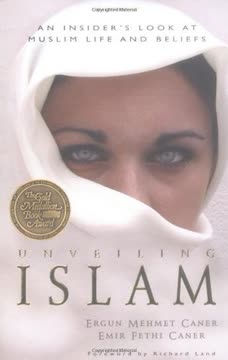
To find heaven's glory in Jesus Christ, we Caner brothers lost our father-our earthly hero-as have millions of others worldwide.
A Personal Transformation. The authors, Ergun and Emir Caner, share their profound journey from devout Muslim upbringing to finding saving faith in Jesus Christ. This conversion, while bringing spiritual freedom, came at a significant personal cost, including disinheritance and estrangement from their beloved father, Acar Mehmet Caner. Their story highlights the deep personal sacrifices often required when converting from Islam to Christianity, a reality many Westerners fail to grasp.
Beyond American Bias. The Caners emphasize that their experience challenges the postmodern American bias that "all religions are the same" or that religious conversion is a simple "switch." For 95% of the world, embracing Christ can mean severe persecution, torture, imprisonment, and even death. Their narrative underscores that Christianity is not merely a religion but a relationship with a Savior, distinct from the fear-based devotion they experienced in Islam.
A Crucial Distinction. Their father's dying words, "Remember, I was a good man," encapsulate the core difference in understanding salvation. While their father believed good works could earn heaven, the Caners found freedom from fear through the atoning grace of Jesus Christ. This personal testimony sets the stage for their detailed examination of Islam, driven by a desire for Christians to understand Islam more clearly and present Christ more effectively to the 1.2 billion Muslims needing Jesus.
2. Muhammad: A Militant Messenger, Not a Peaceful Prophet
Clearly Jesus was a far superior prophet of peace and mercy. Muhammad was ruthless in war, not considering ethical ramifications when he was caught up in the height of savagery.
A Troubled Revelation. Muhammad's prophetic call, beginning around A.D. 610, was marked by personal doubt and fear, initially believing himself possessed by an evil spirit. His wife, Khadija, played a crucial role in validating his visions, despite Islamic theology often portraying women as intellectually inferior. The authors question the trustworthiness of revelations from a prophet who initially doubted their divine source and later claimed to speak with the dead or even altered Allah's words.
A Legacy of Conquest. Muhammad's life, particularly after his flight (Hijra) to Medina in 622, transitioned from peaceful meditation to military expansion. He unified the Arabian Peninsula through numerous battles and raids, often justifying violence against non-believers (kafir) and critics. His actions, such as the execution of poets for satire or the beheading of 800 Jewish men, are presented as foundational examples for jihad, demonstrating a ruthless pursuit of political and religious dominance.
Contrasting Exemplars. The book starkly contrasts Muhammad's character with that of Jesus Christ. While Muhammad shed others' blood for political power and was "ruthless in war," Jesus voluntarily shed His own blood for the salvation of humanity. The authors argue that Muhammad's life, marked by "complexity, expediency, and depravity," provides a problematic "excellent exemplar" for Muslims, leading to the violent acts seen in some Islamic movements today.
3. Jihad: A Call to Warfare, Not Just Inner Struggle
The ruling to kill the Americans and their allies-civilians and military-is an individual duty for every Muslim who can do it in any country in which it is possible to do it, in order to liberate the al-Aqsa Mosque and the holy mosque from their grip, and in order for their armies to move out of all the lands of Islam, defeated and unable to threaten any Muslim.
Beyond Personal Piety. The authors directly challenge the politically correct notion that jihad primarily means an "internal struggle for piety." Citing the 1998 fatwa signed by Osama bin Laden and other Islamic leaders, they assert that jihad, in orthodox Islamic doctrine, is fundamentally a call to militaristic conquest and warfare against infidels. Muhammad's life and the Qur'an itself provide explicit mandates for combat, making it an "absolute necessity if Allah is to be honored and worshiped."
Mandates for Combat. The Qur'an contains verses that explicitly command fighting, such as "Fight [jihad] in the cause of Allah those who fight [ajihad] you" (sura 2:190) and "Fighting is prescribed for you, and you dislike it" (sura 2:216). The Hadith further clarifies jihad as "a fight, struggle, or battle," elevating participation in it as one of the "highest calls of life." This includes fighting to the death, with no Muslim being found guilty of murder for killing a kafir (infidel).
Rewards for Martyrs. A central motivation for engaging in jihad is the promise of immediate and unparalleled rewards in Paradise for those who die as martyrs. This includes forgiveness of all sins, a favorable balance on the scales of judgment, and a special dwelling with unprecedented feasts and virgins. This promise, explicitly detailed in both the Qur'an and Hadith, provides "the only true eternal security" for a Muslim, making death in jihad a highly desirable option for those seeking Allah's favor.
4. The Qur'an and Hadith: Contradictions and Cultural Prescriptions
The Qur'an and the Bible cannot both be the Word of God, because God does not teach different and contradictory things at different points in history.
The "Mother of Books." Muslims revere the Qur'an as the final, exact, word-for-word copy of God's revelation, inscribed on eternal tablets and revealed to Muhammad through Gabriel. It is considered the "Mother of books," superior to all other revelations, including the Bible. This belief leads to practices like kissing the book and storing it on the highest shelf, and viewing any translation with suspicion, as only the Arabic original is considered truly authoritative.
A Flawed Compilation. Despite its revered status, the Qur'an's compilation process was fraught with challenges. Muhammad, being illiterate, had his revelations recorded on various makeshift materials, and large sections were reportedly lost when reciters died in battle. The final standardized text, codified by the third caliph Uthman, involved burning all other variant manuscripts, raising questions about its authenticity and the human fallibility in its preservation.
Internal Inconsistencies. The authors highlight numerous contradictions within the Qur'an itself and between the Qur'an and the Bible. These include discrepancies regarding:
- Pharaoh's family (wife vs. daughter adopted Moses)
- The Trinity (Father, Son, and Mary vs. Father, Son, and Holy Spirit)
- The sacrifice of Ishmael vs. Isaac
- The number of angels at the Annunciation (one vs. several)
- The length of Allah's day (1,000 vs. 50,000 solar years)
- The fate of Pharaoh (drowned vs. saved)
- The unforgivable nature of shirk (idolatry) (unforgivable vs. forgivable)
The Hadith and Sunnah, secondary sources detailing Muhammad's sayings and examples, further complicate matters with unusual teachings on camel urine as medicine, the origin of fever from hell, and the effect of an evil eye, providing specific cultural and ethical prescriptions for daily Muslim life.
5. Allah vs. Jehovah: A Fundamentally Different God
If nothing else was accomplished that night, one point was clear. Muslims and Christians had agreed that Allah and Jehovah are not the same.
Not "Divine Nicknames." The authors strongly refute the popular notion, often promoted by cultural elites, that Allah is simply the Arabic name for the same God worshiped by Christians and Jews. They argue that while the word "Allah" is the generic Arabic term for "god," the nature of Allah as described in Islam is fundamentally different from the triune God of the Bible (Jehovah). To equate them is a dangerous form of syncretism that distorts the gospel.
A Remote, Deterministic Judge. The Islamic concept of Allah emphasizes absolute monotheism (Tawhid), self-existence, and determinism ("En sh'Allah" - Allah wills it). Allah is portrayed as a remote, all-powerful sovereign who is even the cause of evil, and whose mercy is often tied to victory or obedience rather than unconditional love. This contrasts sharply with the Christian God, who is intimately involved, personal, and loving, desiring a relationship with humanity.
The Unforgivable Divide. The core differences are irreconcilable:
- Trinity: Islam explicitly denies the Trinity, viewing it as blasphemy and polytheism.
- Sonship of Christ: Allah "begetteth not, Nor is He begotten" (sura 112:3), making the concept of God having a Son an "abominable assumption."
- Atonement: Allah is a "cold judge" who weighs good deeds against bad, with no concept of a vicarious Redeemer or atoning sacrifice for sin.
Therefore, a Muslim who accepts Jesus Christ as Lord must reject the foundational tenets of Islam, as Christianity is not a fulfillment of Islam but a direct contradiction of its core doctrines.
6. Salvation: Earned Righteousness vs. Redeeming Grace
For the Muslim in fear or without hope, death in jihad is not only a viable option-it may be the only option.
Mathematical Righteousness. In Islam, salvation is a complex and uncertain endeavor, based on a system of "mathematical righteousness" where one's good deeds are weighed against bad deeds on a balance scale. There is no guarantee of eternal security, even for the most devout Muslim, as the ultimate outcome rests on Allah's subjective whim and mercy. This creates a life of striving and fear, as exemplified by Muhammad himself, who questioned his own salvation.
The Five Pillars of Hope. Muslims diligently adhere to the Five Pillars of Islam—the Creed (Shahada), Prayer (Salat), Almsgiving (Zakat), Fasting (Sawm/Ramadan), and Pilgrimage (Hajj)—as essential acts to earn Allah's favor. These practices are seen as non-negotiable duties, with strict protocols and severe consequences for neglect. For instance, neglecting Zakat can lead to eternal punishment, and breaking a Ramadan fast without excuse is an "unpardonable sin."
Grace vs. Works. This system stands in stark contrast to the Christian doctrine of salvation by grace through faith in Jesus Christ. While Islam emphasizes human effort and obedience to earn mercy, Christianity offers forgiveness and eternal life as a free gift, paid for by Christ's atoning sacrifice. The authors highlight that for Muslims, especially those nearing death or in despair, dying in jihad becomes the ultimate act to guarantee Paradise, offering a certainty of salvation that no amount of good works can otherwise provide.
7. Women in Islam: Subordination and Limited Rights
In truth, women are considered possessions in any orthodox Islamic regime.
Genetic Inferiority. Islam, while offering some improvements over pre-Islamic Arabian culture, fundamentally views women as inherently inferior to men. Muhammad's teachings, recorded in the Hadith, explicitly state that women are "deficient in intelligence and religion" and that the "majority of [hell's] dwellers are women." This subordinate status is reflected in legal and social practices, where women receive half the inheritance of men and their testimony in court is valued at half that of a man.
Marriage and Control. Muslim men are permitted to marry up to four wives, and Muhammad himself had thirteen wives and concubines, including Aisha, whom he married at age six and consummated the marriage at nine. Wives are often considered possessions, with the Qur'an referring to them as "tilth [field to be plowed] unto you." Men have the right to divorce their wives verbally, while women do not have explicit reciprocal rights.
Public and Private Restrictions. Islamic law (sharia), when strictly followed, imposes numerous restrictions on women's public appearance and behavior, including veiling, forbidding noisy shoes, and limiting education. The Qur'an even permits husbands to "beat them" (sura 4:34) if they fear disloyalty or ill-conduct. The authors contrast this with Jesus' elevation of women and the biblical emphasis on mutual love and respect within marriage, where a husband's leadership is to mirror Christ's sacrificial love for the Church, never permitting abuse.
8. Religious Liberty: An Unrecognized Concept in Islam
For all their rhetoric about tolerance, not one Muslim-controlled government offers comprehensive religious freedom.
The Pact of Umar. The concept of religious liberty, a cornerstone of Western democracies, is largely absent in traditional Islamic thought and practice. Historically, the 7th-century Pact of Umar, established after rapid Muslim expansion, codified the subordinate status of non-Muslims (Dhimmis). This pact imposed severe restrictions, forbidding the building or repair of churches, public display of Christian symbols, proselytizing, and even requiring deference to Muslims.
Modern Persecution. In the 21st century, many Muslim-dominated countries continue to deny comprehensive religious freedom. The authors cite numerous examples of persecution:
- Sudan: Between 1.5 and 3 million Christians killed, 50,000 children enslaved, forced conversion, and illegal evangelism.
- Turkey: Rigid control over Christian institutions, denial of theological education, and historical massacres of Armenian Christians.
- Morocco: Proselytizing forbidden, converts imprisoned for sharing faith.
- Malaysia: Islamic law committees aggressively implement sharia, denying converts the right to change their legal religious status.
A Call for Consistency. While Muslim leaders were quick to condemn the 9/11 attacks as "demonic," they often remain silent on the widespread persecution of Christians in their own nations. The authors argue that if the West champions political democracy, it must also demand religious freedom, challenging Muslim nations to uphold the "Universal Declaration of Human Rights" which guarantees freedom of conscience and the right to change one's religion.
9. Christian Witness: Navigating Cultural and Theological Divides
In their eagerness to win Muslims to Jesus Christ, Christians sometimes rush to a gospel presentation within minutes of introduction.
Relational Landmines. Witnessing to Muslims requires immense cultural sensitivity and patience, as many well-intentioned Christians inadvertently cause offense. Simple acts like shaking with the left hand, calling a Muslim "brother" (implying theological agreement), or declining hospitality can hinder evangelistic efforts. Christians must build genuine friendships and trust, understanding that Muslims are often immersed in a heritage of enmity towards Christians and may view Westerners with suspicion.
Strategic Hospitality. Extending hospitality is a powerful bridge-building tool, but it requires adherence to Islamic dietary laws (no pork, lard, or shellfish) and avoiding alcohol. When praying, Christians should use the term "Lord" and keep it brief, avoiding sermonic or deceptive evangelism. It's crucial to avoid political arguments, as Muslims often conflate Christianity with Western foreign policy, and to be candid about the historical sins of supposed Christians, like the Crusades.
The Clear Message of Grace. The core of the Christian message to Muslims must emphasize the finished, atoning work of Jesus Christ on the cross, offering liberation from the fear of works-based salvation. Grace, defined as God's unmerited favor to the undeserving, is a concept largely absent in Islam. Christians must also be prepared to defend the Bible's authenticity and the deity of Christ, as these are central points of contention. Understanding the profound implications of conversion for a Muslim—potential rejection, persecution, and loss of everything—is vital for patient and compassionate witness.
10. Syncretism: A Dangerous Compromise for the Gospel
Let us be as emphatically clear as possible: Allah is not the God of the Bible.
The "Camel Method" Controversy. The authors express deep concern over certain evangelical missionary methods, such as the "Camel method," which suggests that Allah is merely the Arabic term for God and that the Qur'an can be used to illustrate Jesus as "much more than a prophet." This approach, they argue, is a "subtle heresy" that dangerously blurs the lines between Islam and Christianity, leading to converts who still identify as "Jesus Muslims," worship on Fridays, and call their pastors imams.
A Fatal Flaw. The "Camel method" is deemed "fatally flawed" because it relies on passages that explicitly deny Jesus' deity and promotes a form of Arianism, a 4th-century heresy. The authors contend that pretending Allah is the same as the God of the Bible is a "lack of integrity" given that Muhammad's entire religion is founded on the rejection of the Christian concept of God. They ask if missionaries would similarly participate in Mormon temple ceremonies or add Jesus to a Hindu altar.
The Unbridgeable Divide. Islam fundamentally repudiates the core tenets of the Christian God:
- Trinity: Explicitly denied as polytheism (sura 5:73).
- Divinity of Christ: Jesus is only a messenger, not God's Son (sura 4:171).
- Person of the Holy Spirit: Identified as Gabriel, not a divine person of the Godhead (sura 16:102).
Therefore, any attempt to syncretize the two faiths sacrifices biblical fidelity for pragmatism. The authors urge Christians to be clear, loving, and patient, presenting the distinct message of God's grace and universal love, believing that "whosoever will may come," including Muslims.
Last updated:
Review Summary
Unveiling Islam receives mixed reviews (3.78/5). Critics note strong Christian bias from the converted authors and question their expertise, as they were raised by a non-Muslim mother with limited Muslim exposure. Some find it informative for Christians seeking to understand Islam, while others criticize it for misrepresenting Islamic teachings and focusing on anti-Muslim rhetoric rather than objective explanation. Positive reviews appreciate its accessibility and insights on Muslim-Christian dialogue. Multiple reviewers emphasize the authors' evangelical agenda overshadows balanced religious education.
Similar Books