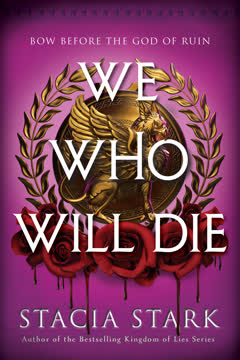
Plot Summary
Shadows Over Thorn District
Arvelle Dacien, a gold-sigilmarked woman, struggles to keep her sick brother Evren and younger brother Gerith alive in the Thorn, a poverty-stricken district of Lysoria. She works as a bodyguard for the loathsome Gaius, haunted by the trauma of her past victories in the deadly Sands arena. The city is a powder keg of tension between the mundane, sigilmarked, and vampires, with violence and corruption everywhere. Arvelle's life is a constant negotiation between danger and necessity, her every move calculated to protect her family. The weight of responsibility as the eldest daughter is crushing, and the city's darkness seeps into her soul, making her hard and wary. Yet, beneath her armor, Arvelle's love for her brothers and her longing for a better life keep her moving forward, even as hope seems to slip further away.
Blood and Bonds
When Arvelle's brother's illness worsens and vital medicine disappears from the market, a powerful vampire named Bran corners her. He reveals he's been orchestrating her desperation, offering the medicine in exchange for an unthinkable task: Arvelle must enter the Sundering, a brutal gladiatorial trial, and ultimately assassinate the emperor, Vallius Corvus. Bran's manipulation is absolute—he holds her brothers' lives hostage, binding Arvelle with a vampire's blood bond. The deal is a devil's bargain, forcing Arvelle to confront her own capacity for violence and the lengths she'll go to for family. The city's power structures—sigilmarked, vampires, and the emperor's Praesidium Guard—loom as both threat and opportunity. Arvelle's world narrows to a single, impossible choice: kill or be killed, for the ones she loves.
The Emperor's Bargain
Bran's true motives emerge: he wants Arvelle to infiltrate the Praesidium Guard by surviving the Sundering, then kill the emperor at his command. The vampire's leverage is ironclad—her brother's cure and her family's future depend on her obedience. Arvelle is thrust into a world of political intrigue, ancient grudges, and supernatural power plays. She must navigate the treacherous dynamics of the Guard, the emperor's paranoia, and the ever-present threat of exposure. The bond with Bran is both a leash and a poison, compelling her actions and eroding her sense of self. As she trains and schemes, Arvelle's resolve hardens, but so does her fear of what she's becoming. The cost of survival is mounting, and the line between victim and perpetrator blurs.
Sins of the Arena
The Sundering is a crucible of violence, spectacle, and death. Arvelle is forced to relive the trauma of her past—her best friend Kassia's death in the arena, the betrayal of her uncle, and the loss of her dreams. The arena is a place where mercy is weakness and every relationship is a potential threat. Arvelle's skills are rusty, her body battered, and her heart scarred. She forms uneasy alliances with other gladians, including the clever Maeva and the enigmatic Primus, leader of the imperius. The ghosts of the past—both literal and figurative—haunt every step, and Arvelle must decide what she's willing to sacrifice to keep her brothers safe. The arena's sand is soaked with blood, and every victory comes at a terrible price.
Ghosts of the Past
Training in the ludus brings Arvelle face-to-face with the Primus, who is revealed to be Tiernon—her lost love and the emperor's younger son. Their reunion is fraught with pain, anger, and unresolved longing. Tiernon's own secrets and sacrifices come to light: he left Arvelle to protect her from his father's wrath, enduring torture and exile. Their connection is both a source of strength and vulnerability, as the emperor's manipulations threaten to destroy them both. The past refuses to stay buried, and Arvelle must confront her grief, guilt, and the possibility of forgiveness. The lines between love and duty, loyalty and betrayal, are razor-thin, and every choice is a gamble with fate.
The Vampire's Leash
Bran's control over Arvelle intensifies, his sun-madness and obsession with the sun's return driving him to greater cruelty. The vampire bond is a constant torment, compelling Arvelle's actions and punishing her defiance with agony. The city's undercurrents of addiction—vampire blood, glister, power—mirror Arvelle's own struggle for autonomy. The emperor's games are a theater of suffering, and the vampires' hunger for the sun is both literal and metaphorical. Arvelle's sense of self is eroded by Bran's manipulations, and she is forced to question her own agency. The cost of power is steep, and every alliance is fraught with danger.
Training Among Enemies
Life in the ludus is a constant test of strength, wit, and will. Arvelle navigates a web of rivalries—Baldric and Hester's vendetta, the imperius's suspicion, and the ever-present threat of exposure. She forms a fragile friendship with Maeva, whose own secrets and ambitions mirror Arvelle's. Training is brutal, and every weakness is exploited. The Primus's interest in Arvelle draws both envy and danger, while Rorrik, the emperor's eldest son, watches with predatory intent. The boundaries between friend and foe are blurred, and trust is a rare and precious commodity. Arvelle's power—both magical and personal—begins to awaken, but so do the forces arrayed against her.
The Sundering Begins
The first challenge of the Sundering is a gauntlet of violence and spectacle. Arvelle faces Maximus in the arena, forced to fight for her life while haunted by memories of Kassia's death. Every move is scrutinized by the emperor, the crowd, and her enemies. Mercy is a liability, and the cost of survival is another's blood. The arena is a crucible that forges and destroys, and Arvelle's victory is both a triumph and a trauma. The emperor's thumb determines life or death, and the spectacle of suffering is the empire's currency. Arvelle's resolve is tested, and the stakes are higher than ever.
Death's Bargain
The second challenge forces Arvelle and Baldric to kill a chained griffon—a symbol of honor and freedom. Arvelle's refusal to prolong the creature's suffering is an act of mercy that costs her dearly. She gains a strange new power from the griffon's death, but the price is guilt and the enmity of her peers. The arena's cruelty is mirrored by the emperor's manipulations, and every act of compassion is punished. The lines between victim and perpetrator blur, and Arvelle's power becomes both a gift and a curse. The cost of survival is measured in blood and regret.
The Primus Revealed
Arvelle's relationship with Tiernon deepens, their shared history and pain binding them together. The truth of Tiernon's sacrifice—his torture, his exile, his love—comes to light, and Arvelle is forced to confront her own capacity for forgiveness. Their love is both a sanctuary and a liability, as the emperor's manipulations threaten to destroy them both. The past is a wound that refuses to heal, and every choice is a gamble with fate. The cost of love is steep, and the future is uncertain.
The Price of Mercy
Maeva's life is threatened by Baldric and Hester's vendetta, forcing Arvelle to break the rules and intervene in the arena. The cost is public humiliation and a brutal punishment at Rorrik's hands. Mercy is punished, and the spectacle of suffering is the emperor's delight. The bonds of friendship are tested, and the cost of loyalty is blood. Arvelle's actions have consequences, and every act of compassion is a risk. The arena is a place where mercy is weakness, and the price of survival is paid in pain.
The Emperor's Games
The emperor's games are a theater of violence and control, but rebellion simmers beneath the surface. Vampire rebels and sigilmarked conspirators plot to overthrow the emperor, and the city erupts in chaos. The arena becomes a battlefield, and the lines between friend and foe blur. Arvelle is caught in the crossfire, her every move scrutinized by enemies and allies alike. The cost of power is steep, and the future of the empire hangs in the balance. The emperor's grip is slipping, and the city teeters on the edge of ruin.
Rebellion in the Blood
The true nature of Arvelle's power is revealed—she absorbs the abilities of those she kills, becoming a vessel for maginari and sigilmarked magic. The cost is guilt and the risk of exposure, as the emperor's paranoia grows. Rorrik's own secrets come to light—he is both vampire and sigilmarked, a living weapon with his own agenda. The bonds of blood and power are both leash and weapon, and every alliance is fraught with danger. The rebellion is both external and internal, as Arvelle fights for control of her own destiny.
The Maginari's Cage
Maeva and Arvelle risk everything to free the maginari imprisoned beneath the arena, forging an alliance with the centaurs, griffons, and harpies. The maginari's rage is a force of nature, and their vow of nonviolence is a fragile truce. The cost of freedom is blood, and the city's power structures are shaken to their core. The maginari's knowledge reveals the true nature of the murders plaguing the ludus—a cult of Mortuus, the god of ruin, is sacrificing souls to break his cage. The past and present collide, and the cost of vengeance is steep.
The Poisoned Sigil
The truth behind the murders is revealed: Albion, driven mad by grief and manipulated by Tiberius Cotta, is sacrificing souls to Mortuus in hopes of resurrecting his son. The cult's reach is deep, and the cost is countless lives. Arvelle and Jorah confront Albion in a deadly confrontation, barely surviving his poisoned blade. The god of ruin's voice echoes in Arvelle's mind, and the threat of his return looms over the city. The cost of power is steep, and the line between savior and destroyer blurs.
The Arena in Flames
The emperor's arena is engulfed in chaos as vampire rebels and sigilmarked conspirators launch a full-scale assault. The city burns, and the power structures that have held for centuries begin to crumble. Arvelle is caught in the maelstrom, forced to choose between vengeance and mercy, survival and sacrifice. The cost of rebellion is blood, and the future of the empire is uncertain. The arena's flames are both destruction and purification, and the city's fate hangs in the balance.
The God of Ruin
The cult's sacrifices have weakened Mortuus's cage, and the god of ruin's influence spreads through the city. Arvelle's stolen powers make her both weapon and target, and the cost of her survival is the risk of unleashing an ancient evil. Rorrik's own agenda comes to light—he seeks the knowledge to control or contain Mortuus, but his motives are as dangerous as the god himself. The city teeters on the brink of annihilation, and the cost of power is the risk of total ruin.
The Final Sacrifice
In the aftermath of chaos, Arvelle, Tiernon, and Rorrik form an uneasy alliance to prevent Mortuus's return and save the city from destruction. The cost of survival is steep—sacrifice, forgiveness, and the willingness to face the darkness within. Arvelle's journey is one of redemption, as she learns to accept love, friendship, and her own power. The future is uncertain, but hope flickers in the ashes. The story ends not with triumph, but with the promise of a new beginning—and the knowledge that the fight for freedom, love, and selfhood is never truly over.
Characters
Arvelle Dacien
Arvelle is the eldest daughter, a gold-sigilmarked woman shaped by trauma, loss, and the crushing weight of responsibility. Her love for her brothers is fierce and uncompromising, driving her to make impossible choices and sacrifices. Arvelle's psyche is a battleground of guilt, grief, and longing for a better life. She is both victim and perpetrator, forced to kill to survive, yet desperate to retain her humanity. Her relationship with Tiernon is a source of both strength and pain, a reminder of what she's lost and what she still hopes for. Arvelle's journey is one of reluctant heroism, as she learns to accept her own power, forgive herself, and fight for a future beyond survival.
Tiernon (The Primus)
Tiernon is the emperor's younger son, a born vampire and the enigmatic leader of the imperius. His love for Arvelle is both his greatest strength and his deepest vulnerability. Tiernon's psyche is marked by sacrifice—he endured torture and exile to protect Arvelle, and his every action is shaped by the need to shield those he loves from his father's wrath. He is both a weapon and a shield, torn between duty and desire, loyalty and rebellion. Tiernon's relationship with his brother Rorrik is fraught with rivalry, guilt, and unresolved pain. His journey is one of redemption, as he learns to trust, forgive, and fight for a future he never thought possible.
Rorrik
Rorrik is the emperor's eldest son, a hybrid of vampire and sigilmarked, and a living weapon. His psyche is a labyrinth of pain, rage, and longing for connection. Rorrik's actions are driven by both cruelty and a twisted sense of justice—he delights in breaking others, yet is haunted by his own brokenness. His rivalry with Tiernon is both personal and political, a battle for power, love, and identity. Rorrik's interest in Arvelle is both predatory and possessive, a reflection of his own loneliness and desire for meaning. He is both monster and victim, and his journey is one of self-discovery, as he confronts the darkness within and the possibility of redemption.
Bran
Bran is a powerful vampire, driven mad by his obsession with the sun and his own sense of entitlement. His manipulation of Arvelle is both calculated and desperate, a reflection of his own addiction and longing for power. Bran's psyche is a study in self-destruction—his every action is shaped by the need to reclaim what he believes is rightfully his. He is both puppet master and puppet, his schemes unraveling as his madness deepens. Bran's relationship with Arvelle is a twisted mirror of power and dependency, and his ultimate downfall is both inevitable and tragic.
Maeva
Maeva is a bronze-sigilmarked novice, underestimated by many but possessing a core of unshakable strength. Her friendship with Arvelle is a lifeline, a reminder of the possibility of trust and connection. Maeva's psyche is marked by rejection and longing for acceptance, both from her powerful family and from herself. Her relationship with Neris is a source of hope and healing, a testament to the power of love in a world of violence. Maeva's journey is one of self-discovery, as she learns to claim her own power and fight for those she loves.
Leon
Leon is Kassia's father, a former champion of the arena, and Arvelle's reluctant mentor. His psyche is scarred by loss, guilt, and the burden of survival. Leon's relationship with Arvelle is fraught with blame and unspoken love, a reflection of their shared grief for Kassia. He is both a source of strength and a reminder of the past, his own journey one of forgiveness and the search for meaning beyond pain. Leon's willingness to sacrifice for Arvelle is both a gift and a curse, and his survival is a testament to the power of resilience.
Gerith and Evren
Gerith and Evren are Arvelle's younger brothers, symbols of innocence and the possibility of a better life. Their psyches are shaped by trauma, illness, and the constant threat of loss, yet they retain a core of hope and resilience. Gerith's awakening power and Evren's healing are both gifts and burdens, reminders of what is at stake. Their relationship with Arvelle is both a source of strength and a vulnerability, and their survival is the driving force behind her every action.
Neris
Neris is a powerful member of the imperius, known for her strength, discipline, and loyalty. Her psyche is marked by loss and the burden of leadership, yet she possesses a core of compassion and empathy. Her relationship with Maeva is a source of healing, a reminder of the possibility of love in a world of violence. Neris's journey is one of self-acceptance, as she learns to balance duty and desire, strength and vulnerability.
Jorah
Jorah is a bronze-sigilmarked worker in the ludus, overlooked and underestimated by all. His psyche is marked by loneliness, longing for acceptance, and a quiet resilience. Jorah's friendship with Arvelle is a source of hope, and his unexpected heroism is a testament to the power of kindness and courage. His journey is one of self-discovery, as he learns to claim his own worth and fight for his dreams.
Calena
Calena is a former enemy of the empire, a survivor of the arena, and a sigilmarked rebel. Her psyche is marked by loss, rage, and the drive for vengeance. Calena's actions are both a reflection of her pain and a catalyst for change, as she helps orchestrate the rebellion against the emperor. Her relationship with Arvelle is one of uneasy alliance, and her journey is a testament to the cost of survival and the possibility of redemption.
Plot Devices
The Vampire Bond
The vampire bond is a central device, binding Arvelle to Bran and compelling her actions with both magical and psychological force. It serves as both leash and poison, stripping Arvelle of agency and autonomy, and driving the plot's central conflict. The bond's pain and compulsion are used to heighten tension, force impossible choices, and explore themes of power, addiction, and manipulation. Its eventual breaking is a moment of liberation and transformation, symbolizing Arvelle's reclamation of selfhood.
The Arena and The Sundering
The arena is both setting and metaphor—a place where survival is won through blood, and every relationship is a potential threat. The Sundering's three challenges structure the narrative, each escalating the stakes and forcing Arvelle to confront her own capacity for violence, mercy, and sacrifice. The arena's spectacle is a tool of the emperor's control, and its blood-soaked sand is a testament to the cost of power. The challenges serve as both external and internal crucibles, forging and breaking the characters.
Power Absorption
Arvelle's ability to absorb the powers of those she kills is a plot device that both empowers and endangers her. It is a metaphor for the cost of survival—the way trauma and violence leave their mark, both gift and curse. The device is used to explore themes of guilt, identity, and the blurring of victim and perpetrator. It also serves as a catalyst for the story's climax, as Arvelle's stolen powers make her both weapon and target in the battle against Mortuus.
The Cult of Mortuus
The cult's sacrifices and the recurring mark of Mortuus are used to foreshadow the awakening of an ancient evil and the city's impending doom. The device is a metaphor for the destructive power of grief, the dangers of unchecked longing, and the way pain can be twisted into violence. The cult's reach is deep, and its influence spreads through the city like a poison, driving the plot toward its apocalyptic climax.
Unreliable Alliances and Shifting Loyalties
The narrative is structured around shifting alliances—between Arvelle and Bran, Arvelle and Tiernon, Arvelle and Rorrik, and the various factions within the city. Foreshadowing and misdirection are used to heighten tension, as every character's motives are suspect and every alliance is fraught with danger. The device is used to explore themes of trust, betrayal, and the cost of survival in a world where power is the only currency.
Trauma and Memory
Flashbacks, dreams, and recurring memories are used to structure the narrative, revealing the characters' traumas and shaping their actions. The device is used to explore the ways the past haunts the present, the difficulty of healing, and the possibility of redemption. The ghosts of the past—both literal and figurative—are ever-present, and the cost of survival is the willingness to confront and forgive.
Analysis
Stacia Stark's We Who Will Die is a masterful exploration of trauma, power, and the cost of survival in a world where violence is both spectacle and currency. Through Arvelle's journey, the novel interrogates the ways in which systems of oppression—political, magical, and personal—shape and distort identity. The vampire bond is a potent metaphor for addiction, manipulation, and the loss of agency, while the arena's blood-soaked sand is a crucible that both forges and destroys. The novel's greatest strength lies in its refusal to offer easy answers: mercy is punished, love is both sanctuary and liability, and every act of survival comes at a terrible price. The story's emotional core is the tension between hope and despair, the longing for connection in a world that punishes vulnerability. The rebellion against the emperor is both external and internal—a fight for freedom, love, and selfhood. In the end, the novel suggests that redemption is possible, but only through the willingness to confront the darkness within, to accept love and forgiveness, and to fight for a future beyond mere survival. The lessons are clear: power is never without cost, trauma leaves indelible marks, and the fight for autonomy and hope is never truly over.
Last updated:
Review Summary
We Who Will Die receives mostly positive reviews (4.35/5 stars), praised for its Roman-inspired gladiator fantasy world with vampires, engaging plot twists, and complex characters. Readers appreciate protagonist Arvelle's authenticity as a traumatized eldest daughter fighting for her brothers. The love triangle between vampire brothers Tiernon and Rorrik proves divisive but compelling, with many favoring the antagonistic Rorrik. Strengths include fast-paced action, political intrigue, and innovative vampire lore. Common criticisms mention underdeveloped worldbuilding, uneven pacing, poor initial explanations, and the protagonist's questionable decisions. Most readers found it addictive despite familiar tropes.





