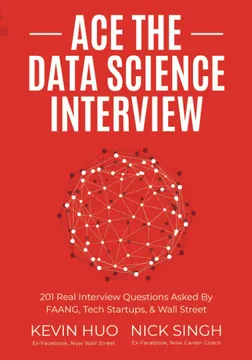


Key Takeaways
Write a resume that earns ten seconds of attention, not a career archive
The resume opens doors. Its job is to earn an interview, not explain an entire career. The book says recruiters may spend ten seconds or less scanning, so put the strongest evidence where it is easy to see. For early-career applicants, that usually means one page, tailored to the role, with irrelevant or merely neutral details removed. Translate technical work into outcomes a recruiter can grasp: users reached, money saved, or a measurable improvement. A project with 2,000 monthly users may be more legible than a sophisticated research title without context.
Show, do not stuff. Put tools beside the work that used them, and never claim more credit than earned. Bold or reorder sections if it helps readers find the most persuasive evidence quickly. The governing test is simple: does each line strengthen the case for an interview?
What's striking is that resume advice here treats hiring as a problem of information design. A recruiter cannot infer skill from a dense inventory, so the applicant must reduce the cost of recognizing relevant evidence. This resembles interface design: make the important action obvious before adding detail. The emphasis on measurable outcomes also counters a common technical blind spot, the assumption that complexity speaks for itself. Still, numbers need context. A large usage count may reflect distribution more than analytical skill, so strong resumes pair scale with a clear description of the candidate's contribution.
Build one finished project that makes your skills and motivation visible
Make the work memorable. A portfolio project should be easy to understand before anyone opens its code. Choose a question with a clear story, preferably connected to a real interest, and use a visual or working demo to make the result tangible. The book contrasts a generic classroom dataset with more distinctive work, such as analyzing space data or building a music-related project from a personal passion. The point is not novelty for its own sake. A strong project gives a recruiter a quick reason to care and gives an interviewer something concrete to discuss.
Finish and publish it. One polished project can be more valuable than several abandoned notebooks. Explain the question, the evidence, and the conclusion; then add an interactive display or usable product when appropriate. Share the work publicly, and report user or business impact when it exists. A project can also show authentic interest in a particular company or field.
A well-made project functions as both a work sample and a narrative device. Research on expert communication often distinguishes knowing how to do something from making that knowledge usable to another person; a clear visual or demo bridges that gap. The project also lets a candidate show persistence, a quality interviews struggle to measure directly. Yet presentation should not become theater. A polished interface cannot rescue weak inference, and a compelling story can make an uncertain result seem definitive. The strongest portfolio makes its limitations visible along with its most attractive finding.
Trade job-board silence for specific, brief outreach and disciplined follow-up
Reach a real person. The authors argue that online applications often disappear into a crowded queue. Cold email means contacting someone at a company without an introduction, such as a recruiter, hiring manager, or, at a small firm, a founder. Identify the person whose role matches the position, then write a short note that connects one or two relevant accomplishments to a direct request to interview. Attach the resume rather than pasting it into the message. A portfolio link can make the evidence easy to inspect.
Follow up professionally. The book recommends three follow-ups, spaced over several days, and describes outreach as a process rather than a one-shot message. Personal details, such as a shared school or genuine product interest, can make the note more human. Mention competing interviews or deadlines only when truthful. The tactic is not a substitute for fit: a concise message cannot make an unrelated candidate qualified.
The useful insight is not simply that persistence works. It is that job seeking has two different bottlenecks: being qualified and being noticed. Direct outreach targets the second. In network science, a referral or personal message can act as a bridge between otherwise separate groups, giving a candidate access to attention that an application portal does not provide. But outreach also has a consent boundary. Repeated messages can become intrusive, and a fabricated deadline damages trust. The durable principle is to make a relevant request easy to answer, then stop when the evidence says the recipient is not interested.
Turn behavioral interviews into concise evidence, not improvised biography
Prepare stories in advance. Behavioral questions test communication, teamwork, coachability, motivation, and fit, not just technical ability. They can appear in a recruiter call, a technical interview, or an informal conversation. For “Tell me about yourself,” offer a brief path from relevant background to notable accomplishments to the role being pursued. For experience questions, the book uses STAR: Situation, Task, Action, and Result. This structure distinguishes what the team faced from what the candidate personally did, then closes with an outcome or lesson.
Make claims inspectable. A project walkthrough may probe how data was collected, why a method was chosen, what metric measured success, and what would change on a second attempt. Practice answers aloud and keep them concise. Prepare questions that show research into the company or interviewer, and send a brief thank-you note that recalls a specific part of the conversation.
Prepared stories reduce the cognitive load of a stressful conversation. The STAR structure is useful because it forces a distinction between context and personal agency, a distinction that can disappear inside team-oriented language. This also makes claims easier to verify through follow-up questions. There is a risk, however, in over-rehearsal: a perfectly polished story can sound detached from the actual event. The best preparation is not memorizing a script, but knowing the sequence of evidence well enough to adapt it honestly when the interviewer asks a sharper question.
Use probability and statistics to explain uncertainty, not recite formulas
Start with the evidence. Interviewers commonly test conditional probability, Bayes' rule, distributions, expected value, and the Central Limit Theorem, which explains why averages of many independent observations tend toward a normal distribution under suitable conditions. A rare-disease test illustrates why base rates matter: with disease prevalence of 1 in 1,000, 98% sensitivity, and a 1% false-positive rate, the chance that a positive result indicates disease is only about 8.9%. The test sounds accurate, but most positive results still come from the much larger healthy group.
Explain conclusions carefully. Hypothesis tests compare data with a null model. A p-value describes how likely results at least this extreme would be if that model were true; it is not the probability that the null hypothesis is true. Confidence intervals describe estimation uncertainty, while Type I and Type II errors capture different failure costs. In experiments, sample size, power, multiple comparisons, and practical impact all matter.
This is the book's most valuable corrective to formula memorization: probability is a discipline of conditioning on the right information. The medical-test example is an instance of base-rate neglect, a well-documented feature of human judgment. It also shows why a technically accurate test can still be a poor decision tool. The caution about p-values matters because statistical significance is often mistaken for certainty or importance. A sound interview answer should separate the probability model, the evidence, and the action threshold, especially when false alarms and missed detections have unequal consequences.
Choose models by business costs, data limits, and failure modes
Fit the method to the job. The book argues that most general data science roles reward sound problem framing and classical methods more often than deep learning expertise. Linear and logistic regression can be fast and interpretable; trees and random forests can capture more complex patterns; boosting builds models sequentially to correct earlier errors. No method wins without regard to context. Model complexity affects overfitting, compute costs, explanation, and performance on new data. Cross-validation estimates how well a model generalizes by testing it across different training and validation splits.
Measure the errors that matter. Accuracy can mislead when one class is rare. In cancer detection or fraud screening, precision measures how often positive predictions are correct, while recall measures how many true cases are found. Choosing between them depends on the costs of false alarms and missed cases. For production systems, check data quality, missing values, drift, and whether a model's predictions can be acted upon.
Model selection is best understood as decision design, not a contest among algorithms. The same score can imply very different consequences in fraud screening, medical diagnosis, and recommendations. This links machine learning to decision theory, where predictions become useful only after costs and actions are specified. The book's preference for simple baselines is especially strong because they reveal whether extra complexity earns its keep. One qualification: interpretability is not binary, and simpler models can still encode biased data or misleading assumptions. Validation must test the whole decision process, not only predictive performance.
Solve SQL and coding problems aloud, from clear requirements to tested output
Clarify before typing. SQL interviews often ask candidates to turn a business request into a query. First define terms such as “active,” “popular,” or “retained,” then work backward from the desired result. Common table expressions and subqueries can split a complicated query into understandable parts; window functions help calculate rankings, running totals, and comparisons across rows without collapsing each group into one row.
Show your reasoning. For coding problems, confirm assumptions and test a small example before choosing an approach. Explain a brute-force solution, identify its cost, and improve it where appropriate. Know how common structures behave: arrays offer fast indexed access, hash maps make lookups efficient on average, queues support breadth-first search, and heaps provide quick access to a current minimum or maximum. State time and space complexity, then test edge cases. The interviewer is evaluating the reasoning process as well as the final code.
Thinking aloud turns private reasoning into observable evidence. That matters because an interviewer cannot distinguish a lucky answer from a reusable method by looking only at a final query. The discipline resembles debugging in collaborative software work: state assumptions, isolate components, and test the result. The book's emphasis on brute force is also pedagogically useful, since optimization is easier to evaluate against a clear baseline. A caveat is that Big O is not a complete performance model. Data layout, database indexes, and actual workload can make a theoretically slower approach faster in practice.
Measure product success by user value, with guardrails against easy wins
Define success before optimizing. Product questions ask what a feature is meant to accomplish, who benefits, and how the outcome will be measured. A useful metric should be meaningful to the goal, measurable, understandable, and timely. The book distinguishes a north star metric, the primary signal of success, from guardrail metrics, which reveal whether optimizing that signal harms other parts of the product. For a dating feature, profiles viewed may be easy to count but may not show whether people form meaningful connections.
Diagnose before prescribing. When a metric changes, clarify its definition, time period, and size of change. Then test explanations such as logging errors, seasonality, product changes, or external events. A/B tests require careful assignment, sufficient duration, and attention to multiple comparisons, novelty effects, and social-network spillovers. A statistically significant lift is not enough: examine effect size, user consequences, and counter-metrics before shipping.
This section resists a familiar trap: treating a metric as the product itself. Goodhart's law describes how a measure can stop being useful when it becomes a target. A rise in time spent might mean satisfaction, confusion, or difficulty completing a task. Pairing a primary measure with guardrails is one way to expose such distortions. Still, guardrails cannot anticipate every harm, especially when product changes affect groups differently. Quantitative monitoring is strongest when combined with user research and a clear theory of how the feature creates value.
Treat case interviews as end-to-end decisions, not model-selection quizzes
Build the answer around the decision. A case may ask how to recommend shows, price products, or estimate retail sales from foot traffic. Start by clarifying the business goal, users, constraints, and what counts as success. Then identify data sources and their weaknesses, explore and clean the data, select useful features, choose a baseline model, and compare it with alternatives. The retail example shows why data provenance matters: mobile-phone visits may represent only a biased sample, and a store visit does not prove a purchase.
Plan beyond prediction. Connect model metrics to business outcomes, choose batch or real-time deployment based on latency and scale, and monitor for changing data and declining performance. Discuss trade-offs rather than pretending one method is unquestionably best. In a take-home challenge, turn the analysis into a concise story that leads to a recommendation. The aim is to show how evidence becomes a responsible operational choice.
The end-to-end framing reflects a mature view of data work: the model is one component in a chain that begins with a decision and ends with consequences. Systems thinking helps expose failures that model-centric answers miss, such as biased sampling, slow inference, or an output no team can use. This also clarifies why communication is a technical competency: stakeholders must understand what a prediction supports and what it cannot establish. The book's business orientation is practical, though not every worthwhile data problem has immediate revenue impact. Safety, fairness, and public value can also be legitimate objectives.
Analysis
The book's central argument is that succeeding in data science hiring requires translation at every stage. A candidate translates experience into resume evidence, technical work into a portfolio story, interest into direct outreach, and analysis into decisions a team can use. This is more than interview coaching. It is a model of professional legibility: employers can assess ability only when a candidate makes relevant evidence visible and interpretable.
Its strongest insight is that technical competence is necessary but insufficient. A data scientist works across ambiguous business questions, imperfect data, statistical uncertainty, engineering constraints, and human judgment. The book therefore refuses to treat probability, SQL, coding, product reasoning, and behavior as unrelated exams. A useful answer makes assumptions explicit, identifies the right objective, chooses a defensible method, and explains limitations. The recurring case-study format makes that integration concrete.
The approach is particularly persuasive for early-career candidates. A finished project can stand in for workplace experience, and a prepared account of personal contribution can make potential easier to evaluate. Yet the hiring advice carries an implicit inequality: recognizable employers, prestigious schools, measurable business impact, and access to decision-makers are easier for some candidates to claim than others. The authors do advise candidates without famous credentials to focus on substantive work, but the broader lesson is that evidence should be assessed in context, not reduced to brand names or vanity metrics.
A second tension concerns measurement. The book teaches candidates to optimize metrics, while also showing how a metric can diverge from actual user benefit. This is not a contradiction to eliminate. It is the defining challenge of applied data science. Statistical significance, predictive accuracy, and business improvement are different claims, and none alone proves a product is good. The most durable preparation is therefore not memorizing answers, but practicing a disciplined sequence: clarify, quantify, test, communicate, and revise. That sequence transfers beyond interviews because it is also how credible data work is done.
Glossary
STAR
Behavioral story structureA format for answering experience-based interview questions. It organizes an answer around the situation or challenge, the task or goal, the candidate's own actions, and the result or lesson. The structure helps distinguish personal contribution from team activity and keeps the story focused on evidence relevant to the role.
AARRR
Customer lifecycle stagesA framework for grouping product metrics across acquisition, activation, retention, referral, and revenue. It helps teams examine how people discover a product, reach its core benefit, return, invite others, and generate income. The book uses the stages as a guide for selecting metrics, not as a rigid sequence every product must follow.
north star metric
Primary product success measureThe main metric chosen to represent progress toward a product's central goal. It should connect to meaningful user or business value rather than merely count activity. Because one metric can be improved in harmful ways, it is best interpreted alongside guardrail measures and a clear explanation of the outcome the product is meant to create.
guardrail metrics
Measures against harmful trade-offsSecondary metrics monitored to ensure that improving a primary success measure does not damage other important outcomes. For example, reducing harmful posts should not be accomplished by suppressing nearly all posts. Guardrails make product decisions more holistic by revealing costs that a single headline metric could conceal.
Central Limit Theorem
Approximate normality of averagesA statistical result stating that, under suitable conditions, the distribution of averages from many independent observations approaches a normal distribution as sample size grows, even when the original observations are not normally distributed. It supports many common confidence intervals and tests, but does not remove the need to check independence, sample size, and data quality.
p-value
Evidence under the nullThe probability, assuming a specified null hypothesis and its model are correct, of observing a test statistic at least as extreme as the one obtained. A p-value is not the probability that the null hypothesis is true, nor does it measure the size or practical importance of an effect. Interpretation depends on the test design and assumptions.
bias-variance trade-off
Fit versus sensitivity balanceA way to understand prediction error as a balance between bias, error from a model that is too simple to capture the underlying pattern, and variance, error from a model that changes too much with the training data. More complex models can reduce bias while increasing variance. The practical goal is useful generalization, not complexity for its own sake.
cross-validation
Repeated out-of-sample checksA model evaluation procedure that divides training data into portions, repeatedly fits a model on some portions, and evaluates it on the held-out portion. Averaging these results gives a more stable estimate of performance than relying on one split, especially with limited data. Ordinary random folds are inappropriate when they allow future information to predict the past in time-series problems.
feature engineering
Preparing useful model inputsThe process of selecting, transforming, and representing data so a model can learn relevant patterns. It may include scaling numerical values, encoding categories, handling skew, creating useful derived variables, or reducing dimensionality. Good feature engineering can improve performance and allow simpler models, but transformations must be justified by the data and task.
cold-start problem
Recommendations without historyThe difficulty of making useful recommendations for a new user or item when there is little or no interaction data. A new viewer has not yet expressed preferences, and a newly released show has no viewing record. Systems can supplement collaborative behavior data with item descriptions, basic user information where appropriate, or popular selections until meaningful history accumulates.
training-serving skew
Training and production mismatchA performance problem caused when the data or feature distributions used during model training differ from those encountered after deployment. Changes in user behavior, product logging, or the external environment can make a once-useful model unreliable. Monitoring, consistent feature pipelines, and retraining policies help detect and address the mismatch.
MapReduce
Distributed data processing patternA framework for processing large datasets across multiple machines. Data is split into pieces, mapped into key-value pairs, shuffled so matching keys reach the same worker, and reduced by combining values into results. The shuffle step groups related data, allowing aggregation to happen locally and limiting costly communication between machines.
Download PDF
Download EPUB
.epub digital book format is ideal for reading ebooks on phones, tablets, and e-readers.








