

Key Takeaways
Name the loss that has no clear ending
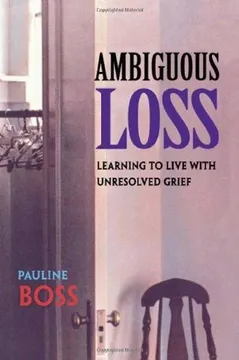
A missing kind of grief. Pauline Boss calls a loss ambiguous when a loved one’s status or place in the family cannot be settled. In one form, the person is physically gone but remains psychologically present, as when someone disappears in war. In the other, the person is physically present but psychologically changed or unavailable, as in advanced dementia. Without confirmation, customary mourning rituals, or a clear point at which to reorganize family life, grief can remain suspended.
Uncertainty changes the task. Boss’s research with families of missing pilots and people with Alzheimer’s argues that distress often comes not simply from losing someone, but from being unable to establish what has been lost. The practical first step is to name the uncertainty rather than demand a clean ending that may never arrive.
What's distinctive is the shift from asking whether grief is proceeding correctly to asking what conditions keep it unresolved. That moves attention from an individual’s presumed weakness to the relational and informational environment around them. The distinction also fits research on continuing bonds, which recognizes that connection to a deceased person need not disappear for healthy adaptation. Yet the two categories are not always cleanly separable: someone can be physically present, emotionally distant, and intermittently engaged. The label is most useful as a lens for asking better questions, not as a rigid diagnosis.
Treat frozen grief as a response to uncertainty, not a personal defect
The situation can immobilize. Boss argues that ambiguous loss can produce depression, anxiety, physical symptoms, and family conflict because people cannot tell whether to grieve, wait, or change their roles. When a missing parent may return, a spouse may postpone decisions; when dementia changes a loved one, relatives may disagree about how much of the person remains. These responses can look dysfunctional without arising from a defective personality.
Look beyond symptoms. In Boss’s study of 70 families caring for people with Alzheimer’s, the patient’s illness severity did not predict caregivers’ depression as strongly as caregivers’ perceptions of the person’s absence or presence. That finding supports asking about unresolved losses alongside standard mental-health assessments. It does not mean medical care is unnecessary, but it prevents a situational crisis from being mistaken for an individual flaw.
This is a strong ecological correction: mental health is shaped not only by inner traits, but by relationships, constraints, and the availability of reliable information. A similar principle appears in stress research, where appraisal and perceived control affect how demands are experienced. The clinical value is practical: a therapist can ask what changed in the family system before concluding that a person is simply resistant or disordered. The caution is equally important. A contextual explanation should broaden assessment, not replace it; depression, trauma, and medical conditions still deserve direct evaluation.
Redraw who counts as family when presence and absence conflict
Family has a mental map. Boss distinguishes the physical family from the psychological family: the people a person experiences as emotionally present and dependable. The two maps can diverge. A divorced parent may live elsewhere but remain central to a child; an immigrant may be surrounded by relatives while longing for family left overseas. Family membership can also include people connected by care rather than biology.
Make the boundaries discussable. After divorce, the marriage may be over while parenting continues. In adoption, birth relatives may remain psychologically important even when contact is limited or impossible. Boss suggests revisiting who belongs, what roles continue, and what boundaries are needed, especially during transitions. An ex-partner might still be a coparent while no longer having open access to a former spouse’s home.
The psychological-family idea resembles a social network map: support depends less on a census category than on who is actually available, trusted, and emotionally meaningful. Making that map explicit can reveal missing support and prevent children from being forced to choose between competing definitions of family. It also gives language to families formed through adoption, divorce, migration, and chosen kinship. The difficult question is whose map takes priority. Adults may disagree, and children may have less power to make their view count, so discussion needs to include those whose relationships are most affected.
Let mixed feelings exist before forcing a final answer
Contradiction is expected. People facing uncertain loss may love someone and resent the demands of caring for them, hope for a return and fear the consequences, or want an end to suffering while dreading death. Boss calls attention to how ambiguity can intensify ambivalence: when a person’s status or role is unclear, emotions pull in opposing directions. That conflict is not proof that love has failed.
Avoid the two extremes. One response is to insist that nothing has changed. Another is to treat a still-living person as entirely gone. Either stance can block adaptation. Families can instead say what is known, what remains uncertain, and how each person understands the relationship. In Boss’s clinical examples, hearing different views without shaming them helps families move from private conflict toward decisions they can share.
Naming ambivalence can reduce the extra burden of feeling guilty about one’s feelings. This connects with psychological research on emotional complexity, which suggests that people can experience positive and negative emotions at once without needing to resolve one into the other. The family context matters: disagreement may reflect different roles and exposure to caregiving, not merely different personalities. Still, honoring multiple perspectives does not require treating every interpretation as equally safe. When denial leads to danger, such as allowing a confused person to drive, care and protection must take priority.
Make an informed family decision instead of living indefinitely in limbo
Every family eventually wagers. Boss calls the choice about an uncertain loss the family gamble: relatives make their best judgment about whether to wait, prepare for change, or treat a relationship as partly over. A family that assumes a gravely ill person will recover may be unprepared for death; one that assumes death is imminent may have to rebuild if the person improves. Either choice carries risk, but perpetual indecision can keep the family immobilized.
Match the response to the evidence. Families of the Iranian hostages were advised to preserve symbolic roles and routines because a safe return seemed likely. All returned after 444 days. By contrast, with progressive dementia, families may need to adapt gradually to what the person can no longer do while valuing what remains. The decision is a working judgment, not a guarantee.
The family gamble is a useful decision model because it makes uncertainty visible rather than disguising it as certainty. It resembles decision-making under risk: people compare possible outcomes, revise their expectations, and act before all facts are available. The hostage example shows how keeping roles open can ease reintegration when return is plausible. However, a favorable outcome should not be mistaken for proof that the gamble was objectively correct. Good decisions depend on information available at the time, and they need planned review as circumstances change.
Pair practical action with acceptance of what cannot be controlled
Control has two sides. Boss’s examples suggest that coping works best when people change what they can and stop treating every uncertainty as solvable. Anishinabe women caring for elders with dementia arranged medical care and medication while also viewing illness as part of life’s cycle. John, whose wife had Alzheimer’s, handled each new crisis and kept Thursday golf and Sunday church as anchors. Neither approach required pretending the illness was easy.
Support is part of coping. John’s neighbors understood that he needed time outside caregiving and did not treat respite as disloyalty. Boss also argues that families deserve information, even when the honest answer is that no one knows the outcome. Practical help, contact with others in similar situations, rest, and spiritual or social resources can reduce isolation.
The balance of agency and acceptance echoes a distinction found across coping research: problem-focused strategies work when circumstances can be changed, while emotion-focused strategies help people live with what cannot. A rigid preference for either control or surrender can fail. Acceptance should not become a polite demand that caregivers endure preventable hardship, and action should not imply that illness is a personal failure. The cultural examples are valuable precisely because they widen the range of coping styles, though they should not be treated as uniform descriptions of any community.
Use family conversations to revise roles, rules, and rituals
Talk makes change possible. Boss recommends family meetings where relatives compare their understanding of the loss, share information, name emotions, and decide how to adapt. The meetings are about the situation, not about labeling the family as sick. When possible, the person whose presence is uncertain should be included, since being spoken about as if already gone can cause further harm.
Keep what still matters. The Olson family nearly canceled Thanksgiving after Mr. Olson’s Alzheimer’s made carving the turkey confusing and distressing. Instead, relatives carved the turkey in the kitchen, then brought it to the table so he could keep his place at its head. The ritual changed without erasing his role. Meetings can also clarify boundaries, caregiving responsibilities, and when respite is needed.
Rituals provide more than ceremony: they coordinate roles and tell people where they belong. Changing a ritual thoughtfully can preserve its social purpose while removing demands that no longer fit. Family meetings similarly create a small forum for shared sense-making, an idea consistent with systems approaches in which interaction can alter the problem itself. The method assumes that participants can meet safely and communicate. Where coercion, abuse, or severe conflict is present, a meeting alone may be inadequate and professional protection or individual support may be needed.
Create meaning without pretending the loss was deserved or necessary
Meaning can be made, not discovered. Boss argues that people may find purpose in helping others, changing harmful systems, preserving stories, or adapting family traditions. A family caring for someone with a progressive illness might support research or help another family navigate care. Such action cannot undo the loss, but it can make effort feel less futile.
Do not force a lesson. The book also warns against a just-world story in which suffering must be someone’s fault. A family facing disappearance or illness may need to accept that no satisfying explanation exists. Boss describes families using faith, optimism, storytelling, and practical service to make a life around the uncertainty. These are possible sources of meaning, not obligations imposed on people who are grieving.
Meaning-making can restore a sense of coherence after events that violate expectations, and collective action can convert helplessness into civic agency. Yet there is a moral boundary: finding value in survival is different from claiming that tragedy happened for a reason. The latter can silence anger or burden people who cannot identify a benefit. Boss’s emphasis on listening to each family’s own account helps avoid that trap. Stories need not settle the facts to matter; they can hold several perspectives while helping people decide how to live together.
Keep living while the answer remains uncertain
Hope can change its object. Boss describes a family living with ALS that took Ron, whose body was increasingly paralyzed, to music performances and places he loved. They could not change the diagnosis, but they could create experiences within the time available and accept help from others. In another everyday example, Congresswoman Patricia Schroeder held her child’s birthday party in a political leader’s dining room when work threatened to crowd out family life. The setting changed; the celebration continued.
Resilience is not closure. Some losses remain unresolved. The aim is not to declare the pain finished, but to regain enough flexibility to make decisions, maintain connection where possible, and pursue ordinary life alongside grief. Hope may shift from recovery to comfort, from reunion to truth, or from certainty to a meaningful day together.
This account resists the false choice between grieving and functioning. People can acknowledge a deteriorating reality while still investing in relationships, pleasures, and future-oriented actions. That is a more durable account of resilience than a triumphant recovery narrative. It also respects limits: not everyone has the resources, health, or support to create bright moments, and optimism should not be demanded as evidence of good coping. The measure is not cheerfulness. It is whether a person has room to act, connect, rest, and revise plans without denying the loss.
Analysis
Boss’s central contribution is to treat unresolved grief as a relational problem shaped by uncertainty, not simply as an individual failure to let go. The concept explains why the same person can be physically absent yet psychologically central, or physically present yet experienced as partly lost. It also shows how grief changes family structure: decisions about care, parenting, money, rituals, and belonging cannot wait for certainty that may never come.
The book’s most useful practical move is to replace the demand for closure with a sequence of smaller tasks. Families identify what is known, compare their perceptions, distinguish what has ended from what continues, and revise roles as circumstances change. This does not resolve the loss. It restores some capacity to respond to it. The examples make the idea memorable because they range from missing soldiers to dementia, divorce, adoption, migration, and the ordinary departure of adult children.
The argument is strongest as a clinical lens and a guide to conversation. Its research examples support the importance of perceived absence and presence, but many findings arise from specific populations and do not establish that ambiguity alone causes distress in every case. Individual illness, financial strain, prior trauma, and unequal caregiving burdens can also matter. The concept should therefore widen assessment rather than replace it.
A second strength is the book’s respect for cultural differences in uncertainty and ritual. Its caution is that cultural stories can become overgeneralized if treated as fixed traits. No group has a single way of accepting loss, and spiritual interpretations should be offered only when they fit the people experiencing it. The most durable lesson is modest but profound: when certainty is unavailable, families can still build enough shared understanding to care, choose, and continue living.
Glossary
Ambiguous loss
Unresolved loss under uncertaintyA loss in which a loved one’s status or place in a relationship remains unclear. The person may be physically absent but psychologically present, as with someone missing, or physically present but psychologically changed, as with advanced dementia. Because there may be no confirmation, shared ritual, or clear transition, ordinary grieving and family reorganization can be difficult.
psychological family
Family as experienced emotionallyThe people a person experiences as intimate, dependable sources of care, support, and emotional closeness. This group may not match the people who live in the household or are biologically related. Boss uses the idea to explain why someone far away can remain central to family life, while a person physically at home may feel emotionally absent.
family gamble
A judgment about uncertain lossThe decision a family makes about how to treat an unclear loss when the outcome cannot be known with certainty. Relatives may act as though a person will return, prepare for a likely death, or revise the relationship gradually. Each choice risks being wrong, but making a reasoned, revisable judgment can be less immobilizing than remaining indefinitely in limbo.
boundary ambiguity
Unclear family membershipUncertainty or disagreement about who is considered part of a family, and whether a person is present or absent in its relationships. It can arise after divorce, adoption, migration, disappearance, or cognitive illness. Boundary ambiguity makes roles and expectations harder to coordinate, especially when family members hold different views of who belongs.
frozen grief
Grief stalled by uncertaintyA state in which mourning and adjustment remain stuck because the loss has no clear status or ending. People may be unable to decide whether to wait, let go, or reorganize their lives. Boss frames this as a response to the circumstances of ambiguous loss, rather than automatic evidence of personal weakness or pathology.
Download PDF
Download EPUB
.epub digital book format is ideal for reading ebooks on phones, tablets, and e-readers.








