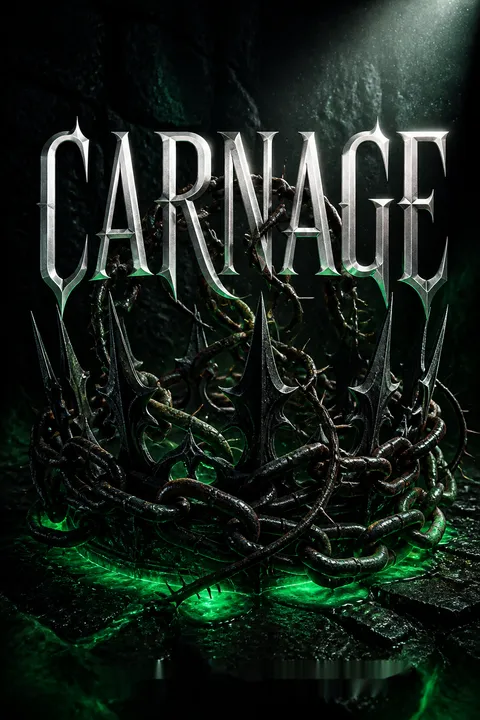


Plot Summary
Prologue
Scarlett1 remembers a sunlit summer with four boys, then years shut away in the Kent countryside after an accident erased the first sixteen years of her life. Her adoptive parents call her confinement protection.
When they finally release her, they give her a mission: enter Fortuity, the company ruled by the Four Horsemen, and destroy its owners. Scarlett1 returns to London with little memory of the city and no certainty about the men she must target. She intends to earn her freedom by bringing her parents the downfall they want.
The opening makes confinement both a physical condition and a problem of identity. Scarlett has been told that isolation keeps her safe, but it has also left her dependent on other people to explain her own history. Her mission offers agency in a form already compromised by her parents: she can act, but only toward an outcome they chose. The remembered boys suggest an emotional past before the plot can name it, turning the assignment into a return to something Scarlett cannot yet recognize. Her promise to destroy the Horsemen sounds decisive, but its force rests on missing knowledge.
Fortuity Baits the Trap
At Fortuity, a powerful London finance company, the four owners present an expansion plan to the press. Prescott Ellis,2 the polished public face, sells the announcement; Drake Ackley3 runs the company, Francis Beaufort5 controls its money, and volatile West Greer4 oversees operations. Their public promises conceal an appetite for power and a plan years in the making.
Each man knows their success has made enemies, yet they expect the next move to bring them closer to something they lost. Elsewhere, Scarlett Carver1 enters the city on her parents' assignment, hoping the job will buy her freedom from their estate. Neither side understands how dangerous this reunion will become.
The company announcement establishes the Horsemen's central skill: they manufacture a reassuring public story while privately treating people and institutions as instruments. Scarlett's assignment mirrors that method. She too must perform a role, but hers is not backed by money, authority, or a secure sense of self. Putting the two schemes in parallel makes Fortuity more than a workplace. It is the point where competing forms of control meet. The Horsemen believe they are setting a trap, while Scarlett believes she is entering one deliberately. Both convictions depend on incomplete information.
A Stranger Gets Hired
Scarlett1 applies for a personal assistant position at Fortuity and meets Francis5 in the lift before Drake3 interviews her. She is drawn to Francis's5 appearance and struck by a sense of recognition she cannot explain. Drake3 presses her about her work history; she offers a carefully prepared account of wanting independence, while avoiding the full truth about her life.
He hires her, and on her first day she meets Prescott,2 whose attention also feels strangely familiar. Scarlett's1 only close companion in London is Mason Jones,6 a family employee who lives with her and worries about the risks of the job. As voices and sensations stir fragments of memory, Scarlett1 hides her confusion and begins trying to earn the Horsemen's trust.
The interview turns recognition into a bodily event rather than a clear recollection. Scarlett notices faces, smells, and voices before she can attach them to a usable past, so her own responses unsettle her as much as the men do. Her practiced answers also show that she has learned to survive by managing what others know. Mason's presence offers practical security, but his connection to her parents complicates that comfort. The section makes the workplace an arena where Scarlett must read people without access to the personal history that would normally help her judge them.
Ten Years in the Dark
Seven years before the present, the Horsemen torture an informant named Den12 after years of searching for Scarlett.1 Den12 tells them that she survived her accident but lost the memories of her first sixteen years, and that her adoptive parents took her away. The men kill Den12 after extracting the information and decide they must wait rather than confront the Carvers7 openly.
In the present, they know Scarlett1 has returned under her parents' influence, but she does not recognize them. Drake,3 Prescott,2 and West4 want to draw her closer and test her; Francis5 objects to exploiting someone who cannot remember their shared past. They agree to wait until Drake's3 outgoing assistant leaves, then begin probing Scarlett's1 limits.
Den's revelation changes absence from a mystery into an injury with human causes. The Horsemen's years of searching suggest attachment, but their response to the news is still violence and strategy. They treat Scarlett's amnesia as both a wound and an opening through which they can regain access to her. Francis's objection matters because it exposes the contradiction inside the group: they remember a friendship that Scarlett cannot consent to resume, yet they use that remembered bond to justify manipulation. Their patience is not restraint so much as a long game.
West Breaks the Distance
For two weeks, Scarlett1 learns the office routines and tries to approach the Horsemen without revealing her mission. Prescott2 flirts, Francis5 deliberately crowds her in the kitchen, and Drake3 alternates professional demands with gestures that leave her unsure how to read him.
Her nightmares grow more vivid, and a dream about being hunted leaves her sexually aroused and disturbed. After Prescott2 learns she believes herself inexperienced, the Horsemen debate what to do, but West4 acts before the others can settle the question.
He brings Scarlett1 into his office, orders her to submit, and has sex with her despite her fear and protest. The encounter does not give her the control she sought; instead, it leaves her confronting how strongly her body responds to danger.
This encounter collapses Scarlett's imagined strategy into a situation governed by West's power. She had considered using desire as a tool, but intention does not make a coercive encounter freely chosen. The narrative keeps her fear and arousal in tension, a distinction essential to understanding her confusion rather than treating bodily response as consent. West, meanwhile, converts an old attachment he will not explain into possession and punishment. The scene establishes the novel's most troubling pattern: intimacy becomes a test of control, while Scarlett is left to interpret sensations that cannot resolve the ethical imbalance.
A Dinner Becomes an Ambush
After Drake3 asks Scarlett1 to stay late on Friday, he brings her to the penthouse under the pretext of continuing work over dinner. Francis5 laces her meal with a sedative, while Prescott2 arranges for Mason6 to be occupied elsewhere.
Scarlett1 wakes naked, restrained, blindfolded, and wearing headphones that let her hear only Prescott's2 disguised voice. Drake3 and Francis5 touch and have sex with her while Prescott2 narrates, and West4 eventually joins them.
Scarlett1 experiences intense pleasure, but she has been drugged, restrained, and denied the ability to identify or freely negotiate with the men. The Horsemen take her back to her flat and leave her in bed. On waking, she remembers enough to feel used, confused, and unable to understand their purpose.
The ambush makes the gap between desire and consent impossible to ignore. Scarlett's responses are real, but the men have shaped the conditions: they sedate her, restrict her senses, and control who can approach her. Her pleasure therefore cannot erase the violation of her agency. The staged anonymity also echoes her amnesia, turning a personal loss into a tool the Horsemen exploit. Their careful return of her clothes and body to her home complicates the cruelty without undoing it. They can perform care after the fact while withholding the basic respect of letting her choose.
Desire Becomes Leverage
On Monday, Scarlett1 confronts Prescott2 and bargains for an explanation of the penthouse encounter. He makes her comply with his sexual demands before telling her which Horsemen touched her, but he withholds why they targeted her. Later, Scarlett1 asks Francis5 to kiss her because she has never experienced one; he obliges, and the kiss leaves her more curious about the men rather than less.
Drake3 questions her about the encounter and makes clear that he expects obedience, then invites her to a black-tie awards event. At work, Scarlett1 keeps noticing fragments of her past and tries to separate her attraction from her assignment. The Horsemen, meanwhile, continue to treat her curiosity and desire as evidence that their plan is working.
Here, information and intimacy become currencies traded under unequal conditions. Scarlett actively seeks answers and initiates some contact, but she does so inside a workplace controlled by men who can withhold information, command her schedule, and define the terms of access. The distinction prevents her agency from being reduced either to helplessness or to uncomplicated consent. Francis's kiss briefly offers tenderness, yet it also deepens a bond founded on concealment. The Horsemen read her longing as proof of their influence, while Scarlett reads their familiarity as a possible path back to herself.
The Dance Sparks War
At Fortuity's awards event, Scarlett1 attends with Mason6 despite his hostility toward the Horsemen. When Mason6 dances closely with her, West4 grows jealous and pulls Scarlett1 into a secluded alcove. He touches her beneath her dress and makes her climax as punishment for allowing another man near her, insisting that she belongs to him.
Scarlett1 returns shaken and furious, then leaves the event with Prescott2 after arguing with Mason.6 At the penthouse, she tells Prescott2 she does not want to go home with Mason.6 Prescott2 brings her to his bedroom, undresses with her, and sleeps beside her. In the morning, she wakes without her usual nightmare and begins crying, admitting to herself that she cannot bring herself to destroy him.
The dance turns possessiveness into a public contest, with Mason's ordinary gesture provoking West's claim of ownership. West's punishment is not simply a private sexual encounter; it enforces a rule Scarlett never agreed to and reveals how little her autonomy counts to him. Prescott's refuge offers a contrasting experience of comfort, but it is not a clean escape from the Horsemen's power. Scarlett's tears mark the first explicit collapse of her mission's emotional logic: the people she is supposed to destroy are becoming people she fears losing.
A Knife at Breakfast
At breakfast in the penthouse, Scarlett1 needles West4 about Prescott,2 and West4 pins her against the table with a knife beside her face. He makes her kneel and apologize, then demands that she acknowledge her sexual loyalty to him. When Scarlett1 returns to her flat, Mason6 confronts her about the Horsemen, grips her hard enough to bruise her arm, and threatens to call her father7 and end the assignment.
Scarlett1 refuses to be sent back to the estate and goes to work. She shows the bruises to Prescott2 and asks him to protect her from Mason.6 Prescott2 believes her and calls the others together, though he admits he still does not trust her. Her request forces the Horsemen to choose between their plan and the danger she faces at home.
The bruises expose a disturbing asymmetry in how the characters define harm. The Horsemen condemn Mason for physical force while claiming exclusive rights to control Scarlett themselves. Their protection is therefore inseparable from possession, not a simple restoration of her freedom. Scarlett's plea is practical and urgent: she fears returning to the estate, and Mason's threat makes that fear immediate. Yet asking Prescott for help also moves her further into the Horsemen's reach. The scene makes safety a contested claim, one none of the available men can offer without attaching conditions.
The Penthouse Takes Her
Prescott2 tells Drake,3 Francis,5 and West4 that Scarlett1 has asked for protection and that Mason6 left bruises on her arm. The men argue over whether bringing her into their home is too dangerous, since she is still working for the Carvers.7 They agree to take her in but insist she must prove herself, and West4 proposes a test severe enough to secure leverage over her.
That evening, Prescott2 and Francis5 arrive at Scarlett's1 flat while Mason6 is away and pack her belongings without leaving room for debate. Francis5 kisses her before they leave. During the drive, Prescott2 encourages Scarlett1 to perform a sexual act on Francis5 in exchange for a promised kiss. They do not take her to Fortuity; instead, they stop at a warehouse.
The move turns Prescott's promise of protection into another mechanism of control. Scarlett asked for help, but the Horsemen answer by relocating her without negotiation and adding sexual demands to the journey. Their decision to test her reflects a genuine fear of the Carvers, yet it also gives them a rationale for making her prove loyalty on their terms. The warehouse destination signals that this is no ordinary move to a safer home. By combining care, desire, and coercion, the men make it difficult for Scarlett to distinguish being sheltered from being captured.
The Lamb Gets the Knife
Inside the warehouse, Scarlett1 finds Drake,3 Francis,5 and West4 waiting beside a hooded man tied to a chair. Prescott2 lets go of her hand, and West4 places his knife in hers. The Horsemen reveal that the captive is Mason6 and demand that Scarlett1 kill him as the price of their protection and proof that she can be trusted. She asks why they would force her to do this, but they refuse to reconsider.
West4 stands behind her, holds her knife hand, and explains where to stab Mason6 for a quick death or how to make the attack hurt. He urges her to act as one of them. Scarlett1 sees the man who cared for her after her accident and begins to lower the blade. The book ends as her hand comes down, before the outcome is revealed.
The final test converts the Horsemen's abstract demand for loyalty into a choice that could permanently alter Scarlett's life. Mason has hurt and threatened her, but he has also been her companion through years of recovery; the captors erase that complexity by presenting his death as a price she must pay. West's physical guidance makes the action neither wholly hers nor wholly separate from her. The blade becomes a brutal instrument for transferring allegiance, while the unresolved ending refuses to grant certainty about what Scarlett has done. Her last movement is both a cliffhanger and the book's sharpest image of compromised choice.
Analysis
Carnage builds its plot around competing claims to Scarlett's1 identity. Her parents frame confinement as protection and her mission as the price of freedom. The Horsemen frame possessiveness as belonging and their escalating demands as tests of trust. Neither group offers Scarlett1 uncomplicated care. That conflict gives her attraction to the men its psychological force: they awaken sensations and fragments of recognition that seem to connect her to a self she cannot retrieve, even as their conduct makes her less free to decide what those sensations mean.
The novel's treatment of desire is deliberately unstable. Scarlett's1 bodily pleasure is repeatedly set beside fear, restraint, manipulation, and missing information. These conditions should not be collapsed into a simple equation between arousal and consent. The Horsemen exploit that ambiguity, reading her responses as permission while withholding the history that might let her understand their claims. Her attempts to act strategically are real, but so are the constraints imposed by her employers, her parents, and Mason.6
The four men are not interchangeable antagonists. Prescott2 uses charm and observation, Drake3 uses procedure and command, Francis5 moves between moral hesitation and complicity, and West4 makes violence explicit. Their unity is strongest when they are pursuing Scarlett,1 yet her return also destabilizes them: old grief collides with the habits of power they have built in her absence. That contradiction is most visible in their talk of protecting her while refusing to trust her or give her control.
The ending makes the personal and political plots converge in a single demanded act. Scarlett's1 family sent her to destroy the Horsemen; the Horsemen now ask her to kill Mason to prove she belongs with them. The book stops before confirming what the knife does, leaving the central question unresolved: whether Scarlett1 can recover an identity that is hers rather than one imposed by the people competing to possess her.
Review Summary
Carnage received mixed reviews, with ratings ranging from 1 to 5 stars. Many readers found it to be a steamy, dark romance with intriguing characters and plot. However, others criticized the writing quality, repetitiveness, and lack of character depth. Some readers enjoyed the spicy scenes and mysterious elements, while others were put off by the extreme content, including non-consensual acts and violence. The book's polarizing nature led to passionate responses from both fans and critics, with some eagerly anticipating the next installment and others unable to finish.
Characters
Scarlett Carver
Memory-fractured survivorAt twenty-six, Scarlett is trying to build an adult life after years of isolation and the loss of her early memories. She is observant, curious, and more resilient than the sheltered life arranged for her would suggest. Her lack of experience does not make her passive: she tests people, asks direct questions, and tries to understand the rules around her. Yet she is vulnerable to anyone who can offer belonging or a sense of safety, especially when her own history feels inaccessible. Scarlett's central conflict is between the life her family has assigned her and the identity she is trying to recover. Attraction, fear, and ambition become difficult for her to disentangle.
Prescott Ellis
Charming public facePrescott is Fortuity's polished public representative and its most openly charismatic Horseman. He understands how to make people feel seen, then uses that understanding to steer them toward his aims. Beneath his confidence is a need for control and a taste for watching others lose theirs. He favors teasing, pursuit, and psychological games, yet he is also more emotionally exposed than he wants his friends to notice. His connections with the other Horsemen are old and intimate, built on shared ambition and shared damage. Prescott's charm is not a mask that hides a simple opposite; it is one of the instruments through which his darker instincts operate.
Drake Ackley
Controlled strategistDrake is Fortuity's CEO, a disciplined decision-maker who prefers to manage risk before it becomes visible. His quiet authority contrasts with Prescott's2 showmanship and West's4 volatility. Drake reads people closely, values control, and rarely offers emotion without first deciding what it will cost him. He has long struggled with insomnia and relies on routine to keep his mind contained. Among the four men, he often becomes the practical referee, though his composure should not be mistaken for gentleness. He is drawn to power over both business and personal situations, and he tends to frame difficult choices as necessities. His greatest weakness is the possibility that an old attachment may outrun his calculations.
West Greer
Volatile enforcerWest runs Fortuity's operations and is the most openly volatile of the four men. Tattoos, a quick temper, and a history of violence make him difficult to approach, while drugs and reckless sex serve as his chosen ways of managing distress. He has little interest in disguising his appetites as respectability. West is fiercely loyal to the other Horsemen, though his impulse to act can endanger the plans they share. He views attachment through possession and protection, a combination that makes his care difficult to separate from his capacity for harm. Beneath his aggression is an emotional intensity he refuses to discuss, particularly when a person from his past is involved.
Francis Beaufort
Conflicted financierFrancis manages Fortuity's finances and is the Horsemen's most likely dissenter when their plans cross a line he cannot comfortably ignore. His precision and impatience with waste make him essential to the company's success, while his insistence on appearing more moral than his friends reveals an ongoing conflict with his own desires. Francis is not innocent of the group's cruelty, but he is more likely to pause and ask what their actions mean for the person caught in them. He uses flirtation and provocation to test others, then struggles when emotional intimacy makes the consequences personal. Loyalty to his friends often wins over his misgivings, even when he knows the choice is costly.
Mason Jones
Protective family friendMason has been close to Scarlett1 since her recovery from the accident and lives with her in London at her parents' request. He acts as her companion and informal guardian, checking on her safety and worrying about the Horsemen. His loyalty is divided: he cares about Scarlett1, but his employment ties him to the Carvers7 and their expectations. That divided position makes his protection feel both reassuring and restrictive. Mason wants to spare Scarlett1 from danger, yet he does not always recognize how much control others already exercise over her.
Stuart Carver
Controlling adoptive fatherStuart is Scarlett's1 adoptive father and the architect of the mission that sends her into Fortuity. He presents his control as concern for her safety, but expects her to obey and report back. His investment in revenge turns Scarlett's1 need for independence into leverage. He is an authority figure whose approval carries practical consequences, leaving Scarlett1 wary of disappointing him even after she has left his home.
Phoebe Carver
Protective adoptive motherPhoebe is Scarlett's1 adoptive mother and part of the family that raised her after the accident. Her role in Scarlett's1 life is bound up with the household's insistence that isolation is protection. She is less directly present than Stuart7, but her influence contributes to the emotional pressure surrounding Scarlett's1 obedience, gratitude, and desire to know where she came from.
Deborah Manning
Fortuity recruiterDeborah handles Scarlett's1 interview arrangements and onboarding at Fortuity. She is a professional intermediary who helps Scarlett1 enter the company without knowing the private history driving the appointment.
Tonya
Executive assistantTonya manages schedules for the Horsemen and works near Drake's3 office. She is observant about their decisions and willing to question them, though their reputations make the workplace intimidating.
Annika
Outgoing personal assistantAnnika is Drake's3 departing assistant. She trains Scarlett1 in the duties and routines of the job, giving her a short period of ordinary workplace guidance before the Horsemen take a more personal interest in her.
Den
Tortured informantDen is a man connected to the Horsemen's search for information. His encounter with them exposes the brutal methods they use when patience and negotiation fail.
Gary
West's underworld contactGary is West's4 drug dealer and a source of connections beyond Fortuity's corporate world. His network helps the Horsemen arrange distractions and favors while keeping their business dealings at a distance.
Zayn Villetti
Underworld power brokerZayn is a criminal-world contact known for arranging services for wealthy clients. The Horsemen approach his network when they need someone occupied without drawing direct attention to themselves.
Ash Bykov
Prospective finance clientAsh attends a Fortuity proposal meeting with Quinn Knox16. Her visit illustrates how the Horsemen pursue high-profile clients and personalize their business pitches.
Quinn Knox
Syndicate representativeQuinn accompanies Ash15 to meet Prescott2 and Francis5 about Fortuity's financial services. His perceptiveness about the people around him briefly unsettles Francis5 during the meeting.
Plot Devices
Retrograde amnesia
A past without accessScarlett's1 loss of the first sixteen years of her memories separates what she feels from what she can verify. Familiar voices, scents, and expressions trigger fragments without restoring a coherent history. The device creates dramatic asymmetry: the Horsemen remember their shared past with her, while Scarlett1 must interpret their behavior as a newcomer. It also gives her parents and the Horsemen power to shape her account of herself. Her desire to remember is therefore not merely a mystery to solve; it is a struggle over who gets to define her identity.
The revenge assignment
Freedom with conditionsScarlett's1 adoptive parents send her into Fortuity to infiltrate the Horsemen and destroy them, presenting the assignment as the price of leaving their estate. The mission supplies the plot with a clear external goal while complicating her motives: she wants independence, but the only route offered to her requires obedience to her family. She hides the assignment from the men she is supposed to deceive, even as they conceal their own knowledge and intentions. The competing plans make nearly every intimate gesture double as possible strategy.
The Four Horsemen
Power made into a nameThe Horsemen label turns four powerful executives into a public myth of inevitable destruction. Prescott2, Drake3, Francis5, and West4 each embody a different style of influence: charm, calculation, financial precision, and force. Their horse figurines and themed mugs extend the motif into the domestic spaces they control. The symbol helps them glamorize their own brutality, but it also frames the story's central irony: men who imagine themselves as forces of judgment still act from fear, grief, and appetite. The name is both an image of power and a story they tell themselves.
Memory triggers
The body recalls firstA voice, a familiar nickname, the scent of cinnamon, or the sight of the Horsemen can provoke brief sensations from Scarlett's1 inaccessible past. These fragments appear before she can explain them, unsettling her certainty about who the men are and what her parents have told her. Because the memories remain incomplete, they build recognition without supplying reliable answers. The device makes the past active in the present while preserving the possibility that emotion can be both a clue and a source of confusion.
Tests of loyalty
Trust demanded through dangerThe Horsemen repeatedly turn access, protection, and information into tests Scarlett1 must pass. The early sexual encounters establish the pattern; Mason's6 bruises give the men an opportunity to claim they are protecting her; the final warehouse demand makes the test lethal. Each escalation places Scarlett1 under greater pressure while allowing the Horsemen to describe coercion as proof of belonging. The device drives the plot toward its unresolved ending and exposes the difference between being accepted by a group and being free to choose its terms.
Four Horsemen Series


Download PDF
Download EPUB
.epub digital book format is ideal for reading ebooks on phones, tablets, and e-readers.








