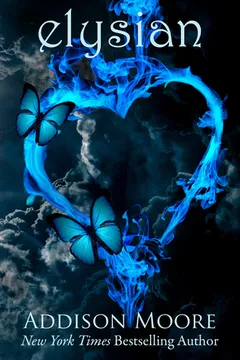


Plot Summary
Prologue
The preface places Skyla1 at the edge of death, facing a tower of flames while she weighs love against sacrifice. Her memories of family, Paragon, and the two Olivers gather around her as she steps toward the fire, convinced she may not survive.
The vision promises that death is not a final boundary, but a threshold into something new. It frames the story’s central tension: Skyla1 must choose what she is willing to lose for the people she loves.
The preface turns the coming plot into a question of cost. Skyla’s memories are not presented as a neutral recap but as the evidence she carries into a possible death: family, desire, and unfinished obligations. By making sacrifice feel both chosen and frightening, the frame complicates the usual fantasy promise that victory will restore everything. The claim that death opens into another life is reassuring, but the story tests how much comfort that belief can offer to those left behind.
The Sword Rejects Skyla
After surviving the fire that carries her across dimensions, Skyla1 reaches the heavenly throne room with Marshall,4 Logan,2 Gage,3 and Ellis.8 The elders reveal the Master’s sword, but her mother, Candace,6 refuses to declare the faction war settled and warns that the Justice Alliance must judge the result.
Skyla1 ignores her order to touch the sword only, grabs its handle, and is hurled out of the throne room. She wakes on Paragon with no verdict and no weapon. Her return makes clear that winning the battle has not ended the conflict: the authority to decide what victory means still belongs to the celestial court, and Skyla1 has just challenged it.
The sword is both prize and test. Skyla has fought for the right to lead, yet her first impulse in the throne room is to seize authority before the institution has granted it. Her mother’s rejection exposes the difference between moral courage and legitimate power, a distinction that will keep shaping Skyla’s choices. The scene also establishes the book’s central frustration: survival and victory do not automatically secure a future. Skyla returns with more responsibility than certainty.
The Masquerade Turns Bloody
Skyla1 returns to Marshall’s4 masquerade as the party collapses into screams and injuries. Gage3 lies unconscious with a severe neck wound, while Ellis8 has been cut apart; Chloe5 and Natalie are hurt as well. Candace6 has left Skyla1 visibly bloodied, making her look like the attacker, and Emma Oliver9 blames her for the danger surrounding Gage.3
Logan,2 alive and apparently unharmed, explains that he found Ellis8 and hid him until Marshall4 could take him to the Transfer. Gage3 is rushed to hospital surgery, and his family9 refuses Skyla’s1 offer of blood. The party’s violence turns Skyla’s1 victory into a fresh crisis, while the people she most needs to trust begin questioning whether she brings danger with her.
The aftermath strips away the triumph of the heavenly scene and returns Skyla to a social world that judges visible evidence. Blood on her hands matters more to the crowd than her intentions, and Emma’s grief makes that judgment intimate rather than abstract. The injured men also sharpen the triangle’s emotional stakes: Skyla is not choosing between fantasies, but between relationships already marked by sacrifice. Her instinct to repair the damage is loving, yet it can also override the boundaries others set.
Blood Buys Ellis Time
At the hospital, Skyla1 uses her Celestra blood to heal Gage’s3 damaged neck despite his earlier refusal and Barron’s10 warning. Gage3 recovers, but Barron10 leaves angry that Skyla1 forced his hand and broke his promise to his son.3 Logan2 then takes Skyla1 to the Transfer, where Ezrina13 is rebuilding Ellis’s8 body and using Chloe’s5 blood to supply the missing life force.
Chloe5 is fading, and Skyla1 must decide whether to inject her with the toxin that will revive her Celestra blood or let her die. Remembering Gage’s3 plea, Skyla1 injects the antidote. Ellis8 remains under Ezrina’s13 care, while Chloe5 survives, leaving Skyla1 with a reason she does not yet understand for keeping her enemy alive.
Blood functions here as care, power, and moral liability at once. Skyla’s healing gift rescues Gage, but she uses it against his wishes, making love look uncomfortably close to control. Her choice to save Chloe is more difficult because it offers no immediate reward and may expose others to future harm. The scene rejects simple moral accounting: Skyla can be compassionate without trusting Chloe, and she can act rightly while still causing conflict with the people she is trying to protect.
The Pendant Becomes Urgent
As senior year begins, Skyla1 agrees to date Logan2 and Gage3 without choosing between them, while Marshall4 remains an emotionally charged third possibility. Logan2 insists she recover the protective pendant, called the Eye of Refuge, from Chloe.5 He and Skyla1 travel through time to meet his grandmother, Jean,20 who explains that the pendant must be gifted to Skyla1 while its owner is alive, or it may be lost.
Jean20 also recognizes Skyla1 as the prophesied figure Celestra has awaited and warns that Chloe’s5 attachment to Gage3 may be the key to persuading her. Logan2 gives Skyla1 no clear account of the war, and his evasions leave her uneasy. The pendant changes from a symbol of old jealousy into a tool with consequences for several lives.
The love triangle is initially framed as a problem of fairness, but Jean’s warning reveals that private affection is entangled with political survival. The pendant’s transfer depends on relationship rather than force, which makes Chloe’s capacity for attachment strategically important. Skyla must learn to interpret intimacy without reducing it to possession. Logan’s selective memory also introduces a second kind of uncertainty: the people closest to her may be withholding truth not to manipulate her, but because they believe knowledge itself can cause harm.
Chloe Recruits Skyla’s Sisters
Chloe5 and Pierce draw Mia and Melissa17 into the Counts’ junior organization, naming them leaders of a youth council and encouraging them to treat Skyla1 as an enemy. Skyla1 tries to warn her sisters,17 but their new status makes them proud rather than cautious.
At school, Chloe5 also recruits the cheer squad into a plan to dig up Kate’s body for a senior prank, then shifts the scheme so the others can frame Skyla1 as its mastermind. Giselle,12 living as Emerson, quietly learns what Chloe5 is planning and warns Skyla.1
Meanwhile, the Landons’ Gas Lab struggles financially after Skyla’s1 inheritance helps fund it. The family’s ordinary problems become tangled with faction politics, leaving Skyla1 to defend her sisters,17 her reputation, and a failing business at once.
Chloe’s most effective weapon is not physical force but the ability to make belonging feel like a reward. Mia and Melissa are young enough to mistake faction status for agency, while Skyla’s warnings sound like the control of an older sister. The failed business adds a grounded version of the same problem: family loyalty is being spent without clear consent. Skyla’s role as protector cannot simply be imposed. She has to persuade people who believe they have already chosen their side.
Marshall Faces the Court
On Halloween, Marshall4 takes Skyla1 to the Justice Alliance, where her mother6 sits in judgment alongside other celestial authorities. They find Marshall4 guilty of forming a covenant with Skyla,1 interfering in forbidden affairs, and helping restore a severed head without permission.
Skyla1 protests and tries to defend him, but her status as his spirit wife disqualifies her testimony. The court strips Marshall4 of his position and orders him to return his wings and sacred objects, with the Eye of Refuge still missing.
Logan’s2 strange behavior and his private dealings with Chloe5 remain unexplained, while Marshall’s4 punishment makes the pendant’s recovery a matter of survival. Skyla1 leaves the hearing with her ally threatened and her own questions unanswered.
The hearing exposes a system that treats love as both a breach of order and a reason for mercy, depending on who controls the record. Skyla’s testimony is dismissed precisely because she is emotionally involved, a ruling that turns intimacy into a legal disability. Marshall’s willingness to accept the sentence contrasts with Skyla’s instinct to fight every limit. The scene forces her to recognize that loyalty alone cannot protect someone inside institutions built to define what counts as legitimate action.
Logan’s Body in the Transfer
When Skyla1 finally returns to the Transfer, she finds Logan’s2 real body suspended in one of Ezrina’s13 blue tanks, dead since the faction war. Chloe5 admits that she killed him, and Ezrina13 confirms that his body cannot be revived through the ordinary process again. The Logan2 who has been walking Paragon is a treble, a temporary continuation granted by Candace,6 not a living return.
He had been hiding the truth while trying to guide Skyla1 toward the Eye of Refuge. Skyla1 attacks the false Logan2 before realizing who he is, then learns that his borrowed time is limited. The revelation transforms every recent conversation with him into a farewell he had been trying to make bearable.
The revelation destabilizes both memory and intimacy. Skyla’s relationship with Logan has been real, but its physical basis was not what she believed, forcing her to hold emotional truth alongside biological fact. His secrecy can seem cruel until its motive becomes clear: he wanted her to choose freely rather than out of pity. The treble gives grief a temporary body, which is both a gift and a trap. It postpones loss without undoing it.
Kate Returns to Homecoming
Chloe’s5 cheer squad plots to steal Kate’s body for a homecoming prank and plant evidence in Skyla’s1 car. Skyla1 finds Kate’s severed head in the trunk and throws it during the ceremony, striking Chloe5 and exposing the scheme. At the dance, Kate appears only to Skyla1 and confronts Chloe,5 Lexy, and Michelle, forcing them to apologize publicly for disturbing her grave.
Kate also tells Skyla1 that Logan2 loves her and understands what lies ahead. Earlier, Stella Landon’s21 spirit had warned Skyla1 that time was short and urged her to investigate her death. These encounters turn the girls’ cruelty into evidence of a larger pattern, while giving Skyla1 a glimpse of how the dead remain connected to the living.
Kate’s return reverses the usual power relation between the living and the dead. The cheerleaders treat her body as a prop, but her ghost makes them answer for the violation in public. Skyla’s own impulsive act with the head also shows how quickly justice can slide into spectacle. Stella’s warning extends the plot beyond Chloe’s immediate vendettas, suggesting that deaths once dismissed as accidents may belong to a deliberate design. Memory becomes an active witness.
Birthday Brings Borrowed Time
On Skyla’s1 eighteenth birthday, she meets Candace6 in Ahava and learns that Demetri7 killed her father19 under orders, even though he had asked to be released from the task. Candace’s6 refusal helped seal Nathan’s19 fate, complicating Skyla’s1 anger toward Demetri7 and deepening her distrust of her mother.6
Logan2 appears as a treble, and Candace6 permits him only a brief extension in the living world. Skyla1 spends those borrowed days with him, accepting his proposal and marrying him at the Falls of Virtue before they travel to Rome. Their reunion is joyful and intimate, but its duration is fixed. When Skyla1 wakes back on Paragon, Logan2 is gone, and Gage3 helps her bear the loss.
The birthday meeting replaces simple blame with moral complication. Demetri remains responsible for his actions, yet the chain of command implicates Candace, who possessed the power to refuse and did not. Skyla’s brief marriage to Logan is not a loophole around death; it is a conscious decision to value a finite interval without pretending it can become permanent. Gage’s support after Logan’s departure makes love less a contest than a practice of carrying one another through grief.
Chloe’s Family Crime Emerges
Skyla1 learns that Stella Landon21 and Nathan Messenger19 died on the same day, and that Chloe5 had acted on a prophecy supplied by Demetri.7 She believed Stella’s21 line would produce a powerful Nephilim ruler and tried to remove the threat, but the prophecy pointed to the wrong child: Skyla.1
Chloe’s5 obsession with controlling Gage3 and her hostility toward Skyla1 are therefore part of a longer attempt to secure the future for herself. The revelation also exposes Demetri’s7 role as Chloe’s5 supervising spirit and shows how false information can turn fear into murder. Skyla’s1 anger shifts from the visible crimes alone to the network of manipulation that let Chloe5 mistake ambition for destiny.
The prophecy operates as a political rumor with supernatural force. Its falsehood does not make its consequences unreal; instead, it shows how people convert uncertain information into permission for violence. Chloe’s desire for power grows from being treated as a disposable instrument, but that injury does not excuse her choices. Skyla’s own danger is that she may answer manipulation with absolute certainty. The revelation asks whether understanding a perpetrator’s motives can sharpen justice without softening accountability.
The War Is Finally Judged
At the Justice Alliance hearing, Candace6 counts the faction victories and rules that Celestra won the war because Skyla1 reached the sword of the Master in the final region. The judgment appoints Skyla1 to become overseer of the faction councils, giving her authority to raise disputes before the court.
The Alliance dismisses Skyla’s1 complaint against Arson and Holden Kragger24 under the prisoner-of-war rules, and it initially finds Skyla1 and Logan2 guilty of acting without proper authority.
Nathan19 then explains that he had authorized Logan’s2 strategy, overturning that conviction. Candace6 also reverses Marshall’s4 earlier sentence, allowing him to keep his standing. The result gives Skyla1 power, but also makes her responsible for decisions that can reshape both factions.
Victory arrives through procedure as well as courage. The final sword mattered, but the court’s interpretation of the campaign determines who can govern afterward. Skyla gains institutional power while discovering that some of her own actions still fall under rules she did not understand. Her father’s intervention shows that authority can protect as well as punish, though its legitimacy depends on who is willing to speak. The scene shifts Skyla from a contestant in the war to a custodian of its aftermath.
Skyla Rewrites the Sentence
When the Alliance sentences Ezrina13 and Nevermore14 for their past killings, Skyla1 invokes a covenant that could cost her and Logan2 their forms. Nathan’s19 earlier authorization saves them from the original charges, but Ezrina’s13 fate still stands. As overseer, Skyla1 issues her first edict: Chloe5 must inhabit Ezrina’s13 feared form, and Holden24 must take Nevermore’s14 raven form, while Ezrina13 and Nevermore14 are restored to the bodies they choose.
Chloe5 protests that Skyla1 had promised to spare her, but Skyla1 admits the promise was a lie. The edict ends Chloe’s5 immediate control over Paragon, though her hatred survives the transformation. Skyla1 uses power not to erase wrongdoing, but to impose a consequence tied to the harm each antagonist caused.
Skyla’s first ruling marks a break from being acted upon. She uses the office she has earned to redirect punishment toward those who weaponized other people’s bodies and choices. Yet the edict is not morally simple: it answers manipulation with deception and turns punishment into an embodied sentence. Her decision shows that leadership does not remove the temptation to retaliate. The question is whether she can wield authority without becoming the kind of absolute power she spent the war opposing.
A Life Shared by Three
After the judgment, Skyla1 asks Candace6 to restore Logan’s2 life, but his earlier resurrection means she refuses to return him permanently. Gage3 offers part of his lifespan, and Skyla1 offers hers; Candace6 grants Logan2 a substantial extension and promises him another treble from the future.
Skyla,1 Marshall,4 and Ezrina13 retrieve Logan’s2 body from the Transfer and place it in a protected laboratory built beneath the house he had planned for Skyla.1 The lab gives his body a chance to be preserved while they wait. At graduation, Logan2 returns alive in a treble of his own choosing, congratulates Skyla1 and Gage,3 then steps back so they can build their relationship without him competing for her attention.
The resolution refuses to treat love as a scarce resource that must be won by one person. Gage’s sacrifice allows Logan more time, while Logan’s return is governed by his own choice rather than Skyla’s claim over him. His decision to step back protects Gage’s chance at a life with Skyla, even as it leaves Logan lonely. The novel’s emotional logic is therefore not a conventional romantic selection but an ethic of generosity, where love can include relinquishment without becoming indifference.
The Coronation and the Warning
At her coronation in the throne room, Skyla1 receives the Master’s sword and becomes overseer of the factions. Marshall4 dresses her for the ceremony, while Logan,2 Gage,3 Ellis,8 and her family15 stand with her as she accepts the authority she once tried to seize. The image of victory is unsettled by Chloe’s5 presence among the dead and by the unresolved threat she represents.
The next day, Skyla1 and Gage3 travel to Host to begin the life they planned, but they see Chloe5 on Devil’s Peak beside Demetri’s dark-haired son.7 The pair’s alignment signals that the peace on Paragon will be challenged. Skyla1 and Gage3 continue toward the courthouse, choosing their future together despite the danger still gathering behind them.
The coronation fulfills the opening image of Skyla reaching for the sword, but changes its meaning. At first she grabs it impulsively; now she accepts it publicly, with witnesses and obligations attached. The ending offers emotional forward motion rather than complete security. Chloe’s alliance with Demetri’s son keeps the conflict open, while the courthouse and Gage’s presence suggest Skyla can face uncertainty without surrendering her own agency. Victory is not the absence of danger, but the capacity to meet what comes next.
Epilogue
After graduation, Logan2 returns in a treble and gives Skyla1 a house with a private butterfly room, then steps back so she and Gage3 can begin their life together. At her coronation, Skyla1 takes the Master’s sword and accepts her role as overseer.
She leaves for Host with Gage,3 hopeful about their future, but sees Chloe5 waiting on Devil’s Peak beside Demetri’s son.7 The ending grants Skyla1 love, authority, and a new beginning, while making clear that the peace she has won will need defending.
The closing movement balances three forms of inheritance: Logan’s house and continuing presence, Gage’s shared future, and the sword that makes Skyla responsible for the factions. None cancels the others. The final image of Chloe beside a new ally prevents the coronation from becoming a sealed fairy-tale ending, but it also demonstrates how far Skyla has moved from the frightened girl who was thrown out of the throne room. She begins the next stage not as a passive object of prophecy, but as a leader who knows the cost of love and power.
Analysis
Elysian treats destiny not as a script that cancels choice, but as pressure placed on choices. Skyla1 is repeatedly told that her future has been designed, yet her decisions still matter: she saves Chloe,5 challenges the Justice Alliance, accepts the sword, and uses her authority to impose consequences. The novel’s strongest ethical tension is between mercy and accountability. Skyla’s1 instinct to preserve life complicates her desire for justice, while Chloe’s5 history explains her hunger for power without absolving the harm she causes.
The love triangle also rejects the idea that desire must be a competition with one winner. Logan,2 Gage,3 and Marshall4 represent distinct forms of attachment: sacrifice, patient devotion, and protective intimacy. The plot makes those forms costly rather than interchangeable. Logan’s2 borrowed life gives Skyla1 a brief marriage and a genuine goodbye; Gage’s3 willingness to share his years turns love into an act of material generosity; Marshall’s4 loyalty puts his own standing at risk. The relationships become most moving when no one claims the right to own Skyla’s1 future.
Death is the novel’s most persistent fact, but not its only definition of loss. Trebles and resurrection make bodies recoverable, while memory, consent, and time remain vulnerable. Skyla1 cannot simply defeat death, and her mother6 refuses to grant every wish. What she can do is decide how to love people while they are present, then carry that love into her public responsibilities. The ending’s promise is therefore double-edged: Skyla1 gains power and companionship, but the sight of Chloe5 with a new ally warns that authority will require ongoing judgment. Her triumph is not a permanent peace. It is the capacity to meet the next conflict without becoming its instrument.
Review Summary
Elysian receives mixed reviews as the final book in the Celestra YA series. Many readers felt frustrated by protagonist Skyla's indecisiveness among her three love interests — Gage, Logan, and Marshall — and were disappointed by the lack of a definitive romantic resolution, as Skyla ultimately cycles through relationships with all three. Some appreciated the closure given to plot loose ends and praised Moore's engaging writing style, while others found the ending unsatisfying and overly drawn out.
Characters
Skyla Messenger
Reluctant celestial heirSkyla is a Celestra teenager whose unusual blood, family history, and connection to prophecy place her at the center of a faction war. She is impulsive, funny, and often defensive, but her strongest instinct is to protect people who have been treated as disposable. That instinct can become overreach: she disregards Gage’s3 wishes when she heals him and sometimes mistakes control for care. Her emotional life is unusually crowded, shaped by love for Logan2, Gage3, and Marshall4, as well as grief for her father19 and fear for her family. Across the story, she moves from seeking approval and certainty toward accepting that leadership means making difficult choices without knowing every consequence.
Logan Oliver
Devoted, secretive protectorLogan is Gage’s3 uncle and Skyla’s1 first love, a gifted Celestra who has also pledged himself to the Counts. His steadiness and protective instincts make him a refuge for Skyla1, but he often withholds information because he believes concealment will spare her pain. He is capable of tenderness without possessiveness, a quality tested by his place in Skyla’s1 complicated romantic life. Logan values loyalty, private promises, and the future he imagines with her. His mixture of courage and secrecy creates both security and frustration: he will make sacrifices for Skyla1, yet can leave her struggling to understand what those sacrifices mean.
Gage Oliver
Vision-bearing steadfast loveGage is Logan’s2 nephew, a Celestra with visions of possible futures and an unusually generous capacity for love. His attachment to Skyla1 is intense, but he works to give her room to choose rather than using his visions to control her. Gage is protective of his family and wary of the supernatural dangers surrounding Skyla1, yet he can be playful and warm in ordinary moments. His confidence in a shared future gives him strength, though it also makes him vulnerable when Skyla1 remains undecided. He represents a form of devotion based on patience and sacrifice rather than possession.
Marshall Dudley
Skyla’s celestial guardianMarshall is a Sector, Skyla’s1 chemistry teacher, protector, and spirit spouse. His dry humor and seductive confidence often conceal how seriously he takes his duty to her. He knows more about the celestial order than Skyla1 does, yet does not always explain what he knows, partly because he is bound by spiritual rules. His relationship with Skyla1 mixes attraction, loyalty, and a familial tenderness that complicates her feelings for the Olivers. Marshall is willing to risk his standing for her, but he also expects her to take responsibility for what she wants. His composure makes him a stabilizing presence, not an infallible one.
Chloe Bishop
Rival shaped by ambitionChloe is Skyla’s1 Celestra rival, a cheerleader whose desire for Gage3 and hunger for status sharpen into a persistent campaign against Skyla1. She is intelligent, socially strategic, and skilled at making others feel chosen before turning them into instruments. Her fixation on being loved and recognized gives her behavior a desperate core, but she repeatedly responds to rejection with coercion and harm. Chloe sees Skyla1 as the person who took the future that should have been hers. That belief makes reconciliation difficult, because she treats affection as a prize to secure rather than a relationship that requires mutual choice.
Candace Messenger
Skyla’s celestial motherCandace is Skyla’s1 biological mother and a member of the celestial authority that judges the factions. Her beauty and composure can make her seem remote, while her decisions reveal a complicated mixture of maternal love, strategic control, and institutional duty. She withholds explanations and expects Skyla1 to withstand uncertainty, sometimes leaving her daughter exposed to pain that Candace could have eased. Yet she also believes Skyla1 has a destiny worth preparing her for, even when preparation resembles a test. Candace’s central tension is between loving Skyla1 as a mother and directing her as a figure within a cosmic plan.
Demetri Edinger
Count protector and tempterDemetri is a Fem assigned to protect the Countenance and a powerful presence in Skyla’s1 family and faction conflicts. He can be courteous, strategic, and genuinely useful, but his loyalty to the Counts makes him difficult for Skyla1 to trust. His complicated bond with Lizbeth15 unsettles the Landon household, while his knowledge of prophecy helps shape Chloe’s5 ambitions. Demetri often presents himself as an ally when it suits his purpose, leaving others unsure whether his kindness is sincere or calculated.
Ellis Harrison
Loyal friend and comic foilEllis is Skyla’s1 friend, Gage’s3 cousin, and a party-loving presence whose irreverence keeps grim events from swallowing the group whole. He jokes at inappropriate moments, pursues romance enthusiastically, and can seem self-centered, but he is also loyal and willing to help when friends are in danger. His relationships with the Olivers and Skyla1 make him part of their chosen family. Beneath his comic appetite for attention is a person who wants to be wanted and included.
Emma Oliver
Protective Oliver matriarchEmma is Gage’s3 mother and Logan’s2 sister-in-law. She is fiercely protective of her son3 and initially sees Skyla1 through the danger surrounding him, which makes her anger understandable even when it wounds Skyla1. Emma values family safety and clear boundaries, especially when the faction war threatens to spill into domestic life. Her warmth appears most plainly in moments of caregiving, but fear can make her judgment harsh. She represents the ordinary parent’s view of supernatural conflict: the cost is measured in the safety of a child.
Barron Oliver
Family doctor and steady judgeBarron is Gage’s3 father, Logan’s2 brother, and a doctor accustomed to dealing with injury and death in concrete terms. He is practical and disciplined, often trying to keep family conflict from becoming another emergency. His frustration with Skyla1 comes from concern for Gage3, not simple hostility, and he is capable of revising his judgment when emotions cool. Barron’s calm presence offers a human counterweight to celestial explanations: consequences still require care, accountability, and the difficult work of helping people recover.
Brielle Johnson
Skyla’s candid confidanteBrielle is Skyla’s1 closest friend, a cheerleader who speaks openly about romance, sex, and the emotional confusion Skyla1 would rather avoid. Her advice can be impulsive or comically blunt, but she is attentive to the pain beneath Skyla’s1 sarcasm. Brielle’s own complicated attachment to Drake18 gives her a personal understanding of loving someone who does not make simple choices. She offers humor without dismissing grief, and her loyalty gives Skyla1 a place to be uncertain without being alone.
Giselle Kragger
A child in another lifeGiselle is Gage’s3 younger sister, inhabiting the body and memories associated with Emerson Kragger. Her age and identity make her vulnerable to adult faction politics, even as she tries to participate in school and friendship like an ordinary teenager. Giselle is curious, affectionate, and eager to belong, but she can become entangled in Chloe’s5 schemes because she is still learning whom to trust. Her presence highlights the emotional cost of supernatural resurrection and the instability of identity in this world.
Ezrina MacHatter
Rogue resurrection surgeonEzrina is a formidable Celestra who operates the Transfer, where the dead are stored and bodies can be restored. Her skill is matched by a sharp temper and an intense attachment to her work. Ezrina is neither a simple villain nor a safe ally; she has committed grave acts, yet her expertise becomes essential when Skyla’s1 loved ones are in danger. Her relationship with Nevermore14 reveals a capacity for devotion beneath her harsh exterior, while her history with the factions leaves her wary of judgment.
Nevermore
Raven with hidden historyNevermore is a raven who serves as a messenger and guide between Skyla1 and the supernatural world. He is sharp-tongued, proud, and impatient with being treated as a pet, yet he repeatedly brings Skyla1 information she needs. His bond with Ezrina13 gives him a personal stake in the conflicts he reports. Nevermore’s animal form makes him both vulnerable and overlooked, a useful contrast to the powerful beings who often underestimate him.
Lizbeth Landon
Skyla’s warm, chaotic motherLizbeth is Skyla’s1 adoptive mother and the emotional center of the Landon household. She is affectionate, forgiving, and frequently overwhelmed by her unruly family, financial problems, and expanding responsibilities. Her tendency to excuse Demetri7 frustrates Skyla1, especially because of his connection to Nathan’s19 death, but Lizbeth’s warmth is genuine. She tries to build a home through parties, food, and family rituals, even when those efforts become chaotic. Her blend of vulnerability and optimism makes her a source of comfort and exasperation in equal measure.
Tad Landon
Blunt stepfather and schemerTad is Skyla’s1 stepfather, a loud, penny-conscious family man whose impulsive business ideas repeatedly strain the household. He is crude and often oblivious, but his affection for his family comes through in his attempts to provide, even when his methods are disastrous. Tad’s comic excess brings ordinary domestic absurdity into a story dominated by angels and faction courts. He is also a reminder that family life continues in all its messy, mundane forms while Skyla1 confronts supernatural stakes.
Mia and Melissa Landon
Skyla’s impressionable sistersMia and Melissa are Skyla’s1 younger sisters, close enough to share the same household but different in temperament. Mia is more openly affectionate and eager to connect with Skyla1, while Melissa is sharper, more guarded, and more susceptible to the appeal of status and faction belonging. Both are still forming their identities when Chloe5 draws them into Count politics. Their relationship with Skyla1 reflects the difficulty of protecting younger siblings without treating them as children forever.
Drake Landon
Impulsive older stepbrotherDrake is Skyla’s1 stepbrother, a brash young man whose romantic decisions and business schemes generate much of the Landon household’s comic disorder. He is often immature and self-absorbed, but not without charm or genuine affection for the people around him. His relationships with Brielle11 and Emily expose the difference between attraction and responsibility. Drake’s eventual movement toward adulthood remains uneven, which suits a character still learning that his choices affect more than his own pleasure.
Nathan Messenger
Skyla’s loving fatherNathan is Skyla’s1 father, a source of warmth and moral steadiness whose influence reaches beyond his earthly life. He believes in strategy, but also in love, forgiveness, and protecting others from harm. His relationship with Skyla1 gives her a model of care that is less controlling than Candace’s6 and less impulsive than her own. Nathan’s presence in the celestial world allows him to continue guiding her, while his absence remains a source of grief and unresolved anger.
Jean Oliver
Keeper of the pendant’s historyJean is Logan’s2 grandmother and a wise, composed figure who understands the family’s spiritual history. She explains the protective pendant’s importance and recognizes Skyla’s1 unusual place in Celestra’s future. Jean’s advice is direct but not cold: she values love while warning that affection alone cannot solve a political crisis. Her meeting with Skyla1 and Logan2 turns an old family object into a question of responsibility and trust.
Stella Landon
A mother silenced by prophecyStella is Tad’s16 former wife and the mother of his children. Her death remains a shadow over the Landon family, while her connection to prophecy gives her story significance beyond the household. She appears through the consequences of decisions made by others, yet her history eventually helps expose how ambition and misinformation can destroy lives. Stella’s presence underscores the way people who are absent can still shape the choices of the living.
Cooper and Laken
Visitors from another timeCooper and Laken are Celestra and Count figures whose paths intersect with Skyla1 through the Tenebrous Woods and the Transfer. Cooper is determined to protect Laken, while Laken carries memories that the Counts’ systems were meant to erase. Their relationship gives the supernatural conflict a perspective beyond Paragon and hints at the larger consequences of resurrection and time travel.
Wesley Paxton
Gage’s unsettling doubleWesley is a Count in the Tenebrous Woods whose resemblance to Gage3 unsettles Skyla1 from their first meeting. He is tied to the tunnel system and to Laken, and his possessiveness creates friction even when he reveals flashes of vulnerability. Wesley’s likeness to Gage3 complicates Skyla’s1 emotional reactions, while his choices show how similar appearances can conceal very different loyalties.
Holden Kragger
Dangerous junior faction leaderHolden is a member of the Kragger family and an influential figure among the younger Counts. He uses status and intimidation to recruit others, including Skyla’s sisters17, and his interest in power makes him a persistent threat. Holden’s actions expose the way faction politics can exploit teenagers who want belonging and recognition. He is defined less by ideology than by entitlement and the confidence that rules can be bent for his benefit.
Plot Devices
The Master’s Sword
Makes victory officialThe sword is the prize at the end of the faction war and the symbol of authority over the Celestra and Countenance councils. Skyla1 first reaches for it in the throne room before the Justice Alliance has announced a verdict, and the attempt sends her back to Paragon. Its true function is larger than a weapon: reaching it proves that the final region belongs to Celestra and makes Skyla1 eligible to become overseer. The sword links physical courage to political responsibility, and its coronation ceremony completes the struggle that began when Skyla1 was denied it.
The Eye of Refuge
Turns gifting into leverageThe protective pendant is a family heirloom passed from Jean20 to Logan2 and then to Chloe5. It can protect its owner, but its deeper importance depends on how it is transferred: it must be gifted while its owner is alive. Logan2 presses Skyla1 to recover it, and Jean20 explains why force alone may not secure it. Chloe5 ultimately gives it up during their confrontation. The pendant binds emotional history to political necessity, making the act of giving more consequential than simple possession. It also becomes the object that lets Skyla1 negotiate for the people she loves.
Treble Life
Lets the dead return brieflyA treble allows a deceased person to experience life through a version of themself from another point in time. Logan’s2 treble accounts for his presence on Paragon after his body is found in the Transfer, but the borrowed life is limited and does not erase his death. Candace6 grants him time, while later allowing him to return again on his own terms. The device turns grief into a temporary relationship with the living, raising difficult questions about consent, memory, and whether an extension of life is a gift or a prolonged goodbye.
The Transfer
Stores bodies and secretsEzrina’s13 Transfer is a hidden laboratory where dead Counts are held in fluid-filled containers and bodies can be repaired or restored. Skyla’s1 history with the Transfer makes it a place of both rescue and captivity: she finds Ellis8 being rebuilt there, learns that Chloe’s5 blood can help restore him, and later discovers Logan’s2 body among the stored dead. The space gives the novel a physical setting for its questions about identity and resurrection. A body can remain present while its spirit is absent, and the difference becomes central to Skyla’s1 understanding of loss.
Visions and Prophecy
Make futures negotiableVisions reach Skyla1 through Gage3, Logan2, Candace6, Demetri7, and other supernatural figures, but they rarely arrive as complete explanations. They guide decisions about the pendant, relationships, and the faction war while also allowing false information to misdirect characters. Gage’s3 visions offer confidence but not full knowledge; Demetri’s7 mistaken account of a powerful heir helps fuel Chloe’s5 crimes. The device resists simple fate: the future can be glimpsed, misunderstood, or changed by choices. Visions therefore create dramatic irony without removing responsibility from the people who act on them.
Download PDF
Download EPUB
.epub digital book format is ideal for reading ebooks on phones, tablets, and e-readers.








