

Key Takeaways
Keep asking God to help you believe when belief feels impossible
Faith can begin in doubt. In Mark’s Gospel, a father brings his suffering son to Jesus and admits that his trust is mixed with uncertainty. His plea for help is not polished confidence; it is an honest attempt to keep reaching toward God. Groeschel begins with similarly painful realities: a friend loses her baby, a mother watches her daughter die of cancer, and his own daughter faces chronic illness. These stories do not resolve into neat miracles. They establish the book’s central claim: doubt and grief can coexist with a desire for faith.
Honesty keeps a door open. Within the book’s Christian framework, wanting to trust is itself a meaningful beginning. It does not guarantee the outcome a person prays for, and it does not require pretending to feel certain. It gives a person a way to bring fear, anger, and uncertainty into relationship with God.
What's striking is the refusal to make certainty the admission price for prayer. That stance resembles a useful principle in counseling: people can acknowledge conflicting feelings without having to resolve them before speaking. It also lowers the social cost of religious doubt, which can otherwise leave mourners isolated. The theological claim remains a claim of faith, not evidence that suffering has a hidden benevolent cause. Its strongest practical promise is narrower and more humane: a person can speak honestly without first becoming sure.
Tell God the truth about pain instead of performing certainty
Lament belongs in faith. Habakkuk protests the violence and injustice around him, asking why God seems inactive. Groeschel places this complaint beside the Bible’s many anguished voices, including the Psalms, Job, Jeremiah, and Jesus in Gethsemane and on the cross. Their presence in scripture challenges the idea that faithful people must conceal anger or confusion. Habakkuk’s message is described with the Hebrew term massa, meaning a burden or ominous utterance, a fitting name for speech that carries sorrow rather than a tidy answer.
Name what hurts. The book argues that honest protest can preserve relationship, while denial can leave grief unspoken and faith brittle. It recommends bringing the real question to God rather than replacing it with a religious slogan. That does not mean every question receives an explanation; Habakkuk himself is left with unresolved concerns.
Lament makes room for emotional truth without requiring an immediate verdict about what that truth means. In grief research, acknowledging a loss is generally more workable than demanding that a person feel composed on schedule. The biblical examples give religious permission for that honesty. A useful distinction is between lament and certainty about blame: naming harm need not settle why it happened. The book’s approach is strongest when it welcomes protest without treating suffering as proof of either divine absence or a person’s spiritual failure.
Face a crisis of faith rather than pretending you are fine
A crisis tests belief. Groeschel uses Henry Blackaby’s term crisis of belief for a period when events collide with what someone believes about God. It may follow illness, betrayal, financial loss, or several pressures at once. Groeschel recalls his own doubts in seminary and describes Martin, who received a seven-year prison sentence after confessing to embezzlement. Martin said prison became a place of deep spiritual dependence, although the outcome was plainly not what he hoped for.
Do not fake the mountaintop. The book rejects the idea that mature faith prevents hardship or that believers should deny distress to appear faithful. Groeschel argues that some people find deeper dependence in painful seasons, while also urging friends not to answer suffering with blame or easy explanations. The crisis can change faith, but the book does not claim that every person will experience the same kind of growth.
The distinction between a spiritual high and a durable faith is valuable: intense religious feeling is not the same as being prepared for uncertainty. The idea also connects with resilience research, where adaptation is often described as a process rather than a fixed trait. Still, growth after trauma is possible, not compulsory. Treating pain as a necessary spiritual lesson can burden people who are already suffering. The book’s own warning against pat answers matters here: companionship and practical care should not be displaced by a theory about what hardship is meant to teach.
After asking, make quiet space to listen and discern
Listening takes intention. Habakkuk finishes his complaint and waits to hear what God will say. Groeschel compares this with a conversation in which he claimed to listen to his wife while looking at messages and work. He heard her words, but attention was elsewhere. In the same way, he argues, constant activity can crowd out reflection. His suggested sources of guidance include scripture, trusted people, circumstances, and the Holy Spirit, approached with time and quiet.
Test what you hear. Groeschel advises looking for confirmation from more than one source and checking whether an impression fits God’s character and the Bible. This matters because inner conviction can be mistaken, especially under stress. Listening is not simply treating every coincidence or strong feeling as instruction. The book’s practice is to pause, reflect, and seek corroboration before acting.
The analogy to distracted conversation makes listening concrete: attention is not passive, but something protected from competing demands. Quiet reflection can help people notice patterns and reconsider impulsive conclusions. The proposed checks also serve as safeguards against confusing preference with divine direction. Yet circumstances can be ambiguous, and multiple people can reinforce the same mistaken idea. A grounded version of the practice combines prayer with time, trusted counsel, scripture, and ordinary evidence, rather than using spiritual certainty to bypass careful judgment.
Write down spiritual insights, then test them against scripture and wise counsel
A record outlasts a mood. God tells Habakkuk to write down the revelation he receives. Groeschel turns that instruction into a practical habit: keep a journal of prayers, perceived guidance, and events worth remembering. He describes a simple five-year journal, where a few lines each day make it possible to compare the same date across years and notice concerns that have since changed. The evangelist George Mueller also kept extensive records of his prayers and what he regarded as answers, which Groeschel says strengthened his confidence in God’s faithfulness.
Make reflection concrete. Writing preserves details that memory can lose, especially when current distress dominates attention. Groeschel recommends checking impressions against scripture, confirmation from others, and consistency with God’s character. The notebook is not proof that every interpretation is correct. It is a record to revisit, examine, and learn from over time.
Written records create distance between an intense moment and the story later told about it. That can support better reflection, much as a decision journal helps people compare expectations with outcomes. The practice is especially useful when distress narrows attention to the present. There is a real counter-risk: people may record apparent confirmations while overlooking unanswered prayers, producing a selective account. A balanced journal can note both what seemed meaningful and what remains unresolved, making remembrance more honest rather than merely reassuring.
Wait actively by serving in the life you have now
Waiting is not inactivity. Habakkuk is told that the promised outcome has an appointed time. The Hebrew word mow'ed refers to a fixed or appointed time. Groeschel connects this with the long delays in biblical stories: Moses and the Israelites spent decades before reaching the promised land, Joseph endured slavery and prison before gaining authority in Egypt, and Paul waited years before beginning his public ministry.
Serve while time passes. The book rejects treating a delay as a reason to put life on hold. It suggests continuing to do what is already within reach, including serving God and caring for others while waiting for a desired change. That may mean working, seeking treatment, or showing up for family rather than passively expecting a solution. The promise of perfect timing is a faith claim; the practical counsel is to remain engaged in the present.
This reframing helps distinguish patience from helpless waiting. In behavioral terms, people often cope better when they can identify meaningful actions that remain available, even when the main outcome is outside their control. Service can also redirect attention toward relationships and responsibilities. The concept must not be used to shame someone who lacks energy during illness or grief, nor to insist that every delay is divinely scheduled. Its most usable insight is modest: uncertainty about the future does not erase the value of today's attainable actions.
Anchor trust in God's character, not the outcome you demand
Faith cannot guarantee rescue. Groeschel contrasts Amy’s wedding ring, which he believes God helped him find after prayer, with his wife’s chronic infections, which remained despite years of treatment and prayer. The contrast exposes a difficult question: why would a small request seem answered while a more serious one remains unmet? The book does not offer a satisfying explanation. Instead, it points to Habakkuk’s decision to trust God even as he anticipates invasion and devastation.
Separate trust from prediction. The book also recounts a family whose daughter recovered after a severe seizure and another whose daughter died of brain cancer. Groeschel says God was present in both, as healer in one case and comforter in the other. The core lesson is that faith should not be measured by whether the preferred result occurs. That claim is a commitment to God’s character, not a method for predicting events.
This is the book’s sharpest distinction: confidence in a relationship is not the same as confidence in a particular result. It can protect believers from treating prayer as a transaction in which enough faith earns a cure. At the same time, calling one outcome healing and another comfort may help some readers but will not resolve the emotional or philosophical difficulty for everyone. The framing is most compassionate when it leaves room for grief and medical care, rather than suggesting that a tragedy is made acceptable by assigning it a spiritual role.
Remember past provision without assuming every loss will reverse
Memory can widen perspective. In the third chapter of Habakkuk, the prophet recalls earlier acts of God, using places and images associated with Israel’s deliverance. Groeschel applies that pattern to personal memory: remember moments of comfort, guidance, provision, or change. He recounts receiving unexpected help when his family lacked money, finding places for his growing church to meet, and seeing prayers answered in striking ways. His point is that present pain is not the only evidence a person has lived through.
Keep memory honest. Groeschel also suggests that writing things down can reveal how past worries changed with time. Remembering may restore perspective when current fear blocks it. It does not prove that a new crisis will end in the same way, or that every unanswered prayer will later look like an answer. The practice is to recall what has happened without turning past good fortune into a guarantee.
Autobiographical memory is not a neutral archive; current emotion can make painful events unusually vivid and positive ones difficult to retrieve. Deliberate recollection can broaden the picture, especially when it includes specific details rather than vague reassurance. But memory also invites selection: people may count apparent answers and forget requests that went unmet. The book’s practice is most credible when remembrance includes both gratitude and loss. Past care can support endurance without becoming a prediction about what the next crisis will bring.
Accept painful facts without surrendering hope or practical responsibility
Acceptance is not denial. Groeschel tells the story of his children praying for their missing cat, Pumpkin, before he eventually explained that she might not return. He uses the episode to distinguish acknowledging reality from giving up. He also criticizes what he calls HITS Christians, people who put their heads in the sand by refusing to face facts. Examples include ignoring a doctor’s warning, declining marital counseling, or taking on debt because a desired house is assumed to be guaranteed by faith.
Face the situation directly. Habakkuk hears that his people will face invasion and reacts with fear, not cheerful denial. Groeschel argues that believers can pray for change while also responding to what is actually happening. Acceptance may include medical care, financial limits, or grieving a loss. It is not passive resignation, and it does not require pretending to understand why events occurred.
This is a practical corrective to spiritualized avoidance. In health care and financial decision-making, acknowledging the evidence is often the first condition for choosing an effective response. The book’s distinction also helps prevent faith from becoming a reason to neglect treatment or accountability. Its language about accepting what God is doing can still imply that every painful event is directly intended by God, a conclusion many readers may question. The stronger application is to meet reality without denial while retaining room for prayer, protest, and responsible action.
Build hope on Christ, not on a guaranteed happy ending
Hope can coexist with grief. Groeschel closes with the death of his brother-in-law David, despite extensive prayer for his recovery. At the funeral, the family mourned while also expressing gratitude for David’s changed life and Christian faith. Groeschel says the service moved some attendees toward faith, but he does not claim this erased the family’s loss. The book locates its deepest hope in Christ, including the promise of life beyond death, rather than in a guarantee that earthly circumstances will improve.
A future can sustain action. Groeschel connects hope with the biblical image of Jesus enduring suffering for a joy beyond it. In his account, hope includes anticipation, security in God, and a desire for spiritual change. This is not simply optimism about a favorable outcome. It is a Christian conviction that sorrow is real but does not have the final word.
The closing distinction between hope and optimism is important. Optimism predicts a favorable result; religious hope can instead orient a person toward a larger story while acknowledging that a desired result may never arrive in this life. The funeral account also raises an ethical caution: the influence of a death should not be used to imply that the death was justified. Meaning can emerge from loss without explaining it away. For readers outside the Christian tradition, the passage offers a clear picture of how a faith community can hold grief and purpose together, though its final assurance depends on belief in Christ.
Analysis
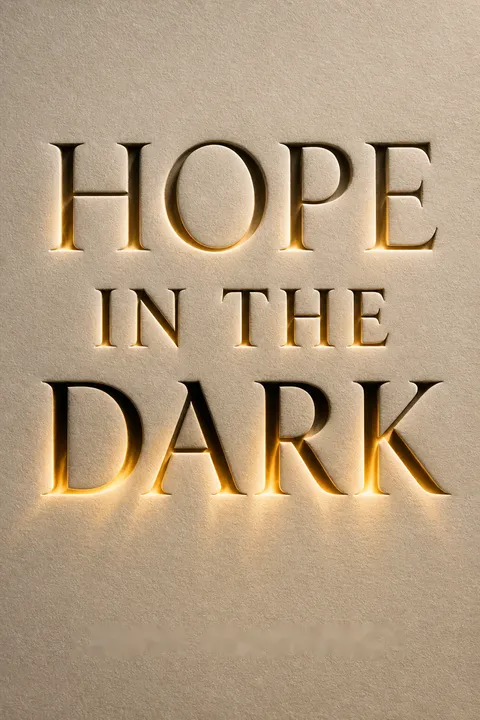
Hope in the Dark is a pastoral book about the collision between Christian belief and painful experience. Its narrative begins with people whose faith is strained by miscarriage, cancer, chronic illness, betrayal, and death. It then follows Habakkuk through a three-part movement: protest against injustice, waiting for an answer, and a decision to trust despite anticipated loss. Groeschel’s structure is memorable because it does not begin with a solution. It gives readers permission to be angry and confused before asking them to listen, record, wait, remember, accept, and hope.
The book’s most useful contribution is its distinction between trust and prediction. A person can trust God without claiming that prayer guarantees healing, restored relationships, or financial rescue. That distinction allows the author to tell stories of both recovery and death without treating the latter as evidence of weak faith. His practical advice to listen carefully, journal, seek confirmation, and face medical or financial realities also resists a form of religious denial that can cause real harm.
The underlying theology remains more asserted than demonstrated. Groeschel believes God is sovereign and good, and that suffering may deepen faith or serve purposes beyond human sight. Habakkuk and the cross provide the book’s central grounds for that belief, but they do not resolve the logical problem of why an all-good, all-powerful God permits particular suffering. The author is strongest when he acknowledges that he does not know why, and weaker when painful outcomes are readily described as part of divine formation. Such language can console, but it can also make mourners feel obligated to discover a lesson or call a tragedy good.
A careful reading preserves both sides of the book’s message. Questions are not proof of spiritual failure, and hope need not depend on a happy ending. Yet grief does not need to produce visible growth to be legitimate. The book offers a Christian practice for remaining in relationship through uncertainty, not a universal explanation of suffering or a promise that every loss will later make sense.
Review Summary
Hope in the Dark receives overwhelmingly positive reviews, with readers praising its authenticity, relatability, and practical guidance for those struggling with faith during difficult times. Many found comfort in Groeschel's vulnerability and personal experiences. Readers appreciated the book's focus on the prophet Habakkuk and its encouragement to wrestle with doubts while trusting God. Some noted its simplicity and accessibility, making it a valuable resource for those seeking hope in challenging seasons. The book resonated deeply with many, offering reassurance and renewed faith.
People Also Read





Glossary
crisis of belief
A season of spiritual testingA term Groeschel borrows from Henry Blackaby for a period when events challenge a person's beliefs about God and divine goodness. It may begin with illness, financial trouble, relational pain, or several pressures at once. The phrase describes a struggle of faith, not proof that a person has failed spiritually.
HITS Christians
Believers who avoid realityGroeschel's label for Christians who put their Heads In The Sand. They use religious confidence to avoid acknowledging a real problem, such as a medical warning, marital trouble, or financial risk. The book contrasts this behavior with acceptance, which means facing facts while continuing to pray and act responsibly.
mow'ed
An appointed timeA Hebrew word Groeschel uses to describe the fixed or appointed time at which something occurs. In Habakkuk, the promised revelation has a time of fulfillment, even if it seems delayed. The term supports the book's teaching about waiting on God's timing, which is presented as a Christian belief rather than a way to calculate when events will happen.
massa
A burdened prophetic utteranceA Hebrew term Groeschel says is used to describe Habakkuk's message. He explains it as an ominous utterance, a doom, or a burden. In the book, the word emphasizes that religious speech can carry protest, distress, and the weight of hard questions, rather than offering only reassuring or polished language.
FAQ
What's "Hope in the Dark" about?
- Theme of Doubt and Faith: "Hope in the Dark" by Craig Groeschel addresses the struggle of maintaining faith in God during life's darkest moments. It explores the tension between doubt and belief.
- Biblical Encouragement: The book provides biblical encouragement and insights, drawing from stories and teachings in the Bible to help readers find hope and trust in God's goodness.
- Personal Stories: Groeschel shares personal stories and experiences, including his own struggles and those of people he knows, to illustrate how faith can be tested and strengthened.
- Practical Guidance: The book offers practical steps for readers to navigate their crises of belief, such as questioning, listening, writing, waiting, and trusting God.
Why should I read "Hope in the Dark"?
- Relatable Struggles: If you've ever doubted God's presence or goodness during tough times, this book offers relatable stories and insights that can resonate with your experiences.
- Strengthen Faith: It provides tools and encouragement to strengthen your faith, even when circumstances seem bleak, helping you to find hope and peace.
- Biblical Insights: The book is rich with biblical references and teachings, offering a deeper understanding of how to apply scripture to real-life challenges.
- Personal Growth: By addressing doubts and questions openly, the book encourages personal growth and a closer relationship with God.
What are the key takeaways of "Hope in the Dark"?
- Embrace Doubt: Doubt is a natural part of faith, and questioning God can lead to a deeper understanding and stronger belief.
- God's Timing: Trust in God's timing, even when it requires waiting, as His plans are often beyond our understanding.
- Faith in Action: Faith is not passive; it involves actively listening, writing down revelations, and serving God while waiting for His promises.
- Hope and Trust: True hope is found in trusting God's character and promises, even when circumstances are challenging.
How does Craig Groeschel suggest dealing with doubt in "Hope in the Dark"?
- Ask Honest Questions: Groeschel encourages readers to ask God honest questions about their doubts and struggles, as this can lead to greater clarity and faith.
- Listen for God's Response: After questioning, it's important to listen for God's voice through scripture, prayer, and circumstances.
- Write Down Revelations: Recording what God reveals can serve as a spiritual anchor and reminder of His faithfulness.
- Wait Patiently: Trust in God's timing and continue to serve Him while waiting for His promises to be fulfilled.
What are the best quotes from "Hope in the Dark" and what do they mean?
- "I do believe; help me overcome my unbelief!" This quote from Mark 9:24 encapsulates the struggle between faith and doubt, highlighting the desire to believe despite uncertainties.
- "But the LORD is in his holy Temple." This phrase emphasizes God's sovereignty and presence, even when life feels chaotic and uncertain.
- "The Sovereign LORD is my strength." It reflects the idea that true strength and hope come from relying on God, not on our circumstances.
- "Though the fig tree does not bud... yet I will rejoice in the LORD." This quote from Habakkuk 3:17-18 illustrates unwavering faith and joy in God, regardless of life's challenges.
How does "Hope in the Dark" address the concept of God's timing?
- Mow’ed Concept: The book introduces the Hebrew word "mow’ed," meaning the appointed time, emphasizing that God's timing is perfect and beyond human control.
- Waiting as Growth: Groeschel explains that waiting on God is not passive but an active period of growth and service, preparing us for His plans.
- Biblical Examples: The book references biblical figures like Moses and Joseph, who waited years for God's promises, illustrating the importance of patience.
- Trust in the Process: Readers are encouraged to trust that God's timing is always right, even when it seems slow or delayed.
What role does writing play in "Hope in the Dark"?
- Recording Revelations: Writing down what God reveals helps solidify His messages and serves as a reminder of His faithfulness during difficult times.
- Spiritual Anchor: Written records act as a spiritual anchor, providing stability and reference points during moments of doubt.
- Discernment Tool: Writing helps in discerning God's voice and confirming His guidance through repeated patterns and confirmations.
- Encouragement and Reflection: Journaling allows for reflection on past experiences, encouraging gratitude and recognition of God's work in one's life.
How does Craig Groeschel use personal stories in "Hope in the Dark"?
- Relatable Experiences: Groeschel shares personal stories of his own doubts and those of people he knows, making the book relatable and authentic.
- Illustrating Faith in Action: These stories demonstrate how faith can be tested and strengthened through real-life challenges and God's interventions.
- Encouragement Through Testimonies: Personal testimonies serve as encouragement, showing readers that they are not alone in their struggles.
- Practical Application: The stories provide practical examples of how to apply the book's teachings in everyday life.
What is the significance of the title "Hope in the Dark"?
- Hope Amidst Darkness: The title suggests finding hope and faith even in the darkest and most challenging times of life.
- Light of Faith: It implies that faith can be a guiding light, providing direction and comfort when circumstances seem bleak.
- God's Presence: The title reflects the book's message that God is present and good, even when life feels overwhelming and uncertain.
- Encouragement to Persevere: It encourages readers to persevere through their doubts and struggles, trusting that hope is always possible.
How does "Hope in the Dark" interpret the story of Habakkuk?
- Wrestling and Embracing: Habakkuk's name means both to wrestle and to embrace, symbolizing the dual nature of faith—questioning and trusting God.
- Honest Dialogue with God: The book highlights Habakkuk's honest questions to God and his willingness to listen for answers, serving as a model for readers.
- Faith Despite Circumstances: Habakkuk's story illustrates maintaining faith and hope in God's promises, even when facing dire situations.
- God's Sovereignty: The narrative emphasizes God's control and timing, encouraging readers to trust His plans and purposes.
What practical steps does "Hope in the Dark" offer for strengthening faith?
- Question and Listen: Encourage open dialogue with God, asking questions and listening for His responses through various means.
- Write and Reflect: Keep a journal of revelations and experiences to serve as a spiritual anchor and reminder of God's faithfulness.
- Wait and Serve: Embrace waiting as a time of growth and service, trusting in God's perfect timing for His promises.
- Trust and Hope: Cultivate trust in God's character and hope in His plans, even when circumstances are challenging.
How does "Hope in the Dark" address the theme of suffering?
- Purpose in Pain: The book suggests that suffering can lead to spiritual growth and a deeper relationship with God, as seen in biblical examples.
- God's Presence in Trials: It emphasizes that God is present and working for good, even in the midst of suffering and hardship.
- Faith Through Adversity: Readers are encouraged to maintain faith and hope, trusting that God will bring about good from their trials.
- Endurance and Glory: The book highlights the idea that enduring suffering with faith can lead to greater glory and intimacy with God.
About the Author
Other books by Craig Groeschel





Download PDF
Download EPUB
.epub digital book format is ideal for reading ebooks on phones, tablets, and e-readers.








