

Key Takeaways
Question the romance script before treating singleness as failure
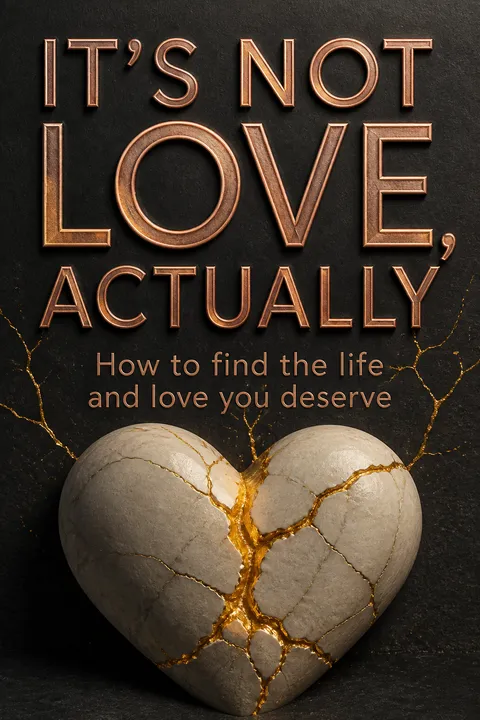
Romance is a cultural lesson. Salmin opens with Karen in Love Actually, who expects a thoughtful gift from her husband and instead receives a CD while realizing he has given the necklace she wanted to another woman. The scene hurts because it echoes a familiar fear: building a life around a partner who does not value you. Salmin traces that fear to stories that present marriage as a woman’s natural destination, from fairy tales to romantic comedies, and to a culture that treats single people as unfinished.
Notice who profits. The book argues that romance is also sold through dating apps, weddings, and other industries that turn insecurity into spending. It cites Australian figures suggesting 41 per cent of marriages end in divorce, a reminder that coupling is no guarantee of a happy ending. Examining those messages helps separate inherited expectations from personal desire.
The argument is strongest when it treats romance as a script, not a scam. Stories can shape what people expect, while industries can profit from those expectations; neither fact means romantic love is inherently false. The useful question is whether a cultural ideal leaves room for friendship, ambition, solitude, and choice. The divorce statistic is a caution against assuming marriage guarantees security, not a forecast for any individual couple. Cultural critique works best when it widens people’s options rather than replacing one compulsory life plan with another.
Use solitude to build a life that does not need male approval
Alone can be formative. During Melbourne’s Covid lockdowns, Salmin lived by herself with little social contact. She read, wrote, cooked, painted, moved her body, explored her own pleasure, and went to therapy. The isolation was difficult, but it gave her space to see how much attention she had spent pursuing men’s approval. A break from dating began as a circumstance and became an intentional period she calls being “boy sober,” meaning choosing to pause dating and sex.
Invest beyond romance. Salmin describes three years without apps, dates, or hookups as a turning point. She became more comfortable alone and more curious about the life she could build. Her practical route is not just to stop dating: develop interests, reflect on patterns, and make plans that belong to you.
A deliberate pause can interrupt a feedback loop: attention from a romantic prospect briefly lifts self-esteem, then uncertainty pulls attention back toward that prospect. Replacing the loop with creative work, reflection, and non-romantic connection can reveal how much of daily life had been organized around seeking validation. Chosen solitude is not the same as unwanted isolation, and the book’s lockdown story makes that distinction vivid. Still, a dating break is an option, not a universal remedy; safety, desire, culture, and access to supportive relationships all shape what feels right.
Notice when you are performing femininity for an imagined audience
Performance can look effortless. Salmin uses the “Cool Girl” as a name for a woman who edits herself to appear attractive, easygoing, and undemanding. She describes changing her music tastes, waiting around for late-night invitations, and acting unbothered when she wanted something different. The related “male gaze” describes seeing women chiefly through heterosexual male desire, a perspective that can influence everyday choices as well as films.
Ask what the choice serves. Clothes, makeup, body changes, and sexual behavior can be genuine pleasures, but they can also be attempts to win approval. Salmin suggests asking whether a choice feels authentic and whose comfort it protects. She also cautions that social rewards and pressures differ by race, class, and circumstance, so this reflection should not become a purity test.
The most useful idea here is not that appearance or femininity is inherently submissive. It is that a choice can feel personal while being shaped by incentives, including safety, status, and belonging. Social psychology’s distinction between private preference and social performance helps explain why motives can be mixed rather than pure. Asking what a behavior does for someone is more revealing than declaring it empowering or oppressive from the outside. The book’s emphasis on context matters: agency includes making strategic choices within unequal conditions, not pretending those conditions have vanished.
Treat familiar anxiety as a pattern to investigate, not proof of love
Familiarity can masquerade as chemistry. Salmin connects her attraction to hot-and-cold men with childhood experiences of affection that felt conditional and unpredictable. She explains attachment theory as a way to consider how early relationships may influence adult comfort with closeness, distance, and reassurance. It is a lens for noticing patterns, not a permanent label: the book emphasizes that insecure attachment can change.
Unpredictable rewards can hook. In an abusive relationship described in the book, intense attention alternates with withdrawal, blame, and harm, followed by apologies and renewed affection. This repeated cycle can make the return of kindness feel especially powerful. Salmin calls attention to trauma bonds and intermittent reinforcement, in which unpredictable rewards strengthen attachment. A racing heart may signal distress or uncertainty, not necessarily compatibility.
The distinction between emotional intensity and relational safety is important because uncertainty can command attention without indicating a good match. Learning to notice patterns can create a pause between a familiar feeling and an automatic choice. At the same time, attachment categories are simplified maps, not diagnoses, and a person’s dating behavior can reflect present circumstances as well as childhood. The book’s trauma-bond discussion also helps counter the unfair question of why someone did not simply leave. Understanding a pattern can reduce self-blame, but support and practical safety matter more than labeling a partner.
Choose dates by what you want, not by who picked you
Make your purpose explicit. Salmin recommends deciding what kind of connection you want, whether that means casual sex, exploration, or a committed relationship. She suggests dating for experience and discovery rather than treating every date as a search for a life partner. A written list of values and non-negotiables can help keep attraction from turning into wishful thinking. In one example, her sister recognized that a boyfriend did not meet the qualities she wanted in a partner.
Measure behavior, not possibility. A situationship is an undefined connection that may include sex and closeness without agreed commitment. It can work when both people genuinely want that arrangement, but hope that it will become a relationship can prolong hurt. Salmin argues that trust and access to your time should grow through consistent, respectful actions, not promises or impressive banter.
This approach shifts dating from an audition into an evaluation of mutual fit. That is a meaningful change in power: attention from another person no longer counts as evidence that the person is desirable or suitable. A short list of core values can help, though rigid checklists can also screen out good matches for superficial reasons. The useful distinction is between essentials, such as respect and honesty, and preferences that may be negotiable. Clarity about intentions does not guarantee compatibility, but it reduces the time spent negotiating with an imagined future version of someone.
Demand sex that includes your pleasure, safety, and real consent
A sexual script can exclude you. Salmin argues that mainstream portrayals often make penetration and male orgasm the center of heterosexual sex, leaving women’s pleasure as an afterthought. The book cites research finding that 10 per cent of women in one study orgasmed during a first hookup, compared with 68 per cent in long-term relationships; a separate study found 95 per cent orgasmed through masturbation. These figures illustrate a gap in experience, not a standard every person must meet.
Consent is more than acquiescence. Salmin recounts learning to treat coercive or unwanted experiences as normal, and describes how pressure, freezing, or fear of seeming inexperienced can silence a person. Her advice is to explore what feels good, state boundaries, and stop pretending sex is enjoyable when it is not. A “want, will, won’t” list can help clarify preferences before a sexual encounter.
The chapter connects sexual pleasure to education and power, rather than treating dissatisfaction as an individual failure. That reframing is valuable: communication is difficult when someone has never been invited to notice or name their own desire. Consent and pleasure also need to remain distinct. A consensual encounter can still be unfulfilling, while pleasure does not excuse pressure or boundary violations. The cited orgasm figures are averages from particular studies, not predictions for every person. Their strongest use is to challenge the assumption that male-centered sex is inevitable.
Make invisible relationship work visible before resentment takes over
Care has a workload. Salmin describes emotional labour as the work of managing feelings and supporting a relationship, and mental labour as planning, remembering, and organizing daily life. She introduces “hermeneutic labour,” the effort of interpreting another person’s unclear feelings and finding a safe way to raise difficult topics. In many heterosexual relationships, she argues, women do more of this work, alongside domestic tasks and social planning.
Ask clearly, then assess the response. A friend spent months trying to decode a partner’s intentions before asking directly where the relationship was going. He reacted with anger, and she ended things. Salmin advises naming the imbalance, requesting change, and observing whether a partner participates. A conversation can reveal more than endless message analysis, but one person cannot make a relationship equal alone.
Giving invisible labor names makes it easier to notice, divide, and discuss. The concepts also distinguish practical tasks from the cognitive and emotional effort that often precedes them, such as remembering what needs doing and managing a partner’s reaction. A household task list can expose imbalances that a vague sense of being overwhelmed cannot. Still, fairness is not always a perfect fifty-fifty split; illness, work demands, and changing capacity matter. The central test is whether both people recognize the work and take responsibility for a sustainable arrangement.
Rewrite commitment rituals instead of inheriting their gender rules
Tradition carries assumptions. Salmin examines proposals, weddings, and marriage customs that can position women as passive recipients or transfer figures: men ask fathers for permission, brides are “given away,” women change surnames, and women often organize much of the celebration. These customs have histories connected to male control of women’s sexuality, labor, and identity. The book does not argue that marriage is inherently wrong; it asks whether people want the rituals they are repeating.
Equality continues after the ceremony. Salmin cites Australian data showing women do an average of 18.4 hours of housework weekly, compared with 12.8 hours for men. She also discusses research that mothers carry most household planning and scheduling. The point is to evaluate the everyday partnership, not just the public promise. Couples can keep, alter, or discard traditions, but should discuss what each one means to them.
Rituals are not merely decorative. They can communicate who chooses, who belongs to whose family, and who is expected to serve. Making those meanings discussable gives couples room to preserve a cherished custom without accepting every assumption attached to it. The same scrutiny should apply to alternatives: rejecting tradition does not automatically produce equality, especially if unpaid work remains uneven. The practical measure is whether decision-making and labor are shared, not whether a couple’s ceremony looks conventionally feminist.
Keep friendship beside romance, not beneath it
Love is not one category. After a serious car accident left Salmin hospitalized for months, friends and family visited, helped, and made her feel cared for. Her boyfriend was largely absent. The experience changed her understanding of love and helped her see that her romantic relationship was not giving her the care she needed. She later describes a close friend as a platonic life partner, a deeply committed companion whose bond does not depend on romance.
Do not make one person your whole world. Salmin challenges the “love hierarchy” that places romantic love above friendship, family, and community. A partner can be one of your closest people without being your only source of intimacy or support. Maintaining close relationships also gives people practical and emotional support if a romance ends or life becomes difficult.
The accident story demonstrates a useful distinction between the prestige of a relationship and the care it actually provides. Friendship can involve loyalty, intimacy, and long-term commitment, even when culture gives it fewer ceremonies and less public recognition. A broader support network can also make a romantic relationship less pressured, since one partner is not expected to meet every social need. The point is not that friends never disappoint or that partners are interchangeable. Different relationships offer different forms of care, and each deserves deliberate attention.
Build a village by becoming the person who shows up
Support is built through practice. Salmin argues that strong social connections support well-being, yet many people want community without taking on the ordinary work of maintaining it. Her friends Carina and James model what she calls being villagers: they remember important dates, offer rides, bring food, organize gatherings, and check in on people who are struggling.
Make care concrete. Community does not require grand gestures. Put a friend’s important event in the calendar, offer a useful skill, volunteer, or keep a plan even when staying home sounds easier. Salmin connects the decline of extended community with the rise of smaller nuclear households, while emphasizing that people can still build chosen networks. Rest and boundaries matter, but constant withdrawal can leave relationships without the attention that keeps them alive.
This ending makes love an activity rather than a status. Sociological accounts of mutual aid show how everyday exchanges of time, knowledge, and practical help create trust that formal institutions cannot fully replace. The idea also corrects a one-sided model of self-care in which protecting personal energy is the only measure of health. Yet generosity should not become another unequal burden, especially for people already doing most care work. A durable village distributes support across many people, with room for limits, changing capacity, and reciprocal responsibility.
Analysis
This book moves through a deliberate change in scale. It begins with one woman’s fear of becoming a neglected wife, then asks how childhood stories, family patterns, media, and dating markets make that fear feel like a personal defect. From there it moves into conduct: how to date, have sex, negotiate partnership, and build a social life. Its memoir scenes are not decorative. Lockdown gives the author a lived example of life outside constant romantic pursuit; the car accident reveals which relationships actually provide care. Those episodes give emotional force to arguments that could otherwise read as abstract feminist critique.
The book’s distinctive contribution is its refusal to treat private choices as wholly private. A woman’s clothes, sex life, wedding, and unpaid planning work may express genuine preference while also reflecting social rewards and constraints. That complexity makes the advice more useful than a simple command to reject femininity or marriage. The recurring practical move is to ask what someone wants, notice what they have learned to tolerate, and compare a partner’s actions with their stated values.
There are limits worth keeping in view. Most of the analysis concerns cisgender women dating cisgender men, a scope the author states openly. Readers outside that frame may recognize some dynamics but should not assume identical risks or roles. Some claims about attachment, inherited trauma, sexual differences, and single women’s health are complex topics that can be oversimplified when reduced to a memorable statistic or category. Correlation does not establish that singleness itself causes better health, and attachment language should not become a diagnosis applied casually to oneself or a partner.
The strongest reading is therefore neither a rejection of romance nor a promise that self-love prevents heartbreak. It is a challenge to romance’s monopoly on worth. A full life can include a partner, but it should not require shrinking other sources of identity, pleasure, safety, or belonging to make room for one.
Glossary
Boy sober
Chosen pause from datingA deliberate break from dating men and, often, sex with men. Salmin uses the term for a period of stepping out of romantic pursuit to examine habits, recover attention for other parts of life, and learn what being single feels like. It is a personal choice, not a rule that everyone should follow.
Decentring men
Reducing men’s priorityA practice of noticing how much attention, time, and decision-making are organized around men’s approval or needs, then redirecting that energy toward one’s own interests, friendships, work, and values. It does not require removing all men from one’s life. It means no longer treating them as the default center of it.
Male gaze
Seeing through male desireA concept from film criticism, associated with Laura Mulvey, describing how visual stories often frame women as objects for heterosexual male viewers rather than as full subjects. Salmin also applies the term to everyday self-presentation, when women may judge their bodies, clothing, or behavior through assumptions about what men will find attractive.
Cool Girl
Low-maintenance approval performanceA cultural figure who appears attractive, relaxed, and undemanding by hiding preferences or discomfort that might displease men. Salmin uses the term for a performance that can involve pretending to enjoy a partner’s interests, waiting for attention, or minimizing needs. Its defining feature is not a particular hobby, but self-editing for approval.
Patriarchal bargain
Adapting for social rewardsA concept developed by researcher Deniz Kandiyoti for the ways women may accommodate or participate in patriarchal systems in exchange for benefits such as security, status, desirability, or social acceptance. Salmin uses it to explain why choices that appear individual can be shaped by unequal structures and their rewards.
Attachment theory
Early bonds shape expectationsA psychological framework associated with John Bowlby and Mary Ainsworth that examines how early relationships with caregivers can influence later expectations of closeness and security. Salmin describes secure, anxious, avoidant, and disorganized patterns. These are broad ways to reflect on relationship habits, not fixed identities or diagnoses.
Trauma bond
Attachment amid abuse cyclesA powerful attachment that can develop in an abusive relationship where harm and affection alternate. In Salmin’s account, a partner may move from intense attention to cruelty or withdrawal, then return with apologies and affection. The cycle can make leaving difficult and should not be treated as evidence that the harmed person chose or caused the abuse.
Intermittent reinforcement
Unpredictable rewards strengthen behaviorA learning pattern in which a reward arrives inconsistently rather than every time. Salmin uses gambling as a comparison: when affection appears unpredictably after periods of rejection or distress, a person may stay focused on the possibility of the next rewarding moment. In a harmful relationship, this pattern can reinforce attachment to the cycle.
Body neutrality
Value function over appearanceAn approach to body image that does not require loving every aspect of one’s appearance. Instead, it encourages a less judgmental stance and attention to what the body does, such as helping a person move, rest, digest, and experience sensation. Salmin presents it as an alternative for people who find constant body positivity unrealistic.
Singlism
Bias against single peopleSocial scientist Bella DePaulo’s term for discrimination and disadvantage experienced by people who are single. Salmin describes examples including cultural pity, assumptions that single life needs fixing, and systems that may favor couples in social, economic, or workplace settings. The concept identifies a social bias, not a claim that every single person has the same experience.
Situationship
Unclear romantic arrangementA connection that may involve sex, affection, and dates but lacks clearly agreed labels, exclusivity, or commitment. Salmin notes that it can suit people who genuinely want an undefined or casual arrangement. Problems arise when the people involved want different things or one person silently hopes the arrangement will become a committed relationship.
Sexual scripts
Learned rules for sexSocial expectations about how sexual encounters should proceed, whose pleasure matters, and which acts count as sex. Salmin argues that common heterosexual scripts often center penetration and male orgasm while positioning women as providers of pleasure. Recognizing these learned rules can help people question whether their sex life reflects their own desires.
Second shift
Paid work plus home laborSociologist Arlie Hochschild’s term for the unpaid household work many women perform after completing paid employment. In the book, it describes how women in heterosexual relationships may carry a disproportionate share of domestic tasks, often alongside planning and caregiving. The term makes visible the extra labor hidden behind an apparently equal workday.
Hermeneutic labour
Interpreting unclear feelingsThe mental work of understanding one’s own feelings, interpreting another person’s unclear intentions, and deciding how to communicate about them. Philosopher Ellie Anderson uses the term to describe a gendered burden in intimate relationships. Salmin applies it to the time women may spend decoding a partner’s behavior and carefully planning relationship conversations.
Mankeeping
Maintaining men’s social needsA term developed by researchers Angelica Puzio Ferrara and Dylan Vergara for labor women may perform to maintain men’s emotional and social lives. Examples include arranging gatherings, prompting contact with relatives, and supporting a partner who lacks other close connections. The concept highlights when such care is one-sided and burdensome.
Love hierarchy
Ranking romantic love highestThe cultural assumption that romantic partnership is more important than friendship, family, community, self-love, or other forms of connection. Salmin argues that this ranking can make single people feel incomplete and encourage people to stay in harmful relationships. Dismantling it means recognizing that meaningful care and belonging can come from many relationships.
Download PDF
Download EPUB
.epub digital book format is ideal for reading ebooks on phones, tablets, and e-readers.








