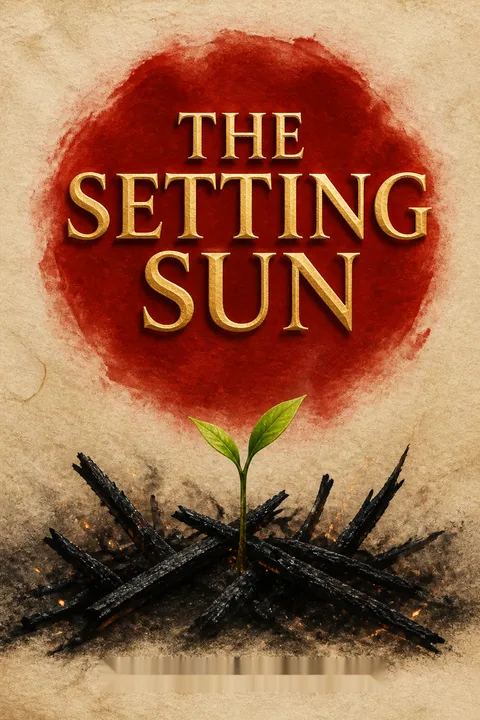


Plot Summary
Nishikata Is Sold
After Japan’s surrender, Kazuko, twenty-nine, lives with her widowed mother in Tokyo while her younger brother Naoji remains missing in the South Pacific. Uncle Wada tells them the family’s money can no longer support their old house and servants, so they sell the Nishikata home and move to a small cottage in Izu.
Mother trusts her brother without inspecting the property, but on the final night she admits she would rather have died in the house where Kazuko’s father died.
At the cottage, grief and strain bring on a high fever. Kazuko nurses her through an uncertain first day until the village doctor’s injection lowers it. Mother calls the recovery a kind of rebirth, yet Kazuko senses their peace rests on money already gone and Naoji absent.
The move turns the family’s loss of status into a physical fact: rooms, servants, and familiar routines disappear, leaving Kazuko responsible for care that once belonged to a household staff. Her mother’s trust in Uncle Wada and her eventual collapse expose how little control she has over the family’s new circumstances. Kazuko reads the fever as evidence that the move has wounded her mother, then clings to the doctor’s recovery as a reprieve. The cottage offers a fresh landscape but no real reset. Their material decline has begun, and the imagined return of Naoji becomes part of what keeps them going.
The Snake’s Unburned Eggs
Some months later, Kazuko finds white snake eggs in the garden fence and burns them, believing they may hatch into vipers. A neighboring farmer’s daughter tells her they are harmless eggs, but Kazuko has already buried them beneath a plum tree with the children who helped. Mother sees the burial and calls the act cruel.
Her fear comes from the night Kazuko’s father died, when a snake appeared beside his bed; Kazuko also remembers seeing snakes throughout the garden. Later, an adult female snake searches the lawn near the buried eggs. Mother watches it with pity, and Kazuko begins to imagine that the guilt she carries could somehow consume the woman she loves.
The episode gives Kazuko a way to turn ordinary uncertainty into personal responsibility. She mistakes harmless eggs for danger, acts decisively, then discovers that her protection has caused harm. Her mother’s response is not superstition so much as an emotional memory attached to the snake near her husband’s deathbed. The living snake reverses Kazuko’s original fear: it becomes a grieving creature, and Mother recognizes its loss. Kazuko, meanwhile, converts guilt into a private curse, imagining that her own inner life is feeding on her mother. The garden makes grief visible without explaining it away.
Firewood at Dawn
Ten days after the snake incident, Kazuko wakes at night to find the firewood beside the bathroom furnace blazing. She had left embers there, believing they were out. A farmer helps her and several villagers form a bucket line before the flames reach the cottage; the police agree not to file a report. At dawn, Kazuko visits the neighbors alone with small payments and apologies.
One woman rebukes her for living as if the village were a place to play house, and Kazuko accepts that the danger was real. She begins working in the fields, finding relief in the physical labor even as Mother grows weaker. The fire leaves no lasting damage to the house, but it sharpens Kazuko’s fear that her mistakes are harming her mother.
The fire punctures the sheltered world Kazuko and her mother have tried to preserve. Unlike their lost wealth, this danger is directly caused by Kazuko’s action, and the possibility of damage extends beyond her family to the whole village. Her neighbors’ decision not to report her gives her mercy, while the scolding insists that privilege cannot excuse carelessness. Kazuko responds by entering the fields, where labor becomes both practical adaptation and a form of self-punishment. She can change how she works, but she cannot make her mother stronger. The mismatch between Kazuko’s growing physical capacity and her mother’s decline deepens her sense of helplessness.
Naoji Is Alive
Mother receives a letter from Uncle Wada reporting that Naoji survived the war and will soon return, but has become addicted to opium again. With the family’s remaining money nearly gone, Uncle Wada suggests that Kazuko become a governess in a related aristocratic household. Kazuko hears the proposal as proof that her mother has kept her only until Naoji came back.
Exhausted from fieldwork, she accuses Mother of using her and threatens to leave. Once Kazuko has calmed, Mother reveals that she has rejected her brother’s instructions and will sell their clothes rather than send her daughter away. Kazuko apologizes and admits she has a secret destination in mind, though she will not name the man she hopes to join.
The news of Naoji’s survival brings relief tangled with dread. Kazuko’s fear is not simply that her brother will return troubled, but that her own bond with Mother will become less secure once the family is reunited. The proposed governess position makes the economic crisis feel like a judgment on Kazuko’s usefulness. Her angry accusation exposes a need she has concealed beneath caretaking: she wants to be chosen, not merely needed. Mother’s refusal to obey Uncle Wada is a rare act of independence, but it does not solve their poverty. Their reconciliation gives Kazuko permission to imagine a separate life, while leaving its cost and outcome unresolved.
The Moonflower Journal
Naoji returns from the South Pacific thin and bitter, barely greeting Mother before criticizing the cottage and demanding alcohol. Mother is suffering from a painful tongue, and Naoji prescribes a gauze mask that she wears because she trusts him.
He soon leaves for Tokyo, taking money and staying away while Mother waits for him. In his crowded room, Kazuko finds his journal from an earlier period of drug dependence, full of shame, anger, and a conviction that he cannot fit either aristocratic society or the world he tried to join.
The notebook brings back the years when his addiction drove Kazuko to sell jewelry and secretly send him money through the novelist Uehara. During that earlier crisis, Uehara kissed her, creating the attachment she has never named openly.
Naoji’s return fails to restore the family; his presence makes their fragile domestic life more difficult, and his advice about Mother’s illness becomes another test of her dependence on him. The journal complicates Kazuko’s view of her brother by revealing that his disorder is not merely appetite or rebellion. He experiences his attempts to become someone else as a trap, yet cannot return to the identity he rejected. Kazuko’s memories connect his addiction to her own earlier marriage and her first encounter with Uehara. The family’s silences are filled in through written traces, but those documents expose pain without providing a workable remedy.
Letters to Uehara
With Naoji again away in Tokyo and the family surviving by selling possessions, Kazuko writes repeatedly to Uehara, the novelist she met six years earlier. She asks whether he could accept her as his lover and the mother of his child, and urges him to visit, but he sends no answer. An older, wealthy painter then proposes marriage through family connections.
Kazuko refuses him, explaining that security without love would not give her the life she wants. She continues waiting for Uehara while Mother’s health becomes a growing concern. The letters allow Kazuko to turn a private longing into a decision she can act on, even though she has no assurance that Uehara will welcome her or that the relationship can support a child.
Kazuko’s letters are not simply declarations of romance; they are attempts to create a future outside the roles available to an impoverished aristocratic woman. She rejects the painter’s offer because material comfort would not answer her desire for love or motherhood. Yet her plan depends on Uehara’s response, and his silence leaves her exercising agency in a vacuum. The letters also reveal the contradiction in her self-understanding: she argues for a radical life while still asking a man to confirm that it is possible. Her decision is consequential before it is reciprocated. Waiting becomes an active but precarious form of commitment.
The Last Autumn
Mother develops a persistent fever and cough, but the village doctor repeatedly treats the illness as an ordinary cold. Uncle Wada arranges for Dr. Miyake to examine her; he privately tells Kazuko that Mother has tuberculosis and may not recover.
Kazuko conceals the diagnosis and tries to sustain Mother with food and hope. As Mother weakens, her hand swells, she can barely swallow, and Dr. Miyake warns that the end may be near. Mother dreams of a snake on the porch step, and Kazuko sees one there but denies it to spare her.
Mother’s brother and Naoji arrive at her bedside. After asking the doctor to end her suffering, she speaks her last words to Kazuko, then dies that evening. Kazuko is left without the person who held their family together.
The mistaken reassurances from the village doctor give Kazuko time to hope, but they also postpone her emotional preparation for what Dr. Miyake knows. She manages the truth by replacing diagnosis with meals, small comforts, and carefully chosen lies. The snake returns at the bedside, but Kazuko denies its presence, choosing protection over the confession that has consumed her since the eggs were burned. Mother’s final attention to her children and brother briefly reunites the family around her, yet cannot repair its divisions. Her death removes Kazuko’s anchor and changes survival from a duty of care into a problem she must answer for herself.
A Night in Tokyo
After Mother’s cremation, Kazuko and Naoji live together in silence. When Naoji brings a dancer to the cottage, Kazuko uses the chance to travel to Tokyo and find Uehara. His wife welcomes her into their dark, impoverished home and helps repair her sandal, making Kazuko feel the human cost of pursuing him.
She tracks Uehara from one drinking place to another until she finds him among his companions. He takes her to a room for the night, and they become lovers; he admits he has fallen for her, while she recognizes how worn down he is by drink and despair. By morning, her love has returned with painful force. Back at the cottage, Naoji has killed himself.
Kazuko’s journey carries her from imagined romance into the material lives of the people around Uehara. His wife’s kindness makes it impossible to treat her as a convenient obstacle, and Kazuko’s awareness of that harm does not stop her. Uehara’s attraction is real, but it arrives inside a life shaped by drinking, financial strain, and exhaustion. Their night offers Kazuko the intimacy she sought without promising a stable future. Naoji’s suicide occurs in the same dawn, making private desire and family catastrophe collide. Kazuko’s new attachment cannot replace her mother or rescue her brother; it must exist alongside both losses.
What Naoji Confessed
Naoji’s testament explains that he used drugs and alcohol to escape the shame of being an aristocrat and to imitate the toughness he believed ordinary people required. He could neither return to his former class nor feel accepted by the people he tried to join. His planned publishing venture was mostly a cover for his dependence on family money, which he found humiliating.
He also reveals a long, hidden love for Suga, the gentle wife of a painter whose home he visited. He had mistaken her natural kindness for the one form of human connection he could trust. Naoji asks Kazuko to place their mother’s hemp kimono in his coffin. His account gives his sister a view of the suffering he had disguised as contempt.
The testament revises Naoji without absolving him. His drug use, drinking, and financial dependence harmed the people around him, but the letter shows how each behavior served his attempt to flee a social identity he could neither inhabit nor discard. He experiences class as a double exclusion: aristocratic privilege makes him suspect among ordinary people, while his deliberate roughness alienates him from his origins. His love for Suga centers on unguarded kindness rather than possession, an intimacy he cannot ask for directly. The kimono request turns the family’s past into a final act of care. Writing lets Naoji explain himself where ordinary conversation failed.
A Child, A Revolution
Kazuko spends a month alone in the Izu cottage, handling the arrangements after Naoji’s death. She writes to Uehara and tells him she is pregnant, but she does not ask him to become a dependable partner or abandon his existing life. Instead, she treats the child as the result of a choice she made and intends to raise it herself.
Kazuko asks Uehara to let his wife hold the baby once, framing the request through Naoji, though she cannot fully explain why it matters to her. She believes that giving birth and raising the child will challenge the morality that condemns her. The book ends with her committed to a difficult life beyond her mother’s household and her brother’s shadow.
Kazuko’s final decision converts longing into responsibility. Pregnancy does not guarantee companionship, money, or social acceptance, and Uehara has offered no promise that he will alter his life for her. She nevertheless claims the child as a purpose she can pursue without waiting for public approval. Her request that Uehara’s wife hold the baby unsettles any simple triumph: Kazuko’s chosen future remains bound to another woman’s injury and to the family she has lost. The language of revolution gives her an ethical framework for continuing, not a victory over the world around her. Unlike Mother’s quiet endurance or Naoji’s refusal, Kazuko chooses to remain and struggle.
Analysis
The novel follows Kazuko through the collapse of a family whose inherited status no longer protects it. The loss is material, but the deeper disintegration concerns the rules that once made identity feel stable. Mother remains graceful without relying on social performance; Naoji tries to escape aristocratic privilege by adopting roughness, only to discover that imitation cannot make him belong elsewhere. Their different responses make the family’s decline more than a story of money. It becomes a crisis of available selves.
Kazuko’s narration is emotionally trustworthy but not always interpretively secure. She records her own mistakes, including the fire and the burned snake eggs, yet turns coincidence into punishment when she fears that her desires will injure Mother. The novel’s documents interrupt that limited perspective. Naoji’s writings do not excuse his harm, but they expose the pain concealed by his sarcasm. Letters, journals, and testament function as substitute conversations in a family that cannot sustain direct confession.
The story’s ethical conflict is not resolved by choosing conventional goodness over transgression. Kazuko’s love for Uehara brings her into contact with his wife’s kindness, making her choice morally costly rather than romantically pure. Still, she rejects the idea that respectability alone can make a life worth living. Her pregnancy gives this conviction a concrete form: she accepts responsibility for a child without a guarantee of support or approval. Against Mother’s quiet endurance and Naoji’s inability to continue, Kazuko chooses an exposed, uncertain survival. The ending does not promise that her revolution will succeed. It insists that she will act, and that the act itself is a refusal to let inherited morality decide whether she may live.
Review Summary
The Setting Sun is a melancholic novel depicting post-World War II Japan through the lens of an aristocratic family's decline. Readers praise Dazai's poetic prose and ability to convey themes of societal change, existential despair, and the struggle between tradition and modernity. The book's characters, particularly Kazuko, are complex and reflect the broader national turmoil. While some find the narrative slow-paced or difficult to connect with, many consider it a masterpiece of Japanese literature, highlighting Dazai's skill in exploring human nature and the challenges of a rapidly changing society.
People Also Read






Characters
Kazuko
Unruly daughter and narratorKazuko is a twenty-nine-year-old former aristocrat whose first-person account moves between domestic observation, memory, and fierce self-argument. She is attentive to beauty, quick to feel shame, and often more candid about desire than the people around her. Her marriage has ended, her child was stillborn, and the family’s declining means have made her a caregiver as well as a working farmer. She loves her mother and brother, but does not experience family duty as a substitute for a life of her own. Kazuko’s central tension is between tenderness and defiance: she wants to protect the people she loves while resisting the social rules that would make her life smaller.
Mother
The family’s last aristocratKazuko and Naoji’s widowed mother carries an inherited aristocratic grace that has little to do with money or etiquette. Her ease in everyday gestures contrasts with her dependence on relatives to manage the family’s finances. She is gentle without being naïve, and her instinct is to absorb distress rather than burden her children with it. Her quiet bond with Kazuko rests on care, shared habits, and moments of mutual understanding more than explicit explanation. She also remains emotionally attentive to Naoji despite his volatility. Mother represents a form of dignity rooted in conduct and feeling, even as the postwar world makes the household that sustained her impossible to preserve.
Naoji
A brother at war with himselfNaoji is Kazuko’s younger brother, a writerly, volatile man whose return from military service does not restore him to family life. He uses wit, drink, and cultivated roughness to keep others at a distance, while remaining painfully alert to his dependence on them. His aristocratic background makes him distrust the privilege he inherited, yet his attempts to reject it leave him without a secure place among ordinary people. Naoji’s tenderness rarely appears directly; it emerges through private writing and small attachments he cannot easily confess. He is both a source of strain for Kazuko and someone whose suffering she tries, often unsuccessfully, to understand.
Uehara Jirō
The compromised novelistUehara is a novelist known through Kazuko’s memories, letters, and eventual encounter with him. He is connected to Naoji as a literary mentor and drinking companion, and to Kazuko through a brief meeting that grows into a long private fixation. His public reputation for dissipation is matched by genuine weariness and an unvarnished distrust of respectability. Uehara does not offer the orderly reassurance that Kazuko’s family or society might demand; his appeal lies partly in his willingness to live outside those forms. Yet his disorder is not merely theatrical. He is a difficult, compromised person, and Kazuko’s desire for him does not make him a reliable answer to her needs.
Uncle Wada
The practical family guardianMother’s younger brother manages the family’s finances and arranges the move from Tokyo to Izu. He approaches crisis through logistics, property, and advice about suitable work, rather than through emotional intimacy. His decisions help the family survive, but they also remind Kazuko and Mother that their former independence has ended. He is not simply cruel or indifferent; he acts within the practical limits of a depleted family estate, even when his solutions disregard what Kazuko wants.
Osaki
The village innkeeperOsaki runs the village inn and becomes one of Kazuko’s local points of contact. She offers practical help after the fire, advising Kazuko how to apologize to the neighbors and accompanying her in spirit even when Kazuko insists on making the visits alone. Her concern is plain and useful, a contrast to Kazuko’s tendency to turn every mistake into a private moral crisis.
Dr. Miyake
The blunt family doctorAn old acquaintance of Kazuko’s father, Dr. Miyake comes from Tokyo to examine Mother when the village doctor cannot explain her persistent fever. His coarse manner and relaxed conversation initially make him seem reassuring, but he does not soften the seriousness of his medical judgment. He represents the moment when Kazuko must face a truth she cannot manage through optimism or domestic care.
Mrs. Uehara
Uehara’s gentle wifeUehara’s wife lives with her daughter in a house marked by scarcity and her husband’s absences. When Kazuko arrives looking for him, she treats the stranger kindly, helps repair her sandal, and explains where Uehara may be found. Her lack of hostility makes Kazuko more aware of the harm her desire could cause. She is not reduced to a rival; her ordinary generosity gives Kazuko a human connection to the life she is intruding upon.
Suga
A painter’s quiet-hearted wifeSuga is the wife of a painter whose household Naoji visits. She is remembered for a composed, unguarded kindness that stands apart from the performances and social maneuvering around her. Her presence gives Naoji an image of care that does not demand explanation or display. Though she occupies little of the narrated present, her emotional significance is conveyed through the way Naoji remembers her.
The painter
A successful, dissipated artistThe painter is a successful artist whose home connects him to both Uehara’s circle and Suga’s quiet domestic life. Naoji views him as irresponsible and commercially opportunistic, while Kazuko once admired his work enough for her husband to suspect an affair. His character shows how artistic reputation can be mistaken for moral or emotional depth.
Chie
A waitress in Uehara’s circleChie is a young waitress who helps Kazuko when she arrives at a drinking gathering to find Uehara. She offers food and company rather than treating her as an intruder, reflecting the informal, interdependent world around the novelist.
The village doctor
A reassuring local physicianThe village doctor treats Mother’s early fever and later dismisses her worsening symptoms as an ordinary cold. His confident reassurances shape Kazuko’s hope, though they cannot resolve the family’s uncertainty about Mother’s health.
Nakai
A neighbor who helps fight fireNakai is a nearby farmer who rushes to help Kazuko when the woodpile catches fire. His quick action and efforts to minimize her blame help keep the flames from spreading to the cottage.
Okimi
The former household maidOkimi is one of the servants dismissed when the family sells its Tokyo home. Her departure marks the end of the household structure that once sheltered Kazuko and her mother.
Kazuko’s first husband
The marriage she leftKazuko’s former husband becomes part of her past through the suspicions surrounding her admiration for a painter and the end of their marriage. Their relationship reveals how easily her open enthusiasm was interpreted as evidence of an affair.
The older painter
A wealthy marriage suitorAn older, wealthy artist connected to Kazuko’s former neighborhood proposes marriage after her family’s fortunes decline. His offer is materially secure, but it does not match the life Kazuko wants.
Uehara’s daughter
The child in Uehara’s homeUehara’s daughter lives with her mother in a household strained by poverty and Uehara’s absences. Her quiet presence makes Kazuko’s pursuit of her father feel less like an abstract romance and more like an intrusion into a real family.
Plot Devices
The Snake
A living omen of griefSnakes recur at moments when the family’s private grief becomes difficult to speak about directly. Kazuko remembers them around her father’s death, then burns eggs in the garden, mistakenly thinking they may be vipers. When a female snake searches for the buried eggs, Mother sees a bereaved creature, while Kazuko turns the event into a fear that her own actions will harm her mother. Later, another snake appears near Mother’s sickroom. The motif binds guilt, loss, and tenderness to a concrete animal rather than presenting them as abstract ideas. Its meaning shifts with each encounter, shaped by what Kazuko and Mother can bear to acknowledge.
Letters and Journals
Private lives made legibleKazuko’s account is supplemented by written documents because the family rarely explains itself openly. Naoji’s journal exposes the shame and alienation beneath his apparent carelessness; Kazuko’s letters to Uehara make her desire and intended future explicit; and Naoji’s testament offers an account he could not give in ordinary conversation. These texts do more than provide background. Each document revises how the reader understands a person already seen from Kazuko’s limited perspective. They also preserve the gap between what a character feels and what the family can say aloud.
The Sold Household
Class loss made physicalThe family’s postwar decline is expressed through concrete changes to its daily life: the Tokyo home is sold, servants are dismissed, jewelry becomes money for food and drinking, and Kazuko works in the fields. These losses repeatedly shape what the characters can choose. Mother’s attachment to the old house, Naoji’s shame about dependence, and Kazuko’s refusal of a financially secure marriage all emerge within the same economic pressure. The household becomes a measure of the distance between inherited status and present reality, without reducing the family’s emotional conflicts to poverty alone.
Kazuko’s Pregnancy
A chosen future takes shapeKazuko’s desire for a child develops through her letters to Uehara and her growing refusal to accept a life chosen by family expectations. Her pregnancy gives that intention a consequence she must carry into the future. She frames motherhood as a challenge to the social morality that would condemn her relationship, but the choice also demands practical endurance without a reliable promise from Uehara. The device closes the story on action rather than reconciliation: Kazuko cannot restore her former family, so she commits herself to raising a new one.
FAQ
Synopsis & Basic Details
What is The Setting Sun about?
- Decline of aristocracy: The novel portrays the struggles of a noble family in post-World War II Japan as they grapple with financial hardship, changing social norms, and personal demons.
- Kazuko's search for meaning: The story centers on Kazuko, a young woman navigating a world where traditional values are fading, and she seeks love and purpose on her own terms.
- Themes of love and loss: The narrative explores themes of forbidden love, familial duty, societal decay, and the search for individual identity amidst widespread disillusionment.
Why should I read The Setting Sun?
- Profound character study: Dazai masterfully crafts complex characters, each grappling with their own internal struggles and reflecting the anxieties of a nation in transition.
- Exploration of universal themes: The novel delves into timeless themes of love, loss, identity, and societal change, resonating with readers across cultures and generations.
- Insight into post-war Japan: The Setting Sun offers a glimpse into the social and cultural landscape of post-war Japan, capturing the sense of disillusionment and the struggle to redefine national identity.
What is the background of The Setting Sun?
- Post-World War II Japan: The novel is set against the backdrop of post-World War II Japan, a period of immense social, economic, and political upheaval. The aristocracy is losing its power and wealth, and traditional values are being challenged by Western influences.
- Dazai's personal experiences: Osamu Dazai drew heavily from his own life experiences, including his aristocratic background, struggles with addiction, and feelings of alienation, to create the characters and themes in the novel.
- Cultural and historical context: The novel reflects the anxieties and uncertainties of a nation grappling with defeat, occupation, and the loss of its traditional way of life. The land reforms and economic policies of the time are subtly woven into the narrative.
What are the most memorable quotes in The Setting Sun?
- "Victims of a transitional period": This quote encapsulates the central theme of the novel, highlighting the characters' struggle to adapt to a rapidly changing world and their sense of being caught between two eras. "Victims of a transitional period in morality" (Translator's Introduction).
- "Scoundrels simply don't die": This cynical yet humorous line reflects Kazuko's complex feelings about her brother Naoji and the perceived unfairness of life. "Scoundrels like Naoji simply don't die. The ones who die are always the gentle, sweet, and beautiful people. Naoji wouldn't die even if you clubbed him with a stick" (Chapter 1).
- "Man was born for love and revolution": This quote encapsulates Kazuko's rebellious spirit and her determination to break free from societal constraints and pursue her own path. "Man was born for love and revolution" (Chapter 6).
What writing style, narrative choices, and literary techniques does Osamu Dazai use?
- First-person narration: The story is primarily told from Kazuko's perspective, providing an intimate and subjective view of the events and characters. This allows the reader to deeply connect with her thoughts and emotions.
- Use of flashbacks and letters: Dazai employs flashbacks and letters to reveal the characters' pasts and inner thoughts, adding depth and complexity to their portrayals. This technique allows for a non-linear narrative structure and provides insights into the characters' motivations.
- Symbolism and imagery: Dazai uses symbolism and vivid imagery to convey the novel's themes and create a sense of atmosphere. Recurring motifs, such as the setting sun and the snake, add layers of meaning to the narrative.
Hidden Details & Subtle Connections
What are some minor details that add significant meaning?
- Mother's soup-eating habits: Mother's unique way of eating soup, described in detail, symbolizes her innate aristocratic grace and sets her apart from the "high-class beggars" who merely imitate nobility. "Mother eats in a way so unlike the manner prescribed in women's magazines that it is no mere figure of speech in her case to use the word "flutter."" (Chapter 1)
- The burning of snake eggs: This seemingly small act foreshadows the tragic events that follow and symbolizes Kazuko's destructive tendencies and her fear of the future. "You've done a very cruel thing," she said." (Chapter 1)
- The sneakers from the war: Kazuko's army-issued sneakers represent her brief experience with manual labor and her attempt to connect with the common people, highlighting her internal conflict and desire for authenticity. "Idiotically enough, all that remains of my war experiences is the pair of sneakers." (Chapter 2)
What are some subtle foreshadowing and callbacks?
- Mother's fear of snakes: The initial mention of Mother's fear of snakes foreshadows the later appearance of the snake in the garden and its connection to her declining health. "Mother is by no means superstitious, but she has had a mortal dread of snakes ever since ten years ago, when Father died" (Chapter 1).
- The "Moonflower Journal": Naoji's journal entries, filled with despair and drug-induced reflections, foreshadow his eventual suicide and provide insight into his troubled mind. "A sensation of burning to death. And excruciating though it is, I cannot pronounce even the simple words "it hurts."" (Chapter 3)
- Kazuko's mention of Marie Laurencin: Kazuko's interest in Marie Laurencin's paintings subtly foreshadows her own artistic sensibilities and her desire to find beauty in a world of decay. "As I stepped down into the garden with the chair in my arms, I saw the snake by the iris stalks. My only reaction was one of mild revulsion. I carried the chair back to the porch, sat down, and began to knit. In the afternoon, when I went into the garden intending to get from our library (which is in a storehouse at the bottom of the garden) a volume of Marie Laurencin's paintings, a snake was crawling slowly, slowly over the lawn." (Chapter 1)
What are some unexpected character connections?
- Kazuko and Uehara's shared disillusionment: Despite their different backgrounds, Kazuko and Uehara are both disillusioned with societal norms and seek meaning outside of conventional morality, drawing them together. "I am not in love with an author, like Nina in The Sea Gull. I am not fascinated by novelists. If you think me a "literary lady" or anything of the kind, you are off the track. I want a child from you." (Chapter 4)
- Naoji and Uehara's complex relationship: Naoji idolizes Uehara as a mentor, but Uehara also exploits Naoji's weaknesses and contributes to his downfall, creating a complicated dynamic of admiration and manipulation. "I'm sure it's psychological. You probably sleep at night with your mouth open. Very careless of you. You should wear a gauze mask. Soak some gauze in Rivanol solution and put it inside a mask." (Chapter 3)
- Kazuko and Uehara's wife: Kazuko's complex feelings towards Uehara's wife, ranging from guilt to admiration, highlight the moral ambiguities of her pursuit of love and happiness. "I have never met M.C.'s wife, but I hear that she is a very sweet and good person. Whenever I think of her, I seem in my own eyes a dreadful woman." (Chapter 4)
Who are the most significant supporting characters?
- Uncle Wada: As the family's financial advisor, Uncle Wada represents the practical realities of their decline and the changing economic landscape of post-war Japan. His advice, though often unwelcome, reflects the harsh realities they face. "Uncle Wada informed Mother that we couldn't go on as we were, that we had no choice but to sell the house and dismiss all the servants, and that the best thing for us would be to buy a nice little place somewhere in the country where the two of us could live as we pleased." (Chapter 1)
- Osaki (the inn proprietress): Osaki provides a glimpse into the lives of the common people and offers Kazuko a connection to the local community. Her advice and support, though sometimes pragmatic, reflect a genuine concern for Kazuko's well-being. "What happened? I just heard about it. What happened last night?" Tears shone in her eyes." (Chapter 2)
- Dr. Miyake: The old doctor, with his coarse manners and blunt pronouncements, represents the old guard and the limitations of traditional medicine in the face of modern challenges. His presence highlights the sense of helplessness and the inevitability of death. "It may possibly develop into pneumonia. However, even if pneumonia develops, there is no occasion for anxiety."" (Chapter 1)
Psychological, Emotional, & Relational Analysis
What are some unspoken motivations of the characters?
- Kazuko's desire for authenticity: Beyond her romantic pursuit of Uehara, Kazuko seeks a life free from the constraints of her aristocratic upbringing and a genuine connection with the world around her. "I sometimes secretly think that the peace of this house in the mountains is nothing more than a lie and a sham." (Chapter 1)
- Naoji's need for self-destruction: Naoji's addiction and self-destructive behavior stem from a deep-seated sense of guilt and a desire to punish himself for his privileged background and perceived inadequacies. "I had to forget my family. I had to oppose my father's blood. I had to reject my mother's gentleness. I had to be cold to my sister. I thought that otherwise I would not be able to secure an admission ticket for the rooms of the people." (Chapter 7)
- Mother's silent sacrifice: Mother's unwavering grace and acceptance mask a deep sadness and a willingness to sacrifice her own happiness for the sake of her children, reflecting the traditional role of women in Japanese society. "I am going to Izu because you are with me, because I have you."" (Chapter 1)
What psychological complexities do the characters exhibit?
- Kazuko's rebellious nature: Kazuko's desire for love and freedom clashes with her ingrained sense of duty and societal expectations, creating a complex internal conflict. She is both a rebel and a product of her upbringing. "Mother, recently I have discovered the one way in which human beings differ completely from other animals... It's a faculty absolutely unique to man—having secrets. Can you see what I mean?"" (Chapter 2)
- Naoji's self-loathing: Naoji's struggles with addiction and despair are rooted in a deep-seated self-loathing and a sense of alienation from both the aristocracy and the common people. He is trapped between two worlds and unable to find his place in either. "I cannot think of the slightest reason why I should have to go on living." (Chapter 7)
- Uehara's cynicism and vulnerability: Uehara's cynical exterior masks a deep vulnerability and a longing for connection, making him a complex and ultimately tragic figure. He is both a mentor and a destructive influence on Naoji and Kazuko. "I've made a mess of it—I've fallen for you."" (Chapter 6)
What are the major emotional turning points?
- The fire incident: The fire incident forces Kazuko to confront her own carelessness and the potential consequences of her actions, leading to a period of self-reflection and a desire to atone for her mistakes. "I began from the following day to devote my energies to working in the fields. Mr. Nakai's daughter sometimes helps me. Ever since my disgraceful act of having started a fire, I have felt somehow as if the color of my blood has turned a little darker, as if I am becoming every day more of an uncouth country girl." (Chapter 2)
- Mother's revelation about Naoji: Mother's revelation that Naoji is alive but struggling with addiction triggers a wave of conflicting emotions in Kazuko, including relief, anger, and a renewed sense of responsibility. "The truth is that Naoji is alive."" (Chapter 2)
- Naoji's suicide: Naoji's suicide is a devastating blow to Kazuko, forcing her to confront the full extent of his suffering and to reevaluate her own life and choices. "That morning my brother Naoji committed suicide." (Chapter 6)
How do relationship dynamics evolve?
- Kazuko and Mother: The relationship between Kazuko and her mother evolves from one of admiration and dependence to one of mutual understanding and acceptance as they face adversity together. "I am going to Izu because you are with me, because I have you."" (Chapter 1)
- Kazuko and Naoji: The relationship between Kazuko and Naoji is marked by both affection and conflict, as they struggle to understand each other and navigate their different paths in life. Naoji's suicide forces Kazuko to confront the complexities of their bond and the impact of his choices. "We have become impoverished. While I was alive and still had the means, I always thought of paying for others, but now we can only survive by being paid for by others." (Chapter 7)
- Kazuko and Uehara: The relationship between Kazuko and Uehara is characterized by a power imbalance and a sense of moral ambiguity, as they both seek solace and connection outside of societal norms. Their affair ultimately leads to both fulfillment and disillusionment for Kazuko. "I've made a mess of it—I've fallen for you."" (Chapter 6)
Interpretation & Debate
Which parts of the story remain ambiguous or open-ended?
- The true nature of Uehara's feelings: Uehara's true feelings for Kazuko remain ambiguous throughout the novel, leaving the reader to question whether his actions are motivated by genuine love or mere self-interest. "I don't like the aristocracy. There's always a kind of offensive arrogance hovering around them... Do you still love me?" His voice was rough. "Do you want a child from me?"" (Chapter 6)
- The future of Kazuko and her child: The novel ends with Kazuko pregnant and determined to raise her child independently, but the challenges she will face and the ultimate outcome of her "moral revolution" remain uncertain. "To give birth to the child of the man I love, and to raise him, will be the accomplishment of my moral revolution." (Chapter 8)
- The meaning of Naoji's secret love: Naoji's secret love for Suga, the painter's wife, adds a layer of mystery to his character and raises questions about the nature of love and desire. The fact that he never acts on his feelings and ultimately takes the secret to his grave leaves the reader to speculate about its significance. "I shall never be able to reveal her name to anyone, but I thought that I would at least tell you, my sister, everything about her, since I am now on the point of death." (Chapter 7)
What are some debatable, controversial scenes or moments in The Setting Sun?
- Kazuko's pursuit of Uehara: Kazuko's decision to pursue a relationship with a married man is a controversial one, raising questions about morality, societal expectations, and the pursuit of personal happiness. "I want now to make an open declaration to my mother and to Naoji. I want to state with absolute clarity that I have been in love for some time with a certain man, and that I intend in the future to live as his mistress." (Chapter 4)
- Naoji's suicide: Naoji's suicide is a tragic and controversial event, raising questions about mental health, societal pressures, and the right to choose one's own destiny. "It's no use. I'm going. I cannot think of the slightest reason why I should have to go on living." (Chapter 7)
- The portrayal of the aristocracy: Dazai's portrayal of the aristocracy is both sympathetic and critical, raising questions about the merits and flaws of this social class and its role in post-war Japan. "Just because a person has a title doesn't make him an aristocrat. Some people are great aristocrats who have no other title than the one that nature has bestowed on them, and others like us, who have nothing but titles, are closer to being pariahs than aristocrats." (Chapter 1)
The Setting Sun Ending Explained: How It Ends & What It Means
- Kazuko's pregnancy as a symbol of hope: Kazuko's pregnancy represents a new beginning and a rejection of the old morality, symbolizing her determination to create a better future for herself and her child. "I have become pregnant, as I had hoped. I feel as if I had now lost everything. Nevertheless, the little being within me has become the source of my solitary smiles." (Chapter 8)
- Embracing a "moral revolution": Kazuko's decision to raise her child independently is a revolutionary act, challenging societal norms and asserting her right to self-determination. She sees herself as a "victim" of a transitional period, but also as a pioneer of a new morality. "To give birth to the child of the man I love, and to raise him, will be the accomplishment of my moral revolution." (Chapter 8)
- The cycle of victims: The ending suggests that the cycle of victims will continue, as Kazuko and her child will face their own struggles against the old morality. However, her determination to fight for her beliefs offers a glimmer of hope for a more just and equitable future. "In the present world, the most beautiful thing is a victim." (Chapter 8)
About the Author


Download PDF
Download EPUB
.epub digital book format is ideal for reading ebooks on phones, tablets, and e-readers.








