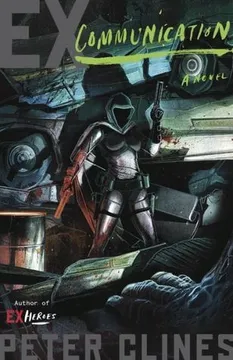


Plot Summary
Prologue
At the Big Wall, Captain John Carter Freedom arrives as Legion directs hundreds of helmeted exes up the barricade. The defenders have nearly spent their ammunition when Cerberus, Stealth, and the flying fire-breather St. George reinforce the line. Legion’s puppets move with new coordination, and one guard is dragged into the horde.
St. George’s flames finally break Legion’s control, leaving the survivors shaken and the city’s defenses depleted. The attack has changed the terms of survival: the dead are no longer merely a mindless crowd, and the Wall that protects Los Angeles can be studied, tested, and nearly breached.
The siege makes the Wall both a physical defense and a measure of how far the survivors have come. Its defenders have routines, weapons, and a chain of command, but Legion’s helmets turn those habits into liabilities. The danger is not simply that the dead are stronger; they are learning to exploit human hesitation. Freedom restores order through presence and disciplined commands, while the loss of a guard exposes the cost of treating a defended community as safe. The prologue also refuses a clean victory: Legion withdraws, but the city must live with the knowledge that he can adapt faster than its institutions.
Max Builds His Safeguards
Years before the siege, occultist Maxwell Hale travels to a remote field in Siberia with a GPS, iron brackets, a large lens, and a carefully carved obsidian lens. He aligns the apparatus with an eclipse and a junction of the Earth’s magnetic forces, focusing its power through a medallion.
Later, in Paris, he asks tattoo artist Weiss to add a Marley, a permanent safeguard intended to keep his spirit bound to Earth after death. Max already has a Sativus medallion capable of letting him inhabit the demon Cairax Murrain. The tattoos and ritual are insurance against the dangers of that bargain, but they are designed for death, not for a world where corpses keep walking.
Max’s precautions make him neither a simple thrill-seeker nor a master who has everything under control. He understands that power creates liabilities, so he tries to engineer an escape route before taking risks. Yet his safeguards depend on a stable distinction between life and death, precisely the distinction the ex-virus will destroy. His preparation therefore carries an irony beyond mere hubris: the more expertly he plans for the familiar dangers of magic, the more vulnerable he becomes to an unprecedented biological catastrophe. The episode establishes that knowledge can be rigorous and still fail when its basic assumptions no longer hold.
A City Learns to Govern
Inside the Big Wall, St. George watches residents build a guard shack, the first new structure in Los Angeles since the outbreak. Scavenger leader Billie Carter warns that fuel costs are making distant supply runs pointless, while Hiram Jarvis urges the community to prepare for a mayoral election that could divide people who once worked together.
Christian Nguyen’s After Death congregation offers a religious account of the catastrophe, and Father Andy sees its members selecting scripture to support what they already hope is true.
St. George resists turning rebuilding into factional warfare. He encourages his friends to take a night off, even as Legion’s presence and the city’s growing population make ordinary civic life harder to postpone.
The Wall changes the survivors’ problem from immediate survival to the harder question of how to share a future. Scarcity remains concrete: fuel, ammunition, and safe routes can determine whether a community can expand. But elections and religious movements introduce conflicts that cannot be solved with stronger barricades. St. George’s instinct is to protect cohesion by resisting labels and inviting rest, though his optimism risks mistaking disagreement for a temporary inconvenience. Billie and Jarvis recognize that organization is no longer optional. Their concern marks a transition from a heroic refuge to a fragile society whose decisions can injure people even without an enemy at the gate.
Secrets Beneath the Mount
St. George visits Cell Nine, the Mount’s sealed basement prison, where a man named Max has been confined for months and depends on George’s occasional visits for company. Elsewhere, Stealth tells George that Zzzap has been speaking as though someone were answering him, a change she has monitored because his uncontrolled energy could devastate the Mount.
George invites Zzzap, engineer Danielle Morris, and Stealth to dinner. There, he introduces Stealth by her private name, Karen, and lets his friends see the woman behind her mask for the first time. Danielle recognizes her from a screening, while Barry recognizes Karen from a television quiz show. The meal briefly makes their guarded lives feel shared rather than merely coordinated.
The chapter’s secrets are not interchangeable mysteries. Max’s confinement reflects the community’s need to hide a threat, while Zzzap’s behavior exposes the cost of being treated as indispensable infrastructure. Stealth’s unmasking makes intimacy another form of risk: she has spent years controlling what others can know, yet George’s invitation asks her to be seen without a tactical purpose. The dinner does not solve anyone’s problem, but it changes the terms of friendship by allowing vulnerability into a group accustomed to functioning under emergency rules. Its warmth is deliberately modest, which makes the surrounding secrecy feel more human than conspiratorial.
Madelyn Loses the Calendar
In diary entries from 2009, Madelyn Sorensen records waking alone in the Southwest with torn clothes, no phone, and no clear memory of how she arrived there. She finds abandoned cars and food, but each morning brings missing days, so she relies on her diary to reconstruct her movements. Months later, a watch shows that far more time has passed than she can remember.
At a gas station, her reflection reveals the truth: her eyes and skin resemble the exes. She believes her scientist father might still fix what has happened, though she cannot find him. Fireworks seen far to the west eventually give her a direction to follow, and she continues toward Los Angeles with her memories breaking into fragments.
Madelyn’s diary turns memory into survival equipment. Where other characters use walls, weapons, or plans to maintain continuity, she writes down what she cannot carry reliably from one day to the next. The entries make her vulnerability intimate without making her passive: she observes patterns, tests explanations, and keeps moving despite not knowing whether her own account will still make sense tomorrow. Her discovery that she is dead does not arrive as a neat revelation with an answer attached. It deepens her isolation, because she can recognize her condition but cannot explain why her mind remains active or whether the people she loves survived.
The Valley Turns Hostile
St. George and Cerberus escort Billie’s scavengers into Sherman Oaks, where a minor traffic obstruction turns into a Legion-coordinated ambush. Exes pour from shops and streets wearing helmets and pieces of body armor, and more arrive behind the truck, cutting off retreat.
The scavengers’ bullets struggle to penetrate the protection, while St. George and Cerberus fight to keep the horde from reaching the vehicle. Jarvis is bitten in the leg as the truck swerves through the crowd.
St. George carries him back to the hospital at high speed, where doctors can slow the bleeding but cannot promise to stop the infection. Jarvis faces the familiar prospect of becoming an ex, and the expedition returns with its supplies and confidence badly diminished.
The ambush makes Legion’s tactical growth materially costly. Armor changes the arithmetic of every shot, while the trap attacks the scavengers’ dependence on a vehicle and a clear road. Jarvis’s injury gives the threat a face: this is not only a setback to the supply chain but a likely death for one of the community’s most useful and trusted members. St. George’s flight to the hospital expresses his responsibility in its most physical form, carrying a friend faster than the city’s infrastructure can. Yet speed cannot undo the bite. The episode separates rescue from control, a distinction that will haunt George’s later choices.
The Girl at the Window
While checking an East Gate report, St. George follows a woman’s calls for help into a barricaded apartment. He expects a trap and initially mistakes the pale, gray-eyed young woman for Legion’s disguise. After she cries and insists that she is Madelyn Sorensen, he realizes his error and apologizes. Captain Freedom recognizes her from the day Project Krypton’s soldiers brought her and her mother to the base.
In the hospital, doctors confirm that Madelyn has no pulse and is unmistakably dead, yet she speaks, thinks, and remembers her father. Freedom tells her that her mother died with her and her father died later during the evacuation. Madelyn grieves, then asks to leave the hospital, where the living keep staring at her.
Madelyn’s arrival forces the heroes to confront the limits of their categories. She looks like an ex, carries the history of a dead girl, and still responds as a person; St. George’s mistake shows how readily fear can turn recognition into violence. Freedom’s role is especially painful because he remembers the failed mission that killed her family. He gives Madelyn the truth she needs, but his first instinct is still protective containment. Her grief comes in the presence of people who can identify her past but cannot restore it, leaving her to negotiate a future that others regard as a medical problem before they regard it as hers.
Jarvis Gives His Body
Zzzap finally explains that he can perceive spirits and has been communicating with Max, whose body St. George destroyed months earlier. With Jarvis dying from his bite, George asks whether the old scavenger will allow his body to be used after death. Jarvis agrees if it might save someone else, then removes his oxygen mask and dies before George can return from another emergency.
The corpse reanimates under restraints. Zzzap burns magical symbols into the streets around the Mount, and Max uses them to return to life inside Jarvis’s body. The symbols were also meant to hold Cairax Murrain at bay. An ex outside the ward mutates into the demon and explodes, revealing that Max’s resurrection has brought his old enemy to Los Angeles.
Jarvis’s consent is an act of generosity, but the decision exposes a moral boundary the community has never needed to define so precisely. His body becomes both a gift and an instrument in a plan whose consequences he cannot fully know. Max’s return makes death seem negotiable, but the price is not confined to the person who comes back. The wards transform the city into a protected ritual space, while the demon’s appearance shows that protection can also announce a target. Zzzap’s long-hidden perceptions and George’s promise to Jarvis converge in a single event, binding friendship, grief, and supernatural danger into one irreversible choice.
Hope Becomes a Hazard
As the demon’s presence keeps residents behind the wards, Cerberus meets Tori, a survivor who has watched her former almost-boyfriend Rich wander among the exes below the freeway. Tori believes he still knows her.
She climbs over the barrier and approaches him; Rich grabs and bites her, and the other exes overwhelm her before Cerberus can reach the street. Meanwhile, Christian Nguyen’s congregation treats Madelyn and Max as proof that the dead may return.
Christian asks the heroes to stop shooting exes, fearing they could damage the souls inside them. Max rejects that hope, explaining that the exes are not their loved ones. The crowd leaves wounded and divided, and the belief that comfort can be turned into a rescue plan becomes another danger.
Tori’s death is not a punishment for caring about Rich. It is the terrible consequence of treating a familiar body as evidence of a familiar mind. Her hope has emotional logic, especially in a society where grief rarely receives ceremony or closure, but it cannot make the dead reciprocate. Christian’s movement extends that same need into public doctrine, asking a whole community to alter its defenses around an unverified promise. Max’s blunt correction may be accurate, yet truth delivered without care can deepen despair. The story holds both facts together: false hope can kill, and hope is often what people reach for when the world offers no gentler way to mourn.
Madelyn Finds Her Edge
Madelyn tests a suspicion at the West Gate by stepping among the exes and moving in front of them. They do not look toward her, even when she touches one. A helmeted puppet under Legion’s control draws a pistol toward the guards, so Madelyn grabs its weapon and disrupts the attack before Jefferson and the other guards shoot the armed exes.
Later, St. George tests the discovery by letting her strike Legion’s chosen body. Legion feels the blows but cannot locate the person delivering them. Madelyn realizes the dead do not register her as a living target, and she can affect objects and bodies without drawing their attention. The discovery gives Los Angeles a possible advantage, though it also turns a teenager into a proposed weapon.
Madelyn’s ability is first useful because it emerges from observation rather than a heroic revelation. She notices what others overlook, then risks testing it where a mistake could have cost the guards their lives. That competence changes how the community sees her, but it does not automatically grant her agency: others quickly begin deciding what her difference should be used for. The scene also reframes invisibility as a failure of attention, not an absence from the world. Madelyn is physically present and capable of intervention; the exes’ inability to prioritize her says more about their narrow perception than about her significance.
The Prisoner Is the Plague
Joshua Garcetti, the healing hero known as Regenerator, escapes Cell Nine and reaches the streets beyond the Big Wall. The heroes reveal that his guilt and mental illness once manifested as a physical injury, and that he created the ex-virus that killed billions.
They had kept him imprisoned while concealing the truth from the population. Max had helped him escape, intending to offer his unusually durable body to Cairax. The demon needs a living host strong enough to survive possession; Joshua’s healing makes him ideal.
Max’s warding symbols cannot stop Cairax once it has a body. The revelation turns the escape into an immediate threat to everyone inside the Wall, and the heroes learn that their hidden punishment has helped create a path for the catastrophe.
The reveal collapses several moral compartments at once. Joshua is both a former hero and the source of mass death; the Mount’s leaders are both protectors and jailers who concealed a truth from the people they serve. Max’s plan exploits the community’s secrecy, while the demon turns Joshua’s healing into a resource for destruction. No single label can resolve these roles. The revelation also exposes the danger of treating containment as a permanent ethical solution: a secret prison may postpone public reckoning, but it cannot erase the prisoner’s capacity to alter events. The immediate crisis is supernatural, yet its conditions were partly made by human decisions about guilt and control.
The Sword Comes Back
The heroes search for a real sword, a symbol strong enough to wound Cairax, but St. George refuses to send Madelyn beyond the wards. She disobeys and bikes to Hector de la Vega’s grandfather’s home in North Hollywood.
After searching the cottage and garage, she finds an old family saber in the rafters and rides back through the exes. While she is gone, Dr. Connolly studies Madelyn’s blood and concludes that adaptive nanites rebuilt her body after death; the girl is a machine-made reconstruction, though no one tells her.
Madelyn returns too late to stop St. George and Max leaving. Stealth then realizes Max could not have spent eighteen months in the Mount without knowing Joshua was imprisoned there, exposing his claim to have been an uninvolved ghost.
Madelyn’s return with the saber is an argument made through action. The adults have framed her as too vulnerable to help, while she decides that responsibility should follow ability, not age or approval. Her retrieval also gives the story’s supernatural solution a tangible object with family history behind it. Connolly’s discovery complicates that agency without invalidating it: Madelyn’s consciousness and decisions remain consequential even if her body is not what she believes. Stealth’s deduction, meanwhile, shifts the conflict from uncertainty to suspicion. The heroes now have reason to doubt not just Max’s judgment but the story that made them trust his guidance.
The Demon Takes Its Due
St. George and Max find Cairax inhabiting Joshua and discover that Max has bound George with blood ties, intending to trade his body for safety. Stealth, Freedom, Zzzap, and Madelyn reach them. Stealth shoots Madelyn, whose reconstructed body survives, breaking Max’s concentration and freeing George. Freedom uses ammunition blessed by Father Andy, while Zzzap and George hold off Cairax among the swarming exes.
The dead turn on the demon, buying the heroes seconds. Madelyn passes the saber to Stealth, who throws it toward Zzzap. As the blade enters his radiant body, he melts it into a stream of steel and drives it through Cairax’s heart. The demon burns in a blast that leaves the street fused and hundreds of exes reduced to ash.
The climax turns each character’s apparent limitation into a specific contribution. Madelyn’s death-like body makes her both a target Max misjudges and the means of interrupting him. Freedom’s religiously blessed ammunition gives ritual force to military equipment, while Zzzap transforms a material weapon through the very energy that makes him dangerous. The exes’ temporary alliance with the living does not redeem Legion or undo their history; it redirects a common threat. The victory is therefore collective without becoming harmonious. Each participant acts from a distinct motive, and the demon falls only when those motives briefly align around a task none could accomplish alone.
One Hour of Mercy
After the blast, St. George finds Stealth, Madelyn, and Zzzap alive, while Freedom lies badly wounded and later requires intensive treatment for a poison-like infection. Max is dying from Stealth’s gunfire.
He claims he had to convince Cairax that he was loyal, but St. George cannot know whether the confession is truth or another performance; Max dies before he can settle the question. Regenerator’s remains are uncertain, so Stealth separates his skull from the body and sends it away.
Legion surrounds the survivors with exes, then gives them one hour to return behind the Wall because Cairax threatened his city too. The reprieve is not forgiveness. It is a narrow bargain between enemies who have briefly faced something worse than each other.
The resolution withholds the comfort of moral accounting. Max’s final explanation may indicate a hidden attempt to help, but the life he chose still involved sacrificing George and risking the Mount. St. George’s refusal to accept an easy absolution preserves the consequences of action without pretending to know every motive. Legion’s hour of passage is similarly limited: self-interest and gratitude coexist, but neither becomes reconciliation. Freedom’s injuries remind the survivors that a victory can leave damage long after the spectacle ends. The city survives, yet the relationships and political disagreements exposed by the crisis remain unresolved, ready to shape what rebuilding means next.
Epilogue
Two nights later, St. George watches the sun rise early over the city and worries about his wounded friends. Zzzap arrives to announce that he has realized he is an archangel and must leave Earth, then rockets skyward. The performance lasts only moments.
He returns, admits he was teasing, and joins St. George on a call to thin a crowd of exes near the East Gate. Their return to routine is small but meaningful: the city still needs them, and friendship can survive even the temptation to turn survival into a grand destiny.
The epilogue releases tension through humor without pretending that the battle erased its costs. Zzzap’s mock ascension echoes the community’s hunger to interpret extraordinary events as proof of divine purpose, but he refuses to become a religious symbol. His return to the Wall is a choice to remain accountable to ordinary people rather than transcend them. St. George’s willingness to answer the guard’s call likewise restores the modest scale of heroism: after facing a demon, they still respond to a manageable threat because neighbors need help. The ending offers continuity, not closure, and makes loyalty feel more durable than spectacle.
Analysis
Ex-Communication asks what survival means after familiar categories have failed. The exes are bodies without the people their families remember; Madelyn is a person whose body has been reconstructed by machines; Max dies and returns through magic; Zzzap inhabits a form that makes him both a power source and a near-isolated consciousness. These cases resist a simple equation between a functioning body and a continuing self. Madelyn’s nanites offer a scientific account of her condition, but they do not resolve the human question of whether her identity is real. Her diaries, attachments, and choices matter because other people respond to them, not because a biological test certifies them.
The novel also treats hope as an action with consequences. Christian’s congregation seeks comfort in the belief that the dead can return, while Tori’s attempt to reach Rich makes that longing physically dangerous. Their need is not foolish; it arises from grief made permanent by the absence of funerals, certainty, and ordinary time. But comfort becomes harmful when it overrides evidence. Max’s bluntness corrects false beliefs without offering an easy replacement, leaving St. George to practice a more difficult form of hope: rebuilding institutions and relationships without promising that loss can be undone.
Leadership is shown as a negotiation between protection and control. Stealth hides information to prevent panic, Freedom carries responsibility as command, and St. George resists turning security into a reason to stop living. Their decisions can be defensible and still produce harm. The concealed prisoner, the warded city, and the attempt to use Jarvis’s body all reveal how emergency measures acquire moral weight once a community begins to imagine a future.
At the climax, no single hero can solve the threat. Madelyn’s difference, Freedom’s military discipline, Stealth’s precision, Zzzap’s energy, and St. George’s endurance become useful only together. Legion’s temporary aid does not erase their conflict, and Max’s final claim does not absolve him. The ending’s modest return to patrol is therefore apt: victory is not a restoration of the old world, but the renewed choice to protect one another within a damaged one.
Review Summary
Ex-Communication is the third installment in Peter Clines' Ex-Heroes series, earning an overall rating of 4.12/5. Most reviewers praise its fresh direction, introducing magic and supernatural elements alongside the established superhero-zombie formula. Highlights include the new character Corpse Girl, the return of Max/Cairax, and resolutions to lingering plot threads. Some critics note hero bloat, uneven pacing, and the supernatural elements feeling slightly mismatched with the series' established tone. The epic finale battle receives particular praise, with most fans eagerly anticipating the next installment.
People Also Read

Characters
St. George, George Bailey
Fire-breathing flying heroOnce known as the Mighty Dragon, St. George is a flying, fire-breathing hero who helps lead Los Angeles through its recovery. He treats strength as an obligation to protect people, not a license to rule them, and he is wary of turning the survivors into factions. His optimism gives exhausted residents permission to imagine ordinary pleasures again, though it can make him slow to recognize how deeply the city is changing. He carries responsibility personally, especially when someone is hurt under his watch. His relationships with Stealth, Zzzap, and the residents of the Mount give his heroism a domestic and civic dimension beyond combat.
Stealth, Karen Quilt
Masked master strategistStealth is the Mount’s masked tactician, an exacting planner who monitors threats, manages security, and often sees consequences before others do. Her control is both a professional strength and a defense against exposure; she trusts preparation more readily than improvisation or public intimacy. Under her mask is Karen Quilt, a woman whose relationship with St. George complicates the distance she maintains from the community. She is not emotionless, but she translates concern into procedures and decisions. Her clashes with George arise partly because she prioritizes risk reduction while he places greater weight on hope, trust, and the moral example their choices set.
Barry Zzzap
Living electrical powerhouseBarry is a former human being whose energy form can supply much of the Mount’s electricity and unleash devastating power. His transformation has left him dependent on an electric containment structure and unable to interact with the material world in ordinary ways. Humor, television, and friendship help him resist the isolation of that existence. He is loyal to St. George and deeply sensitive to the needs of people others may overlook, especially children and the bereaved. His importance to the community is a source of pride and pressure: the more essential his power becomes, the harder it can be for him to admit when he needs help.
Danielle Morris, Cerberus
Armored suit inventorDanielle designed the Cerberus battle armor and became its regular pilot when the world collapsed before anyone else could be trained. Inside the giant blue-and-silver suit, she can move cars, fight hordes, and patrol places where ordinary guards would be overwhelmed. The armor is also a refuge: she trusts its systems and protective shell more than she trusts the exposed world around her. Her competence does not make her invulnerable to grief, and she is often forced to face situations where technical skill cannot save everyone. She cares about the community while resisting the expectation that she must always be its weapon.
John Carter Freedom
Super-soldier captainCaptain Freedom is a towering, enhanced soldier from Project Krypton and a disciplined leader of the Mount’s guards. His uniform, sheriff’s star, and commanding presence help frightened people believe that order still exists. He measures himself by the lives he can protect and carries old failures with a severity he rarely shares. His military instincts are useful at the Wall, but governing civilians requires him to learn that command cannot substitute for trust. His connection to the Sorensen family makes his protective role personal, and his patience with vulnerable people reveals a gentler side beneath the soldierly bearing.
Madelyn Sorensen
Unseen teenage survivorMadelyn is a teenage girl with a sharp eye for patterns, a stubborn streak, and a diary she uses to anchor memories that do not reliably stay with her. She has spent years moving through danger largely alone, learning to improvise with abandoned clothes, supplies, and whatever information she can recover. Her youth makes adults eager to protect or direct her, but she wants to contribute rather than be treated as a problem to manage. She meets uncertainty with practical tests and humor, even when the questions concern her identity. Her relationships with Freedom and St. George offer different kinds of safety, neither of which can replace her independence.
Maxwell Hale
Occultist with contingenciesMax is a practiced sorcerer who approaches magic as a system of conditions, symbols, and carefully prepared safeguards. He is quick-witted and theatrical, but his confidence hides a profound fear of what may follow death. He can be generous with knowledge when it serves a plan, yet secrecy and self-preservation shape how much he tells the people around him. His history with Cairax makes him both an expert source and a dangerous guide. Max’s intellect is real, but so is his capacity to rationalize choices that put others at risk.
Legion, Rodney Cesares
Undead puppet masterLegion is a former soldier whose consciousness can direct and perceive through the exes scattered across Los Angeles. He treats the city’s dead as extensions of himself, using them to gather resources, coordinate attacks, and speak from bodies that once belonged to ordinary people. His taunts and impatience suggest a personality that takes pleasure in unsettling his opponents, but his tactics are more dangerous than his theatrics imply. He understands that fear can disrupt organized defenders. His conflict with St. George is not simply a battle between hero and villain; both are trying to preserve a community, though Legion’s methods make that aim ruthless and coercive.
Joshua Garcetti, Regenerator
Healing former heroRegenerator was a hero known for his ability to heal and survive injuries that would kill others. The people at the Mount remember him as a colleague, but also as a deeply troubled man whose guilt has shaped how he experiences his own body. His endurance makes him an invaluable asset in a crisis and a source of fear when his judgment is compromised. He is a reminder that extraordinary ability does not protect someone from psychological collapse. Others struggle to decide whether he should be treated as a patient, a prisoner, or a threat.
Hiram Jarvis
Beloved civic generalistJarvis is a cheerful, practical survivor who fills whatever role the community needs, from scavenging to hospital shifts and wall patrols. His easy humor helps people talk about difficult work without pretending it is easy. He notices political divisions early and prefers getting useful tasks done before disagreement hardens into faction. Others trust him because his generosity is ordinary and consistent, not performed for status. His concern for the community coexists with a harsh judgment of his own courage, which he tends to underestimate.
Billie Carter
Scavenger crew leaderBillie is a Marine sergeant who organizes the scavengers responsible for bringing supplies into the Mount. She thinks in terms of fuel, distance, security, and whether a mission can keep paying for itself. Her practical focus makes her willing to challenge St. George when optimism threatens logistics. She is tough without being careless, and she understands that community survival depends on work that rarely looks heroic. Her military past gives her confidence in planning, but she remains attentive to the changing needs of the civilian population.
Father Andy Shepard
Reluctant spiritual counselorAndy was a scavenger before the surviving Catholics asked him to guide their services. Although he was never formally ordained, he accepts the responsibility because people need someone to hear their grief and guilt. His approach is gentle and broad-minded, shaped more by care for the congregation than by institutional authority. He questions Christian Nguyen’s use of scripture without dismissing the comfort that religion can offer. Andy’s presence gives the Mount a place to discuss moral questions that cannot be answered by military procedure alone.
Christian Nguyen
After Death organizerChristian is a former councilwoman and an ambitious public figure who leads a congregation searching for meaning in the apocalypse. She gives people a language for grief and offers them the possibility that their loved ones remain reachable. Her confidence makes her persuasive, especially among survivors desperate for evidence that death is not final. She is skilled at reading a crowd and framing a demand as a moral necessity. Her faith may be sincere, but her political instincts remain active within it.
Dr. Connolly
Mount hospital physicianDr. Connolly leads the Mount’s medical work with limited staff and supplies. She is observant, pragmatic, and willing to admit when existing science cannot explain what she sees. Her investigations into Madelyn’s condition begin with familiar diagnostic assumptions, then force her to reconsider what counts as a living body. She balances intellectual curiosity against the responsibility not to expose patients to needless risk. Connolly’s findings matter because she reports what the evidence supports, even when the result is unsettling.
Tori
Grieving Corner residentTori is a survivor who spends time near the freeway, watching the exes for a familiar figure from her former life. She is warm, lonely, and reluctant to admit how much an unfinished relationship still matters to her. The Corner’s constant noise gives her few places to grieve privately, so the dead become the focus of feelings she has not resolved.
Hector de la Vega
Scavenger with family historyHector is a gruff scavenger whose family has lived in California for generations. He knows the history of an heirloom sword kept by his grandfather and can help Madelyn navigate the Valley. His blunt manner hides a practical understanding of how difficult the journey will be, though he is not always tactful about the young woman he is helping.
Richard, called Rich
Tori’s lost almost-loveRich was Tori’s coworker and close friend before the outbreak, a man who used clashing ties as a small act of rebellion against an overbearing boss. He and Tori came close to becoming a couple, but never crossed that line. His memory remains important to her because their unfinished relationship represents a future that vanished before either could decide what it meant.
Plot Devices
The Big Wall and its wards
A refuge with a boundaryThe Big Wall is built from thousands of cars, fencing, and improvised platforms, enclosing a portion of Los Angeles where survivors can establish a community. It is designed to stop mindless exes, but Legion learns to direct the dead and use scavenged armor against its weak points. Max’s magical seals later add a second boundary around the gates and the Mount. These defenses buy time rather than permanent safety. They shape the plot by forcing characters to decide when it is worth leaving protection, and they reveal how a shelter can become a trap when its inhabitants cannot move freely.
Legion’s shared perception
A citywide enemy networkLegion can move his awareness among the exes and make them act with coordination, turning a mindless population into a distributed force. He uses them to observe the city, gather helmets and weapons, set ambushes, and address the heroes through a chosen corpse. The ability explains why ordinary defense tactics repeatedly fail: the heroes are not facing one attacker at one location. Madelyn’s unusual status complicates that network because Legion has difficulty noticing or targeting her, giving her a way to affect his puppets without drawing the same response as a living person.
The Sativus and Marley
A dangerous route backMax’s Sativus medallion lets him take on Cairax Murrain’s form, while his tattoos provide magical safeguards and a Marley intended to bind his spirit to Earth. Those preparations make it possible for him to persist after death and eventually inhabit a newly dead body. They do not account for the ex-virus, which keeps corpses active and disrupts the clean separation between a dead body and a departed spirit. The device gives Max a route back to life, but also creates the conditions under which Cairax can pursue him and endanger everyone who helped him.
Madelyn’s nanite body
A second kind of survivalMadelyn’s body contains adaptive nanites engineered by her father, Emil Sorensen. After her death, the nanites repair the damage and reconstruct her physical form, but they do not restore ordinary biological life. Their work explains her lack of vital signs, her unusual durability, her appetite, and her unreliable memory. Because the exes and Legion prioritize living targets, Madelyn can also move through their attention without being noticed, while still touching and moving objects. The revelation complicates the meaning of personhood in the novel: her body has an artificial explanation, but her feelings and choices remain central to the people around her.
The symbolic sword
Belief becomes a weaponMax insists that Cairax can only be defeated by a real sword whose symbolic meaning matches the heroes’ belief that it can wound the demon. The weapon is not a magic gadget so much as an object whose cultural and spiritual associations help make an impossible injury conceivable. Madelyn retrieves Hector’s family saber, but it can reach Cairax only when Zzzap takes it into his radiant energy form and reshapes it into a molten projectile. The device joins inherited history, religious symbolism, physical teamwork, and belief in a single act of resistance.
Download PDF
Download EPUB
.epub digital book format is ideal for reading ebooks on phones, tablets, and e-readers.








