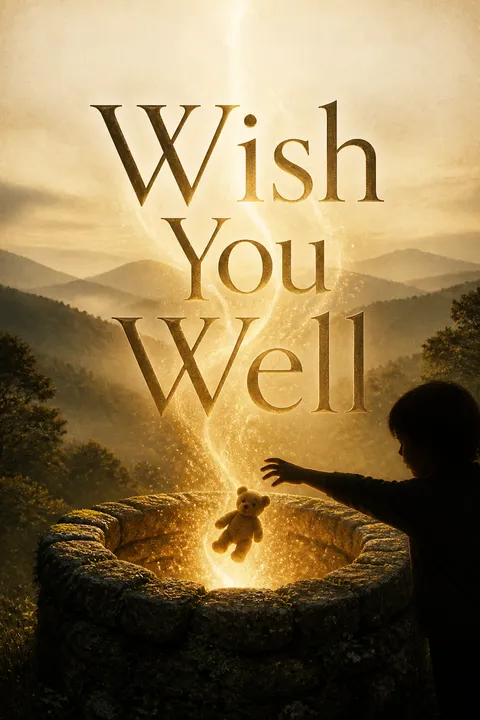


Plot Summary
A Picnic Ends in Ruin
Twelve-year-old Lou Cardinal1 watches her father,6 Jack,6 lose himself in stories while her mother,4 Amanda,4 tries to persuade him to take the family to his Virginia home instead of California, where a studio has offered him screenwriting work. Jack6 wants money and recognition while he is alive; Amanda4 fears the move will cost him the life he loves.
Lou1 defends her father,6 desperate for his approval, as the argument sharpens in the car. Jack6 swerves to avoid a stranded motorist, but the Lincoln overturns. He is thrown from the car and killed. Amanda4 takes the worst of the wreck protecting Lou1 and seven-year-old Oz,2 then falls unconscious. Lou1 sees her father’s6 body and blames her mother4 for the argument that preceded his death.
The crash turns a domestic disagreement into the children’s defining wound. Lou’s quick defense of Jack is more than loyalty: she has made his attention a measure of her own worth, so his death feels like both bereavement and the sudden loss of an audience. Amanda’s effort to shield the children contrasts with Lou’s later accusation that she caused the disaster. The novel’s moral pressure begins here, with grief looking for a culprit because random catastrophe is harder for a child to bear than blame.
Orphans Claim Their Mountain Kin
At Jack’s6 funeral, Lou1 hears the men managing the nearly empty estate discuss placing the children with strangers. She tells them their great-grandmother, Louisa Mae Cardinal,3 lives in Virginia and will take them, although she has never met the woman.
When Oz2 asks whether their mother4 can come too, Lou1 promises that all three of them will go. Their train journey south is funded by Jack6 and Amanda’s4 friends, and a nurse accompanies Amanda,4 whose body is stable but whose mind has not returned.
At Rainwater Ridge, the nurse leaves after Louisa3 refuses her demands and takes charge of Amanda4 herself. Lou1 and Oz2 meet Eugene Randall,8 Louisa’s3 quiet, limping farmhand, and the red-haired Jimmy Skinner,7 called Diamond.7 The children follow Eugene8 up the mountain toward the great-grandmother3 they have claimed as family.
Lou’s promise to keep the family together is both an act of love and an attempt to command what cannot be controlled. She presents certainty to Oz because his fear needs somewhere to rest, even though she has no proof Louisa will accept them. The journey also shifts the story from a world where care is outsourced to strangers toward one where people must personally shoulder it. Louisa’s refusal of the nurse establishes her authority through action, not credentials, and gives the children a home built on obligation and trust.
The Farm Becomes Home
Lou1 finds her father’s6 initials carved into the desk in his childhood room, but the farm offers little time for mourning. Lou1 and Oz2 learn to milk cows, carry water, feed livestock, and attend Big Spruce, where Billy Davis10 mocks them as outsiders.
When Billy10 throws Oz2 down, Lou1 beats him and earns a bruised lip and a wary truce with the other pupils. Diamond7 draws the siblings into the woods and tells them of a wishing well that grants a wish in exchange for a treasured possession.
One night Oz2 leaves his beloved bear there, wishing for Amanda4 to wake and love them again. Lou1 follows, sees his sacrifice, and quietly adds the photograph of herself with their mother.4 She still doubts the well, but can no longer dismiss the hope her brother2 has placed in it.
The farm makes grief physical: care means repetitive labor, and survival depends on learning tasks the children once took for granted. Lou responds to exclusion with force because she understands protection better than negotiation. Oz answers helplessness differently, investing meaning in ritual and objects. Their separate offerings at the well reveal a shared need they cannot yet discuss directly. Lou’s skepticism is not simply rationality; it is armor against another disappointment. Yet she follows Oz and gives up the photograph, showing that her defenses already have a seam.
A Davis Baby Arrives
When Billy Davis10 arrives at night to fetch help for his laboring mother, Louisa3 gathers supplies and sets out despite George Davis’s9 refusal to pay a midwife. Lou1 insists on coming. At the Davis9 house, she finds hungry children and Sally in a dangerous labor while George9 stays in the barn tending a mare.
Lou1 helps Louisa3 prepare clean cloths and hot water, then assists as the baby arrives feet first. Sally gives the newborn Lou’s1 name, and Louisa3 records the birth so the child will be recognized.
On the wagon ride home, Louisa3 explains that George’s9 family has food and livestock but keeps his children hungry. Lou1 begins to see that hardship alone does not make people cruel. She also recognizes Billy10 as a frightened boy shaped by his father,9 not simply the bully she fought at school.
The birth scene expands Lou’s understanding of responsibility beyond the circle of people who are easy to love. Louisa risks George’s anger because a laboring woman and child need help, not because the household has earned her kindness. Her practical competence makes care visible as work: water boiled, cloth sterilized, a dangerous birth managed. Lou’s changed view of Billy follows from witnessing the conditions behind his cruelty. The episode does not excuse his behavior, but it refuses to mistake a child’s learned aggression for his whole character.
The Mine Takes Diamond
As summer brings fishing, swimming, and baseball, Diamond7 becomes Lou1 and Oz’s2 closest friend. He leads them through the hills, shares his odd collection of treasures, and gives Oz2 a place in his rough-edged adventures.
One day he notices unfamiliar men carrying equipment into Louisa’s3 old mine, but investigates before telling anyone. Later, while Eugene8 prepares a small dynamite charge to gather winter coal, Diamond7 rushes inside after Jeb11 follows a squirrel. Eugene8 enters after him. The blast throws Eugene8 hard against the mine wall and kills Diamond.7
Lou1 learns that the company geologists have been secretly drilling for gas nearby, though the truth is not yet public. She grieves for Diamond7 as a person, not the foolish boy others call him, and decides at last to read to Amanda4 herself.
Diamond’s death joins the novel’s intimate losses to its larger economic conflict. He enters the mine not for money or glory, but because Jeb is his responsibility; the rescue impulse that makes him lovable also exposes him to danger created by corporate secrecy. Lou’s insistence that Diamond was a man honors the seriousness of his attachments, even as the adults around her struggle to explain his death. Her decision to read to Amanda marks a shift from demanding proof of recovery to offering care without certainty.
A Mountain Put Up for Sale
Louisa3 tells Lou1 that Diamond’s7 father also died after a mining blast destroyed the hillside he farmed, and that Southern Valley escaped responsibility through legal maneuvers. The company’s surveyors have now found natural gas beneath Louisa’s3 land.
Its representative offers a large sum for the farm, insisting that the area needs industrial jobs and promising prosperity for the towns. Louisa3 refuses to sell the land itself, which she regards as something entrusted to her rather than a possession to strip for profit.
Cotton5 explains that the company could seek mineral rights without owning the farm, but its plans include leveling the mountain and building a pipeline. Townspeople begin to fear that Louisa’s3 refusal will block their last chance at work, while Lou1 sees the same company that profited from the mine’s danger now courting her family’s land.
The conflict is not a simple contest between nature and progress. The town’s need for jobs is real, but the company frames extraction as the only imaginable future, even after coal and lumber have already left communities poorer. Louisa’s refusal rests on a different time scale: she has lived through failed harvests and still trusts the land’s capacity to sustain life. Her distinction between owning land and caring for it challenges the company’s language of property and value. Lou begins to understand that protecting home may also mean resisting the desperation of neighbors.
The Barn Burns at Midnight
During a winter storm, a flash near the barn reveals the building fully ablaze. Lou,1 Eugene,8 and Oz2 rush out; Eugene8 enters through smoke and flames to lead Sue and several animals to safety. They lose the hogs, hay, tools, and most of the barn.
As Louisa3 watches the structure collapse, she suffers a stroke. The family races her down the mountain to a small hospital, where the doctor warns that she may not recover. Lou1 accuses Cotton5 of giving her false hope about Amanda4 and flees on Sue.
When a pack of wild dogs corners Lou1 and Jeb,11 a large panther drives the animals away and shadows them through the woods until they reach home. Oz2 angrily tells Lou1 that he will care for Amanda4 himself. Lou1 later tells her mother4 she loves her, and Amanda4 sheds a tear.
The fire destroys the material center of farm life, while Louisa’s stroke threatens the person who has taught the children how to rebuild after hardship. Lou’s flight and near-fatal encounter dramatize the cost of carrying grief alone: she is physically endangered at the moment she believes there is nobody left to protect her. Oz’s anger breaks the familiar pattern in which Lou leads and he follows. Her confession to Amanda is a small but crucial change, from withholding tenderness to expressing it without demanding a response.
Cotton Faces the Company
With Louisa3 hospitalized and unable to manage her affairs, Southern Valley moves to have her declared incompetent so a representative can sell the property. The company raises its offer to half a million dollars, and the town’s failing coal business makes the money tempting to families facing unemployment.
Cotton5 discovers that Louisa3 also owes back taxes; he sells many of his books to pay the immediate bill and protect the land from foreclosure. Lou1 and Oz2 travel through the cold to the first hearing, where the judge rules that children cannot live independently and sets a trial.
Cotton5 admits he has little courtroom experience and doubts his ability to beat the company’s celebrated lawyer. Lou1 brings him food, apologizes for her earlier anger, and asks him not to abandon them. He promises to stay and take care of the family.
The company’s legal strategy turns vulnerability into leverage: Louisa’s stroke, the children’s age, and unpaid taxes become separate routes toward the same acquisition. Cotton’s sacrifice of his books echoes the family’s repeated exchange of cherished things for immediate survival, but he chooses the cost himself rather than asking Lou and Oz to bear it. Lou’s apology is not a sudden loss of anger; it is recognition that Cotton’s imperfect help is still help. Their mutual promise gives the coming trial emotional stakes beyond property ownership.
The Mine Becomes Evidence
In court, the company’s lawyer presents a psychiatrist who calls Louisa3 mentally unfit, and he uses Oz’s2 wishing-well story to make the boy’s hope look childish. Cotton5 cannot prevent the attack, but later questions reveal that the doctor has little experience assessing stroke victims.
For the next stage, Cotton5 changes course: rather than dispute Louisa’s3 condition, he challenges Southern Valley’s fitness to acquire the land. Eugene8 explains that the blast that killed Diamond7 was far more powerful than his small charge and that he had marked distances along the mine walls.
Dr. Barnes15 confirms that the injuries resemble a natural-gas explosion. Geologist Judd Wheeler13 admits that Southern Valley drilled into a gas field, failed to warn the family, and hid the truth after Diamond7 died. He identifies company vice president Hugh Miller12 as the man who ordered his silence.
Cotton’s strategy reframes the case from a private family’s capacity to a corporation’s conduct. The company tries to make vulnerability look like incompetence, particularly through Oz’s belief, while the factual record points toward a different kind of recklessness. Eugene’s practical knowledge, learned outside school, proves more reliable than the opposing lawyer’s assumptions about education and authority. The testimony also gives Diamond’s death a public cause: what appeared to be an ordinary accident was made deadly by concealed industrial activity. Evidence becomes a form of belated care for the person the company failed to protect.
A Verdict, Then a Return
Before the final hearing, Lou1 and Oz2 return to the wishing well and surrender Amanda’s letters, their most precious family record, asking that Louisa3 be able to defend her home. Cotton5 reaches a new legal argument from the gas lamps and empty coal trucks: Southern Valley should not profit from the danger it created.
At the courthouse, the jury nevertheless rules for the company. Cotton5 then reports that Louisa3 has died. But as Lou1 sits beside her great-grandmother3 in the hospital, Louisa3 briefly opens her eyes, recognizes the mountain, and struggles upright before growing still.
In the courtroom, the doors open again: Amanda,4 who has finally awakened, enters supported by Lou1 and Oz.2 She has heard Cotton5 read to her and can now take responsibility for her children. Lou’s1 family is no longer without an adult guardian.
The ending gives no tidy balance sheet: the jury’s ruling favors Southern Valley, while the family’s immediate crisis changes when Amanda returns. Louisa’s final effort to see the mountain makes her attachment concrete, and her death does not erase the home she has placed in the children’s care. Amanda’s awakening answers the novel’s emotional question without proving the well’s magic. It follows months of attention, reading, touch, and finally Lou’s spoken love. The resolution rests on human presence, while leaving the legal and economic victory unsettled.
Epilogue
Years later, Lou1 writes on the mountain where she has returned to build a home and raise her family. She and Oz2 were adopted by Cotton,5 who married Amanda;4 the couple spent decades on the mountain and died within a week of each other. Oz2 became a New York Yankees pitcher and later taught children, while Eugene8 built a nearby farm and family.
Lou1 became a novelist, as her father6 had, but unlike him she came back. She tells her grandchildren about Louisa,3 Cotton,5 Diamond,7 and the people who held the family together, believing that memory keeps them present. At last, the girl who feared she could never belong calls the mountain home.
The future account resolves the story’s opening wound through a deliberate contrast with Jack. He made the mountain live in books but never returned; Lou leaves, writes, and comes back to build a life there. Her return is not a rejection of the wider world, since Oz’s career carries him elsewhere and Lou herself becomes a writer. Instead, home becomes a choice renewed across generations. The family’s story survives through narration, just as Jack believed, but Lou’s version includes the return he could not make and the relationships that made staying possible.
Analysis
Wish You Well places a family’s grief inside a conflict over who gets to define value. Southern Valley measures the mountain in gas, coal, timber, and potential jobs. Louisa3 measures it through the food it yields, the people it shelters, and the long practice of living with its limits. The book does not pretend that extraction is tempting only to villains: Dickens is collapsing, and people who have lost work want a future. But the company’s promises are built on a pattern of taking resources elsewhere and leaving the damage behind.
Lou’s1 coming of age is inseparable from this argument. In New York, her identity is bound to Jack’s6 attention and the stories he writes. On the farm, she learns that love is less a matter of admiration than repeated acts: carrying water, tending Amanda,4 helping at a birth, feeding a neighbor’s children, and returning to those who grieve. Her early violence is a crude form of protection. Over time she becomes capable of expressing care directly, especially when she tells Amanda4 she loves her without knowing whether the words will be heard.
Oz2 and Lou1 represent different responses to uncertainty, but the novel does not finally make one right and the other foolish. His faith sustains him; her skepticism protects her from false certainty. Each must learn from the other. The wishing well remains ambiguous, while the more demonstrable miracle is communal: people build a barn together, share a harvest, and refuse to let the family stand alone.
The book’s treatment of storytelling completes that ethic. Jack’s6 writing keeps the mountain vivid but cannot substitute for returning to it. Lou1 inherits his craft and chooses a different relationship to home: she leaves, comes back, and tells the next generation what happened. Memory becomes a form of stewardship, preserving the people and labor that economic histories tend to discard.
Review Summary
Wish You Well by David Baldacci receives polarized reviews with a 4.06 average rating. Many readers praise it as a beautiful, emotional departure from Baldacci's typical thrillers, comparing it favorably to "To Kill a Mockingbird." Set in 1940s Appalachian Virginia, the story follows Lou and Oz Cardinal after a tragic accident kills their father and leaves their mother comatose. Critics appreciate the vivid setting and emotional depth, though some find the characters unrealistic, the plot predictable and clichéd, with dialogue that doesn't sound authentic for children. The ending divides readers—some find it heartwarming while others consider it contrived.
People Also Read









Characters
Lou Cardinal
The fierce big sisterLou is a twelve-year-old writer’s daughter whose quick mind, stubbornness, and physical courage often make her seem older than she is. She adores Jack6 and measures herself by his attention, while protecting Oz2 with the same intensity she uses to defend her own pride. Her first instinct is to fight, reject comfort, and treat hope as a trap. Yet she is observant enough to notice what others overlook, and her curiosity gradually widens into a capacity for tenderness. She cares deeply about stories, family history, and the land her father6 wrote about, even when she cannot yet understand what belonging there will ask of her.
Oz Cardinal
The hopeful little brotherSeven-year-old Oz is Lou’s1 younger brother, a gentle, imaginative child who clings to a stuffed bear and struggles with fear and night terrors. He looks for magic in small objects and treats faith as something practical: a way to keep loving people when there is no proof they will return. His openness contrasts with Lou’s1 skepticism, but it is not weakness. Oz notices the feelings adults avoid and offers loyalty without calculation. His growing physical confidence and his bond with Lou1 give him a path toward independence, even as he continues to need the safety of family.
Louisa Mae Cardinal
The mountain's keeperLouisa is Jack’s6 grandmother and Lou1 and Oz’s2 great-grandmother, an elderly farmer whose strength comes from a lifetime of reading weather, soil, animals, and people. She speaks plainly, works without ceremony, and treats self-reliance as a learned skill rather than a virtue to boast about. Her farm is austere, but she makes room for people who need help, including Eugene8 and the children. Louisa is neither sentimental about hardship nor indifferent to suffering. Her loyalty to the mountain reflects a lived relationship with the land, shaped by both its generosity and its cruelty.
Amanda Cardinal
The devoted motherAmanda is Lou1 and Oz’s2 educated, attentive mother and Jack’s6 wife. She is curious about people and the world beyond her home, and she tries to balance Jack’s6 consuming devotion to writing with the children’s need for his presence. Amanda recognizes Lou’s1 fierce independence and understands that offering help can sometimes push her daughter1 away. Her care for Oz2 is especially physical and reassuring, while her relationship with Lou1 is more complicated by Lou’s1 longing for her father’s6 approval. Amanda’s voice and letters reveal a thoughtful woman who hopes to bring her family into closer contact with Louisa3 and the life Jack6 left behind.
Cotton Longfellow
The principled mountain lawyerCotton is a Boston-born lawyer who has made a modest life in Dickens, Virginia, among farmers who often pay him in food or labor. He reads widely, admires Jack’s6 writing, and once hoped to become a writer himself. His self-deprecating manner masks a serious commitment to people who cannot easily defend themselves. Cotton supports Louisa3, reads to Amanda4, and treats Lou1 and Oz2 as more than a legal responsibility. His affection for the family grows through ordinary acts of service, even as his uncertainty about his own abilities leaves him vulnerable to Lou’s1 judgment.
Jack Cardinal
The absent storytellerJack is Lou1 and Oz’s2 father, an acclaimed novelist whose books draw on the Virginia mountains where he grew up. He is imaginative, generous, and capable of making ordinary moments feel vivid, but his attention often slips from family life into the work that consumes him. Financial insecurity pushes him toward a California screenwriting job, even though Amanda4 believes he will be unhappy there. Lou1 identifies with him and craves his approval. His history and writing remain powerful presences in the family, shaping how Lou1 understands both the mountain and the responsibilities of storytelling.
Diamond Skinner
The wild-hearted friendJimmy Skinner, known as Diamond, is a red-haired mountain boy who befriends Lou1 and Oz2 on their first trip to Louisa’s3 farm. He is resourceful, funny, and proud of his freedom, with a gift for turning rough surroundings into adventures. His knowledge comes from experience in the woods, on the river, and among the people who live on the mountain. Diamond’s storytelling blends invention with genuine insight, while his loyalty to Jeb11 and his friends gives his independence a generous core. He is also a child shaped by loss and by a local economy that has harmed his family.
Eugene Randall
The capable farmhandEugene is a young Black farmhand with a damaged leg who lives and works with Louisa3. Quiet and physically powerful, he communicates more easily through skilled work than conversation. Louisa3 took him in after his family losses, and he repays her trust by caring for the animals, maintaining the farm, and helping the children learn. His knowledge of carpentry, farming, and the mine comes from practical experience, not formal schooling. Eugene’s dignity matters to him, particularly when others use a demeaning name instead of the one he chooses.
George Davis
The abusive neighborGeorge Davis is a neighboring farmer with a large property, hired help, and a deep capacity for intimidation. He treats his children harshly and resents anyone who challenges his authority. His hostility toward Louisa3 and Eugene8 mixes personal prejudice with a desire to control the land and resources around him. George is calculating as well as violent, able to present himself as respectable when it serves him. His family’s poverty amid visible abundance reveals that hardship on the mountain does not explain every injustice; some suffering is imposed by those with power.
Billy Davis
A boy under pressureBilly is George Davis’s9 son and one of Lou’s1 first antagonists at Big Spruce school. He mocks Lou1 and Oz2, then becomes the target of Lou’s1 fighting spirit. Billy’s behavior reflects both the local suspicion of outsiders and the fear he lives with at home. He is expected to work the farm and endure his father’s9 violence, leaving little room to act like a child. Lou’s1 changing view of him grows from seeing the difference between the boy’s cruelty and the conditions that shape it.
Jeb
Diamond's loyal houndJeb is Diamond’s7 scruffy dog and constant companion, a lively, affectionate hound who follows his master into the woods and through the children’s adventures. He is brave enough to chase animals much larger than himself and devoted enough to keep close to the people he trusts. Jeb gives Diamond7 a source of companionship and responsibility, and his presence helps draw Lou1 and Oz2 into Diamond’s7 world.
Hugh Miller
The company's polished enforcerHugh Miller is a Southern Valley Coal and Gas vice president who presents the company’s plans as a public good. He is practiced at turning economic desperation into leverage, offering money while minimizing the cost of extraction. His confidence depends on the assumption that people with less power will eventually accept the company’s terms. Miller’s polished arguments contrast with the physical damage mining and industrial expansion leave behind.
Judd Wheeler
The company's geologistJudd Wheeler leads Southern Valley’s geological work on Louisa’s3 land. His technical knowledge helps locate the natural gas the company wants, but his willingness to work secretly places him inside the conflict between scientific expertise and corporate responsibility. Wheeler is not the chief decision-maker, yet his choices and testimony matter because he understands what the drilling uncovered and what the company failed to disclose.
Estelle McCoy
Big Spruce's longtime teacherEstelle McCoy teaches every grade at Big Spruce in a single classroom. She is warm and proud of her pupils, though she is sometimes unprepared for Lou’s1 bluntness and the school’s rough social order. Her long service reflects a community where education competes with farm labor.
Dr. Travis Barnes
The local country doctorTravis Barnes is the doctor who treats Amanda4 and later cares for Louisa3. He is practical, kindly, and honest about the limits of medicine. His familiarity with the mountain community makes him a trusted source of care and, later, an important witness.
Plot Devices
The wishing well
A test of beliefDiamond’s story gives Oz a ritual for confronting Amanda’s unconsciousness: a wish will be granted if the wisher gives up what matters most. Oz offers his bear, and Lou later places a photograph and then Amanda’s letters at the well. The device keeps uncertainty alive without confirming that supernatural forces intervene. Its deeper function is dramatic and psychological: it makes the children’s changing understanding of hope visible through what they are willing to surrender, and it gives their private love a physical form.
Amanda's letters
A bridge across absenceAmanda’s4 letters to Louisa3 preserve the family history the children have not been told and reveal her private hopes for the children’s connection to the mountain. Lou1 initially refuses to read them because she believes looking backward will only deepen her losses. Later, the letters connect Lou1 to her mother’s4 voice and to Jack’s6 childhood, and become the offering she places at the well. They also reinforce the novel’s claim that written stories can keep relationships present across distance, silence, and time.
The old coal mine
A hidden dangerThe mine is part of the farm’s practical life, supplying coal for winter, but it also becomes the secret worksite where Southern Valley explores for natural gas. The company’s drilling creates an explosive danger without warning the people who use the mine. The resulting blast kills Diamond7 and turns what first appears to be a tragic accident into evidence of corporate misconduct. The mine links the family’s daily dependence on local resources to the larger forces trying to extract wealth from the mountain.
The farm and its harvest
A measure of survivalThe farm’s chores give the children a concrete education in dependence: crops need timing, animals need care, and food must be stored against winter. The harvest also allows Louisa3 to feed the Davis9 children and to trade with the lumber camp. Farming therefore functions as both plot engine and ethical contrast to extractive industry. Its rewards are uncertain and labor-intensive, but the land can recover; coal, timber, and gas are removed and sent elsewhere. The farm makes the competing definitions of prosperity visible in daily life.
The mountain stories
Memory made inheritanceJack’s6 novels, Lou’s1 notebook, Cotton’s5 reading, and Diamond’s7 improvised tales place storytelling at the center of the family’s way of understanding the world. Stories help Lou1 approach her father’s6 past, give Diamond7 a form of self-expression, and offer Amanda4 companionship during her silence. They also become a means of passing family knowledge to later generations. The device is not simply literary decoration: in a world where formal records, schooling, and legal power are unevenly distributed, telling and preserving stories helps people claim a place in the community.
About the Author
Other books by David Baldacci








Download PDF
Download EPUB
.epub digital book format is ideal for reading ebooks on phones, tablets, and e-readers.








