

Plot Summary
The Eagle in the Dust
When King Varaz brings his inexperienced son Pacorus to face a Roman legion near Zeugma, Pacorus longs to prove that years of training have made him a warrior. His father waits until horse archers and cataphracts have weakened the disciplined Roman square, then entrusts the decisive charge to Pacorus.
The young prince breaks into the Roman ranks, fights his way to the standard, and kills its bearer when the man knocks him from his horse. Raising the silver eagle ends the legion’s resistance. Varaz celebrates his son’s courage, but a captured Roman tries to spear Pacorus and is killed by Vistaspa, the king’s cold, watchful bodyguard. The warning is plain: one victory has won Pacorus fame, not safety.
Pacorus’s first victory gives him exactly what he wants, but not quite what he understands. Taking the eagle transforms a private test of courage into a public symbol that Rome will remember, while the attempted assassination exposes the gap between battlefield triumph and political security. His father’s patience and Vistaspa’s vigilance contrast with Pacorus’s appetite for visible glory. The episode begins his education in power: an action can be brave and consequential at once, and the consequences do not end when the fighting stops.
Zeugma’s Gilded Trap
At Zeugma, King Darius welcomes Varaz and Pacorus with a lavish feast, but refuses to strengthen the city against another Roman attack. Varaz suspects that Darius would rather become Rome’s client than defend his place in the Parthian Empire.
That night, black-clad attackers strike the royal camp. Varaz’s disciplined bodyguard beats them back, though an interrogation yields little. Back in Hatra, Pacorus celebrates his triumph so extravagantly that Vistaspa drags him from bed for punishing military drills. The shame tempers his pride.
When King Sinatruces summons Varaz and Pacorus to Ctesiphon, Pacorus meets Dobbai, a feared seer who links his captured eagle to future conflict. Sinatruces refuses troops but gives Hatra gold, while news arrives that Roman raiders have burned villages in Sirhi.
The comforts of Darius’s palace are not merely decadent scenery. They embody the bargain that Varaz fears: security purchased by surrendering political agency. Pacorus initially enjoys the feast without grasping its stakes, just as his drunken celebration at home shows how easily public acclaim can become self-indulgence. Vistaspa’s brutal training restores the body as a check on vanity. Dobbai’s prophecy, meanwhile, unsettles the confident military logic of the court. The Roman raid makes the danger immediate, turning suspicion and omen into pressure for action.
Bozan’s Last Lesson
Varaz orders two retaliatory raids, one against Syria and another into Cappadocia under Bozan, Pacorus’s longtime mentor. Pacorus joins Bozan’s force, which ambushes Roman supply troops and burns an exposed garrison.
When Roman cavalry attacks, Pacorus nearly loses a sword fight with a centurion and survives only because archers intervene. Bozan warns him that war is no heroic game. Later, after the cavalry wins another encounter, a fallen Roman stabs Bozan from behind.
Grief and anger push Pacorus to lead an assault on undefended Caesarea, the former home of their guide, Byrd. Pacorus cannot stop his men from killing civilians and burning the town. On the journey home, Roman forces ambush the exhausted raiders and take Pacorus and his surviving companions prisoner.
Bozan’s death removes the mentor who taught Pacorus that competence requires restraint as well as courage. Pacorus responds not by absorbing the lesson but by turning grief into retaliation, and Caesarea shows the human cost of confusing vengeance with justice. His horror at the massacre comes too late to undo it. The ambush that follows also reverses his earlier sense of invulnerability. He is now a defeated commander whose choices have endangered both his men and the people he meant to avenge.
Chains Toward Vesuvius
Roman captors chain Pacorus and his soldiers to other prisoners and drive them toward the coast. The centurion Cookus starves, beats, and humiliates the column; many civilians die on the road or aboard the ship to Italy.
When Pacorus resists Cookus on deck, the centurion has him flogged nearly to death. The captives are then marched toward an estate near Nola, where Cookus torments Pacorus again. During the night, armed fugitives attack the Roman camp. Pacorus seizes a fallen soldier’s sword, kills Cookus, and finds himself facing the uprising’s leader, Spartacus.
After recovering, Pacorus learns that the gladiators have freed him and his men. Spartacus offers them a choice: join his march toward the Alps or remain in Roman captivity. Pacorus chooses to fight beside him.
The journey to Italy strips Pacorus of rank, possessions, and bodily autonomy, making slavery a lived condition rather than a political abstraction. His small act of resistance aboard ship brings punishment, yet it also prepares him to act decisively when the camp is attacked. Killing Cookus gives him a personal revenge, but Spartacus offers a broader purpose: a collective attempt to escape bondage. Pacorus joins not because he has become a champion of every enslaved person, but because freedom and the chance to return home now depend on solidarity.
The Army in the Crater
Spartacus gathers fugitives on Mount Vesuvius and organizes them with the Roman methods he learned as a soldier. He frees Pacorus’s servant Gafarn, insisting that the man must choose his own future. Pacorus’s Parthians stay together and join Spartacus, who appoints their prince to organize cavalry.
After the rebels capture Nola by disguising Pacorus’s riders as Roman troops, they find horses and supplies, and the former Parthian slave Godarz joins them. Pacorus trains recruits to ride and shoot, using wild horses and the bow skills of his people.
Gallia, a Gallic princess sold into slavery by her father, insists on joining the cavalry with Diana. Her skill and resolve impress Pacorus, whose admiration turns into love as the two train and fight side by side.
The camp on Vesuvius is a fragile society built by people whom Rome treats as property. Spartacus’s decision to free Gafarn gives that principle practical force, while Pacorus’s cavalry gives the rebellion a distinctive military advantage. Yet Pacorus’s command also reproduces hierarchies: he remains a prince leading former slaves, and his attachment to Gallia is partly shaped by his instinct to protect and direct her. Gallia resists that role from the beginning. Their relationship becomes most compelling when she earns authority through action rather than accepting it as a gift.
Rome’s First Broken Army
When a Roman army approaches Vesuvius, Spartacus moves his people south and sends Pacorus to delay the advance. Pacorus’s horse archers ambush the Romans, retreat into wooded ground, and destroy the pursuing cavalry with close-range arrows. Spartacus then chooses a narrow plateau near Forum Annii for a larger battle.
His Thracians break the Roman centre, giving Pacorus’s cavalry a gap through which to attack the rear. Pacorus helps kill the commander, a Roman consul, while Castus’s Germans drive the remaining troops from the field. Gallia and other women disobey Pacorus’s order to stay behind and fight in the pursuit. Spartacus wins, but the victory brings looting, dead Romans, and a warning that Rome will send stronger forces.
The victory demonstrates that Spartacus’s force is no longer an escape party. Pacorus’s cavalry works in coordination with infantry trained to exploit a breach, making discipline rather than sheer numbers the army’s decisive advantage. Yet success encourages excess: the pursuit blurs the line between military necessity and revenge, while Gallia’s choice to fight challenges Pacorus’s claim to command her safety. Spartacus understands the deeper consequence. Rome can absorb defeat more easily than the rebels can, so each victory raises the stakes rather than ending the conflict.
The Cities Pay
As Spartacus’s army moves south, Crixus and his Gauls capture Forum Annii and kill its inhabitants. Pacorus confronts Crixus’s lieutenant Oenomaus, defeats him, and frees a group of Roman civilians, including Quintus Hortonius and his family. At Metapontum, the Gauls use a canal to enter the city and slaughter its population after the defenders kill a messenger.
Spartacus is disturbed by the massacre, but Crixus’s following is too large to dismiss. The rebels then encircle Thurii, a wealthy port protected by formidable walls. Spartacus avoids a costly assault and captures a nearby silver mine instead. By holding the mine, he gains leverage over the city and a source of wealth with which to equip the growing army.
Pacorus’s rescue at Forum Annii is an early refusal to let military success erase civilian humanity, but his influence is limited. Crixus’s killings make visible the danger of building a coalition around hatred alone: the same violence that binds fighters together can destroy any claim to a just cause. Spartacus’s restraint at Thurii is therefore more than tactical. By choosing leverage over another massacre, he tries to distinguish an organized army from a mob, though the growing power of Crixus continually tests that distinction.
Silver for a Truce
Spartacus sends Pacorus to negotiate with Thurii’s leaders, who agree to sell supplies and metals rather than risk an assault. The bargain lets the rebels forge weapons and prepare their force through winter.
Pacorus’s bond with Gallia deepens, and she proves her place in the cavalry by matching his archery in a public contest. Later, the Roman commander Titus Sextus uses a shipment of mail shirts as cover for an ambush. Gallia arrives in time to save Pacorus, who survives the fighting and kills Sextus.
In retaliation, Pacorus impales the eunuch who helped arrange the trap and secretly enters Thurii to kill the merchant Marcus Aristius, who financed it. When the army leaves, Crixus refuses to go north with Spartacus and takes his Gauls away.
The truce exposes a central contradiction: Spartacus’s army uses commerce and Roman resources to prepare for war, while the city’s merchants treat survival as another transaction. The ambush turns that arrangement into betrayal, and Pacorus answers with a punishment that shows how far his own restraint has eroded. Gallia’s rescue of him reverses their usual dynamic; she is not merely the beloved he protects but a combatant whose judgment saves his life. Crixus’s departure then reveals that shared enemies cannot permanently reconcile incompatible visions of freedom.
Crixus Leaves Rome’s Wake
Spartacus leads the remaining army north, while Crixus keeps his Gauls in Italy rather than crossing the Alps. Roman forces destroy Crixus’s followers, and Crixus himself does not return. Spartacus mourns the loss but cannot risk dividing the army further.
Two Roman forces then converge on Spartacus. He splits his own strength, sending Pacorus and Castus against the southern army while he faces the northern one. At the River Pisaurus, Pacorus uses the terrain to conceal most of his cavalry, then sends horse archers behind the Romans as Castus’s Germans hold their front.
The Romans are crushed; Spartacus wins against the other force as well. Pacorus captures his old adversary Lucius Furius but spares him to carry a warning to Rome. After the victories, Pacorus and Gallia agree to marry.
Crixus’s fate demonstrates the strategic cost of choosing immediate dominion over escape. Spartacus’s victories are impressive, but the two-front plan depends on splitting an already fragile force and asks Pacorus to command beyond the emotional security of his mentor’s presence. His decision to spare Furius reflects a continuing belief that honorable conduct can shape an enemy’s response. Yet the Roman’s survival also preserves a personal antagonist and a channel through which Rome can learn the scale of the rebellion.
A Princess in Chains
As the army moves through northern Italy, Gallic warriors kidnap Gallia from her camp. Her father, King Ambiorix, has taken her hostage and demands twelve chests of Roman gold, hoping to use the money to unite Gallic tribes against Rome.
Pacorus accepts the exchange but hides archers among the cart drivers. When Ambiorix’s men inspect the payment, Pacorus shoots Gallia’s guard and Iccius, the king’s son, then cuts Gallia free. His archers rout the other Gauls, and the pair escape with the gold still in enemy hands.
Later, Spartacus leads an attack on Ambiorix’s stronghold. Pacorus and Gafarn kill the king during the fighting, and Spartacus burns the royal settlement. Gallia rejects grief for a father who sold her, calling her companions her true family.
Ambiorix turns kinship into currency, repeating the logic of slavery within a family bond. Gallia’s capture threatens Pacorus’s deepest attachment, but the rescue succeeds because he combines negotiation with suspicion rather than trusting the transaction. The killing of Iccius and Ambiorix complicates the rescue: liberation is achieved through violence that cannot restore the family Gallia lost. Her refusal to mourn her father is not emotional numbness so much as a deliberate redefinition of belonging. The army has become the family she chooses.
Mutina’s Costly Victory
Near Mutina, a Roman governor joins his legions with thousands of Gallic warriors to block Spartacus’s route north. The Gauls defend their wings behind rows of sharpened stakes, limiting the usefulness of Pacorus’s cavalry.
When they advance against Castus’s Germans, Pacorus rides around their flank and attacks from behind. His horse archers break the Gallic line, while Castus’s infantry then strikes its exposed side. The Roman centre is trapped between the rebels’ formations and driven toward a deep ditch, where fleeing soldiers pile up and die.
Pacorus’s cavalry helps complete the rout, but the victory costs the army thousands of lives. Rhesus dies from a spear wound after Diana comforts him. Spartacus’s army has cleared its northern path, yet its growing casualties make the promised escape more urgent.
The battle confirms the power of combined arms: Pacorus can dismantle an exposed flank, but the infantry must hold long enough for the maneuver to matter. The stakes prevent a simple cavalry victory, and the ditch turns retreat into a second killing ground. Rhesus’s death, softened by Diana’s compassion, restores individual grief to a battle otherwise counted in formations and totals. The victory opens a route, but every successful battle consumes people the army cannot replace. Freedom remains possible only if the rebels can stop winning at such a cost.
The Army Refuses Alps
After the Mutina victory, Spartacus reaches the River Pagus and announces that he will release the army to cross the Alps and return to its homelands. On parade day, however, the troops refuse to disperse.
They acclaim Spartacus instead, choosing the shared identity and victories of the army over an uncertain journey home. Pacorus remains with him, though he wants to return to Hatra with Gallia. The rebels march south again, raid towns and estates, and Pacorus burns Arretium after its weak defenses let his riders enter.
He stops his men from killing every civilian but cannot prevent deaths in the panic. Rome sends Marcus Licinius Crassus a letter inviting Pacorus to meet. Crassus offers safe passage to Parthia if Pacorus abandons Spartacus; Pacorus refuses and returns to his friends.
The refusal to cross the Alps is a collective choice, but not necessarily a free one. Spartacus has given people who were once treated as disposable a community, a role, and proof that Rome can be beaten. Leaving that world means surrendering a form of belonging as well as an armed struggle. Pacorus’s refusal of Crassus’s offer follows the same emotional logic: loyalty now matters more to him than the safety of his birthright. The raid on Arretium also shows that his ideals remain unstable when his followers are swept into violence.
Rhegium Becomes a Prison
Spartacus leads the army south to Rhegium, planning to hire Cilician ships to carry everyone to Sicily. Their representative, Sherash Patelli, promises transport but is already contracted to move Roman troops.
While Spartacus waits, Crassus builds a long fortified barrier across the peninsula, trapping the rebels between his army and the sea. Pacorus warns that the pirates cannot be trusted, but Spartacus has few alternatives. He sends Pacorus and most of the cavalry north to Brundisium, where a fresh Roman army is landing, to disrupt its arrival and then strike Crassus from behind.
Before the raid, Claudia, pregnant and troubled by a dream of the army’s destruction, asks Pacorus to take her unborn child to Parthia if she dies. He gives his word, then leaves with Gallia and the horsemen.
Rhegium is where the rebellion’s mobility finally meets infrastructure designed to contain it. Crassus does not need to defeat Spartacus immediately; he can narrow the rebels’ choices until hunger and geography do much of the work. The pirate contract converts the hope of escape into another failed dependency on profit-driven outsiders. Claudia’s request gives Pacorus a responsibility that is no longer merely military. His promise to carry her child home will outlast the army that currently gives his life structure.
Fire on Brundisium Beach
Pacorus’s riders reach Brundisium unseen and charge a beach where Roman troops are sleeping beside their ships. The horse archers kill hundreds, while flaming arrows set vessels alight. The attack cannot destroy the whole incoming force, but it delays the Roman advance and gives the cavalry a victory of its own.
On the return journey, Godarz and Gafarn arrive with Diana, Rubi, and the rescued child. They report that Patelli has fled with his ships and Spartacus has learned of the betrayal. Crassus’s fortifications still block the way out.
Pacorus rides back to Rhegium through worsening weather and meets Spartacus shortly before the planned breakout. By then, Roman forces are closing in, supplies are low, and the army’s last chance depends on a coordinated attack from both sides.
The raid on Brundisium is a tactical success but not a strategic escape. Pacorus can disrupt Rome’s timetable and destroy ships, yet he cannot undo Crassus’s barrier or replace the ships Patelli has stolen. The return of the child makes the stakes intimate: the rebellion’s future has narrowed to a vulnerable infant and a promise. Pacorus comes back not as a victorious rescuer but as one part of a desperate plan, aware that courage and mobility cannot solve every problem once an enemy has closed the exits.
Spartacus Falls at the Silarus
In the storm that follows Claudia’s death in childbirth, Spartacus walks toward the Roman lines intending to die fighting. Pacorus and Domitus catch up and help him attack a small Roman party, then the wider army joins the battle.
Spartacus’s men fight through repeated assaults, but Crassus’s forces are numerous and disciplined. Spartacus is killed in the melee while trying to reach the Roman commander. Pacorus covers the retreat and later joins Castus’s Germans, who are threatened by three Roman legions crossing the swollen river.
Nergal returns with the cavalry at the critical moment and attacks the Romans’ exposed flank, scattering them. The victory cannot save Spartacus or restore the rebel army, but it prevents the surviving fighters from being trapped and slaughtered beside the Silarus.
Spartacus’s final charge grows directly out of grief: after Claudia dies, he no longer treats survival as a duty. Pacorus’s attempt to protect him cannot override the general’s choice, and the death of the leader transforms the battle from a campaign into a question of what remains for the survivors. Nergal’s return proves that Pacorus’s earlier decision to send cavalry through the mountains mattered, but the tactical rescue cannot reverse the emotional and political defeat. Victory now means getting people out alive, not winning Rome.
The Last Road East
After Spartacus and Claudia are cremated together, the survivors divide. The Germans, led by the wounded Cannicus, head toward their forests; Afranius takes Spaniards south to continue fighting; Pacorus gathers the Parthians and their allies to reach safety.
Godarz reveals that he secretly buried a chest of silver in the mountains, saving it as insurance when Spartacus’s victories made him fear the army would never leave Italy. With the money, the group hires ships near Thurii and carries the child across the sea to Syria.
Pacorus and his companions travel east through dangerous territory, where an approaching cavalry force seems ready to stop them. The riders prove to be King Varaz’s bodyguard. Pacorus returns to Hatra with Gallia, Gafarn, Diana, the child, and the survivors of Spartacus’s cause.
Godarz’s hidden reserve is an act of practical foresight that complements Spartacus’s charisma and Pacorus’s battlefield skill. He prepares for the possibility that hope will fail without abandoning the people who still believe in it. The army’s dispersal is not a single defeat but several divergent answers to loss: continue the war, return to a homeland, or seek refuge in a new one. Pacorus’s return closes the journey he began as a prince seeking glory, but he comes back carrying a child and a clearer understanding of what freedom costs.
Epilogue
In Rome, Lucius Furius brings Crassus a letter from Pacorus, now king of Dura Europus. Pacorus reports that Spartacus’s son and the survivors are safe in Parthia, then warns Rome not to cross the Euphrates.
Furius demands retaliation, but Crassus recognizes that an eastern campaign would be far more dangerous than crushing a slave rebellion in Italy. He orders patience and begins planning for war against Parthia, with Pacorus as a prize he intends to bring back in chains.
The epilogue converts Pacorus’s escape into a new political threat. Crassus’s restraint is not respect for Pacorus so much as a calculation about scale: the same man who could be cornered in Italy now stands behind an empire and its cavalry. Furius reads the letter as an insult that demands immediate vengeance; Crassus reads it as a strategic problem requiring preparation. The contrast leaves the story’s ending deliberately unsettled. Pacorus has reached home, but his new title and public warning make peace less secure than it first appears.
Analysis
The novel’s central conflict is not simply between Parthia and Rome, or even between enslaved people and their masters. It is between freedom as an individual destination and freedom as a shared political condition. Pacorus begins with a prince’s assumption that honor, courage, and a secure homeland belong together. Captivity disrupts that assumption. Beside Spartacus, he learns that people without inherited status can create authority through competence, risk, and mutual commitment. Yet he never entirely escapes his aristocratic habits: he still thinks in terms of command, glory, and the prestige of his own name.
Spartacus’s army makes freedom tangible through drills, shared danger, and the refusal to treat former slaves as disposable. Its military success, however, generates a paradox. Victory gives the rebels confidence and a common identity, but it also makes them reluctant to leave Italy while escape remains possible. The army becomes both their means of liberation and the community they fear losing. Spartacus’s personal charisma binds people together, but the same attachment encourages him to keep fighting after strategy has turned against him.
Pacorus’s romance with Gallia tests whether love means protection or recognition. His instinct is to keep her out of danger; her insistence on fighting forces him to acknowledge her agency. Their relationship develops not because he rescues her once, but because she repeatedly acts as his equal, including when his judgment fails. Gafarn’s freedom and choice to remain with Pacorus similarly challenge the assumption that status defines loyalty. These relationships make the novel’s political question intimate: can a person claim to value freedom while retaining power over someone else?
The ending offers no simple victory. Pacorus reaches Hatra, carries Spartacus’s child to safety, and receives a kingdom, but the epilogue shows that his return creates a new confrontation with Rome. Survival is not the same as security. The book closes by turning the story of one failed rebellion into a warning that political power remembers humiliation, and that freedom won in one place can expose its survivors to danger elsewhere.
Review Summary
The Parthian receives mixed reviews, with an average rating of 4.26 out of 5. Readers praise its unique perspective on Roman history, engaging storyline, and well-researched details. Many appreciate the focus on Parthia and Spartacus. However, some criticize the writing quality, noting grammatical errors and pacing issues. The book is commended for its action sequences and character development, though a few find it lacks depth. Despite its flaws, many readers find it an enjoyable and refreshing take on historical fiction.
Characters
Pacorus
The Parthian horse lordA young prince of Hatra, Pacorus begins as a trained but untested warrior eager for battlefield glory. His confidence comes from skill, lineage, and the expectation that he will one day inherit a kingdom. Captivity and service beside Spartacus force him to confront people whose lives are as vulnerable as his own, while his attachment to Gallia challenges his instinct to protect by giving orders. He remains proud of Parthia and its traditions, but gradually becomes more attentive to loyalty, restraint, and the human cost of command. His close relationships with Gafarn, Nergal, and Spartacus repeatedly complicate his sense of duty.
Gallia
The Gallic warrior princessA princess of the Senones, Gallia is sold into slavery after refusing her father’s arranged marriage. Beautiful and self-possessed, she is also an expert rider and archer who rejects the idea that others should decide whether she fights. Her bond with Pacorus grows through shared danger, but she resists being treated as someone to protect rather than a partner with her own judgment. Gallia’s loyalty is directed toward the people who earn it, not toward ancestry or titles. Her friendship with Claudia and Diana, and her care for vulnerable companions, reveal a tenderness that sits beside her ferocity.
Spartacus
The rebel generalA Thracian former auxiliary and celebrated gladiator, Spartacus combines practical military knowledge with a commanding personal presence. He studies Roman organization closely and uses it to turn scattered fugitives into a disciplined army. His followers trust him because he shares danger and offers them a collective purpose, though his ambition and attachment to the army can make him reluctant to recognize when an escape is still possible. He is both a leader who creates belonging and a fighter shaped by the brutality of the arena. His marriage to Claudia gives him a private life that contrasts with the relentless demands of command.
Claudia
Spartacus’s clear-eyed partnerClaudia is Spartacus’s wife and one of the few people able to challenge his judgment without diminishing her affection for him. She reads the emotional needs of the army and understands how longing for purpose can keep people in danger. Her visions make her a source of unease as well as counsel, though she does not treat foresight as a power she controls. Claudia befriends Gallia and Diana, supports Pacorus, and sees beyond his royal pride to the responsibility he carries. Her combination of tenderness, candor, and spiritual conviction makes her an important counterweight to the army’s male commanders.
Gafarn
Pacorus’s loyal companionRaised alongside Pacorus after being taken into the royal household as a child, Gafarn is technically a servant but functions as the prince’s closest friend. He is quick-witted, a gifted archer, and willing to puncture Pacorus’s vanity with teasing observations. When Spartacus declares him free, Gafarn does not mistake freedom for an easy life; he chooses to remain beside Pacorus because their bond matters more than a change in status. His humor keeps the group human during grim campaigns, while his reliability and skill repeatedly prove essential.
Godarz
The practical quartermasterA Parthian veteran enslaved in Italy, Godarz brings experience in soldiering, horses, and the movement of supplies. He has survived by understanding the practical structures that idealists can overlook: food, routes, mounts, equipment, and money. Once reunited with Pacorus, he becomes a trusted organizer and adviser, often pushing back against romantic plans with the limits imposed by terrain and logistics. His concern for horses and his quiet attention to the army’s needs make him a stabilizing presence. He sees loyalty not as blind obedience but as work that keeps others alive.
Nergal
Pacorus’s steadfast commanderNergal is a loyal Parthian officer who believes the gods have marked Pacorus for greatness. His faith gives him confidence in dangerous situations, and his skill as a horseman helps him grow into a capable cavalry commander. He is warm, optimistic, and deeply attached to his men, while his relationship with Praxima gives him a personal stake beyond military success. Nergal’s trust in Pacorus is not merely reverence; he repeatedly accepts responsibility and carries out difficult assignments without losing his characteristic spirit.
Bozan
Pacorus’s stern mentorBozan has served King Varaz for decades and trains Pacorus in fighting, horsemanship, and command. His blunt manner masks deep affection for the prince, whom he treats as a pupil rather than an heir entitled to praise. Bozan insists that preparation, patience, and attention to one’s own equipment keep a soldier alive. His practical lessons become a moral reference point for Pacorus, especially when grief and ambition tempt him into reckless action.
King Varaz
The king of HatraPacorus’s father rules a wealthy border kingdom whose security depends on trade, intelligence, and a strong cavalry. Varaz is a seasoned commander who understands that military strength exists to protect the people and the routes that sustain them. He expects his son to learn leadership through responsibility, not birth alone. His political caution contrasts with Pacorus’s appetite for glory, but his affection for his son remains evident beneath the demands of kingship.
Vistaspa
The king’s watchful shieldA displaced Armenian prince who became commander of Varaz’s bodyguard, Vistaspa is disciplined, suspicious, and fiercely loyal to the king. His cool manner makes him unpopular, but his attention to danger repeatedly protects the royal family. He regards Pacorus as a promising but undisciplined youth and teaches him through hard training rather than reassurance. His past loss of home and family has made loyalty to Varaz the center of his life.
Crixus
The fierce Gallic rivalA powerful Gaul and skilled gladiator, Crixus is drawn to direct action and the immediate satisfaction of defeating an enemy. He has little patience for discipline or long plans, which makes him both an effective fighter and a destabilizing presence within Spartacus’s coalition. His resentment of Pacorus mixes rivalry with frustration at the prince’s inherited status. Beneath his brutality, Crixus shows loyalty to fellow gladiators and a desire to shape his own future rather than submit to another authority.
Akmon
The wary Thracian officerA veteran Thracian and trusted lieutenant to Spartacus, Akmon is blunt, skeptical, and rarely comforted by optimism. His experience makes him quick to spot logistical weaknesses and the costs hidden inside grand plans. Though he often appears dour, his loyalty to Spartacus and the army is firm. He respects competence over status and is willing to challenge a plan when he believes it endangers the people who must carry it out.
Castus
The steady German commanderA German warrior captured by Rome, Castus leads a large contingent of his countrymen in Spartacus’s army. He is a calm, dependable commander who values comradeship and practical judgment more than displays of authority. His friendship with Pacorus grows through shared campaigns, and he often offers a measured perspective between Pacorus’s impulse and Spartacus’s larger ambitions. Castus understands both the force and the limitations of a coalition held together by a common enemy.
Dobbai
The unsettling seerA Scythian sage at the court of Sinatruces, Dobbai is treated as a nuisance by some and a source of feared insight by others. Her appearance and manners unsettle Pacorus, but her attention to him links his personal story to the wider political future. She speaks with startling certainty and shows little deference to kings. Whether people believe her because of supernatural power or because they fear what they cannot explain, her presence makes certainty feel precarious.
Lucius Furius
The Roman cavalry adversaryA Roman tribune and capable cavalry officer, Lucius Furius is proud of Rome’s military power and unwilling to accept humiliation quietly. His encounters with Pacorus turn the conflict into a personal contest as well as a campaign. Furius is brave and persistent, but his confidence in Roman superiority can make him underestimate the tactics and resolve of his opponents.
Marcus Licinius Crassus
Rome’s calculating commanderA wealthy Roman senator and general, Crassus approaches conflict as both a state responsibility and an injury to his own interests. He prefers planning, resources, and leverage to impulsive displays of courage. His meeting with Pacorus shows that he can recognize an opponent’s ability even while regarding the rebellion as a threat that must be eliminated. Crassus’s self-control and ambition make him a different kind of danger from the battlefield bullies Pacorus has faced.
Diana
The gentle companionA former kitchen slave and Gallia’s close friend, Diana is compassionate and more comfortable caring for people than killing them. She learns to ride and shoot alongside the cavalry, but does not lose her gentleness. Her concern for the wounded and the frightened makes her an emotional anchor for the women around her. Diana’s courage often takes the form of staying with someone in pain rather than seeking the glory of combat.
Praxima
The fearless AmazonA former sex slave who becomes a skilled rider and fighter, Praxima refuses to let her past define her place in the army. She is bold, sharp-tongued, and comfortable with violence in a way that unsettles Pacorus. Her relationship with Nergal gives her a gentler dimension, but she remains a determined combatant who insists that women have the right to fight for their own freedom.
Lucius Domitus
The Roman-turned-centurionA former Roman centurion imprisoned in a silver mine, Domitus joins Spartacus after his liberation. He brings professional knowledge of Roman training and command, and becomes an exacting instructor to the rebel army. His bluntness and fondness for discipline can be abrasive, but he respects those who prove themselves in battle. Domitus’s choice to fight Rome reflects both gratitude to Spartacus and a desire to reclaim agency after punishment by his own side.
Afranius
The ambitious Spanish leaderA former Spanish fighter and leader of the rebel legions, Afranius is aggressive, proud, and eager to prove that his troops are the army’s strongest. His hatred of Roman rule gives him courage, but impatience makes him prone to mistaking a costly gesture for a sound plan. He accepts discipline when it serves the campaign, yet remains attracted to decisive combat and personal glory.
Plot Devices
The Roman Eagle
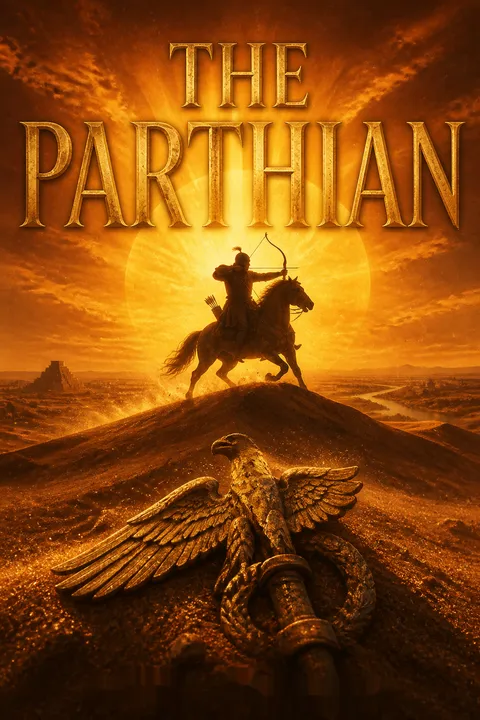
Victory made into a warningPacorus takes a legion’s silver eagle during his first battle, making a military success visible to both Parthia and Rome. In Hatra, the standard becomes proof of his courage and a sacred offering at the temple of Shamash. To the Romans, its loss is a national humiliation that demands revenge. The eagle also links Pacorus’s youthful pursuit of glory to the larger conflict: the object he wants as a trophy helps draw him into a cycle of retaliation, captivity, and further battles.
Parthian Horse Archery
Mobility against Roman formationPacorus’s cavalry combines speed, distance, and disciplined movement. Horse archers can shoot while advancing or retreating, attack a Roman flank, then wheel away before infantry can reach them. The tactics let a relatively small force disrupt supply columns, delay a larger army, and exploit openings created by Spartacus’s infantry. The horses, arrows, and trained riders are not interchangeable tools: their effectiveness depends on careful care, abundant supplies, and repeated drilling. When the cavalry is exhausted or badly positioned, its advantages diminish sharply.
Dobbai’s Prophecies
Fate shadowing military choiceThe seer Dobbai links Pacorus’s captured eagle to future conflict and identifies him through images of a horse and a journey into enemy lands. Her predictions unsettle him because they imply that military skill may not control the consequences of his choices. Claudia’s own visions later give practical weight to this supernatural thread, influencing how Pacorus understands the dangers around the army. The prophecies do not remove agency; rather, they make characters interpret events through belief, doubt, and fear.
The Roman Camp
A rebel army’s borrowed structureSpartacus organizes his followers with Roman camps, cohorts, drills, and battlefield formations, adapting the machinery of empire for people it has enslaved. The imitation makes a scattered uprising capable of defeating professional legions, while Pacorus adds mobile cavalry that Rome’s foot-centered tactics struggle to contain. The system also creates tension: Roman discipline can strengthen a bid for freedom, but it can reproduce rigid authority and make the army dependent on the very model it resists. Its success depends on shared purpose as much as on copied procedure.
Godarz’s Hidden Silver
Practical hope after defeatAs Spartacus’s victories accumulate, Godarz quietly buries silver in the mountains because he doubts the army can remain in Italy indefinitely. He does not use the reserve to undermine Spartacus or escape alone; he preserves it as a means of getting survivors out if the coalition collapses. After the final battles, the hidden money pays for passage from Italy and helps carry Pacorus’s group toward Parthia. The cache embodies a survival-minded form of loyalty: Godarz keeps faith with his companions by planning for the possibility that their shared dream will fail.
Series
Download PDF
Download EPUB
.epub digital book format is ideal for reading ebooks on phones, tablets, and e-readers.








