

Key Takeaways
Treat the Balidan badge as a promise, not a decoration
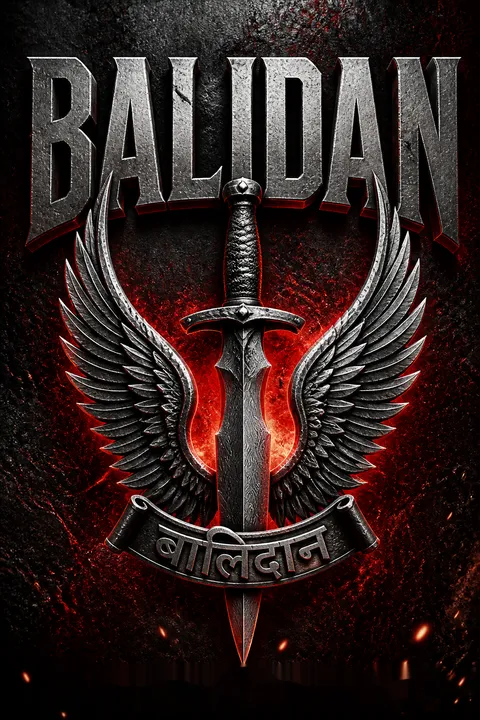
A badge with a cost. Balidan means sacrifice. The badge is worn by members of the Indian Army’s Para Special Forces, or Para (SF), after they complete service with a Special Forces battalion. It represents a role built around reconnaissance, unconventional warfare, and dangerous missions, not simply an elite status. The Parachute Regiment’s history reaches back to India’s wartime airborne units, while its Special Forces developed from a task group raised in 1965.
The book’s central subject. Swapnil Pandey draws on more than 200 interviews to introduce six stories from a force whose work is often kept secret. The operatives are celebrated, but so are the comrades and families who absorb the consequences of their service. The badge stands for an obligation shared across that circle.
A symbol can make an institution’s values visible, especially when its work is deliberately hidden. Here, the badge connects individual courage to a demanding collective identity. That connection matters because the stories are not only about exceptional people, but also about the training, trust, and support that make their work possible. There is a tension, though: a symbol of sacrifice can invite admiration while making sacrifice seem inevitable or desirable. The strongest reading honors service without treating danger or death as proof of worth.
Train for judgment under pressure, not pain alone
Selection tests more than strength. Para (SF) probation is the demanding selection period candidates must pass before joining a battalion. The book describes long marches, survival exercises, limited food and sleep, and a stress week designed to test behavior under pressure. In one escape-and-evasion exercise, Saurabh Singh Shekhawat and five others covered 100 kilometres in difficult conditions, then faced another physical test after reaching camp. The account describes the 9 Para (SF) selection attrition rate as close to 99.9 percent.
The goal is sound action. Mahendra Singh’s account shows how training could help him stay composed when a mission changed unexpectedly. Tushar Mahajan, meanwhile, stopped during a speed march to help a probationer with a broken ankle. Both examples suggest that resilience includes judgment and responsibility, not just endurance.
The distinction between hardship and learning is crucial. Stress can reveal habits that ordinary conditions conceal, but strain by itself does not guarantee good judgment. These stories give training its clearest purpose when endurance serves a practical capacity: stay calm, protect a teammate, and make a sound decision with incomplete information. A further question follows: how does a training system tell productive challenge from needless harm? The book foregrounds toughness, while its most persuasive examples show toughness joined to care.
Earn command by doing the hard work beside your soldiers
Authority has to be earned. Col Santosh Mahadik’s comrades remember an officer who stayed humble despite his skill and awards. He walked ahead of his scouts, took on difficult tasks, and knew his men by name. His former trainee recalled Mahadik’s belief that an officer should work at least as hard as the soldiers he leads. Trust, in this account, is not granted automatically with rank.
Leadership means accepting exposure. In 2015, while commanding a Rashtriya Rifles unit, Mahadik led a search operation in Manigah forest. After being shot, he continued engaging the attackers so his troops could reach cover. His death came during that effort. The episode echoes the conduct described by Shekhawat’s colleagues: a leader who takes risks alongside the team is more likely to be followed when the stakes rise.
This is a demanding model of authority: credibility grows through shared work, competence, and visible responsibility. It resembles a broader principle in high-reliability teams, where people need confidence that leaders understand conditions on the ground rather than relying only on formal position. Yet leading from the front is not the same as taking every risk personally. Mahadik’s story is moving partly because his example protected his men, but the account also makes clear that his loss was devastating. Trust should enable disciplined action, not require a leader’s death as its proof.
Plan patiently, then change course when reality breaks the plan
Preparation creates options. Operation Loktak Vijay began with a difficult problem: terrorists were hidden among dense floating vegetation on a large lake, where approaching by boat risked alerting them. Shekhawat used a local fisherman to gather the camp’s coordinates, then studied the site and trained with his men. The operation involved 45 days of surveillance, planning, and practice, while the assault itself lasted about four minutes.
Adaptation kept the plan alive. The commandos first considered swimming to the camp, but the distance and fatigue made that approach unsafe. They shifted to local canoes, then adjusted again when wind and thick vegetation threatened stealth and access. Shekhawat also checked the target area to reduce the risk of civilian casualties. The operation succeeded after a series of revisions, not because the first idea was flawless.
The episode presents planning as a process of disciplined revision rather than a fixed script. Teams reduce uncertainty by gathering information, rehearsing, and identifying obstacles, but real conditions still demand improvisation. That model applies well beyond military operations: preparation is valuable partly because it helps people recognize when a plan no longer fits. The account also foregrounds civilian risk, a reminder that operational success cannot be measured only by reaching the target. Its limitation is that the story’s compressed, successful ending may make uncertainty look more manageable than it often is.
Local trust can secure ground that weapons cannot hold
Information comes through people. Tushar Mahajan’s covert work depended on language skills and familiarity with local customs. In one operation, he posed as a militant to build access to a local network. His disguise helped expose a village headman and an over-ground worker who were supporting infiltrators. The episode shows how information, access, and patience can matter as much as firepower.
Security also has a civic side. As commanding officer in Kupwara, Mahadik supported local education, sports, healthcare, and tourism initiatives. He helped send young people to learn about tourism and outdoor activities, and he worked with former militants seeking a different life. The book presents these efforts as a way to build ties with residents and address conditions that can feed radicalization.
These accounts distinguish control of territory from confidence among the people who live there. Local knowledge can help identify threats, while credible civic engagement may give residents reasons to cooperate with institutions. The two are not interchangeable: surveillance and outreach serve different purposes, and one cannot automatically substitute for the other. Mahadik’s efforts are compelling because they pair security duties with practical local projects. Still, the book offers anecdotes rather than evidence of long-term outcomes, so the initiatives are best understood as promising efforts, not proof that trust can be engineered on command.
Count the families and comrades who carry each soldier’s risk
Service extends beyond deployment. Special Forces operatives may disappear into operations for weeks or months, often without being able to contact home. Mahadik’s wife, Swati, described a marriage shaped by long absences; after his death, she trained to become an Army officer. Mahendra Singh’s wife, Savitri, raised their children through years of separation and later cared for him after his severe injury. These accounts show that a soldier’s service reorganizes family life, too.
The unit also stays connected. After Mahendra was wounded, 9 Para (SF) supported his treatment and helped arrange a dignified role until retirement. The book also describes a unit cell offering practical and moral support to families of personnel killed in action. Loyalty appears here as a continuing duty to those who return injured and those left behind.
The book widens the meaning of military service by showing the people who absorb its costs without wearing the same uniform. Their work is not merely emotional support: it includes parenting alone, managing uncertainty, and rebuilding a life after bereavement or injury. Such labor is easy to overlook because it happens outside the visible mission. The stories also resist a simple division between soldier and family, showing how a unit’s responsibilities can continue after an operation ends. Recognition matters, but it cannot replace the practical support these families need.
Measure courage by whom a soldier protects, not only whom he defeats
A rescue can become the mission. In the 2020 Operation Rangdori Baihk, twelve commandos pursued infiltrators through deep snow and difficult mountain terrain. A section of hardened snow collapsed beneath two scouts, who fell into a ravine and were badly injured. Their comrades moved toward them despite enemy fire. Subedar Sanjiv Kumar, Havildar Devendra Singh, and Paratroopers Amit Kumar, Bal Krishan, and Chhatrapal Singh died in the close-range fighting; another commando survived.
The outcome was not a clean victory. The five men’s actions reflected a fierce commitment to rescuing one another, but the operation also left families grieving and the unit confronting an exceptional loss. The book treats their solidarity as heroic without hiding the cost. Their story suggests that courage is visible not only in attacking an opponent, but in refusing to abandon a fellow soldier.
The episode makes solidarity concrete: comrades take risks for one another when communication fails and the situation is deteriorating. That commitment is a source of strength in teams whose members depend on each other for survival. It also raises a difficult distinction between courage and sound risk management. Honoring those who tried to rescue their friends should not turn a tragic outcome into a standard that demands similar sacrifice in every crisis. The book’s emotional power comes from keeping both truths present: their loyalty was extraordinary, and their deaths were a profound loss.
A wound can change the mission without ending service
Identity can survive injury. In 2012, Manish Singh was shot in the spine during an operation in Kupwara. He survived, recovered enough to use a wheelchair, and received the Shaurya Chakra for protecting his men and killing an attacker. Rather than leave the Army, he returned to 9 Para (SF) in an administrative role, managing support work for the unit.
Contribution takes new forms. Singh also trained as a competitive sharpshooter and became a Paralympian. His story shifts the focus from a simple recovery narrative to adaptation: his body and duties changed, but he remained part of the team. The account also describes the unit’s support during his treatment, including help in finding specialized care. Continued service depended on both personal determination and institutional commitment.
Singh’s story challenges the assumption that meaningful work ends when someone can no longer perform a previous role. Organizations often define people too narrowly by the tasks they once did, even when experience, skill, and commitment remain valuable. His return shows the importance of adapting roles rather than treating disability as the end of contribution. It is worth resisting the idea that willpower alone explains his path, though. The account also credits medical care and unit support, underscoring that resilience is partly personal and partly built by the people and systems around someone.
Keep these lives human, because secrecy leaves parts of every story untold
The record has boundaries. Pandey says the book grew from more than 200 interviews, conducted over a year, and that some stories and operational details had to be omitted for security and privacy. The six featured accounts rely on memories from operatives, families, friends, and comrades. That breadth makes private experiences visible, while the restrictions leave important parts of the work outside the narrative.
Remember people, not just legends. Mahadik’s story includes his children and wife as well as his operations. Tushar Mahajan’s story includes his parents and fiancée, and the life they had imagined together. These details resist reducing the dead to medals or dramatic final moments. The book’s memorial purpose is strongest when it preserves both the public act of service and the ordinary relationships that service interrupted.
Narrative can restore visibility to people whose work is deliberately concealed, and family testimony adds dimensions that official records rarely capture. But vivid storytelling also shapes memory: scenes are selected, voices are mediated, and classified details remain inaccessible. A careful reader can hold gratitude alongside that awareness without dismissing the accounts. The distinction matters because honoring a person is not the same as treating every retelling as complete. These profiles are best read as researched portraits of real lives, shaped by both what interviewees shared and what the author could responsibly publish.
Analysis
Balidan is a collection of military profiles, but its deeper subject is how an institution distributes risk. The stories place the individual operative at the center, then widen the frame to include teammates, spouses, parents, children, local residents, and the unit itself. That structure usefully complicates the image of the solitary hero. Even the most accomplished soldier depends on training, intelligence, equipment, cooperation, and people who sustain life outside the operation.
The book’s strongest narrative tension lies between competence and uncertainty. Shekhawat’s planning for Loktak, Mahadik’s field judgment, and the shifting dangers at Rangdori Baihk show that preparation improves a team’s position without controlling outcomes. This is a more valuable account of expertise than a simple triumph narrative: skill includes noticing limits, adapting, and accepting that some risks cannot be eliminated. At the same time, the intensely patriotic framing sometimes turns military sacrifice into a near-sacred ideal. Readers can honor courage while asking what prevention, institutional learning, and care for survivors require after a mission goes wrong.
The family stories make that ethical question personal. A spouse’s waiting, a parent’s bereavement, or a disabled soldier’s altered career is not a side plot. Each shows how the consequences of service continue long after an operation ends. The account of Manish Singh is particularly useful because it presents adaptation through both individual determination and support from his unit, rather than through willpower alone.
Finally, the book is valuable partly because it marks its own limits. Its reporting draws on extensive interviews, yet secrecy and privacy prevent a complete public record. The result is neither a full operational history nor merely a tribute. It is memorial journalism: a way to bring hidden lives into view while reminding readers that the most dramatic account is still only one perspective on a much larger, partly unknowable experience.
Review Summary
Balidan receives mostly positive reviews, praised for its insight into India's Para Special Forces. Readers appreciate the author's research and storytelling, highlighting the soldiers' bravery and sacrifice. The book offers six stories about elite operatives, providing a mix of operational, emotional, and social perspectives. Some reviewers note the writing could be more refined, but most find it compelling and inspiring. Many recommend it for those interested in military history and the Indian Army's special forces.
People Also Read





Glossary
Balidan
Special Forces sacrifice badgeBalidan means sacrifice and names the badge worn by personnel of the Parachute Regiment’s Special Forces units. The book describes it as a sign of their unconventional warfare role. It is awarded after a period of service with a Para (SF) battalion, normally one year, or six months when the battalion is on active duty.
Para (SF)
Indian Army Special ForcesPara (SF) refers to the Special Forces units and personnel of the Indian Army’s Parachute Regiment. The book describes these units as small, specially trained forces that conduct reconnaissance, unconventional warfare, and other special operations. Their work depends on specialized skills, self-reliance, stealth, speed, and close teamwork.
probation period
Special Forces selection trainingThe probation period is the demanding selection phase candidates complete before joining a Para (SF) battalion. It tests physical endurance, technical skills, and behavior under stress through activities such as marches, field exercises, navigation, and survival tasks. Candidates who do not meet the unit’s standards are sent back; those who pass are accepted into the battalion.
escape and evasion exercise
Simulated capture and escape testAn escape and evasion exercise tests whether trainees can avoid capture and reach safety after being treated as prisoners or fugitives in a simulated enemy environment. In Shekhawat’s account, trainees faced ambushes, captivity, difficult terrain, and a demanding timed journey. The exercise was intended to test endurance, fieldcraft, and resolve under pressure.
SADO
Search-and-destroy operationSADO is an abbreviation for search-and-destroy operation. In the book, it describes a military operation in which forces search an area for armed opponents and attempt to eliminate the threat. Such operations can involve surveillance, cordons, intelligence gathering, and coordinated teams, especially when difficult terrain or incomplete information complicates the search.
combat free fall
High-altitude military parachute insertionCombat free fall is a military method of entering a target area by jumping from an aircraft at high altitude and steering a specialized parachute toward the landing zone. The book describes operatives carrying weapons and other equipment during the descent. The method can insert personnel covertly where land, sea, or conventional air approaches are unsuitable.
veergati
Death in military serviceVeergati is a term used in the book for a soldier’s death while serving the nation, especially in combat. It carries an honorific meaning in the accounts and reflects the language through which comrades and families describe a military death. It does not lessen the grief or practical consequences experienced by those left behind.
Operation Sadbhavana
Community support initiativesOperation Sadbhavana refers in the book to initiatives undertaken by the Army to support local communities. Mahadik’s work in Kupwara included activities in education, sports, and healthcare, along with efforts to encourage tourism and employment. The account presents these projects as a way to build relationships with residents and support peaceful alternatives.
Download PDF
Download EPUB
.epub digital book format is ideal for reading ebooks on phones, tablets, and e-readers.








