

Key Takeaways
Treat small irritations as small before they commandeer your day
Perspective changes the size. A driver cutting in, a long queue, or an unfair remark can occupy far more attention than the event deserves. Carlson's point is not that nothing matters, but that replaying minor offenses turns them into lasting sources of anger and drains energy from the rest of life.
A story behind the book's title makes the point. After a foreign publisher used an old endorsement without permission, Carlson worried about the consequences and apologized to the endorser, Wayne Dyer. Dyer responded graciously and urged him not to let the mistake become a crisis. His response gave Carlson a living example of calm under provocation. The practical question is whether an annoyance deserves more attention, or whether it can be released.
What's useful here is the separation between an event and the attention repeatedly spent on it. That distinction appears in cognitive approaches to stress: an inconvenience may be real, while the mental replay adds a second burden. Dyer's response also models a social benefit of composure, since refusing to escalate can protect a relationship as well as one's mood. The caution is that perspective should not become self-silencing. Repeated mistreatment, safety risks, and consequential errors deserve action. The skill is proportionality, not pretending every problem is trivial.
Interrupt spiraling thoughts before a reminder becomes a personal crisis
Thoughts gather momentum. Carlson calls the escalating chain of worries the snowball effect of thinking. A person wakes at night remembering a phone call, then mentally reviews tomorrow's entire workload, rehearses a tense conversation, and ends up feeling overwhelmed before the day begins. Catching the first few links in that chain makes it easier to stop feeding it.
The back burner is Carlson's metaphor for leaving a problem to simmer without actively wrestling with it. A person can note a task, perhaps by writing it down, then return attention to the present instead of repeatedly analyzing it. He also warns that a low mood can make ordinary circumstances look disastrous. Rather than making sweeping judgments about life in that state, allow the mood to pass and revisit real decisions with more perspective.
This advice anticipates a useful distinction between having a thought and treating it as a command. Cognitive defusion, a practice used in some therapies, similarly invites people to notice thoughts without automatically obeying or disputing them. The back-burner image adds a practical option: record what needs attention, then stop rehearsing it. The limitation is important: some worries point to genuine problems that require planning. The aim is not to suppress concern, but to distinguish useful preparation from repetitive mental activity that leaves the problem unchanged.
Stop waiting for an empty inbox to make room for living
The list keeps replenishing. Carlson argues that people often postpone family, rest, and enjoyment until their work is finished. But calls, chores, and projects continually replace completed tasks. An unfinished inbox is not necessarily proof of failure; it may simply be the normal condition of a busy life. Treating every task as urgent can crowd out the people and experiences that matter most.
For perspective, ask whether the current problem is likely to matter a year from now. Carlson also invites readers to imagine looking back from their own funeral. Such an exercise is uncomfortable, but it can clarify whether today's irritation or deadline deserves priority over time with loved ones. The point is not to neglect responsibilities. It is to stop making completion the price of being present.
This reframes time management as a question of values, not merely efficiency. A perfectly cleared queue is an unstable target, while relationships and health are affected by how attention is allocated today. The year-from-now question works as a quick test of scale; the funeral exercise makes the cost of postponement harder to ignore. Still, some deadlines carry serious consequences, and caregiving or financial obligations cannot simply be waved away. The sharper lesson is to distinguish true urgency from the feeling of urgency, then protect time for what cannot be recovered.
Train calm through brief practice in ordinary moments
Patience is practiced, not wished for. Carlson's patience practice periods are deliberately chosen stretches of time in which a person tries not to be thrown by small frustrations. Start with five minutes, then extend the exercise as it becomes manageable. A traffic jam, an interruption, or a child's repeated question becomes an opportunity to notice tension and respond more slowly.
He pairs this practice with quiet time, meditation, and doing one task at a time. Even a short pause before entering the house can help someone shift out of work mode. Meditation, as he describes it, involves sitting quietly, attending to the breath, and gently returning attention when thoughts wander. These are not tricks for eliminating life's demands. They are ways to meet ordinary demands with less internal frenzy.
The strength of this approach is its modest scale. A short practice period lowers the stakes and turns patience into a repeatable skill rather than a personality trait reserved for naturally calm people. Single-tasking and breath awareness also make attention itself the training ground. The book's early-rising example may work for some, but quiet time need not require waking before dawn; rigid routines can become another source of self-criticism. The key is a protected pause that fits the person's life, not copying someone else's schedule.
Listen to understand before defending your version of events
Understanding can soften conflict. Carlson describes a couple who argued about money for years. He saved aggressively, while she spent more freely. Once each explained the fear beneath the habit, the disagreement became easier to navigate: she feared financial instability because of her family's past, and he wanted to feel capable of providing. Listening revealed motives that argument had obscured.
The practice is to let another person finish, pause before responding, and ask what matters from their point of view. Carlson draws on Stephen Covey's advice to understand before trying to be understood. That does not require agreeing with every claim or abandoning one's position. It means making comprehension the first task, rather than treating conversation as a contest for airtime or proof of who is right.
The couple's story shows how listening can expose the emotional logic beneath a practical dispute. Conflict often persists because each person argues for a solution before recognizing the fear or need that makes it important. A pause also changes the pace of interaction, making room for information that a quick rebuttal would miss. However, understanding is not the same as consent. In situations involving unequal power or harmful conduct, listening should support clear boundaries and accountability, not pressure someone to accommodate the other person's perspective.
Replace snap judgments with curiosity about another person's reality
Curiosity interrupts condemnation. Carlson suggests imagining other people as teachers, or observing them like an anthropologist: with interest rather than immediate judgment. He calls the differences between individuals separate realities. People can encounter the same event and interpret it differently because their histories, fears, and preferences differ.
This perspective can reduce irritation with someone who seems rude, strange, or inconvenient. Carlson also calls habitual fault-finding in relationships weatherproofing: searching for flaws as if another person were a house that needed repairs. Noticing the behavior without making it the whole person leaves more room for compassion. This is not an instruction to excuse cruelty or accept unsafe behavior. It is a way to avoid turning every difference or mistake into a verdict on someone's character.
Curiosity is a powerful alternative to certainty because it asks what context might explain behavior before assigning motive. The separate-realities idea also has value in negotiation and cross-cultural communication: disagreement does not prove that one side is irrational. The weatherproofing metaphor captures how repeated correction can make a relationship feel like a permanent performance review. Yet charitable interpretation has limits. When harmful actions recur, compassion must coexist with consequences. Understanding a person's perspective can inform a response without making that response permissive.
Make kindness a practice, not a transaction or performance
Small acts build a generous orientation. Carlson recommends giving help without expecting repayment or praise. He describes ordinary gestures such as paying a stranger's toll, picking up litter, or making a quiet contribution. He also suggests writing a heartfelt letter, thanking someone each day, or telling a person what is appreciated about them. The acts need not be grand to make care tangible.
The point is partly what the recipient receives, but also what the giver practices: attention to other people rather than constant monitoring of personal grievances. Keeping a kind act private can help separate generosity from the wish to be admired. Service is most sustainable when it fits into everyday life, rather than being reserved for some future moment of success or spare time.
This section turns kindness from a feeling into a behavior that can be repeated. That matters because goodwill often grows through attention and action, not through waiting for a perfect mood. Private giving also tests whether the act is genuinely generous or partly a bid for status. At the same time, unreciprocated giving should not become a rule that licenses exploitation. Sustainable service includes judgment about capacity, consent, and fairness. Generosity is most durable when it is freely chosen rather than extracted by guilt.
Accept life's unfinished, imperfect nature without surrendering your agency
Acceptance is not resignation. Carlson challenges the expectation that life should be fair, orderly, and complete. Perfectionism keeps attention fixed on what is wrong, while inflexibility turns changed plans into personal affronts. He recommends treating problems as possible teachers and asking what patience, humility, or practical adjustment they might call for.
A parable makes uncertainty vivid: a farmer's lost ox seems disastrous, then leads to a new horse; the horse injures his son, who is then spared from being sent to war. The village wise man refuses to label events too quickly, because their consequences are not yet clear. The lesson is to stay open to what unfolds. Accepting a situation does not mean approving injustice or refusing to improve it. It means responding to the facts rather than exhausting oneself wishing they were different.
The parable offers a useful antidote to premature certainty. People often assign permanent meaning to events whose consequences remain unknown, and that can intensify distress without improving decisions. Acceptance-based approaches similarly distinguish acknowledging reality from endorsing it. The distinction protects the idea from becoming passive fatalism: a person can accept that a loss occurred while still seeking remedy or change. The story's apparent reversals should not imply that every hardship hides a benefit. Its more dependable insight is epistemic humility: outcomes are often harder to predict than they feel.
Own your response without taking responsibility for every problem thrown at you
Choice begins with your part. Carlson warns that blaming others makes personal happiness depend on behavior outside one's control. If a room is messy, one can contribute to fixing it rather than spending the day keeping score. If a project fails, identify what can be changed without assuming every cause belongs to someone else.
At the same time, not every problem directed at a person has to be accepted as their responsibility. Carlson uses the image of someone throwing a ball: the recipient can choose whether to catch it. A person may decline an unnecessary call, avoid taking over a friend's problem, or refuse to absorb an insult. This is not indifference. It is a way to distinguish helpful involvement from automatic overcommitment, while remaining accountable for one's own choices.
The combination of responsibility and refusal is more sophisticated than a blanket instruction to take charge. Personal agency grows when people focus on actions they can actually influence, while boundaries prevent agency from becoming endless caretaking. The ball image is especially useful for noticing how quickly a request can become an assumed obligation. Its limit is that obligations are not always optional: family care, professional duties, and collective harms can create legitimate responsibilities. The question is not simply whether to catch the ball, but what the relationship and circumstances reasonably require.
Measure achievement by the person you practice becoming, not applause
Inner conduct counts as accomplishment. Carlson questions the idea that more possessions, recognition, or completed goals automatically bring satisfaction. A new home can lose its thrill almost as soon as the move is finished if attention has already shifted to the next upgrade. Instead, he asks readers to notice qualities such as patience, kindness, forgiveness, and steadiness under pressure.
Practice shapes what becomes familiar. If a person repeatedly rehearses resentment, defensiveness, or hurry, those reactions can dominate daily life. If that person makes time for quiet reflection, meditation, yoga, or service, those qualities receive attention instead. Carlson recommends scheduling inner work rather than waiting until every chore is finished. The aim is not constant self-improvement. It is to align daily choices with the kind of life the person says matters.
This reframing gives achievement an internal measure that is less dependent on comparison or public recognition. It also links identity to repeated behavior: a life is partly shaped by what receives regular practice. That connection can make small actions feel consequential without turning every moment into a productivity project. The account of wanting more also points to a familiar problem with moving goalposts: attaining a desired object may not settle the habit of desire. Still, external success can provide security and opportunity. The stronger claim is not to reject ambition, but to refuse to let it monopolize the definition of a good life.
Analysis
The book is built as one hundred short reflections rather than a continuous argument. That structure fits its subject: each entry is a small interruption to automatic irritation, and the reader can open the book wherever life feels needlessly urgent. The governing idea is that distress is often amplified by the way attention, expectation, and interpretation interact with events. Carlson therefore offers a repertoire of responses: pause, listen, widen perspective, act kindly, accept uncertainty, and choose where to invest effort.
The most durable contribution is practical scale. The advice is not limited to meditation or retreat; it relocates practice to traffic, chores, criticism, family conversations, and the unfinished task list. Its examples make calmness behavioral rather than abstract. The story of Wayne Dyer's gracious response gives the title a human source, while the financial-conflict anecdote shows how listening can uncover the fears beneath opposing positions.
The book also contains a tension worth preserving. It urges acceptance while asking readers to change their habits, and it advises letting others be right while recognizing that some positions deserve resistance. Read carefully, these are not contradictions: acceptance concerns the facts of the moment, while action concerns what can still be influenced. But slogans can blur that distinction. Not every injury is small, every mood is misleading, or every conflict best handled through accommodation. Compassion without boundaries can enable harm, and treating all distress as a product of thought can understate social or material causes.
The strongest reading is therefore neither passive nor relentlessly self-correcting. Carlson's methods work best as attention training: notice the escalation, assess the stakes, and choose a response that serves a real priority. The book's hundred suggestions may be repetitive, but repetition is part of the design. Each one returns to a single discipline: spend less of life fighting ordinary imperfection, and more of it acting in line with love, perspective, and responsibility.
Review Summary
Don't Sweat the Small Stuff and It's All Small Stuff receives mostly positive reviews for its practical advice on reducing stress and finding inner peace. Readers appreciate the bite-sized wisdom and simple techniques for managing life's challenges. Some find the book repetitive or oversimplified, while others consider it life-changing. Many note that the advice aligns with religious teachings, particularly Buddhism and Islam. The book's accessibility and gentle reminders resonate with readers seeking to improve their outlook and reduce anxiety in daily life.
People Also Read








Glossary
The snowball effect of your thinking
Escalating thought spiralA chain in which one worry prompts another until a manageable concern feels overwhelming. Carlson's example begins with remembering a task, then expands into rehearsing the next day's workload and imagining further problems. The technique is to notice the chain early, before repeated thinking gives it more momentum.
Back burner
Unforced problem-solvingA metaphor for holding a problem in mind without actively analyzing it while attention is given to something else. Like food simmering on a stove, an issue is left to develop rather than constantly stirred. Carlson distinguishes this from denial or procrastination: the problem remains available for attention when action is appropriate.
Patience practice periods
Timed patience exercisesDeliberately chosen intervals in which a person practices not becoming upset by ordinary frustrations. Carlson suggests beginning with a short period, such as five minutes, and extending it with practice. The exercise turns patience into a skill that can be strengthened during everyday situations rather than a trait one either has or lacks.
Weatherproofing
Scanning for others' flawsCarlson's metaphor for continually searching relationships or life for imperfections that should be corrected. The habit resembles inspecting a house for cracks and leaks, except the person applies that scrutiny to other people and their behavior. Occasional feedback can be useful, but persistent fault-finding can undermine appreciation and closeness.
Separate realities
Different personal viewpointsThe idea that people interpret the same event through distinct histories, preferences, concerns, and assumptions. Carlson compares these differences to those between cultures: another person's response may not match one's own because their experience of the situation is different. Recognizing this can reduce the expectation that others should think or act exactly as oneself would.
If Someone Throws You the Ball, You Don't Have to Catch It
Choose whether to engageCarlson's image for the choice to accept or decline another person's concern, request, criticism, or invitation into conflict. Automatically taking on every problem can produce resentment and overload. Choosing not to engage in a particular moment is not necessarily uncaring; it can reflect limits, priorities, and responsibility for one's own attention.
FAQ
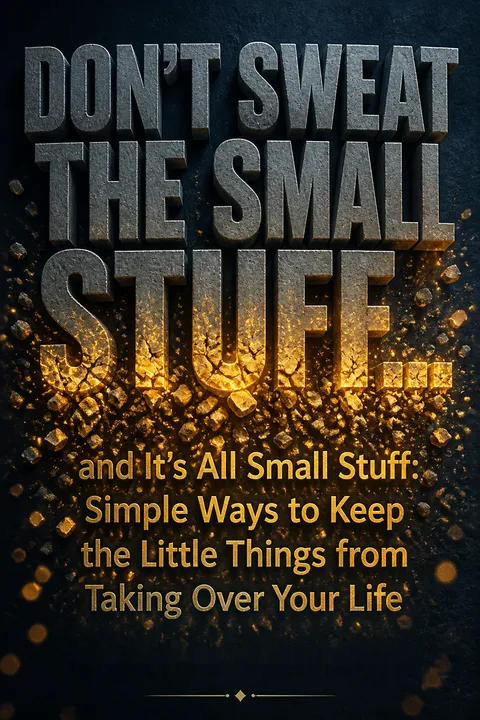
What's "Don't Sweat the Small Stuff... and It's All Small Stuff" about?
- Overview: The book by Richard Carlson offers simple strategies to prevent minor issues from overwhelming your life. It emphasizes maintaining perspective and reducing stress.
- Core Message: It teaches readers to focus on what truly matters and to let go of trivial concerns that can cause unnecessary stress.
- Practical Advice: The book provides actionable steps to cultivate a more peaceful and relaxed approach to life, such as practicing patience and living in the present moment.
- Target Audience: It's aimed at anyone looking to improve their mental well-being and find more joy in everyday life.
Why should I read "Don't Sweat the Small Stuff... and It's All Small Stuff"?
- Stress Reduction: The book offers practical advice for reducing stress and anxiety by changing your perspective on daily challenges.
- Improved Relationships: By learning to let go of minor irritations, you can improve your interactions with others and foster more harmonious relationships.
- Personal Growth: It encourages self-reflection and personal development, helping you become more patient, compassionate, and content.
- Accessible Wisdom: The strategies are simple and easy to implement, making it a valuable read for anyone seeking a calmer, more fulfilling life.
What are the key takeaways of "Don't Sweat the Small Stuff... and It's All Small Stuff"?
- Perspective Shift: Learn to see problems as opportunities for growth rather than obstacles.
- Present Moment Awareness: Focus on living in the present rather than worrying about the past or future.
- Letting Go: Practice letting go of the need to be right and the desire to control everything.
- Compassion and Kindness: Cultivate compassion for others and perform acts of kindness without expecting anything in return.
What are the best quotes from "Don't Sweat the Small Stuff... and It's All Small Stuff" and what do they mean?
- "Life isn't an emergency." This quote reminds us to stop treating every situation as a crisis and to approach life with calmness and patience.
- "When you die, your 'in basket' won't be empty." It emphasizes the importance of prioritizing what truly matters over mundane tasks.
- "Choose being kind over being right." This encourages us to value relationships and harmony over winning arguments.
- "Let others have the glory." It suggests that allowing others to shine can lead to more fulfilling interactions and personal peace.
How does Richard Carlson suggest we handle stress in "Don't Sweat the Small Stuff... and It's All Small Stuff"?
- Lower Tolerance to Stress: Carlson advises recognizing stress early and taking steps to manage it before it escalates.
- Practice Patience: Developing patience can help you accept life as it is, reducing frustration and stress.
- Focus on Breathing: Simple breathing exercises can help calm the mind and reduce stress levels.
- Adopt a Flexible Mindset: Being open to changes in plans can prevent stress from rigid expectations.
What specific methods does Richard Carlson recommend for living in the present moment?
- Mindful Breathing: Focus on your breath to anchor yourself in the present.
- Single-tasking: Do one thing at a time to fully engage with the present activity.
- Gratitude Practice: Start your day by thinking of someone or something to be grateful for, which keeps you grounded in the present.
- Letting Go of Perfection: Accept imperfections in yourself and others to reduce anxiety about the future.
How does "Don't Sweat the Small Stuff... and It's All Small Stuff" address interpersonal relationships?
- Listening Skills: Carlson emphasizes the importance of being a better listener to improve communication and understanding.
- Avoid Interrupting: He advises against interrupting others, which can lead to more respectful and meaningful conversations.
- Let Others Be Right: Allowing others to be right can reduce conflict and foster more harmonious relationships.
- Random Acts of Kindness: Performing kind acts without expecting anything in return can strengthen bonds and create a positive environment.
What role does compassion play in "Don't Sweat the Small Stuff... and It's All Small Stuff"?
- Developing Compassion: Carlson suggests putting yourself in others' shoes to understand their perspectives and challenges.
- Compassion as a Practice: Regularly practicing compassion can lead to greater inner peace and improved relationships.
- Seeing Innocence: Viewing others' actions with compassion rather than judgment can reduce frustration and increase empathy.
- Compassionate Living: Integrating compassion into daily life can transform how you interact with the world.
How does Richard Carlson suggest we deal with criticism in "Don't Sweat the Small Stuff... and It's All Small Stuff"?
- Agree with Criticism: Carlson recommends occasionally agreeing with criticism to defuse tension and learn from others' perspectives.
- Search for Truth: Look for the grain of truth in criticism to gain insights and improve yourself.
- Non-defensive Response: Responding non-defensively to criticism can lead to more constructive interactions.
- Letting Go of Ego: Reducing the need to defend yourself can lead to greater peace and self-awareness.
What does Richard Carlson mean by "transforming your relationship to your problems"?
- View Problems as Teachers: Carlson suggests seeing problems as opportunities for growth and learning.
- Acceptance: Accepting problems as a natural part of life can reduce stress and increase resilience.
- Change Perspective: Shifting your perspective on problems can lead to more creative solutions and less frustration.
- Embrace Challenges: Embracing challenges rather than resisting them can lead to personal development and inner peace.
How does "Don't Sweat the Small Stuff... and It's All Small Stuff" suggest we cultivate gratitude?
- Daily Gratitude Practice: Spend a moment each day thinking of someone or something to be grateful for.
- Focus on What You Have: Shift your focus from what you want to what you already have to increase satisfaction.
- Heartfelt Letters: Writing letters of gratitude can deepen your appreciation for the people in your life.
- Gratitude as a Mindset: Adopting gratitude as a mindset can lead to a more positive and peaceful life.
What is the significance of the title "Don't Sweat the Small Stuff... and It's All Small Stuff"?
- Perspective on Problems: The title suggests that most problems are minor and should not be allowed to dominate your life.
- Letting Go of Trivial Concerns: It encourages readers to let go of minor irritations and focus on what truly matters.
- Life's Bigger Picture: By not sweating the small stuff, you can maintain a broader perspective on life and its challenges.
- Path to Peace: The title encapsulates the book's message of finding peace by not getting bogged down by insignificant issues.
About the Author
Other books by Richard Carlson




Download PDF
Download EPUB
.epub digital book format is ideal for reading ebooks on phones, tablets, and e-readers.








