

Key Takeaways
Recognize megafire by its destructive behavior, not acreage alone
More than a size label. Michael Kodas follows fires from a Colorado canyon to a California town and the fatal Yarnell Hill disaster to ask why blazes are growing larger, faster, hotter, and harder to control. Scientists disagree about what counts as a megafire. In 2015, the U.S. Forest Service used a threshold of 100,000 acres, but acreage misses other forms of disaster: deaths, homes destroyed, ecological damage, smoke, and a season that no longer ends with winter.
A crisis with many causes. The book connects four pressures: how people manage forests, development in fire-prone areas, a hotter and drier climate, and political and economic decisions about prevention and suppression. A small fire can be catastrophic when it outruns crews, threatens a town, or kills firefighters.
What's striking is that the argument resists turning a dramatic word into a scientific measuring stick. Acreage is easy to count, but it does not capture whether a fire destroys homes, alters an ecosystem, or overwhelms emergency services. That is a familiar problem in public risk: the most visible metric can become a substitute for the thing society actually needs to protect. A useful response is to track several outcomes at once, while keeping the term flexible enough to describe fires whose danger comes from speed, duration, or human consequences.
Restore fire where forests evolved with it, but stop generalizing across ecosystems
Different forests, different fires. In many lower-elevation ponderosa pine forests, frequent, low-intensity fires historically cleared brush and small trees. A century of aggressive suppression, along with grazing and timber practices, helped some such forests become unnaturally dense. Trees crowded together, dead material accumulated, and branches could carry flames from the ground into the canopy. But not every western forest fits this pattern. Lodgepole pine forests, for example, naturally experience infrequent, high-intensity fires that replace most trees.
Fire also sustains life. Burned landscapes form a mosaic of lightly and heavily affected areas. Some wildlife depends on severely burned stands, while other species use less damaged patches. Research discussed in the book suggests only 16 percent of Colorado Front Range forests below roughly 9,000 feet showed increased fire severity linked to past suppression. Treatment should target the places where it helps most, especially fire-prone forests near homes.
This ecological distinction matters because one-size-fits-all restoration can do harm while claiming to prevent it. The mosaic idea also offers a better public image of a healthy forest than an untouched landscape: health may include both surviving trees and areas burned hard. The challenge is translating that complexity into policy, since residents and officials often want a simple prescription. The book's emphasis on forest type and location is therefore a strength, though historical conditions cannot simply be copied when today’s climate and nearby development have changed.
Build homes to resist windblown embers, not just nearby flames
The forest is not the only fuel. About one in three U.S. homes, or 44 million residences, stood in the wildland-urban interface, the zone where development meets fire-prone vegetation. As homes spread into those landscapes, firefighters must protect people and buildings while facing more roads, infrastructure, and potential ignition sources. Kodas describes how firebrands can travel far beyond the main fire and ignite houses even when nearby trees remain unburned.
Defend the home itself. Fire scientist Jack Cohen’s home ignition zone is the area around a house where its materials and immediate surroundings influence whether embers can start a fire. Clearing needles from gutters, moving woodpiles and propane tanks away from buildings, and using less flammable roofs can reduce vulnerability. These steps do not guarantee survival in every extreme fire, but they address common ignition pathways more directly than simply cutting down distant trees.
The shift from forest-scale defense to home-scale ignition is a powerful correction to the instinct to treat fire as a wall advancing across the landscape. It also changes responsibility: local building choices can affect whether a community becomes a chain of burning structures. This resembles resilience planning in other hazards, where protecting critical points often works better than trying to stop the entire natural event. Still, individual maintenance cannot solve unsafe siting, poor evacuation routes, or extreme exposure. Household preparedness must sit alongside land-use rules and public infrastructure.
Plan for fire seasons that start earlier, end later, and feed back on climate
The calendar is shifting. Warming and drying conditions can melt mountain snowpack earlier, dry vegetation sooner, and extend the time when landscapes can burn. The book reports that the western U.S. fire season expanded by 78 days between 1970 and 2015. In Colorado, the 2012 season began with winter grass fires and ended with a blaze that smoldered beneath snow and continued into spring. Firefighters and seasonal crews who once expected winter downtime faced a longer, more expensive operating season.
Fire can intensify the cause. Wildfires release carbon dioxide, while smoke can darken ice and accelerate melting. In some northern forests, fire and insect damage also weaken the landscape’s capacity to store carbon. This creates a feedback: hotter, drier conditions can favor fire, and fire can add warming gases and other climate effects that further stress forests.
This account makes climate change tangible through operational consequences: an earlier melt, a longer period of dry fuels, and fewer predictable months for crews to rest and equipment to be available. The feedback framing is useful because it shows wildfire as both a response to climate stress and a contributor to it. Yet climate is not a single-fire explanation. Weather, vegetation, ignition, and land management interact, and a particular blaze cannot be attributed to warming from its size alone. Clear communication needs both the broader trend and the local conditions.
Reduce human ignitions and invasive fuels that turn sparks into fast-moving fires
People extend the danger. The book cites a study finding that humans started 84 percent of U.S. wildfires between 1992 and 2012. Those fires stretched the season to times when lightning starts were uncommon and affected far more land than lightning-caused fires. Sparks from power lines, vehicles, machinery, campfires, and firearms can all start blazes. In one example, target shooters using exploding targets helped ignite a Utah fire that forced thousands of people to evacuate.
Some plants accelerate the cycle. Cheatgrass, an invasive annual grass, grows early, dries quickly, and creates continuous beds of flammable material. Native grasses often grow in separated clumps that interrupt fire; cheatgrass can fill the gaps. Fires then eliminate native plants while the invasive grass quickly returns, making future fires more likely. Climate shifts and human disturbance help it spread, linking ignition, vegetation, and weather in a reinforcing cycle.
The point is not that human carelessness explains every fire, but that human activity changes both where fires begin and which fuels connect across a landscape. That distinction supports targeted prevention: ignition rules matter most where vegetation and weather make consequences severe. Cheatgrass also illustrates how ecological invasions can change the conditions under which fire behaves, rather than merely adding another plant to the scenery. A caution is warranted: the 84 percent figure counts fire starts, not the share of burned acreage or damage attributable to people.
Treat prescribed burns as necessary work with strict safety margins
A controlled fire can escape. Forest managers use prescribed burns to reduce fuel and restore landscapes shaped by recurring fire. But the Lower North Fork operation in Colorado shows why a burn plan cannot make risk disappear. After foresters lit a treatment area in dry, chopped-up timber, crews monitored and mopped it up. Hidden embers later revived in strong winds. The escaped fire killed three residents and destroyed homes.
Preparation must match conditions. The site had experienced earlier spot fires, while drought, warm weather, and heavy fuels raised the stakes. As the blaze spread, responders faced outdated maps, incompatible radios, confusion over command, and evacuation alerts that failed to reach many residents. The incident does not show that prescribed burning is always a mistake. It shows that restoration itself requires conservative weather decisions, sustained monitoring, clear public notice, and emergency plans capable of handling failure.
This tragedy reveals a difficult feature of prevention: the action needed to lower long-term danger can create immediate danger if institutions underestimate conditions or cannot coordinate a response. The lesson is not to abandon prescribed fire, which can reduce fuel and restore ecological processes, but to design it with the same seriousness as any hazardous operation. In high-risk settings, a burn plan should be judged not only by whether ignition conditions look acceptable, but by whether crews, communications, and evacuation systems can cope if the fire escapes.
Protect people first; aircraft cannot control a fire in extreme conditions
Retardant buys time, not control. Air tankers drop retardant to slow flames, but it does not extinguish a fire; ground crews must still act. Wind can scatter drops, and the conditions that make fires most explosive can make flying especially dangerous. During Colorado’s 2012 fires, C-130 crews dropped more than 125,000 gallons of retardant on the Waldo Canyon Fire, yet the blaze crossed the lines and entered Colorado Springs. In South Dakota that year, a storm-related crash killed four airmen on a firefighting C-130.
Match tactics to conditions. Aircraft can help in some situations, especially while a fire is small, but they are not a substitute for evacuation, defensible homes, or sound decisions about where crews can safely work. Evidence on aircraft effectiveness was limited in the period Kodas describes. The public’s visible reassurance at a dramatic drop should not be confused with proof that the fire has been stopped.
The book usefully challenges the spectacle of aerial suppression. A bright line of retardant offers a visible sign of action, but visibility is not effectiveness, and aviation exposes crews to unusual risk. This is a broader lesson in emergency management: tools can become politically attractive because they are dramatic, even when their performance is uncertain. The account does not establish that aircraft are useless; it argues for evidence-based deployment and for placing life safety ahead of the appearance of aggressive control.
Fund prevention before emergency firefighting consumes the forest agency
Suppression crowds out preparation. Wildfires rose from 16 percent of the U.S. Forest Service budget in 1995 to more than half two decades later. When fire costs exceeded available funds, agencies borrowed from programs for forest restoration, recreation, and maintenance. Between 2002 and 2014, the Forest Service and Interior Department diverted $3.2 billion from other work to fight fires. That leaves fewer resources for fuel reduction and the infrastructure that communities and firefighters depend on.
Incentives shape the response. Kodas describes a firefighting economy that includes private crews, aircraft, equipment, and camp services, as well as developers who benefit when public agencies protect homes built in risky places. These interests do not make every suppression decision corrupt, but they can favor spending on response over prevention. Meanwhile, taxpayers far from the fire may share the costs of protecting new development in fire-prone areas.
The budget story is a classic feedback problem: rising emergencies pull money from prevention, and weaker prevention can leave future emergencies more costly. The distribution of costs matters too. When development decisions are local but much of the response is publicly funded, communities may not face the full price of added exposure. That does not mean every fire should be allowed to burn, or that contractors are inherently suspect. It does mean funding systems should reward risk reduction and transparent outcomes, not simply the volume of emergency activity.
Do not mistake elite training for protection from system failure
Yarnell was not a simple story of one choice. On June 30, 2013, the Granite Mountain Hotshots left the black, an area already burned and comparatively safer, and descended into a brush-filled canyon as the Yarnell Hill Fire changed direction. The flames traveled about 100 yards in 19 seconds, roughly the time a trained firefighter needs to deploy a shelter. Nineteen firefighters died. The precise reasoning behind the crew’s route remains disputed, and investigators disagreed about whether the operation involved serious safety violations.
Risk accumulates across systems. The fire grew amid extreme heat, drought, shifting winds, limited resources, communication problems, and homes lacking defensible space. Yarnell’s evacuation process was also late and confused. The tragedy warns against treating courage or individual skill as a substitute for current information, reliable communication, clear authority, and permission to withdraw from a dangerous assignment.
Yarnell’s unresolved details matter: uncertainty should not be filled with a neat story that assigns all blame to a single person or decision. High-risk work depends on teams, command structures, communication, and a culture where safety concerns can change the plan. That systems view is common in aviation and medicine, where catastrophic outcomes often emerge from several small failures aligning. It does not erase individual responsibility. It makes responsibility more useful by asking which safeguards failed and how they can be strengthened.
Analysis
Megafire is strongest when read not as a forecast of ever-larger flames, but as an investigation of how societies manufacture exposure to a natural process. The book’s central paradox is that fire can be both ecological maintenance and human catastrophe. Suppression can worsen risk in forests adapted to frequent surface burns, while letting fire run can be dangerous where homes, watersheds, or contaminated sites lie in its path. The right policy therefore depends on place, fuel, weather, and what must be protected.
Kodas’s narrative structure makes that complexity legible. Personal accounts of the Fourmile Canyon and Valley Fires establish that these are not distant abstractions; the contrasting stories of the Lower North Fork and Gila wilderness show that neither suppression nor prescribed fire is a simple solution. Yarnell then concentrates the book’s themes in one terrible event, while the contested investigations demonstrate the limits of retrospective certainty. The result is a warning against heroic simplicity: no single technology, policy, or firefighter can master a fire regime shaped by climate, land use, vegetation, and public decisions.
The book’s most consequential political insight is that risk and cost are often separated. Development decisions may bring local revenue and private benefit, while suppression expenses are spread across public agencies and taxpayers. At the same time, emergency budgets can displace the maintenance and prevention that might lower future losses. This structure makes repeated crisis response appear inevitable, even when some of its drivers are choices.
The argument does not imply that all large fires are unnatural, that climate alone explains individual disasters, or that every forest should be burned. Its more demanding conclusion is that adaptation requires differentiated management: reduce avoidable ignitions, build safer communities, restore fire where ecosystems benefit, and accept that some fires cannot be controlled. The unresolved challenge is political as much as technical: communities must decide which risks to reduce, who pays, and when protecting property is no longer worth exposing firefighters to extraordinary danger.
Review Summary
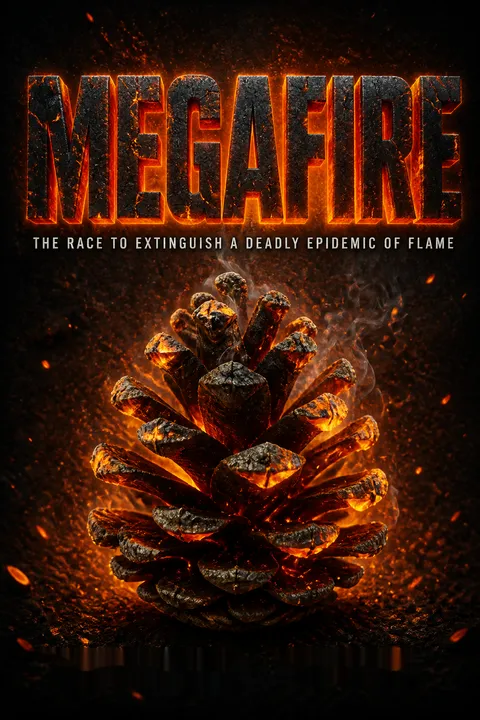
Megafire by Michael Kodas is a well-researched exploration of the increasing threat of wildfires. Readers praised Kodas's engaging storytelling, blending personal accounts with scientific and policy analysis. The book covers the causes of megafires, including climate change, forest management practices, and urban expansion into fire-prone areas. Many found the content informative and timely, though some felt the structure was disjointed. The book's focus on Colorado fires and firefighting strategies resonated with readers, particularly those living in wildfire-prone regions.
Glossary
megafire
high-impact wildfireA wildfire distinguished not only by the area it burns, but also by its intensity, speed, duration, deaths, property loss, and ecological or economic effects. The book describes disagreement over the term’s scientific meaning. In 2015, the U.S. Forest Service defined a megafire as one burning at least 100,000 acres, while Kodas argues that smaller fires can also have megafire-level consequences.
wildland-urban interface
homes beside fire-prone landThe area where development meets or is interspersed with wild vegetation that can burn. The book uses the term for communities exposed to wildfire, including homes surrounded by forests, grasslands, or scrub. Development in this zone adds structures and infrastructure that may need protection, complicates evacuation and firefighting, and creates more opportunities for human-caused ignitions.
fire regime
pattern of landscape firesThe characteristic pattern of fire in a landscape, including how often it burns, how intensely, and how much area it affects. Different ecosystems have different regimes: some ponderosa pine forests historically experienced frequent, low-intensity fires, while some lodgepole pine forests naturally experience infrequent, high-intensity fires. Human land use and climate shifts can alter these patterns.
ladder fuels
vegetation carrying flames upwardLow branches, shrubs, and small trees that allow a fire burning near the ground to climb into a forest canopy. When fires enter tree crowns, they may spread rapidly through exposed needles and branches, especially under strong winds. Fire suppression and dense growth can increase ladder fuels in some forests.
home ignition zone
area affecting house ignitionThe immediate area around a building where vegetation, debris, and construction materials can help ignite it during a wildfire. The book uses this term to shift attention from distant flames to nearby ignition sources, including embers landing in gutters, combustible materials under decks, or flammable siding. Managing this zone can reduce risk, though it cannot guarantee a home will survive every extreme fire.
slop-over
controlled fire escaping its lineA term firefighters use when a prescribed or backburning operation crosses the line intended to contain it. A slop-over can become a wildfire, especially when dry fuels, wind, and limited resources allow it to spread. The Lower North Fork Fire began when embers escaped a prescribed burn and ignited vegetation outside its control line.
fire-industrial complex
interests built around suppressionKodas’s term for the network of public agencies, private contractors, equipment providers, and development interests involved in wildfire suppression and management. The book argues that some participants benefit economically or politically from expanded firefighting and development in fire-prone areas. The term describes incentives and influence, not proof that every suppression decision is improper.
fire borrowing
redirecting funds to suppressionThe transfer of money from other agency programs to cover wildfire-fighting costs when designated suppression budgets are insufficient. The book describes funds being taken from forest restoration, recreation, research, and maintenance. Repeated borrowing can weaken prevention and preparation, potentially leaving agencies less able to reduce future fire risks.
Download PDF
Download EPUB
.epub digital book format is ideal for reading ebooks on phones, tablets, and e-readers.








