

Key Takeaways
Do not mistake violent games for a proven cause of real-world violence
A familiar fear returns. In Marshfield, Massachusetts, video games were banned for 32 years because local leaders believed they encouraged youth crime. The ban ended in 2014, by just 28 votes. The authors place this episode in a long history of moral panics: waves of fear in which a group or new form of entertainment is blamed for social problems beyond its demonstrated influence. Comic books, rock music, and television all faced similar accusations before video games did.
Technology made fear vivid. Early games used crude shapes and familiar make-believe scenarios. Mortal Kombat, Night Trap, and Doom unsettled parents and politicians partly because digitized actors, full-motion video, and first-person perspectives made violence feel newly realistic. The book argues that public alarm arrived ahead of convincing evidence that games caused real-world violence.
The historical pattern is useful because it shifts the question from whether a new medium feels disturbing to whether it produces measurable harm. That is a valuable safeguard against treating unfamiliarity as evidence. Still, the history of moral panics cannot prove that every concern about a new technology is misplaced. Some new products do create genuine risks. The lesson is methodological, not dismissive: define the proposed harm, seek evidence that could disconfirm the claim, and compare the risk with more established causes before reaching for bans or sweeping predictions.
Demand evidence of real harm, not a lab proxy called aggression
Measures shape conclusions. Many studies criticized in the book do not measure assault or violence. They use proxies such as self-reported irritation, willingness to deliver an unpleasant noise, or giving someone unwanted hot sauce. Some studies have even labeled games such as Pac-Man or Missile Command violent. The authors argue that results from these measures cannot establish that games cause serious real-world violence.
The effects are small. The book reports that violent games explain roughly 0.4% to 3.2% of variation in minor forms of aggression across research. It also describes a common experimental problem: unfamiliar games can frustrate participants, and frustration may be mistaken for an effect of violent content. Researchers have scored the same noise-blast task in many different ways, sometimes producing different conclusions from the same data.
This is a strong reminder that a measured outcome is not automatically a meaningful outcome. A laboratory measure can be reliable yet still fail to represent the public harm under discussion. Construct validity, meaning whether a test captures the concept it claims to measure, is central here. The authors' skepticism is warranted, though small effects should not be dismissed solely because they are small: repeated, well-measured effects can matter at population scale. Better practice includes preregistered analyses, transparent measures, and outcomes that match the policy claim.
Do not turn a shooter's game library into a causal explanation
A memorable link can mislead. The authors call the tendency to connect a violent crime to the perpetrator's video games the Grand Theft Fallacy. News reports highlight a shooter who played Doom or Call of Duty, while rarely mentioning violent offenders who did not play games or the millions of gamers who never commit violent acts. This imbalance can create an illusory correlation, a false impression that two things are connected because striking examples are easier to recall.
The base rates cut against the stereotype. A Secret Service study found that only 12% of school shooters had an interest in violent video games. In a later sample discussed in the book, the figure was 20%, compared with about 70% of typical male students. The authors also note that US violent crime fell while game sales rose, but correctly distinguish this pattern from proof that games prevent crime.
The chapter's best contribution is its insistence on comparing shooters with the population they come from, rather than collecting anecdotes that fit a frightening story. That is a practical use of base-rate reasoning. The caution applies in both directions: the fact that most gamers are not violent does not, by itself, rule out a small effect for some people. Nor do falling crime rates alongside rising game sales show that games make society safer. Individual risk assessment is better grounded in concrete threats, plans, and behavior than in a common hobby.
Judge problematic gaming by life interference, not hours logged
Time alone is a poor test. Jose plays four or five hours a day but keeps up with school and friendships. Amanda plays less, yet her grades are falling because she cannot stop gaming instead of doing homework. The contrast illustrates the book's practical definition of problematic gaming: the behavior matters when it persistently interferes with responsibilities or relationships, not simply when someone plays more than a parent considers reasonable.
Serious cases exist, but are uncommon. The authors estimate that about 1% to 3% of players may experience symptoms of problematic gaming. The DSM-5 listed Internet Gaming Disorder as a condition for further study, not as an established diagnosis. The book also cautions against equating gaming with substance addiction: typical harms described include missed work or school, while drugs can bring severe physical dependence and medical consequences.
Impairment is a more useful threshold than enthusiasm because it asks what the behavior is doing to a person's life. This also guards against confusing high engagement with disorder, a common problem when observers do not understand the activity. Yet impairment should not be treated as a complete explanation. Falling grades or isolation may precede heavy play and help drive it. A careful assessment asks what changed, what gaming replaces, and whether anxiety, depression, bullying, or family conflict is also present.
Treat games as possible belonging and recovery, not automatic isolation
Play can meet real needs. The book describes Jett, a bullied teenager facing depression and conflict at home, who found a sense of agency and purpose in Fallout 3. The game did not solve his problems, but its story and goals helped him imagine himself as capable during a bleak period. The authors use self-determination theory, which explains motivation through needs for autonomy, competence, and connection, to describe why games can feel rewarding.
Gaming is often social. More than 70% of gamers in the research cited play with friends. Multiplayer games can offer shared goals, conversation, cooperation, and a lower-pressure way for shy players to connect. This does not mean every gaming environment is supportive, or that online friendships replace every offline need. It does mean that hours spent playing cannot automatically be counted as hours spent alone.
The useful shift is from asking whether gaming is good or bad in the abstract to asking what function it serves for a particular person. A game can provide competence when school or work feels unrewarding, and connection when face-to-face interaction feels difficult. This resembles the way other hobbies offer structure and belonging. The benefit depends on context, however: a supportive guild and a hostile online space are not equivalent. Understanding the player's relationships and motivations is more informative than inferring isolation from the screen.
Virtual guilt can sharpen reflection, but it is not proof of moral training
Fiction can trigger real emotion. In a virtual-reality version of Stanley Milgram's obedience experiment, participants knew the person receiving simulated electric shocks was computer-generated, yet many still felt distress when the character protested. The authors use this to explain why players may feel genuine guilt about virtual choices, even while knowing no real person is being harmed.
Context changes the response. One study described in the book found that players assigned to act as terrorists shooting civilians reported more guilt and moral reflection than players acting as soldiers shooting terrorists. The authors also distinguish desensitization to fictional violence from desensitization to real suffering: the cited research found that exposure to violent media did not make viewers less upset by real violence. These findings suggest possible reflection, not a guarantee that games improve everyone's morality.
Interactive media creates a distinctive moral position: the audience does not merely witness an action, but may choose it and experience its consequences within a story. That can make guilt a prompt for reflection, much as role-playing exercises can help people examine decisions from another angle. But immediate emotion is not the same as durable moral growth. The game context, player interpretation, and later discussion all matter. The evidence here supports a plausible mechanism, not the broad conclusion that violent games reliably make players more ethical.
Expect game skills to transfer only when real tasks resemble play
Learning has boundaries. Transfer of learning means that a skill acquired in one setting carries over to another. The book argues that transfer is most likely when the tasks are similar. Action games have been associated with improvements in visual attention, contrast sensitivity, and spatial cognition. Some studies also found that surgeons who played video games performed better on computer-assisted laparoscopic tasks, which share visual and fine-motor demands with gameplay.
A game is not a universal trainer. Tetris can improve performance at Tetris without broadly improving spatial skill. Likewise, pressing controller buttons to fire a virtual weapon does not teach the grip, stance, aiming, or breathing involved in using a real firearm. Evidence for specific benefits is promising but disputed in some areas, and the authors caution against turning narrow training effects into claims that games make people generally smarter or more capable.
The transfer principle helps explain why games can train some skills without teaching everything their stories depict. Similarity of inputs, feedback, and goals matters more than a superficial resemblance in subject matter. A surgical simulation and a first-person game may share rapid visual scanning, while a controller and a real weapon do not share the same motor demands. The chapter is most persuasive when it remains specific. Small laboratory gains should still be tested in real settings before being treated as evidence of better professional performance.
Target food and movement, not screen time alone, when addressing weight
Screen limits do not create exercise. A study of more than 44,000 children found no meaningful relationship between time spent gaming and body size. In another program, students reduced television viewing by 43%, yet lost only about one pound on average. The authors argue that cutting screen time often changes what children do while sedentary, rather than making them active. They point to food and overall movement as more direct targets for weight management.
Make activity enjoyable. Exergames combine gameplay with movement. They may burn fewer calories than jogging or conventional exercise, but can make activity feel engaging and less socially intimidating. The book estimates that playing a game burning about 150 calories for 30 minutes each day could add up to more than 15 pounds of weight loss over a year, assuming no compensating changes in eating or other activity.
The distinction between removing a sedentary activity and adding movement is important for behavior change. Taking away a screen does not specify what replaces it, while an enjoyable active game gives a concrete alternative. The calorie projection is best read as an illustration of consistency, not a promise: energy expenditure and weight change vary, and appetite or other habits can offset activity. The broader point remains useful. Interventions tend to work better when they target the behavior directly, rather than treating screen exposure as a stand-in for diet and exercise.
Parent through curiosity, clear limits, and informed game ratings
Start with the child's reason. Veronica relies on World of Warcraft for friendships and confidence, so banning it outright could remove an important social outlet without addressing her underlying shyness. The authors recommend listening, explaining concerns calmly, and setting predictable limits tied to responsibilities. Homework or chores can come before gaming, with a clear route to earning time back rather than an indefinite ban.
Know what is on the screen. The Entertainment Software Rating Board provides age ratings, content descriptors, and summaries that help parents judge violence, language, sexual content, and other material. The book reports that about 90% of parents find the system useful, and that retailers generally enforce age restrictions. Parents can also watch or play a game with their child. Ratings inform a decision, but the child's age, temperament, and response still matter.
This approach treats parenting as guidance rather than a contest over control. Clear rules reduce ambiguity, while curiosity helps reveal whether gaming is entertainment, social connection, stress relief, or avoidance. Playing together can also turn a disliked medium into shared time and open discussion about its content. Ratings are helpful tools, not substitutes for judgment: a content label cannot predict how a particular child will respond. The strongest plan is specific to the child, consistent enough to be trusted, and flexible enough to change when circumstances do.
Analysis
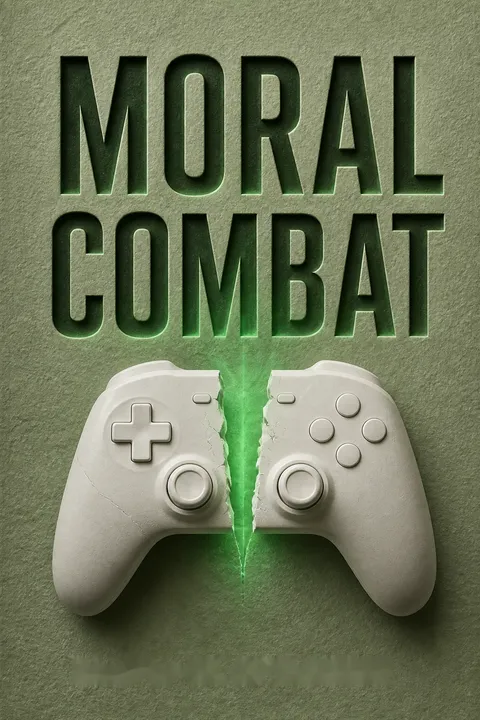
Moral Combat is a science-informed cultural argument organized around a central distinction: frightening depictions of violence are not the same thing as evidence that a medium causes violent crime. Its historical opening, from Marshfield's long-lived ban to the controversies around Mortal Kombat, Night Trap, and Doom, gives the argument narrative force. The later chapters widen the lens to research methods, crime statistics, addiction, morality, health, and parenting. The result is a book less about video games alone than about how fear, institutions, and weak measurement can reinforce one another.
Its most durable contribution is methodological. It asks readers to inspect what studies actually measure, whether a proxy matches the harm being claimed, and whether a headline has converted correlation into causation. The distinction between ordinary aggression measures and rare severe violence is essential. So is the warning that an anecdote about a perpetrator's media habits can become memorable without being predictive.
The book's confidence sometimes exceeds the caution it asks of its opponents. A decline in violence while game sales rise, or lower crime in high-gaming countries, cannot establish that games protect people; aggregate patterns are vulnerable to confounding and cannot settle individual-level causation. Likewise, flaws in particular laboratory measures do not prove that every possible effect is absent. The strongest defensible conclusion is narrower: the evidence presented does not justify treating violent games as a major cause of shootings or as a sound basis for broad censorship.
That distinction preserves the book's practical value without requiring readers to accept every rhetorical flourish. Games can be meaningful hobbies, social spaces, and sources of narrow skills, while still warranting age-sensitive choices and attention to actual impairment. Parents need neither panic nor blind reassurance. They need proportionate evidence, knowledge of the child, and willingness to revise a judgment when real consequences appear.
Review Summary
Moral Combat receives high praise for debunking myths about violent video games and their effects on behavior. Readers appreciate its well-researched content, accessible writing style, and humor. The book is lauded for addressing generational issues, moral panics, and providing evidence-based arguments. Many reviewers recommend it to parents concerned about their children's gaming habits. While some find certain sections challenging to read, the overall consensus is that the book offers valuable insights into the gaming industry and its impact on society.
Glossary
Moral panic
Disproportionate fear of a scapegoatA social reaction in which concern about a person, group, activity, or new medium greatly exceeds the demonstrated danger it poses. The feared target is treated as the cause of broad social problems, and public alarm can encourage politicians, media outlets, and advocates to demand action before evidence is strong.
Grand Theft Fallacy
Mistaking a crime link for causeThe authors' term for inferring that video games caused a crime because the perpetrator played them. News accounts often emphasize gamers who commit violence while overlooking violent offenders who did not play games and the vast number of players who commit no such acts. The selective examples can create a false impression of causation.
illusory correlation
A perceived link that is falseA mistaken belief that two events are connected because they seem to occur together, especially when the examples are vivid or memorable. People notice cases that fit an existing expectation and overlook cases that do not. In the book, this helps explain why reports linking a violent offender's gaming to a crime can distort perceived frequency.
Internet Gaming Disorder
Proposed diagnosis for harmful gamingA condition the DSM-5 identified as warranting further study, rather than an established diagnosis in the book's account. Proposed symptoms include preoccupation, withdrawal-like distress, unsuccessful efforts to cut back, and continuing despite serious consequences. The authors caution that checklists can mistake normal enthusiasm for disorder unless gaming causes meaningful impairment.
Routine activity theory
Crime requires an opportunityA criminological framework explaining crime through the convergence of a potential offender, a potential victim, and limited supervision or protection. Changing whether and where these elements meet can alter opportunities for crime. The authors apply this framework to argue that time spent gaming at home may reduce exposure to some street-crime situations.
Transfer of learning
Skills carry across similar tasksThe principle that learning in one setting may improve performance in another, especially when the two tasks share relevant demands. Game practice may transfer to tasks involving similar visual scanning or motor control, such as some computer-assisted surgical tasks. It does not follow that a skill transfers to dissimilar activities merely because their themes look alike.
Self-determination theory
Motivation through basic psychological needsA motivational framework used in the book to explain why people engage with games. It emphasizes needs for autonomy, competence, and relatedness. Games can appeal when they offer meaningful choices, achievable challenges, or social connection that a player feels is missing elsewhere. This helps explain engagement without assuming that heavy play is automatically addictive.
FAQ
1. What is Moral Combat: Why the War on Violent Video Games Is Wrong by Patrick M. Markey about?
- Debunking moral panic: The book critically examines the widespread fear that violent video games cause real-world harm, arguing these concerns are exaggerated and largely unsupported by evidence.
- Science and society: It explores how research, media, and politics have shaped public perceptions of video games, often leading to misleading conclusions about their effects.
- Cultural and psychological insights: The authors discuss why people are drawn to violent games, the history of moral panics, and the actual benefits and risks of gaming.
- Authors’ expertise: Written by psychologists Patrick M. Markey and Christopher J. Ferguson, the book draws on scientific studies and real-world examples to educate readers and policymakers.
2. Why should I read Moral Combat by Patrick M. Markey and Christopher J. Ferguson?
- Myth-busting approach: The book dismantles common misconceptions about video games, such as their alleged links to violence and addiction.
- Balanced, research-based perspective: It provides evidence-based insights into both the potential harms and benefits of gaming, helping readers make informed decisions.
- Practical guidance for parents: The authors offer actionable advice for managing children’s gaming habits and understanding game content.
- Accessible and comprehensive: The book is written for a broad audience, including parents, educators, and policymakers, making complex issues understandable.
3. What are the key takeaways from Moral Combat by Patrick M. Markey?
- No causal link to violence: Violent video games do not cause real-world violence or mass shootings, and crime rates have declined as gaming has become more popular.
- Addiction is rare and mild: Video game addiction affects a small percentage of players and is generally less severe than substance addictions.
- Benefits of gaming: Video games can improve mood, social skills, and cognitive abilities, and even promote physical activity through exergaming.
- Importance of context: The impact of gaming depends on individual circumstances, and moral panics often distract from real issues.
4. How does Moral Combat define and explain the concept of "moral panic" in relation to video games?
- Definition of moral panic: A moral panic is an exaggerated societal fear about a perceived threat, often blaming a scapegoat for broader social problems.
- Historical parallels: The book compares video game panics to past fears over comic books and rock music, showing a recurring pattern of generational anxiety.
- Self-perpetuating cycle: Media sensationalism, political pressure, and biased research fuel a cycle of fear that distorts public understanding and policy.
- Impact on science and policy: Moral panics can lead to flawed research and misguided regulations targeting video games.
5. What is the "Grand Theft Fallacy" as described in Moral Combat by Patrick M. Markey?
- Definition of the fallacy: The Grand Theft Fallacy is the mistaken belief that violent games like Grand Theft Auto directly cause real-world violent crimes.
- Illusory correlation: Media and public focus on rare cases where criminals played violent games, ignoring the vast majority of non-violent gamers.
- Misleading policy and legal outcomes: This fallacy has influenced court cases and public policy, despite a lack of supporting evidence.
- Importance of rigorous analysis: The authors stress the need for careful scientific methods to avoid confusing correlation with causation.
6. What does Moral Combat reveal about the scientific research on violent video games and aggression?
- Methodological flaws: Many studies use poor measures of aggression and inconsistent definitions of violence, often confusing frustration with violent content effects.
- Small effect sizes: Meta-analyses show that violent games account for only a tiny fraction of minor aggressive behaviors, not serious violence.
- Political and funding pressures: Research priorities and interpretations have been skewed by political agendas and funding sources.
- Shift in scientific consensus: Most scientists now reject the idea that violent games significantly increase aggression or violence.
7. How does Moral Combat address the link between violent video games and school shootings?
- No evidence of causation: Data show that school shooters are less likely to be interested in violent games than typical youth.
- Real risk factors: Social rejection, mental illness, and lack of social skills are more reliable indicators of potential violence.
- Critique of warning checklists: Including "plays violent video games" as a risk factor can lead to harmful mislabeling and distract from real causes.
- Media and policy misdirection: The focus on games diverts attention from addressing underlying social and psychological issues.
8. What does Moral Combat by Patrick M. Markey say about video game addiction and its controversies?
- Addiction defined by interference: True addiction is about gaming interfering with life responsibilities, not just time spent playing.
- Rare and mild cases: Only 1–3% of gamers show symptoms of addiction, which are generally less severe than substance abuse.
- Checklist limitations: Many diagnostic criteria overlap with normal gaming behaviors, risking false positives.
- Contextual factors: Problematic gaming often co-occurs with issues like depression or social anxiety, and gaming can also be a healthy outlet.
9. What are the benefits of playing violent video games according to Moral Combat?
- Stress relief and mood improvement: Games can reduce stress and provide a sense of accomplishment and purpose.
- Social skills and connection: Many games foster cooperation, communication, and friendships, especially for shy or isolated individuals.
- Cognitive and motor benefits: Action games can improve visuospatial skills, multitasking, and hand-eye coordination.
- Physical activity through exergaming: Some games encourage movement and exercise, contributing to better health.
10. How does Moral Combat by Patrick M. Markey address the moral impact of video games on players?
- In-game choices reflect real values: Players’ decisions in games often mirror their real-world moral sensitivity.
- Games can increase moral reflection: Experiencing guilt from virtual antisocial acts can lead to greater empathy and moral awareness.
- Desensitization fears overstated: While players may become desensitized to fictional violence, their empathy for real suffering remains intact.
- Games as a mirror, not a mold: The book argues that games reveal, rather than shape, players’ moral character.
11. What does Moral Combat say about video games and physical health, especially regarding obesity?
- No direct link to obesity: Large studies find no meaningful relationship between gaming time and body weight.
- Exergaming as a positive: Games that involve physical activity can help burn calories and motivate exercise.
- Broader societal factors: The obesity epidemic is driven more by overall lifestyle and diet than by video games.
- Screen time reduction not a cure: Simply cutting gaming time does not lead to significant weight loss, as sedentary behavior is often replaced by other inactive activities.
12. What practical advice does Moral Combat by Patrick M. Markey offer to parents and society about video games?
- Use ESRB ratings: Parents should use the video game rating system to guide age-appropriate choices.
- Focus on context and communication: Consider the child’s social environment, individual needs, and set clear, consistent rules about gaming.
- Be informed and involved: Parents are encouraged to learn about game content, play with their children, and foster open dialogue.
- Avoid moral panic: The authors urge society to resist sensationalism and focus on evidence-based approaches to media use.
Download PDF
Download EPUB
.epub digital book format is ideal for reading ebooks on phones, tablets, and e-readers.








