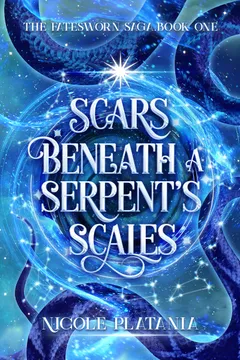


Plot Summary
Prologue
A Fate imprisoned beneath a broken dome senses a change moving through the worlds. She understands fortune and disaster as paired forces, and the prophecy forming in her mind binds blood, sacrifice, family, and a choice that must be made.
Its images are cryptic, but one warning is clear: someone is coming, and madness will follow. The Fate cannot leave her cage or explain what she knows. Her vision opens the story with a future already pressing against the present, while the identity of the one who will arrive remains unknown.
The prologue makes fate feel less like a map than a pressure system: its paired forces can be read as promise or calamity, but not cleanly separated. The imprisoned Fate’s insight offers no practical control, only awareness that consequences are gathering. That tension anticipates the novel’s central question: if a future is foretold, what responsibility remains with the people caught inside it? By keeping the prophecy unnamed and incomplete, the opening creates dramatic irony without giving the reader a usable answer. Knowledge is present from the start, but understanding must be earned through events.
The Hunt Beneath Lyra
Emmeline DeLeoste, a Fate-reading instructor at Lyra Temple Academy, spends her nights pursuing men connected to the trafficking of children with magical abilities. She kills a former trader who cannot identify the operation’s leader, but learns that a senior figure once supervised shipments himself.
The information sharpens her private search for her missing sister, yet a new danger interrupts it: women have begun disappearing across Lyra. Temple Master Aldryn Fallaire summons Emmeline and Roremar Silventa, a former army scout known for reckless tactics, to investigate together.
Fallaire offers Emmeline a chance to transfer to the capital if she succeeds. Roremar’s reward is help paying for his younger siblings’ education. Their investigation begins with different goals, joined by one deadline.
Emmeline’s opening act establishes both her competence and the cost of the survival strategy she has built. She uses patience, disguise, and lethal force to pursue an old injustice, while hiding that work from the institution that employs her. The case of the missing women forces her into public responsibility just as she has made solitude her protection. Roremar enters with a parallel form of concealment: his rough reputation masks the care and financial strain organizing his life. Their incentives are transactional at first, but each already carries a private wound that will complicate the bargain.
The Reckless Assignment
Roremar accepts the assignment after Fallaire promises to cover his siblings’ schooling, then learns he must teach sparring at the Academy to explain his presence there. He and Emmeline clash immediately over how to investigate.
At breakfast, she attempts a reading and reports that her Fate warns them away from the case, but Roremar presses for a more active search. Their argument exposes how little either trusts the other, and Emmeline leaves rather than continue the partnership.
She later follows two cloaked men near the Academy, choosing one path after a cryptic reading directs her. Roremar, meanwhile, drinks at the Mezzanine. A scream draws both toward the docks, where they find a murdered traveler with a fresh, uneven star tattoo across her chest.
The partnership fails first because each protagonist mistakes self-protection for sound judgment. Emmeline treats withdrawal as a way to prevent a foretold disaster; Roremar treats decisive action as the only reliable answer to uncertainty. Neither recognizes that their methods are also defenses against dependence. The first murder makes their disagreement materially consequential: while Emmeline follows a lead, the killer acts elsewhere, and her private hunt cannot substitute for a coordinated investigation. Roremar’s intoxication also contrasts with his usual vigilance, showing that his burdens sometimes drive him toward escape rather than control.
A Body at the Docks
Roremar studies the dead traveler rather than the horrified crowd. The star tattoo is badly made, placed conspicuously on her chest, and marked with a fresh red edge. His friend Desmond Alvanti, a tattoo artist, confirms that the work is too crude for a professional hand.
Emmeline watches from the shadows in the dark leathers she wears on her own hunts. She and Roremar exchange a silent acknowledgment that the murder belongs to their case, then leave without explaining their other purposes.
The body changes their arrangement: both now know the killer is acting in public, and neither can dismiss the investigation as an abstract assignment. Roremar begins gathering evidence through Lyra’s negligent guard service, while Emmeline resumes working beside him.
The first crime gives the investigation a visible object and exposes the different ways the protagonists process suffering. Roremar separates a victim’s life from the evidence because analysis lets him function around death; Emmeline’s concealed presence suggests that she has already learned to operate near violence without allowing others to see her. Their wordless agreement matters precisely because it is not yet trust. It is a practical recognition that each possesses information or skills the other lacks. The crude tattoo and public placement also make the murder feel communicative, as if the killer wants the bodies to be read.
The Star on Skin
Roremar brings in Desmond and his younger brother Nico to help examine the first victim’s tattoo and identify her medallion. Emmeline connects the medallion’s wing-and-rose design to a local tattoo shop, but its owner is away, leaving the lead unresolved.
Soon a second woman is found dead on a beach, her throat cut and another uneven twelve-pointed star inked on her chest. She holds a scrap containing references to sacrifice, while a ring of ash circles her body.
Emmeline argues that the scene resembles a ritual, possibly tied to a cult; Roremar agrees to investigate the possibility while continuing to test other explanations. The ash, the repeated symbol, and the victims’ shared status as women turn separate disappearances into a pattern.
The second scene changes the case from a search for a killer into a search for a system. Repetition implies design, while ash and the victim’s written fragment invite religious interpretation without proving it. Emmeline is willing to use myth as evidence because she understands the symbolic grammar of her culture; Roremar resists premature certainty because a compelling story can distort an investigation. Their productive disagreement preserves multiple hypotheses. It also shows how institutions shape what counts as knowledge: the guard has gathered basic records, but the investigators must interpret the overlooked details themselves.
Blood on the Wall
After a late reading leaves Emmeline exhausted, an attacker enters her Academy dormitory, chokes her, and leaves a blood-written warning over her bed. Roremar feels her distress before anyone reaches her and runs to the room with Desmond and Nico. He finds her frightened among broken glass and extinguished starfire, then carries her to an empty apartment above Desmond’s parlor.
Emmeline wakes disoriented and initially panics at being under Desmond’s roof, but Roremar steadies her and offers her a choice about staying. She accepts his protection, a new kind of trust for someone who has spent years refusing help. The attack also makes the murder investigation personal: someone knows where she lives and can reach her inside the Academy.
The attack turns Emmeline’s policy of isolation into a practical vulnerability. Her skills protect her in alleys, but they cannot guarantee safety in a place she once considered secure. Roremar’s response is significant because he helps without demanding an explanation or treating her fear as failure. His care does not erase the danger; it gives her a temporary place from which to face it. The warning on the wall also transforms the case’s symbolic clues into direct intimidation. The killer is not merely leaving messages for the public. Emmeline herself has entered the pattern.
Liana in the Vines
As Emmeline recovers, she confides in Myrella, a fellow instructor, and receives her help with the investigation. Roremar and Emmeline pursue the tattoo and ash clues while Lyra imposes a curfew to contain the growing fear. Their search is interrupted when Liana, another instructor and Charisse’s secret partner, is found with her throat cut near the Academy vineyards.
Her body is carefully arranged, without blood at the scene, and ash marks her hands and clothes. Charisse’s grief confirms that Liana mattered deeply to those around her, while the repeated tattoo links her death to the earlier victims. The murder makes the case impossible to keep at arm’s length, especially for Emmeline, who is beginning to form friendships at the Academy.
Liana’s death reveals that emotional closeness is not a luxury outside the investigation; it is one of the facts that makes violence legible. Charisse can describe the life the crime scene cannot, and Myrella’s grief gives Emmeline a model for sharing rather than suppressing loss. The killer’s careful arrangement of the body suggests a ritual or a gesture of respect, but neither interpretation comforts the survivors. Emmeline’s new connections therefore increase both her capacity to understand other people and her exposure to pain. Her long-standing equation of attachment with danger begins to be tested in public.
Alvan’s Speaking Fates
Evidence points toward Alvan, the neighboring isle associated with art and warfare. Emmeline, Roremar, Desmond, Nico, and Myrella travel there to seek records unavailable in Lyra.
The Alvan Accords restrict access to private files, so Desmond leads them instead to the Lair, a strange chamber where Storytellers represent the Fates. Emmeline and Roremar are admitted; Desmond is turned away. Three Storytellers discuss the tangled histories of Anphrosia, Arenothos, and Aevollon, while a silent figure observes from a darkened section.
They cannot identify the killer, but direct the pair to the Mourning Gardens and tell them to seek a reflection connected to Anphrosia. The visit supplies a route forward while making clear that divine guidance will remain partial.
The journey to Alvan expands the story’s geography and its limits of knowledge. Official records are controlled by local authority, while supernatural witnesses possess insight but refuse straightforward explanation. Emmeline and Roremar are admitted because their roles are entangled with the question, whereas Desmond’s exclusion hints that personal connection does not guarantee access to truth. The Storytellers’ riddles mirror the investigators’ own habits: both offer fragments that require interpretation. The scene also destabilizes the comforting idea that the Fates are neutral sources of guidance. Their histories contain rivalry, desire, and grievance, all of which may still shape the living.
The Victims Share Anphrosia
At the Mourning Gardens, the group separates to question visitors. Emmeline finds a secluded pool whose reflection fills with images of the victims, each linked by a bright thread to Anphrosia, the Fate of Cruelty and Adoration. The vision also shows that Emmeline shares that connection, making her a likely target.
Roremar draws her away from the vision, and they return to Lyra with a clearer theory: someone is selecting women tied to Anphrosia. Emmeline then connects Desmond’s Alvan origins, his access to imported ink, and his presence near the first murder. She confronts him with Roremar beside her, convinced the evidence points to his two Fate ties and the ritual tattoos.
The reflecting pool converts a supernatural hint into a testable pattern, but its revelation is also intimate: Emmeline discovers that she is not simply investigating the threatened women; she belongs among them. That knowledge sharpens her urgency while increasing her temptation to act alone. Her accusation of Desmond demonstrates the danger of treating a coherent pattern as a complete explanation. She has real evidence, but she has not yet understood its context. The episode therefore distinguishes analytic accuracy from epistemic humility. A person can correctly identify every clue and still misread what those clues mean.
The Wrong Accusation
Desmond acknowledges that Emmeline’s clues are accurate but denies killing anyone. He explains that he has been secretly bringing extra ink to Lyra to support his business and protect his mother, whom he rescued from an abusive home on Alvan. The house Emmeline watched was his mother’s new refuge, and the man she followed on the first murder night was Desmond, meeting a contact about shipments.
Roremar learns that his closest friend has hidden this from him, while Emmeline sees how badly her accusation has damaged their partnership. She and Roremar stop working together for several days. The truth clears Desmond of murder but leaves the imported goods unexplained, and the breach of trust sends each investigator back to solitude.
Desmond’s explanation reframes suspicious behavior as protective secrecy rather than criminal intent. His choices remain unlawful, but they arise from a concrete obligation to his mother, not from the motive Emmeline assigned him. The scene refuses an easy moral binary: care can involve deception, and deception can still harm people who have earned trust. Emmeline’s error is not that she noticed evidence, but that fear of intimacy made her withhold her theory until accusation was unavoidable. Roremar’s anger is therefore about more than a wrong suspect. He has been denied the chance to act as a partner.
The Snake Charmer’s Price
Emmeline apologizes to Roremar and asks him to accompany her to the Mezzanine, where she seeks information from Brutus Celvo, the Snake Charmer. Brutus demands a dance as payment. Emmeline performs while Roremar watches, unable to intervene without jeopardizing the information she needs.
Brutus reveals that shipments listed as ink also contain seeds, likely connected to the dangerous drugs circulating on Lyra, and suggests revenge as the killer’s motive. The experience triggers Emmeline’s memories of being sold to Brutus as a teenager and forced to perform with his snakes. Afterward, Roremar waits outside the bath while she tells him how her sister Addie was taken, her mother was murdered, and she has hunted the traffickers ever since.
The scene turns information gathering into an encounter with the bodily cost of survival. Emmeline’s performance is not a freely chosen display of confidence; it is a price imposed by a powerful man who once controlled her. Roremar’s inability to stop it exposes the limits of protective impulse, while his decision to remain available afterward gives her control over what she discloses. Her story explains why she confuses closeness with peril and why the search for her sister governs her plans. The seeds also connect the trafficking investigation, the drug trade, and the murders without yet revealing how they intersect.
A Birthday by the Sea
Roremar brings Emmeline to his family home for his youngest sister Siena’s birthday. She meets his mother Chrysta, Siena, Vivienne, and Leo, and sees how the siblings rely on Roremar to manage their daily lives. Nico, meanwhile, tries to repair his relationship with Myrella after admitting he lied about leaving Lyra when they first met.
Emmeline joins the family’s cooking, games, and night swim, watching Roremar move from guarded investigator to affectionate older brother. Later, he explains that his father died in his arms during an army mission and that he took on the family’s finances and care afterward. Their growing trust draws them into a tender, intimate night, but the case remains active and a new murder is approaching.
The family visit gives Roremar’s sense of duty a lived texture: it is not an abstract virtue but schedules, lessons, meals, repairs, and the daily management of other people’s hopes. Emmeline sees that his apparent control is partly a response to an early demand that he replace an absent provider. Nico and Myrella’s subplot offers a contrasting model of repair, where honesty can begin after a lie but cannot erase it instantly. The intimacy between Emmeline and Roremar grows from being witnessed in ordinary life, not only from danger or attraction, making their eventual separation more consequential.
Seeds Beneath Lyra
A fourth victim, a Mezzanine dancer, is found near the Promenade, confirming that the killer is no longer concealing the bodies. On the eve of the Revels, Emmeline loses her mother’s ring and follows the panther Cirre into tunnels beneath the cliffs after recovering it. Roremar joins her with evidence from the guard: a cave bears the same uneven star carved on the victims, beside mysterious seeds.
In a larger chamber, they discover the flowers that have been burned around the bodies and mixed into dangerous drugs. Behind a moss curtain lie four more dead women, including a recent victim, and a stolen book of Desmond’s tattoo designs. Roremar leads Emmeline out before the scent overwhelms her.
The cave supplies the investigation with its first material convergence: the star, imported seeds, flowers, drugs, and bodies occupy the same hidden place. The discovery does not yet identify the killer, but it proves that the ritual has an infrastructure rather than being an isolated series of crimes. Emmeline’s lost ring briefly reopens her bond with her mother and sister, while Cirre’s guidance draws her into the danger before she knows what awaits. Roremar’s choice to prioritize getting her out demonstrates how much his protective role has become personal, even as the evidence around him grows more disturbing.
Nico’s Blood, Roremar’s Chains
On the first morning of the Remembrance Revels, Emmeline follows a powerful pull to the Trade House cells. There she finds Roremar clutching Nico’s lifeless body beside an altar. Nico’s throat has been cut, his chest bears the familiar star tattoo, and ash stains Roremar’s hands. Roremar does not resist when the guards seize him.
Emmeline is left with evidence that seems to implicate the man she has come to love, while Myrella learns that Nico is dead and the promise of their future is gone. The festival continues above them as Lyra celebrates the supposed defeat of its old chaotic Fate. Emmeline cannot make Roremar’s actions fit the brother she knows, but the physical facts are impossible to ignore.
The apparent solution is emotionally designed to resemble the worst possible truth. Roremar is found with the weapon, the body, and the ritual marks, while his silence prevents him from offering an alternative account. The evidence is powerful precisely because it is concrete, but the scene also places it inside a relationship structured by trust and shared observation. Emmeline must decide whether to privilege what she sees or what she has learned about his character. Myrella’s bereavement further widens the consequences: the mystery is no longer only about identifying a murderer, but about whether grief will become another instrument of isolation.
A Case Against the Cell
After comforting Myrella, Emmeline reviews the evidence and notices that Roremar’s apparent guilt has no credible motive. She visits his younger siblings, Leo and Vivienne, who insist that the brother they depend on would never harm Nico. Emmeline then seeks help from Desmond, who tests her resolve before agreeing to assist.
During a reading, Anphrosia confirms that Emmeline lacks the full story and warns that more blood may be shed if nothing changes. The Fate’s words reinforce Emmeline’s suspicion that Roremar is not the true culprit, but they do not explain how the killings occurred. She returns to the case with Desmond, determined to investigate the gaps rather than accept the arrest as closure.
Emmeline’s decision marks a return to disciplined doubt. She does not dismiss the evidence because she loves Roremar; she asks what the evidence cannot explain, especially the absence of motive and his lifelong devotion to Nico. The siblings’ testimony is emotionally compelling but not sufficient, so she seeks corroboration from Desmond and the Fates. Anphrosia’s partial confirmation offers direction without absolution, preserving Emmeline’s responsibility to investigate. This is a meaningful shift from her earlier accusation of Desmond: she now shares uncertainty with an ally instead of privately turning suspicion into certainty.
The Lost Constellation
Emmeline compares Roremar’s supposed connection to Pheasantos against star charts and discovers that the Fate’s constellation disappeared during the year Roremar was born. His claimed tie could not have formed normally. She and Desmond also recognize that the Warders of Selene are not simply an active cult; their symbols represent the Fates themselves.
Emmeline combines these clues with the silent Storyteller, the wine imagery, and the murders’ ritual pattern, then asks the Alvan and Byron leaders to attend a hearing. Her conclusion is that Dryvius, the supposedly dead Fate of Chaos and Revelry, has been using Roremar as his sole conduit. Roremar’s body committed the killings while his waking mind remained unaware.
The solution emerges through convergence rather than a single miraculous revelation. Astronomy exposes the false premise of Roremar’s stated alignment; iconography reclassifies the supposed cult mark; and the silent Storyteller becomes legible in retrospect. Emmeline’s expertise is not simply supernatural access but the ability to connect systems of evidence that have been treated as separate. Yet the discovery carries moral complexity: explaining how Roremar’s body acted does not erase the deaths or his grief. The case’s central distinction becomes agency versus physical causation, a distinction that institutions may not be willing to honor.
Eleven Lights Break Free
At the hearing, Roremar confirms that Dryvius is his Fate, and Emmeline explains how the dead Fate seized control of him. The officials accept that the killings were not willed by Roremar but still treat his power as a threat. They order him into the Trade House’s seeing chamber, where intensified magic tears at his mind and body.
Emmeline fights through the guards and enters the chamber, breaking its structure with an eruption of power. As the roof collapses, eleven constellations answer her, revealing that she is tied to every living Fate. The supposedly dead Fate’s constellation returns as well. The display saves Roremar from immediate separation, but exposes Emmeline’s hidden power to the island’s leaders.
The climax forces Emmeline to choose between secrecy and another person’s survival. She has spent years suppressing her exceptional magic because visibility once made her family a target; now she makes herself visible to stop an institution from treating Roremar as a disposable danger. The seeing chamber embodies that institution’s desire to turn spiritual connection into a controllable instrument, while its destruction makes such control impossible. The revelation of eleven ties is both rescue and exposure. Emmeline gains the power to intervene, but the political world immediately converts that power into a claim on her future.
The Twelfth Star Returns
The officials kneel before Emmeline’s revealed power, but Maeson argues that Roremar must still be removed because his connection to Dryvius could endanger her and others. Roremar accepts the guards’ custody, urging Emmeline to pursue the transfer she has wanted for years and find her sister.
Before they separate, she breaks her long-standing rule against kissing him, and he promises he will seek her again. Fallaire then announces that a place for Emmeline in Valyn is available.
She has finally secured the opportunity that drove her choices from the beginning, yet Roremar is being taken from her and the Fate’s constellation now shines again. The book ends without resolving his sentence or their reunion, leaving Emmeline to face a future she once believed she wanted.
The ending grants Emmeline her stated objective while making clear that achievement and fulfillment are not identical. Valyn represents access to records and the hope of finding her sister, but the price of that opportunity is immediate separation from the person who helped her imagine belonging. Roremar’s willingness to accept removal is consistent with his lifelong habit of sacrificing his own future for others, even when that sacrifice may not be necessary. The returning constellation complicates any sense of closure: Dryvius remains present, and the institution’s response is still containment rather than understanding. The novel resolves the mystery but leaves its central bond and political danger suspended.
Analysis
The novel’s mystery turns on a distinction between what a body does and what a person wills. Roremar is made physically responsible for violence he cannot remember, so the evidence against him is not false; it is incomplete in a way that threatens to make punishment look reasonable. Emmeline’s work is therefore more than identifying a culprit. She must persuade people to recognize a form of coercion their institutions have helped normalize through controlled readings and forced access to magic.
Both protagonists begin by treating isolation as competence. Emmeline hides her past, her sister’s disappearance, and the reach of her magic. Roremar hides his grief and carries the family’s needs without allowing others to share the burden. Their intimacy changes that arrangement, but it cannot simply cure either wound. Emmeline learns to disclose and accept help; Roremar begins to imagine a life not wholly defined by duty. Their separation at the end makes the cost of that change immediate rather than sentimental.
The book also distrusts clean moral categories. Desmond breaks trade rules to protect his mother. Emmeline kills people while pursuing a cause she considers just. Roremar’s body performs murders under a power he never chose. Aldryn seeks island independence while manipulating the people who serve his plans. In each case, motive matters, but motive does not erase harm. The novel asks whether accountability can distinguish between an action’s consequences and the agency behind it.
Finally, fate here is less a fixed script than an unequal distribution of power. The Fates offer partial knowledge, while institutions decide whose magic is useful and whose is dangerous. Emmeline’s revealed connections do not simply crown her; they make her valuable to political leaders who may claim authority over her. Her final uncertainty about Valyn challenges the assumption that reaching a long-sought goal will answer the need that produced it. The story closes with the mystery explained, but with freedom, justice, and belonging still unsettled.
Review Summary
Scars Beneath a Serpent's Scales receives mostly glowing reviews, with readers praising its unique celestial magic system, compelling murder mystery, and agonizingly satisfying slow-burn romance between Emmeline and Roremar. Many highlight the shocking twists, rich world-building, and emotionally layered characters as standouts. The dual audiobook narration also earns praise. Critical reviews cite uneven pacing, underdeveloped world-building, confusing prose, and an overly slow first act. A few readers found the romance juvenile or formulaic. Overall, the book averages 4.07 stars, with most readers eagerly anticipating the sequel.
Characters
Emmeline DeLeoste
The guarded Fate readerEmmeline teaches students to interpret and control their Fate readings while keeping her own life carefully divided between the Academy and a secret night hunt. She is intelligent, observant, and capable of violence, but her competence is built around avoiding dependence. Her missing sister and the violence that shaped her childhood drive her toward the capital, where she hopes to find answers. Emmeline’s instinct is to turn fear into self-sufficiency, and she often mistakes distance for safety. Teaching gives her a gentler way to exercise power: she encourages young Starsearchers to trust their abilities rather than be ruled by them. Her challenge is to let others see her without surrendering her agency.
Roremar Silventa
The burdened former scoutRoremar is a former army reconnaissance scout whose reputation for reckless schemes obscures a methodical mind and a fierce capacity for care. Since his father’s death, he has organized his family’s finances, education, and daily life, treating responsibility as both purpose and penance. He is observant because he expects danger and because solving problems gives him a sense of control. Humor and flirtation let him test people without exposing how much he needs their loyalty. Roremar resents being reduced to his old reputation, yet he continues to take risks when he believes the people he loves will benefit. His deepest conflict is whether protecting others means making every choice for them.
Desmond Alvanti
The loyal tattoo artistDesmond is Roremar’s oldest friend and a talented tattoo artist who offers practical help with investigations, business, and family life. His easy charm can make him seem careless, but it sits beside a fierce loyalty and a willingness to break rules for people he loves. He and Roremar share a history of military service and mutual support, though both sometimes hide important truths rather than burden the other. Desmond reads through ink and design as naturally as Roremar reads a battlefield, and his artistic knowledge helps the investigation follow visual clues. His care for his family is protective and pragmatic, even when his secrecy strains the trust he values.
Myrella
The generous colleagueMyrella is a warm, attentive instructor whose work with young students reflects her instinct to make unfamiliar magic feel manageable. She notices when Emmeline is isolated and keeps approaching her without demanding instant intimacy. Her affection for Nico makes her cautious after he gives her a false explanation for leaving, but she is willing to reconsider when he offers the truth. Myrella’s openness is not naivety; it is an active choice to make room for other people. She becomes an important source of practical help and emotional companionship, particularly when the investigation begins to fracture the Academy community.
Nico Silventa
The hopeful younger brotherNico is Roremar’s younger brother, an apprentice at the Trade House and a gentle presence among his siblings. He wants to shoulder more of the family’s responsibilities, even when Roremar’s protectiveness keeps him from doing so. His connection with Myrella is immediate, but fear of adding another obligation to Roremar’s life leads him to conceal his plans and pretend he is leaving Lyra. Nico combines charm with a serious sense of loyalty. He is trying to become his own person without abandoning the family that shaped him.
Aldryn Fallaire
Lyra’s strategic masterAldryn is the Temple Master of Lyra and a powerful organizer of the island’s institutions. He recruits Emmeline and Roremar because their skills suit a discreet investigation, then ties their success to the futures they each want. His authority is expressed through careful arrangements, favors, and deadlines rather than open force. Aldryn understands that people are motivated by personal needs, and he is willing to use that knowledge to keep Lyra functioning according to his vision. His concern for stability is genuine, but it is difficult to separate that concern from his appetite for control.
Brutus Celvo
The Snake Charmer brokerKnown as the Snake Charmer, Brutus Celvo is an underworld broker who trades information for favors and surrounds himself with theatrical displays of danger. He has connections to illicit commerce and understands how secrets move between businesses, ports, and powerful people. His manner makes every exchange feel like a test of control. Brutus does not offer help out of generosity; he expects payment and watches closely for weakness. His establishment represents the way a person can turn private knowledge into a source of power.
Chrysta Silventa
The resilient family centerChrysta is Roremar and Nico’s mother, a caring parent whose chronic headaches and demanding work leave her physically vulnerable. She keeps the household warm through cooking, attention to her children, and an effort to preserve the family’s connection to their father. Chrysta accepts help when necessary but does not surrender her own preferences or dignity. Her quiet presence helps explain why Roremar feels responsible for keeping the household stable, even when that responsibility consumes his life.
Siena Silventa
The spirited youngest sisterSiena is Roremar’s youngest sister, a confident child who loves art, games, and being included in the family’s plans. She is quick to speak her mind and relies on Roremar’s attention without treating his care as remarkable. Her birthday gives Emmeline a glimpse of the family’s ordinary tenderness.
Vivienne Silventa
The budding dressmakerVivienne is one of Roremar’s younger sisters. She enjoys sewing dresses and tending the plants around the family home, and she argues with her siblings with the confidence of someone who knows she will be forgiven. Her creativity gives the family a small, vivid pleasure amid financial strain.
Leo Silventa
The observant youngest brotherLeo is Roremar’s youngest brother, a bookish boy who collects stories and facts about the world beyond Lyra. He admires Roremar and assumes his older brother can repair nearly anything. That confidence reflects how much the family relies on Roremar, even when they do not see the cost.
Liana
The confident Academy instructorLiana is an instructor at the Academy, known for her confidence, teasing humor, and ease with other people. She shares a private relationship with Charisse and brings a lively, social energy to the staff. Her ability to make others laugh contrasts with the guardedness Emmeline often brings into shared spaces.
Charisse
The outspoken apothecaryCharisse teaches apothecary studies and knows how to grow, prepare, and use herbs, oils, and incense. She is outspoken and playful with her colleagues, but her knowledge also gives her a practical concern for contaminated supplies. Her closeness to Liana is private because the Academy restricts relationships among instructors.
Aviana
The questioning studentAviana is one of Emmeline’s students, a thoughtful girl who asks precise questions and is willing to admit when magic unsettles her. She responds well to patient guidance and represents the younger generation Emmeline hopes will learn to approach power with curiosity rather than fear.
Torvin Darcy
The diligent guard contactDarcy is a former soldier who now serves with Lyra Isle Guard. Unlike many of his colleagues, he takes the disappearances seriously and shares records with Roremar. His decision to settle on Lyra for his family gives him a perspective that connects military discipline with civilian responsibility.
Dryvius
The lost Fate of revelryDryvius is remembered as the Fate of Chaos and Revelry, whose place among the stars was lost long ago. Stories portray him as an agent of indulgence and disruption, but accounts of his history are incomplete and contradictory. His absence shapes Lyra’s annual Remembrance Revels, where people celebrate the end of his celestial place even as they preserve his symbols in art and ritual.
Anphrosia
The Fate of tangled desireAnphrosia is the Fate of Cruelty and Adoration, associated with attraction, betrayal, and the pain that can accompany desire. Her legends describe powerful attachments and the damage left when affection is unevenly returned. Her readings can be intimate and challenging, forcing Starsearchers to question whether a painful event is meaningless or part of a larger balance.
Metrina
The Fate of grim prophecyMetrina is the Fate of Prophecy and Demise, to whom Emmeline is connected. Her fortunes are often difficult to interpret and rarely arrive as direct instructions. She offers warnings through images, fragments, and symbols, leaving the Starsearcher responsible for deciding how to act.
Cirre
The watchful pantherCirre is a panther who has chosen to remain near Roremar’s family. Her crescent marking and quiet appearances make her feel like part of the island’s living magic. She is not a pet to be commanded, but a presence that sometimes chooses to guide the people she has accepted.
Enya Yorren
Alvan’s practical War MasterEnya is Alvan’s War Master, responsible for military order and patrols on her isle. She takes Emmeline’s request seriously enough to release records that may help the investigation, despite the usual barriers between island authorities.
Maeson Trellis
Byron’s guarded cartographerMaeson is Byron’s Lead Cartographer, an expert in star maps and the records surrounding constellations. He approaches unusual celestial claims cautiously, relying on documented history, but is willing to examine evidence that challenges what his isle believes.
Plot Devices
Fate ties
Magic with a human costEvery Starsearcher is connected to one or more of the twelve Fates, and readings pass through that bond using incense, oils, or other prepared materials. The connection offers glimpses of possible futures, but the messages are often symbolic and can overwhelm the person receiving them. Fate ties also create a social and political identity, since a person’s alignment may determine what training and responsibilities they receive. In the investigation, the ties help connect victims, guide Emmeline toward clues, and complicate the question of who is responsible when a person’s body acts under another power’s control.
Starfire readings
Clues hidden in visionsStarsearchers use carefully chosen herbs, oils, and incense to open communication with their Fate. Each material changes the strength and character of the experience, so trained readers learn to control how far they open the connection. Emmeline’s readings provide warnings, images, and fragments that influence the investigation, but rarely supply a direct answer. The ambiguity forces her to interpret visions alongside physical evidence. When she finally uses multiple records and materials at once, the reading becomes powerful enough to expose a truth she has spent years keeping private.
The twelve-pointed star
A mark that links victimsThe killer leaves an uneven twelve-pointed star tattoo on the chests of the victims. At first, its placement and crude execution seem to point toward a local tattoo shop, and the investigators mistake a related winged emblem for that shop’s insignia. The mark instead functions as a ritual sign and a directional clue. Comparing its irregular point with star maps eventually helps connect the murders to the Fates and to a hidden location. Its repetition turns each body into evidence, but the symbol’s meaning remains unstable until Emmeline stops reading it literally.
The Warders of Selene
A false cult trailThe winged symbols found near the victims resemble an emblem associated with the Warders of Selene, an ancient group said to have honored the Fates. The resemblance leads Emmeline and Roremar toward cult histories, ritual sacrifices, and the Storytellers’ Lair. The evidence is useful but misleading: the mark is not straightforward proof of a revived human cult. Regina’s research into its variations, combined with the Storytellers’ cryptic answers, helps Emmeline reinterpret it as a sign connected to the Fates themselves.
The seeing chamber
Power forced into the openThe Trade House contains a chamber built to intensify a Starsearcher’s connection to the Fates. Though intended to help with readings, such rooms have also been used to force a Fate tie to the surface. The officials bring Roremar there because they fear the power connected to him, and the chamber’s magic begins tearing at him rather than separating him cleanly from it. Emmeline enters to stop the process, causing the chamber to collapse and her own suppressed power to become visible. The device turns a legal hearing into a physical crisis and makes secrecy impossible.
Download PDF
Download EPUB
.epub digital book format is ideal for reading ebooks on phones, tablets, and e-readers.








