

Plot Summary
Prologue
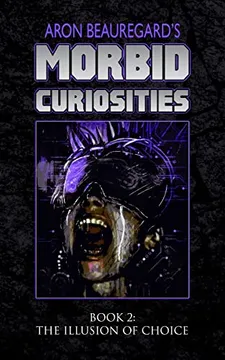
A storm traps Mia inside Morbid Curiosities, an isolated shop run by Venus, whose lantern-lit basement holds objects with darker histories than their age suggests. Venus leads Mia past a cradle associated with dead infants and shows her a strange headset beside a handwritten journal.
Mia wants to avoid talk of children, but curiosity draws her toward the notebook. As the rain keeps her from leaving, Venus begins to read the account of Heather Mills, a woman who once believed another life might be waiting for her.
The frame makes curiosity feel less like a free choice than a response to confinement. Mia enters the basement because the storm has removed the easy exit, just as Heather will approach the Randomizer while believing her own options have narrowed to almost nothing. Venus controls the pace of disclosure, presenting disturbing objects and then a journal, but does not force Mia to listen. That distinction matters: the book repeatedly asks whether a choice remains meaningful when fear, desperation, or circumstance has already shaped the available paths. The shop's uncanny atmosphere establishes that question before Heather's story gives it a machine.
Shelter Under the Floor
After an apartment fire destroys her belongings, Heather Mills accepts a basement room from landlord Nicolas Franks. She has already left home to escape years of harassment by Gary, and the fire strips away what little stability she had rebuilt. Franks rents the unfinished space cheaply after Heather's supervisor, Tom Pell, explains her situation; Tom also supplies a couch, bed, and basic dishes.
Heather sees the dirt floor and mold, but the room offers privacy and a chance to plan her return to ordinary life. Her gratitude is genuine, though it rests on a precarious bargain: she has somewhere to sleep, but no possessions, few friends, and no clear route forward.
Heather's starting point is shaped by successive losses rather than a single dramatic fall. The fire destroys property, but its deeper effect is to intensify her sense that she has been erased from her former life. Tom's help and Franks's rent arrangement offer practical rescue, not emotional repair. That distinction grounds the story's later temptation: Heather does not seek another reality from idle ambition. She wants security and a self she can recognize. Her loneliness is both a wound and a resource, since the privacy she values makes her more willing to investigate what others might leave untouched.
The Hatch Below Heather
Restless in the basement, Heather steps onto the dirt floor and feels something solid beneath it. She uncovers a chained hatch, climbs down a ladder, and finds a hidden workroom covered in calculations. A chalkboard names the project the Randomizer, and a headset with violet lenses sits connected to a power source.
The notebooks belong to Charles Baxter, the property's former owner, and describe a device intended to move its wearer into a randomly selected alternate reality. Heather cannot follow the science, but the promise is plain enough: another version of her life may exist. She stays up reading, drawn toward the machine despite not knowing whether it works or what it might take from her.
The concealed room gives physical form to Heather's wish to find an unseen route out of her life. Its position beneath the basement makes escape feel less like a journey into the world than a descent into the foundations of her own circumstances. Baxter's calculations suggest that identity is shaped by countless small decisions, while the device offers a way to evade their accumulated consequences. Heather's fascination is understandable, but it is already compromised by desperation. She does not approach the machine as a neutral experiment; she approaches it as a remedy, and that expectation will make every random outcome feel personal.
Gary Follows Her East
At work, Heather studies Baxter's explanation of alternate choices and remembers why she left home. Gary, a mentally impaired supermarket employee, attacked her after she refused his demand for a child. He later stalked her, left threats on her car, tormented her parents, and broke into their home.
Heather fled east rather than risk another encounter, though she still wonders whether escaping him led her into the poverty and displacement she now faces. Tom reveals that Baxter died by suicide in the house, reportedly under the strain of his work. The disclosure gives Heather reason to fear the invention, but also confirms that its maker had pursued it seriously. His death unsettles her; his apparent success still beckons.
Gary's threat gives Heather's desire for a different life a concrete history. Her escape was a decision made under pressure, and she cannot know whether it saved her or merely redirected her toward hardship. That uncertainty leaves her vulnerable to Baxter's theory, which reframes painful outcomes as branches that might be abandoned. Tom's disclosure complicates the fantasy of technological rescue: the inventor's death implies that access to other lives may carry a psychological cost that cannot be measured in advance. Heather registers the warning, but the possibility of a life untouched by Gary remains more persuasive than an unknown danger.
A Helmet for Another Life
Back in the cellar, Heather sorts Baxter's notes into what she can understand: electrical stimulation, the dismantling and reassembly of matter, and a transfer into another reality. Several pages are missing, and she finds an unopened letter addressed to Baxter from Victoria Abernathy, but leaves it aside to focus on the machine.
Baxter's papers say that objects she carries may travel with her, and the headset's indicator has turned green. Heather packs the device, notebooks, and a briefcase, then records her own account so someone might learn what happens. She thinks she can escape the poverty and fear that define her present. After a final hesitation, she puts on the visor and activates it.
Heather's decision is a point of no return because she knowingly acts with incomplete information. The missing pages and Baxter's suicide are not hidden from her; she simply judges the chance of relief worth the risk. Recording her experience is an attempt to create control where the machine offers none. It also echoes Baxter's notebooks, making her both a user of his invention and the next person responsible for interpreting it. The green light resembles permission, but it is only a charge indicator. Heather mistakes readiness for safety, a small but consequential confusion between a device being usable and a future being manageable.
A Rich Room, Ruined Skin
Heather wakes in a lavish bedroom, surrounded by expensive clothes, jewelry, and legal papers suggesting she has money to pursue a claim over the apartment fire. For a moment, she believes the Randomizer has delivered the security she wanted. Then she sees her hands and face: in this reality, the fire burned her severely, leaving her disfigured.
The device and her briefcase are missing from the room, but a caretaker explains that she stored them in a downstairs office. Heather retrieves them and charges the headset, relieved that another transition may be possible. Yet her relief is hollow. She understands that the machine changed her body along with her circumstances, and that she has no control over what it chooses next.
The first alternate life exposes the flaw in Heather's transactional hope. She asked for a better existence, but the Randomizer does not distinguish between the conditions she wants changed and the person who must live through them. Wealth arrives alongside bodily damage, making the outcome neither simple reward nor simple punishment. Her horror at her reflection is not vanity; it is the shock of discovering that identity can be altered without consent. Recovering the headset restores agency only in a narrow sense. Heather can choose to travel again, but she cannot choose the version of herself or the world she will inhabit.
The Same Monster Returns
The next transition places Heather in a bedroom with Gary, who is naked, sexually aggressive, and convinced they belong together. Her burned body has carried over, while the room's photographs show that this version of Heather lives with him. Gary assaults her and recreates the milk attack from their first encounter.
When he reaches for the jug, Heather strikes him with it, takes his red safety helmet, and beats him until he stops moving. The act leaves her shaken and exhausted, but she has stopped the immediate assault. Searching the house, she finds no one else except a neglected infant in a filthy closet. The machine has delivered her into a life that is not merely unfamiliar, but morally and physically unbearable.
This reality collapses the distinction between memory and present danger. Gary is no longer only the man Heather escaped; he is embedded in a life she did not choose, complete with photographs that insist on an intimacy she rejects. Her violence is an act of immediate survival, but it also confronts her with an unfamiliar version of herself, one capable of killing. The neglected infant widens the crisis beyond personal escape. Heather now faces consequences attached to this alternate identity, including a child whose existence is real in this world even if she experiences it as foreign. The machine has made choice inseparable from responsibility.
Baxter's Missing Pages
After Gary's death, Heather opens Victoria Abernathy's letter and finds the pages Baxter had asked her to keep. They reveal why he hid parts of his research: his own journeys had grown progressively worse, and he believed only a descent to the lowest possible reality could lead to an ideal one. The notes offer no proof that this theory is true.
The infant cries from the closet, and Heather leaves it behind as she prepares the Randomizer for another jump. She hopes the next world will be kinder, but the evidence points the other way. Baxter's record ends after dozens of increasingly grim experiences, and Heather now understands that he may have wanted another traveler to continue a process he could not endure.
The letter changes the meaning of Baxter's work from speculative invention to a possible trap with a concealed cost. His theory gives suffering a direction, suggesting that each worse world might be a step toward a final release. That promise can sustain Heather, but it also rationalizes continuing when stopping might be safer. The crying infant makes the cost immediate: Heather's exit preserves her chance to move, while leaving another vulnerable being in danger. Her decision is neither cleanly heroic nor simply selfish. The story places her in a reality where every available choice has been burdened by someone else's needs, even when she cannot identify with them.
The Home She Never Knew
In one reality, Heather wakes as a heroin addict, shares drugs with a homeless woman, and takes street work to feed the dependency. She retrieves the Randomizer after a shopkeeper dismisses it as worthless, then escapes. Another transition sends her to a life in which she never left home or met Gary. Her parents, once loving in her memory, abuse her, and she eventually kills her mother with a kitchen knife.
When her father returns and assaults her, Heather injures him with pruning shears, then uses the moment to activate the machine and flee. Across these lives, her body remains scarred and her responses grow harder. She still seeks an exit, but each passage demands that she survive acts she once could not imagine committing.
These episodes erode Heather's belief that changing circumstances will restore a stable self. Addiction makes her body a site of compulsion; the alternate family life turns the figures she trusted into sources of danger. Her retaliatory violence is both a means of escape and evidence of adaptation to repeated coercion. The narration does not present these actions as uncomplicated empowerment. Heather is learning to survive by methods that disturb her own moral image, then carrying the knowledge of those actions into another world. Her continuity across realities is therefore less about a fixed personality than about accumulated memory, fear, and defensive capacity.
Red Skies, Sealed Streets
The Randomizer next casts Heather into realities where catastrophe engulfs entire societies. In one, chemical-red skies, gunfire, and ruined streets reveal a country at war. In another, masked and suited residents treat her burned skin as contamination, forcing her to hide in an abandoned church until she can recharge the device.
She finds no clear evidence that the feared virus is real, only a culture organized around surveillance and suspicion. Other worlds bring more intimate brutality, with strangers repeating patterns of sexual violence, greed, and murder.
Heather records fewer details as exhaustion takes over. Eventually she enters a place with no visible people at all, and the quiet offers relief after years of being hunted, harmed, or forced to fight.
The escalating worlds expand the scale of Heather's suffering from the body to the social order. War makes violence public; the pandemic reality turns fear into a system of policing and exclusion. Her burned appearance marks her as a threat, showing how quickly a community can convert vulnerability into stigma. Yet the empty world is not introduced as a conventional triumph. Its peace comes from the absence of anyone who might help as well as anyone who might hurt her. Heather's relief is psychologically credible, but it reveals how thoroughly her expectations have narrowed: solitude now seems safer than any human bond.
A Child, Then Silence
In the deserted reality, Heather scavenges food and settles in a library. Morning sickness makes her realize she is pregnant, though she cannot determine who fathered the child. She considers ways to end the pregnancy, then reads a biblical story about a mother willing to surrender her child rather than see it harmed.
When she gives birth on the library floor, she kills the infant with the heavy book, choosing the silence and solitude she has come to value above motherhood. Heather recovers, resumes living alone, and finishes her journal. She does not claim that the Randomizer has delivered an ideal life; she decides only that, for now, isolation is the least painful option. The machine remains available for a final journey someday.
Heather's final choice is horrifying partly because it emerges from a coherent, if damaged, survival logic. She has learned to associate other people with danger, demands, and loss; solitude offers a boundary no one can violate. The biblical account briefly gives her a language of maternal sacrifice, but she interprets its lesson through trauma rather than care. Killing the infant is not framed as liberation without cost: it is a decisive rejection of a relationship she cannot bear to enter. Her ending is a form of provisional peace, not redemption. She has stopped moving between realities, but the desire to test one more possibility remains.
Epilogue
Back in Morbid Curiosities, Mia is shaken by Heather's account because her own son, Kyle, has spent years in juvenile detention and returned home volatile. She has been searching for his absent father, hoping he might help, but cannot find him.
Venus offers a lead: Patricia and Patrick Crane, a doctor and anatomist who run a discreet program called Cemetery Camp for troubled young people. She gives Mia their number but warns that their methods are unconventional. Outside, the storm has passed and the road is visible again. Mia pockets the card, facing a choice whose consequences Venus will not explain for her.
The frame translates Heather's extraordinary dilemma into Mia's recognizable crisis: a parent facing a child she cannot protect through ordinary means. Venus does not promise a cure or make the decision for her. Instead, she supplies a name, a number, and a warning, preserving Mia's agency while exposing how little she can know before acting. The cleared road echoes the opening storm, but it does not guarantee safety. Mia's next step remains unresolved, which makes the ending less a cliffhanger than a deliberate return to the book's central problem: people often choose under pressure, with only partial knowledge, and must decide what risks they can live with.
Analysis
The novel builds its horror around a precise contradiction: the more Heather gains the power to leave a life, the less control she has over what a life contains. The Randomizer turns choice into a brutal physical process, but its randomness does not produce freedom in any stable sense. Heather can reject one reality only by accepting another she has not seen. Her repeated transitions therefore expose the limits of the fantasy that a person can escape pain by locating a cleaner version of the self.
The book also makes memory the one continuous thread between alternate lives. Heather's body may change, and the people around her may occupy new roles, but her recollection of past harm travels with her. That continuity becomes both evidence and burden. It lets her recognize repeated danger, yet it also makes each new world carry the emotional weight of the last. Her survival skills sharpen, but the violence she uses to survive unsettles her sense of who she is.
Baxter's theory that suffering must reach its lowest point before life improves gives the journey a grim teleology. It is a promise that can keep Heather moving, but it may also be a rationalization for enduring harm without evidence of eventual reward. The novel refuses to verify that the theory is true. Heather's final solitude is less a victory than a decision made after every available relationship has become associated with danger or obligation.
The frame with Mia turns this private ordeal into an ethical question rather than a closed lesson. Venus gives Mia a possible next step, not certainty. Both women confront the same structure: when ordinary options feel exhausted, an unknown alternative can look like hope. The story's title points to the unease beneath that hope. A choice can be real and still be shaped by fear, incomplete knowledge, and circumstances no one chose.
Review Summary
The Illusion of Choice is the second book in Aron Beauregard's Morbid Curiosities trilogy, earning an impressive 4.3 out of 5 rating. Reviewers consistently praised its Twilight Zone and Black Mirror-like atmosphere, compelling concept of parallel dimension travel, and effective blend of sci-fi and horror. Many considered it superior to the first installment, highlighting its psychological depth, twists, and thought-provoking themes around choice and consequence. Some noted its disturbing content, while a few wished it were longer. Most readers eagerly anticipated the third book.
Characters
Heather Mills
The desperate travelerHeather is a resourceful woman whose life has been shaped by displacement, harassment, and the loss of her home. She values privacy and tries to meet hardship with practical decisions, but her hope for stability makes her vulnerable to the Randomizer's promise of a clean alternative. She is observant enough to record what happens, even when she cannot explain it, and her journal becomes a way to preserve continuity across lives that threaten to erase her sense of self. Heather's central tension is between wanting freedom from pain and wanting to remain someone she can recognize. Her story follows the changing cost of that pursuit.
Mia
The troubled motherMia arrives at Morbid Curiosities carrying a private crisis: she is trying to manage her son Kyle's volatility and locate his absent father. She is wary of Venus's unsettling shop, yet willing to hear Heather's story because its premise touches her own wish to escape an impossible situation. Mia's grief makes her receptive to help, but she does not accept the camp referral blindly. Her role in the frame is to mirror Heather's desperation in a different form: a parent weighing an unfamiliar intervention when familiar efforts have failed.
Venus
The keeper of curiositiesVenus owns Morbid Curiosities and guides Mia through its strange collection. Calm and deliberate, she treats disturbing objects as invitations to consider their histories rather than as mere spectacle. She controls what Mia sees and when, but she does not claim to control what Mia decides. Her manner combines hospitality with an unsettling certainty, making it difficult to tell whether she is simply wise or knows more than she reveals. Venus's most important function is to connect private suffering with possible choices beyond the shop.
Gary
Heather's persistent threatGary works at the supermarket Heather once frequented and becomes fixated on her after she rejects his demand for a child. His limited understanding of boundaries does not make his actions harmless: he uses physical force, stalking, and intimidation, leaving Heather afraid for herself and her parents. Gary represents the danger of a person whose desires are not checked by empathy or restraint. In the story, his presence follows Heather beyond the original encounter, shaping her decision to leave home and haunting the alternate lives she enters.
Tom Pell
Heather's steady benefactorTom is Heather's supervisor at The Ten Pin and the person who advocates for her when she needs housing. He arranges practical help without demanding repayment, offering a model of ordinary decency that contrasts with the danger and instability surrounding her. Tom is friendly and encouraging, though he withholds Baxter's history at first because he worries it will frighten Heather. His kindness helps Heather regain a foothold, but it cannot solve the deeper problems that make the Randomizer seem worth the risk.
Charles H. Baxter
The vanished inventorBaxter is the former owner of Heather's house and the inventor of the Randomizer. His notebooks reveal a mind devoted to the consequences of choice, alternate realities, and the possibility of reaching a better life by moving through worse ones. He is absent from the main action, yet his records guide Heather and conceal crucial information about the machine's effects. Baxter's combination of intellectual ambition and secrecy makes him difficult to trust: he leaves behind both a possible escape route and evidence that its cost may have overwhelmed him.
Nicolas Franks
The reluctant landlordFranks owns the house where Heather rents an unfinished basement. He is blunt about the property's condition but agrees to lower the barrier to housing after Tom explains Heather's circumstances. His practical generosity gives her a place to begin again, even though he does not know what lies beneath the dirt floor.
Victoria Abernathy
Baxter's trusted correspondentVictoria is an old acquaintance of Baxter's who keeps pages for him without reading them. Her letter reaches his former home after his death and becomes an unexpected link between his private research and Heather's investigation. She is remembered through the care and loyalty expressed in that correspondence.
Kyle
Mia's troubled sonKyle is Mia's son, recently released from juvenile detention after years marked by fighting, drug use, and dangerous behavior. Mia fears he will return to detention and believes his absent father might have helped him change. Kyle does not appear directly, but the crisis around him motivates Mia's willingness to consider an unfamiliar form of help.
Patricia Crane
A specialist in troubled youthPatricia is a doctor and one half of the sibling team Venus recommends to Mia. She is associated with Cemetery Camp and a program intended to help troubled children and teenagers. Mia knows her only through Venus's description and the card.
Patrick Crane
Anatomist and camp founderPatrick is Patricia's brother and an anatomist. Venus presents him as a dedicated partner in the Cemetery Camp program, whose approach is private and unconventional. He remains an offstage possibility in Mia's search for help.
Plot Devices
The Randomizer
A machine for alternate livesBaxter's headset sends its wearer into a randomly selected reality. Heather learns that the transition can alter her body and surroundings, while the objects she carries may travel with her. She can use the device again after it recharges, but she cannot choose the destination or predict its consequences. The Randomizer turns the abstract idea of life's branching decisions into a physical ordeal: Heather can leave one reality, but each new one brings a different version of her history and another set of dangers.
Baxter's notebooks
A map with missing piecesBaxter's notes explain the theory behind the machine and record his own experiments. Heather relies on them to understand how to activate the device, but their technical language is difficult and some pages have been removed. The gaps make the notebooks both an instruction manual and a source of danger: they let Heather proceed while withholding the information that might have changed her decision. Her own journal continues the record, preserving her testimony even as each transition destabilizes her grasp of identity and reality.
Victoria's letter
The truth Baxter withheldA letter from Victoria Abernathy arrives among Baxter's mail and leads Heather to pages he had asked Victoria to keep sealed. Those pages explain his belief that successive realities would grow worse before reaching an ideal life, and they reveal that he concealed this theory from future users. The letter changes Heather's understanding of the journeys without providing a safe way out. It raises the stakes of continuing, while leaving her with the same core uncertainty: whether Baxter's promised endpoint exists or is only a story he told himself.
Morbid Curiosities
A frame for stories and choicesVenus's shop frames Heather's journal as one of the many troubling histories attached to objects in the collection. The shop gives the novel a second storyline, linking Heather's experiences to Mia's present-day crisis without resolving Mia's decision for her. Its storm, basement, lantern, and uncanny artifacts create a threshold between ordinary life and the story being read. The frame also shifts the meaning of Heather's account: it is not merely a record of suffering, but a warning and a possible source of guidance for someone facing a choice of her own.
Download PDF
Download EPUB
.epub digital book format is ideal for reading ebooks on phones, tablets, and e-readers.








