

Key Takeaways
A killer-like brain scan did not make Fallon a killer
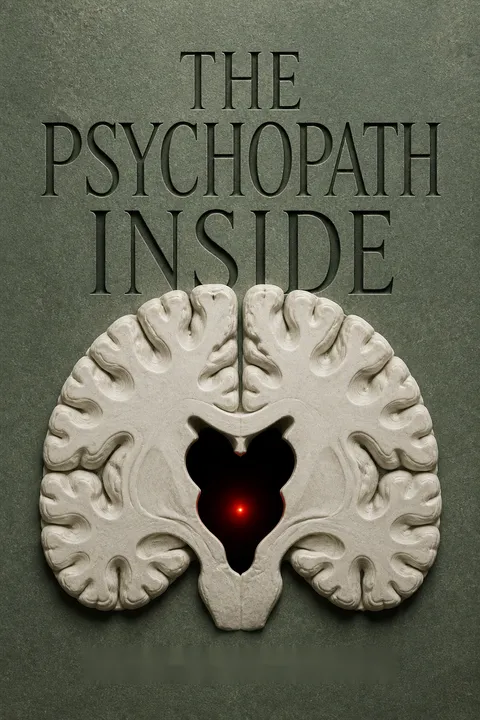
The scan was his. In 2005, neuroscientist James Fallon was comparing brain scans of convicted killers with scans collected for a separate family study. One family scan showed the low activity pattern he had associated with psychopathic killers. He checked the records, expecting a mix-up. The scan belonged to him. It showed differences in regions linked to emotional processing and impulse control, yet Fallon was a successful researcher, husband, and father with no history of violent crime.
A pattern is not a verdict. The discovery unsettled his belief that biology largely determines behavior. His central puzzle became how a brain that resembled those of violent offenders could belong to someone who had not become one. The memoir follows his attempt to answer that question through his upbringing, family history, genes, and relationships.
What's striking is that the opening reverses the usual crime story: the scientist first finds a pattern, then discovers himself inside it. That reversal makes a useful distinction between biological risk and individual destiny. A brain image records activity under particular conditions; it does not directly reveal a person's character, motives, or future. This is a crucial safeguard whenever medical evidence enters public debate. The image is meaningful as a clue, but its meaning depends on context, behavior, and the limits of the measurement.
Treat psychopathy as a contested spectrum, not a scan-based verdict
The label is unsettled. Psychopathy is not a formal diagnosis in the Diagnostic and Statistical Manual of Mental Disorders. The closest listed condition, antisocial personality disorder, focuses more on persistent harmful behavior than on the full cluster of traits associated with psychopathy. Researchers and clinicians do not use one universally accepted definition.
A checklist has limits. The best-known measure, Robert Hare's Psychopathy Checklist-Revised, rates 20 traits from 0 to 2. A score of 30 is a common threshold for psychopathy, though the cutoff can vary. Its traits include charm, deceit, lack of remorse, impulsivity, and antisocial behavior. Fallon argues that a single total score can conceal important differences between people. He also notes disputes about how well specific traits predict violence and whether social class or cultural context distort assessment.
The distinction between a label and the conduct it is meant to summarize matters most when a diagnosis could shape a sentence, treatment, or reputation. A checklist can make assessment more consistent, but consistency is not the same as validity. The traits may cluster differently, and some predict harmful behavior better than others. This is a familiar problem in clinical classification: categories help people coordinate, yet can make gradual differences look like hard boundaries. Fallon's warning against casual self-diagnosis is especially sound.
Look at emotional circuits, not one supposedly violent brain spot
A network, not a switch. In Fallon's account, scans of psychopathic killers showed reduced activity across a connected set of brain regions, including the orbital and ventromedial prefrontal cortex, parts of the temporal lobe, the amygdala, and the insula. He interprets this pattern as involving emotion, empathy, inhibition, and social judgment, rather than one isolated “violence center.”
Reason can remain sharp. Fallon distinguishes hot cognition, emotionally informed judgment, from cold cognition, planning and rule-based reasoning. His hypothesis is that a person may have weak emotional brakes but strong planning skills, making manipulation more calculated than chaotic. The pattern he describes is a proposed explanation for some psychopathic traits, not a brain scan that can diagnose a person or predict a crime.
The network approach is more plausible than the hunt for a single anatomical culprit. Complex behavior emerges from communication among regions, and the same region participates in many different tasks. The hot and cold cognition distinction also helps explain why someone can understand what another person wants without sharing that person's feelings. Still, low activity on an image does not establish why a behavior occurred. Scans can show correlations, but translating a group pattern into a reliable individual judgment requires far stronger evidence.
Psychopathy risk emerges when vulnerable biology meets early abuse
Three risks interact. Fallon's Three-Legged Stool theory proposes that psychopathic violence is more likely when three factors converge: atypical functioning in emotional brain circuits, genetic variants associated with aggression, and early childhood abuse. He calls the MAOA variant commonly nicknamed the “warrior gene” one possible contributor, but stresses that no single gene determines whether a person becomes violent.
The Dunedin findings illustrate interaction. In a study of men in New Zealand, 12 percent had both the low-activity MAOA variant and a history of maltreatment, yet this group accounted for 44 percent of violent convictions. The study suggests that childhood maltreatment heightened risk among people with that variant. It measured antisocial outcomes, however, not psychopathy itself, and the result does not mean that most carriers become violent.
The valuable idea here is interaction: a predisposition can matter more under some conditions than others. That model avoids the crude choice between genes and upbringing. Modern behavioral genetics likewise treats complex traits as the product of many small genetic influences interacting with development and context, rather than a single “bad gene.” The reported percentages are memorable, but they should not be mistaken for a screening formula. A statistical association in a group cannot tell a family which individual child will become violent.
A loving childhood can change the path without erasing risk
Fallon was not abused. His own brain scan and genetic results seemed to fit parts of his risk model, and his family tree included murderers. Yet he describes a childhood shaped by attentive parents and a supportive extended family. His mother noticed periods of withdrawal and unusual behavior; teachers encouraged his social and creative interests. He came to see that his upbringing might have helped prevent his traits from becoming criminal behavior.
Development is not a fixed script. Fallon explains epigenetic regulation as chemical marks that can influence how genes are expressed without changing the DNA sequence itself. He argues that stress and care can affect development, especially early in life. His point is not that affection guarantees a particular outcome, but that biology acts within an environment. The protective role he assigns his family is personal evidence, not proof of a universal recipe.
This is the memoir's strongest challenge to genetic fatalism. Developmental science increasingly studies how caregiving, stress, and biology shape one another, rather than treating nurture as a superficial layer over fixed genes. Yet the counterfactual remains unknowable: no one can observe how Fallon would have developed in a different home. That uncertainty does not weaken the practical case for protecting children from abuse. It does counsel against promising that any one parenting style can reliably prevent a complex disorder.
Separate understanding another mind from feeling its pain
Empathy has distinct parts. Fallon distinguishes emotional empathy, sharing or resonating with another person's feelings, from cognitive empathy, recognizing what another person thinks or wants. He also distinguishes both from sympathy, the wish to help someone in distress without necessarily feeling that distress personally. In his account, a person may read people accurately while remaining emotionally detached.
His relationships supplied the evidence. Fallon recalls friends describing him as charming but unreliable, and family members saying they often had to initiate contact. He could enjoy his children and wife while struggling to respond to their needs with the emotional closeness they wanted. He also recounts taking his brother toward a dangerous cave without explaining the risk. The harm was not always intended, but his appetite for excitement repeatedly outranked other people's safety and expectations.
The distinctions help resolve a common puzzle: social insight and compassion are not identical abilities. Someone can infer another person's vulnerability and still fail to care about it, while someone else may feel deeply but not know how to help. This framework shifts attention from a person's self-description to the effect of repeated behavior on others. It also warns against equating smooth conversation with genuine concern. A limitation is that empathy is difficult to measure, and one person's account cannot establish a clinical profile.
Trust outside feedback when emotional blind spots hide your impact
Self-knowledge failed him. For decades, Fallon dismissed colleagues who called his behavior sociopathic, assuming they were joking or overreacting. In 2000, his sister and daughter separately wrote letters describing how shallow and one-sided their relationships with him felt. He initially brushed off their complaints. After his brain scan and years of reflection, he reread the letters and recognized a pattern he had not been able to see from the inside.
Other people noticed the costs. Friends said they enjoyed his company but could not count on him in a crisis. He often kept plans uncertain in case a more exciting option appeared. Fallon links this gap between his intentions and their experience to his difficulty recognizing emotional harm. His story makes a case for taking repeated, specific feedback seriously, especially when it comes from people who know a person well.
Self-assessment is especially unreliable when the missing capacity is part of what must be assessed. External feedback can reveal patterns that introspection misses, although it is not automatically objective: close relationships carry their own conflicts and expectations. The useful approach is to look for convergence across independent observers and concrete examples, not to accept every accusation as diagnosis. Fallon's delayed response also shows why explanation alone is insufficient. Understanding a pattern can begin change, but it does not undo the accumulated cost to others.
Practice reliable care even when warm feelings do not arrive
Behavior can lead feeling. After accepting how often he neglected people close to him, Fallon tried to attend family events, visit people who were ill, and provide support instead of choosing the most entertaining alternative. He describes this as a deliberate experiment: could he perform considerate actions even when he did not feel an instinctive pull to do them? His family noticed the effort, although he admits it felt more like practice than emotional transformation.
This is not a cure claim. Fallon doubts that deep tendencies such as low empathy can simply be willed away. He nevertheless suggests that repeated actions may strengthen more considerate habits. He also warns that good deeds can be self-serving, as when help is offered partly to create future favors. The practical test is not whether care feels pure, but whether a person becomes more dependable and less harmful.
This account separates moral behavior from moral emotion. In many forms of rehabilitation and behavior change, people rehearse new responses before those responses feel natural. That can make responsibility more realistic: a person need not wait for an emotional conversion before honoring commitments or protecting others. At the same time, a performance of care can become another form of manipulation if it is used to win trust without changing conduct. The meaningful measure is sustained impact, not the private story someone tells about their motives.
Do not confuse useful risk-taking with psychopathy's social costs
Some traits can be useful. Fallon speculates that people who tolerate risk, remain calm under pressure, or act decisively may sometimes help a group take chances that others avoid. He connects these traits to leadership, business, and warfare, while suggesting that variation in human behavior may have evolutionary value. These are arguments about possible advantages of particular traits, not evidence that psychopathy as a whole benefits society.
The costs are substantial. The book cites researcher Kent Kiehl's estimate that criminal psychopathy cost the United States $460 billion in 2011 through criminal justice expenses and damages. Fallon ultimately describes himself as a “lucky” prosocial case: he had traits he associates with psychopathy but grew up in a supportive home and did not become a violent criminal. His evolutionary account remains speculative, and should not romanticize exploitation or excuse harm.
The distinction between a trait and a syndrome is essential here. Decisiveness or comfort with risk may help in a crisis without requiring deceit, callousness, or disregard for others. Evolutionary explanations can illuminate why variation persists, but they are vulnerable to just-so stories that assign a social purpose after the fact. The book is most persuasive when it asks how harmful traits can be managed, and least secure when it generalizes their benefits to civilization. Possible utility never cancels the obligation to account for victims.
Analysis
The book's most valuable contribution is not a definitive theory of psychopathy, but a demonstration of how a confident scientific worldview can be unsettled by personal evidence. Fallon begins as a neuroscientist who believes biology dominates behavior. His own scan resembles patterns he associates with violent offenders, yet his life diverges sharply from theirs. The resulting story gives the nature and nurture debate a human scale: genes, brain development, childhood care, mood, and circumstance interact, while no single factor explains a whole person.
That memoir form is also a limitation. Fallon is both investigator and case study, and he develops explanations from a single life while relying on research that varies in quality and certainty. His Three-Legged Stool is a useful hypothesis about interacting risks, not a validated diagnostic model. Likewise, a PET pattern cannot establish that a person is psychopathic, and a genetic marker cannot forecast an individual's conduct. The book sometimes moves quickly from plausible mechanisms to broad claims about parenting, warfare, politics, and evolution. Those claims deserve more caution than the personal narrative naturally encourages.
The account is strongest when it separates dimensions that are often collapsed: criminal conduct from personality traits, emotional empathy from social insight, and biological vulnerability from inevitable outcome. It is also unusually candid about a central moral problem: recognizing that others are hurt does not automatically make a person care or change. Fallon's experiment with more reliable behavior offers a modest but practical response. Conduct can be judged by its consequences even when motives remain mixed. The book's enduring lesson is therefore neither that people are machines nor that willpower conquers biology. It is that risk can be real without being destiny, and explanation does not remove responsibility.
Review Summary
The Psychopath Inside receives mixed reviews, with some praising its scientific insights into brain function and psychopathy, while others criticize the author's narcissistic tone. Readers find the neuroscience aspects fascinating but struggle with Fallon's self-aggrandizing narrative. Many appreciate the unique perspective of a scientist discovering his own psychopathic traits, though some question his objectivity. The book sparks discussions on nature vs. nurture and the spectrum of psychopathy, but its personal anecdotes and scientific jargon can be polarizing.
Glossary
Psychopathy Checklist-Revised
structured psychopathy ratingA 20-item assessment developed by Robert Hare. A trained evaluator rates each trait from 0 to 2, drawing on an interview and, where available, records or information from others. The total score estimates the degree of psychopathic traits. The book describes 30 as a commonly used threshold, while noting that definitions and cutoffs remain contested.
Three-Legged Stool theory
three interacting risk factorsFallon's proposed account of psychopathic violence, involving the convergence of atypical activity in emotional brain regions, genetic variants associated with aggression, and severe early abuse. The model emphasizes interaction rather than a single cause. It is a hypothesis presented by Fallon, not an established diagnostic test or a settled scientific explanation of psychopathy.
warrior gene
low-activity MAOA variantA popular nickname for a low-activity promoter variant of MAOA, the gene that produces the enzyme monoamine oxidase A. The book links the variant to aggression-related findings, particularly when combined with childhood maltreatment. It does not determine behavior by itself, and the nickname can misleadingly suggest a direct or inevitable connection to violence.
epigenetic tag
gene-expression regulatorA chemical modification associated with DNA or its packaging that can influence whether, and how strongly, a gene is expressed without changing the underlying DNA sequence. Fallon uses the term to explain how environmental conditions, including stress, may affect biological development. Such regulation is complex and does not mean that every experience creates a permanent, inherited change.
Psychopath Lite
subthreshold psychopathic traitsFallon's informal label for someone who displays some traits associated with psychopathy but does not meet the usual threshold for a full psychopathy score and may not engage in serious criminal behavior. He uses it for people who can seem socially successful while showing traits such as superficiality, manipulation, or emotional detachment. It is not a formal clinical diagnosis.
prosocial psychopath
traits without violent criminalityFallon's description of a person with several psychopathic traits, such as low emotional empathy, impulsivity, or manipulation, who does not display the violent criminal behavior commonly associated with the label. He applies the term to himself, while acknowledging that his conduct can still hurt or endanger people. It is descriptive vocabulary in the book, not an official diagnosis.
cold cognition
emotion-light reasoningFallon's term for relatively rational, planning-oriented mental processes, including rule use, executive control, and strategic thought. He contrasts it with hot cognition, in which emotion informs judgment and social behavior. His account proposes that strong cold cognition alongside impaired emotional processing may help explain how some people can plan effectively without responding normally to others' distress.
hot cognition
emotion-informed judgmentFallon's term for thinking and decision-making shaped by emotional memory and social or moral responses. He associates it with brain systems involved in feeling, empathy, inhibition, and interpersonal behavior. The term helps him contrast emotional judgment with cold cognition, but the two processes interact rather than operating as entirely separate mental systems.
FAQ
What's "The Psychopath Inside" about?
- Personal Journey: The book is a personal narrative by neuroscientist James Fallon, who discovers that his own brain scan resembles those of psychopathic killers he has studied.
- Scientific Exploration: It delves into the neuroscience of psychopathy, exploring brain function, genetics, and environmental factors that contribute to psychopathic traits.
- Family History: Fallon uncovers a history of violence in his family, which adds a personal dimension to his scientific findings.
- Nature vs. Nurture: The book examines the interplay between genetic predispositions and environmental influences in shaping behavior.
Why should I read "The Psychopath Inside"?
- Unique Perspective: It offers a rare combination of personal memoir and scientific exploration, providing insights into the mind of a neuroscientist grappling with his own findings.
- Understanding Psychopathy: The book provides a detailed look at what makes a psychopath, challenging common misconceptions and offering a nuanced view.
- Nature vs. Nurture Debate: It contributes to the ongoing discussion about the roles of genetics and environment in shaping human behavior.
- Engaging Narrative: Fallon's storytelling is engaging, making complex scientific concepts accessible to a general audience.
What are the key takeaways of "The Psychopath Inside"?
- Brain Patterns: Psychopathy is associated with specific patterns of brain activity, particularly in the frontal and temporal lobes.
- Genetic Factors: Certain genes, like the "warrior gene," may predispose individuals to aggressive behavior, but they are not deterministic.
- Environmental Influence: Early childhood experiences, such as abuse, can significantly impact the development of psychopathic traits.
- Self-Reflection: Fallon's journey highlights the importance of self-awareness and the potential for personal growth despite genetic predispositions.
How does James Fallon discover his own psychopathic traits?
- Brain Scan Revelation: Fallon discovers his brain scan matches those of psychopathic killers while conducting research on Alzheimer's disease.
- Family History: He learns about a history of violence in his family, which prompts further self-examination.
- Genetic Testing: Genetic analysis reveals that he possesses many of the genes associated with aggression and psychopathy.
- Behavioral Reflection: Fallon reflects on his own behavior and relationships, recognizing traits consistent with psychopathy.
What is the Three-Legged Stool theory in "The Psychopath Inside"?
- Three Factors: The theory posits that psychopathy arises from a combination of brain dysfunction, genetic predispositions, and early childhood abuse.
- Brain Dysfunction: Low activity in the orbital and ventromedial prefrontal cortex and the amygdala is a common pattern in psychopaths.
- Genetic Predispositions: Genes like the MAOA "warrior gene" can increase the risk of developing psychopathic traits.
- Environmental Influence: Childhood abuse or neglect can trigger the expression of these traits, completing the "stool."
How does "The Psychopath Inside" address the nature vs. nurture debate?
- Interplay of Factors: Fallon emphasizes the complex interplay between genetic predispositions and environmental influences in shaping behavior.
- Epigenetics: The book discusses how environmental factors can alter gene expression through epigenetic mechanisms.
- Personal Experience: Fallon's own life serves as a case study, illustrating how a nurturing environment can mitigate genetic risks.
- Scientific Evidence: The book presents research findings that support the significant role of both nature and nurture in psychopathy.
What role does family history play in "The Psychopath Inside"?
- Violent Ancestry: Fallon discovers a history of violence in his family, including connections to infamous figures like Lizzie Borden.
- Genetic Legacy: This history prompts Fallon to explore the genetic components of psychopathy within his own lineage.
- Personal Reflection: The revelation of his family's past leads Fallon to reflect on his own behavior and potential predispositions.
- Broader Implications: The book uses Fallon's family history to discuss the potential for genetic traits to persist across generations.
What are the best quotes from "The Psychopath Inside" and what do they mean?
- "I’m a borderline psychopath." This quote encapsulates Fallon's shocking discovery about himself and sets the stage for his exploration of psychopathy.
- "We are machines, albeit machines we don’t understand all that well." This reflects Fallon's view on human behavior as largely determined by biology, though he later acknowledges the role of environment.
- "Real nurture can overcome a lousy deck of cards dealt at birth by nature." This highlights the book's ultimate message that a supportive environment can mitigate genetic predispositions.
- "I don’t care." Fallon's admission of his emotional detachment underscores the challenges of self-awareness and change.
How does James Fallon reconcile his scientific findings with his personal life?
- Cognitive Dissonance: Fallon grapples with the disconnect between his scientific understanding of psychopathy and his own life experiences.
- Self-Reflection: He engages in deep self-reflection, examining his behavior, relationships, and family history.
- Public Disclosure: By sharing his story publicly, Fallon seeks to understand himself better and contribute to the broader conversation on psychopathy.
- Ongoing Journey: The book portrays Fallon's journey as ongoing, with a focus on personal growth and understanding.
What is the significance of the "warrior gene" in "The Psychopath Inside"?
- Genetic Risk Factor: The "warrior gene" (MAOA) is associated with increased aggression and risk-taking behavior.
- Not Deterministic: Fallon emphasizes that possessing the gene does not guarantee psychopathic behavior; environmental factors play a crucial role.
- Personal Relevance: Fallon discovers he has the "warrior gene," prompting him to explore its implications for his own behavior.
- Broader Implications: The book discusses the gene's prevalence in different populations and its potential evolutionary advantages.
How does "The Psychopath Inside" explore the concept of empathy?
- Lack of Empathy: Fallon examines his own lack of emotional empathy, a common trait in psychopaths.
- Brain Function: The book discusses how certain brain areas, like the amygdala and prefrontal cortex, are involved in processing empathy.
- Cognitive vs. Emotional Empathy: Fallon distinguishes between cognitive empathy (understanding others' emotions) and emotional empathy (feeling others' emotions).
- Personal Impact: The exploration of empathy is central to Fallon's understanding of his relationships and behavior.
What are the societal implications of psychopathy discussed in "The Psychopath Inside"?
- Leadership and Risk-Taking: Psychopathic traits can be advantageous in leadership roles, where risk-taking and decisiveness are valued.
- Economic Impact: The book discusses the financial costs of criminal psychopathy and the potential benefits of non-criminal psychopathic traits.
- War and Conflict: Psychopaths may excel in military roles due to their lack of fear and emotional detachment.
- Need for Balance: Fallon suggests that a certain level of psychopathic traits may be beneficial for society, but extreme cases pose significant challenges.
Download PDF
Download EPUB
.epub digital book format is ideal for reading ebooks on phones, tablets, and e-readers.








