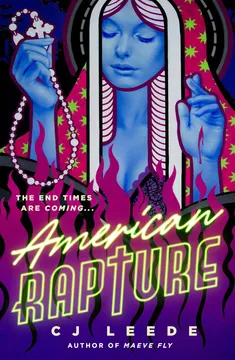


Plot Summary
The Sealed Bedroom
At sixteen, Sophie Allen lives under her parents’ strict Catholic rules in a house designed to keep noise and disorder out. Her twin brother, Noah, has been locked away at Sacred Hearts since their father found a magazine showing two boys kissing.
Sophie still remembers their shared plan to visit the Dells, and the night their parents dragged Noah from home while she fought to hold on to him. Now she and Noah speak only during supervised weekly calls. Their separation has left Sophie angry, lonely, and afraid that her own thoughts can condemn them both.
Her father controls what news she can see, and her mother measures food and clothing against religious rules. When a flu outbreak appears in the newspaper, Sophie barely knows how much of the world is changing.
Sophie’s isolation is not merely a setting; it is a system that teaches her to distrust her own perception. Her parents present control as protection, while Noah’s removal makes that claim impossible for her to accept. The sealed window turns the household into a physical model of her inner life: curiosity becomes dangerous because the family has defined it as disobedience. Her memories of the Dells matter because they preserve an image of freedom that predates the punishment. The outbreak begins beyond her awareness, but her confinement has already left her unprepared to interpret danger independently.
A Kiss Through Leaves
At St. Mary’s, Sophie hides behind the school while reading a forbidden novel and watches classmates arrive in a truck with fast food. Rachel kisses her boyfriend openly, careless of the punishment their Catholic school might impose.
Sophie is transfixed by the casual intimacy and by the greasy food her own family has rejected since Noah’s exile. In the driver’s seat, a dark-eyed boy watches the scene; Sophie notices him before learning his name is Ben.
The truck leaves, but a violent gust hits Sophie from the woods, followed by a strange sensation of being watched. She interprets the wind through the only language she has been given, as a possible greeting from the Devil. The moment leaves her curious about desire and newly alert to the world beyond her rules.
Rachel’s kiss works as an embodied counterargument to Sophie’s training. The act does not look like damnation or collapse; it looks spontaneous, mutual, and alive. That contrast gives Sophie her first concrete reason to question whether obedience is the same thing as goodness. Her reaction to Ben is entangled with the same awakening, but she lacks any framework for separating attraction from danger. The gust of wind complicates this discovery by making ordinary bodily curiosity feel supernatural. Sophie’s mind does not yet have room for ambiguity, so desire and demonic threat arrive as neighboring explanations.
The Dressing Room Confession
At the mall, Sophie encounters Ben again across an illuminated map of Wisconsin. They mirror each other’s movements on opposite sides of the display, and he reaches toward her through the translucent screen before his friends interrupt.
Her mother catches her and takes her shopping, where Sophie sees her changing body clearly for the first time. She hopes the outing might reopen their closeness, but her mother instead recounts leaving Wisconsin for college and being raped by a man on a farm.
She describes the assault as the consequence of her own clothes, ambition, and vanity, then presents modesty as a girl’s duty. Sophie hears both the facts of the violence and the blame attached to them. Their conversation ends with new clothes chosen for concealment, while news from the mall confirms the flu has spread into the Midwest.
The mother’s story reveals how trauma can be inherited not only as fear but as an explanatory structure. She has survived an assault by converting it into a moral lesson that makes the world seem predictable: if women control themselves, men’s violence can be prevented. That belief offers her a measure of order, but it transfers responsibility from the attacker to the vulnerable. Sophie recognizes her mother’s pain without being able to accept the doctrine built around it. The scene also links bodily self-awareness to surveillance. Sophie does not simply discover that she is growing up; she learns that her body has already been interpreted as a source of danger.
The Music Room Lesson
At school, Sophie hears rhythmic sounds from the music room and discovers two girls touching each other. The sight unsettles her, but the physical excitement she feels unsettles her more. Soon afterward, the school sends students home early when someone falls ill, and Sophie sees staff handling a bundle of red cloth.
She reads her father’s newspaper and finds reports of a mutated flu with fever, erratic behavior, and a red rash on men’s palms. During her weekly call, Noah urges her to investigate the outbreak, warning that conditions at Sacred Hearts are worsening.
Their conversation turns tense when Sophie asks about the magazine that led to his removal. He refuses to revisit that night, but insists she find more information. Sophie agrees, carrying both his request and her unresolved guilt.
Sophie’s first direct encounter with female desire makes the teachings of her community feel less like truth than prohibition. Her bodily response does not erase her fear; it intensifies it, because she has been taught that a thought can be a moral crime. The flu’s early signs begin to resemble the religious language she already uses to explain temptation, creating a dangerous interpretive overlap. Noah’s request gives her a practical task, but their strained call shows how trauma has narrowed even their closest bond. She wants to help him, yet cannot ask freely about the event that separated them.
Ben Finds Her Books
At the library, Sophie meets Ben without the mall map between them. He recognizes her as the girl who reads behind her school and recommends a novel, then helps her search for information when the computers partly fail.
Sophie learns that the virus has been spreading for months, that cities are being quarantined, and that people are discussing a second, more frightening strain called Sylvia. She asks him to print basic reports for Noah, but leaves when her mother honks outside.
The book Ben chose, a novel filled with tenderness and mutual pleasure, occupies Sophie through the weekend and gives her an alternative to the self-denial she knows. At school, Sister Anna touches Sophie’s face in a feverish, intrusive way. Then a classmate, Will, corners Sophie and uses her isolation and curiosity to pressure her.
The library offers Sophie knowledge without requiring submission to an authority, and Ben’s help makes learning feel relational rather than illicit. Yet the information arrives in fragments, leaving her unable to distinguish ordinary infection from the new strain. The novel’s vision of reciprocal pleasure quietly challenges her mother’s model of gender, while Sister Anna’s touch and Will’s coercion show that desire does not make every encounter safe. Sophie’s attraction and her vulnerability coexist. This distinction is crucial: she is beginning to claim curiosity, but she has not yet been taught how to identify consent or protect herself.
Noah in the Hospital
When Sophie calls Sacred Hearts, a distracted worker tells her that the residents have been moved to St. Joseph’s Hospital after a child became infected. Her parents had received the news and kept it from her.
Sophie confronts them and demands that Noah come home, but they insist his homosexuality is a spiritual sickness and deny that he belongs in their house. Her mother strikes her when Sophie accuses them of abandoning their son. The next morning, her father sends Sophie to confession and supervised church chores instead of school.
In the confessional, she notices Father James sweating and his palms red. At home, she tries to repair things with her parents, but hears them making animal-like sounds in the living room and discovers them feverish and having sex on the floor.
The hospital revelation turns Sophie’s family conflict into a crisis of trust: the adults who claim to protect her have concealed a real danger to Noah. Her parents’ language about spiritual illness mirrors the culture’s habit of treating difference as pathology, even as the outbreak supplies a literal illness they refuse to confront. The slap makes that hierarchy physical. Sophie’s attempt to reconcile before finding her parents transformed shows that anger has not extinguished her need for family. Their feverish behavior collapses the boundary between moral accusation and bodily sickness, forcing her to face a reality her upbringing has made nearly impossible to name.
The House Turns on Sophie
Sophie runs outside, then returns for the car keys. Her parents fall silent before her father charges from the living room, with her mother close behind. He chases Sophie onto the porch and pins her down, tearing at her clothes.
She wounds him with a metal cross, but her mother pulls him away, then turns on Sophie herself. Their struggle gives Sophie enough time to reach the keys and lock herself inside the car. She drives away as her neighbors watch without helping. On the freeway, panic briefly gives way to exhilaration: for the first time, Sophie controls where she goes.
Then an emergency broadcast orders counties including hers and Noah’s into quarantine. Stalled traffic traps her, and she watches an infected man overpower another driver before a woman kills him with a tire iron.
The home’s transformation is not presented as a simple escape from bad parents. Sophie has to defend herself against the people she still wants to believe are hers, and the assault echoes her mother’s history without making the situations identical. The cross fails as a symbol of protection until Sophie uses it as a weapon. Her brief freedom on the freeway is immediately constrained by the state’s quarantine, showing that leaving one enclosure does not mean the world is open. The road attack also turns the epidemic from a headline into a visible pattern of bodily violence, linking Sophie’s private terror to a public emergency.
Maro’s Highway
Officer Maro Verges finds Sophie trapped in traffic and moves her out of the worst of the gridlock. He explains that the new strain, HPSV or Sylvia, can trigger sexual violence before a fatal fever, and that no late-stage cases have survived.
Sophie realizes her parents are likely infected, but Maro cannot take her into the quarantine zone to reach Noah. At a farmhouse owned by his friend Eli, they find Eli and his lover Fiona dead together, with a gun beside them.
Their huge guard dog, Barghest, initially attacks Maro, then accepts Sophie when she calmly feeds him. Maro buries the couple, and Sophie comforts the grieving dog. She persuades Maro to let Barghest travel with them in a pickup truck, choosing the animal’s safety over the simpler motorcycle journey.
Maro’s blunt account replaces supernatural certainty with medical facts, but it does not remove Sophie’s fear. She must live with an unbearable gap between what she knows and what she can verify about her parents. Eli and Fiona’s deaths give the outbreak an intimate cost, while Barghest’s grief makes care tangible amid the collapse of ordinary institutions. Sophie’s ability to approach the dog comes from patience rather than command, a different kind of competence than the obedience she has been taught. Her insistence that Barghest come along also establishes a pattern: she increasingly makes decisions from attachment, even when adults warn her against them.
The Tornado and the Wall
A tornado catches Maro, Sophie, and Barghest at a rural house. Sophie climbs into the truck bed to keep Barghest from being thrown out as Maro drives through the storm. The tornado blows them off course and leaves them among discarded fiberglass figures. Maro angrily calls Sophie reckless, and she accuses him of trying to save her only because he could not save his sister or the teenagers under his care.
At a military roadblock, officials send them to a vaccination center instead of allowing them into the quarantine zone. Maro learns that a vaccine for the original NARS strain is available, but it offers no certain protection against Sylvia. Sophie receives the shots and enters Bright Beginnings with him, still focused on finding Noah.
The tornado makes the landscape itself unstable, while Sophie’s choice to protect Barghest exposes the cost of her loyalty. Her argument with Maro is emotionally precise but cruel: she identifies his grief and uses it against him because he is the person blocking her path. At the checkpoint, government authority replaces parental authority as the force deciding where she may go. Vaccination offers a thin form of safety, not resolution. The scene’s central tension is between protection and agency: Maro believes Sophie’s survival depends on stopping her, while Sophie experiences every delay as another possible loss of her brother.
Bright Beginnings Breaks
At Bright Beginnings, Sophie and Maro enter a crowded gym serving as a vaccination center and emergency shelter. Sophie receives an NARS vaccine and penicillin, while the staff explain that no proven Sylvia vaccine exists.
There she reunites with Ben, whose mother, librarian Mrs. Parson, has died after falling ill. He has escaped the quarantine area and is grieving, but his presence gives Sophie a familiar connection to home. Helen, a young former pageant contestant, and Wyatt, an isolated boy, share the shelter; Cleo, a stylish woman with a gun and hard-earned confidence, becomes another ally.
Maro joins fellow officers. When an infected resident attacks an elderly woman, the crowd freezes until Maro and another officer intervene, revealing how quickly the shelter’s fragile order can fail.
The shelter assembles a provisional community from people who have lost their ordinary affiliations. Sophie’s reunion with Ben is not a return to safety; both have been changed by bereavement, and their shared past is now a scarce resource. The other survivors introduce contrasting survival styles: Helen’s polished self-presentation, Wyatt’s withdrawal, and Cleo’s forceful independence. The attack exposes the moral weakness of crowds under threat. People know danger is present, yet fear suspends action until someone accepts responsibility. Maro’s intervention matters not because it restores order permanently, but because it models the active care that Sophie has repeatedly failed to find among adults.
Luke and the Red Robes
During the shelter’s uneasy pause, Luke, a man staying nearby, corners Sophie beneath the school bleachers and demands sexual access. Barghest attacks him before he can hurt her, and Sophie escapes with the dog.
Soon, members of St. Michael’s Crusaders, a Christian extremist group, set fires and explosives around Bright Beginnings to destroy the vaccination site. Maro tries to return to the gym for the people inside, while Cleo insists that Sophie and Wyatt must get out. Sophie hotwires a school bus, and Cleo drives it through the smoke.
Maro and Wyatt manage to reach them, followed by Ben and Helen. The group escapes together, though Sophie is injured and briefly loses consciousness. Their shelter has been destroyed, and the Crusaders have turned religious language into a weapon against medical help.
The two threats in this section reveal why Sophie’s growing self-trust cannot mean indiscriminate openness. Luke exploits the culture’s assumptions about male entitlement, while the Crusaders use faith to justify attacking people who are trying to prevent infection. Barghest’s intervention protects Sophie, but the bus escape depends on her technical knowledge and Cleo’s decisive driving. The group survives because different forms of competence cooperate. Maro’s attempt to return for others also shows the burden he carries as an officer. His instinct to help is admirable, but in a collapsing system it repeatedly puts him and those with him at risk.
The Cheese Castle Gunfight
After fleeing the school, the group takes supplies from a ranch house and reaches Hank’s Cheese Fortress, a tourist shop stocked with food, clothing, and practical goods. They load up, but two armed men emerge and fire on their vehicle.
Cleo shoots both attackers, while Ben is wounded by a bullet grazing his shoulder. Maro treats the injuries, and the survivors continue toward House on the Rock, a sprawling tourist attraction he hopes will offer shelter. Along the way, Ben reveals that he survived childhood cancer and that his mother helped him endure it.
Sophie begins to understand why he insists on finding reasons to hope, even when the landscape is becoming a war zone. Their arrival at the strange attraction gives the wounded group a place to rest, but its labyrinthine interior feels anything but safe.
The cheese shop briefly converts consumption into survival: ordinary abundance becomes a cache of food, clothes, and supplies. Yet the gunfight shows how quickly a resource can attract violence. Cleo’s skill saves the group, while Ben’s wound makes his optimism more complicated than simple cheerfulness. His history of serious illness has taught him that hope is a practice, not a guarantee. House on the Rock then shifts the story from exposed roads into an enclosed, artificial world. Its oddity collections echo Sophie’s private habit of making things to pass time, but the scale and darkness make her familiar strategies feel uncanny.
House on the Rock
The survivors settle in the attraction’s gatehouse, gather food, and try to recover. Sophie and Helen explore deeper rooms, where a colossal carousel of strange animals and figures fills Helen with wonder. They find melting butter sculptures in a failed refrigerator, slip into the mess, and laugh together.
Their brief intimacy gives Sophie a rare sense of friendship ungoverned by judgment. Later, Helen becomes feverish and attacks Sophie in the dark, driven by Sylvia.
Sophie runs through the attraction’s twisting rooms as the power and lights fail, using what she remembers of the layout to stay ahead. Helen catches her in an enormous organ exhibit and pins her down. Maro and Cleo pull Helen away, but Cleo has to kill her. Sophie survives, while the group loses another friend to the virus.
The attraction’s artificial wonders create a temporary permission to feel awe, play, and closeness. Sophie and Helen’s laughter matters because it is not a cure for grief; it is a moment in which grief does not occupy the whole room. Helen’s infection then turns intimacy into uncertainty. The danger is not only that a friend can attack, but that tenderness offers no reliable way to recognize the moment when illness has taken hold. The maze makes Sophie’s escape dependent on memory and orientation, while the organ room transforms familiar religious sound into overwhelming machinery. Cleo’s act of killing Helen is both protection and a lasting moral wound.
A Birthday in the Dells
After Helen’s death, Maro guides the survivors toward the Dells, where displaced police and medics have made the Ho-Chunk casino a functioning refuge. Sophie searches the tourist town’s science museum and bookstore for Noah, but finds no sign of him.
She learns more about Ben, including his Anishinaabe heritage and his mother’s connection to Red Cliff, though he is still trying to understand what that inheritance means to him. On October 8, Sophie realizes it is her and Noah’s birthday.
Cleo, Wyatt, Ben, and Maro make a small celebration from cheese curds, candles, folded paper hats, wine, and stories. Cleo gives Sophie a necklace, and Ben prepares a handmade card. For the first time, Sophie joins in a celebration that is not organized around penance or absence, even as she remains determined to find her twin.
The birthday gathering restores a form of ritual without restoring the old family structure. Its homemade decorations and improvised food make care visible as something people can create rather than inherit from authority. Sophie’s birthday has always been bound to Noah, so celebrating without him risks making absence permanent; instead, the group acknowledges both the loss and her continuing life. Ben’s Indigenous background also complicates Sophie’s narrow education, reminding her that history and identity exceed the stories her community chose to tell. The celebration does not resolve her search, but it gives her a small experience of belonging that is chosen and reciprocal.
The Casino Burns
St. Michael’s Crusaders attack the casino refuge, setting buildings alight and killing people as survivors flee through smoke. Cleo and Wyatt are stabbed. Sophie and Ben find them, but neither can save them. Cleo presses her gun into Sophie’s hand and urges her to resist the attackers.
Sophie confronts a Crusader with a torch, then uses his gasoline to turn the fire against him. When Barghest attacks and is soaked in fuel, the flames catch his fur. Sophie tries to smother the blaze with robes, but Barghest dies.
A second attacker wounds Ben, and another Crusader shoots Maro as he intervenes. Maro dies beside Sophie after saving her. She and Ben escape the burning grounds carrying the loss of their companions, while the people who claimed to defend faith have destroyed their refuge.
The attack concentrates the book’s conflicts into a single catastrophe: religious extremism, bodily vulnerability, communal care, and the limits of rescue. Sophie acts with force, but action cannot reverse the deaths around her. Her attempt to save Barghest is especially painful because his loyalty has been one of the few uncomplicated relationships she can trust. Maro’s death fulfills his protective impulse while leaving Sophie with the knowledge that survival can depend on another person’s sacrifice. The Crusaders’ violence exposes the gap between moral certainty and moral conduct. They claim divine authority, yet the most meaningful ethical acts belong to people who protect others without demanding obedience.
Holy Hill’s Silent Congregation
Ben drives Sophie away from the burning casino in a stolen SUV. They find reports that Sacred Hearts residents were moved to Holy Hill, the Catholic sanctuary Sophie and Noah once visited together, and head there. The basilica and surrounding buildings are crowded with dead worshippers, many seated in the pews with their hands joined.
A surviving monk, bitten and dying, explains that he tried to give the dead dignity by arranging them together. He has taken medicine to prevent himself from spreading the infection and dies before Sophie can learn whether Noah escaped.
She and Ben search the grounds, finding no sign of him. Sophie notices the display of abandoned crutches and walking aids left by visitors who believed the holy water had healed them. She takes a pair, carrying away a practical tool rather than proof of a miracle.
Holy Hill is both a physical destination and the place where Sophie’s religious world should be most secure. Its dead congregation makes that expectation impossible to sustain. The monk’s effort to arrange the bodies is a quiet form of care, not a defense of doctrine; he offers dignity where institutions have failed. Sophie’s search is driven by hope, but the absence of Noah forces her to distinguish intuition from evidence. Taking crutches from the shrine’s display is deliberately ambiguous. The act may be practical, symbolic, or both, but it does not require her to decide whether the reported healings were supernatural.
Noah’s Origami Signal
Before leaving Holy Hill, Sophie and Ben search the rooms where Sacred Hearts residents stayed. In the last bedroom, Ben finds a folded paper bird beneath a mattress, one of the secret signals Sophie and Noah used as children.
Noah’s note explains that he and another former Sacred Hearts resident, Tyler, escaped from guards who were aligned with the Crusaders. Noah has fallen in love with Tyler and is traveling with him and a pregnant friend who needs help reaching a safe place. He tells Sophie not to blame herself for his removal or their parents’ choices.
The clue to their destination is the phrase about twin islands. Sophie realizes he means North and South Twin in Lake Superior’s Apostle Islands, near Ben’s mother’s home at Red Cliff. Noah is alive, though still beyond her reach.
The origami bird turns a childhood practice into a survival technology. Sophie and Noah’s private language has outlasted the institution that tried to separate them, and the note answers the emotional question that has driven her journey: he is not merely a memory she is chasing. Noah’s love for Tyler also reframes the magazine that led to his removal. What his parents treated as corruption is part of a life he has chosen for himself. His request that Sophie release her guilt does not erase her pain, but it shifts responsibility back toward the adults and systems that caused the separation.
Sophie Takes the Wheel
Sophie and Ben recover at an abandoned house, tend their wounds, and decide to travel toward Red Cliff, where Ben may find his mother’s community and Sophie can continue toward the Apostle Islands. Sophie reads Noah’s note again and accepts that she cannot control when they will meet.
The two survivors carry grief for Maro, Cleo, Wyatt, Helen, Barghest, and the dead they have left behind, but Sophie no longer treats desire as proof of moral failure. Before they leave, she takes the driver’s seat.
Ben gives her the keys, and they share a kiss, choosing closeness without pretending that the world is safe or their future assured. The novel ends with Sophie and Ben heading north, not toward a repaired old life, but toward the chance to build one through their own decisions.
The ending does not resolve the epidemic or reunite the twins; it changes what Sophie believes she is allowed to do while those uncertainties remain. Taking the wheel gives her agency in a literal, earned form, after a journey repeatedly controlled by parents, officials, infection, and circumstance. Her intimacy with Ben is neither presented as a cure for grief nor as a promise of permanence. It is a choice made under conditions where certainty is unavailable. Sophie’s emerging freedom depends less on replacing one doctrine with another than on learning to examine the rules that have governed her body and conscience.
Analysis
American Rapture makes its apocalypse intimate by beginning with a family that has already learned to fear difference. The viral catastrophe does not create Sophie’s crisis of belief; it magnifies the contradictions she has been living with. Her parents call Noah spiritually ill before Sylvia makes illness literal, and the Crusaders later turn that same confusion into political violence. The book refuses the comfort of treating cruelty as an inexplicable exception. Its religious antagonists are not monsters from another world, but ordinary people whose certainty licenses them to injure others.
Sophie’s development is not a simple movement from faith to disbelief. She tests inherited explanations against what happens to bodies: her mother’s assault, Noah’s expulsion, the infected victims, and the people who risk themselves to help. Desire becomes central because Sophie has been taught to experience her body as evidence against her. Her gradual self-acceptance is therefore also an ethical education. She learns that consent matters, that shame can be imposed, and that physical longing does not make a person wicked. The novel places that learning beside the epidemic’s coerced violence, distinguishing chosen intimacy from the disease’s annihilation of choice.
The story’s repeated acts of care offer an alternative to purity and punishment. Mrs. Parson gives Sophie books; Maro protects strangers even when he cannot save them all; Cleo offers knowledge without demanding obedience; Sophie earns Barghest’s trust by attending to his fear. These relationships do not defeat death, and the losses remain devastating. Their value lies in refusing to make survival dependent on deserving it. By the end, Sophie has no proof that the world will recover, no certainty about God, and no reunion with Noah. She has a direction, a companion, and the right to make her next choice. The apocalypse ends the old arrangements, not the possibility of a life beyond them.
Characters
Sophie Allen
A sheltered twin in revoltSophie is a curious, observant teenager raised in a tightly controlled Catholic household. Her twin brother Noah is her closest companion, and his removal from home leaves her isolated with parents who treat obedience as safety. She fills empty hours with library books and practical projects, quietly developing skills that later become useful. Sophie is especially alert to the difference between what adults claim and what their actions reveal, but years of religious instruction have taught her to mistrust her own thoughts and body. Her journey tests that self-distrust against concrete choices: protecting others, seeking knowledge, and deciding what kind of life she wants. She is neither naturally fearless nor instantly liberated; she learns agency through repeated, difficult action.
Noah Allen
Sophie’s brilliant twinNoah is Sophie’s twin and first confidant, a gifted student whose curiosity extends beyond the narrow world their parents permit. He shares scientific discoveries, books, and private jokes with Sophie, giving her a glimpse of thought ungoverned by fear. Unlike his sister, he openly rejects many of the religious claims used to control them, though he still understands the emotional cost of those beliefs on her. His separation from Sophie shapes her choices even when he is absent from the scene. Noah represents not an abstract ideal of freedom, but the particular person Sophie loves and fears losing, someone whose humor and intelligence help her imagine a wider life.
Ben
A generous fellow survivorBen is a boy from Sophie’s school community and the son of Mrs. Parson, the librarian who quietly gives Sophie access to books. He first attracts Sophie through his attentiveness, ease, and respect for her curiosity. Ben is warm without being naïve; surviving childhood cancer has left him conscious of mortality, but he chooses hope as a practice rather than assuming everything will work out. His relationship with Sophie develops amid grief and danger, creating space for her to experience affection without the rigid shame she was taught to expect. He also carries questions about his Anishinaabe heritage and his mother’s past, making his identity larger than Sophie’s first impression of him.
Maro Verges
A grieving officer protectorMaro is a young police officer encountered during the highway quarantine. He is exhausted, practical, and committed to helping people even when the emergency has outgrown the structures meant to manage it. His grief over his sister and the teenagers he could not protect makes him especially determined to keep Sophie alive, sometimes to the point of overriding her wishes. He is not a simple guardian figure: his care is mixed with guilt, frustration, and a need to make himself useful. His relationship with Sophie grows through shared danger and moments of trust, while their age difference and unequal responsibilities remain important boundaries. Maro embodies imperfect care under pressure.
Sophie’s mother
A mother shaped by traumaSophie’s mother is devout and austere, using religious discipline to organize family life and guard against what she sees as danger. Her account of surviving sexual assault reveals an earlier life marked by ambition and curiosity, as well as the self-blame she has built around the attack. She loves her children, but her fear and shame distort that love into control, particularly around Sophie’s body and Noah’s difference. She is not simply a cruel authority; she is a wounded adult who has made a damaging explanation feel necessary for survival.
Sophie’s father
An architect of controlSophie’s father designs the family home and church in a style that prizes order, quiet, and carefully managed space. He appears mild in daily life, but his authority becomes forceful when Noah’s private life violates the family’s religious rules. He supports the decision to send Noah away and restricts Sophie’s access to information, believing that control can preserve moral and domestic stability. His identity as a builder contrasts with the emotional damage his household contains.
Cleo
A fierce, candid survivorCleo is a confident woman Sophie meets at the emergency shelter. She is direct about sex, religion, and the shame imposed on women, and she encourages Sophie to seek knowledge rather than accept ignorance as virtue. Her experience with ballet, music, and artist management gives her a life beyond the polished appearance she first presents. Cleo is also practical under fire, capable with weapons and unwilling to let formal authority obscure immediate need. Her fierce manner protects a more vulnerable interior, and her willingness to share what she has learned helps Sophie imagine self-worth outside the rules of her upbringing.
Helen
A pageant girl seeking herselfHelen is a young woman Sophie meets in the vaccination shelter. Her beauty and poise initially make Sophie self-conscious, but their shared exploration of House on the Rock creates a tentative friendship. Helen has spent years in pageants, pursuing opportunities shaped by her mother’s ambitions, and worries that she has postponed discovering who she is beyond performance. Her moments of wonder and laughter reveal a lively imagination beneath the composed exterior. She offers Sophie a glimpse of female companionship based on curiosity rather than judgment.
Wyatt
A frightened boy needing careWyatt is a young boy found alone in the emergency shelter, withdrawn after the upheaval around him. Sophie recognizes something of Noah in his silence and tries to give him a place among the group without forcing him to speak. He gradually responds to playful attention, especially Cleo’s games and the wonders at House on the Rock. Wyatt’s presence brings out Sophie’s protective instincts and reminds the adults that survival includes making room for children’s fear.
Barghest
A loyal sheltering dogBarghest is a huge black dog found guarding the bodies at Eli’s farmhouse. Initially dangerous to strangers, he responds to Sophie’s patience and food, and the two form a bond built on touch and mutual trust. Barghest protects Sophie during several encounters and becomes her closest physical companion on the road. He cannot understand the political or religious explanations surrounding the outbreak, but his loyalty is immediate and uncomplicated. For Sophie, caring for him becomes one of the clearest ways to express love without fear.
Mrs. Parson
A librarian who opens doorsMrs. Parson is the town librarian and Ben’s mother. She recognizes Sophie’s intelligence and loneliness, then quietly helps her borrow books her parents would not approve. Her generosity makes the library a rare place where Sophie can explore ideas without being shamed. Mrs. Parson’s warmth also shapes Ben’s character and offers Sophie an example of an adult who responds to a child with curiosity rather than control.
Eli
Maro’s longtime friendEli is a retired police officer and Maro’s close friend. He has withdrawn from active work after being stabbed during a drug investigation and built a private life with Fiona. His farmhouse becomes a brief refuge for Sophie, Maro, and Barghest. Eli’s history matters to Maro, who carries a deep sense of responsibility toward the people he loves.
Fiona
Eli’s devoted companionFiona is a married woman who has built a relationship with Eli despite the complications surrounding her husband. Maro knows her from his visits to Eli’s farmhouse and has a personal attachment to her. Her presence in the story reveals that adult relationships, like young people’s desires, rarely fit the clean moral categories Sophie has been taught to use.
Officer Pike
A capable fellow officerOfficer Pike is one of Maro’s colleagues at the vaccination center. She helps manage the crowded shelter while showing concern for the people in her care, including Sophie and the vulnerable residents. Pike’s measured authority contrasts with officials who rely on force or procedure alone. She is a practical ally in a place where neither safety nor order can be guaranteed.
Reverend Don Ansel
A preacher of holy vengeanceReverend Don Ansel is a charismatic religious figure whose online broadcasts frame the epidemic as divine punishment for social change and sexual freedom. His rhetoric connects scattered believers into the St. Michael’s Crusaders, a movement that attacks vaccination centers. Ansel’s influence depends on making fear sound like certainty and violence sound like moral duty. He is less a personal antagonist to Sophie than the public voice of ideas already present in her upbringing.
Sister Anna
A feverish school authoritySister Anna teaches at St. Mary’s and helps maintain the school’s religious rules. Her coughing, feverish appearance, and unusually intrusive attention to Sophie unsettle the girl before the outbreak is fully understood. She represents the fragility of authority when illness begins to alter those who enforce it.
Will
A coercive schoolboyWill is Rachel’s boyfriend, a popular boy who approaches Sophie when she is alone. He misreads her curiosity as consent and uses sexual pressure to test her boundaries. His behavior makes clear that attraction does not protect Sophie from exploitation.
Rachel Miller
A bold schoolmateRachel is a student at St. Mary’s who openly kisses her boyfriend and later humiliates Sophie in front of classmates. Her confidence and cruelty expose Sophie to a more public, socially enforced form of judgment than the one she faces at home.
Tyler
Noah’s fellow escapeeTyler is a former resident of Sacred Hearts who shares Noah’s upbringing and questions the beliefs imposed on them. Sophie learns about him through Noah’s letter. His intelligence, humor, and independent judgment make him someone Noah trusts as a companion.
Father James
A failing confessorFather James is the priest who hears Sophie’s confession. He represents the church’s authority over her conscience, but his own visible illness weakens the certainty of that role. His concern for Noah hints at an awareness that the family’s spiritual explanation has concealed real suffering.
Nurse Dana
A humane facility workerNurse Dana works at Sacred Hearts and treats Sophie with more kindness than the institution’s other staff. She supervises Noah’s limited calls and helps preserve his contact with his sister, even within the rules imposed by the facility.
Plot Devices
Sylvia, or HPSV
A plague that hijacks bodiesThe novel’s epidemic begins as a respiratory illness related to NARS-CoV, then mutates into HPSV, nicknamed Sylvia. After an apparent period of improvement, infected people develop high fever, confusion, and sexual mania that drives them to assault others and spread bodily fluids. The later fever is usually fatal. The disease makes the boundary between bodily autonomy and social panic brutally concrete, while its resemblance to demonic possession allows religious extremists to misname a medical crisis as divine judgment. The vaccine available during the story protects against the original strain but does not reliably prevent Sylvia.
The Wind
A recurring sign of uncertaintyStrong, often sudden winds recur at moments when Sophie’s understanding of the world shifts: her first stirrings of desire, the outbreak’s spread, the tornado, and the final journey. Sophie interprets the wind through religious ideas about God, demons, and temptation, while the plot also gives it a physical role in storms, fires, and the changing weather. Its meaning never settles into a single supernatural explanation. The wind therefore carries both threat and possibility, pressing against the structures Sophie has been taught to trust without confirming what lies beyond them.
Noah’s Paper Birds
A childhood code across distanceSophie and Noah once used secret compartments and folded notes to protect small parts of their lives from their parents. The folded bird that Sophie finds beneath a mattress at Holy Hill turns that childhood habit into a way to locate Noah across a fractured state. The message gives Sophie news of his escape, his relationship with Tyler, and a destination encoded as twin islands. The paper bird links memory to practical action: it is not just a symbol of their bond, but a piece of evidence that lets Sophie continue her search.
Books and How-To Guides
Knowledge as self-relianceSophie secretly reads novels and practical manuals, finding a private education in a life where adults restrict what she may know. The books offer language for desire and relationships, while the how-to guides give her concrete skills such as driving, first aid, lock-picking, and hotwiring. Their importance grows as formal institutions fail: Sophie uses what she has learned to investigate the outbreak, protect herself, and help the group escape. Reading does not make her invulnerable, but it gives her ways to act beyond the narrow roles her family has assigned her.
The Crusaders’ Red Robes
Faith turned into a weaponThe blood-red garments and emblem of St. Michael’s Crusaders first appear as an unsettling detail around Sophie’s school and church community. Later, the same imagery identifies the organized extremists who attack vaccination centers and safe havens. The robes connect local religious authority to a broader political movement, making Sophie confront the possibility that familiar people and institutions have helped prepare the ground for violence. The group’s costume gives its members a theatrical, almost supernatural appearance, but their ordinary faces and human choices expose the danger of treating cruelty as sacred duty.
Download PDF
Download EPUB
.epub digital book format is ideal for reading ebooks on phones, tablets, and e-readers.








