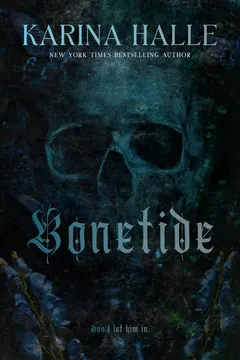


Plot Summary
Prologue
A watcher2 across the loch sees Iris1 arrive at the cottage her great-aunt3 left her. He recognizes Effie3 in the line of Iris’s1 jaw and in the stubborn way she stands alone.
At dusk, he lets Iris1 glimpse a shape across the water, then watches her retreat indoors. He has wanted a Galloway woman for a long time and believes Iris1 will not leave. For now, he keeps his distance, content to make her feel watched.
The opening gives the watcher’s desire the shape of a threat before Iris can interpret it. His confidence that she cannot leave turns the inheritance into a trap, while his attention to her resemblance to Effie makes family history feel physically present. The gap between what he intends and what Iris knows creates the book’s central suspense: attraction will develop inside a structure of danger she cannot yet see. His restraint is not reassurance. It is a strategy, and the patient tone makes that strategy more unsettling.
The Cottage Across the Bay
After divorce, dwindling illustration work, and months of relying on family for shelter, Iris Galloway1 accepts her late great-aunt Effie’s3 remote Scottish cottage. She must live there for a year to inherit it, a condition she accepts because Effie3 chose her and because Iris1 needs a home of her own.
On her fourth day, she spots a naked man2 on the far shore, then draws the empty space where his face should be in her memory. At the village shop, Mhairi4 knows Effie3 and grows guarded when Iris1 asks about the apparently empty castle across the bay. Driving home, Iris1 sees the same man2 swimming beside the road, watching her from the loch.
Iris’s move is both a practical response to economic and bodily vulnerability and an attempt to reclaim authorship after a marriage and career have narrowed her options. The inheritance offers shelter, but its residency rule makes shelter conditional. The faceless figure unsettles the confidence Iris places in observation, her professional instrument as an illustrator. Before the supernatural becomes explicit, the landscape has already begun to behave like a witness that withholds evidence. Mhairi’s caution likewise suggests that local knowledge is not absent, only carefully rationed to newcomers.
Effie's Salted Warning
While clearing the cottage, Iris1 finds a trunk marked with her name beneath the stairs. Effie’s botanical sketches feel startlingly like family inheritance, but a bundle of papers turns the discovery ominous: a list of forty-seven people dated across nearly two centuries, a motionless horse drawn on the shore, and a note warning Iris to keep the salt fresh, leave the horseshoes and rowan in place, and refuse an unnamed man2 entry.
She renews the salt at every window. That evening, a man2 knocks, identifies himself only as Alasdair,2 and apologizes for startling her. He knows her name although she never gave it, and leaves without asking to enter.
The chest makes inheritance more than a transfer of property: Effie has left Iris a method of attention, a record, and an instruction whose meaning is deliberately incomplete. The botanical work gives Iris a point of kinship with a woman she barely knew, while the names and horse image convert that intimacy into unease. Salt, iron, and rowan initially appear as eccentric habits. Their material specificity matters: Iris does not merely inherit a story about danger, she inherits its domestic maintenance. Alasdair’s knowledge of her name complicates the boundary between invitation and intrusion before she understands what either means.
Bones in the Thicket
Local conversation at the Torridon Hotel reveals that women have vanished along the coast, while a story about drowned wives gives the disappearances a folkloric cast. On Effie’s3 land, Iris1 finds fresh bones arranged on a stone and senses something moving behind her2 in the thicket.
She runs home, scattering her flowers, then hears Alasdair2 outside claiming he saw her fall. His visit leaves no tire tracks on the wet drive, and she calls Sergeant MacRae.7
He finds the bones but offers ordinary explanations, while confirming that no one officially lives at the castle. Later Iris1 sees Alasdair2 watching from the opposite shore. His denial and the police officer’s7 uncertainty leave her unable to decide whether she has a neighbor, a threat, or both.
The episode makes fear a conflict between competing systems of evidence. Iris trusts sensory detail, but pain, fog, isolation, and local folklore give her observations several possible meanings. MacRae’s practical explanations do not settle the matter; they expose how easily evidence can be dismissed when it does not fit an accepted account. Alasdair’s impossible arrival seems to answer the mystery while deepening it. Iris’s call to the police is a bid to restore ordinary accountability, but the encounter leaves her more isolated because neither the authorities nor the village fully explains what she saw.
The Window Between Them
Alasdair2 appears outside Iris’s1 kitchen window, fully dressed, and insists he was not the presence in the thicket. He speaks respectfully of Effie’s wards and admits he will not explain himself fully. Iris1 refuses to invite him inside, although his attention and their shared interest in plants make her want to.
Later, she finds binoculars in Effie’s trunk and uses them to study the castle. At dusk she sees Alasdair2 naked on the rocks, touching himself while facing her cottage. Iris1 watches and touches herself, only to realize that he has noticed her. His answering look transforms what she thought was private observation into a deliberate exchange neither of them can pretend did not happen.
Looking is Iris’s craft, but here observation stops being safely one-sided. The binoculars magnify Alasdair while also revealing Iris’s own participation in the encounter. Her desire is real, yet it develops alongside questions of consent and control: she cannot tell whether he arranged the spectacle for her or simply recognized her attention. Effie’s wards give refusal a physical vocabulary, even as attraction makes Iris test its limits. The scene makes erotic curiosity part of the plot’s epistemology. Iris learns something about Alasdair, but also discovers how easily being seen can feel like being chosen.
The Castle in Fog
Iris1 follows the castle’s overgrown access road and sees a white horse2 watching from the trees before she reaches the ruin. Through a glazed window, she spots Alasdair2 reading in a furnished room, proof that the supposedly empty castle has a resident.
He does not see her, and she leaves without knocking, disturbed by how strongly she wants to enter. Later, Alasdair2 invites her to meet him on the shore, but at the hotel Iris1 hears that a fourth woman has vanished and that a witness saw a tall, dark-haired man2 dragging someone toward the water.
Inspector Sinclair6 questions her about Alasdair.2 Iris1 lies about his appearance, then searches Effie’s papers and finds letters addressed to a man called Eachann, including one tied to a woman who disappeared in 1962.
The castle visit places desire beside scrutiny: Iris chooses not to enter, recognizing that an impulse can feel compelling without being wholly her own. The white horse and the furnished room make the castle a concrete contradiction, not merely a Gothic backdrop. News of another missing woman then gives her attraction a moral cost. Her lie to Sinclair is an early choice to protect Alasdair without knowing whether he deserves protection. Effie’s letters expand the danger backward through time, suggesting that the present disappearances belong to a history the village has kept but not openly explained.
Iris Crosses the Threshold
Iris1 walks to the castle in heavy rain, carrying Effie’s letters and questions. Alasdair2 welcomes her, warms her by the fire, and accommodates the pain her fibromyalgia brings on after the walk. He recognizes the names of the missing women but gives few explanations, speaking instead of the loch’s old stories and of Effie’s3 habit of keeping records.
The tenderness unsettles Iris1 as much as his evasiveness. After she leaves, she returns the next day and tells him plainly that she wants him. He kisses her, touches her at the roadside, and stops when Inspector Sinclair6 drives toward the castle. That evening, Iris1 enters the loch with Alasdair,2 drawn to his warmth and unaware of the danger moving beneath the surface.
The first crossing is emotional before it is physical. Alasdair’s response to Iris’s chronic pain offers a form of care she has often had to negotiate for, making his attention powerful precisely because it is practical. Yet his selective truth keeps the relationship asymmetrical. Iris chooses him while lacking crucial information, and the narrative refuses to make that choice either wholly free or wholly coerced. The loch swim intensifies this ambiguity: warmth and safety arrive from the same man who is linked to missing women. Desire becomes a way of approaching knowledge, but not a reliable substitute for it.
The Leash Comes Loose
At the castle, Alasdair2 shares his rooms, food, books, and stories with Iris,1 then begins a sexual relationship while warning that something about him will change if she gives herself fully. After their first night together, he carries her home while she sleeps, enters the locked cottage, and prepares coffee because he remembers how much she wants it.
Iris1 is disturbed by the intrusion and moved by the care behind it. Effie’s3 hidden key opens a sealed workroom filled with portraits of Alasdair painted across decades and notes about a failed binding. Mhairi4 then names him an each-uisge,2 a water-horse that lures and devours women.2 Effie’s3 death has weakened the old bargain, and Iris’s1 intimacy has helped release him from its restraint.
Care and danger become difficult to separate because Alasdair’s tenderness is genuine in form even when the relationship is shaped by supernatural pressure and missing knowledge. The coffee is intimate attention, but the uninvited entry also demonstrates how his devotion can override Iris’s boundaries. The workroom gives physical evidence to what rumor could not prove: Alasdair has not aged. Mhairi’s explanation reframes attraction as part of a failing containment system, without making Iris’s feelings unreal. The central psychological problem is therefore not simply whether Iris was manipulated, but how she can distinguish her own desire from a force that has been shaping it.
The Monster at Home
Mhairi4 explains that Alasdair2 is both man and water-horse,2 and that the Galloway women have kept him tethered to human form through a long-standing bargain. The drowned wives are women he has killed; Effie’s3 death loosened his restraint and brought four disappearances in one summer.
Iris1 knows this and continues seeing him. Alasdair2 admits that the creature’s2 eyes, teeth, and claws sometimes surface during intimacy, while insisting that the man and the monster2 are not always equally in control.
When three drowned women appear in the shallows, he turns Iris1 away from the window and tells her they are waiting to see whether she will join them. Their relationship has become domestic, but the dead remain in the water and the danger is growing.
Iris’s decision to stay is not an endorsement of Alasdair’s violence; it is a psychologically costly refusal to reduce attachment to a simple verdict. Her capacity to adapt protects her from being overwhelmed, but adaptation also risks making atrocity ordinary. The drowned women interrupt domestic comfort with the consequences the couple might otherwise keep outside their rooms. Alasdair’s divided identity complicates responsibility without erasing it: the creature acts, yet the man knows the victims’ names and continues to live with their deaths. The story asks whether intimacy can preserve a person without excusing the harm that person causes.
Becca's Last Night
Inspector Sinclair6 phones Iris1 to ask whether Alasdair2 can account for his whereabouts on the night Becca Rhys disappeared. Iris1 lies and says Alasdair2 was with her. When she confronts him, he admits he killed Becca and treats the act as feeding rather than betrayal. Iris1 throws her breakfast bowl at him and orders him out of the cottage.
Alasdair2 obeys, leaving her with the wreckage, the knowledge that another woman is dead, and a home suddenly too quiet to inhabit comfortably. His distinction between sexual fidelity and killing exposes the distance between their moral worlds. Iris1 can no longer treat his violence as an old story or a distant possibility; it has taken place during their relationship.
This rupture forces Iris to name a moral injury that desire had allowed her to defer. Alasdair’s answer is not a calculated excuse: he genuinely sorts intimacy and feeding into separate categories. That sincerity makes the mismatch more disturbing, because it shows that affection does not automatically generate shared ethics. Iris’s anger is an act of boundary-setting, but it does not erase her complicity in concealing him from Sinclair. The broken bowl gives the conflict a domestic consequence. Her home becomes both a refuge from Alasdair and the place where she must face the choices she made for him.
The Horse Takes Sinclair
When Sinclair6 returns to question Iris,1 the white horse2 appears on the slope above her cottage. Iris1 recognizes the danger and tries to stop the detective,6 but its glamour draws him closer. He touches the horse’s2 wet shoulder and his hand sticks fast. The animal2 rears, crushes him, then drags him into the loch. Drowned women rise and consume what the water-horse2 leaves behind.
Iris1 watches, then moves Sinclair’s6 car to the castle and tells Alasdair2 what happened. He admits the creature2 acts beyond his control and sinks the car to hide the evidence. Iris1 knows police will come looking, but accepts that she must lie because the truth would sound impossible. She has become an active accomplice.
The scene turns folklore into physical consequence and makes skepticism dangerous: Sinclair’s familiarity with horses helps the glamour work rather than protect him. Iris’s attempt to intervene cannot overcome the creature’s power, but her response afterward remains a choice. By relocating the car and agreeing to conceal the death, she crosses from emotional entanglement into legal and moral complicity. Alasdair’s explanation that he cannot fully control the horse may be true, yet the result is still a dead detective and a buried investigation. The water does not simply hide violence; it recruits the living into maintaining its secrecy.
The Water Calls Iris
After Sinclair’s6 death, the drowned wives lure Iris1 off the rocks and into deep water. Their compulsion makes her undress and walk in despite her conscious resistance; cold hands pull her under. Alasdair2 reaches her and commands the dead to release her. In the aftermath, Iris1 understands that the women can call her again and that she may not be able to refuse.
She seeks Mhairi,4 who explains the binding Effie failed to complete: Iris1 must use iron to cut a piece of the water-horse’s2 hide, but Alasdair2 must freely offer it. The hide would end the killing and make him mortal, eventually bringing his death. Iris1 leaves knowing that saving the coast means asking him to give up eternity.
The attack makes Iris’s compromised agency more than a romantic metaphor: her body carries out an action her conscious self rejects. Alasdair’s rescue is real, but it does not resolve the danger, since his power over the dead is also rooted in the history that created them. Mhairi’s binding offers no clean rescue. It requires consent from the creature and turns love into a decision about mortality, not merely separation. The cost matters because it prevents Iris from treating the ritual as a technical fix. To protect future victims, she must ask Alasdair to choose a finite life with her.
A Leash Becomes a Choice
Alasdair2 discovers Iris1 has consulted Mhairi4 and reacts with anger, reading the binding as a plan to control him. During their confrontation, his eyes turn black and his hand closes around Iris’s1 throat; the monster2 nearly kills her before Alasdair2 resurfaces and recoils from what he has done. Iris1 waits through a day of rain, then goes to the castle chapel with Effie’s3 knife and salt.
She tells him the binding will destroy the deathless creature but leave the man mortal, aging beside her. Alasdair2 reveals that he refused Effie3 because he feared surrendering endless time, but now fears the monster2 will kill Iris.1 He agrees to stand for her, giving the consent Effie3 could never obtain.
The near-strangling marks the point at which love cannot be mistaken for safety. Alasdair’s remorse matters, but it cannot undo the bodily threat; Iris must make a decision while knowing that the person she loves may become the person who harms her. His past refusal of Effie exposes the moral cost of immortality: endless time allowed him to postpone responsibility while other people paid. With Iris, he finally chooses a future that includes an ending. The chapel conversation makes consent the hinge of the plot. The binding can work only if he gives what cannot be taken.
The Hide in Her Hand
In the fog beside the castle, Iris1 turns her back while Alasdair2 changes into the immense white horse.2 She circles them with salt, names the man and creature2 together, then places her hand on his shoulder. Her touch does not stick. Using Effie’s3 iron knife, she cuts a piece of hide from him, and it comes away without blood or struggle because he has offered it.
Iris1 wraps the warm fragment and keeps it against her chest. She breaks the salt circle and walks with the horse2 to the shore. At her permission, he enters the loch and disappears beneath the surface. Iris1 returns to the cottage alone, uncertain whether the man will survive the transformation, and stores the hide in Effie’s hidden room.
The ritual completes the inheritance Effie could not complete, but Iris does not simply repeat her aunt’s role. The act depends on reciprocal consent rather than force, and the hide becomes a tangible promise rather than a trophy. Naming Alasdair as man and creature refuses the comforting division that would make the monster someone else’s responsibility. The horse’s departure is both victory and loss: the killings may end, but the immortal being Iris loved may not return in recognizable form. The ritual’s quietness sharpens its emotional scale. No spectacle replaces the difficult fact that Iris has chosen a shared finite future without knowing whether she will receive it.
The Man Comes Back
Alasdair2 does not return that night, and Iris1 fears the binding has killed the man along with the horse. At dusk he knocks on her door, shivering and exhausted. The loch no longer carries him; he had to swim as a human and nearly drowned. Iris1 pulls him inside and feels his pulse beating under her hand.
The supernatural pull between them has vanished, leaving both unsure whether their desire was ever their own. Iris1 discovers that she still wants him, and they make love as two mortal people, with no glamour to dictate their choice. The next day, Alasdair2 leads her to the castle’s memorial room and the well-chamber where he kept the victims’ bones.
The binding’s deepest test is not whether it works but whether affection survives the removal of the force that intensified it. Alasdair’s shivering, breathlessness, and newly audible heartbeat make mortality a sensory fact rather than an abstract sacrifice. Iris’s renewed desire provides evidence, not certainty, that her love is hers. Their intimacy is deliberately different from earlier encounters because neither can blame the loch, the glamour, or the creature for choosing. The memorial room then widens their private future into a public obligation: the victims have been remembered, but they have not yet been released.
Names Released to Sea
Alasdair2 shows Iris1 shelves of keepsakes bearing the names of women the creature2 took, then leads her to the hidden chamber where he preserved their bones. He had treated remembrance as a way to keep himself human, not understanding that he was also keeping the women bound to the loch. Iris1 helps him carry the remains beyond the headland in Effie’s3 skiff.
One by one, Alasdair2 names the dead and lowers their bundles into open sea, including Catriona Carmichael and Becca Rhys. Iris1 offers a farewell blessing, and Alasdair2 feels the bay become only water. He then tells Iris1 his love remains without the old pull; she tells him hers does too. They face mortal life together.
The release of the bones revises the meaning of Alasdair’s memorial room. His naming ritual preserved individual identities, but preservation without freedom became another form of possession. Iris’s role as witness makes the dead legible beyond the private conscience of their killer. Their burial at sea cannot restore the lives taken, yet it ends the loch’s claim on their remains and prevents grief from functioning as a substitute for justice. The love confession follows this reckoning rather than replacing it. Their future is not innocent, but it is chosen with the victims’ names spoken aloud and the creature’s violence ended.
Winter, Then Twenty Years
By December, Iris1 and Alasdair2 share the cottage, care for each other through illness and fibromyalgia flares, and prepare for a visit from Iris’s brother9 Andrew,9 her friend5 Maddie,5 and their daughter10 Rosey.10 Alasdair2 learns the ordinary indignities of cold feet, colds, hunger, and sleep; Iris1 builds a life among her art, Effie’s3 Christmas decorations, and the work of tending a home.
Sinclair’s6 disappearance remains officially unresolved, and Iris’s1 lie stays in place because the women are free and no further killings occur. Twenty years later, Rosey,10 now grown, sees a horse swimming across the bay and watches it vanish beneath the water. Alasdair2 and Iris1 recognize the old danger may have found a new beginning.
The domestic resolution measures the binding through ordinary time: illness, work, family visits, and a grey hair matter because Alasdair can now be changed by living. Iris’s artistic practice and care work establish a home that is not merely a refuge from the Gothic plot but its ethical alternative. The unresolved police case preserves the cost of their silence, even as the release of the victims gives that silence a protective purpose. The epilogue’s horse sighting unsettles closure without erasing the couple’s achievement. Their love has made a life, while the loch’s long history suggests that vigilance must pass between generations.
Epilogue
Twenty years later, Alasdair2 has grey hair, a bad knee, and a human heart that must endure winter. Iris1 and he have made a home, and the castle is partly open to visitors. Their niece10 Rosey10 arrives as a young adult and spends an evening discussing tarot with Iris.1
Days later, she sees a huge horse swim across the bay and disappear beneath the water. Iris1 and Alasdair2 offer a mundane explanation, but Alasdair2 recognizes the ripples as a sign that the loch may have taken a new tenant. He turns from the water and follows Iris1 home.
The epilogue gives the couple the future they chose while refusing to pretend that one act has made the landscape harmless forever. Alasdair’s aging body is evidence that the binding continues to hold, and his attention to ordinary family life marks a change from a being who hoarded centuries. Rosey’s sighting reopens the folklore without undoing the deaths that were prevented. The final image shifts responsibility toward inheritance: Rosey has not yet chosen a role, but the Galloway line and its knowledge remain alive. The old danger may return; so may the practices of attention and refusal that once contained it.
Analysis
Bonetide makes the threshold its central moral and psychological instrument. A doorway can be a literal boundary, a domestic refuge, a sexual choice, or an inherited obligation. Effie’s3 salt and iron give protection a material form, while Iris’s1 attraction to Alasdair2 repeatedly tests whether desire makes a boundary meaningful or merely easier to cross. The book does not treat her neurodivergence or chronic pain as symbolic shorthand; her lists, sensory judgments, and need to pace her body remain practical parts of how she navigates danger and makes decisions.
Alasdair’s2 divided nature complicates responsibility without dissolving it. The man remembers names and tends a memorial, while the creature2 kills and feeds. That split helps explain his self-understanding, but the victims’ bones reveal its cost: remembrance can become another kind of possession when the dead are denied release. Iris’s1 eventual intervention does not restore the women or absolve either lover. It ends the ongoing harm and changes what Alasdair2 is capable of doing.
The binding is therefore more than a magical solution. It converts an inherited pattern of women maintaining a dangerous man into an explicit choice made between two people who understand the price. Iris1 asks; Alasdair2 consents; both accept mortality. Only after the glamour disappears can they test whether their attachment survives without supernatural pressure. Their ordinary life matters because it is neither effortless nor eternal: care means adjusting to pain, hunger, illness, and time rather than escaping those conditions. The story’s resolution insists that love can be genuine without making past harm harmless. Its final unease also refuses the comfort of perfect closure. The loch may hold a new danger, so inheritance remains both a source of knowledge and a responsibility for the living.
Review Summary
Bonetide receives mixed but generally positive reviews, averaging 4.07 stars. Readers praise its atmospheric Scottish setting, gothic folklore, and mysterious premise involving a woman inheriting a cottage beside a loch. Many love the creepy, cozy tone and surprising supernatural reveal. Critics find the FMC frustratingly irrational and the romance too instant. The spice is frequently noted as plentiful and well-written. Most agree the book is uniquely weird, blending horror, mystery, and romance in unexpected ways, with the folklore-based twist catching nearly all readers off guard.
Characters
Iris Galloway
The reluctant heirIris is a thirty-year-old botanical illustrator who arrives in Scotland after divorce, professional uncertainty, and years of feeling like a burden in other people’s homes. She is autistic, has ADHD and fibromyalgia, and often uses lists, close observation, and humor to manage a world that can overwhelm her. Plants connect her to her late father and, unexpectedly, to her great-aunt Effie3. Iris is curious and impulsive, but not simply reckless: she notices physical detail, questions her own interpretations, and wants a life that feels chosen rather than endured. Her story brings her into conflict with the difference between desire and agency, and with the demands of inherited responsibility.
Alasdair MacCoinnich
The castle neighborAlasdair is a striking, reserved man who lives in a half-ruined castle across the bay from Iris1. He moves through the world with old-fashioned courtesy and extraordinary patience, yet his restraint can feel as unsettling as his intensity. He is attentive to Iris’s1 pain, her art, and her preferences, and he approaches intimacy with a gravity that suggests a long history he will not readily explain. His relationship with Iris1 tests the distinction between tenderness and control, and between a person’s chosen self and the parts of that self he cannot easily govern.
Eufemia Galloway
The absent great-auntEffie is Iris’s1 great-aunt, the previous occupant of the inherited cottage, and a skilled botanical artist who kept her life private. Iris1 remembers meeting her only once as a child, yet Effie’s sketches, letters, and carefully maintained house make her presence immediate. She understood the local landscape and preserved records that others did not keep. Effie’s choices are difficult for Iris1 to interpret because she left instructions without a full explanation. Her legacy joins practical knowledge, family resemblance, and the burden of duties that can pass to someone who has not yet agreed to them.
Mhairi
The village truth-keeperMhairi runs the village shop and becomes Iris’s1 first local point of orientation. Warm but guarded, she weighs what a newcomer is prepared to hear before sharing what she knows. Her knowledge comes through family and community tradition, not official records. Mhairi offers Iris1 practical care, direct counsel, and a way to understand Effie’s3 habits without treating them as quaint superstition. She is protective of the village and its women, while recognizing that inherited knowledge can be painful to pass on.
Maddie
The faraway best friendMaddie is Iris’s1 best friend and sister-in-law, married to Iris’s brother9 Andrew9. She is direct, funny, and attentive to Iris’s1 patterns, especially the impulsiveness that surfaces when Iris1 has already decided what she will do. Maddie offers a grounded counterweight to the isolation of the Highlands, urging Iris1 to seek ordinary human company and examine why she feels drawn toward Alasdair2. Her concern is affectionate rather than controlling, though distance and Iris’s1 partial truths strain their closeness.
DI Calum Sinclair
The investigating detectiveSinclair is a serious investigator examining disappearances along the coast. He follows reports methodically and recognizes when a witness’s account has been altered. His questions bring official scrutiny to Iris’s1 isolated home and to the mysterious castle resident2. Sinclair represents the police’s effort to make a coherent case from events that the local community understands through a different framework.
Sergeant MacRae
The local police officerMacRae is the first officer Iris1 contacts after she feels pursued on Effie’s3 land. He searches the property, returns her abandoned flower basket, and advises her to secure the cottage. His explanations are practical, but his willingness to acknowledge the salt on the windows suggests he knows local caution has a purpose. He occupies the uneasy border between official procedure and the region’s older knowledge.
John MacLeod
The hotel publicanJohn MacLeod serves Iris1 at the Torridon Hotel and gradually treats her as a returning local rather than a passing tourist. He listens to village talk without encouraging gossip and offers pieces of history only when he judges them useful. His bar is one of Iris’s1 few places to encounter the community and hear how it discusses the missing women.
Andrew Galloway
Iris's protective brotherAndrew is Iris’s brother1 and Maddie’s5 husband. He gives Iris1 a temporary place to stay after her divorce, helping provide the stability from which she can make a new start. His family life connects Iris1 to the people she has left behind, even as she struggles to ask for help without feeling she has taken up too much space.
Rosey
The next Galloway generationRosey is Andrew9 and Maddie’s5 daughter. As a child, she is curious about Iris’s1 Scottish home, its castle, and its horses. In adulthood she develops an interest in tarot and photography, sharing Iris’s1 attraction to careful observation and the uncanny. She carries the possibility of a new generation encountering the family’s unusual inheritance.
Mary
The village folklore keeperMary is one of the regulars at the Torridon Hotel. She repeats the local story of drowned wives and speaks more openly about missing women than the other patrons prefer. Her remarks show how folklore can preserve warnings even when people hesitate to treat those warnings as evidence.
Plot Devices
Effie's Inheritance
A home with conditionsEffie3 leaves Iris1 her isolated cottage only if Iris1 lives there continuously for a year. The condition gives Iris1 a needed home after divorce, but it also places her inside a landscape and a family history she barely knows. The cottage’s contents become a delayed message: botanical sketches, letters, names, a locked room, and a key all direct Iris1 toward knowledge Effie3 could not plainly explain. The inheritance therefore works both as a practical new beginning and as the mechanism that places Iris1 where the old conflict can reach her.
Salt, Iron, and Rowan
A threshold made physicalEffie’s3 salt lines, horseshoes, and rowan tree first resemble the habits of a superstitious woman. In the story’s folklore, these materials are part of a ward that can keep a water-being2 from crossing a household boundary unless invited. The protections give Iris1 concrete actions to perform when she feels unsafe, while also making the meaning of invitation more complicated than opening a door. As Iris1 learns what the Galloway women have been guarding, domestic details become an active part of the supernatural plot.
Effie's Archive
Evidence across generationsEffie’s3 chest and concealed workroom preserve lists of names, unsent letters, botanical and horse paintings, and notes about an attempted binding. Each artifact supplies a different kind of evidence: the letters reveal a long relationship, the dated portraits undermine the assumption that Alasdair2 is an ordinary man, and the list ties disappearances across generations together. Iris1 must interpret the pieces rather than receive a complete explanation. The archive turns her skill as an illustrator and cataloguer into an investigative method, while showing that record-keeping can preserve truth even when the keeper cannot speak openly.
The Galloway Binding
Consent with a mortal costMhairi4 explains that a Galloway woman can bind the water-horse2 by cutting a piece of its hide with iron while it stands willingly in horse form. The hide cannot be taken by force; Alasdair2 must offer it, though the creature2 cannot ask for its own restraint. Keeping the hide prevents the creature2 from returning to its killing forms and makes Alasdair2 mortal, meaning he will age and eventually die. The ritual resolves the supernatural threat only by exchanging immortality for a shared finite life. Its rules make consent, not strength, the decisive force.
The Drowned Wives
The victims remain presentThe drowned wives are both the remembered victims of the loch and an active danger to the living. They appear in the water, can call Iris1 toward them, and can pull her beneath the surface. Alasdair’s2 history with them is bound to the bones he kept in the castle’s well-chamber and to his ritual of speaking their names. When Iris1 and Alasdair2 carry the remains beyond the headland and release them into open sea, the women are finally freed from his keeping and the loch’s hold.
Download PDF
Download EPUB
.epub digital book format is ideal for reading ebooks on phones, tablets, and e-readers.








