

Key Takeaways
Read Hermes as a Greco-Egyptian sage, not Moses's contemporary
A title before a corpus. Around 170 BCE, an Egyptian scribe named Hor recorded reforms to the ibis cult at Saqqara and described Thoth, the Egyptian god associated with writing and wisdom, with a triple title meaning “great.” It anticipates Trismegistus, but it does not show that Hor wrote these books. Hermes Trismegistus is a mythic figure formed by identifying Greek Hermes with Thoth. The Greek discourses and Latin Asclepius were written much later, mostly between about 100 and 300 CE.
A mixed intellectual world. These texts emerged in Greek-speaking Egypt, where Egyptian religious traditions met Greek philosophy, Jewish ideas, and early Christianity. The edition translates seventeen Greek treatises and the Latin Asclepius, not every text attributed to Hermes. The claim of ancient authorship gave the writings authority; it is not reliable biography.
What's striking is that the tradition's authority begins before its famous books: a temple scribe's title for Thoth becomes part of a much larger literary identity. Pseudonymous authorship in antiquity could signal continuity with revered wisdom, not simply a modern-style hoax. Yet the distinction matters. Treating the texts as direct records from a prehistoric sage obscures the cultural negotiations that made them possible, including the translation of Egyptian gods into Greek names and concepts.
Seek knowledge that changes the knower, not information about God
Knowing as transformation. In the opening discourse, Poimandres appears to a narrator seeking knowledge of reality and God. A vision of light, darkness, and cosmic creation becomes a lesson in the narrator's own nature: humans have a bodily, mortal side and an essential, divine one. The saving goal is gnōsis, a specialized term for experiential knowledge of God and the self, not merely possession of correct facts. To know one's divine origin is to move toward life beyond the body's limits.
A changed life follows. The treatise connects this recognition with reverence, praise, and teaching others. In the dialogue on rebirth, Tat's transformation is pictured as a new birth in mind: destructive impulses recede as knowledge, self-control, justice, generosity, and truth take their place. The teaching describes both insight and ethical change.
The Hermetic account makes knowledge practical: its test is not whether a person can repeat a doctrine, but whether perception, conduct, and identity change. That resembles approaches in which learning is understood as a transformation of the learner rather than the transfer of information. The model is demanding, but it also draws a sharp line between the supposedly awakened and the uninformed. That hierarchy invites a useful question: who gets to decide that another person's way of life proves spiritual blindness?
Use the ordered cosmos as a path from visible nature to divine mind
Look closely at the world. Several discourses treat the cosmos as evidence of an unseen maker. Hermes points Tat toward the sun, stars, earth, and sea, then toward the intricate development of a human body. The reasoning is that patterned, coordinated things suggest an ordering intelligence. In another dialogue, motion depends on something at rest, and apparent emptiness is said to contain air or spirit rather than nothing at all.
Creation can disclose its source. The cosmos is not always described as a mere backdrop. Some treatises present it as a living, ordered work through which divine activity becomes visible. They invite careful attention to natural processes, celestial cycles, and the human body as routes toward understanding what ordinary sight cannot grasp. The move from observation to God is a theological interpretation, not simply a description of nature.
The appeal to nature gives the Hermetic teaching a strikingly observational side: the body and sky become evidence to study, not distractions to ignore. That stance has a distant kinship with natural philosophy, where patterns motivate questions about underlying causes. But an ordered appearance does not, by itself, prove a divine maker. The value of the argument lies partly in its discipline of attention, while its conclusion depends on metaphysical commitments that an observer may reasonably dispute.
Treat human beings as bridges between mortal nature and divine intelligence
A double inheritance. The Hermetica give humanity an unusual place between divine and material life. People inhabit bodies and experience appetite, fear, and fate, yet they also possess mind and reasoned speech. Some texts portray the first human as an image of divine intelligence who enters the visible cosmos and becomes entangled with bodily existence. Others stress that humans can contemplate the heavens while also tending the earth.
Dignity carries a task. In the Asclepius, humanity is described as able to honor the divine order above and cultivate earthly life below. Humans are not simply invited to flee the world: their practical arts and care for the world help complete its arrangement. This human-centered role coexists with strong suspicion of bodily desire, so the human being is both a cosmic mediator and a creature at risk of forgetting its higher nature.
This is not modern humanism in antique dress. Human importance rests on a perceived kinship with divine mind and on a role within a hierarchy of beings, not on equal rights or individual autonomy. Still, the image of a being responsible both to the heavens and to the earth opens an ecological question: does spiritual ascent require contempt for matter, or can care for the material world itself express reverence? The texts preserve both possibilities.
Keep the Corpus's cosmic optimism and pessimism in productive tension
The world gets two verdicts. Some Hermetic passages celebrate the cosmos as a beautiful, living work of God. Others describe bodily existence as a source of vice and treat the lower world as a place from which the soul must escape. One dialogue says the good belongs to God alone and is absent from the passion-filled material world; another urges readers to study the cosmos as a visible manifestation of divine order.
Difference is part of the evidence. The editor presents these works as a varied collection, not a single system with one official answer. Garth Fowden's interpretation, discussed in the introduction, suggests that some differences may reflect stages in a spiritual education: an early appreciation of the cosmos could precede later detachment from it. That proposal helps explain some contrasts, but the treatises do not always fit neatly into a single sequence.
The tension is philosophically useful. A world regarded as divine can command attention and care; a world regarded as a trap can justify renunciation. Reading both positions together shows how one religious tradition can debate whether matter is a teacher, a danger, or both. A staged interpretation may clarify the pattern, but it risks smoothing over genuine disagreement. The more responsible reading lets the proposed progression illuminate the texts without forcing every contradiction to disappear.
Resist fate through disciplined mind, without pretending embodied life is free
The stars set conditions. Hermetic cosmology often assigns the seven planetary powers a role in fate. In the Poimandres, the soul's descent through the cosmic zones brings influences it must shed on its ascent. The Asclepius also describes demons aligned with stars as shaping human impulses from birth. Fate, called Heimarmenē, is the binding order or chain of events connecting celestial movements with earthly life.
Mind can answer fate. Other passages insist that divine mind can help a person rise above these influences. The rational part of the soul is described as a possible refuge from demonic control, and knowledge can loosen the grip of vice. This is not a promise that every event is freely chosen: the texts still describe birth, bodily change, and many earthly events as constrained by necessity.
The position resembles a qualified form of compatibilism: circumstances and impulses may be constrained, yet the quality of one's response remains spiritually significant. That avoids the extremes of total control and total helplessness. The framework is not a modern theory of psychology, however, and its star-demons explain conduct through a cosmology that readers need not accept. Its durable question is more modest: which influences can be noticed, resisted, or redirected?
See ritual and practical magic as neighbors to philosophical salvation
One tradition, different aims. The introduction distinguishes theoretical Hermetica, which focus mainly on God, the cosmos, ethics, and salvation, from technical Hermetica on astrology, alchemy, healing, and magic. It warns that these are rough categories, not sealed worlds. Magical papyri invoke Hermes for goals such as healing, inspiration, or protection, while astrological knowledge could also be presented as a route to understanding God.
The Asclepius joins matter to ritual. Its account of “god-making” describes preparing statues with plants, stones, and spices, then associating them with spiritual beings so they can act as divine images. Elsewhere, Hermes rejects incense in prayer and favors thanksgiving. The texts therefore do not endorse every ritual alike. They show practical techniques, philosophical teaching, and forms of worship meeting within the same Greco-Egyptian religious culture.
The boundaries between religion, philosophy, and magic are less stable here than modern labels suggest. A rite could aim at an immediate benefit and at spiritual transformation at once; a material object could be treated as a focus of divine presence. That makes the texts useful for studying how people combine explanation with practice. It also counsels caution: describing this world as a unified “Hermetic system” would hide real disagreements about which techniques are wise or spiritually worthwhile.
Understand death as transformation, while leaving personal survival unsettled
Bodies change within a living whole. Several discourses reject the idea that change is absolute destruction. In the treatise on death, bodies dissolve into their elements and contribute to renewed life in the cosmos. Another account presents the cosmos as an enduring living being whose parts continually change. The claim is that what looks like an ending can be a rearrangement within a larger order.
Cosmic renewal is not personal immortality. The texts also describe souls facing judgment after death and, in some passages, ascending toward divine life. But the collection does not offer one consistent account of what happens to individual consciousness. Some discussions emphasize a soul's destiny; others focus on the survival of the cosmos and its materials. The editor notes that these positions vary, so cosmic continuity should not be confused with proof that a particular person remains conscious forever.
The distinction between matter's persistence and personal survival is essential. In contemporary terms, the recycling of material does not establish the continuity of memory or identity. The Hermetic texts often move between these levels of claim, and a careful reader should not collapse them. Their strongest shared insight is that human life belongs to a changing whole; their accounts of what, if anything, remains individually after death are more varied.
Track who edited Hermes before trusting what the tradition seems to say
Transmission shaped the message. The Corpus Hermeticum survives through a complicated manuscript history, and the earliest complete copies are medieval. Many manuscripts contain only the first fourteen treatises. In 1463, Marsilio Ficino translated a manuscript with those fourteen, and the printed version helped make them especially influential in Renaissance Europe. Readers then treated Hermes as a sage older than Moses and used the texts to support the idea of an ancient theology that anticipated Christianity.
Historical criticism changed the story. In 1614, Isaac Casaubon argued from the texts' language and ideas that they could not come from the remote antiquity claimed for them. The editor also considers whether Byzantine Christian copyists selected or shaped the collection, perhaps favoring less overtly magical works. Such decisions did not erase the Renaissance impact, but they changed what later readers thought the ancient books contained.
This history demonstrates that a canon is not only inherited; it is assembled. A manuscript's limits, a translator's choices, and a reader's expectations can make one strand of a tradition seem central and another nearly invisible. The case also separates two questions often confused: whether Renaissance readers were mistaken about Hermes's date, and whether their readings mattered. Their chronology was wrong by modern standards, but their interpretation still shaped European intellectual history.
Analysis
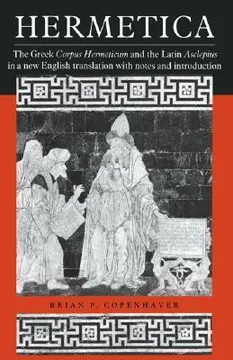
Hermetica is best read not as one author's doctrine but as a meeting point of texts, practices, and later interpretations. The edition's central contribution is contextual: it relocates the writings from the Renaissance fantasy of a pre-Mosaic sage to the religiously mixed world of late antique Egypt. The story begins with an Egyptian title for Thoth, develops through Greek dialogues on divine mind and human destiny, and continues through medieval selection and Renaissance reuse. The path matters because each stage changes what “Hermetic wisdom” can mean.
The most compelling conceptual thread is knowledge as a way of becoming. The dialogues connect knowing God with recognizing one's own divine capacity, disciplining appetite, and adopting a changed relation to the cosmos. Yet the collection makes that transformation difficult to summarize as a single program. Some writings invite reverence for the material world as God's living work; others describe embodied life as a condition to escape. Some present fate as powerful, while others insist that mind can resist its influence. The introduction offers a plausible account of such contrasts as stages or different parts of spiritual practice, but readers should keep the surviving disagreements in view rather than treating them as solved.
The edition also complicates modern divisions between religion, philosophy, and magic. The theoretical discourses emphasize salvation through knowledge, while technical works attributed to Hermes address astrology, healing, alchemy, and ritual. Their overlap suggests that ancient practitioners did not necessarily experience these aims as mutually exclusive. At the same time, the texts disagree about which methods deserve trust, so unity should not be mistaken for uniformity.
Finally, the manuscript history is part of the intellectual story. Ficino's influential translation included only fourteen treatises, helping create a version of Hermes attractive to Christian readers. Casaubon's dating critique then separated historical influence from claims of extreme antiquity. The result is a tradition whose significance lies not in one timeless system, but in the persistent effort to connect cosmic order, human transformation, and divine knowledge across changing cultures.
Review Summary
Reviews of Hermeticia reveal a broadly appreciative readership, with many finding it thought-provoking and even life-changing. Copenhaver's translation earns consistent praise for its readability and extensive scholarly notes. Readers appreciate the text's syncretic blend of Egyptian, Greek, and Judeo-Christian thought, its exploration of divine unity, and its cosmological depth. Common criticisms include its anti-body sentiment, harsh view of humanity, and repetitive passages. Some find it inaccessible without scholarly background, while others see it as a fragmented echo of older Eastern traditions.
Glossary
gnōsis
transformative divine knowledgeIn the Hermetica, gnōsis is more than information or logical argument. It is experiential knowledge of God and of the knower's own divine origin. The texts connect it with reverence, ethical change, and the soul's movement toward divine life. Different treatises explain the process differently, but knowledge is repeatedly presented as a means of salvation.
Nous
divine or higher mindNous is the mind or intellect associated with divine understanding. In some Hermetic passages, it is God's presence in a person and the capacity through which the divine can be recognized. It is often distinguished from ordinary reason or speech, though the texts do not use the distinction consistently. Context is important when interpreting the term.
Heimarmenē
cosmic fate or necessityHeimarmenē is fate understood as an ordered chain connecting celestial powers and earthly events. Hermetic texts associate it with planetary cycles and, in some accounts, with demons that influence human lives. It constrains embodied existence, but some treatises argue that knowledge and divine mind can help the soul rise beyond its effects.
Ogdoad
eighth heavenly realmThe Ogdoad is the eighth cosmic level beyond the seven planetary spheres in some Hermetic accounts of the soul's ascent. The soul reaches it after shedding influences associated with the lower spheres, then joins in praise of God. The term has other theological uses in ancient traditions, so its meaning depends on the passage.
palingenesia
spiritual rebirthPalingenesia means rebirth or regeneration. In the Hermetic discourse to Tat, it describes a spiritual transformation available during earthly life, not simply a new physical birth. The initiate becomes newly oriented through divine knowledge as destructive impulses recede and virtues take their place. The texts connect the change with divine mercy and disciplined attention.
technical Hermetica
practical occult writingsTechnical Hermetica are works attributed to Hermes that address practical subjects such as astrology, alchemy, healing, natural properties, and magical rites. They often promise ways to affect health, fortune, or relations with spiritual powers. The label distinguishes them from philosophical treatises focused on God and salvation, but the edition stresses that the two bodies of writing share a cultural setting and sometimes overlap.
god-making
animating cult imagesIn the Asclepius, god-making is the human practice of preparing statues as receptacles for spiritual presence. The account describes combining material substances, including plants, stones, and spices, with ritual knowledge and the presence of spirits. The idea reflects the text's view that divine and material powers can meet through crafted images, rather than treating statues as merely decorative objects.
prisca theologia
ancient theology before PlatoPrisca theologia is the Renaissance idea that a single ancient wisdom tradition began with Hermes Trismegistus and passed through other sages before reaching Plato. Renaissance readers treated Hermetic writings as ancient witnesses that supported, or anticipated, biblical truth. The historical claim of great antiquity was challenged by Isaac Casaubon, but the idea strongly influenced Renaissance interpretations of philosophy and religion.
Download PDF
Download EPUB
.epub digital book format is ideal for reading ebooks on phones, tablets, and e-readers.








