

Key Takeaways
Treat soul as a way of seeing, not a hidden object
Soul is a perspective. Hillman does not define soul as a substance tucked inside the body. It is the reflective viewpoint that stands between a person and events, allowing an occurrence to deepen into an experience with meaning. Soul is also the imaginative capacity through which dreams, images, and fantasies shape what feels real. This makes soul-making the central task: finding connections between life and psyche, rather than merely explaining behavior or improving performance.
Images come first. Following Jung, Hillman argues that experience is organized through fantasy-images, not simply copied from perception. A landscape, a symptom, or a remembered scene can become psychologically significant when viewed as an image. Soul is difficult to pin down precisely because it appears through these changing images, not as an object separate from them.
The strength of this definition is its refusal to turn soul into another measurable inner object. It makes psychology a practice of attending to how events acquire significance, a useful counterweight to approaches that count behavior while ignoring its felt meaning. The cost is ambiguity: a perspective that cannot be isolated or tested can be mistaken for an explanation of everything. Its value therefore depends on treating soul as a disciplined way of looking, not as a hidden force invoked whenever evidence runs out.
Let dreams' characters exist beyond the ego's explanations
Personifying gives images agency. Hillman uses personifying for the spontaneous experience of events and inner figures as presences with their own qualities, intentions, and emotional force. A dream figure is not automatically a disguised piece of the dreamer's ego. It may be approached as a distinct psychic character, rather than reduced to a memory or a projection.
The tradition is older than therapy. Greeks and Romans honored powers such as Victory, Fortune, and Peace with altars. Hillman invokes Plotinus's idea that images and shrines provide fitting places for psychic powers. Freud and Jung, despite different theories, also gave inner figures names and quasi-independent lives. The practical implication is to hear a dream's characters before explaining them away. Their disagreements may reveal a psyche made of many perspectives, not one voice wearing several masks.
Treating an image as a presence can interrupt the ego's habit of claiming authorship over every inner event. That shift also resembles narrative practices in which characters are allowed to speak in their own terms, creating distance without denying intimacy. The distinction matters: personifying is an interpretive stance, not proof that dream figures are literal beings. It can enrich reflection, but must not turn unusual perceptions into automatic evidence of supernatural agency or a clinical diagnosis.
Read symptoms as the psyche's language, not merely errors
Pathologizing names a psychic activity. Hillman uses this term for the psyche's capacity to produce and experience disorder, abnormality, and suffering. He challenges the assumption that every symptom is simply a defect to correct. Medical and religious frames tend to label distress as illness or sin; Hillman asks what the experience means to the psyche before deciding what should be done about it.
A symptom can redirect attention. Hypochondriacal fears, for example, may seem irrational when treated only as medical forecasts. Psychologically, they can expose the imagination's influence on bodily experience and disrupt an ego's certainty that everything is fine. Hillman argues that depth psychology has often learned from symptoms because they resist easy explanation. This does not make suffering pleasant or harmless. It makes the symptom worthy of attention before it is reduced to a label.
This perspective restores interpretive dignity to distress and cautions against treating diagnosis as a complete account of a person. It also anticipates a broader clinical insight: symptoms can have personal meaning even when they require practical care. But meaning and treatment are not substitutes. Acute risk, severe impairment, or physical illness may demand evidence-based intervention. The soundest reading preserves Hillman's question about significance without romanticizing pain or discouraging appropriate medical help.
Ask which myth shapes distress before assigning it a cause
Myth offers a pattern, not a diagnosis. Hillman's archetypal approach asks which recurring story or figure resembles a person's experience. Depression may be read through Saturn, associated in the book with heaviness, slowness, and darkness. Hysteria is considered alongside Dionysus and patterns of ecstatic division. Panic is explored through Pan. These are not claims that a person literally is a god or that a myth explains every symptom.
The comparison changes the view. A myth gives distress a larger imaginative setting and can reveal qualities that a clinical label misses. Hillman warns against turning myths into a fresh classification system. The purpose is not to match each diagnosis to a god, but to use resemblance to open reflection. A myth can make a symptom intelligible without pretending to identify its single cause or prescribe a cure.
Myth can function like a cultural vocabulary for experiences that otherwise feel private, shameful, or incoherent. Its images connect an individual's distress to patterns larger than biography, which can reduce isolation and invite more nuanced interpretation. The risk is overfitting: a vivid myth can seduce an interpreter into seeing confirmation everywhere. Mythic reading is most responsible when offered as one illuminating perspective among several, alongside personal history, social conditions, and clinical evidence.
Trade the single-center self for a psyche with many centers
The ego is one voice. Hillman challenges the ideal of a unified personality governed by a central self. Dreams portray several figures interacting in one scene, each with a different viewpoint. Their conflicts are not necessarily noise around the ego's true intention. They may show the psyche's normal plurality, while a familiar waking identity is only one style of consciousness.
Dreams loosen the center's grip. Hillman describes the everyday self as socially continuous and recognizable, while dream figures may be intermittent, inconsistent, or strange. Yet they can influence waking attitudes and may anticipate actions. A psyche imagined as polycentric has multiple centers of experience, rather than one ruler and a collection of subordinate impulses. This does not mean every inner voice should be obeyed. It means listening to disagreement before declaring it a failure of integration.
A plural model can help explain ambivalence without treating it as hypocrisy: people routinely contain competing commitments, roles, and emotional histories. It also challenges the assumption that coherence is always healthier than complexity. Still, plurality needs boundaries. Some experiences of fragmentation are frightening and disabling, and may call for professional support. The useful distinction is between welcoming complexity as a feature of ordinary psychic life and dismissing serious impairment as merely another colorful inner character.
Question the archetypal lens behind every psychological idea
Ideas shape what becomes visible. Hillman treats psychological ideas as lenses, not neutral descriptions. A theory centered on growth may carry the imagery of a nurturing mother; a theory centered on love may echo divine or mythic ideals. The blank-slate model, in which experience is written onto an empty mind, can imply a psyche imagined as passive and deprived. Each idea reveals some features while obscuring others.
Psychologizing turns the lens back. This is the practice of examining an idea for the archetypal fantasy that organizes it. Hillman extends the question to science, religion, and everyday beliefs, arguing that their assumptions also express psychic perspectives. The point is not to dismiss these fields as disguised psychology. It is to notice that every account of the mind begins from a particular image of what a mind is.
This reflexive move has an important parallel with philosophy of science, where investigators examine how models and assumptions shape observations. It encourages intellectual humility: a theory can be useful without being the final picture of reality. Hillman's archetypal interpretations, however, need the same scrutiny he applies to other theories. Calling an idea maternal, heroic, or Apollonian may illuminate its style, but does not by itself establish why it is true or false.
Ask what is happening, then who is present in it
Start with the event itself. Hillman distinguishes psychological inquiry from the search for causes or instructions. Instead of rushing to ask why something happened or how to fix it, ask what is taking place: what the person feels, what the image does, and what pattern the details suggest. This attention keeps reflection close to the experience rather than jumping immediately to a theory.
Follow the question toward a person. In archetypal psychology, inquiry may move from what is happening to who appears through it: which psychic figure or mythic pattern gives the event its character? A conflict may involve several figures, not one hidden culprit. The answer is not a definitive identification. It is a way to deepen attention, shifting a practical problem into an imaginative account that can hold more than one perspective.
The sequence encourages careful description before explanation, a practice shared by good interviewing and close reading. Asking who is present can make abstract patterns emotionally legible, especially when a person feels caught in a repetitive conflict. Yet the question should remain exploratory. An interpreter who names a god too quickly can replace the person's account with a compelling story. The discipline lies in keeping the image specific and allowing several plausible meanings to coexist.
Keep disturbing images alive before translating them into concepts
An image is more than a label. Hillman objects to interpreting a dream figure so quickly that it becomes a familiar concept, such as fear, sexuality, or a parent complex. A troubling image may resist the interpretation and reveal something precisely through its oddness. His naturalistic fallacy names the mistake of judging an image by how closely it resembles ordinary events in the physical world.
The broken horse matters as pictured. Hillman imagines a dream of a racehorse with a broken leg. A literal reading might treat the horse as a sick body to be restored. An imaginative reading stays with the wound and explores the horse's associations with speed, competition, and power. The image may shift the dreamer's perspective on relentless striving. Interpretation should open the image's possibilities, not erase its disturbing details.
The insistence on staying with an image protects ambiguity from premature closure. In contemporary terms, it resembles the difference between observing a mental event and immediately treating it as a proposition that must be solved. The method is especially valuable in art, dreams, and memory, where vivid details carry more than one meaning. It has limits: images can also reflect concrete danger or trauma. Imaginative interpretation should deepen inquiry, not override practical realities.
Give psychology image-rich language, not only clinical labels
Words carry emotional worlds. Hillman argues that words are not empty tags attached to experience. They have histories, associations, and the power to move the listener. A diagnostic term can clarify a pattern, but it can also seal a person's experience inside a category. Psychological speech should therefore retain metaphor, narrative, and the particular texture of what someone says.
Rhetoric can serve soul-making. Hillman looks to Renaissance writing, with its images, repetitions, and persuasive turns, as a model for language that engages imagination as well as intellect. This matters in therapy, which depends on speaking and listening, not just on applying techniques. A story may help an experience become reflectable. The aim is not eloquence for its own sake, but language that gives form to experience without pretending to make it wholly transparent.
This account recognizes that language does not merely report experience; it helps organize it. Narrative can make diffuse feelings discussable and can preserve details that standardized terminology misses. At the same time, eloquence is not a guarantee of insight. A persuasive metaphor can obscure facts or impose the therapist's preferred story. Good psychological language therefore needs both imagination and restraint, with room for plain description, uncertainty, and correction.
Renew psychology through Renaissance imagination and polytheistic depth
Look to a different inheritance. Hillman argues that modern psychology remains shaped by the Reformation's emphasis on the individual ego, moral responsibility, and unified belief. He turns instead to Renaissance Neoplatonism, especially Marsilio Ficino, whose world placed soul at the center and treated imagination, myth, and the divine as part of psychological life.
Petrarch's mountain marks the turn. In Hillman's reading, Petrarch's famous ascent of Mont Ventoux becomes significant when he turns from the landscape to Augustine's reflections on inward life. The event is not simply a celebration of man over nature. It signals an attention to soul as a reality in its own right. Hillman's proposed renewal is polytheistic: make room for many psychic perspectives rather than forcing them into a single system. He presents this as a re-vision of psychology, not a call to revive ancient worship.
The Renaissance supplies Hillman with more than historical color: it models a culture in which art, myth, philosophy, and spiritual imagination can inform one another. That breadth is a productive challenge to psychology's tendency to narrow itself to measurement or individual adjustment. The history is also idealized for argumentative purposes. Renaissance life included violence, hierarchy, and religious conflict, not only imaginative abundance. Its value here is as a source of alternative possibilities, not as a lost golden age.
Analysis
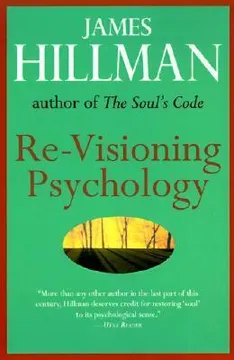
Re-Visioning Psychology is less a conventional psychological theory than an argument about what psychology should notice. Hillman builds his case through four linked moves: experience images as presences, treat distress as psychologically meaningful, examine the ideas that shape perception, and loosen the assumption that the human ego is the psyche's sovereign center. The book's looping, polemical form mirrors its thesis. It resists a single explanatory system because it regards plurality and ambiguity as properties of psychic life, not defects to be resolved.
The most durable contribution is methodological. Hillman asks readers to notice when an interpretation closes an experience too quickly, whether the closure comes from diagnosis, moral judgment, biological reduction, or a reassuring story of growth. His emphasis on images and metaphor also aligns with a contemporary understanding that perception is not a neutral copy of the world. People interpret what they encounter through prior expectations and available concepts. Hillman pushes that insight further by treating those interpretive structures as mythic and emotionally charged.
The approach is also vulnerable to its own critique. If every idea can be assigned an archetypal background, the interpretation may become difficult to disconfirm. A mythic reading can illuminate a symptom, but it cannot establish medical cause, determine a treatment, or settle whether an experience is dangerous. The distinction between meaning and mechanism matters. A person can need both an account of what suffering means and practical help with what it does.
The strongest use of Hillman is therefore neither literal belief in gods nor rejection of clinical knowledge. It is disciplined interpretive pluralism: hold biological, social, personal, and imaginal accounts together without assuming that one exhausts the event. The reader's task is not to choose between explanation and imagination, but to recognize when each is useful, what it leaves unseen, and how quickly certainty turns a living image into a fixed label.
Review Summary
Reviews of Re-Visioning Psychology are largely positive, praising its dense, transformative exploration of archetypal psychology, soul-making, and Greco-Roman mythology. Many readers found it challenging yet deeply rewarding, describing it as paradigm-shifting and intellectually rich. Hillman's poetic writing style and critique of modern psychology's neglect of the soul resonated strongly. Some criticized its repetitiveness, excessive academic density, and lack of practical examples. Overall, readers interested in depth psychology, mythology, and esoteric spirituality found it essential reading, while casual readers struggled with its complexity.
Glossary
Soul-making
Deepening events into experienceHillman's name for the process through which events acquire psychological depth, significance, and connection with the soul. It involves reflection and imagination, not simply the accumulation of experiences or the improvement of personality. Dreams, symptoms, images, and ideas can all contribute by helping life become meaningful to the psyche.
Personifying
Experiencing images as presencesThe spontaneous imaginative activity of encountering psychic events, inner figures, and aspects of the world as presences with distinct qualities or intentions. Hillman distinguishes this from the claim that people merely project human traits onto objects. Personifying is a mode of experience that gives psychological form to otherwise abstract events.
Pathologizing
The psyche's disordering activityHillman's term for the psyche's autonomous capacity to produce and experience suffering, disorder, abnormality, and distortion. It is not simply a synonym for medical illness. Pathologizing names a basic psychological process that can disclose meaning, although Hillman's interpretation does not eliminate the need for medical assessment or treatment when appropriate.
Psychologizing
Seeing through events to psycheThe reflective activity of examining events, ideas, and explanations for their psychological or imaginal significance. Psychologizing moves beyond a literal account without claiming to uncover a final, certain truth. It asks what pattern or perspective is operating and treats the answer as a way to deepen experience rather than close inquiry.
Archetypal psychology
Psychology through mythic patternsHillman's approach to psychology, which understands psychic life through images, myths, and recurring archetypal patterns. It emphasizes the plurality of the psyche and resists reducing experience to biology, ego development, or one unified system. Archetypal interpretations are intended as imaginative perspectives, not literal diagnoses or causal explanations.
Archetype
A deep pattern of psychic lifeA fundamental pattern that shapes how psychic experience is imagined and organized. Hillman treats archetypes less as definable objects than as recurring, emotionally powerful structures encountered through images, myths, styles of behavior, and ideas. Because they are difficult to describe directly, they are approached through metaphor and personified forms.
Anima
Personified soul and imaginationHillman's use of a traditionally feminine figure for the psyche's capacity to personify, imagine, reflect, and create a sense of interior life. Anima appears in many forms rather than as one fixed character. It connects ordinary consciousness with images and fantasies, making experience feel inward, personal, and psychologically significant.
Imaginal
The reality of psychic imagesThe realm of images understood as psychologically real without being treated as literal physical objects. Hillman uses the term for the domain in which dreams, fantasies, myths, and personified figures have their own forms and significance. The imaginal is not simply the imaginary in the sense of false or fabricated.
Polytheistic psychology
A psyche with many centersA model of the psyche organized around multiple autonomous perspectives, personified in the language of many gods and myths. It resists assuming that one ego or unified self must govern every experience. The term describes psychological plurality, not a requirement to practice or profess a literal polytheistic religion.
Naturalistic fallacy
Judging images by physical realityHillman's term for interpreting dream and fantasy images according to standards drawn from ordinary physical nature. A distorted or impossible image is then treated as wrong, unhealthy, or dangerous because it would be abnormal in the external world. Hillman argues that imaginal events require interpretation within the realm of images, not measurement against literal nature.
Download PDF
Download EPUB
.epub digital book format is ideal for reading ebooks on phones, tablets, and e-readers.








