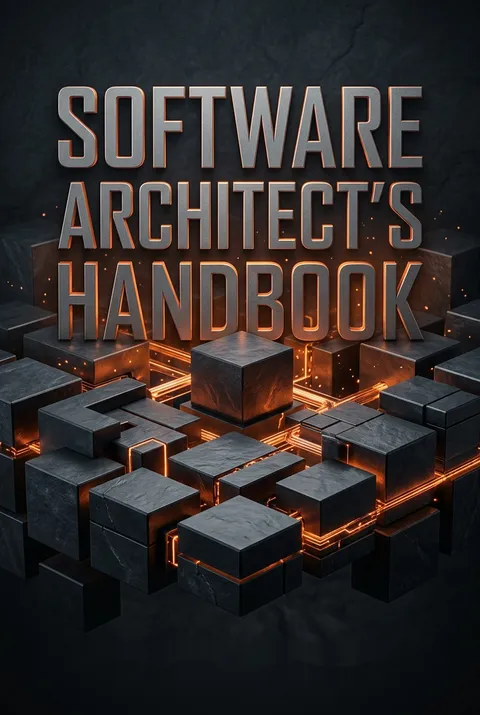


Key Takeaways
Treat architecture as consequential decisions, not a stack of diagrams.
Decisions shape the system. Software architecture describes a system’s important structures, the relationships between them, and the properties exposed through their interfaces. It is an abstraction, not a record of every coding detail. Its decisions influence qualities such as performance and maintainability, and can be expensive to reverse once implementation spreads around them.
Lead close to the work. A software architect guides technical choices, connects developers with business stakeholders, and helps teams reason about risk, cost, and change. Architecture can support communication, estimates, onboarding, and reuse, but it is no magic cure. An architect who designs in isolation risks creating a tidy plan for a system nobody can build or use.
The useful distinction is between architecture as a document and architecture as a set of choices with consequences. This resembles decision theory: early choices constrain later options, even when nobody formally records them. Documentation makes those commitments discussable, but it cannot replace the judgment behind them. The warning against isolated architects also reflects a broader lesson from socio-technical systems: designs work only when they fit the people, skills, and processes that must enact them.
Learn the business domain before choosing the technology.
Model the problem first. The domain is the subject area the software serves. Domain-driven design, or DDD, builds software around that knowledge and encourages regular collaboration with domain experts. A shared vocabulary, called a ubiquitous language, gives stakeholders and developers consistent terms for discussions, documentation, and code.
Draw meaningful boundaries. DDD separates complicated domains into subdomains and bounded contexts, distinct areas where a model has a specific meaning. For example, a customer record used for marketing may need only contact details, while order processing also needs payment and shipping information. Requirements work should uncover business goals, features, constraints, and quality needs. Interviews, observation, workshops, document analysis, and prototypes reveal different parts of the problem.
Shared terminology is not merely a documentation preference. It reduces translation errors, a familiar problem in fields such as medicine and law, where the same word can carry different meanings across specialties. Bounded contexts make that ambiguity visible instead of forcing one overloaded model to serve every purpose. The approach does require access to knowledgeable stakeholders, however. A polished domain model built without them can give teams confidence in a mistaken picture of the business.
Turn vague quality wishes into ranked, testable scenarios.
Quality changes architecture. Performance, security, usability, availability, and maintainability are quality attributes: measurable properties that shape how a system should work, beyond the features it provides. They can conflict. Stronger security may add friction for users; greater availability can demand substantial investment.
Make expectations concrete. A quality attribute scenario describes a stimulus and the system’s measurable response. “The page should be fast” is vague; “the login page appears within two seconds” can be tested. Stakeholders can rank scenarios by business importance, while architects assess technical risk. The book notes that 99.999% availability permits only about five minutes of downtime per year, a costly target that may exceed the need.
Scenarios turn abstract aspirations into arguments that can be tested, priced, and negotiated. This resembles operations research, where constraints and objectives must be explicit before a solution can be optimized. Ranking also prevents teams from treating every desirable property as equally urgent. The caveat is that a single threshold can hide user experience variation: an average response time may look acceptable while the slowest requests remain painful. Measures need context, not just precision.
Give architecture enough structure to guide teams, then iterate.
Start with the drivers. Architectural drivers are the concerns that meaningfully steer design: business goals, key features, quality attribute scenarios, constraints, and architect concerns. A systematic process analyzes these inputs, develops candidate solutions, and evaluates whether those solutions work.
Design in useful increments. Attribute-driven design, or ADD, focuses each iteration on selected requirements and quality needs, then refines system elements and records decisions. Top-down design helps organize large systems and teams; bottom-up work tests details early and adapts to learning. A hybrid often fits better than either extreme. Sketch decisions and rationale as they are made, and track unresolved architecture work in a prioritized backlog, weighing dependencies, risks, business value, and effort.
This approach treats architecture as a learning process rather than a one-time prediction exercise. It has a useful parallel with experimental science: state the question, propose a model, test it, and revise. The balance matters. Too much early design locks in assumptions; too little can leave teams making incompatible local choices. The right amount depends on uncertainty, system scale, and the cost of reversing a decision, not on allegiance to a methodology.
Simplify boundaries, but never apply design principles mechanically.
Reduce change traffic. Loose coupling limits how much one module depends on another; high cohesion keeps related responsibilities together. Both help teams change, test, and reuse parts of a system with less collateral work. Information hiding protects implementation choices behind interfaces, while separation of concerns keeps distinct responsibilities from becoming tangled.
Use principles with judgment. KISS favors solutions no more complicated than necessary. DRY discourages duplicated logic, and YAGNI cautions against building speculative features. SOLID offers guidance for object-oriented design. None is an instruction to abstract everything: combining two similar-looking pieces of code can be harmful if they represent different concepts, and excessive simplicity can fail actual requirements.
These principles are most powerful as diagnostic questions, not commandments. Complexity has a carrying cost: it consumes attention during debugging, testing, and future change. Yet abstraction also has a cost, and premature generalization can make simple behavior harder to understand. The practical test is whether a boundary reduces the likely cost of change in this system. That keeps “clean design” tied to consequences rather than aesthetic preference.
Choose monoliths, services, or functions by context, not fashion.
Match structure to scale. A monolith keeps an application in one deployable unit. For a small product, that can simplify deployment and debugging. As a system grows, tight dependencies can make changes risky and require redeploying everything. Microservices divide functionality into small, autonomous services with clear interfaces and independent deployment, but add network, monitoring, data, and coordination complexity.
Pay for complexity deliberately. Serverless functions can reduce server management and scale with demand, but may complicate debugging and increase dependence on a provider. Event-driven designs suit asynchronous reactions; CQRS separates reading data from changing it, which can help specialized workloads but adds machinery. Even microservices can be split too finely into nanoservices. Select a pattern only when its benefits address a real requirement.
Architectural choices are often framed as technical upgrades, but they also redistribute organizational work. Independent services can let separate teams release changes independently, while demanding stronger operational skills and coordination. This is a socio-technical trade-off, not a simple contest between old and new. A useful question is whether the organization can operate the complexity a pattern introduces. A small, well-understood monolith can be the more agile choice when deployment independence is not yet valuable.
Profile the slow path before buying a faster system.
Measure before changing. Performance is a requirement, not decoration. Teams should profile an application, locate bottlenecks, make targeted changes, and monitor the result. Response time combines processing time and network delay; throughput measures completed work over time. Optimizing code that is not limiting the system may produce little benefit.
Choose the remedy that fits. Caching can avoid repeated expensive reads, but creates invalidation and stale-data problems. HTTP caching, compression, and content delivery networks can reduce web transfer costs. Database indexes can speed common queries, while too many indexes slow writes and require storage. Normalize data for integrity, and denormalize only when a demonstrated performance need justifies the consistency burden.
The profiling loop reflects a principle from performance engineering: optimize the system’s limiting factor, not the component that is easiest to edit. Queueing effects also matter. As a busy resource approaches capacity, delays can grow disproportionately, so averages alone may hide trouble during peak load. Measurement should therefore reflect realistic workloads and user-facing outcomes. The book’s emphasis on evidence is sound, though instrumentation itself can affect measurements and should be interpreted carefully.
Threat-model the attacker, then make secure behavior the default.
Think from the outside in. Security protects confidentiality, integrity, and availability. Threat modeling maps valuable assets, system entry points, and possible attackers, then categorizes and prioritizes threats. STRIDE names common threat categories; DREAD is one method for comparing their risks. This work belongs in requirements and design, not just at the end of development.
Make failure safer. Reduce exposed entry points, use defense in depth, grant only necessary privileges, validate untrusted input, and deny access unless it is explicitly allowed. Passwords should not be stored in plaintext or reversible encryption; salted, purpose-built password hashing is the safer approach described in the book. Security controls must remain usable, because controls that obstruct legitimate work invite workarounds.
Threat modeling is valuable because it changes security from a checklist into a contest between possible attacks and defenses. The CIA triad also prevents a narrow focus on secrecy: an application that hides data but cannot serve authorized users has failed. DREAD can help structure discussion, but assigning numbers to uncertain risks can create false precision. Teams should preserve the reasoning behind scores and revisit assumptions as attackers, dependencies, and business exposure change.
Document decisions and automate delivery so teams can change safely.
Document for a reader. Architecture descriptions use multiple views because no single diagram can explain a complex system to every audience. Record the reasons behind important decisions, not only the boxes and arrows. Reviews such as SAAM and ATAM use scenarios to test whether a design can meet its requirements and expose trade-offs before they become expensive.
Make change repeatable. DevOps combines collaboration, automation, measurement, and shared learning across development and operations. Continuous integration builds and tests frequent code changes; continuous delivery keeps software ready for release, while continuous deployment automates release to production. Architects also need communication and listening skills: a design that teams cannot understand, challenge, or operate is not effectively delivered.
Documentation and automation both externalize knowledge that otherwise lives in a few people’s heads. That improves resilience when teams change and makes failures easier to investigate. Yet more artifacts and pipelines do not automatically create clarity. Their value depends on whether they answer real questions and provide trustworthy feedback. Scenario-based review is especially useful because it invites people with different responsibilities to test the same design against concrete needs.
Design for change, and modernize legacy systems in small steps.
Expect the system to evolve. Most business software models a changing world, so its usefulness depends on adapting. Lehman’s laws describe recurring pressures on such systems: without attention, complexity and defects tend to grow as functionality expands. Fitness functions are checks or measurements that assess whether architectural qualities, such as performance or maintainability, remain within agreed bounds as changes arrive.
Improve what exists safely. Legacy applications may be costly to replace and still valuable to the business. Add tests where possible, remove genuinely redundant code, and make small refactorings that preserve behavior. Cloud migration can mean retiring, retaining, rehosting, replatforming, repurchasing, or re-architecting. The correct path depends on the application’s value, constraints, and expected future, not on the appeal of a clean rewrite.
Evolutionary architecture treats change as a normal operating condition and uses feedback to detect when the system is drifting from its intended qualities. This is close to control theory: measure a system, compare it with a target, and intervene when the gap matters. Fitness checks cannot capture every human or business concern, so they should complement judgment rather than replace it. Incremental modernization is especially compelling when a rewrite would postpone value while concentrating risk.
Analysis
The book is best read as a broad field guide for experienced developers moving into architecture, rather than as one narrow method or a tightly unified theory. Its central argument is that architecture is consequential decision-making in context. The architect must understand the business, translate quality needs into design constraints, choose structures with explicit trade-offs, and stay involved as software is built and operated. The recurring thread is control of complexity: clearer domain boundaries, measurable scenarios, loose coupling, review, automation, and incremental change all make systems easier to reason about and adapt.
Its greatest strength is breadth. It refuses to reduce architecture to diagrams or fashionable patterns, and treats communication, estimation, security, legacy work, and team leadership as architectural concerns. Its practical frameworks give readers useful starting points, especially when they are new to a decision area. Its recurring cautions are also valuable: no pattern is universally right, more people do not automatically accelerate a delayed project, and a technically elegant system can still miss the business need.
The same breadth creates a limitation. A reader may finish with many named methods but little guidance on which to learn first or how to resolve conflicts among them. A stronger organizing principle is proportionality: spend design effort according to uncertainty, impact, and reversal cost. That principle connects the book’s advice on requirements, architecture iteration, risk, and last responsible decisions. The book also dates from 2018, so its durable guidance on boundaries, testing, and trade-offs should be separated from technology-specific examples that may have changed. The most useful takeaway is not to memorize every pattern. It is to make assumptions visible, test the important ones, and keep a system understandable enough to change.
Review Summary
Software Architect's Handbook receives mostly positive reviews, with readers praising its comprehensive coverage of software architecture topics. Many find it insightful for both experienced developers and those aspiring to become architects. The book is commended for its broad scope, including modern concepts like microservices and cloud-native applications. Some readers appreciate its technology-agnostic approach and practical advice. However, a few critics argue that the book lacks clear structure and depth in certain areas, describing it as a collection of basic definitions rather than in-depth explanations.
People Also Read






Glossary
Architectural drivers
Inputs that steer designArchitectural drivers are the concerns that significantly influence a software architecture. They include design objectives, primary functional requirements, quality attribute scenarios, constraints, and architectural concerns. Architects use them to identify what the system must achieve and what limits or risks should shape candidate designs.
Quality attribute scenario
Testable quality requirementA quality attribute scenario describes how a system should respond to a particular stimulus in a specified context. It makes a quality requirement, such as performance or availability, measurable and testable by identifying what triggers the response and how success will be assessed. For example, a page-loading requirement can specify a maximum response time.
Ubiquitous language
Shared domain vocabularyA ubiquitous language is a consistent vocabulary shared by software developers, domain experts, and other project stakeholders. It uses the domain’s terms in conversation, documentation, tests, and code, reducing misunderstandings between business and technical work. The vocabulary evolves as the team’s understanding of the domain improves.
Bounded contexts
Boundaries around domain modelsBounded contexts are explicit boundaries within which a particular domain model and its terminology apply. The same concept, such as a customer, may need different data and behavior in different contexts. Separating those models prevents one overly broad representation from accumulating unrelated responsibilities and rules.
Attribute-driven design (ADD)
Iterative quality-led designAttribute-driven design is an iterative method for designing software architecture with particular attention to quality attributes. Each iteration selects a design goal and relevant architectural drivers, refines system elements, chooses suitable design concepts, records decisions, and evaluates the result. The cycle repeats when important drivers remain unresolved.
DIVE criteria
Backlog prioritization factorsDIVE is a set of criteria for ordering architecture backlog items: Dependencies, Insure against risks, business Value, and estimated Effort. It helps teams decide what to address first by considering prerequisite work, risk reduction, organizational value, and the resources required. Priorities can change as the design and project context evolve.
Microservice architecture
Independent deployable servicesMicroservice architecture organizes an application as small, focused services with well-defined interfaces. Services are intended to operate and deploy independently, and each may own its data. This can improve team autonomy and fault isolation, but it also introduces distributed-system costs such as network communication, monitoring, and cross-service data coordination.
STRIDE threat model
Security threat categoriesSTRIDE is a threat-classification model used to identify security risks systematically. Its categories cover identity spoofing, data tampering, repudiation, information disclosure, denial of service, and elevation of privilege. Teams use the categories to examine how attackers might exploit system assets, entry points, and interactions.
DREAD risk assessment model
Threat-risk ranking methodDREAD is a method for ranking threats using damage potential, reproducibility, exploitability, affected users, and discoverability. A team scores these factors to compare risks and guide mitigation priorities. The book notes that discoverability is disputed as a factor, since hiding a weakness is not a dependable security control.
Fitness functions
Checks on architectural qualitiesFitness functions assess whether a software architecture continues to exhibit desired characteristics as it changes. They can be tests, monitoring rules, or metrics, such as a performance threshold or complexity measure. Some run automatically during builds, while others run continuously or require human review.
FAQ
1. What is "Software Architect’s Handbook" by Joseph Ingeno about?
- Comprehensive architecture guide: The book is a practical and detailed guide for software developers and architects, covering both technical and non-technical aspects of software architecture.
- Wide-ranging topics: It addresses foundational concepts, architecture patterns, quality attributes, modern application design, DevOps, security, documentation, legacy systems, and soft skills.
- Career development focus: The book aims to help readers transition into or excel in the software architect role, emphasizing continuous learning and adaptability.
- Bridges theory and practice: It provides actionable advice, real-world examples, and hands-on methods for designing, documenting, and evolving software architectures.
2. Why should I read "Software Architect’s Handbook" by Joseph Ingeno?
- Bridges theory and implementation: The book not only explains architectural concepts but also offers practical steps for applying them in real projects.
- Addresses modern challenges: It covers current industry topics such as microservices, cloud-native design, DevOps, security, and legacy modernization.
- Develops essential soft skills: The author emphasizes communication, leadership, and negotiation, which are crucial for architects working in collaborative and distributed environments.
- Suitable for all levels: Whether you’re aspiring to become an architect or are already experienced, the book provides value through its comprehensive coverage and actionable insights.
3. What are the key takeaways from "Software Architect’s Handbook" by Joseph Ingeno?
- Importance of quality attributes: The book stresses that attributes like maintainability, performance, security, and deployability are central to successful architecture.
- Emphasis on design principles: It highlights orthogonal design, loose coupling, high cohesion, and SOLID principles as foundations for robust systems.
- Modern architecture patterns: Readers learn about layered, microservices, serverless, and cloud-native architectures, along with their benefits and challenges.
- Continuous learning and soft skills: The book encourages ongoing technical growth and the development of communication and leadership abilities.
4. What are the main responsibilities and expectations of a software architect according to Joseph Ingeno?
- Technical leadership: Architects are responsible for system architecture, design, and documentation, guiding both technical and non-technical stakeholders.
- Broad and deep expertise: They must possess deep knowledge of current technologies and a broad understanding of related fields to make informed decisions.
- Active team involvement: The book warns against "ivory tower syndrome," urging architects to stay engaged with development teams and real-world needs.
- Facilitating communication: Architects act as bridges between management, customers, and developers, ensuring alignment and clarity.
5. How does "Software Architect’s Handbook" by Joseph Ingeno define and explain software architecture design approaches?
- Top-down approach: Starts with high-level abstractions and iteratively decomposes the system, suitable for well-understood domains and large teams.
- Bottom-up approach: Begins with detailed components and builds upward, aligning with agile practices but potentially leading to costly refactoring.
- Hybrid approach recommended: Combining both methods—starting with a high-level design and refining details incrementally—often yields the best results.
- Emphasis on adaptability: The book encourages flexibility in choosing and blending approaches based on project needs.
6. What are the most important software quality attributes discussed in "Software Architect’s Handbook" by Joseph Ingeno?
- Maintainability: Focuses on ease of change, supporting agile development and reducing long-term costs through modifiability and extensibility.
- Usability and availability: Ensures systems are user-friendly, accessible, and reliably available when needed.
- Portability, interoperability, testability: These attributes enable systems to run in various environments, exchange data with other systems, and be efficiently tested.
- Performance and security: The book also highlights the need for responsive, secure systems that meet stakeholder expectations.
7. What are the key software development and design principles emphasized in "Software Architect’s Handbook" by Joseph Ingeno?
- Orthogonal design: Advocates for loose coupling and high cohesion, making modules independent and focused, which simplifies maintenance and testing.
- Complexity minimization: Principles like KISS, DRY, YAGNI, and Separation of Concerns are stressed to reduce unnecessary complexity.
- SOLID principles: The book details Single Responsibility, Open/Closed, Liskov Substitution, Interface Segregation, and Dependency Inversion as essential for maintainable code.
- Dependency Injection: DI is promoted for decoupling components, improving testability, and supporting flexible architectures.
8. How does Joseph Ingeno’s book explain coupling, cohesion, and their impact on software architecture?
- Coupling defined: Measures the degree of dependency between modules, with loose coupling being desirable for independent development and easier changes.
- Types of coupling: Ranges from content (worst) to message/no coupling (best), with tighter coupling increasing complexity and reducing reusability.
- Cohesion explained: High cohesion means a module has a single, focused purpose, which correlates with better maintainability and reusability.
- Design impact: The book links high cohesion and loose coupling to robust, adaptable, and testable architectures.
9. What software architecture patterns and modern application architectures are covered in "Software Architect’s Handbook" by Joseph Ingeno?
- Layered architecture: Organizes systems into layers with clear responsibilities, promoting separation of concerns.
- Microservices: Describes small, autonomous services with independent deployment, supporting organizational agility but introducing complexity.
- Serverless and cloud-native: Explains architectures that leverage cloud platforms, containers, and event-driven models for scalability and rapid delivery.
- Other patterns: Covers MVC, MVP, MVVM, CQRS, SOA, and event-driven architectures, helping architects choose suitable solutions for different contexts.
10. How does "Software Architect’s Handbook" by Joseph Ingeno address cross-cutting concerns in software architecture?
- Definition and challenges: Cross-cutting concerns like logging, security, and caching affect multiple modules and require careful design to avoid code duplication.
- Implementation techniques: The book discusses using Dependency Injection, the decorator pattern, and Aspect-Oriented Programming to modularize these concerns.
- Microservices strategies: Introduces the microservice chassis framework and sidecar pattern for handling cross-cutting concerns in distributed, polyglot environments.
- Benefits: Proper management improves maintainability, reduces duplication, and enhances system consistency.
11. What methods for software architecture documentation and review does Joseph Ingeno recommend in "Software Architect’s Handbook"?
- Multiple architecture views: Advocates for using different views (e.g., logical, physical, process) to address various stakeholder concerns.
- Design rationale documentation: Stresses recording the reasons behind decisions, alternatives considered, and rejected options for future reference and maintenance.
- Review techniques: Details methods like SAAM, ATAM, ADR, and ARID for structured evaluation and validation of architecture designs.
- UML and notations: Covers the use of UML diagrams (class, component, sequence, etc.) to communicate structure and behavior effectively.
12. How does "Software Architect’s Handbook" by Joseph Ingeno guide architects in handling legacy systems and evolutionary architecture?
- Legacy system challenges: Discusses issues like technical debt, outdated technologies, and lack of documentation, and why legacy systems persist.
- Refactoring and modernization: Recommends making code testable, removing redundant code, and incrementally transforming monoliths into microservices.
- Evolutionary architecture: Defines it as supporting guided, incremental change, using fitness functions to ensure quality during evolution.
- Design for adaptability: Encourages loosely coupled components, evolvable APIs, use of standards, and delaying decisions to maintain flexibility over time.
Download PDF
Download EPUB
.epub digital book format is ideal for reading ebooks on phones, tablets, and e-readers.








