

Plot Summary
Prologue
Seven years after meeting Adam, Anna sits beside his unresponsive body and tries to write a letter before she runs out of time. She wants to apologize and explain the secrets she kept, including a mistake that has changed both their lives.
Memories arrive out of order: a shabby hotel bar, a sunrise on the beach, and the day everything went wrong. Anna cannot yet tell whether Adam would want her to keep fighting for their life together. She finally follows his old advice and begins at the beginning.
The frame makes memory an urgent act rather than a refuge. Anna is not recalling the romance to celebrate it; she is trying to decide what she owes Adam and whether there is still time to repair what silence damaged. Her letter promises confession, but its blank page shows how guilt can make even truth difficult to approach. The story's central uncertainty is planted before its history begins: love may endure, yet devotion alone cannot reveal what another person needs. By starting over from their first meeting, Anna seeks not simply explanation but a chance to understand the choices that brought them here.
The Honeymoon Without a Groom
Two weeks before her wedding, Anna's fiancé ends their relationship, leaving her humiliated and unsure whether she misses him or the future she had planned. Her best friend Nell takes over the abandoned honeymoon booking and flies with her to the Spanish island of Alircia.
Anna tries to ignore her ex's photographs with the woman rumored to have replaced her, while Nell pushes her to eat, drink, and stop blaming her body for his cruelty. At the hotel, the staff mistake the pair for newlyweds and decorate their room with a wedding banner and champagne. Anna breaks down at the sight. A young man from the bar appears in the doorway, holding the flower she dropped. His name is Adam.
Anna arrives grieving not only a man but a script she had mistaken for security: marriage, children, and proof that she was loved. Her ex's body-shaming has taught her to treat rejection as evidence against her own worth. Nell counters that lesson through practical care, but cannot yet persuade Anna to feel it. The hotel's mistaken bridal display sharpens the gap between public appearance and private loss. Adam's first gesture is modest and concrete, returning a flower rather than demanding intimacy. The encounter begins with vulnerability on both sides, though Anna is not yet ready to trust what it might mean.
The Current Takes Anna
The next day, Anna walks too far into the sea and a strong current drags her beyond her depth. She tires, sinks, and nearly drowns before Adam reaches her and brings her back to shore. Nell has not seen the danger, so Adam stays beside Anna while she catches her breath. When he assumes Nell is her wife, Anna explains that she is her closest friend, not her partner.
Adam invites her to dinner. Anna initially refuses, then changes her mind and joins him. Over paella, she speaks about losing her father and admits that her broken engagement was built more on grief and a wish for security than love. Later, Adam frees a chained parrot from a tourist's display, and the pair share their first kiss at a secluded cove.
The rescue turns attraction into dependence, but the scene also exposes how quickly care can be confused with romance. Adam does not exploit Anna's fear; he waits with her and lets her choose whether to continue the connection. Her disclosures reveal that the engagement was partly an attempt to replace the safety she felt after her father's death. Adam's release of the parrot offers an early image of love as something other than possession, although Anna's own habits pull toward holding on. Their first kiss follows honesty and shared action, not a rescue treated as a debt.
A Lock Against Goodbye
Over the remaining days, Anna and Adam become inseparable, exploring the island and talking about the grief and disappointment each had kept private. Adam tells her that his parents moved to Australia when he was sixteen and that his friend Josh's family took him in. He also reveals that he still means to travel the world.
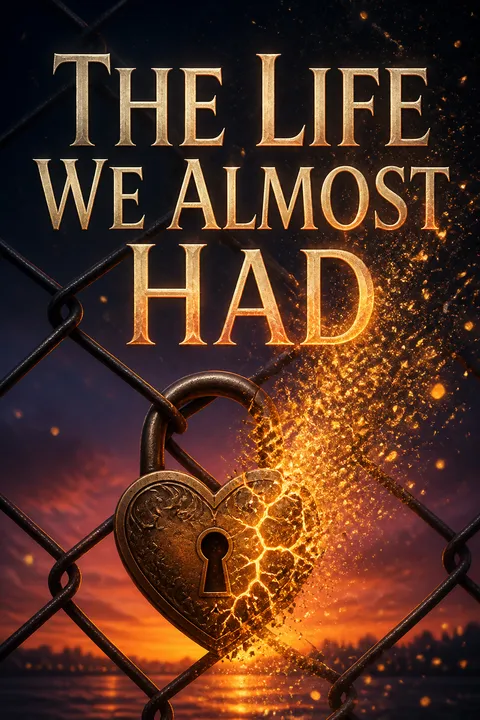
On their last night, Adam clips a padlock bearing their names to the cove fence, calling it a token of friendship because he believes they should part. At the airport, Nell urges Adam not to let Anna go. He admits he wants to see her again and offers to postpone his travels or take her with him. Anna says she needs to stay near her mother. Adam chooses to stay too, and Anna agrees to build a future with him.
The lock dramatizes the couple's first serious conflict: both feel love, but each tries to protect the other by disguising desire as a temporary holiday. Anna fears becoming an obstacle to Adam's long-held dream; Adam fears asking her to choose him. Nell's intervention breaks their mutual restraint, but the decision remains theirs. Anna names her obligation to family, and Adam responds by revising his plan rather than demanding that she abandon hers. Their choice is romantic, yet it establishes a pattern that will later matter: sacrifice can feel loving at first and burdensome when its cost is left unspoken.
The Job He Refuses
Ten months into a long-distance relationship, Adam receives an offer to build a career around travel, the dream he set aside when he chose Anna. He avoids her calls while deciding what to do, then drives to her mother's home and prepares the paella they ate on their first date. Anna expects him to end the relationship.
Instead, Adam tells her he has declined the job because he wants a shared home and ordinary daily life with her, then proposes. She accepts. A late period briefly makes them think a baby is coming, but a pregnancy test proves it was a false alarm. The disappointment prompts them to talk clearly for the first time about wanting children, and they decide to marry that year rather than postpone their future.
Adam's proposal answers Anna's fear of abandonment, but it also converts a private sacrifice into a defining romantic gesture. He has made a life-changing choice without involving her in the decision, which feels generous now and may later become a source of unspoken debt. The false alarm gives them a first glimpse of how intensely they want a family, while showing that hope can arrive before either is prepared to discuss the emotional stakes. Their commitment is sincere, but the scene quietly establishes a vulnerability: they can make decisions for each other more easily than they can negotiate competing needs together.
The Coin at the Altar
Six months later, Anna and Adam marry in a beach-inspired ceremony, but Adam's parents fail to arrive after promising they would attend. He suspects they never intended to come, and their absence revives the hurt of being left behind as a teenager. Anna's father has also died, so her mother Patricia gives her a coin linked to Anna's grandparents' courtship.
Patricia explains that the coin passed between the older couple when words were not enough. Anna presses it into Adam's hand at the altar, offering comfort without pretending she can repair his family history. Their friends Josh and Nell stand with them, and the newlyweds begin married life believing love and a shared home can answer the losses each carries.
The coin offers a model of intimacy different from grand promises: it is a small, transferable sign that someone remains present even when pain cannot be fixed. Anna uses it to comfort Adam because she cannot restore the parents who failed him, just as her own father cannot walk her down the aisle. Their wedding does not erase those absences. Instead, the ceremony folds grief into the marriage from its beginning. That matters because later the couple will mistake silence for reassurance; the coin's usefulness depends on mutual understanding, not on the object itself.
A Friendship Under Strain
After eighteen months without conceiving, Anna learns that endometriosis may be making pregnancy difficult and chooses surgery despite its risks. Unable to face the possibility that her friend will pity her, she lies to Nell about the results.
Nell, who has just discovered she is pregnant, accepts Anna's claim that she and Adam are postponing children. Their friendship thins as Nell becomes a mother to Alfie and then Emily, while Anna and Adam continue treatment, medication, and further operations. Five years pass without a child.
The couple stop discussing their grief openly, and their home fills with unused baby things and unfinished projects. Anna hides their attempts from her mother too, while Adam's abandoned travel dream and the strain of fertility treatment turn affection into recurring resentment.
Infertility becomes more than a medical obstacle because Anna experiences it as a verdict on her womanhood and a private failure she must conceal. Her lie protects Nell from guilt, but it also removes the friendship that could have supported her. Adam and Anna then mirror one another's shame: each assumes the other blames them, so neither risks asking. Their silence makes small domestic failures carry the weight of the child they cannot have. The section shows how avoidance can masquerade as kindness, gradually isolating people from precisely the relationships that might help them survive uncertainty.
Ross's Kiss, Adam's Absence
As the marriage grows brittle, Anna's new head teacher, Ross, listens to her worries and gives her the attention she misses at home. After drinks, she lets him kiss her, then refuses to leave Adam for him. Adam sees Ross's message on Anna's phone and slips away before she wakes, taking their savings book. Anna later spots him at a letting agent and fears he is moving out.
She has also told him during an argument that he should leave, words she regrets as soon as they are spoken. When Adam finally returns, he explains that he has arranged time off and booked a trip to Alircia for their fifth anniversary. He wants them to recover the closeness they have lost, but Anna still has a secret that could change their future.
The kiss is less a simple choice between two men than a measure of Anna's hunger to be seen outside the roles of wife, grieving daughter, and would-be mother. She does not mistake Ross for a solution, but her secrecy confirms how far she and Adam have moved from candid partnership. Adam's departure echoes his childhood abandonment, while Anna's interpretation of his absence shows how readily old fears fill gaps in communication. His anniversary trip is an act of repair, yet it also postpones the conversation they most need to have.
A Baby, Then the Yacht
Back on Alircia, Anna tells Adam she is six weeks pregnant, after years of believing they might never conceive. The couple renew their love lock with space for their child, then accept a free yacht excursion to a nearby island. When the boat tilts and begins to sink, Adam helps Anna over the rail and swims with her to shore, despite her panic and inability to swim.
Once she is safe, he sees an elderly passenger still clinging to the yacht and turns back to rescue her. As Adam reaches the stranded woman, a falling mast strikes him and knocks him beneath the water. Other swimmers bring him ashore, but he is not breathing. Anna watches rescuers try to revive him, unaware that the accident has also placed her long-awaited pregnancy in danger.
The disaster makes Adam's protective instinct both heroic and perilous. He has already saved Anna, yet he cannot ignore another person's fear; his return to the yacht expresses the same generosity that drew her to him. The scene also reverses their familiar roles. Anna is no longer the person rescued from water but the witness unable to reach the man who has repeatedly caught her. Pregnancy intensifies the stakes, turning their hoped-for family into a fragile future exposed to forces neither love nor intention can control.
No Insurance, No Way Home
Doctors place Adam in intensive care with a serious brain injury after the blow to his head and lack of oxygen underwater. Anna stays beside him, but severe cramps and bleeding reveal that she is miscarrying. While she recovers, the hospital withdraws Adam's sedation; he breathes without a ventilator but does not wake, and doctors tell her he is in a coma with an uncertain prognosis.
Anna then discovers that Adam never confirmed the travel insurance for their trip. Without cover, she cannot afford to bring him back to England. Desperate for care and answers, she contacts neuroscientist Oliver Chapman, who offers to move Adam to his research institute and test technology designed to interpret activity in a comatose person's mind.
Loss arrives in layers: Anna must grieve a pregnancy while making decisions for a husband who cannot respond, all in a country where she lacks the financial protection she assumed they had. The missing insurance turns a private crisis into a practical trap, forcing her toward Oliver's untested offer. Her choice is not simple faith in science; it is an attempt to preserve agency when medicine has reduced Adam to a prognosis and she has no way to take him home. The novel makes care both emotional and logistical, each demanding action under conditions of radical uncertainty.
The Mind Behind the Machine
Oliver explains that his institute's powerful scanner and virtual-reality equipment may let a participant experience images and sensations associated with Adam's consciousness. His work grew from questions raised by his late wife Clem's illness, though he admits the system has never been tested this way.
Anna agrees to enter the scanner herself, after insisting that Oliver not be the first person connected to her husband. In the first session, she finds herself at home with a pregnant version of herself and an Adam who believes they are preparing for a baby.
He discusses their ordinary life as though the yacht accident never happened. The computer records only darkness, however, and Anna returns with a headache and nosebleed, carrying an experience no instrument can verify.
The machine offers Anna something conventional medicine cannot: not a cure, but the possibility of contact. That distinction matters. She is willing to risk an experimental procedure because the prospect of knowing Adam's inner life feels more valuable than accepting the silence around his body. Oliver's own bereavement makes him sympathetic, but it also blurs the line between scientific curiosity and personal need. The blank screen creates the book's central epistemic problem: Anna's experience feels true, yet feeling alone cannot establish whose mind produced it.
The Life on the Screen
After an assessment, Anna returns to the scanner and experiences a domestic life with Adam in which she is pregnant. This time they discuss the resentment that years of infertility had left between them, and she feels them begin to speak honestly again.
In a later session, she goes into labor and hears Adam support her through the birth, but Oliver ends the connection before she can learn whether the baby is a boy or a girl. While Anna is with psychologist Eva, Oliver secretly enters the scanner himself and sees nothing.
He concludes that Anna's experiences may be projections of her own longing and tells her the trial must stop. His decision strips away the only place where Anna believes she can still meet Adam and the child they had hoped to raise.
The imagined life is not a frictionless fantasy. Anna and Adam argue, then manage to name the fears that kept them apart, suggesting her deepest wish is not simply a baby but a marriage capable of surviving disappointment. The interrupted birth converts that wish into fresh grief. Oliver's private test appears to answer the scientific question, but because the equipment records no images for him, it cannot conclusively disprove Anna's experience. His unilateral decision nonetheless exerts power over her access to Adam, exposing the ethical danger of treating an intimate encounter as a result to be accepted or discarded.
Harry in the Dream
Refusing to accept Oliver's shutdown, Anna waits until nurse Luis is asleep, moves Adam onto the scanner, and starts the equipment herself. She returns to a home where she and Adam are raising their baby Harry with a puppy named Dug.
She feeds Harry, bathes him, and shares the domestic routines she and Adam once expected, while their marriage feels warmer and more honest than it had become. The connection lasts beyond the safe period. Anna collapses with a severe nosebleed, and staff pull her from the machine.
Oliver ends the trial and tells her they must return to England. Meanwhile, Adam's awareness begins to stir within his comatose body. He hears Oliver describe Harry as unreal and realizes Anna may be risking her life to remain in their imagined family.
Anna's secret session is an act of love and a dangerous refusal to accept limits. The baby gives form to years of suppressed longing, while ordinary tasks make the experience more persuasive than any spectacular fantasy could be. Yet the bodily cost is real: bleeding and collapse mark the point where emotional reunion threatens Anna's survival. Adam's emerging awareness complicates the question of whose dream this is, but he cannot yet communicate. His concern shifts the story's central ethical problem from whether the vision is authentic to whether continuing it is worth the harm it causes.
The Last Signal
Before their scheduled return, Anna finds a silver pram charm hidden in Adam's suitcase. He had described giving it to her after the birth of Harry in the scanner, although she had never seen it before. The physical object persuades Oliver that her account may connect to something beyond her imagination, and he allows one final supervised session.
Anna returns to Alircia, where Adam is preparing to board the same yacht that sank. He sees her on shore and signals with his hands for her to let him go. The boat begins to founder again. Oliver pulls Anna back as Adam's heart stops. In the treatment room, she tells the staff to stop resuscitation, accepting Adam's apparent wish rather than prolonging a life without communication.
The charm does not scientifically prove that Anna has entered Adam's mind, but it makes dismissal harder: an object she knew only through the experience exists in the physical world. The final vision turns the parrot's earlier release into a painful ethic. Adam's gesture asks Anna to distinguish love from keeping, and her decision to stop resuscitation is the most consequential act of agency she has made. The scene refuses easy consolation. Letting go is not a cure for grief; it is a response to the possibility that continued rescue may serve the survivor's fear more than the loved one's wishes.
The Address After the Funeral
At Adam's funeral, his friend Josh recalls how Adam sold his grandfather's watch to buy Anna's engagement ring. During the wake, Anna remembers an address Adam wrote before his final trip into the scanner and follows it to a children's home in Upper Harringdon.
The manager, Nancy, explains that a newborn boy was left there on the day Adam died. The baby has the map-shaped birthmark Anna saw on Harry in the scanner, and she recognizes him as her son. Nancy supports her adoption application, which takes almost nine months.
A year later, Anna prepares to travel the world with Harry, following the route Adam once planned. She carries his watch and a scrapbook from Josh's parents, intending to introduce their grandson to Adam's estranged family.
The discovery refuses a clean division between scientific explanation and miracle. The baby is not a cure for Adam's death or Anna's miscarriage, but his arrival transforms the imagined future into an obligation she can actually fulfill. The address functions as Adam's final act of care, though the mechanism remains beyond ordinary explanation. Anna's adoption is patient, practical work rather than instant destiny: she must wait, build a case, and care for Harry. Her decision to travel honors Adam without freezing her life at the site of their loss.
Epilogue
A year after Adam's death, as Anna and Harry travel through the countries Adam had hoped to see, Adam's voice imagines accompanying them as sea breeze, warm sand, and light among the stars. His presence is not presented as a return to life, but as the continuing bond Anna carries into a future he cannot share in person.
The closing voice offers emotional continuity without undoing the novel's physical loss. Adam survives in the story as a remembered presence woven into places he wanted to visit, while Anna continues to make choices in the living world. The passage also changes the meaning of travel: what he once imagined as an individual escape becomes a journey Anna undertakes with their child. Its comfort remains deliberately symbolic. Love persists through memory and action, not by cancelling death or making grief disappear.
Analysis
The novel treats romance not as a cure for grief but as a relationship repeatedly tested by the stories people tell themselves about what the other person feels. Anna and Adam love one another, yet infertility makes each privately interpret the other's behavior as blame. Their marriage deteriorates less through a single betrayal than through accumulated omissions: Anna hides the kiss and her despair, while Adam makes sacrifices without asking what Anna wants. The story's emotional argument is that devotion cannot substitute for communication.
The experimental scanner gives that argument a speculative form. Anna experiences a version of domestic life in which she and Adam finally speak openly, but the device cannot produce evidence that separates his thoughts from her longing. Oliver's scientific uncertainty and his personal grief make him neither villain nor neutral observer. His dilemma exposes how research can become ethically compromised when a participant's hope is treated as data. The novel leaves some ambiguity intact, even after the silver charm and the child at the home make Anna's experience difficult to dismiss.
Its recurring images of release complicate the usual romance ideal of staying together at any cost. Adam saves strangers because he cannot ignore their need, and later his final signal asks Anna not to destroy herself trying to keep him. Her decision to stop resuscitation is painful, not triumphant. The ending does not replace Adam with Harry or claim that motherhood repairs loss. Instead, adoption and travel give Anna a future shaped by love without making her live only inside memory. The book's deepest hope is modest: grief may remain, but care can still take the form of an honest choice, a remembered promise, or a new journey.
People Also Read



Characters
Anna Adlington Curtis
The guarded romanticAnna is an English teacher who begins the story grieving a broken engagement and her father's death. She longs for a secure family, yet the rejection she has endured makes her measure her worth through other people's approval. Her relationship with Adam restores her confidence, but years of infertility and withheld feelings revive her fear that she is failing as a wife. Anna is compassionate and capable, often caring for her mother and grandmother, though she can mistake silence for protection and delay difficult conversations. Her romantic imagination gives her hope, but it can also make an ideal future feel more urgent than the imperfect present. She is most herself when she learns to speak plainly and act on what she values.
Adam Curtis
The restless-hearted partnerAdam is a generous, sentimental travel enthusiast whose loyalty to his childhood friend Josh helps him survive the emotional distance of his parents. He dreams of seeing the world, loves Eighties music and films, and is drawn to people who need help. His courtship of Anna is attentive and playful, but his habit of making sacrifices without discussing them leaves important feelings unspoken. He wants to be a dependable husband and future father, and the difficulty of building that future unsettles his sense of usefulness. Adam's selflessness is genuine, yet the story asks whether protecting loved ones can become a way of deciding for them.
Nell Stevens
Anna's irrepressible allyNell is Anna's outspoken best friend, quick with humor and quicker to show up when Anna is hurt. She accompanies Anna on the abandoned honeymoon and helps her recover some confidence after the broken engagement. Nell's lively, self-assured manner can disguise how much she also needs support. As motherhood changes her daily life, she and Anna drift apart, partly because each envies what the other seems to have. Nell is loyal but not perfect; her story shows how a close friendship can be damaged by shame and assumption, then strengthened when both women risk speaking honestly.
Josh Quigley
Adam's loyal brother-friendJosh is Adam's childhood friend and chosen family, loud where Adam is reflective and teasing where Adam is earnest. His parents gave Adam a home after Adam's own family moved to Australia, binding the two men through shared history as well as affection. Josh often uses jokes to manage discomfort, but his loyalty is steady when his friends face real trouble. He is attracted to Nell and tries to win her attention, though their relationship remains complicated by timing and her independence. Josh's humor never makes him indifferent; he is one of the people who keeps turning up.
Oliver Chapman
The grieving neuroscientistOliver is a socially awkward scientist who directs an institute devoted to questions about the brain and consciousness. He is intellectually ambitious but motivated by more than professional recognition: personal bereavement has made him acutely aware of the torment families experience when someone cannot communicate. His instinct is to explain, test, and build, which can make him clumsy with people whose lives are at stake. Anna challenges his confidence by insisting that Adam is a husband, not a research subject. Oliver's struggle is to recognize that good intentions do not remove the need for consent, humility, and care.
Patricia Adlington
Anna's steadying motherPatricia is Anna's widowed mother, still carrying grief for her husband while helping care for her own mother. She welcomes Adam and tries to support Anna without taking over her decisions. Her gift of the family coin gives Anna a practical way to comfort Adam when words fail. Patricia can be anxious and protective, but she also understands that support is not the same as fixing another person's pain.
Anna's Nan
Keeper of family storiesAnna's grandmother is affectionate, proud, and increasingly forgetful. She preserves the story of how she met her husband and urges Anna not to let fear decide the course of love. Her memories give Anna a family example of devotion that is imperfectly helpful: it offers hope, but cannot tell Anna what to choose in her own marriage.
Chris
Nell's partnerChris is Nell's partner and the father of Alfie and Emily. He is excited about becoming a parent and is warm toward Anna, though his casual announcement of Nell's pregnancy unintentionally exposes a painful truth. His role helps show that family life can bring joy and exhaustion at once, complicating Anna's tendency to imagine motherhood as an uncomplicated answer to grief.
Ross
The tempting confidantRoss is Anna's head teacher, a capable colleague who offers attention and emotional ease at a time when her marriage feels stalled. He listens to her anxieties and encourages her professional ambitions. His interest creates a test of Anna's honesty with herself and Adam, rather than a simple escape from her marriage.
Eva
The clinical psychologistEva assesses Anna before she participates in Oliver's experiment and continues to monitor her emotional state. Her careful questions draw out the grief, guilt, and resentment Anna has avoided discussing. Eva represents the human safeguards around research, while recognizing that no standard questionnaire can fully prepare someone for the experience Anna describes.
Nancy
The children's-home managerNancy manages a children's home and understands the vulnerability of infants who arrive without a settled family. She responds cautiously when Anna appears at the door in distress, then listens to her account and offers practical help. Nancy's compassion is grounded in experience, patience, and the belief that a child's security matters more than a neat explanation.
Sofia
Oliver's research assistantSofia works closely with Oliver at the institute, handling research procedures and supporting the scanner sessions. She is competent and alert to the ethical unease surrounding the experiment, even when Oliver's personal investment complicates his judgment.
Luis
Adam's attentive nurseLuis is the nurse assigned to Adam at the institute. He monitors Adam's condition and provides Anna with a steady point of contact. His presence makes the research center feel like a place of care as well as experimentation.
Dr Acevedo
The cautious hospital doctorDr Acevedo treats Adam in Alircia and gives Anna a guarded prognosis based on his severe brain injury and oxygen deprivation. He represents the limits of conventional treatment, not a lack of concern; his caution contrasts with Oliver's willingness to test an uncertain possibility.
Harry
The hoped-for childHarry is a name Anna and Adam consider for a future son, honoring Anna's grandfather. The child they imagine gives shape to their shared longing for a family and to the strain infertility places on their marriage. The name carries both tenderness and the pressure of a future neither can guarantee.
Adam's parents
The distant familyAdam's parents move to Australia when he is sixteen, leaving him to finish school in England with Josh's family. Their distance shapes Adam's early sense of belonging and his attachment to the family who takes him in.
Plot Devices
The family coin
A portable act of comfortAnna's grandfather's coin first comes from a family story about love surviving rejection and hardship. Patricia gives it to Anna before her wedding, and Anna uses it when Adam is hurt by his parents' absence. Later it passes between Anna and Adam when words feel difficult. Its function is not magical: it gives the couple a physical reminder that care can mean sitting beside someone without pretending to solve their pain.
The parrot and love lock
Love tested by letting goAdam frees a chained parrot on the night he and Anna first kiss, then connects the bird's release to the idea that love should not become captivity. The couple's lock at the cove turns their names into a tangible pledge, while their airport decision tests whether they can choose one another without coercion. Together, the parrot and lock establish a recurring tension between holding on and allowing someone freedom.
The consciousness scanner
A bridge into uncertaintyOliver's experimental fMRI system combines brain imaging with virtual-reality equipment in an attempt to let another person experience mental images and sensations. Anna uses it to seek contact with Adam while he is comatose. The machine cannot reliably record what she describes, leaving open whether she is encountering Adam's consciousness or her own projections. Its untested nature drives the novel's central ethical conflict: hope may create connection, but it can also expose a grieving person to physical and emotional harm.
The silver pram charm
A material clue to memoryIn one scanner experience, Adam gives Anna a silver charm shaped like a pram, explaining that he bought it after learning she was pregnant. Anna later finds the same charm hidden in his suitcase, despite not having seen it before the experience. The object does not settle every question about the experiment, but it gives Anna a concrete reason to believe her visions may connect to something beyond conscious invention.
The address in Adam's note
A final path to familyBefore his final attempt to reach Anna, Adam writes down an address in Upper Harringdon. After his funeral, the fragment of a memory returns to her, and she follows it to a children's home. The note turns a barely remembered detail into an action Anna can take after losing the experimental connection. Its destination provides the story's final discovery and shifts Anna's attention from the future she lost with Adam toward the child and life still before her.
Download PDF
Download EPUB
.epub digital book format is ideal for reading ebooks on phones, tablets, and e-readers.








